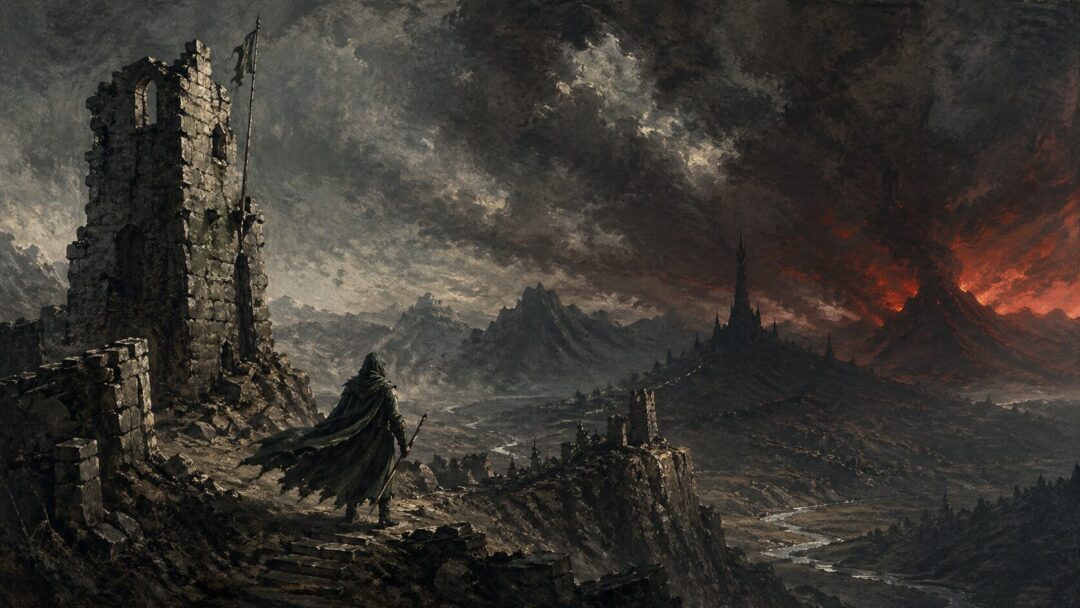
At first glance, Shadow of Mordor seems like it should belong.
It is set in the dark years before the War of the Ring. Sauron is rising again. Mordor is filling with Orcs and captains. Gollum is still wandering in search of the Ring. And the story reaches backward into one of the most important names in the history of the Second Age: Celebrimbor, the Elven-smith of Eregion.
That is a strong foundation.
It uses real pieces of Middle-earth.
But using real pieces is not the same as fitting them together correctly.
The more closely the game is measured against the books, the more complicated the answer becomes. Shadow of Mordoris not simply “wrong” in every detail. Some of its atmosphere works surprisingly well. Some of its choices are plausible as broad invention. But its central story does not fit cleanly into established canon.
The result is a strange mixture.
It feels like Middle-earth in texture.
But in meaning, it often becomes something else.
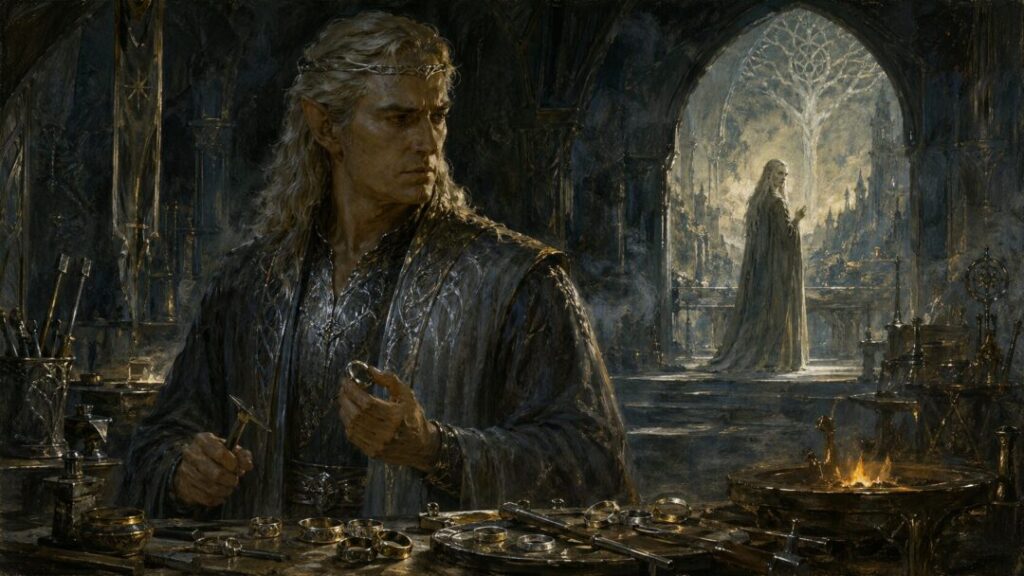
The Part That Almost Works
The basic setting is not the problem.
A story set in Mordor between The Hobbit and The Lord of the Rings is not impossible. After Sauron is driven from Dol Guldur, he returns to Mordor in secret, and later declares himself openly. By the time the War of the Ring begins, Mordor is already a restored military power. Orcs, fortresses, slaves, roads, and armies are all part of the land Frodo and Sam eventually enter.
So the idea of Mordor as a place of gathering strength works.
The game also understands that this period is not peaceful. Gondor is weakened. Ithilien has been emptied by war and fear. Minas Ithil has long since become Minas Morgul. The old watch on Mordor, once held by Gondor, has failed. The Black Gate and the towers around it are no longer the secure border of a vigilant kingdom.
A grim story on the edge of Mordor could fit this age.
Even Gollum’s presence is not automatically impossible. After losing the Ring, he eventually leaves the Misty Mountains and is drawn southward. His path toward Mordor is part of the larger movement of the story, though the exact timing and details must be handled carefully.
So the game begins with a believable shadow.
Sauron is returning.
Mordor is awake.
Old evils are moving again.
That much feels right.
Talion Is Not the Main Canon Problem
Talion himself is invented.
That does not automatically break canon.
Middle-earth has room for unnamed soldiers, forgotten captains, lost families, and small tragedies happening beyond the main story. The books do not record every Ranger of Gondor, every skirmish near Mordor, or every person destroyed by Sauron’s return.
A fictional Gondorian Ranger could exist in the margins.
The difficulty is where the game places him.
Talion is not merely a hidden survivor or a forgotten victim. He becomes central to a secret war inside Mordor. He dies and is denied death. He is bound to Celebrimbor. He dominates Orcs. He destroys major servants of Sauron. In the broader sequel, his story becomes entangled with the Nazgûl and with the fate of Mordor itself.
That scale creates the problem.
The more important Talion becomes, the harder it is to imagine why no trace of him exists in the known history of the War of the Ring. Middle-earth does contain hidden histories, but it is usually careful with consequence. A secret struggle of this magnitude inside Mordor would leave marks.
Talion could work as a small invented figure.
He struggles as a hidden central figure.
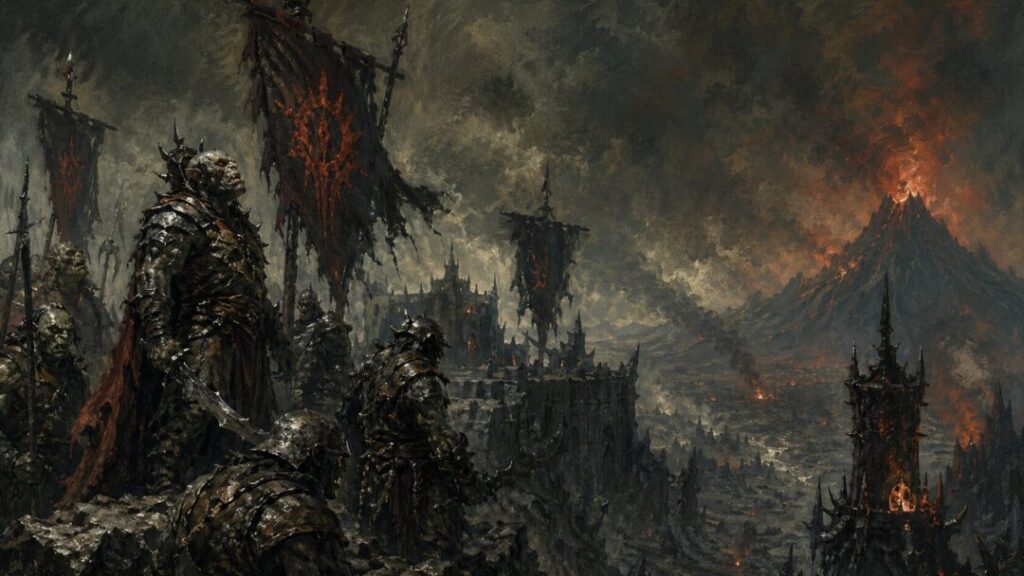
Celebrimbor Is Where the Story Truly Breaks
The largest canon issue is not Talion.
It is Celebrimbor.
In the books, Celebrimbor is the great smith of Eregion and the maker of the Three Rings. Sauron, in fair disguise, teaches the Elven-smiths, but the Three are made by Celebrimbor alone and are never touched by Sauron. When Sauron forges the One Ring in secret, the Elves perceive him and remove their Rings.
Celebrimbor’s story is tragic because he is deceived, but not because he knowingly becomes Sauron’s partner in making the One.
That distinction matters.
Shadow of Mordor reimagines Celebrimbor’s role far more dramatically. It presents him as a wraith bound to Talion, driven by vengeance, and in some versions of the game’s memory sequences, much more directly involved in the making and use of the One Ring than the books allow.
This is not a minor adjustment.
It changes the moral shape of the Rings’ history.
In the canon, Sauron’s deepest act of treachery is secrecy. He makes the One Ring alone, in Orodruin, to master the others. The Elves are not willing partners in that final act. They are deceived, then horrified.
The game turns that history into something more personal, more cinematic, and more confrontational.
But it is not the same story.
The Wraith Problem
There is also the matter of Celebrimbor surviving as an active wraith.
Elves are immortal, but their deaths do not work like the game suggests. Their spirits are not simply free ghosts available to merge with mortal warriors and wage private wars of revenge. The fate of Elven spirits belongs to a deeper spiritual order, not to a system of battlefield resurrection.
The game uses “wraith” as a mechanic and a mood.
Middle-earth uses spirits, death, and embodiment in a far more serious and structured way.
This difference may seem technical, but it matters because the game’s entire story depends on it. Talion cannot die because Celebrimbor is bound to him. Their shared existence becomes the engine of the plot. Without that bond, the game’s central premise disappears.
As gameplay, it is effective.
As canon, it is extremely difficult to place.
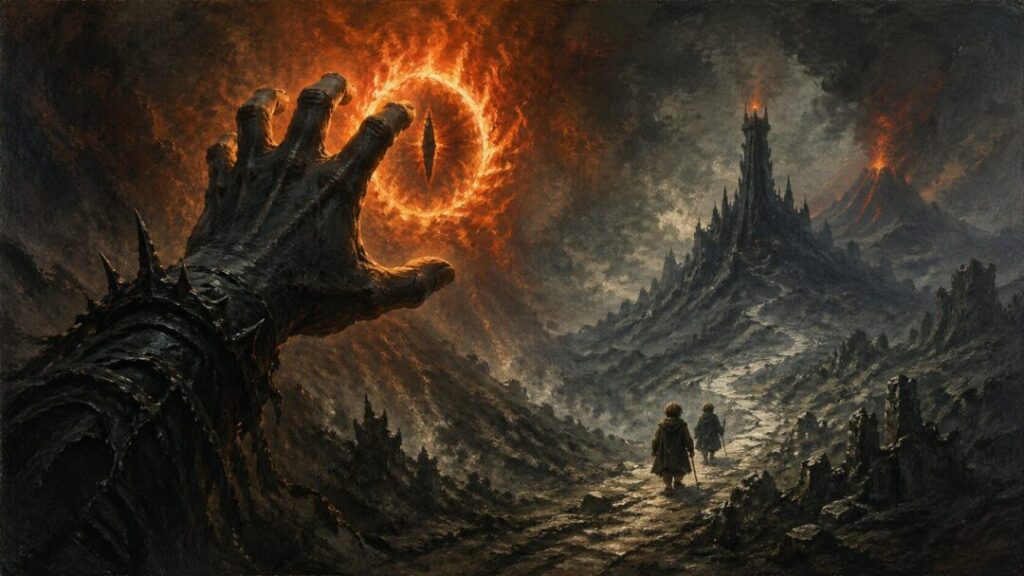
The One Ring Cannot Be Rewritten So Easily
The One Ring is not just an object in Middle-earth.
It is the central act of Sauron’s will.
He made it to rule the others. He poured much of his own power into it. Its destruction is the only reason his power collapses at the end of the Third Age.
That makes its history unusually resistant to alteration.
Any story that changes who helped make it, who held it, or how it passed between hands risks damaging the foundation of The Lord of the Rings itself.
This is one of the biggest problems with Shadow of Mordor and especially the wider game storyline. The more the games involve Celebrimbor directly with the One Ring, the more they move away from the careful structure of the books.
In canon, the One Ring passes from Sauron to Isildur, from Isildur into the Anduin, and eventually to Déagol, Sméagol, Bilbo, Frodo, and Sam. That chain is essential.
It cannot easily contain an extra secret history in which Celebrimbor steals or uses the Ring in a major war against Sauron.
That would not simply fill a gap.
It would create a different history.
The Nazgûl Issue
The Nazgûl are another place where the games move beyond the books.
In the canon, the Nine were once mortal Men who received Rings of Power and became enslaved to Sauron. Their names and identities are mostly unknown. The Witch-king is their lord. Khamûl is the only Ringwraith given a personal name in the established texts.
This silence is important.
The Nazgûl are terrifying partly because they have been emptied of their former selves. They are not remembered as tragic heroes with detailed biographies. They are what remains after long enslavement to the Rings.
When the games attach major known figures to the Nine, especially figures whose canonical deaths and legacies already matter, they create serious tension with the books.
This does not mean no adaptation can ever imagine a Nazgûl’s past.
But it must be labeled as invention.
It cannot be treated as something hidden in canon.
The Orc Domination Problem
One of the most famous parts of Shadow of Mordor is the ability to dominate Orcs and build an army.
As a game mechanic, it is brilliant.
As Middle-earth lore, it is troubling.
The books repeatedly show that the desire to dominate others is not morally neutral. The Ring tempts people with the idea of using power for good. Boromir wants it as a weapon against Sauron. Galadriel imagines what she might become if she took it. Gandalf refuses it because he understands that even the desire to do good through domination would become terrible.
This is where the game accidentally reveals its deepest conflict with Middle-earth.
Talion and Celebrimbor fight Sauron by using methods that resemble Sauron’s own: bending wills, commanding through fear, building an army out of enslaved enemies.
The game is aware of this darkness, especially as Celebrimbor’s ambition grows. But the very structure of gameplay still asks the player to enjoy domination as a tool.
Middle-earth is far more suspicious of that idea.
In the books, you do not defeat Sauron by becoming a better Dark Lord.
You defeat him by refusing the logic of domination altogether.
What the Game Gets Right Emotionally
And yet, Shadow of Mordor is not empty of truth.
Its strongest idea is that revenge can become another form of bondage.
Talion begins as a grieving man. Celebrimbor appears as a wronged spirit. Both have reasons to hate Sauron. Both have suffered because of him.
But Middle-earth is full of warnings about justified anger becoming corrupting power.
That part feels appropriate.
The game’s darker reading of Celebrimbor is not canon, but it does echo a real theme: the danger of opposing evil while becoming more and more like what you oppose. The books do not give Celebrimbor this arc in the same way, but they do return again and again to the same moral pattern.
Power used for mastery is perilous.
Even noble motives can be bent.
Victory by domination is not true victory.
In that sense, the game understands something important, even while breaking the lore to dramatize it.
So Is Shadow of Mordor Canon?
No.
Not in the strict sense.
Its main plot does not fit established Middle-earth history. Talion is an invented character. Celebrimbor’s role is heavily reimagined. The treatment of wraiths, the One Ring, Orc domination, and later the Nazgûl creates conflicts that cannot be smoothly reconciled with the books.
But the better answer is not simply “it is wrong.”
The better answer is that Shadow of Mordor is an alternate Middle-earth built from canon materials.
It borrows the names, places, wounds, and shadows of the real legendarium. Sometimes it uses them well. Sometimes it bends them too far. Sometimes it understands the atmosphere of Mordor better than it understands the moral architecture of the world.
That is why the game feels so strange.
It is closest to canon when it shows Mordor as a place of fear, memory, cruelty, and gathering darkness.
It is farthest from canon when it suggests that the answer to Sauron is another will powerful enough to dominate his servants.
Because Middle-earth’s deepest answer to Sauron was never a stronger tyrant.
It was pity.
Refusal.
Mercy.
Renunciation.
A Hobbit who would not kill Gollum.
A bearer who carried the Ring without claiming mastery until the very end.
A victory achieved not by using the Ring, but by destroying it.
That is the line Shadow of Mordor crosses.
It understands the Shadow.
But it does not always understand why the Shadow falls.
Sources & Notes
- J.R.R. Tolkien, The Lord of the Rings, Appendix B, ‘The Tale of Years’ — places Sauron’s return to Mordor and the rebuilding of his power in the years before the War of the Ring.
- J.R.R. Tolkien, The Silmarillion, ‘Of the Rings of Power and the Third Age’ — gives the canonical account of Celebrimbor, the Three Rings, Sauron’s secret forging of the One, and the fall of Eregion.
- J.R.R. Tolkien, The Lord of the Rings, Book II, Chapter 2, ‘The Council of Elrond’ — summarizes the One Ring’s history from Isildur through Gollum and Bilbo, leaving little room for a major hidden Ring-war involving Celebrimbor.
- J.R.R. Tolkien, The Silmarillion, ‘Of the Rings of Power and the Third Age’ — describes the Nine Rings enslaving mortal Men into the Nazgûl, with their former identities largely effaced in the published legendarium.
- J.R.R. Tolkien, The History of Middle-earth, Vol. X: Morgoth’s Ring, ‘Laws and Customs among the Eldar’ — sets out the usual fate of Elven spirits after bodily death, making an active revenge-wraith Celebrimbor hard to square with canon.
- J.R.R. Tolkien, The Letters of J.R.R. Tolkien, Letter 131 — frames Sauron’s central evil as domination and control, which is the moral background for the article’s criticism of using domination to fight him.