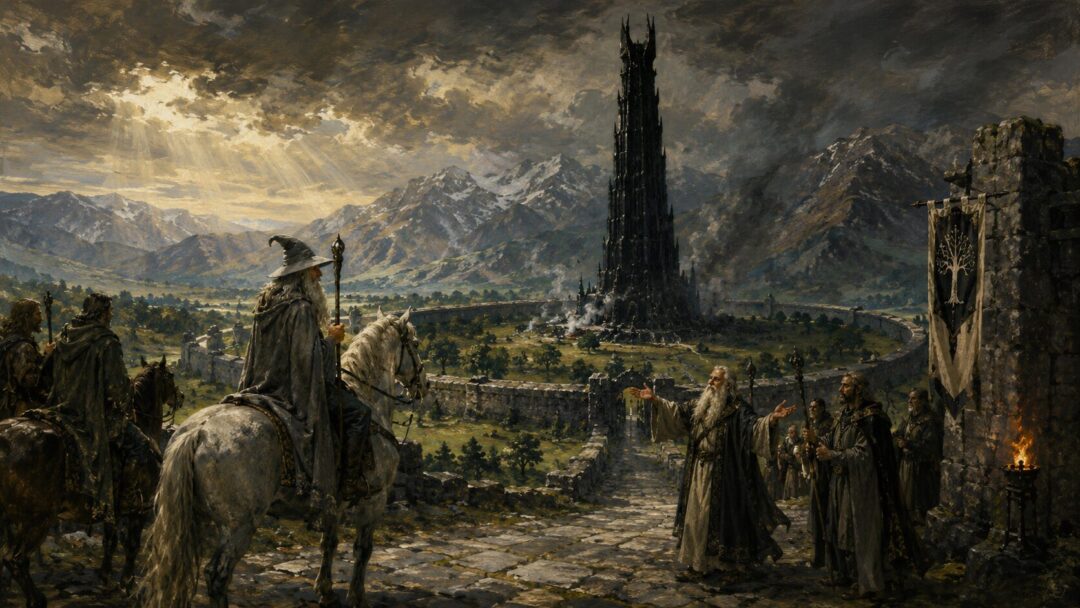
Saruman’s betrayal feels, at first, like one disaster among many.
He imprisons Gandalf. He strengthens Isengard. He poisons Rohan through Gríma. He sends Orcs across the land. He turns from a guardian of the West into a rival power, hoping to master the Ring for himself.
So it is tempting to imagine that if Saruman had remained faithful, the War of the Ring would have become far simpler.
Gandalf would have had help.
Rohan would have been stronger.
Isengard would have stood against Mordor instead of beside it.
All of that is true.
But it is not the whole truth.
Because Saruman’s treachery did not only create obstacles. It also caused several of the strange turns by which the Ring’s destruction became possible. That does not make his betrayal necessary in a moral sense. The texts do not suggest evil is justified because good can answer it. But within the story, evil actions often produce consequences their makers do not intend.
Saruman wanted control.
Instead, his choices helped create a chain of events he could not control at all.
So if Saruman never betrayed anyone, Middle-earth might look safer at first.
But the road to Mount Doom might become far less certain.
The First Great Change: Gandalf Is Not Imprisoned
The clearest change comes at once.
In the story as we have it, Gandalf rides to Isengard seeking Saruman’s counsel after confirming the danger of the Ring. Saruman reveals his treachery and imprisons him in Orthanc. This delays Gandalf at one of the most dangerous moments in the entire history of the Ring.
Because of that delay, Frodo leaves the Shire without Gandalf.
That absence matters deeply.
Frodo, Sam, Merry, and Pippin are brave, but they are not prepared for the full terror hunting them. They do not fully understand the Black Riders. They do not know the scale of the danger. They survive through courage, secrecy, friendship, and more than one stroke of providence.
If Saruman had remained loyal, Gandalf would not have been trapped on Orthanc.
This does not guarantee that Gandalf would personally escort Frodo all the way to Rivendell. The texts do not give us an alternate route to follow. Sauron is already searching. The Ring is still perilous. The Shire is still no fortress.
But Gandalf’s absence would almost certainly be removed or shortened.
That alone could change the journey from the Shire to Rivendell.
Perhaps Frodo leaves sooner.
Perhaps Gandalf reaches him before the worst danger gathers.
Perhaps the Black Riders face not four frightened Hobbits on the road, but a company guided by one of the Wise.
That would be a tremendous advantage.
Yet it also creates a problem.
The story’s actual path brings the Hobbits into contact with figures and places that matter: the Old Forest, Tom Bombadil, Bree, Strider, Weathertop, and finally Rivendell. Not all of these encounters would necessarily vanish, but the shape of the journey would change.
And in Middle-earth, the shape of the road matters.
Saruman’s Knowledge Would Have Been a Weapon for Good
A loyal Saruman would not have been a minor ally.
He was the head of the White Council. He had studied Ring-lore deeply. He knew much about the devices of Sauron. His wisdom, if truly faithful, could have strengthened the counsels of the West.
This is one of the largest differences.
In the real history of the War, Saruman’s knowledge becomes corrupted by desire. He does not merely fear Sauron. He begins to imitate him. He wants power, order, and mastery. He studies the Enemy too closely and becomes drawn toward the very thing he was sent to oppose.
But if that corruption never becomes betrayal, then his learning becomes valuable instead of dangerous.
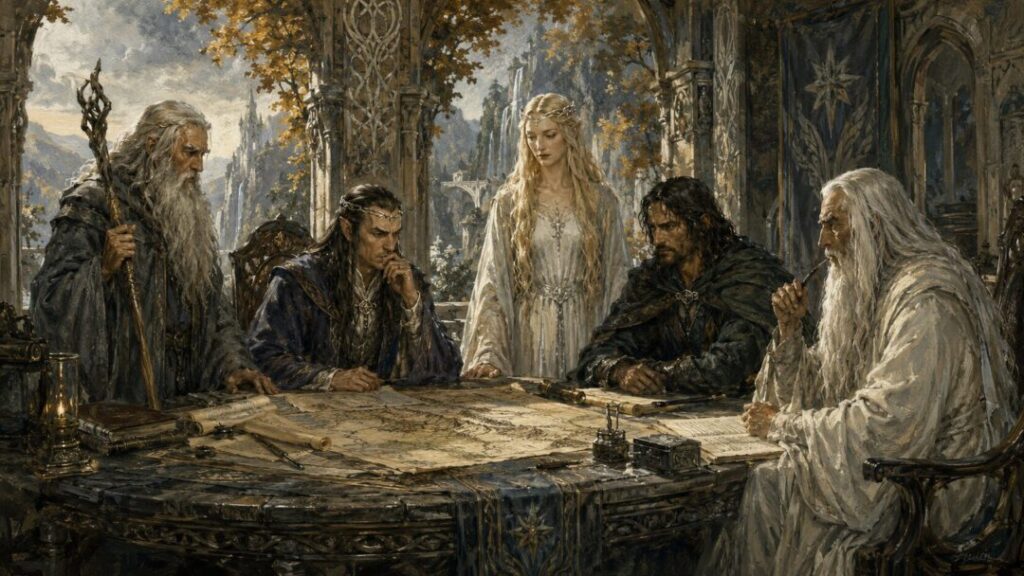
At the Council of Elrond, the final decision would still have to be the same: the Ring cannot be used and must be destroyed. That is not changed by Saruman’s loyalty. The Ring remains Sauron’s. To wield it would be to enter the logic of domination.
Still, Saruman could have helped earlier.
He might have accepted Gandalf’s warnings without delay.
He might have shared what he knew about the Rings and the Enemy.
He might have used Isengard as a true watchtower against Mordor and the lands between.
The Free Peoples would not merely gain one more wizard.
They would regain a mind that had been turned against them.
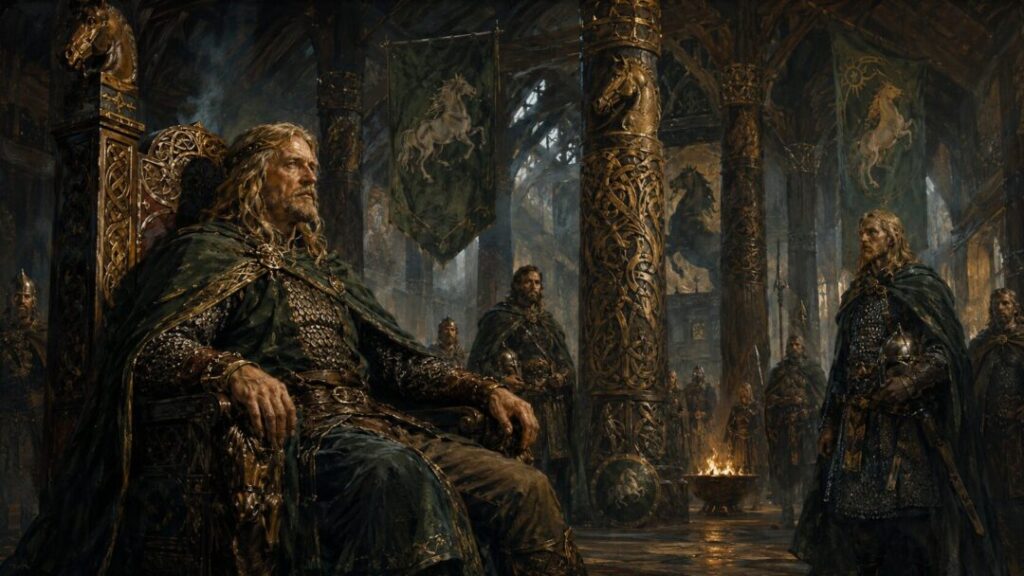
Rohan Would Not Be Slowly Poisoned
One of Saruman’s most damaging acts is not open war.
It is weakening Rohan before the battle begins.
Through Gríma Wormtongue, Saruman’s influence reaches the court of Théoden. The king is not simply defeated in battle; he is diminished in counsel, isolated from strength, and made slow to act.
If Saruman never betrays anyone, this entire wound likely disappears.
Gríma, as Saruman’s agent, would not be serving Isengard’s designs. Théoden would not be held in that same web of fear and manipulation. Éomer would not be treated as a threat in the same way. Rohan would be more ready when the storm from Mordor grows.
This matters enormously.
Rohan’s ride to Gondor is one of the decisive moments of the War. If Rohan is healthier sooner, Gondor may receive aid under less desperate conditions.
But again, the change is not simple.
In the original story, Rohan’s renewal comes through Gandalf’s arrival, Théoden’s healing, and the king’s choice to ride openly into danger. That renewal is spiritual as much as political. Théoden becomes himself again. Rohan awakens.
If Saruman never corrupted the kingdom, Rohan would not need the same dramatic awakening.
It might be stronger.
But it would also be a different story.
Helm’s Deep Probably Never Happens as We Know It
If Saruman is loyal, there is no Isengard army marching to destroy Rohan.
That means the Battle of the Hornburg, or Helm’s Deep, almost certainly does not occur in the form we know. There may still be war in the West. Mordor has allies, and the lands are full of danger. But the great assault from Isengard belongs to Saruman’s treachery.
Without that betrayal, Rohan is not forced into that desperate defense.
The people of the Westfold are not driven into the same terror by Saruman’s forces. Théoden does not ride to Helm’s Deep under the same conditions. Aragorn, Legolas, and Gimli are not drawn into that battle in the same way.
This would save many lives.
It would also preserve strength for the greater war.
But it removes another turning point: the fall of Isengard.
The Ents march because Saruman has ravaged the borders of Fangorn and turned Isengard into a place of axes, smoke, and machinery. Merry and Pippin’s meeting with Treebeard matters, but Treebeard’s wrath is bound to what Saruman has done to the trees.
If Saruman never commits those acts, the Ents may not march.
The texts do not say what the Ents would have done in that alternate case. So we must be careful. It is possible they would still oppose Sauron in some way. But the specific destruction of Isengard is a response to Saruman’s own ruinous behavior.
No betrayal means no ruined Isengard.
But it may also mean no sudden intervention from Fangorn.
Merry and Pippin May Never Meet Treebeard
This is one of the strangest consequences.
Saruman’s Orcs help bring Merry and Pippin toward Fangorn. Their capture is terrible, but it places them exactly where they need to be for one of the most unexpected alliances in the War.
Without Saruman’s forces, the breaking of the Fellowship might unfold differently.
Boromir is still tempted by the Ring. That danger does not depend on Saruman. The Ring’s power to awaken desire remains. But the specific Orc attack that carries Merry and Pippin away includes servants of Isengard. Remove Saruman’s betrayal, and that chain is altered.
If Merry and Pippin do not enter Fangorn, Treebeard may not be stirred by their news in the same way.
If Treebeard is not stirred, the Entmoot may not decide to march.
If the Ents do not march, Isengard does not fall.
But if Saruman is loyal, Isengard does not need to fall.
That sounds like a clean solution—until we remember what was found afterward.
The Orthanc-Stone Changes Everything
After the fall of Isengard, the Orthanc-stone comes into the hands of the Company.
This palantír becomes one of the most dangerous and important objects in the final movement of the War. Pippin looks into it and encounters Sauron’s will. That moment terrifies Gandalf, but it also misleads Sauron. Later, Aragorn uses the stone lawfully as Isildur’s heir and reveals himself to Sauron.
This helps draw Sauron’s attention toward Aragorn and the military threat from the West.
That matters because Frodo and Sam are moving through Mordor.
If Saruman never betrays anyone, the Orthanc-stone may remain in Orthanc. If Saruman is faithful, he might reveal it and surrender its use to wiser counsel. Or he might avoid using it because of its danger. The texts do not give a firm answer, so this must remain interpretation.
But the actual chain is clear.
Saruman’s fall leads to the recovery of the stone.
Pippin’s mistake leads Sauron to false assumptions.
Aragorn’s later use of the stone helps provoke Sauron into premature concern.
Without Saruman’s betrayal, this exact pattern may disappear.
And that is unsettling.
A more orderly war might lose one of the accidents that helped conceal the Ring-bearer.
A Loyal Saruman Still Could Not Use the Ring
This point is essential.
If Saruman stayed loyal, the Wise would be stronger. But they still could not solve the war by wielding the Ring.
That is the central trap.
The Ring is not merely a weapon that changes hands. It belongs to Sauron in a deeper sense. It carries his will toward domination. Even the desire to use it for good would become a path toward corruption.
So Saruman’s loyalty does not create an easy victory.
He cannot take the Ring and defeat Sauron with it.
Gandalf cannot do that either.
Elrond and Galadriel do not treat that as a safe solution.
The only real answer remains destruction.
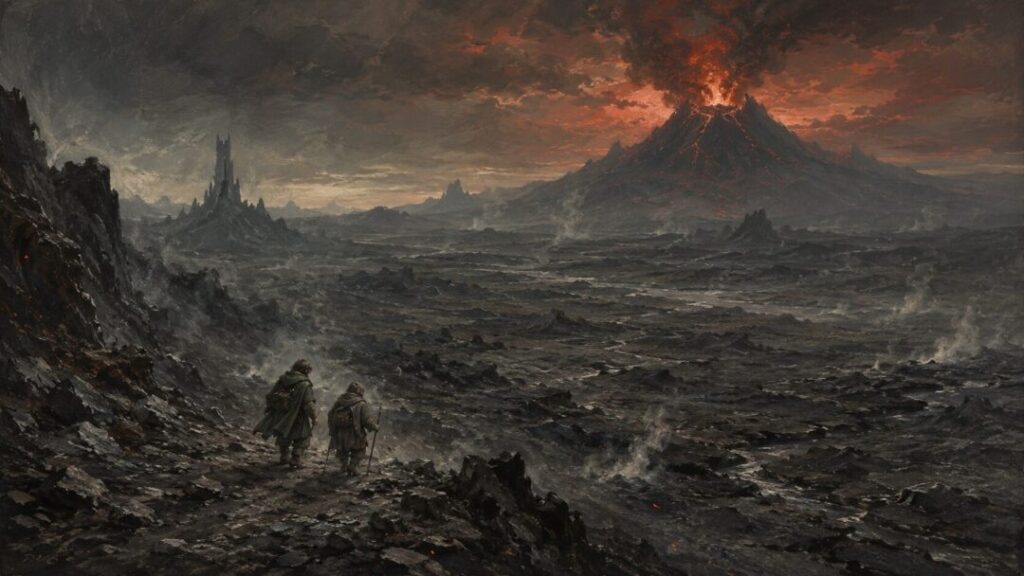
That means the heart of the story does not change. Somewhere, somehow, the Ring must still go into Mordor. A small bearer must still pass beyond the reach of armies. Victory still depends on secrecy, mercy, endurance, and the final failure of possessive power at the edge of the Fire.
Saruman can help the war.
He cannot replace the Quest.
Would the Fellowship Even Be the Same?
A faithful Saruman might change the Council of Elrond before it even begins.
If Gandalf arrives earlier with better information, if Saruman has shared his knowledge, if Rohan is stronger, if Isengard is secure, then the Wise may plan with more confidence.
But confidence is dangerous in this story.
The Fellowship succeeds partly because it is small, strange, and not built according to worldly strength. It includes great figures, yes—but it also depends on Hobbits, whose importance Sauron repeatedly underestimates.
Would a stronger council still entrust the Ring to Frodo?
Probably, because the logic remains the same: secrecy is necessary, and the Ring cannot be marched into Mordor by force. But the surrounding plans might differ. Saruman might urge different roads. More guards might be proposed. Rohan or Isengard might become part of the strategy.
Any of these changes could help.
Any could also make the Quest more visible.
That is the delicate terror of the Ring.
Sometimes adding strength adds danger.
The War Would Be Easier, But the Quest Might Not Be
If Saruman never betrayed anyone, the Free Peoples almost certainly gain major advantages.
Gandalf is not delayed at Orthanc.
Rohan is not weakened from within.
Isengard does not become an enemy fortress.
The West does not waste strength fighting Saruman’s war.
The Wise retain one of their greatest minds.
Militarily, this is a far better position.
But the destruction of the Ring was never primarily a military problem.
Armies could distract Sauron. They could resist him. They could buy time. But they could not overthrow him permanently while the Ring endured. The decisive act had to happen in secret, in Mordor, carried by those Sauron did not understand.
Saruman’s loyalty would strengthen the visible war.
It might not solve the hidden one.
And the hidden one is the one that matters most.
The Deepest Difference
Saruman’s betrayal shows what happens when wisdom turns toward possession.
He begins as one of the Wise, but wisdom alone does not save him. Knowledge without humility becomes hunger. Order without mercy becomes tyranny. Fear of Sauron becomes imitation of Sauron.
If he never betrayed anyone, that moral collapse would be removed from the story.
Middle-earth would lose one of its clearest warnings: that the desire to defeat evil by mastering its tools can become another form of evil.
A faithful Saruman would be powerful.
But perhaps the story would become less revealing.
Because Saruman’s fall exposes the central danger of the Ring more clearly than almost anything else. He does not want chaos. He wants control. He does not imagine himself as a servant. He imagines himself as the mind strong enough to rule events.
And that is exactly why he falls.
So Would Sauron Still Be Defeated?
The honest answer is this:
Possibly—but not certainly in the same way.
Saruman’s loyalty would make many things better. It could spare Rohan immense suffering. It could prevent the war in the West from becoming so desperate. It could bring Gandalf and the Wise into clearer action sooner.
But the actual fall of Sauron depends on a chain of events so unlikely that removing any major part of it creates uncertainty.
No betrayal means no imprisonment of Gandalf.
But it may also mean no fall of Isengard.
No fall of Isengard may mean no Orthanc-stone in Aragorn’s hands.
No Sarumanic assault may mean no same path for Merry and Pippin.
No same path may mean no same awakening of the Ents.
No same use of the palantír may mean Sauron’s attention shifts differently.
The Free Peoples would be stronger.
But the road of the Ring might be less hidden, less strange, and less shaped by the small unforeseen turns that evil failed to understand.
That is the paradox.
Saruman’s betrayal was a disaster.
Yet even that disaster was woven into a victory he neither desired nor foresaw.
Middle-earth might have suffered less if Saruman had remained true.
But whether the Ring would still have reached the Fire by that cleaner road is something the texts do not answer.
And perhaps that is the point.
In the War of the Ring, victory does not come because the powerful finally arrange the world correctly.
It comes because the proud misjudge the small.
Saruman never understood that.
A loyal Saruman might have helped save many lives.
But the Ring was not destroyed by wisdom alone.
It was destroyed by pity, endurance, hidden footsteps, and a mercy shown long before anyone understood why it mattered.
Sources & Notes
- J.R.R. Tolkien, The Lord of the Rings, Book II, Chapter 2, “The Council of Elrond” — Gandalf’s account of Saruman’s treachery at Orthanc, Saruman’s Ring-lore, and the Council’s rejection of using the Ring.
- J.R.R. Tolkien, The Lord of the Rings, Book III, Chapters 6–8, “The King of the Golden Hall,” “Helm’s Deep,” and “The Road to Isengard” — Saruman’s influence over Rohan through Gríma and the war launched from Isengard.
- J.R.R. Tolkien, The Lord of the Rings, Book III, Chapters 4 and 9, “Treebeard” and “Flotsam and Jetsam” — Merry and Pippin’s meeting with Treebeard, the Ents’ anger at Saruman’s destruction, and the fall of Isengard.
- J.R.R. Tolkien, The Lord of the Rings, Book III, Chapter 11, “The Palantír,” and Book V, Chapter 2, “The Passing of the Grey Company” — the Orthanc-stone, Pippin’s encounter with Sauron, and Aragorn’s later use of the stone.
- J.R.R. Tolkien, Letter 131 — Tolkien’s broader explanation of the Rings, domination, and Saruman’s fall into the desire to rival and imitate Sauron.