Most readers think Númenórean blood means greatness.
That is not wrong.
But it is not enough.
In Middle-earth, the blood of Númenor carries some of the highest human dignity ever given to Men. It is tied to long life, wisdom, strength, memory, kingship, sea-power, and the ancient friendship between Men and Elves. It stands behind Elendil, Isildur, the realms of Arnor and Gondor, and finally Aragorn.
On the surface, it looks like a blessing passed down through history.
But the deeper pattern is darker.
Númenórean blood did not only give Men more. It made them feel the loss of what they still could not have.
They lived longer than other Men.
They became greater in body and mind.
They were given a land closer to the West than Middle-earth.
They learned from the Eldar.
And yet they remained mortal.
That tension is the heart of Númenor’s tragedy. The Númenóreans were lifted higher than other Men, but not out of the fate of Men. Their greatness did not free them from death. It made death more visible.
That is why Númenórean blood becomes both gift and burden.
It is not a simple mark of superiority. It is an inheritance of glory, memory, longing, fear, and responsibility.
The Gift Given to the Edain
Númenor begins as a reward.
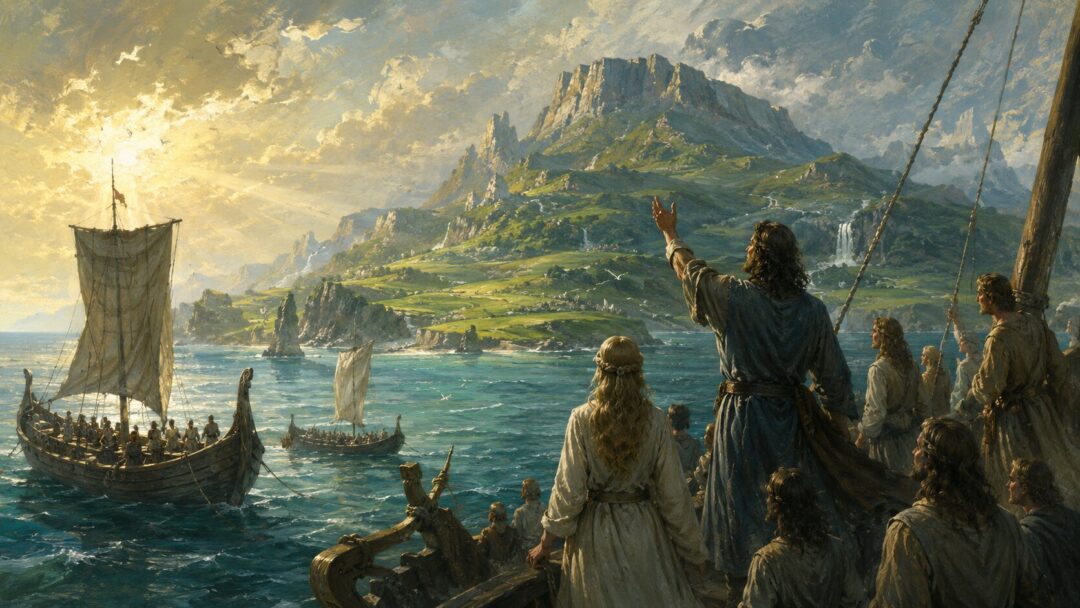
After the wars against Morgoth in the First Age, the Edain—the Houses of Men who had remained faithful and allied themselves with the Elves—were granted a new land. They were not brought into Aman, the Undying Lands, but to an island in the Great Sea, set apart from Middle-earth.
This island was Elenna, later called Númenor.
It was a place of peace after ruin. Beleriand had been broken. The old world of the First Age had passed away in catastrophe. For the surviving Edain, Númenor was not merely a kingdom. It was mercy.
There, the descendants of those Men became the Númenóreans.
Their first king was Elros, brother of Elrond. Both were descended from Elves and Men, and both were given a choice of kindred. Elrond chose the fate of the Elves. Elros chose the fate of Men, and became Tar-Minyatur, first King of Númenor.
That choice matters.
Elros did not become an immortal king pretending to be mortal. He chose to belong to Men. His line would be long-lived, but not deathless. From the beginning, the royal blood of Númenor carried both splendor and limitation.
It stood close to Elvish memory.
But it remained human.
Long Life Was Not Immortality
The Númenóreans were granted lives far longer than those of ordinary Men.
This was part of their blessing. They had more time to learn, build, govern, remember, and create. Their civilization grew in wisdom and power. Their ships crossed the seas. Their knowledge deepened. Their kings ruled for spans that would seem extraordinary among other peoples of Middle-earth.
But long life is not the same as immortality.
This distinction is essential.
The Númenóreans were still Men. Their destiny was still the Gift of Men: to leave the world after death. The Elves were bound to the world while it lasted. Men were not. Their end was mysterious even to the Valar, and beyond the circles of the world.
In the beginning, this was not meant to be a curse.
Death, in the deepest tradition of the world, was called a gift. Not because death is painless or easy, but because Men were not bound forever to the weariness of the world. Their destiny lay beyond it.
But as Númenor grew in power, this gift became harder to accept.
The Númenóreans did not die quickly. They had centuries to love the world, possess it, shape it, and grow attached to it. Their blessing lengthened their lives—but also lengthened their fear of losing them.
This is the first great burden of Númenórean blood.
It gave them more life.
And therefore more to surrender.
The West Was Always in Sight
Númenor’s geography sharpened the wound.
The island was not in Middle-earth. It lay in the Great Sea, closer to the West. The Númenóreans could look toward the Undying Lands, though they were forbidden to sail so far west that they lost sight of their own shores.
That ban was not random cruelty.
The Númenóreans were mortal. Aman was not their home. The Undying Lands did not make mortals immortal. To seek deathlessness by reaching that land was to misunderstand both Aman and the nature of Men.
But the very existence of the Ban created a spiritual pressure.
The Númenóreans knew there was something beyond them. They knew the Eldar could go where they could not. They knew the West was real. It was not a myth, not a dream, not a rumor. It was part of the shape of their world.
That made their mortality more painful.
A Man in a remote village of Middle-earth might fear death without imagining an earthly escape from it. A Númenórean could look westward and imagine that escape every day.
This does not mean the Ban caused the rebellion by itself. The texts do not reduce Númenor’s fall to one simple cause.
But the Ban became the place where fear gathered.
It marked the boundary between blessing and desire.
And eventually, many Númenóreans came to hate the boundary more than they treasured the gift.
The Greatness Became a Mirror
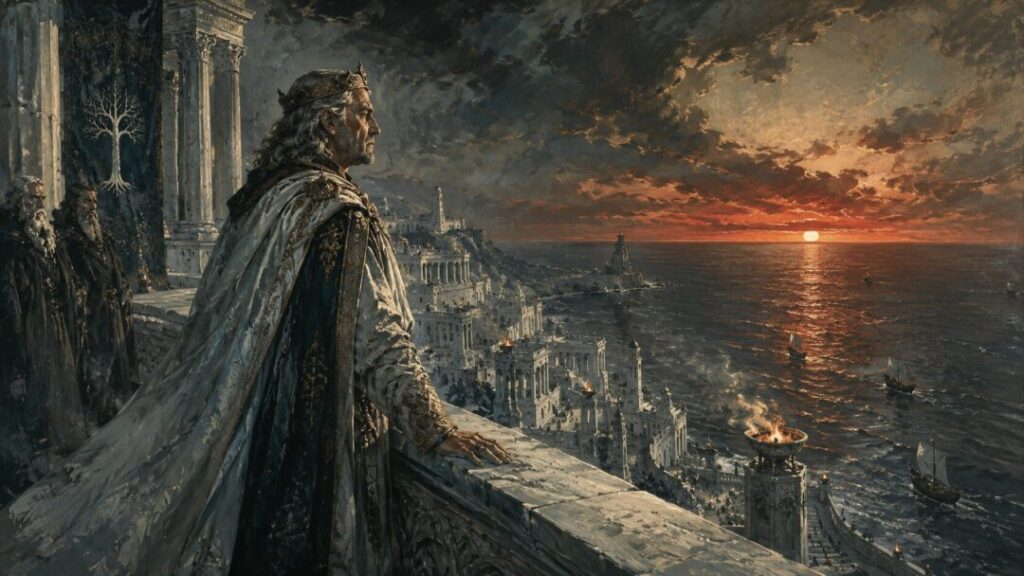
At its height, Númenor was magnificent.
Its people were powerful, learned, and skilled. They were mariners beyond other Men. They built great havens and later established dominion in Middle-earth. Their kings had authority and wealth. Their memory reached back toward the Elder Days.
But greatness can become a mirror.
The more the Númenóreans surpassed other Men, the more they compared themselves with Elves.
That comparison was deadly.
Among ordinary Men, the Númenóreans seemed almost elevated. But beside the Eldar, they were still mortal. They aged. They died. Their kings surrendered the sceptre and passed away. Their houses endured, but each person did not.
This is where the burden becomes psychological as much as physical.
Númenórean blood gave them the strength to build almost anything—except a way out of death.
It gave them the memory to preserve wisdom—but also to remember every loss.
It gave them kings who could rule for generations—but also kings who could cling to rule too long.
The old custom of surrendering the sceptre before death expressed acceptance. A king did not need to grasp until the last breath. But later, that acceptance weakened. Tar-Atanamir is remembered as one who spoke openly against the Ban and clung to life and rule until death.
That shift is important.
The problem was not that Númenóreans had long lives.
The problem was that they began to treat even long life as robbery.
The Faithful Carried the Same Burden
It would be too simple to say the King’s Men feared death while the Faithful did not.
The texts are more subtle than that.
The Faithful were those Númenóreans who remained loyal to the old friendship with the Eldar and reverent toward the Valar. They preserved the Elven tongues when these became politically dangerous. They did not reject the Ban in the way the King’s Men did.
But they were still Númenórean.
They did not escape the sorrow of their people. They too lived under the shadow of mortality. They too had to wrestle with the mystery of death. Their difference was not that they felt no fear, but that they chose trust instead of rebellion.
That makes them more compelling.
The Faithful are not less human. They are not immune to the ache at the center of Númenor. Their greatness lies partly in bearing that ache without turning it into hatred of the West.
This is why Númenórean blood remains both gift and burden even in its noblest line.
Elendil and his sons are not powerful because they escape the tragedy of Númenor. They are powerful because they carry what can be saved through the ruin.
The same inheritance that produced pride also produces endurance.
The same blood that became dangerous in Ar-Pharazôn becomes royal responsibility in Elendil.
Sauron Exploited a Wound Already There
Sauron did not invent Númenor’s fear of death.
He used it.
By the time he came to Númenor as prisoner and then became the king’s counsellor, the spiritual division of the island was already deep. The King’s Men had already turned away from the old trust. The desire for immortality had already poisoned the imagination of the realm.
Sauron’s genius was not creating a new temptation from nothing.
It was telling Númenor exactly the lie it most wanted to believe.
He turned their fear into accusation. He taught them to see the Valar not as guardians of order, but as jailers withholding immortality. He directed their reverence away from Eru and toward darkness. Under his influence, the rebellion became open blasphemy, cruelty, and finally war against the West.
This is the terrible irony.
The Númenóreans had been given more than other Men.
Sauron convinced them that they had been denied everything.
That is how a gift becomes unbearable. Not because the gift is evil, but because gratitude decays into entitlement. The long life once received as blessing becomes evidence of an even greater life supposedly stolen.
And once Númenor accepted that lie, its bloodline no longer felt like a sacred trust.
It became a grievance.
The Downfall Did Not End the Inheritance
Númenor fell.
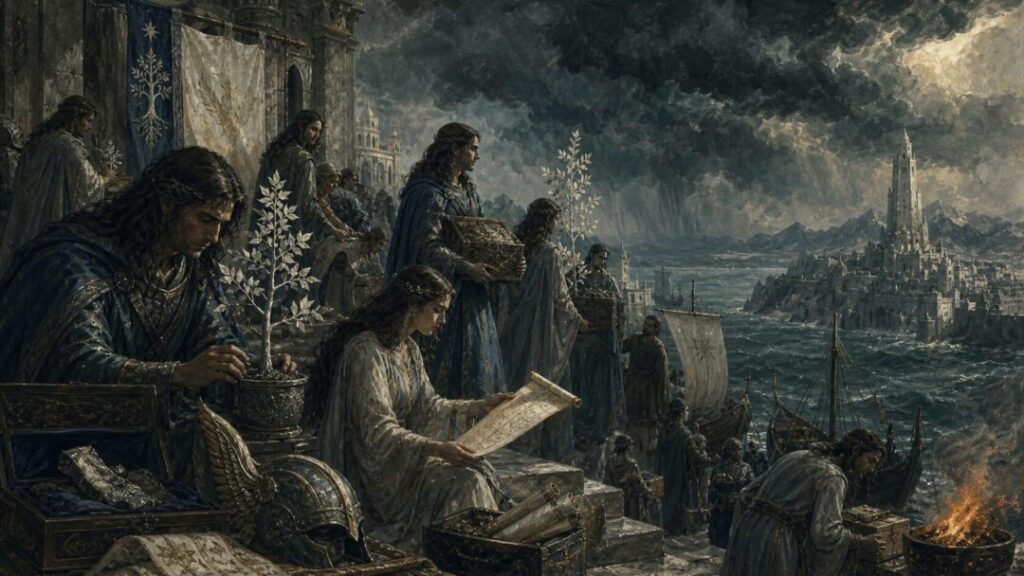
Ar-Pharazôn’s great armament sailed west in defiance of the Ban. The island was drowned. The world was changed. The Faithful escaped under Elendil and his sons, carrying what remained of the old nobility into Middle-earth.
But the burden did not vanish with the island.
It survived in memory.
The realms in exile—Arnor in the North and Gondor in the South—were founded by survivors of a catastrophe caused by their own people’s rebellion. That is a heavy inheritance. Their kingship was not merely glorious. It was haunted.
The Dúnedain after Númenor carried a double identity.
They were heirs of the greatest kingdom of Men.
They were also heirs of its failure.
This is why the blood of Númenor in the Third Age is never just a matter of ancestry. It is a moral question. What will the heirs do with what survived? Will they repeat the pride of the island, or preserve the humility of the Faithful?
The answer is not automatic.
Blood can carry memory.
It cannot guarantee wisdom.
Aragorn and the Burden of the Line
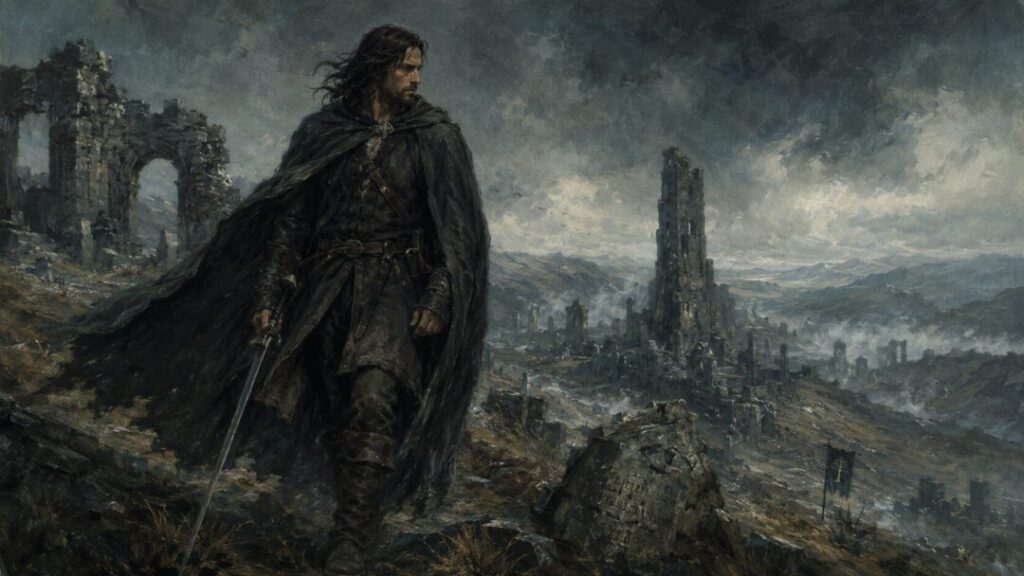
By the time Aragorn appears, Númenor is long gone.
Its island is lost. Its kings are history. Arnor has fallen. Gondor endures, but diminished. The line of Isildur survives in the North in a hidden and weathered form.
Aragorn’s Númenórean descent matters deeply. He is not a random warrior who becomes king by strength alone. He is heir to Elendil and Isildur. His long life, bearing, healing power, and authority all belong to the pattern of the Dúnedain.
But his greatness is not presented as blood without character.
That would miss the point.
Aragorn’s inheritance gives him a claim, but it also gives him a burden. He must become worthy of what he carries. He must resist the old patterns of pride and possessiveness. He must pass through long patience, obscurity, service, and self-command before he takes the crown.
This is where Aragorn differs sharply from the fallen kings of Númenor.
He does not grasp kingship before its time.
He does not seek deathlessness.
He does not turn his ancestry into an excuse for domination.
The blood of Númenor in him becomes gift again because it is joined to humility.
That may be the key.
Númenórean blood is dangerous when it looks inward and says, “I deserve more.”
It becomes noble when it looks outward and says, “I have been entrusted with more.”
Why the Gift Had to Remain a Burden
It is tempting to ask why the Númenóreans were given such greatness if it helped lead to their fall.
But that may be the wrong question.
The gift did not force the fall. Númenor was not doomed simply because its people lived long lives. The Faithful prove that the burden could be borne differently. Elendil proves that something noble could survive. Aragorn proves that the inheritance could be restored without repeating the rebellion.
The danger was real, but not inevitable.
That is what makes the story tragic rather than mechanical.
Númenórean blood magnified the human condition. It did not erase it. All Men must face death, but the Númenóreans faced it with greater memory, greater power, greater beauty, and greater temptation.
Their story asks what happens when mortal beings are given almost everything except immortality.
Some receive that as grace.
Some experience it as torment.
Some become Faithful.
Some become King’s Men.
And in that division, the whole tragedy of Númenor unfolds.
The Inheritance Was Never Just Blood
The phrase “Númenórean blood” can make the matter sound simple, as if greatness were carried only in the body.
But Middle-earth rarely treats inheritance so shallowly.
Blood matters. Descent matters. The line of Elros matters. The survival of the Dúnedain matters.
Yet the deeper inheritance is spiritual and moral.
It is the memory of a gift.
The temptation to resent its limits.
The duty to preserve wisdom.
The danger of pride.
The courage to accept mortality.
The humility to rule without grasping.
That is why Númenórean blood becomes one of the most powerful human symbols in the legendarium.
It is not merely the blood of kings.
It is the blood of Men who were raised high enough to see the West—and still had to die.
That was the gift.
That was the burden.
And every true heir of Númenor had to decide which part of the inheritance would master him.
Sources & Notes
- J.R.R. Tolkien, The Silmarillion, “Akallabêth” — the Edain receive Númenor, long life, the Ban of the Valar, and the fatal envy of deathlessness.
- J.R.R. Tolkien, Unfinished Tales, “The Line of Elros: Kings of Númenor” — Elros, the royal house, Númenórean longevity, and the gradual shortening of the kings’ lives.
- J.R.R. Tolkien, The Silmarillion, “Of the Rings of Power and the Third Age” — Elendil, Isildur, Arnor, Gondor, and the survival of Númenórean inheritance after the Downfall.
- J.R.R. Tolkien, The Lord of the Rings, Appendix A, “Annals of the Kings and Rulers” — the Dúnedain line, the waning of Númenórean blood, and Aragorn’s restored kingship.
- J.R.R. Tolkien, Letter 131 — Tolkien’s own explanation of mortality as the Gift of Men and Númenor’s rebellion as a refusal of that gift.