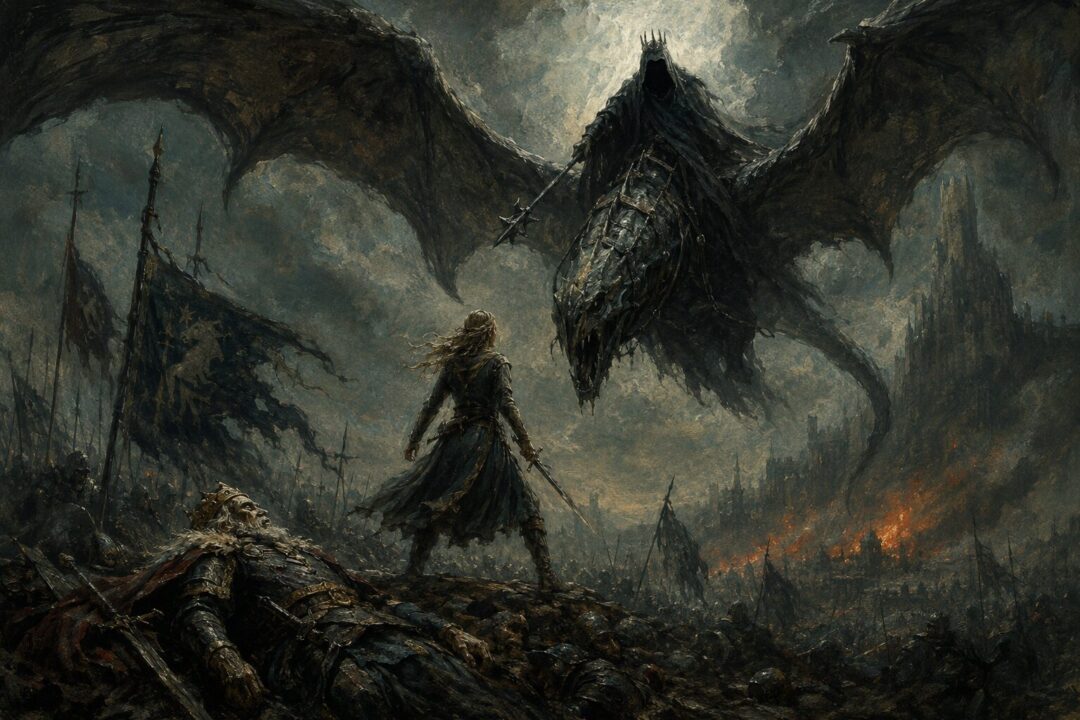
Most readers remember the Nazgûl’s screams as one of the great sounds of terror in The Lord of the Rings.
A shriek in the dark.
A cry above the battlefield.
A voice that makes horses panic and men falter.
But the screams were not just there to make the Ringwraiths seem frightening.
They were part of what the Nazgûl were.
Their cries were not decoration. They were not only signals. They were weapons aimed at courage itself.
And once that becomes clear, the Nazgûl stop looking like ordinary monsters in black cloaks. They become something more unsettling: servants of Sauron whose greatest strength was not always the sword, the mace, or even the Morgul-knife.
It was fear.
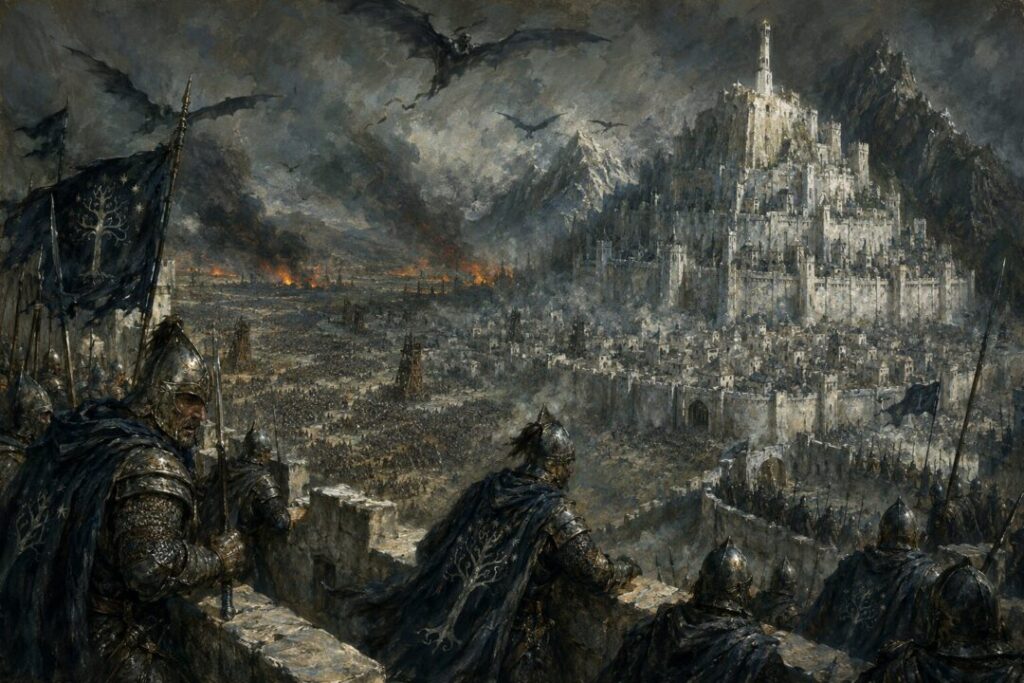
The Nazgûl Were Never Just Physical Enemies
The easiest way to misunderstand the Nazgûl is to treat them like powerful warriors who happen to be invisible.
They are dangerous, of course. The Witch-king wounds Frodo with a Morgul-knife at Weathertop. The Lord of the Nazgûl rides into the broken gate of Minas Tirith. On the Pelennor, he comes against Théoden and Éowyn with terrible force.
But the texts repeatedly suggest that their deepest power is not simply physical.
The Ringwraiths are frightening because they bring terror with them. Darkness goes with them. Their presence bends the hearts of those who face them. Their strength increases when their enemies are isolated, afraid, and surrounded by night.
That matters.
The Nazgûl do not merely try to kill. They try to make resistance feel impossible before the killing even begins.
This is why their cries are so important.
A sword threatens the body. The Nazgûl’s cry threatens the will.
The Scream as a Weapon of Fear
The Ringwraiths’ cries are not described like normal voices.
They are wails, shrieks, cold calls, and piercing sounds associated with death and despair. When they are near, courage does not simply become harder. It begins to fail.
This is clearest during the war in Gondor.
As Sauron’s power grows and the assault on Minas Tirith draws near, the Nazgûl become more openly terrible. Their winged mounts pass over the city. Their cries are heard above the walls. And the effect is not merely that people know the enemy is coming.
The sound itself works on them.
It spreads dread.
It shakes resolve.
It makes the defenders feel the Shadow before it reaches them.
That is the key.
The Nazgûl’s scream is not only a sign of danger. It carries the danger inward. It turns the listener’s own fear into part of Sauron’s assault.
In that sense, their cries belong to the same pattern as the Black Breath. The Black Breath is not explained in modern medical terms in the narrative, and it should not be reduced to a simple poison or disease. What the story shows is something darker and more spiritual: a shadow that can bring cold, weakness, despair, and a deadly sleep.
The screams work in a related way.
They do not need to cut flesh to wound.
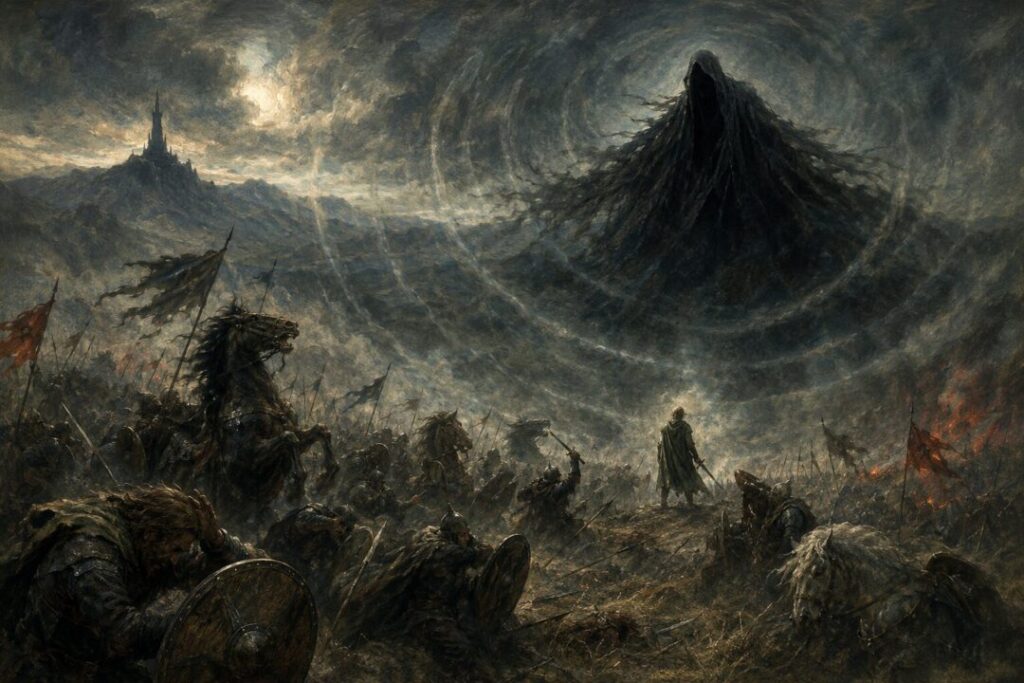
Why Terror Served Sauron So Well
Sauron’s rule is never only about armies.
He dominates by fear, surveillance, despair, and the crushing of hope. His servants do not merely attack cities; they make people believe resistance is useless.
The Nazgûl are perfectly suited to this.
They are not charismatic commanders who inspire loyalty. They are not heroes of Mordor. They are figures of dread, emptied of ordinary life and bound to the Dark Lord’s will.
Their cries announce more than their arrival.
They announce Sauron’s idea of the world.
A world where the weak submit.
A world where courage is absurd.
A world where all roads end in darkness.
That is why the sound of the Nazgûl matters most when morale matters most. Before Minas Tirith falls, the city is not only being battered by siege engines. It is being assaulted by despair. The Nazgûl circle above it like living proclamations that the West has already lost.
Their screams say, without words: there is no rescue.
And that is almost the whole strategy of Mordor.
The Cry Before the Blow
At Weathertop, the Ringwraiths do not simply rush in as assassins.
The scene is full of pressure before the attack happens. Frodo feels fear. The darkness matters. The Nazgûl advance in a way that overwhelms the hobbits’ courage. Frodo is drawn toward the Ring and toward the wraith-world, where their true terror becomes more visible to him.
The Morgul-knife is the physical weapon.
But fear prepares the wound.
That is important because the Nazgûl are most dangerous when the victim is already being separated from hope. A frightened person may flee, freeze, put on the Ring, make a desperate mistake, or cease to resist.
This is exactly the kind of battlefield Sauron wants.
Not a fair contest of strength against strength.
A collapse from within.
The Nazgûl’s cry helps create that collapse.
It tells the listener that death is near. But more than that, it suggests that death is already victorious.
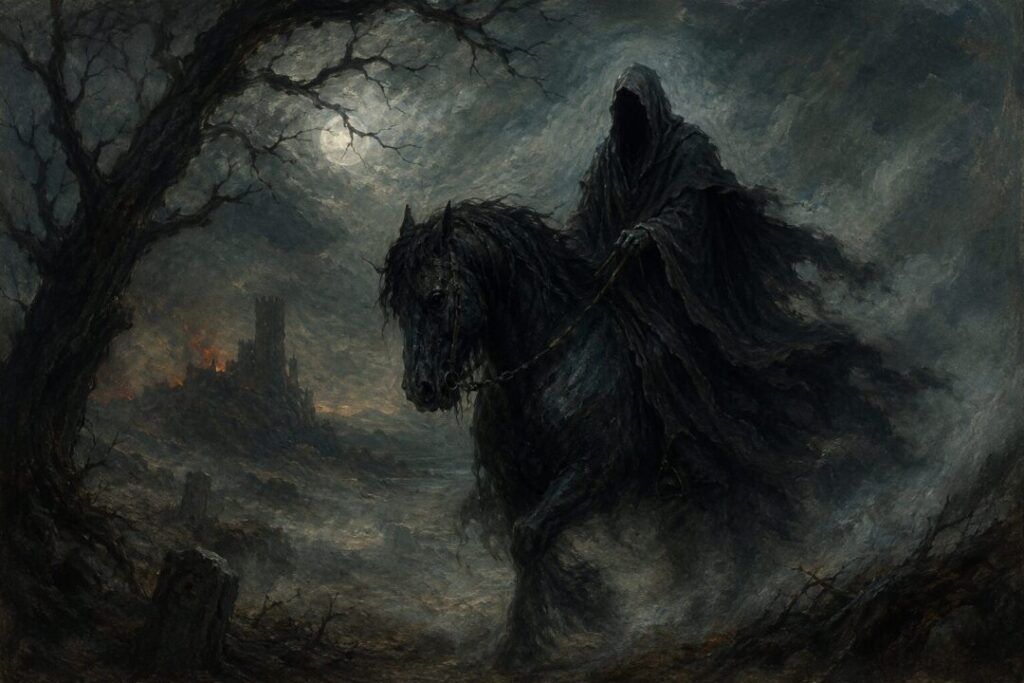
Why the Cries Grow Worse in War
The Nazgûl of the early journey through the Shire and the Nazgûl of the Pelennor are not presented with exactly the same battlefield role.
In the Shire and near Bree, secrecy still matters. The Riders search, question, track, and hunt. They are terrifying, but they are not yet used as open engines of war.
By the siege of Gondor, that changes.
The Lord of the Nazgûl has been given command in Sauron’s great assault. Mordor no longer needs to hide its terror. It wants terror to be seen and heard.
So the cries become part of the public war.
They pass over the walls.
They break the nerves of soldiers.
They make even the strong feel the approach of something beyond ordinary battle.
This does not mean every person instantly collapses. The texts are more careful than that. Some endure. Some continue to fight. Some, like the greatest captains of the West, can withstand fear better than others.
But endurance is not the same as immunity.
The Nazgûl’s voices make courage costly.
Every moment of resistance must be chosen again.
The Witch-king and the Performance of Doom
The Lord of the Nazgûl is especially dangerous because he embodies this terror most fully.
At the gate of Minas Tirith, he does not appear as a normal warrior. He comes as a figure of despair, magnified by the hour, the darkness, and the ruin around him. His presence makes men flee before his face.
That detail is easy to pass over.
They are not merely defeated in combat. They flee before the fight.
This is the Nazgûl’s power at its most concentrated. The Witch-king turns fear into authority. He does not need to prove he can destroy everyone in the city one by one. He needs them to believe that no one can withstand him.
His voice carries that same logic.
When he speaks to Éowyn, his threat is not simply “I will kill you.” It is far worse. He threatens torment, darkness, and exposure to the Lidless Eye. Whether every image in that threat should be read literally or as terror-language, the purpose is clear.
He is trying to break her before he strikes her.
That is what the Nazgûl do.
They make fear speak first.
Why Éowyn’s Stand Matters So Much
This is where the scene on the Pelennor becomes more than a dramatic duel.
Éowyn does not defeat the Witch-king because she is untouched by fear. The text does not need her to be fearless in that simple way. Her greatness lies in standing anyway.
That is the direct answer to the Nazgûl’s deepest weapon.
The Ringwraiths aim at the will. Éowyn answers with will.
The Witch-king’s terror depends on the belief that no one before him can endure. But Éowyn does endure. Merry, too, acts in the shadow of a being far beyond his strength. His blow matters not only because of the blade he carries, but because he moves when terror should have made movement impossible.
This is why the fall of the Witch-king feels so morally satisfying.
His defeat is not only physical. It is a defeat of the lie carried in his voice.
The lie says: you cannot stand.
Éowyn stands.
Merry acts.
The terror breaks.
The Screams Were Meant to Make Hope Seem Foolish
The Nazgûl’s screams were meant to do something very specific.
They were meant to make hope feel irrational.
Not merely difficult.
Not merely distant.
Foolish.
That is the real horror of them.
Sauron does not need every soldier of Gondor to die at once. He needs enough of them to stop believing that courage matters. He needs men to feel abandoned. He needs them to look at the sky, hear the cries, and imagine that the Shadow has already swallowed the future.
The Nazgûl’s screams are the sound of that imagined future pressing into the present.
They are despair made audible.
But the story never lets despair have the final word.
Again and again, the great turning points come when someone acts without full certainty of victory. Frodo continues. Sam follows. Théoden rides. Éowyn stands. Merry strikes. Aragorn comes from the Paths of the Dead and raises a banner where hope seemed lost.
The Nazgûl’s cries are meant to end the story early.
Courage is what refuses to let them.
The Real Meaning of the Nazgûl’s Voices
So what were the Nazgûl’s screams meant to do?
They were meant to weaken the will before the weapon struck.
They were meant to scatter courage.
They were meant to make the listener feel alone, doomed, and already defeated.
They were meant to serve Sauron’s larger war against hope.
That is why they remain so disturbing.
A monster that kills is frightening.
A monster that makes you believe resistance is pointless is something worse.
The Nazgûl’s screams were never just sounds in the dark. They were part of Mordor’s deepest method: to conquer the heart before conquering the field.
And that is why the answer to them is not only strength.
It is defiance.
Not loud defiance. Not certainty. Not invulnerability.
Just the choice to stand when the cry says you cannot.
Sources & Notes
- J.R.R. Tolkien, The Lord of the Rings, Book I, Chapter 11, ‘A Knife in the Dark’ — the Nazgûl’s night attack at Weathertop, Frodo’s fear, the pull of the Ring, and the Morgul-knife wound.
- J.R.R. Tolkien, The Lord of the Rings, Book V, Chapter 4, ‘The Siege of Gondor’ — the winged Nazgûl over Minas Tirith, their cries, and the way terror and despair weaken the city’s defence.
- J.R.R. Tolkien, The Lord of the Rings, Book V, Chapter 6, ‘The Battle of the Pelennor Fields’ — the Witch-king’s appearance, his threat to Éowyn, and the courage of Éowyn and Merry against terror.
- J.R.R. Tolkien, The Lord of the Rings, Book V, Chapter 8, ‘The Houses of Healing’ — the Black Breath and its association with cold, shadow, weakness, and despair after contact with the Nazgûl.
- J.R.R. Tolkien, The Letters of J.R.R. Tolkien, Letter 131 — Tolkien’s account of Sauron’s desire for domination, providing storycraft context for fear as part of Mordor’s method.