
When readers first encounter Gandalf, he seems capable of astonishing feats. He creates fire from pinecones in The Hobbit, breaks a bridge beneath a Balrog in Moria, drives away Nazgûl with light, and returns from death transformed after his battle in the depths of Khazad-dûm. Faced with such power, a natural question arises: if Gandalf was so mighty, why didn’t he simply unleash overwhelming magic against Sauron and end the War of the Ring directly?
The answer reaches into some of the deepest rules governing Middle-earth. Gandalf’s limitations were not merely practical. They were moral, spiritual, and even deliberate restrictions placed upon him. The struggle against Sauron was never intended to be won by a contest of magical firepower. In fact, attempting to defeat evil through greater displays of domination would have risked repeating the very mistake that created the problem in the first place.
Understanding why Gandalf could not simply “use more magic” reveals one of the most important themes in Tolkien’s world: power is often less trustworthy than wisdom, and victory frequently belongs not to the strongest but to those who refuse to become tyrants themselves.
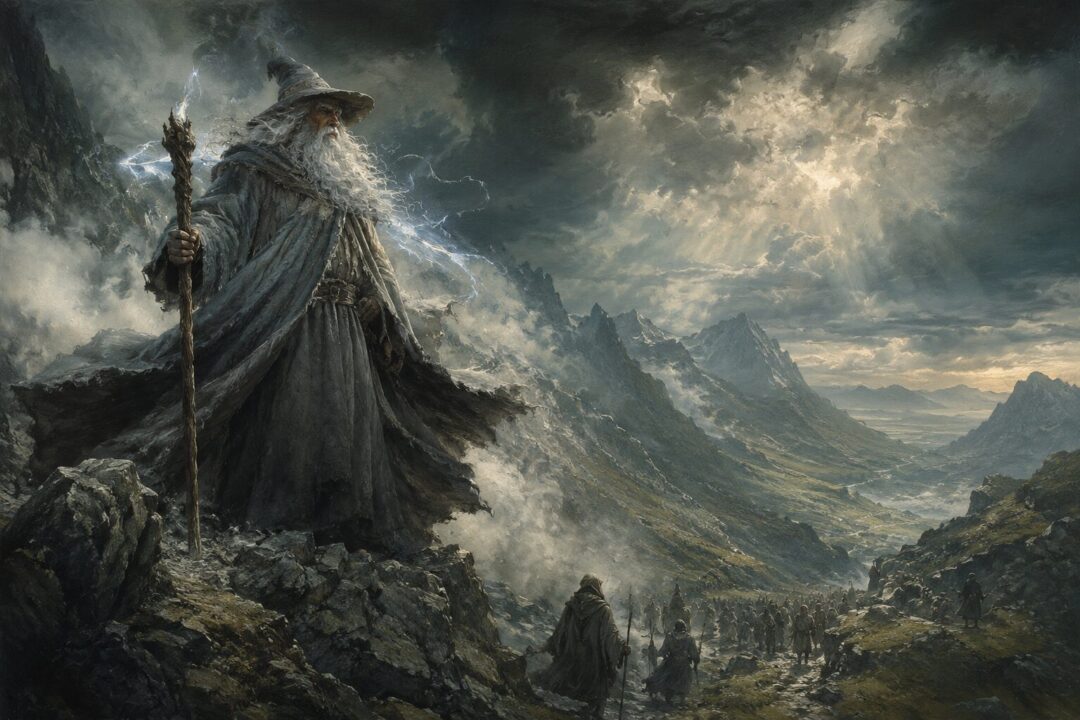
Gandalf Was Not a Human Wizard
One of the biggest misconceptions comes from viewing Gandalf as a traditional fantasy wizard.
In the lore of Middle-earth, Gandalf was actually one of the Maiar, angelic spirits who existed before the creation of the physical world. In his true nature, he belonged to the same order of beings as Sauron. Both were originally servants of the divine powers known as the Valar.
This fact makes the question even more puzzling. If Gandalf and Sauron were members of the same spiritual order, why was one unable to simply overpower the other?
The answer begins with the purpose of Gandalf’s mission.
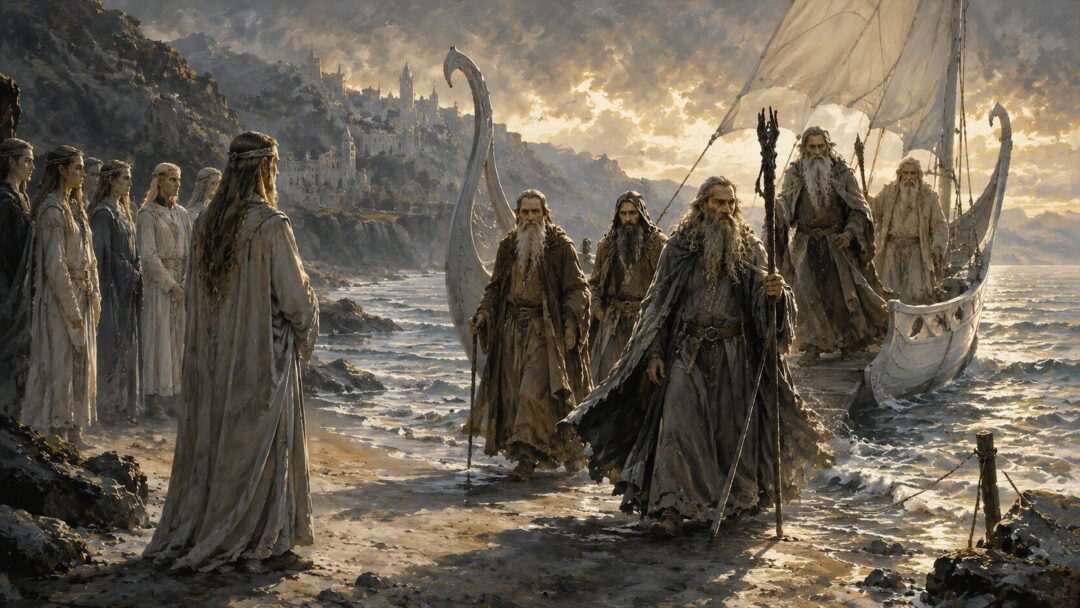
Around the Third Age, the Valar sent five emissaries to Middle-earth. These became known as the Istari: Gandalf, Saruman, Radagast, and the two Blue Wizards. They were not sent as conquering powers. Their task was to assist the peoples of Middle-earth in resisting Sauron.
Crucially, they were forbidden from ruling those peoples through displays of divine force. Their role was to guide, encourage, advise, and unite free peoples rather than dominate them.
As described in Unfinished Tales, the Istari were deliberately clothed in the weaknesses of old age and incarnate form. They were meant to experience fear, weariness, and limitation. Their power was intentionally restrained.
In other words, Gandalf was not sent to win the war for Middle-earth. He was sent to help Middle-earth win its own war.
The Valar Had Already Learned the Cost of Direct Intervention
The history of Arda provides another important clue.
Long before the events of The Lord of the Rings, the powers of the West had repeatedly confronted dark lords through overwhelming force. The consequences were catastrophic.
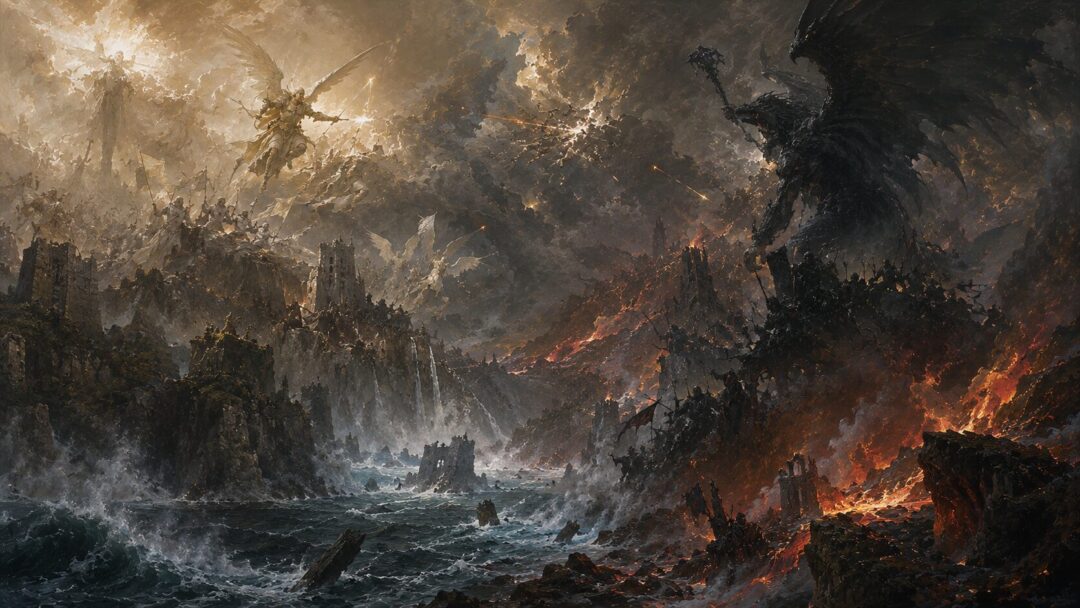
The struggle against Morgoth, Sauron’s master, culminated in the War of Wrath at the end of the First Age. The conflict was victorious, but entire regions of the world were destroyed. Beleriand itself largely vanished beneath the sea.
The lesson was clear. When beings of immense supernatural power wage open war, the world suffers alongside the enemy.
By the Third Age, the Valar chose a different approach. Rather than sending armies of heavenly beings to overthrow Sauron directly, they dispatched the Istari to inspire resistance among Elves, Dwarves, and Men.
This decision reflects a fundamental principle of Middle-earth: free peoples must choose courage and goodness themselves. Salvation imposed from above would defeat the purpose of that freedom.
Gandalf’s mission therefore involved persuasion rather than conquest. Every major success he achieved came through encouraging others to act.
He inspired Thorin’s company to reclaim Erebor. He encouraged Aragorn’s path to kingship. He united the defenders of Gondor. Most importantly, he trusted Hobbits when wiser and stronger people often overlooked them.
These achievements required wisdom rather than magical domination.
Sauron Was Strongest in the Realm of Domination
Another reason Gandalf could not simply overpower Sauron is that Sauron excelled in precisely the kind of power Gandalf was forbidden to use.
Sauron’s greatest abilities were not fireballs or spectacular magical blasts. His true strength lay in domination, corruption, manipulation, and control.
The Rings of Power were expressions of this talent. Through them he sought to bend the wills of others to his own.
Military conquest served the same purpose. Vast armies became extensions of a single will.
Even the One Ring embodied this principle. It concentrated Sauron’s power into an instrument designed to dominate minds and impose control.
To challenge Sauron on those terms would mean entering his chosen battlefield.
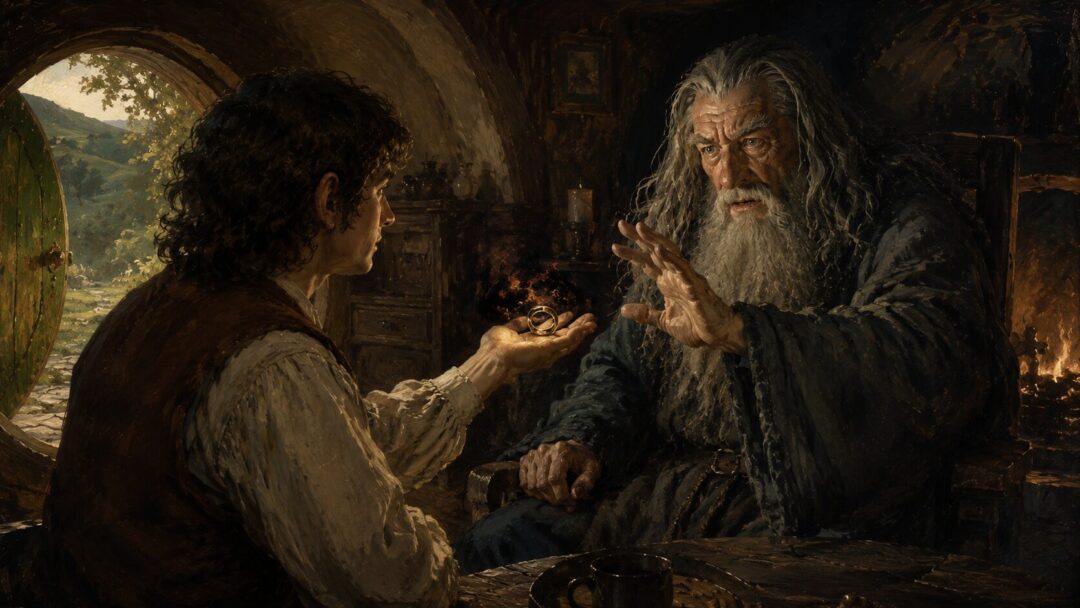
This is why Gandalf feared the One Ring despite his immense wisdom. When Frodo offered it to him in Bag End, Gandalf refused immediately.
His explanation is revealing. He did not deny that he could wield the Ring. On the contrary, he feared that he could use it all too effectively.
Through his desire to do good, he might become terrible.
The danger was not failure. The danger was success.
A victorious Gandalf wielding the Ring might overthrow Sauron yet establish a different form of domination. The external enemy would be defeated, but freedom would still be lost.
The texts strongly suggest that this outcome would betray the purpose of Gandalf’s mission.
Gandalf Actually Uses Magic More Often Than Many Remember
Part of the confusion comes from modern fantasy expectations.
Readers sometimes imagine that Gandalf rarely uses magic because he spends much of the story giving advice, riding horses, attending councils, and leading armies.
Yet he repeatedly demonstrates supernatural abilities throughout the narrative.
He creates magical fire in The Hobbit. He seals doors in Moria. He combats the Balrog with powers beyond ordinary understanding. He drives away wolves with fire. He blinds Nazgûl with light. He breaks Saruman’s staff. He communicates across great distances. He reveals hidden strength and authority as Gandalf the White.
The issue was never that Gandalf lacked power.
Rather, his power was usually employed with precision and necessity.
He used enough force to protect, reveal, encourage, or oppose immediate evil. What he did not do was attempt to solve every problem through overwhelming supernatural intervention.
His restraint was not weakness. It was obedience to the purpose for which he had been sent.
Even Gandalf Could Not Defeat Sauron Militarily
There is another practical consideration.
By the end of the Third Age, Sauron’s strength extended far beyond his personal presence.
His power operated through vast armies, fortified realms, loyal servants, fear, political influence, and centuries of preparation.
Even if Gandalf had somehow confronted Sauron directly and prevailed in a personal struggle, the broader conflict would not necessarily have ended.
The destruction of the One Ring remained essential because so much of Sauron’s native power resided within it.
As long as the Ring endured, Sauron remained extraordinarily dangerous.
This explains why the Council of Elrond rejected alternatives such as wielding the Ring against him or hiding it indefinitely. The problem was not merely defeating Sauron in battle. The problem was permanently removing the foundation of his power.
Only the Ring’s destruction could accomplish that.
No amount of battlefield magic could replace that necessity.
Gandalf the White Was Stronger—But Still Restrained
After defeating the Balrog and returning as Gandalf the White, Gandalf became more openly authoritative.
His transformation reflected a greater revelation of the power already inherent in his nature.
He confronted Saruman successfully. He exercised authority that even powerful figures recognized instinctively. He became a central force in coordinating resistance to Mordor.
Yet even then, he did not become a magical weapon unleashed upon the world.
His behavior remained remarkably consistent.
He advised kings rather than replacing them. He encouraged courage rather than demanding obedience. He trusted others with responsibility rather than concentrating power in himself.
When Minas Tirith faced siege, Gandalf did not single-handedly destroy Mordor’s armies. Instead, he strengthened defenders, organized resistance, and helped people endure long enough for events elsewhere to unfold.
The pattern never changed because his mission never changed.
Power existed to serve freedom, not replace it.
The Smallest People Won the War
The ultimate reason Gandalf could not simply use more magic is that Middle-earth’s greatest victories rarely come from raw power.
The downfall of Sauron was not achieved by the strongest warrior, greatest king, mightiest Elf, or wisest Maia.
It depended upon two Hobbits crossing impossible distances under unbearable burdens.
Again and again, the story elevates humility over domination.
Bilbo’s mercy toward Gollum changed history.
Frodo’s endurance carried the Ring to Mordor.
Sam’s loyalty preserved hope when hope seemed gone.
Aragorn succeeded because he sought kingship as duty rather than ambition.
Faramir resisted temptation where many stronger figures might have fallen.
The destruction of the Ring itself came through a chain of choices involving mercy, pity, courage, and providence rather than military superiority.
Had Gandalf simply solved the crisis through overwhelming magical force, these themes would disappear.
The victory over Sauron matters precisely because it was achieved without becoming like Sauron.
The Real Limitation Was Not Power but Purpose
The deeper answer to the question is therefore surprisingly simple.
Gandalf could not “just use more magic” because his mission was never to dominate Middle-earth into safety.
He possessed immense spiritual power, but that power was intentionally limited, carefully directed, and morally constrained. The Istari were sent to awaken courage in others, not to replace them. Direct domination—even for noble ends—risked reproducing the very evil they opposed.
Throughout The Lord of the Rings, Gandalf demonstrates that wisdom is greater than force, encouragement stronger than coercion, and humility more enduring than domination.
Sauron believed power could save the world if only it were placed in the right hands—his own.
Gandalf understood something different.
The fate of Middle-earth would ultimately depend not on who possessed the greatest power, but on who was willing to renounce it.
Sources & Notes
- Array