In the final catastrophe before the Black Gate, the armies of the West marched not because they believed they could defeat Sauron in battle, but because they hoped to distract him from a single terrible weakness. The Dark Lord was watching for the Ring. Everything in his strategy, his fear, and his confidence revolved around one assumption: whoever possessed the One Ring would eventually try to use it.
That assumption reveals something crucial about how the Ring actually worked.
Many readers imagine the One Ring primarily as a weapon that needed to be physically worn or wielded by Sauron himself. Yet the deeper horror in the texts is that Sauron never truly lost his connection to it. Even without touching it, wearing it, or possessing it, he continued to shape the world through it for thousands of years. The Ring remained an extension of his will long after it left his hand.
Its destruction did not merely deprive him of a tool. It destroyed the foundation of his power.
The One Ring Was Never Just an Object
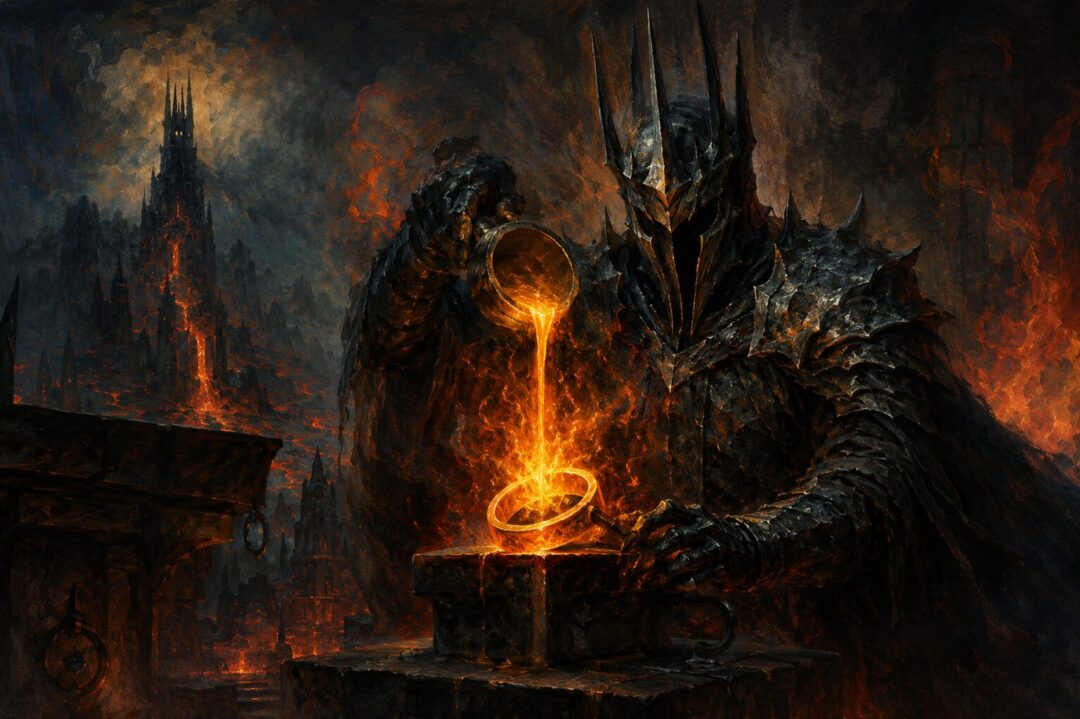
The One Ring differed from every other Ring of Power because Sauron placed part of his own native strength into it. In the account given in “Of the Rings of Power and the Third Age,” the Ring was made so that Sauron could govern the others and dominate their bearers. The famous verse was not symbolic. The Ring genuinely contained a concentration of his power and purpose.
This is why the Ring remained uniquely tied to him even after it was cut from his hand by Isildur during the War of the Last Alliance.
Sauron did not become powerless after losing the Ring. He fled, diminished and weakened, but still terrifyingly dangerous. The texts repeatedly show that his spirit endured because the Ring itself endured. Gandalf explains that while Sauron’s power was greatly reduced without it, he was still bound to it. As long as the Ring survived, the possibility of his full restoration remained.
This is one of the most important but often overlooked ideas in Tolkien’s legendarium: the Ring was not separate from Sauron’s rule. It was the mechanism through which his will continued operating in Middle-earth even during his absence.
The Ring Extended Sauron’s Will Across Middle-earth
The One Ring’s deepest power was domination.
It enhanced the natural capacities of its bearer, but it also bent minds, corrupted judgment, and drew others into systems of control. This reflected Sauron’s own nature. Unlike Morgoth, whose evil often manifested as destruction and chaos, Sauron preferred order, hierarchy, efficiency, and submission. He wanted wills beneath his own.
The Ring therefore acted less like a magical weapon and more like a permanent channel for domination.
This explains why Sauron never needed to physically recover the Ring in order for its influence to spread. Even separated from him, the Ring continued operating according to his design. It amplified greed, pride, possessiveness, fear, and the desire for mastery. The Ring was still doing Sauron’s work because it had been made from Sauron himself.
Boromir is one of the clearest examples. He never touched the Ring for long, never used it, and never intended evil in the beginning. Yet merely imagining its military power slowly reshaped his judgment. He came to believe that domination could be justified if used against a greater enemy.
Saruman followed a similar path without even possessing the Ring. His obsession with Ring-lore and power gradually made him imitate Sauron’s methods. By the end, Treebeard remarks that Saruman’s mind had become “of metal and wheels.” The corruption preceded ownership. The desire itself was already enough.
The Ring spread Sauron’s logic long before it returned to him.
Why Sauron Feared Aragorn More Than Frodo
One of the great ironies of The Lord of the Rings is that Sauron never seriously considered the possibility that someone would try to destroy the Ring.
This was not because he lacked intelligence. It was because he understood power too well.
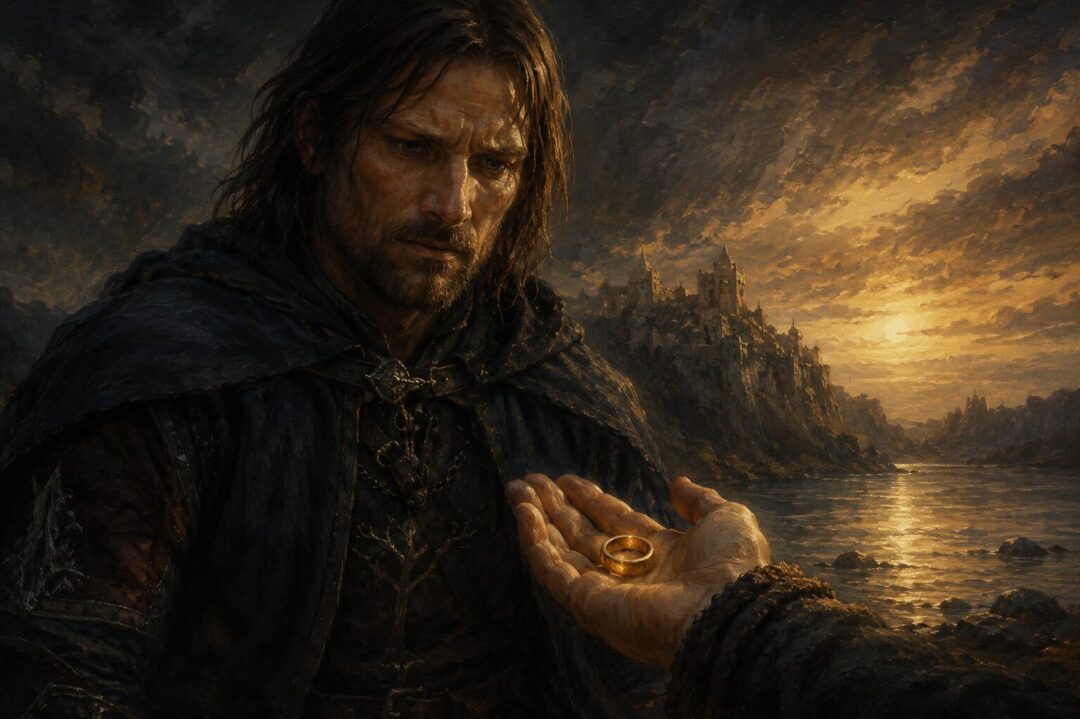
From Sauron’s perspective, no one capable of claiming the Ring would willingly reject it forever. The stronger and wiser the individual, the more dangerous they would become. Gandalf refuses the Ring because he fears becoming a tyrant “through pity.” Galadriel imagines herself as a terrible queen before rejecting it. Even Aragorn avoids touching it.
Sauron expects rivals, not renunciation.
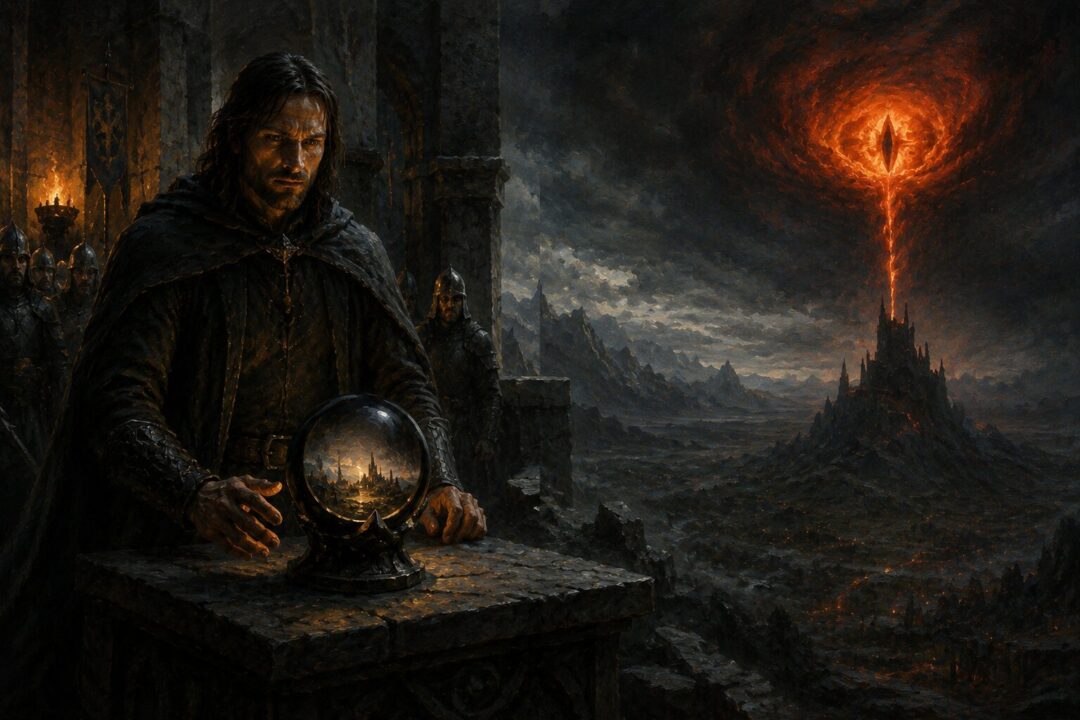
This is why Aragorn’s actions after the fall of Isengard become strategically important. When Aragorn reveals himself through the palantír, Sauron interprets this as the emergence of a new Ring-lord. He assumes Aragorn has acquired the Ring and is preparing to challenge him openly.
That fear drives several critical mistakes.
Sauron launches his assault earlier than he may have intended. He becomes increasingly focused on military confrontation. Most importantly, he directs his attention outward toward Gondor instead of inward toward Mordor’s own borders.
Frodo and Sam survive partly because Sauron cannot imagine their mission.
The Ring had shaped Sauron’s worldview so completely that he no longer understood humility, sacrifice, or mercy as meaningful political forces.
The Ring Was Already Ruling Before It Returned
By the Third Age, Sauron’s influence was spreading across Middle-earth even without the Ring physically in his possession.
Mordor was rebuilt. Barad-dûr rose again because its foundations had been made with the power of the Ring. Armies gathered from distant lands. Fear expanded through rumor alone. Entire kingdoms weakened under pressure before direct war even began.
This matters because it shows that Sauron’s rule depended as much on psychological domination as military conquest.
The Nazgûl demonstrate this perfectly. Their Rings had enslaved them centuries earlier. Even without Sauron wearing the One Ring, they remained permanently subject to his will. The system he created continued functioning across ages.
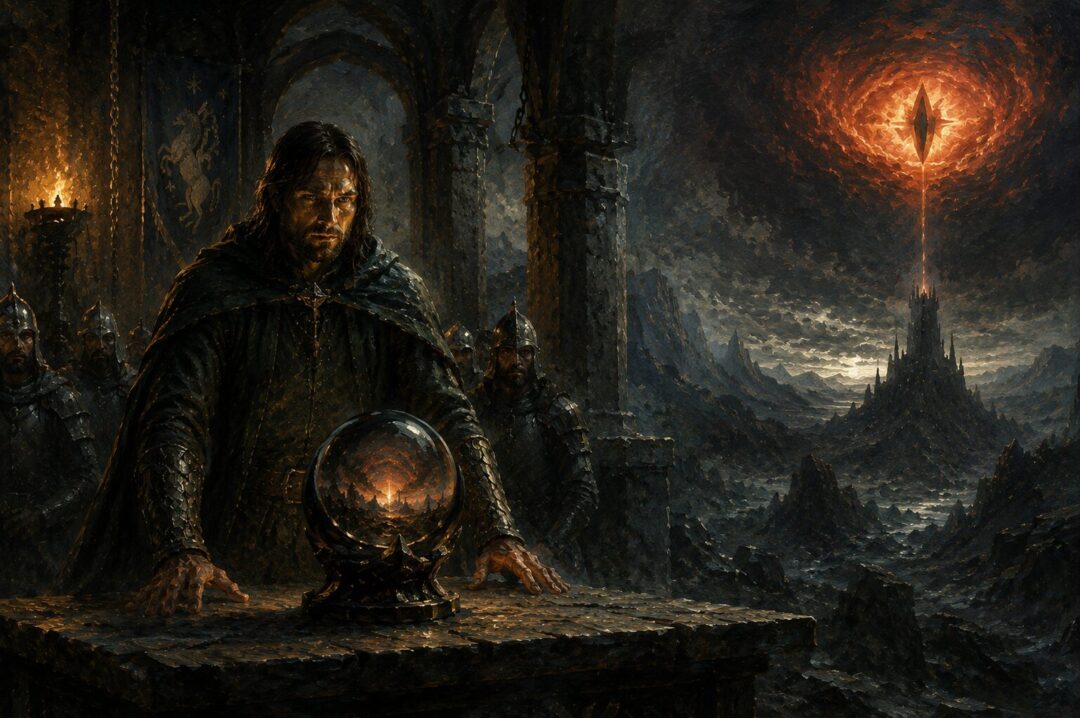
The same principle appears in subtler ways throughout Middle-earth. Denethor falls into despair partly through prolonged struggle against Sauron’s influence in the palantír. Gollum becomes spiritually deformed after centuries of possession. Entire political systems fracture under fear of power.
The Ring did not need to sit on Sauron’s finger for Sauron’s domination to persist. The structures of domination were already embedded in the world.
In this sense, the War of the Ring begins long before Frodo leaves the Shire.
Why the Ring Wanted to Return to Sauron
The texts repeatedly imply that the Ring possessed a kind of malign agency. Gandalf warns that the Ring “betrayed” Isildur. It abandons Gollum. It slips from fingers at crucial moments. Yet Tolkien never portrays the Ring as fully alive or independently conscious.
Instead, its behavior reflects the enduring will inside it.
The Ring “wanted” to return to Sauron because it was still fundamentally part of Sauron.
This explains why the Ring often acted against the interests of its temporary bearers. Gollum hid beneath the Misty Mountains for centuries, which kept the Ring lost from Sauron. Eventually, however, the Ring abandoned him. Bilbo found it by chance — or what Gandalf cautiously calls something more than chance.
Even then, the Ring continued exerting pressure toward exposure and movement. Bilbo’s unnatural possessiveness grows stronger over time. Frodo feels increasing psychological exhaustion the closer he approaches Mordor. Sam briefly imagines himself as a mighty heroic ruler when carrying it.
The Ring consistently pushed bearers toward visions of power.
That temptation was not accidental corruption. It was the continuation of Sauron’s original intention.
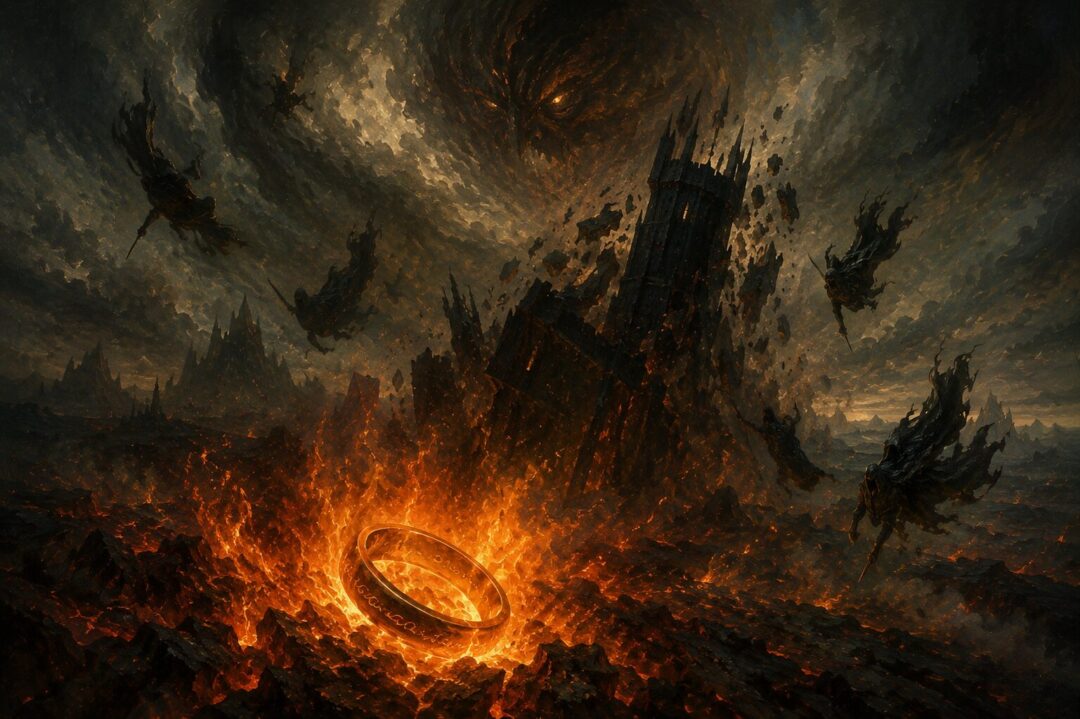
Destroying the Ring Meant Unmaking Sauron’s Power
When the Ring is finally destroyed in the fires of Orodruin, the collapse is immediate and catastrophic.
Barad-dûr falls. The Nazgûl perish. Sauron’s vast military system disintegrates into panic and confusion. Most importantly, Sauron himself becomes permanently impotent.
This outcome reveals the true relationship between Sauron and the Ring.
He had not merely stored power inside it like treasure hidden in a vault. He had externalized part of his own being into the physical world. That act allowed him to dominate others more effectively than any previous tyrant in Middle-earth. But it also created a fatal dependency.
The more power Sauron invested into the Ring, the more vulnerable he became to its loss.
This is the central paradox of the One Ring. Sauron forged it to control all other wills absolutely. Yet by pouring so much of himself into domination, he chained his own existence to a single object that could be destroyed.
And for centuries, even without touching it, he still ruled through it.
Every kingdom weakened by fear, every mind seduced by power, every alliance fractured by pride, and every soul tempted toward domination reflected the same invisible force radiating outward from the Ring and the will bound within it.
The tragedy for Sauron is that he understood power so completely that he became blind to everything else.
He could imagine conquest. He could imagine rebellion. He could imagine rivals seeking mastery for themselves.
But he could not imagine that the small and weak might choose destruction over possession.
That failure — more than any sword, army, or king — destroyed him in the end.
Sources & Notes
- J.R.R. Tolkien, The Silmarillion, "Of the Rings of Power and the Third Age" — the One Ring is made to rule the others, with much of Sauron’s own power passing into it.
- J.R.R. Tolkien, The Lord of the Rings, Book I, Chapter 2, "The Shadow of the Past" — Gandalf explains Sauron’s continuing need for the Ring, its corrupting pull, and its tendency to seek its maker.
- J.R.R. Tolkien, The Lord of the Rings, Book II, Chapter 2, "The Council of Elrond" — the Council’s refusal to use the Ring frames domination itself as the danger, even against Sauron.
- J.R.R. Tolkien, The Lord of the Rings, Book V, Chapter 9, "The Last Debate," and Book VI, Chapter 3, "Mount Doom" — the West’s feint exploits Sauron’s inability to imagine the Ring’s renunciation, and its destruction collapses his power.
- J.R.R. Tolkien, Letter 131, to Milton Waldman — Tolkien describes Sauron’s will toward order and control, and the Ring as the concentrated instrument of that domination.