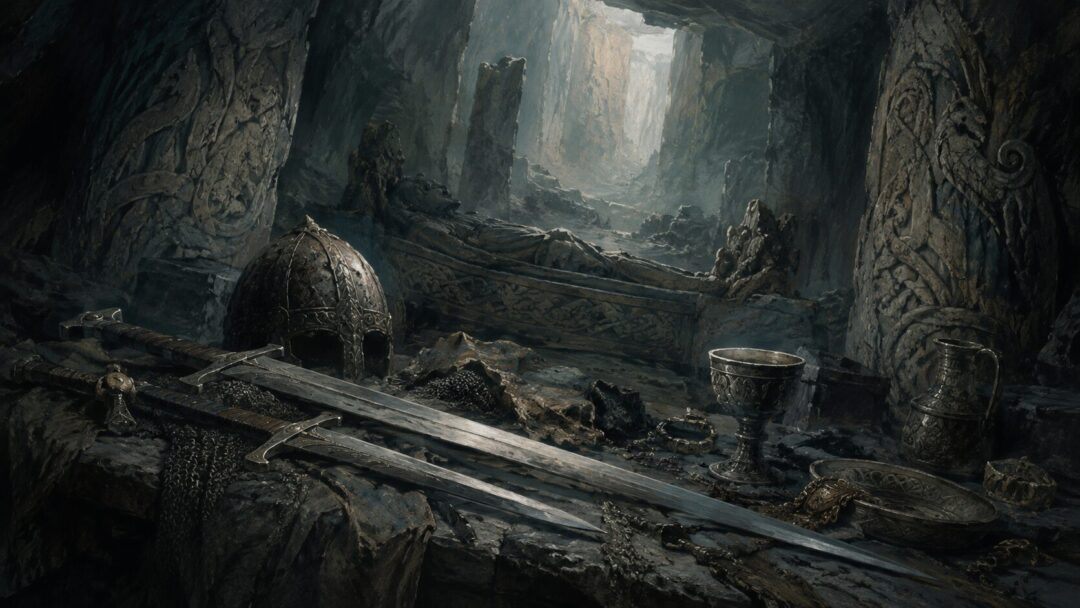
The most dangerous object in Middle-earth passed through hands that no lord, king, captain, or wizard would have chosen by ordinary wisdom. The One Ring did not come first to Gondor, or to the Wise, or to the strongholds of the Elves. It came to a hobbit-hole, to Bilbo Baggins, and later to Frodo — people whose greatness was almost invisible until the world depended on it.
That is the strange contradiction at the heart of Gandalf’s long interest in the Shire. Gandalf did not simply “like hobbits” because they were cheerful, homely, or good company. He had seen something in them that mattered deeply in a world ruled increasingly by fear: a power that did not look like power.
Saruman never truly learned that. He noticed hobbits. He watched the Shire. He even became entangled with one of their most ordinary pleasures, pipe-weed. But he never understood them. To Saruman, smallness meant insignificance. To Gandalf, smallness could hide endurance, pity, and the ability to act when the great were looking elsewhere.
That difference helps explain why one wizard helped save Middle-earth, while the other ended by bullying the very country he had once dismissed.
Gandalf’s Discovery Was Not Romantic — It Was Practical
Gandalf’s affection for hobbits was not born from sentiment alone. In the wider tradition surrounding The Hobbit and The Lord of the Rings, especially the account known as “The Quest of Erebor” in Unfinished Tales, Gandalf’s interest in hobbits is tied to observation. He had seen them endure hardship. He had noticed their courage, their pity for one another, and their ability to survive without turning themselves into warriors or rulers.
This matters because Gandalf was not sent to Middle-earth to dominate events by force. His role was to advise, encourage, awaken resistance, and strengthen free peoples against Sauron. He could fight when needed, but his deeper wisdom lay in recognizing forms of strength that others overlooked.
Hobbits were not mighty in arms. They had no great cities, no ancient armies, no lore of the Rings, and little interest in the politics of kings. Their own records remembered chiefly family, food, land, genealogy, local disputes, and festivals. On the surface, that made them provincial. But Gandalf saw that their very lack of grand ambition could become a safeguard.
They did not dream naturally of empire. Most hobbits wanted enough to eat, a warm hearth, a pipe, a garden, peace with neighbors, and perhaps a little harmless respectability. That could make them foolishly incurious about danger. But it also meant that Sauron’s usual temptations — command, conquest, fear, glory, domination — did not always find easy soil in them.
Not perfect soil, certainly. No hobbit was immune to corruption. Sméagol, who came from a hobbit-like people near the Anduin, was quickly ensnared by the Ring after murder and desire entered the story. Bilbo was affected by it. Frodo was wounded by it, burdened by it, and at the end could not freely cast it away. The texts do not say hobbits were magically incorruptible.
What they do suggest is subtler: some hobbits possessed a remarkable capacity to endure evil without immediately becoming servants of evil. Gandalf recognized that difference.
Saruman Mistook Information for Understanding
Saruman was not ignorant in the simple sense. He was learned, powerful, persuasive, and deeply informed about Ring-lore. He studied the devices of the Enemy and became increasingly fascinated by the mechanisms of power. He also became suspicious of Gandalf’s movements and interests.
That is why Saruman’s failure with hobbits is so revealing. He did not fail because he had never heard of them. He failed because he interpreted them through his own corrupted imagination.
Saruman understood hierarchy. He understood fear. He understood the desire to possess, command, and imitate power. He understood usefulness. The Shire could provide pipe-weed. It could be watched. It could be exploited. Later, it could be punished and degraded. But he never perceived the Shire as Gandalf did: as a place where humble loves had preserved a kind of moral sanity the great realms were in danger of losing.
His private interest in pipe-weed is especially telling. Saruman mocked Gandalf’s use of it, yet secretly took up the habit himself. This is not merely a comic detail. It reveals a deeper hypocrisy. Saruman could not openly honor a hobbit custom because that would mean admitting that something valuable had come from the Little People. He could consume the comfort, but not respect the culture.
Gandalf’s pipe, by contrast, belongs to his fellowship with ordinary lives. He can sit with hobbits, speak with them, laugh with them, and learn from them without feeling diminished. Saruman cannot do that. He must either look down on a thing or possess it.
Bilbo Was the Test Saruman Would Have Failed
When Gandalf chose Bilbo for Thorin’s company, it seemed absurd even within the story. Bilbo was not a trained burglar, not a warrior, and not hungry for peril. His respectable Baggins side resisted adventure; his Tookish inheritance left some buried responsiveness to wonder. Gandalf’s choice was not based on Bilbo’s visible qualifications. It was based on Gandalf’s ability to see possibility beneath comfort.
That is precisely the sort of possibility Saruman would have dismissed.
Bilbo’s importance in The Hobbit does not come from overpowering enemies. He survives through luck, riddling wit, stealth, mercy, and unexpected bravery. He spares Gollum when he has the chance to kill him. He faces Smaug with a courage that trembles but still acts. He tries to prevent ruinous conflict by giving the Arkenstone to Bard and the Elvenking, a morally complicated choice made in hope of peace.
Bilbo’s heroism is not clean, simple, or grand. It is hobbit-sized: reluctant, improvisational, sometimes frightened, sometimes morally clearer than the proud around him.
Gandalf saw that such people could change the direction of events not by seeking greatness, but by doing what necessity and conscience placed before them. Saruman’s imagination had narrowed too much for that. He believed increasingly in plans, devices, influence, and mastery. Bilbo would have looked to him like an error in strategy.
Yet the “error” was exactly the point.
Frodo Showed the Depth of Gandalf’s Insight
Frodo’s journey confirms Gandalf’s understanding, but not in a simplistic way. Frodo does not succeed because hobbits are untouched by evil. He succeeds because he carries the Ring farther into darkness than almost anyone could have expected, while remaining capable for a long time of pity, friendship, memory, and mercy.
Gandalf’s teaching about Gollum is central here. When Frodo wishes that Bilbo had killed Gollum, Gandalf answers by turning the idea of pity upside down. Pity is not weakness in that conversation. It becomes one of the hidden powers by which the story moves. Bilbo’s mercy spared Gollum; Frodo later continues that mercy; and Gollum, though twisted by the Ring, becomes the instrument through which the Ring is finally destroyed.
This does not mean Gandalf foresaw every detail. The text frames much of this in terms of providence, pity, and strange chances rather than mechanical prediction. Gandalf trusts that mercy has consequences beyond calculation. That is one of the things he knows and Saruman does not.
Saruman calculates advantage. Gandalf leaves room for grace.
Frodo’s pity is not sentimental. It costs him. Carrying the Ring leaves him permanently wounded in spirit and body. He saves the Shire, but cannot simply enjoy the saved Shire as others do. That pain prevents the story from becoming a neat celebration of small heroes. Gandalf was right about hobbits, but his wisdom did not make their burden light.
Merry and Pippin Proved Hobbits Could Grow Without Becoming Sarumanic
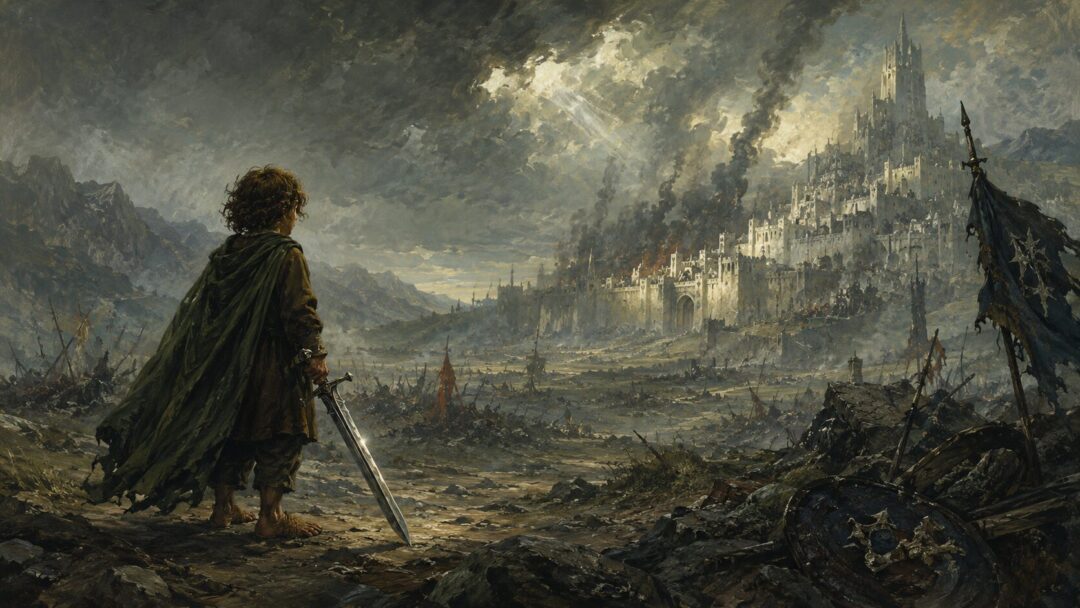
Merry and Pippin begin as young, curious, and often comic figures. Yet their growth is one of the clearest answers to Saruman’s contempt. They enter the great affairs of Rohan and Gondor without becoming conquerors. They learn courage, loyalty, and grief. They serve kings and captains, but they do not lose their hobbit identity.
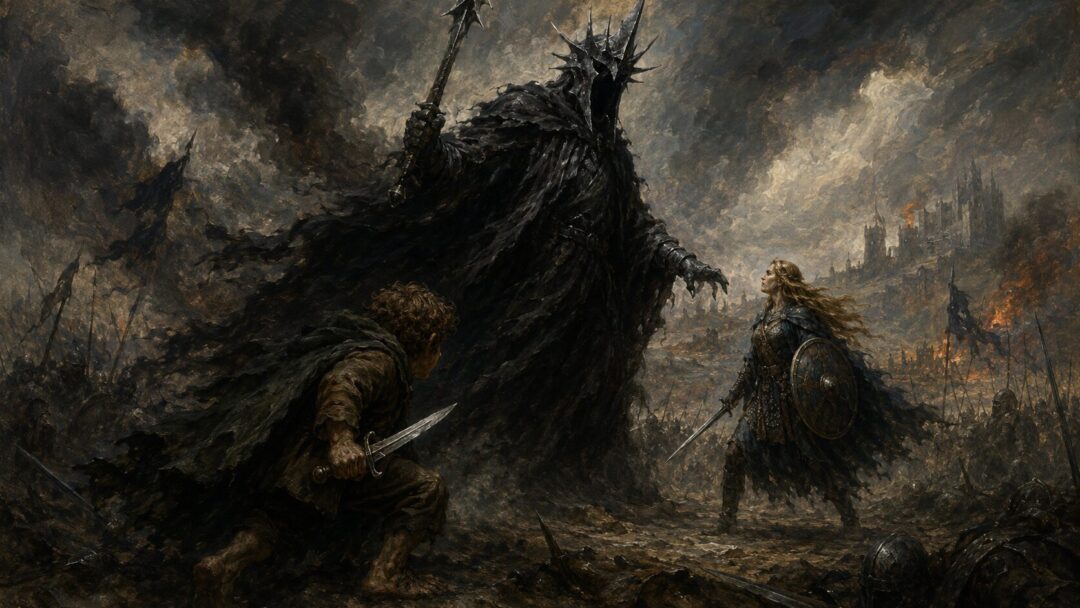
Merry helps in the fall of the Lord of the Nazgûl, not as the great warrior of prophecy, but as the overlooked companion whose stroke matters at the crucial moment. Pippin enters the service of Denethor and later acts out of desperate loyalty to save Faramir. Neither becomes mighty in the Sarumanic sense. Their greatness is relational: loyalty to friends, service freely given, courage awakened by love.
Even the Ents’ assault on Isengard is connected to the hobbits’ presence. Merry and Pippin do not command Fangorn. They do not manipulate him as Saruman would. They awaken attention. They become witnesses. Their smallness allows them to enter places where armies cannot.
Saruman’s whole system is undone partly by what he considered beneath notice: trees he had abused, hobbits he had scorned, and loyalties he could not measure.
The Scouring of the Shire Is Saruman’s Final Failure
Saruman’s occupation and spoiling of the Shire is one of the darkest proofs that he never learned what Gandalf knew. Reduced from his former power, he turns his malice toward a small land. His revenge is petty, bureaucratic, and spiritually ugly. He cannot create greatness, so he diminishes homeliness. He cannot rule Middle-earth, so he tries to ruin gardens, inns, mills, and simple freedoms.
But the Shire does not remain passive. Frodo, Sam, Merry, and Pippin return changed by the wider war. They organize resistance, but importantly, they do not become miniature tyrants. Merry and Pippin bring courage and order. Sam brings restoration. Frodo brings mercy, even toward Saruman.
That mercy shocks Saruman more than hatred would have. Frodo sees clearly what Saruman has become, but refuses needless killing. In that moment, Frodo stands in the same moral tradition Gandalf had taught: pity is not blindness, and mercy is not surrender.
Saruman recognizes, at least for an instant, that Frodo has grown. But recognition is not repentance. His final response remains spite. He cannot receive mercy because he cannot stop interpreting the world through pride, humiliation, and control.
That is the tragedy of Saruman. He had knowledge, but not humility. He had perception, but not love. He could observe hobbits, use hobbit goods, and injure hobbit lands, yet still fail to understand the moral center of hobbit strength.
What Gandalf Really Knew
Gandalf knew that hobbits were not impressive in the ways the world usually honors. He knew they could be narrow, timid, absurd, comfort-loving, and stubborn. He also knew those traits did not exhaust them.
He knew that beneath the love of meals and gardens there could be endurance. Beneath provincial habits there could be loyalty. Beneath fear there could be courage. Beneath small pleasures there could be resistance to the great lusts that devoured kings and wizards.
Most of all, Gandalf knew that the war against Sauron could not be won merely by becoming better at power than Sauron. Saruman never learned that. He tried to defeat domination by mastering its language. Gandalf trusted instead in awakened freedom, friendship, pity, and the unglamorous courage of people who did not want to rule the world.
That is why the fate of the Ring could rest in the hands of hobbits. Not because they were immune to evil. Not because they were secretly mighty in the ordinary sense. But because their smallness concealed a kind of strength that pride could not read.
Saruman looked at hobbits and saw weakness.
Gandalf looked longer — and saw hope.
Sources & Notes
- J.R.R. Tolkien, The Lord of the Rings, Prologue, “Concerning Hobbits” — for hobbits’ quiet habits, love of peace and tilled earth, and their being largely overlooked by the great.
- J.R.R. Tolkien, Unfinished Tales, “The Quest of Erebor” — Gandalf’s retrospective explanation of why Bilbo, and hobbits more generally, mattered to his design against Smaug and Sauron.
- J.R.R. Tolkien, The Hobbit, “Riddles in the Dark,” “Inside Information,” and “The Gathering of the Clouds” — Bilbo’s mercy, wary courage before Smaug, and attempt to avert ruin over the Arkenstone.
- J.R.R. Tolkien, The Lord of the Rings, Book I, Chapter 2, “The Shadow of the Past” — Gandalf’s teaching on Bilbo’s pity for Gollum and the hidden consequences of mercy.
- J.R.R. Tolkien, The Lord of the Rings, Book VI, Chapter 8, “The Scouring of the Shire” — Saruman’s spiteful rule in the Shire, the hobbits’ resistance, and Frodo’s final mercy toward him.