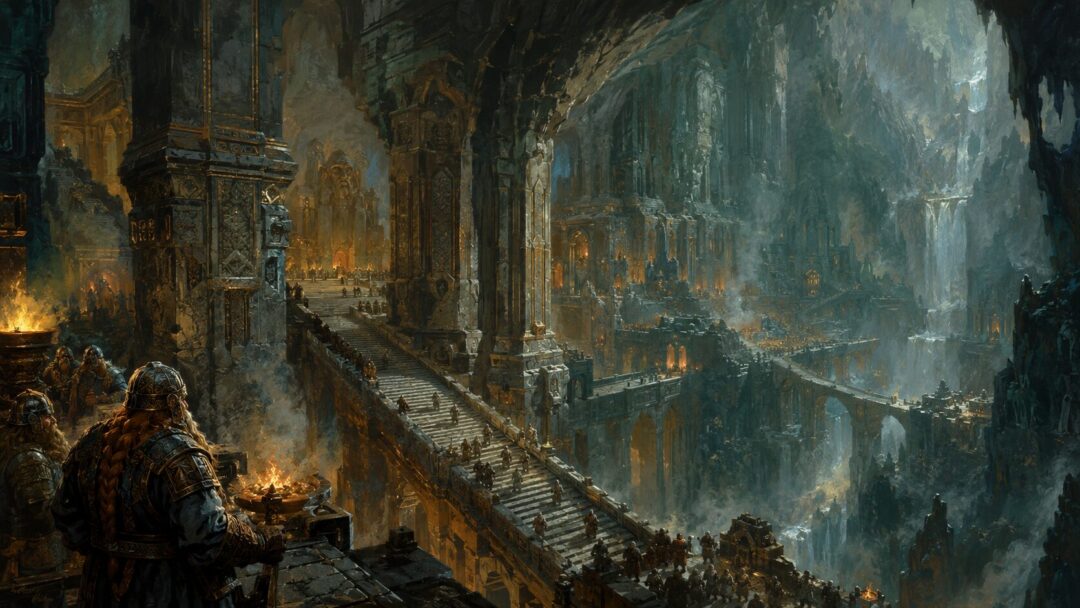
The Fellowship did not enter Moria as tourists entering a ruin. They entered it as trespassers in the corpse of a kingdom.
That is what makes Khazad-dûm so haunting. It was not a weak place that failed because it was poorly built. It was not a small colony swallowed by chance. It was the greatest and most famous mansion of the Dwarves, a realm of vast halls, deep craft, ancient memory, and almost unimaginable wealth. Its western doors were made with Elven friendship. Its eastern valley held the sacred memory of Durin. Its mines held mithril, the treasure that made kings and lords speak of it with awe long after its glory had vanished.
And yet that greatness was part of the danger.
Moria did not fall because greatness is evil. The texts do not say that. But they do suggest something darker and more tragic: the very things that made Khazad-dûm powerful also made it difficult to stop, difficult to abandon, and difficult to judge clearly. Its wealth invited deeper delving. Its endurance encouraged confidence. Its memory made return irresistible. Its hidden depths concealed an enemy older than the kingdom itself.
Moria’s fall was not simply a punishment for greed. It was the slow collision between wonder, need, pride, and a terror that should never have been awakened.
Khazad-dûm Was Built on a Sacred Beginning
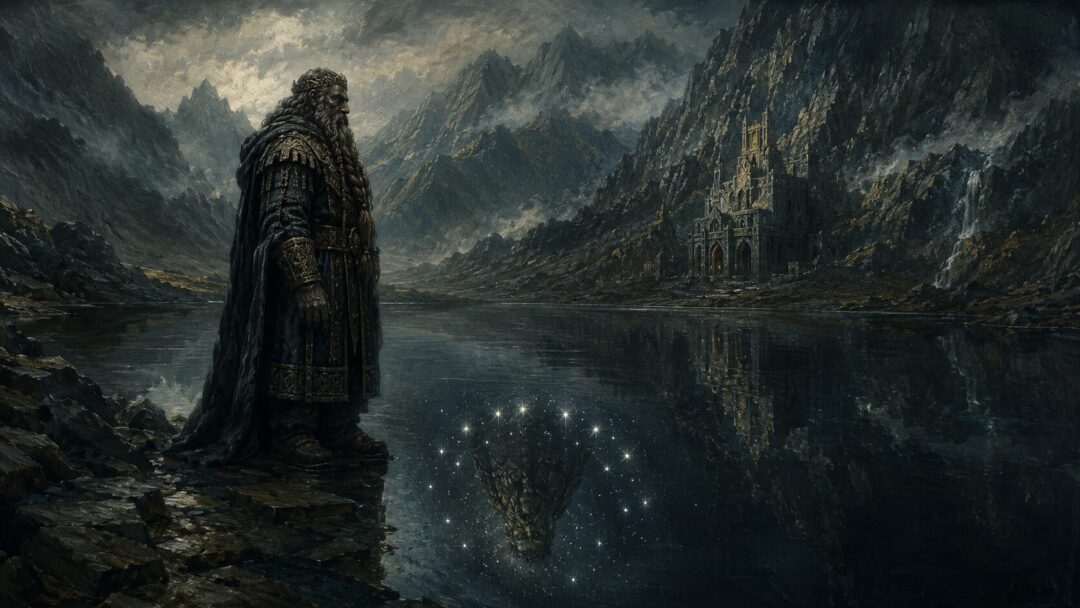
Before it was called Moria, the Black Pit, it was Khazad-dûm: the Dwarrowdelf, the great mansion of Durin’s Folk. Its beginning was not merely practical. In Dwarven tradition, Durin the Deathless came to Kheled-zâram, the Mirrormere, and saw stars reflected like a crown above his head. Near that place his people made their greatest dwelling beneath the Misty Mountains.
That origin matters because Khazad-dûm was never only a mine. It was homeland, shrine, fortress, archive, and royal seat. To the Dwarves, especially Durin’s Folk, it carried a meaning no other place could easily replace. Erebor could become a kingdom. The Iron Hills could shelter survivors. But Khazad-dûm was older, deeper, and more bound to identity.
This is one reason its greatness made its danger harder to face. A lesser mine might have been deserted sooner. A newer settlement might have been judged more coldly. Khazad-dûm, however, was not something one simply left behind. It was the heart of a people.
That emotional weight returns again and again. Long after the Balrog drove the Dwarves out, Balin’s expedition tried to reclaim Moria. The attempt was not presented as random treasure-hunting alone. It carried the sorrow of exile and the dream of restoration. Even in ruin, Moria still called to the descendants of those who had lost it.
Greatness makes memory powerful. In Middle-earth, memory is rarely harmless.
Mithril Made Moria Almost Impossible to Ignore
The most obvious reason Moria became both mighty and vulnerable was mithril.
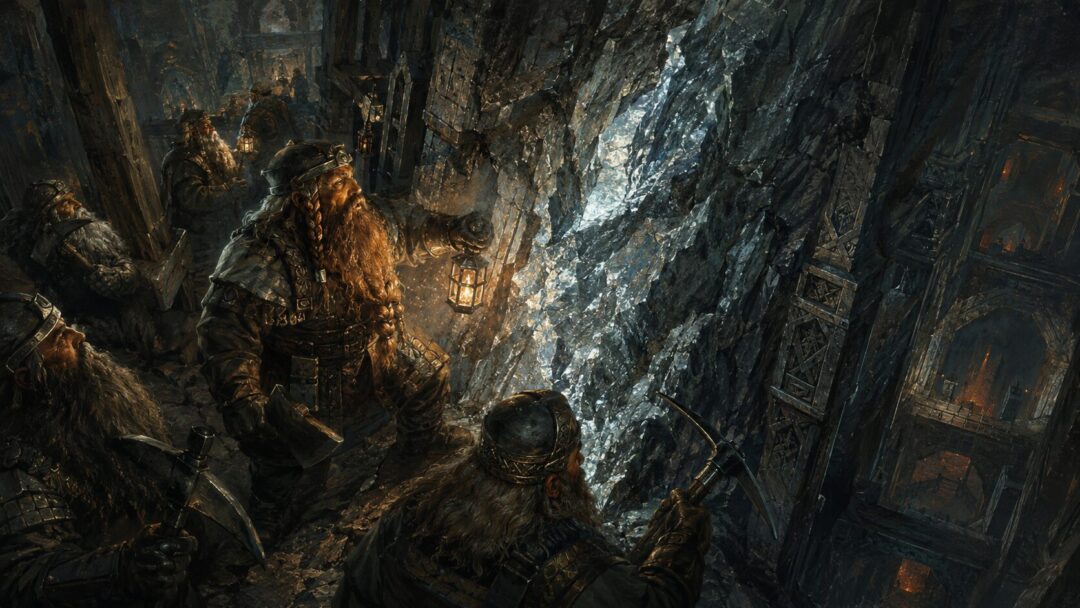
The texts describe mithril as a metal of extraordinary worth: light, beautiful, strong, and beyond price by the end of the Third Age. The famous mail-shirt given to Bilbo, later worn by Frodo, becomes a small symbol of Moria’s lost wealth. Gandalf says its worth was greater than the value of the Shire and everything in it, a line that makes the reader feel just how absurdly precious this hidden treasure was.
Mithril did not merely enrich Khazad-dûm. It made the realm strategically and culturally unique. Dwarven craft was already renowned, but mithril gave Moria something no neighboring power could easily replace. Elves desired it. Dwarves mastered it. The wider world remembered it.
That uniqueness created pressure. When a resource is ordinary, people can stop. When it is irreplaceable, stopping becomes harder. The Dwarves of Khazad-dûm did not dig because they were foolish miners stumbling blindly through stone. They dug because their greatest wealth, their craft, and perhaps their political strength were tied to what lay beneath them.
The famous phrase that they “delved too greedily and too deep” is often treated as the whole explanation. It is important, but it can be too simple if read carelessly. The text does not give us a detailed moral trial of Durin’s Folk. It does not say every Dwarf in Moria was corrupt, or that they knowingly risked awakening a demon. What it shows is a terrible pattern: the deeper they pursued the source of their greatness, the closer they came to something buried far below their knowledge.
Mithril made the descent rational, profitable, glorious, and dangerous at the same time.
That is the tragedy.
The Hidden Enemy Was Older Than Moria
The Balrog later called Durin’s Bane was not created by the Dwarves, and the texts do not support the idea that mithril itself produced it. It was one of the ancient servants of Morgoth, a terror from the wars of the Elder Days. After the ruin of Morgoth’s power, some of his creatures survived by hiding in forgotten places. Durin’s Bane lay concealed beneath the Misty Mountains until the Dwarves uncovered it in the Third Age.
This matters because Moria’s fall was not a simple engineering disaster. The Dwarves did not merely dig into a weak cavern or release poisonous gas. They disturbed an evil from a much older layer of history.
Middle-earth is full of this kind of buried past. The present is never free from what came before. Númenórean ruins, Elven sorrows, dragon-hoards, barrows, old roads, and ancient weapons all remind readers that history is physically present in the world. In Moria, that idea becomes literal. Beneath the shining craft of the Dwarves sleeps a remnant of Morgoth’s shadow.
Khazad-dûm’s greatness required depth. But depth in Middle-earth is never neutral. It can mean memory, treasure, roots, secrecy, and ancient evil. The Dwarves were uniquely capable of going where others could not. Their strength under stone was one of their great gifts. Yet that same gift brought them into contact with a terror no ordinary people would ever have reached.
One reading, then, is that Moria fell because its greatness extended downward into a world no kingdom could fully master.
Pride Was Not the Only Problem — Success Was
It is tempting to say Moria fell because the Dwarves were greedy. There is truth in that if greed means the refusal to stop desiring what should be left alone. But the story is sharper if we notice that Moria’s problem was not failure. It was success.
Khazad-dûm survived for ages. It endured when other kingdoms rose and fell. It had gates, halls, mines, defenses, traditions, and wealth. It was not a fragile settlement. Its people had every reason to trust their craft and their endurance.
That confidence is understandable. The Dwarves were made for stone. Their works outlasted many surface realms. Their halls were not temporary human buildings waiting for weather to ruin them. They carved mountains. They shaped darkness into dwelling. If any people in Middle-earth could believe they understood the deep places, it would be Durin’s Folk.
But success can become a trap when it teaches the wrong lesson. A people who have safely dug deeper for centuries may believe that deeper digging is still safe. A kingdom that has endured many dangers may assume the next danger can also be endured. A mine that has yielded wonders may seem to promise more wonders below.
The texts do not tell us the private motives of Durin VI or his miners. They do not give us a scene where a king ignores a clear warning. So we should be careful. But the broad implication is clear enough: Moria’s prosperity depended on continuing the very activity that exposed it to ruin.
Its greatness created momentum.
The Friendship with Eregion Made Moria Brighter — and More Exposed
Moria’s greatness was not only underground. In the Second Age, Khazad-dûm stood near Eregion, the land of the Elven-smiths. The friendship between the Dwarves of Moria and the Elves of Eregion is one of the most remarkable alliances in Middle-earth. The West-gate itself, with its famous inscription and craft, preserves that memory through the names of Narvi the Dwarf and Celebrimbor the Elf.
That friendship shows Moria at its most luminous. It was not an isolated pit of treasure. It was part of a living network of craft, exchange, and beauty. Elves and Dwarves, so often estranged elsewhere, found common cause through making.
Yet even this brightness carried consequence. Moria’s position made it important. Its wealth and gates connected worlds. Its closeness to Eregion placed it near one of the central dramas of the Second Age: the making of the Rings of Power and Sauron’s war against the Elves.
The Dwarves of Khazad-dûm survived that age, and their gates were shut against Sauron’s forces. But the wider pattern remains: the greater a realm is, the more it matters to powers beyond itself. Moria was not a forgotten village. Its wealth, roads, gates, and alliances made it a prize, a refuge, and a target.
Greatness increases visibility. In Middle-earth, being seen by the powerful is often dangerous.
The Fall Was Sudden, but the Conditions Were Ancient
The immediate catastrophe came in the Third Age, when the Dwarves awakened the Balrog. Durin VI was slain in 1980, and Náin I was slain soon after. The survivors fled, and Khazad-dûm became Moria.
The speed of that collapse is chilling. A realm that had endured for ages was broken by one awakened power. That does not mean its earlier strength was imaginary. It means the danger was of a different order. Stone walls, axes, kingship, wealth, and craft could not solve the problem of a Balrog.
This is one of the most frightening lessons of Moria: not every threat is answerable by the strengths that built your civilization. The Dwarves’ mastery of stone led them deep. Their courage could not make the Balrog harmless. Their wealth could not buy safety. Their halls, once signs of power, became shadows and hiding-places for enemies.
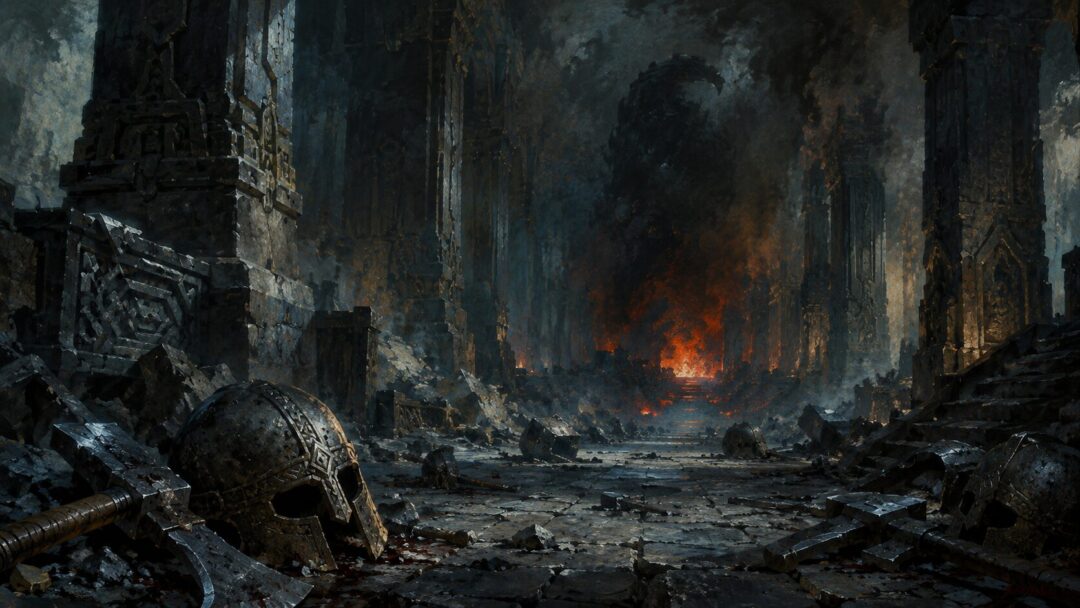
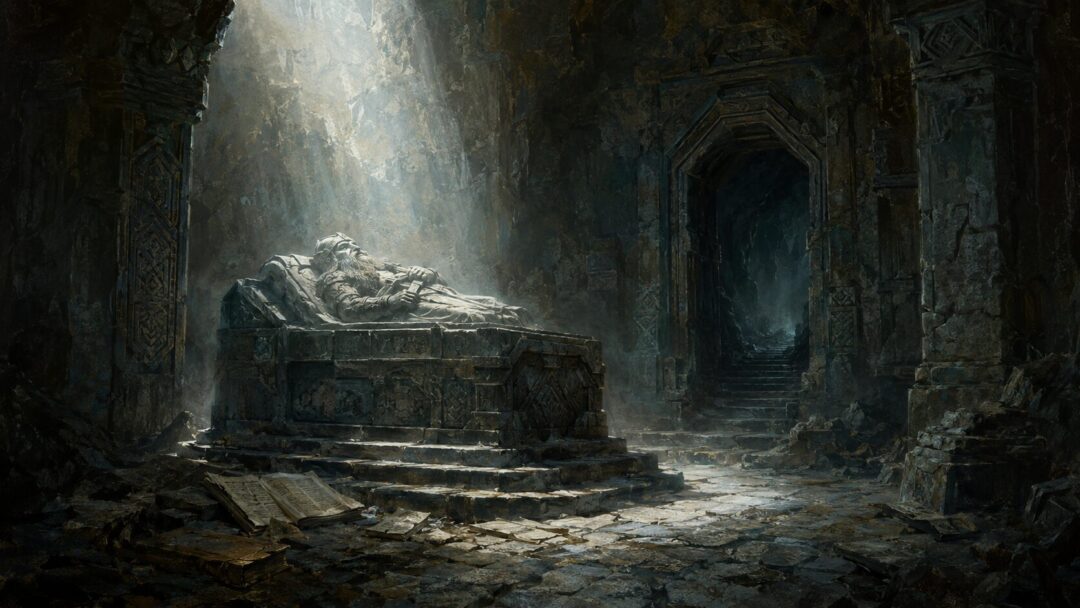
Afterward, Orcs and other evil things occupied parts of Moria. By the time the Fellowship passed through, the old kingdom had become a place of darkness, drums, and fear. Yet the remains of greatness were everywhere: vast halls, carved chambers, ancient roads, and the tomb of Balin in the Chamber of Mazarbul.
The ruin hurts because the glory is still visible.
Balin’s Colony Proved the Wound Had Never Closed
Balin’s attempt to retake Moria in the late Third Age is one of the saddest echoes of the original fall. He had been one of Thorin Oakenshield’s companions, a Dwarf who knew exile, treasure, dragons, and restored kingship. His expedition briefly succeeded in entering Moria, and he was called Lord of Moria. But the colony was destroyed, and the Book of Mazarbul records its desperate final days.
This second tragedy shows that Moria’s greatness remained dangerous even after its fall. The dream of return was powerful enough to draw Dwarves back into a place still haunted by enemies. The texts do not say Balin knew the full nature of Durin’s Bane or expected to defeat it. But the attempt reveals how deeply Khazad-dûm still mattered.
A dead kingdom can still command loyalty. A lost homeland can still shape decisions. A treasure-house can still attract hope.
Balin’s tomb is not only a marker of personal death. It is the sign that Moria’s greatness continued to exert force long after its halls were emptied.
Moria’s Fall Was Not Inevitable Fate — But It Was Tragically Likely
The word “inevitable” must be used carefully. Tolkien’s world allows for choice, mercy, error, courage, and unexpected grace. Nothing in the texts says Khazad-dûm was metaphysically doomed from its founding. The Dwarves were not cursed simply because they were skilled, wealthy, or ambitious.
But once all the conditions are placed together, the fall becomes tragically likely.
A sacred ancestral kingdom lay beneath mountains. Its people were unmatched in mining and stonecraft. Its greatest treasure was hidden in the deep places. Its wealth encouraged further delving. Its identity made abandonment almost unthinkable. Beneath it slept a surviving terror of Morgoth, unknown until too late. After its fall, its memory remained so powerful that later Dwarves risked returning.
Moria’s greatness did not make its fall morally deserved. It made the stakes higher, the temptations stronger, the blindness more understandable, and the loss more devastating.
That is why Moria remains one of the most powerful ruins in Middle-earth. It is not merely a warning against greed. It is a warning that the greatest works of a people can become bound to dangers they do not fully see. The same depth that holds treasure may hold terror. The same memory that preserves identity may resist wisdom. The same confidence that builds wonders may continue one step too far.
Khazad-dûm was magnificent because the Dwarves went deeper than others dared.
Moria was lost because, at last, something in the deep answered.
Sources & Notes
- J.R.R. Tolkien, The Lord of the Rings, Appendix A, III, ‘Durin’s Folk’ — Durin at Kheled-zâram, Khazad-dûm’s central place for Durin’s people, mithril, and the awakening of Durin’s Bane in T.A. 1980.
- J.R.R. Tolkien, The Lord of the Rings, Book II, Chapter 4, ‘A Journey in the Dark’ — Gandalf’s account of Moria’s mithril, its immense value, and the Dwarves who ‘delved too greedily and too deep.’
- J.R.R. Tolkien, The Lord of the Rings, Book II, Chapter 4, ‘A Journey in the Dark’ — the West-gate inscription of Narvi and Celebrimbor, preserving the old friendship between Khazad-dûm and Eregion.
- J.R.R. Tolkien, The Lord of the Rings, Book II, Chapter 5, ‘The Bridge of Khazad-dûm’ — the Chamber of Mazarbul, Balin’s tomb, and the Fellowship’s encounter with the Balrog in the ruined Dwarven realm.
- J.R.R. Tolkien, The Silmarillion, ‘Of the Rings of Power and the Third Age’ — the survival of ancient servants of Morgoth after the Elder Days and the wider Second Age setting around Eregion, Sauron, and the Rings.