Why Lothlórien Felt Outside Time After the Fellowship Entered
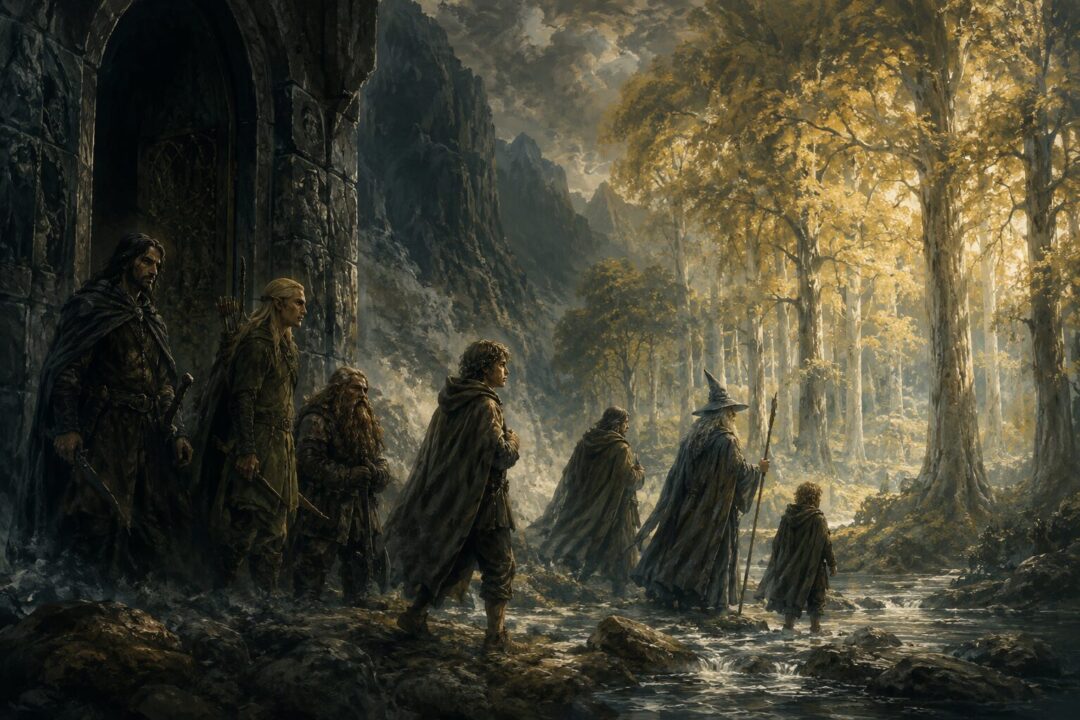
When the Fellowship fled the darkness of Moria and emerged into the woods of Lothlórien, they did not simply enter another forest.
They entered a place where time itself seemed different.
The change is immediate in the narrative. The Company has just endured exhaustion, grief, and terror. Gandalf has fallen in Moria. Orcs and shadows pursue them. Yet after crossing the Silverlode and passing beneath the golden trees, something strange happens. Days seem difficult to measure. Memories sharpen and blur at the same time. The outside world begins to feel distant. Even the members of the Fellowship struggle to explain what they are experiencing.
For many readers, Lothlórien feels almost dreamlike. Yet Tolkien never presents it as an illusion. The forest is real. The people are real. The sense of altered time comes from something deeper: one of the last surviving remnants of an older world that was already fading from Middle-earth.
The Fellowship Notices Time Behaving Differently
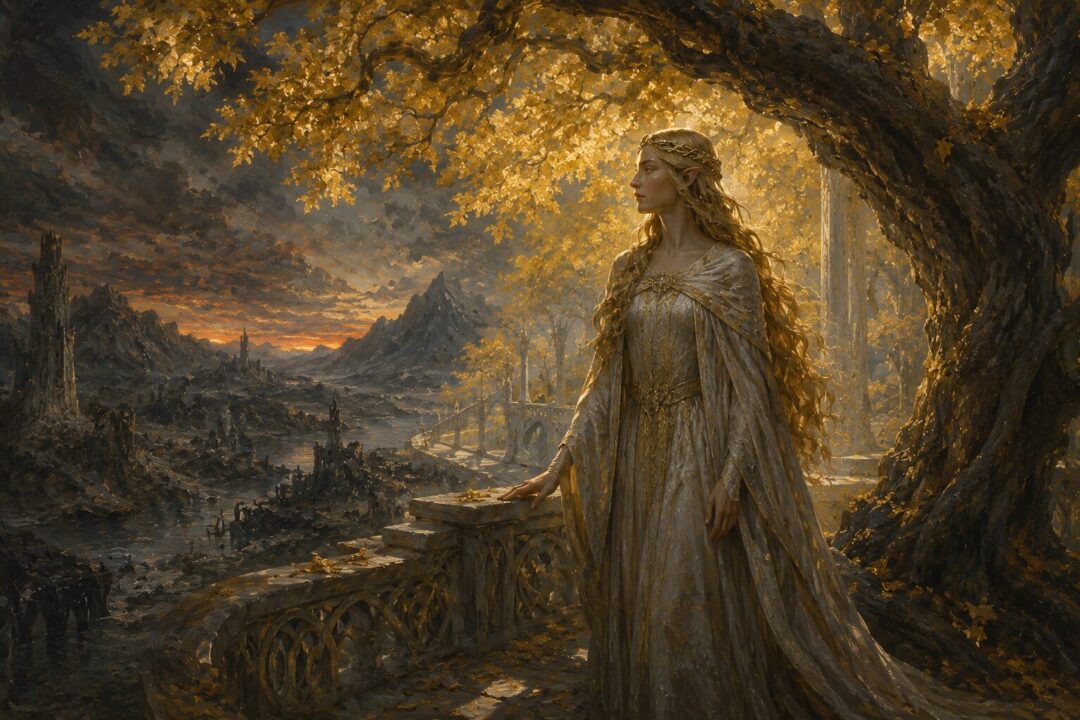
One of the most striking features of the Lothlórien chapters is how often characters comment on time.
While the Fellowship remains in the Golden Wood, they lose their normal sense of days passing. Later, when they depart, they are surprised to discover how much time has actually elapsed.
Sam Gamgee expresses the feeling most clearly. During the stay in Lothlórien, he becomes uncertain whether time is moving quickly or slowly. The days seem full and meaningful, yet they do not feel like ordinary days. The experience is neither sleep nor waking life as the travelers understand it elsewhere.
Importantly, Tolkien never states that time literally stops in Lothlórien. The Fellowship ages normally. The moon and stars continue their courses. The outside world continues to move forward.
Instead, the text presents a change in perception. Time is experienced differently because the environment itself is different from almost anywhere else remaining in Middle-earth.
To understand why, it is necessary to understand what Lothlórien actually was.
Lothlórien Preserved Something That Was Already Vanishing
By the end of the Third Age, most of Middle-earth exists under the pressure of decline.
Ancient kingdoms have fallen. Great cities lie in ruins. Languages are disappearing. The power of the Elves is fading. Even the Wise know that their age is nearing its end.
Lothlórien stands in contrast to this process.
Within its borders, much of the beauty and memory of earlier ages has been preserved. Visitors encounter not merely a woodland realm but a surviving fragment of a much older reality.
The Elves of Lothlórien are among the most ancient peoples still dwelling east of the Sea. Many have memories stretching back centuries. Some may even remember events far older than the kingdoms of Men. Their songs, customs, architecture, and way of life are deeply connected to the Elder Days.
As a result, entering Lothlórien feels less like traveling to another place and more like stepping into another age.
The Fellowship is moving through the same world geographically, but culturally and spiritually they have crossed into something much older.
The Power of Galadriel's Ring
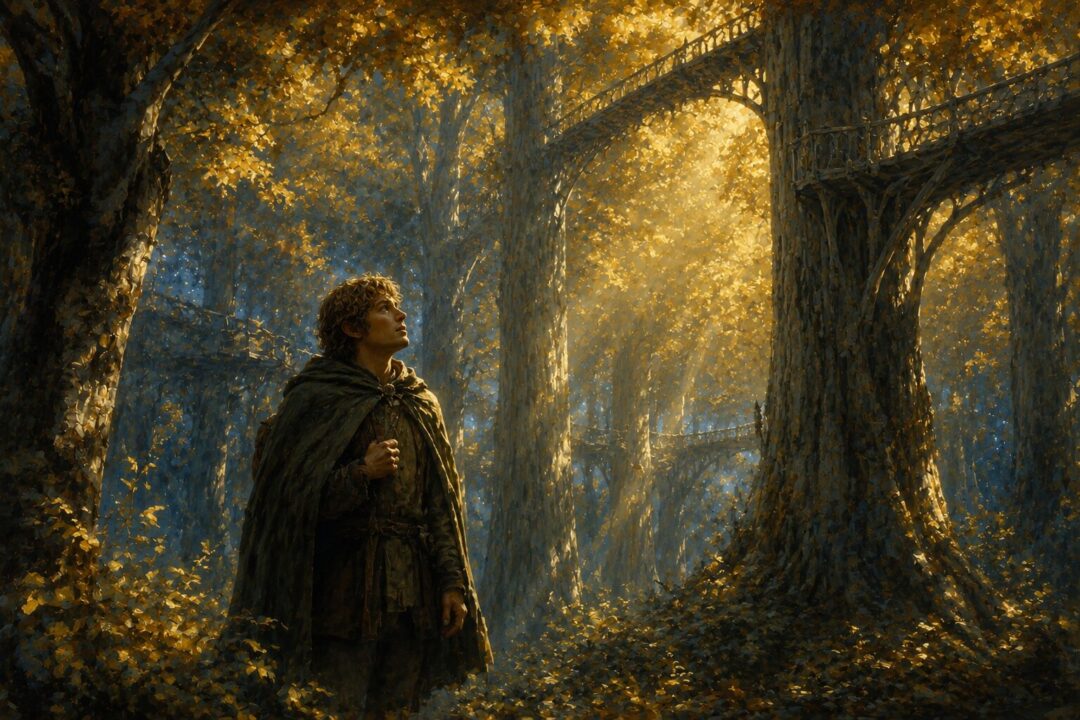
The greatest reason Lothlórien feels outside time is the presence of Galadriel's Ring.
Galadriel bears Nenya, one of the Three Rings of the Elves.
Unlike the One Ring, the Three were not primarily instruments of domination. Their powers are associated with preservation, healing, and resistance against decay. Although they are connected indirectly to Sauron's Ring-making tradition, they were used by the Elves to protect what they loved from the weariness of time.
Lothlórien represents perhaps the clearest example of this preservation.
The text never provides a technical explanation of exactly how Nenya works. Tolkien generally avoids turning magic into a mechanical system. However, the narrative repeatedly associates Galadriel's realm with endurance, memory, beauty, and resistance to change.
The effect is not immortality for the land. Rather, it is a slowing of loss.
Things that would normally fade seem to endure. Beauty remains unspoiled. Ancient memories remain vivid. The passage of years feels less destructive than elsewhere in Middle-earth.
In this sense, Lothlórien is not outside time entirely. It exists in a state of resistance against time's normal effects.
A Land Built Around Memory
Memory is one of the central themes of Lothlórien.
Throughout Tolkien's legendarium, memory possesses immense importance. The Elves do not relate to the past as Men do. Their lives are so long that events centuries earlier may remain emotionally immediate.
Lothlórien reflects this Elvish relationship with memory.
The landscape itself seems saturated with remembrance. Ancient songs survive. Names preserve forgotten histories. Trees connect the present to distant ages. Even ordinary conversations often carry echoes of events long past.
For mortal visitors, this creates an unusual experience.
Human beings normally separate the past from the present. For the Elves, the distinction is less absolute. Old griefs remain alive. Old joys remain vivid. Ancient beauty continues to matter.
When the Fellowship enters this environment, they briefly experience the world through an Elvish lens. The result is a sensation that past and present have drawn closer together.
Time feels strange because memory has become unusually powerful.
The Contrast With the Outside World
The effect of Lothlórien becomes clearer when compared with the lands surrounding it.
Outside the Golden Wood lies a dangerous and changing world.
To the east stands the growing threat of Sauron. To the south, kingdoms struggle against decline. To the north are scars left by centuries of war. Everywhere, change advances relentlessly.
Inside Lothlórien, however, visitors encounter stability.
The mallorn trees bloom in golden splendor. Songs continue unchanged through generations. Beauty remains protected from many of the forces damaging the wider world.
This contrast magnifies the sense of altered time.
Imagine leaving a world defined by constant crisis and entering a place where nothing seems hurried, where memory is treasured rather than discarded, and where ancient traditions still flourish. Even without supernatural influence, such a place would feel different.
Combined with the power of Galadriel and the deep history of the Elves, the effect becomes profound.
Why Mortals React So Strongly
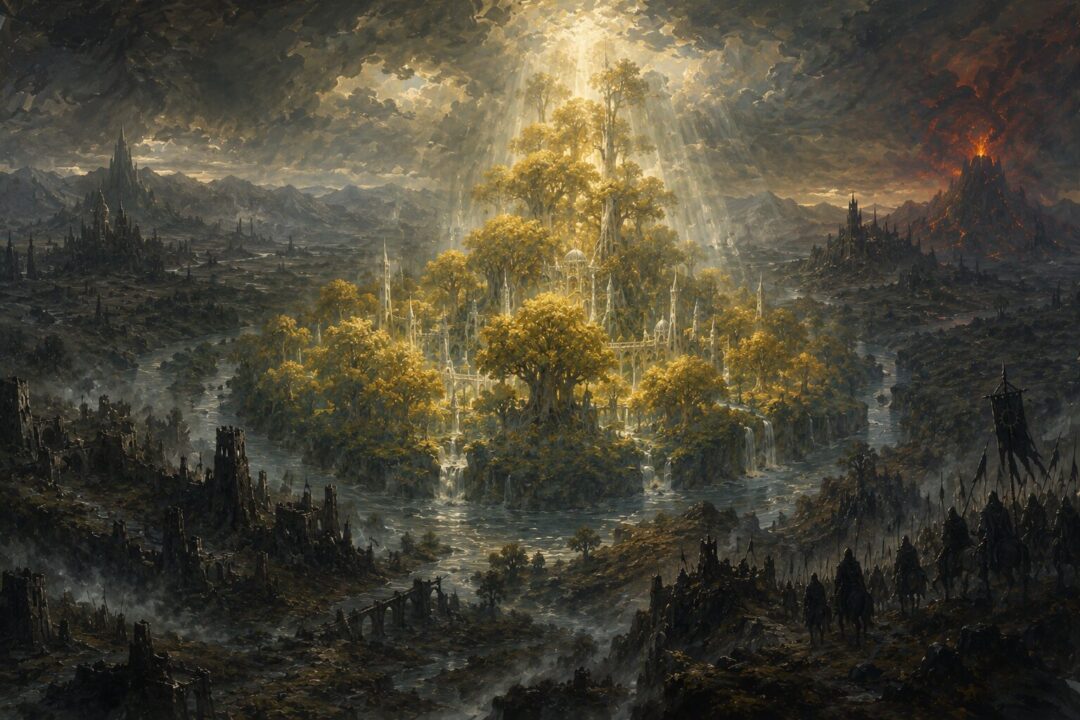
The members of the Fellowship do not all experience Lothlórien in exactly the same way.
Legolas appears entirely at home. The realm feels natural to him because it reflects aspects of Elvish existence he already understands.
The Hobbits are fascinated and bewildered. Sam, in particular, senses beauty that exceeds his ability to describe. Yet he also struggles to understand the strange relationship between memory and time surrounding him.
Aragorn experiences Lothlórien differently still. He has deep ties to the Elves and a greater understanding of their history. For him, the realm carries both wonder and sadness because he knows its preservation cannot last forever.
This difference matters.
Mortals are especially sensitive to Lothlórien because they are creatures whose lives are shaped by time. Human beings and Hobbits experience aging, loss, and change in ways fundamentally different from the Elves.
When mortals encounter a place that seems to resist these forces, the experience naturally feels uncanny.
They are briefly touching a mode of existence that is not truly theirs.
The Hidden Sadness Behind the Beauty
One reason readers often remember Lothlórien so vividly is that its beauty contains an underlying tragedy.
The realm feels timeless, but it is not eternal.
The preservation achieved there depends heavily upon the power of the Three Rings. Once the One Ring is destroyed, the Three lose their sustaining power as well.
Galadriel understands this long before the War of the Ring ends.
The victory over Sauron will save Middle-earth, but it will also mark the beginning of the end for many of the greatest Elvish realms. The age of preservation cannot continue indefinitely.
This reality transforms Lothlórien from a paradise into something more poignant.
The Golden Wood is beautiful precisely because it is passing away.
The Fellowship experiences it at one of the last moments when such a place can still exist.
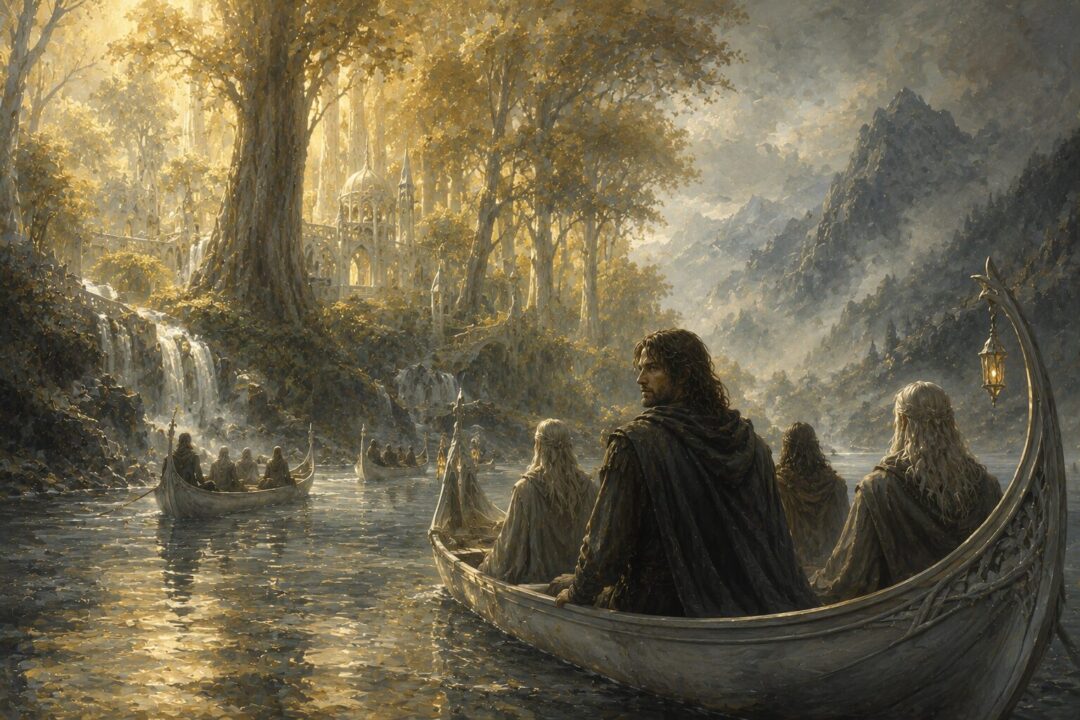
A Glimpse of What Middle-earth Once Was
Perhaps the deepest explanation for Lothlórien's unusual atmosphere is that it offers a glimpse into an older Middle-earth.
The Fellowship spends much of its journey traveling through lands marked by fragmentation, loss, and decline. Ancient greatness survives mostly in ruins, stories, and memories.
Lothlórien is different.
For a brief time, the travelers encounter a realm where beauty, memory, wisdom, and continuity still endure together. The experience is so rare that ordinary measures of time seem inadequate.
The sensation of being "outside time" is therefore not simply magical. It is emotional, historical, and spiritual.
The Fellowship enters a surviving fragment of the Elder Days.
For a few precious weeks, they dwell in a place where the wounds of history have been held at bay, where memory remains alive, and where the long defeat of the Elves has not yet fully claimed its final victory.
That is why leaving Lothlórien feels almost like waking from a dream.
Not because the Golden Wood was unreal.
But because the rest of Middle-earth had already moved on, while Lothlórien still remembered what had been lost.
Sources & Notes
- J.R.R. Tolkien, The Lord of the Rings, Book II, Chapter 6, “Lothlórien” — the Fellowship enters the Golden Wood after Moria and encounters a realm described as unstained and strangely removed from ordinary change.
- J.R.R. Tolkien, The Lord of the Rings, Book II, Chapter 7, “The Mirror of Galadriel” — Galadriel’s realm, memory, testing, and the revealed presence of Nenya frame Lórien’s protected, otherworldly quality.
- J.R.R. Tolkien, The Lord of the Rings, Book II, Chapter 8, “Farewell to Lórien” — the Company’s departure and later reckoning of dates support the article’s point that time in Lórien is experienced unusually rather than simply stopped.
- J.R.R. Tolkien, The Lord of the Rings, Appendix B, “The Tale of Years” — the chronology places the Fellowship in Lórien from mid-January to mid-February, grounding the elapsed-time detail.
- J.R.R. Tolkien, The Silmarillion, “Of the Rings of Power and the Third Age” — explains that the Three Rings were used for preservation, healing, and warding off decay, the key context for Nenya’s effect on Lórien.
- J.R.R. Tolkien, Unfinished Tales, “The History of Galadriel and Celeborn” — gives additional background on Galadriel, Celeborn, Lórien, and the Elvish desire to preserve beauty in Middle-earth.