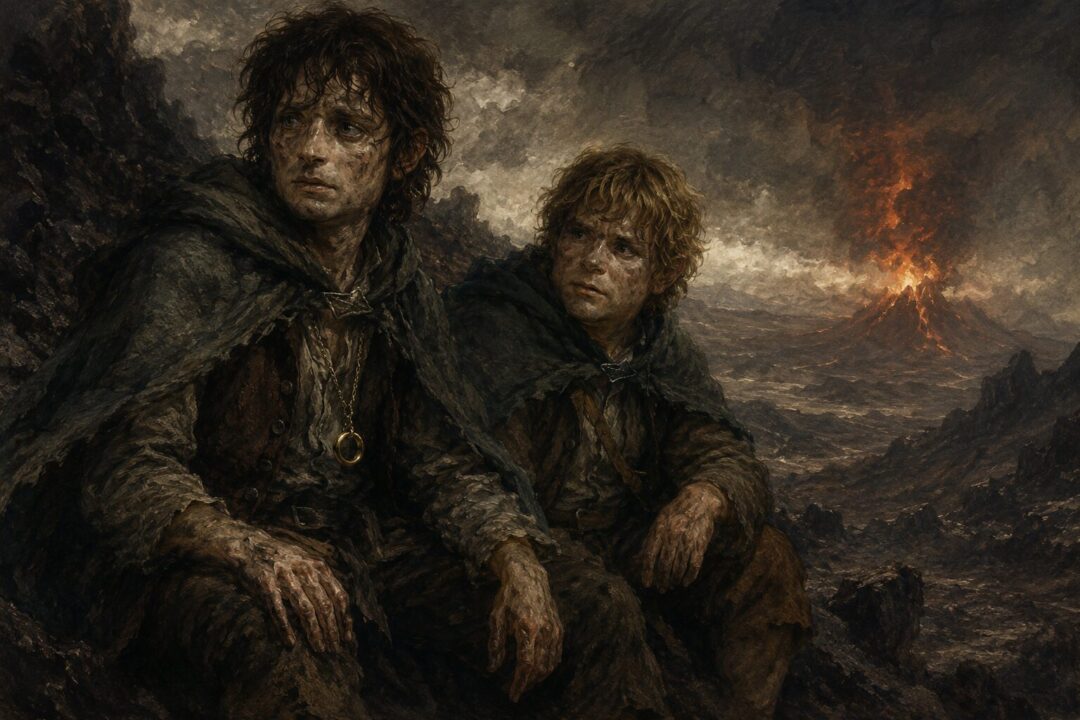
Why did Sam and Frodo seem to experience the One Ring differently?
At first glance, the answer appears obvious. Frodo carried the Ring longer, suffered more from it, and ultimately bore a burden no one else could fully understand. Yet there is a quieter detail hidden in the story. When Sam briefly becomes Ring-bearer in Mordor, he appears to perceive the Ring in a way that Frodo often does not. The Ring seems to speak to his desires, offering visions of power, greatness, and transformation. Sam recognizes the temptation and rejects it.
Frodo's relationship with the Ring is stranger.
As the Quest progresses, Frodo does not primarily struggle with dreams of conquest or grand ambition. Instead, he experiences exhaustion, isolation, physical pain, and a growing inability to separate himself from the Ring's influence. The Ring reaches both hobbits, but not in exactly the same way.
The difference reveals one of the most subtle truths about the Ring's corruption: it did not tempt everyone with the same voice.
The Ring Was Not a Talking Object
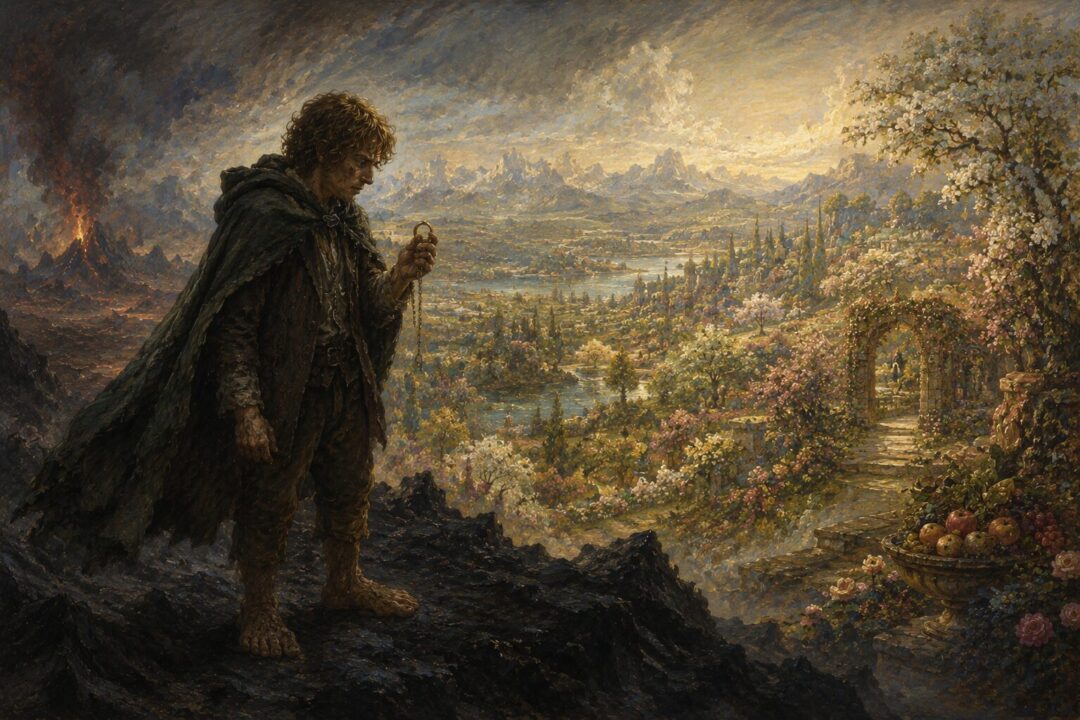
Readers sometimes imagine the Ring literally speaking into the minds of its bearers. The texts suggest something more complex.
The Ring is repeatedly shown working through desire, fear, ambition, and weakness. It magnifies impulses that already exist within a person. It does not appear to possess a separate personality that converses openly with its victims. Instead, it offers possibilities.
This is why different characters react to it differently.
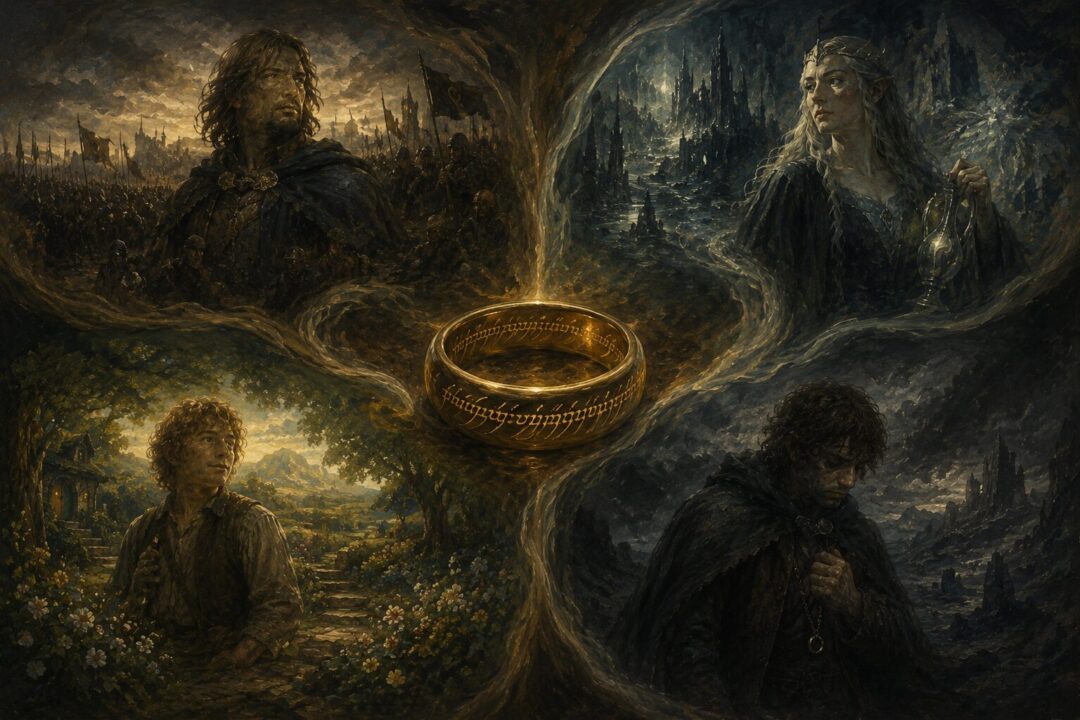
When Gandalf refuses the Ring, he fears becoming a tyrant who would try to do good through domination. Galadriel imagines becoming a queen both beautiful and terrible. Boromir sees a weapon that could save Gondor. Even Gollum's obsession takes a form suited to his own possessiveness and isolation.
The Ring does not offer a single promise. It studies the person holding it.
Sam and Frodo therefore encounter the same evil object, but filtered through profoundly different circumstances.
Sam's Moment of Temptation in Mordor
The clearest evidence comes after the apparent death of Frodo at Cirith Ungol.
Believing his master dead, Sam takes the Ring and continues the Quest alone. During this period Tolkien gives readers one of the rare direct glimpses into how the Ring attempts to corrupt a fundamentally good person.
The Ring presents Sam with extraordinary possibilities.
He imagines himself as a mighty hero capable of overthrowing Sauron. Vast landscapes become gardens under his command. The humble gardener of the Shire is offered the chance to reshape the entire world according to his vision.
Yet the temptation immediately encounters a problem.
Sam does not actually want those things.
His deepest desire is astonishingly small compared to the ambitions of kings and warriors. He wants his garden. He wants home. He wants Frodo.
The fantasy collapses because Sam's heart remains rooted in ordinary affection rather than domination. He recognizes that one small garden is enough for him. The Ring offers empire, but Sam values stewardship more than control.
This moment is often remembered because Sam succeeds where many greater figures might have failed. But it also reveals something important: the Ring approaches him through temptation.
It tries to persuade him.
Frodo Had Moved Beyond Simple Temptation
By the time Sam briefly bears the Ring, Frodo has carried it for many months.
His situation is fundamentally different.
When Frodo first leaves the Shire, he experiences temptations that resemble those faced by other characters. He hesitates to surrender the Ring. He feels its attraction. He increasingly desires to keep it close.
But as the journey continues, the struggle changes.
The Ring becomes less an external temptation and more an internal burden. Frodo's suffering grows psychological, spiritual, and physical. He experiences increasing difficulty resisting the urge to claim the Ring or use it.
This is particularly visible after Weathertop and even more after the journey into Mordor. The Morgul wound, constant fear, hunger, exhaustion, and proximity to Sauron's realm all intensify the Ring's hold.
The Ring no longer needs to entice Frodo with visions of glory.
It already possesses much of his attention.
In a sense, Frodo has moved to a later stage of corruption than Sam. The battle is no longer over whether he wants power. The battle is over whether he can remain himself at all.
The Ring Exploited Different Weaknesses
One reason Sam hears promises while Frodo experiences pressure is that their vulnerabilities are different.
Sam's weakness is comparatively simple. He loves growing things, protecting those he cares about, and doing good work. The Ring inflates these virtues into fantasies of world-shaping authority.
Frodo's weakness lies elsewhere.
He carries responsibility.
From the Council of Elrond onward, he bears the knowledge that the fate of Middle-earth rests largely upon his success. Every setback, every injury, every delay becomes part of that burden.
The Ring therefore exploits duty as much as desire.
Instead of offering Frodo magnificent gardens or kingdoms, it gradually convinces him that separation from the Ring is impossible. The object becomes intertwined with his identity. The burden he carries slowly transforms into possession.
This distinction matters.
Sam is still being courted.
Frodo is being consumed.
Why Hobbits Resisted Longer Than Others
The contrast between Sam and Frodo also highlights why hobbits proved unusually resistant to the Ring in the first place.
Neither hobbit possesses large political ambitions. Neither dreams of ruling nations. Neither seeks military glory.
This relative simplicity makes the Ring's work more difficult.
The Ring is extraordinarily effective when it can exploit a desire for power. Boromir falls quickly because he already seeks a means to defend Gondor. Saruman falls because he wishes to rival Sauron. Countless rulers throughout history might have been vulnerable for similar reasons.
Hobbits provide less material for corruption.
Yet resistance is not immunity.
The Ring eventually adapts to Frodo's circumstances. Rather than seducing him through dreams of kingship, it attacks endurance itself. The Quest becomes a contest between finite strength and an infinite pressure that never relents.
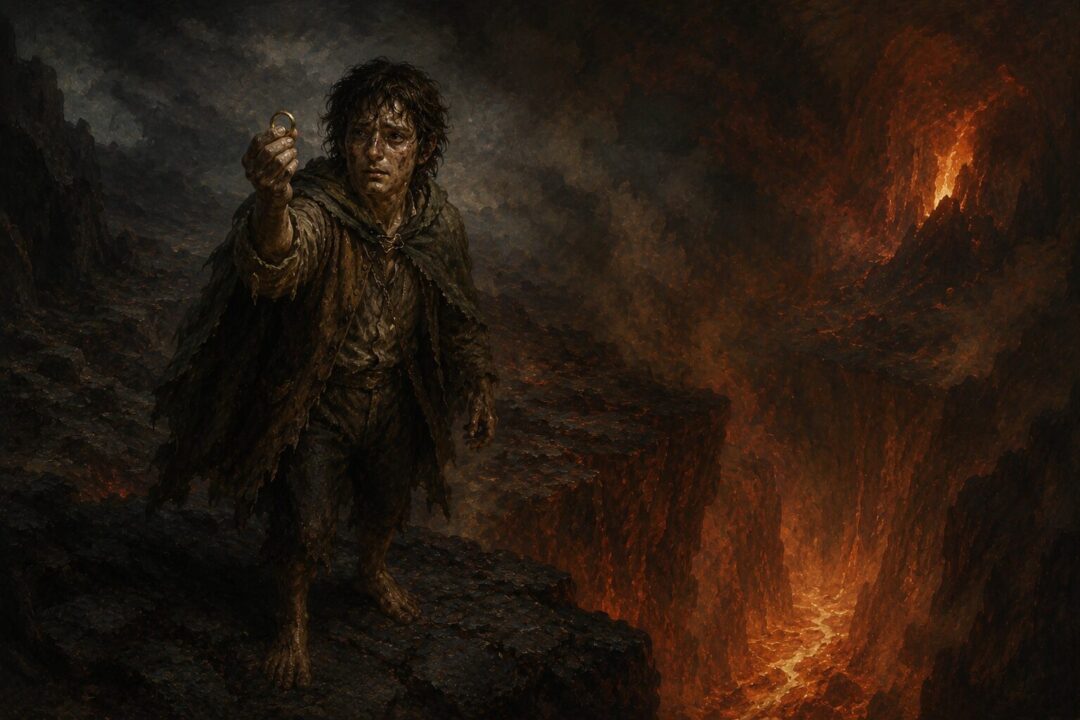
This helps explain why Frodo's eventual failure at Mount Doom is presented with such tragedy and compassion.
The question is not why he failed.
The question is how he endured so long.
The Importance of Time
One overlooked factor is duration.
Sam carries the Ring only briefly.
Frodo carries it for roughly seventeen years after Bilbo leaves the Shire, though for most of that time the Ring remains relatively dormant because Sauron has not yet fully moved against him. Even restricting attention to the Quest itself, Frodo bears the Ring across enormous physical and spiritual trials.
The Ring's influence accumulates.
Characters who encounter it briefly often perceive temptation in a recognizable form. They imagine power, victory, justice, or greatness.
Long-term bearers experience something more dangerous.
Bilbo struggles to surrender the Ring after decades of possession. Gollum becomes almost entirely defined by it. Frodo increasingly identifies himself with the burden he carries.
By the time Frodo reaches Mordor, he is fighting a battle that Sam never has to face.
Sam sees the bait.
Frodo lives inside the trap.
The Mercy Hidden in Sam's Experience
There is another reason the contrast matters.
Sam's victory over temptation demonstrates that the Ring is not irresistible in every moment. Choices still matter. Character still matters.
When Sam rejects the fantasy of becoming a world-transforming hero, he shows that humility remains a genuine defense against corruption.
Yet the story carefully avoids turning this into a judgment against Frodo.
Sam encounters the Ring at one stage of its work.
Frodo encounters it at another.
The achievement of one does not diminish the suffering of the other.
In fact, Sam's brief experience may help readers understand the scale of what Frodo endured. If the Ring could generate such powerful visions after only a short period in Sam's possession, what must months of exposure have done to Frodo deep within Mordor, under the Eye's growing attention?
The text never fully answers that question.
Instead, it invites sympathy.
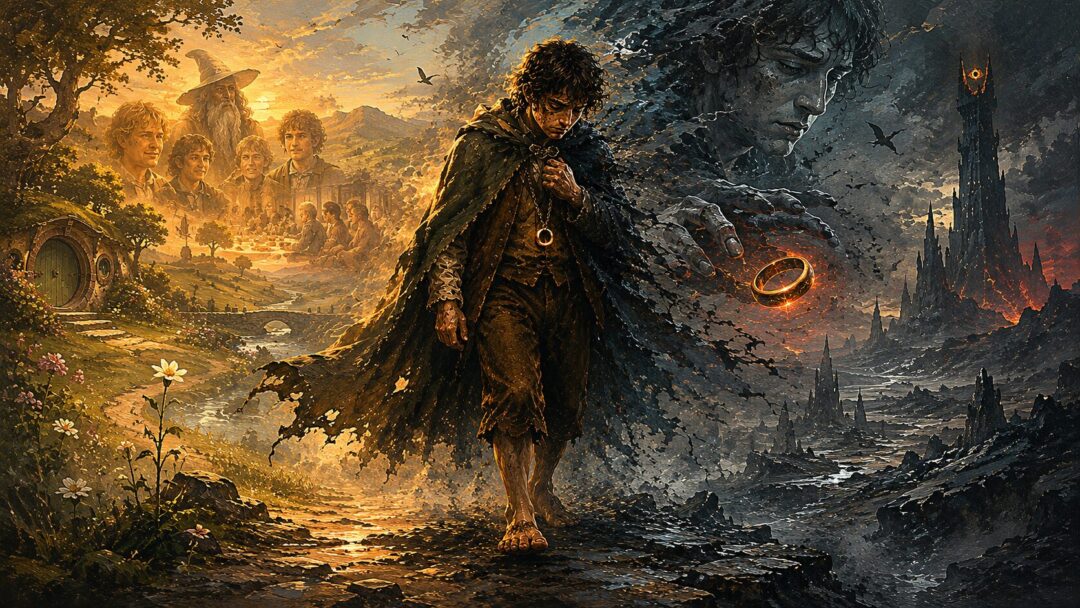
Why Frodo Could Not Hear the Ring the Same Way Sam Did
The simplest answer is that Frodo and Sam were not standing in the same place when the Ring reached for them.
Sam encountered temptation.
Frodo encountered possession.
The Ring tailored its influence to each bearer, drawing upon existing desires, fears, and circumstances. For Sam, that meant dreams of heroic greatness and gardens spanning the world. For Frodo, whose resistance had been worn down by years of burden and months of agony, the Ring no longer needed grand promises.
Its victory would come through attachment.
By the end of the Quest, Frodo does not fail because he secretly wanted a throne or an empire. The tragedy is far more profound. The Ring had become part of him through suffering, endurance, and relentless pressure.
Sam could still hear what the Ring offered.
Frodo had reached the point where the Ring no longer needed to offer anything at all.
That distinction reveals one of the deepest truths in The Lord of the Rings: corruption is not always a sudden fall. Sometimes it is a long erosion of the self, resisted with extraordinary courage until resistance itself is nearly exhausted.
Sources & Notes
- J.R.R. Tolkien, The Lord of the Rings, Book I, Chapter 2, "The Shadow of the Past" — Gandalf explains how the Ring preserves, possesses, and acts through the desires of its bearers.
- J.R.R. Tolkien, The Lord of the Rings, Book II, Chapter 2, "The Council of Elrond" — Frodo accepts the burden of carrying the Ring after the Council weighs its danger and its power to corrupt.
- J.R.R. Tolkien, The Lord of the Rings, Book II, Chapter 7, "The Mirror of Galadriel" — Galadriel's refusal shows how the Ring can transform even a desire to defend and order the world into domination.
- J.R.R. Tolkien, The Lord of the Rings, Book VI, Chapter 1, "The Tower of Cirith Ungol" — Sam's brief possession of the Ring produces visions of heroic power and a garden-like Mordor, which his humility rejects.
- J.R.R. Tolkien, The Lord of the Rings, Book VI, Chapter 3, "Mount Doom" — Frodo's final claim of the Ring shows the culmination of its pressure after long endurance rather than a simple wish for conquest.
- J.R.R. Tolkien, Letter 246 — Tolkien's discussion of Frodo's failure emphasizes the overwhelming pressure at the Cracks of Doom and treats Frodo with pity rather than condemnation.