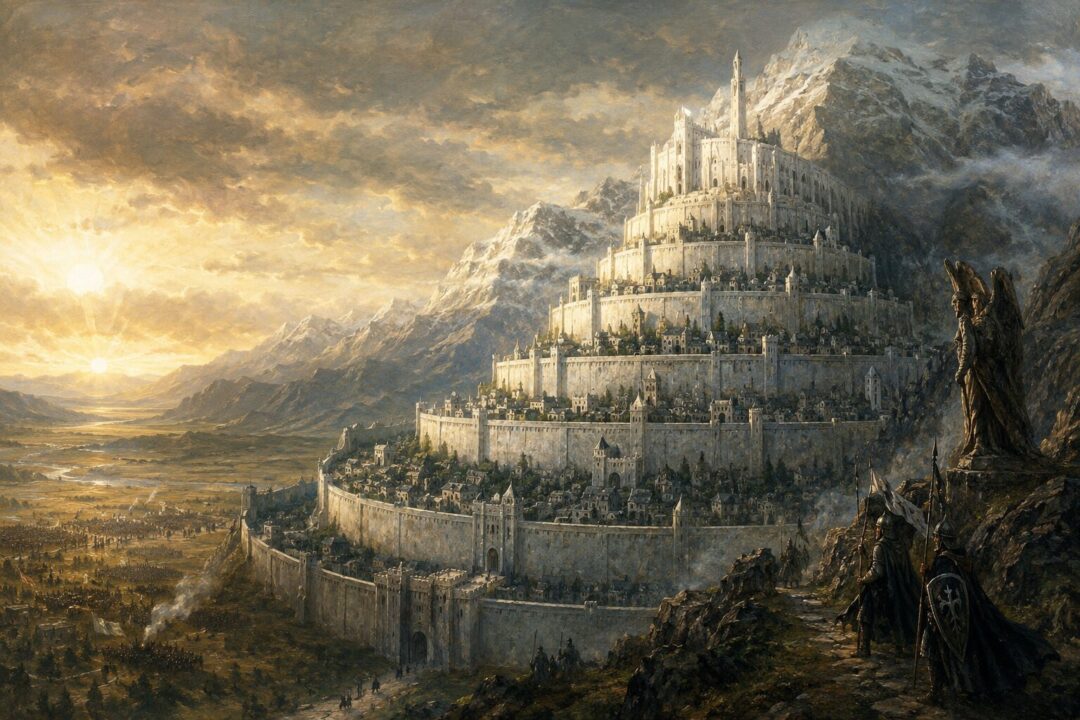
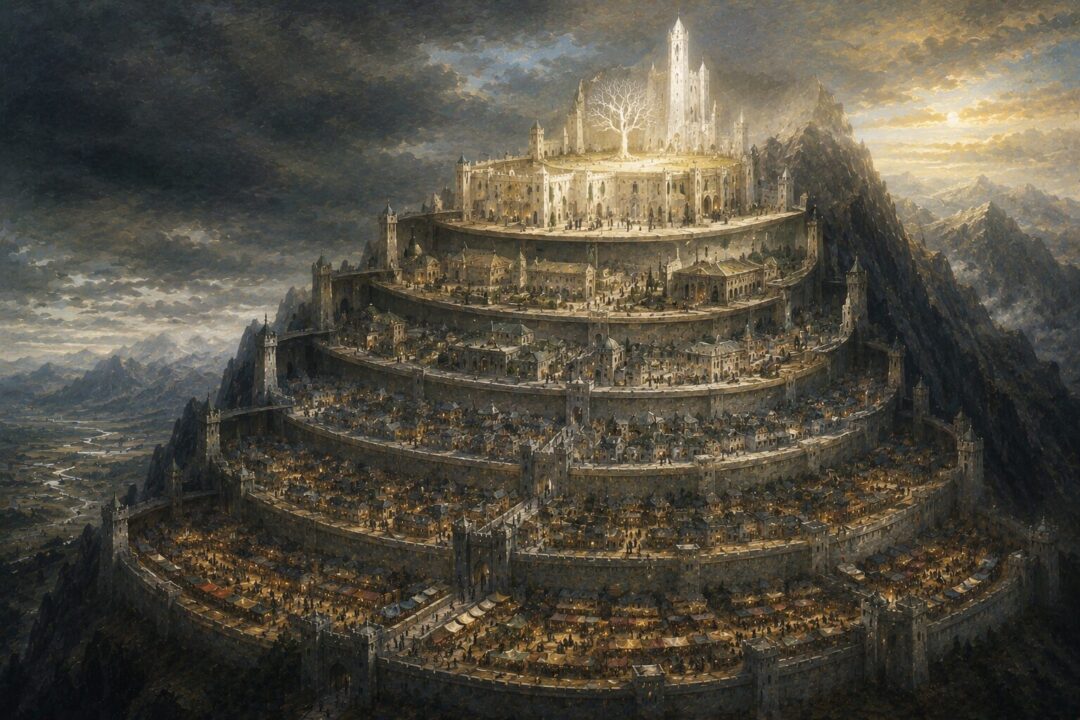
When readers first encounter Minas Tirith, what usually stands out is its sheer grandeur: a white city carved into the side of a mountain, crowned by a shining tower and defended by walls that seem almost impossible to breach. Yet one of its most distinctive features is often overlooked. Minas Tirith was not built as a single fortified city. It was built in seven ascending levels, each enclosed by its own wall and entered through its own gate.
At first glance, this might seem like a practical military design. In part, it was. But the seven levels reveal something deeper about Gondor itself. They show how the people of the West understood power, security, and kingship. The city was not merely protecting people from attack. It was protecting layers of civilization, memory, authority, and identity.
By the end of the Third Age, Minas Tirith stood as the last great symbol of Númenórean civilization in Middle-earth. Its seven levels reflected that responsibility. The higher one climbed, the closer one came to the heart of Gondor—and the things the city considered most precious.
A Fortress Built Into the Mountain
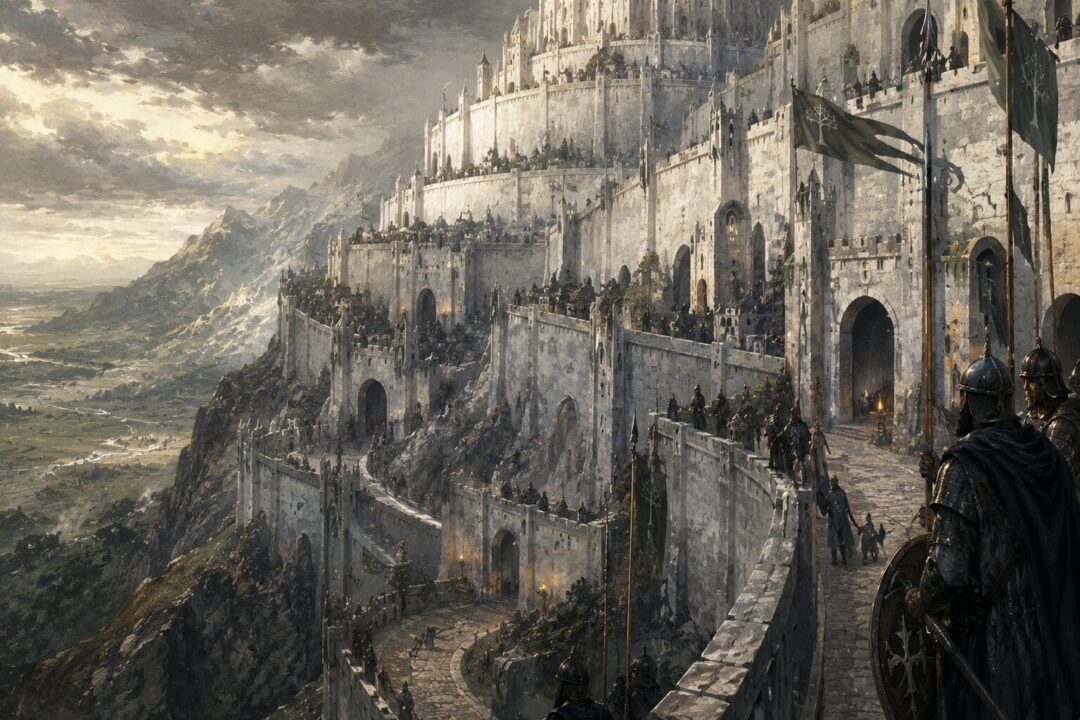
Minas Tirith was constructed on the eastern spur of Mindolluin, the easternmost peak of the White Mountains. Unlike many cities that expand outward across flat land, Minas Tirith rose upward. Tolkien describes seven walls built into the hillside, with each level reaching higher than the one below.
An important detail often missed is that the gates of these levels were not aligned directly above one another. Instead, each gate faced a different direction. An attacker who breached one gate could not simply charge straight through the city. They would have to navigate a winding ascent while remaining exposed to defenders positioned above.
This arrangement made military sense, but it also created a symbolic journey. Moving upward through Minas Tirith meant passing through increasingly important and protected spaces. The city itself functioned almost like a hierarchy of values built in stone.
The lowest circles housed much of the population and commerce. The highest circles contained the institutions upon which Gondor's survival depended.
The First Levels Protected the Life of the City
The lower circles of Minas Tirith were where ordinary life unfolded.
Craftsmen worked there. Merchants conducted trade. Families lived within the protection of the walls. During times of danger, refugees from the surrounding lands could seek shelter behind the city's defenses.
Although Tolkien provides limited detail about the exact arrangement of every district, the narrative makes clear that the lower levels contained the bulk of the city's inhabitants. These circles represented what cities traditionally protect: people, homes, food supplies, workshops, and economic activity.
This is one reason the city's design was so effective. Even if an enemy managed to penetrate the outer defenses, the destruction of the first level would not immediately doom Gondor. The city could continue resisting from above.
The seven-level structure created depth rather than dependence upon a single wall. Every higher circle became another defensive position.
But the upper levels protected more than military assets.
The Middle Levels Protected Governance and Continuity
As one ascended through Minas Tirith, the city's role gradually changed.
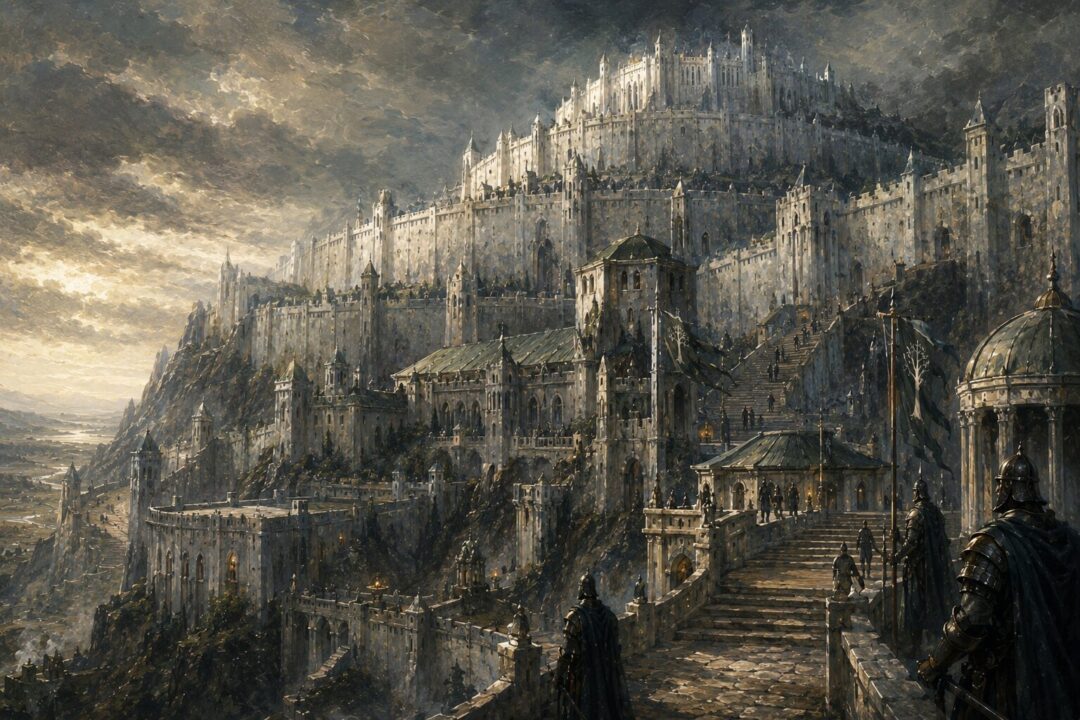
The upper circles were less crowded and increasingly associated with administration, leadership, and the machinery of government. Here lived many of Gondor's nobles, officials, and those responsible for maintaining the realm.
This arrangement reflected a recurring pattern in Númenórean culture. Throughout Gondor's history, important institutions were often physically elevated above ordinary settlements. Height conveyed authority, but it also provided security.
The Stewards ruled from Minas Tirith for centuries after the disappearance of the kings. During that long period, the city became more than a military stronghold. It became the administrative heart of a vast kingdom struggling to preserve its inheritance against centuries of decline.
The middle and upper circles therefore protected continuity itself. Even if war ravaged the Pelennor Fields, Gondor's governing structure could continue functioning from within the city.
This mattered enormously because Gondor's greatest challenge was not a single invasion. It was gradual erosion across centuries. Population declined. Territories were lost. Enemies multiplied. The city increasingly became the vessel carrying the memory of a greater age.
The Sixth Level Protected the House of the Stewards
One of the most important locations within Minas Tirith stood on the sixth level: the House of the Stewards.
By the War of the Ring, the Stewards had ruled Gondor for nearly a thousand years in the absence of the kings. Although they claimed authority only as caretakers of the throne, they carried the burden of preserving the kingdom through some of its darkest centuries.
The placement of the Steward's residence high within the city reveals its significance.
The ruler of Gondor was protected not merely by walls but by multiple successive layers of defense. Any enemy attempting to reach the Steward would need to overcome numerous fortified positions first.
This was not unique to Minas Tirith. Throughout history, rulers often occupied the most defensible part of a stronghold. Yet in Gondor's case, there was an additional symbolic element. The Steward represented the endurance of lawful authority.
The city protected him because the collapse of governance could prove as dangerous as military defeat.
When Denethor succumbed to despair during the War of the Ring, readers see how fragile that continuity had become. Minas Tirith's defenses could hold against armies, but no wall could entirely protect the realm from hopelessness within its leadership.
The Seventh Level Protected Gondor's Sacred Heart
At the summit of Minas Tirith stood the seventh and highest circle.
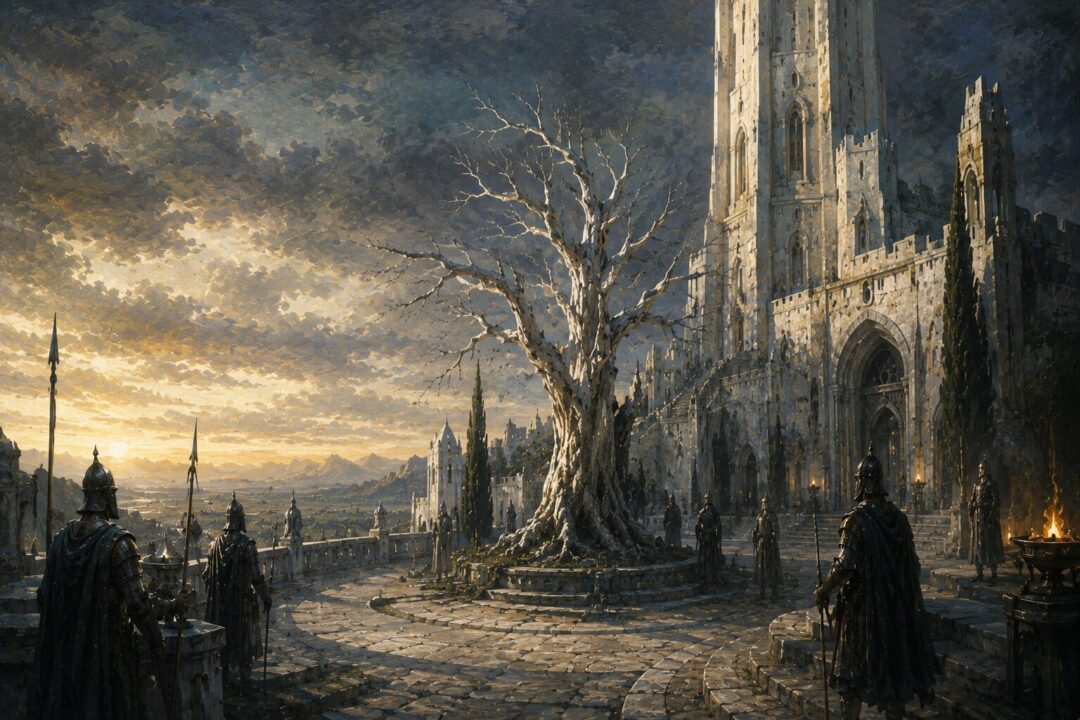
Here were located the White Tower, the Tower Hall, and the Court of the Fountain. This was the true heart of Gondor.
The White Tower was the city's central symbol of authority. It stood upon the highest point accessible within the city, visible across great distances. For generations it represented the enduring legacy of Númenor and the authority of the realm.
Nearby stood the White Tree.
By the end of the Third Age, the Tree was dead, yet it remained standing. This detail reveals much about Gondor's values. The people did not remove it simply because it no longer flourished. The dead tree remained because it embodied memory, legitimacy, and hope.
The seventh level therefore protected something beyond practical governance. It protected symbols.
Modern readers sometimes underestimate the importance of symbols during wartime. Yet throughout Gondor's history, legitimacy mattered enormously. The White Tree connected the kingdom to its ancient heritage. The Tower represented authority. The high court represented the continuity of the realm itself.
If these were lost, something more profound than military defeat might occur. Gondor could lose its identity.
Why the Citadel Was the Final Objective
The design of Minas Tirith becomes especially meaningful during the Battle of the Pelennor Fields.
The forces of Mordor did not merely seek to enter the city. Their ultimate objective was the Citadel on the highest level.
This reveals what the defenders understood all along. The lower circles were important, but the city's true center lay above.
Even after the Great Gate was breached by the Lord of the Nazgûl, the battle was not automatically won. Multiple defensive layers still remained. The city had been designed to absorb catastrophic damage while continuing to resist.
The attackers would have needed to fight upward through increasingly narrow and defensible positions.
In practical terms, the seven levels transformed a single siege into a sequence of smaller battles.
In symbolic terms, each level represented another barrier protecting Gondor's history and identity from annihilation.
The Seven Levels Reflected the Philosophy of Gondor
One interpretation strongly supported by the city's design is that Minas Tirith embodied how Gondor viewed civilization itself.
The lowest levels protected physical survival.
The middle levels protected social order.
The upper levels protected leadership.
The highest level protected memory, legitimacy, and hope.
This hierarchy mirrors many themes found throughout The Lord of the Rings. Physical strength alone is never enough. Kingdoms survive because they preserve meaning as well as walls. The destruction of symbols can be nearly as devastating as military conquest.
The White Tree illustrates this perfectly. It contributed nothing to the city's military defense. Yet its preservation mattered deeply to the people of Gondor because it connected them to a larger story.
The seven levels can therefore be read not merely as architecture but as a map of values.
More Than Seven Walls
The genius of Minas Tirith lies in the fact that every level served two purposes at once.
Each wall strengthened military defense. At the same time, each wall protected something increasingly important as one climbed higher.
Ordinary life occupied the lower circles. Governance occupied the middle circles. The Steward ruled near the summit. Above all stood the Citadel, the White Tower, and the White Tree—the visible reminders of Gondor's past and hopes for the future.
By the time Aragorn entered Minas Tirith after the War of the Ring, the city had survived not simply because its stones were strong. It had survived because its structure reflected what its people believed was worth defending.
The seven levels were therefore far more than an architectural curiosity. They formed a layered defense of a civilization. Each circle guarded another piece of Gondor's identity until, at the summit, the city protected the very idea that the kingdom might endure beyond the long shadow of decline.
Sources & Notes
- J.R.R. Tolkien, The Lord of the Rings, Book V, Chapter 1, "Minas Tirith" — describes the city on Mindolluin with seven walled circles, staggered gates, and the Citadel above them.
- J.R.R. Tolkien, The Lord of the Rings, Book V, Chapter 1, "Minas Tirith" — places the White Tower, Tower Hall, Court of the Fountain, and dead White Tree in the city’s highest circle.
- J.R.R. Tolkien, The Lord of the Rings, Book V, Chapter 4, "The Siege of Gondor" — shows the city’s defenses under assault and the importance of the Great Gate being breached.
- J.R.R. Tolkien, The Lord of the Rings, Book V, Chapter 7, "The Pyre of Denethor" — connects Denethor’s rule, despair, and the tombs of the Stewards with Minas Tirith’s upper sacred spaces.
- J.R.R. Tolkien, The Lord of the Rings, Appendix A, "Gondor and the Heirs of Anárion" — gives the background of Gondor’s Stewards, royal absence, decline, and Númenórean inheritance.