
Why did the Nazgûl, the most feared servants of Sauron, spend much of The Lord of the Rings riding ordinary horses?
It is easy to remember them as the terrifying winged figures that darkened the skies above Gondor. By the final stages of the War of the Ring, they seem almost inseparable from the monstrous flying creatures they rode. Yet for most of their long history—and during some of the most important events in the story—the Ringwraiths depended on common horses.
The contrast reveals something important about both the Nazgûl and Sauron. Their greatest weapon was not always overwhelming power. Often it was patience, stealth, and the careful use of fear. The image of nine black riders crossing roads and borders on horseback was not a weakness waiting to be corrected. It was exactly what Sauron needed for the task at hand.
Understanding why the Nazgûl rode horses helps explain how they hunted the Ring, how they spread terror, and why their transformation into flying terrors happened relatively late in the war.
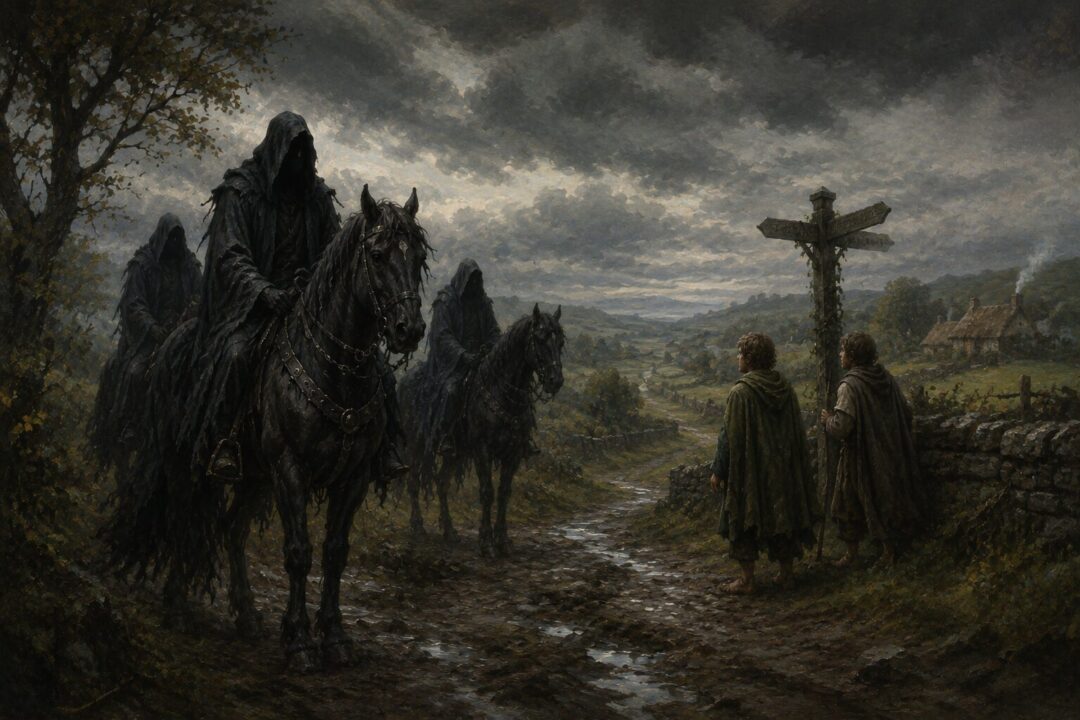
The Nazgûl Were Not Always Battlefield Weapons
The Nine began as mortal Men who received Rings of Power. Over time, they faded from the visible world and became entirely enslaved to Sauron's will.
By the end of the Third Age, they existed as Ringwraiths, beings caught between the seen and unseen worlds. They inspired dread wherever they went, and their chief weapon was often psychological rather than physical. People fled before them. Armies lost courage. Entire populations could be shaken by rumors of their approach.
This role helps explain why mobility mattered so much.
The Nazgûl needed a practical way to travel across enormous distances. They served as Sauron's messengers, spies, commanders, and agents of terror. Horses provided speed, endurance, and flexibility across the roads and landscapes of Middle-earth.
A Ringwraith on horseback could move through lands that would immediately react to a more obviously supernatural threat. The Nazgûl inspired fear, but they could still pass as dark riders at a distance. Their appearance remained mysterious rather than openly monstrous.
That ambiguity became especially important during the hunt for the One Ring.
The Hunt for the Ring Required Stealth
When Sauron finally learned that the Ring had been found and was associated with a place called "Shire," he dispatched the Nazgûl to recover it.
This mission was not an invasion. It was a search.
The Ringwraiths needed information. They questioned travelers, intimidated informants, and followed clues across Eriador. Their goal was to locate a single hobbit carrying the most important object in Middle-earth.
Flying beasts would have been poorly suited to this task.
A giant winged creature crossing the skies would have announced the Nazgûl's presence immediately. Every settlement would have noticed. Every ranger, elf, and enemy scout would have known something significant was happening.
Instead, the Black Riders moved along roads and through inhabited regions. They searched houses, questioned locals, and tracked their prey directly. The image repeatedly presented in The Fellowship of the Ring is not of airborne hunters but of mounted pursuers appearing unexpectedly on roads, at crossroads, and near villages.
Their success depended partly on remaining uncertain and elusive. People knew something frightening was abroad, but many did not yet understand exactly what they were facing.
Horses Amplified the Nazgûl's Fear
The Nazgûl's horses were not merely transportation.
Their mounts became extensions of their terrifying presence.
Throughout The Fellowship of the Ring, the Black Riders appear suddenly on lonely roads, often accompanied by unnatural silence, sniffing for their prey or listening for signs of movement. The combination of rider and horse created a uniquely unsettling image.
A traveler might first hear hoofbeats.
Then a dark silhouette would emerge from the shadows.
Only gradually would the true horror become apparent.
This slow revelation suited the Ringwraiths. Terror often grows stronger when it approaches step by step.
A flying monster overhead would inspire panic, but it would do so instantly. A mounted Nazgûl could stalk, pursue, and psychologically torment its victims over time.
The fear experienced by Frodo and his companions before reaching Rivendell comes largely from this relentless mounted pursuit. The Black Riders feel close enough to touch, yet impossible to escape.
The Nazgûl Could Influence Animals
The texts suggest that ordinary creatures often reacted badly to the presence of the Nazgûl.
Horses, in particular, frequently displayed fear around them.
Yet the Ringwraiths were still able to use mounted travel extensively. This indicates that they possessed the means to control or dominate suitable animals despite the terror they naturally inspired.
The black horses associated with the Nazgûl appear unusually hardy and obedient. Tolkien does not provide a detailed explanation of how these mounts were trained or controlled, but the Ringwraiths clearly maintained effective mounted service over long distances.
This arrangement had limits.
Animals could still suffer from proximity to the Nazgûl's dreadful presence. The relationship was practical rather than natural. Horses served because they were compelled, controlled, or specially prepared for the task.
Even so, horses remained the best available option for much of the Third Age.
The Ford of Bruinen Changed Everything
The turning point came at the Ford of Bruinen.
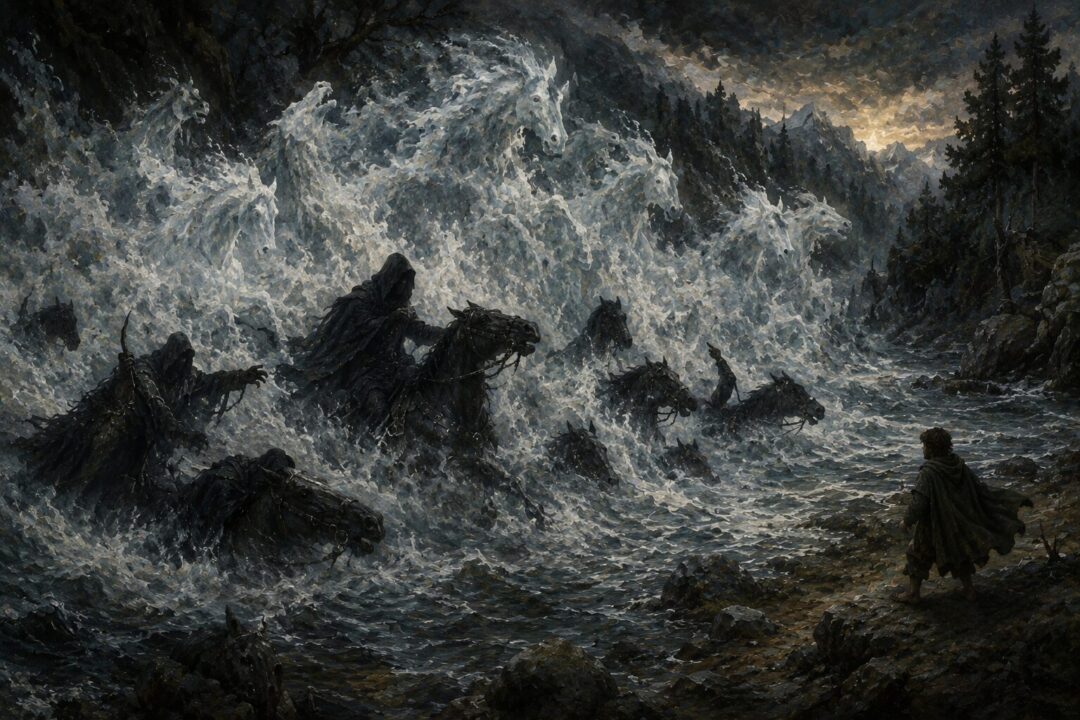
As Frodo approached Rivendell, the Nazgûl nearly completed their mission. They pursued him to the river crossing, only to be overwhelmed by the flood sent against them.
Their horses were destroyed in the waters.
This detail is easy to overlook, but it created a significant logistical problem.
The Nazgûl themselves were not permanently destroyed. As servants bound to Sauron's power, they eventually returned. However, the loss of their mounts temporarily deprived them of the mobility they had relied upon.
The destruction at the Ford marked the end of the Black Riders as readers had known them throughout most of The Fellowship of the Ring.
When the Nazgûl reappeared later, their role had begun to change.
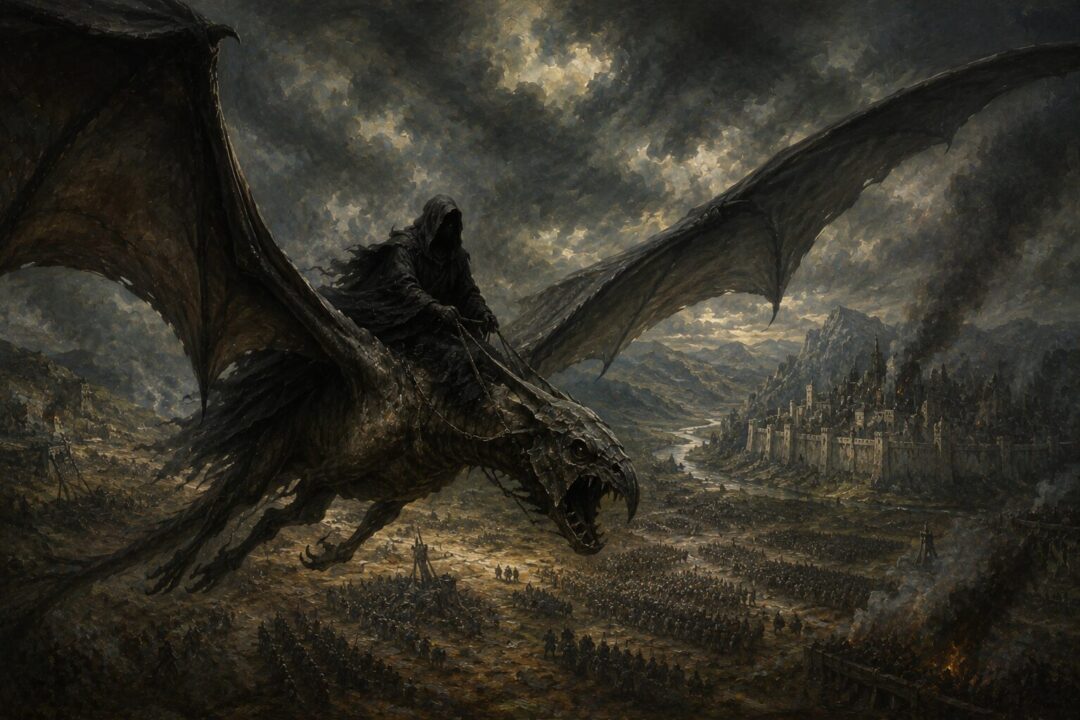
Sauron's Strategy Was Becoming More Open
After the Fellowship was formed and the war expanded, secrecy became less important.
Sauron no longer needed his chief servants to search quietly through remote lands. The conflict was becoming increasingly direct.
Armies marched.
Cities prepared for siege.
The Ring had not been recovered, but open war was now underway.
Under these circumstances, the Nazgûl's purpose evolved. They became commanders, battlefield terrors, and instruments of intimidation on a much larger scale.
A mounted rider could frighten individuals and small groups.
A winged Nazgûl could terrify entire armies.
The changing nature of the war created the perfect opportunity for a new kind of mount.
The Fell Beasts Made the Nazgûl Far More Dangerous
By the later stages of the war, the Nazgûl rode the creatures often called fell beasts.
Tolkien provides a memorable description of these beings as ancient, winged creatures, neither birds nor easily classified according to familiar categories. Their origins are not fully explained.
What matters is what they allowed the Nazgûl to do.
They could now cross enormous distances rapidly.
They could observe battlefields from above.
They could strike unexpectedly from the sky.
Most importantly, they projected terror across entire regions.
The psychological effect was immense. Defenders in Gondor heard their cries before seeing them. Soldiers who might stand against ordinary enemies often lost courage beneath their shadow.
The Witch-king's arrival before Minas Tirith demonstrates this transformation perfectly. He no longer resembles a mysterious rider searching roads in the wilderness. He appears as the visible embodiment of Sauron's growing power.
The Nazgûl had become airborne symbols of conquest.
Why Didn't Sauron Use Fell Beasts From the Beginning?
The texts never explicitly state why the Nazgûl lacked fell beasts during the early hunt for the Ring.
Several possibilities are consistent with what Tolkien actually wrote.
First, stealth remained essential. Flying creatures would have attracted attention and revealed the search.
Second, availability may have been limited. The fell beasts appear only during the later stages of the war, and Tolkien never indicates that large numbers existed.
Third, their battlefield role had not yet emerged. The Nazgûl initially needed to investigate, interrogate, and track. Horses were better suited to operating among roads, settlements, and travelers.
Whatever the exact explanation, the narrative shows that mounted travel served the mission far more effectively during the Ring hunt than aerial terror would have.
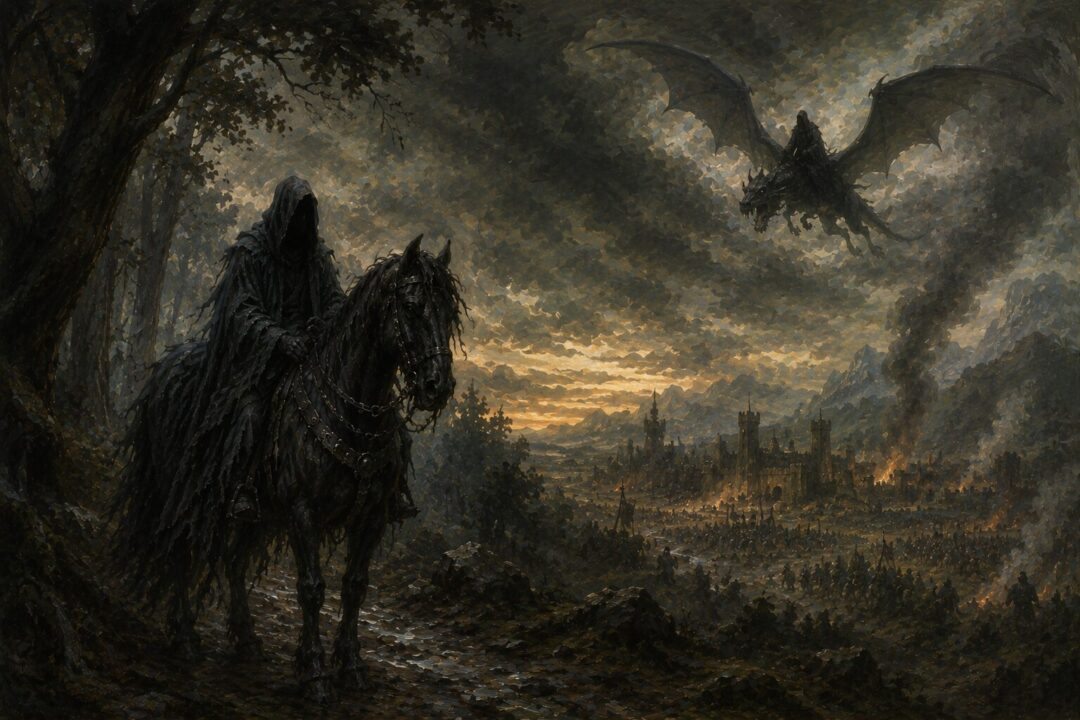
The Black Riders Were Scary for a Reason
Many readers remember the flying Nazgûl most vividly because they represent the height of the Ringwraiths' power. Yet some of the most frightening moments in The Lord of the Rings occur before the fell beasts ever appear.
A cloaked rider standing motionless beside a road.
A horse approaching through darkness.
A sniffing figure searching for a hidden hobbit.
These scenes work because the threat feels close and personal.
The Black Riders are terrifying not because they dominate the sky, but because they can appear around the next bend in the road.
In that sense, ordinary horses were never a temporary substitute for something better. They were the perfect tools for the Nazgûl's original purpose. Sauron needed hunters before he needed aerial weapons.
Only after the hunt failed and war consumed Middle-earth did the Ringwraiths become the flying terrors most people remember. Their transformation reflects the larger transformation of the war itself—from secrecy and pursuit to open fear and conquest.
The Nazgûl did not abandon horses because horses were inadequate. They abandoned them because Sauron's strategy had changed, and the shape of terror changed with it.
Sources & Notes
- J.R.R. Tolkien, The Fellowship of the Ring, Book I, Chapter 3, “Three Is Company” — the Black Riders first appear as mounted hunters on the Shire roads, sniffing and searching rather than attacking openly.
- J.R.R. Tolkien, The Fellowship of the Ring, Book I, Chapter 11, “A Knife in the Dark” — the Nazgûl pursue Frodo as Black Riders and use fear as a weapon around Weathertop.
- J.R.R. Tolkien, The Fellowship of the Ring, Book I, Chapter 12, “Flight to the Ford” — the Riders chase Frodo to the Ford of Bruinen, where the flood overwhelms them and their horses.
- J.R.R. Tolkien, The Fellowship of the Ring, Book II, Chapter 1, “Many Meetings” — Gandalf explains that the Ringwraiths are not destroyed at the Ford, while their horses are lost.
- J.R.R. Tolkien, Unfinished Tales, Part Three, “The Hunt for the Ring” — gives Tolkien’s fuller account of Sauron sending the Nazgûl to find the Shire and the Ring, including the practical intelligence-gathering nature of their mission.
- J.R.R. Tolkien, The Two Towers, Book IV, Chapter 2, “The Passage of the Marshes” — shows the later terror of a winged Nazgûl overhead after the mounted hunt has failed.
- J.R.R. Tolkien, The Return of the King, Book V, Chapter 4, “The Siege of Gondor,” and Chapter 6, “The Battle of the Pelennor Fields” — presents the Nazgûl as airborne battlefield terrors and describes the Witch-king’s monstrous winged mount.