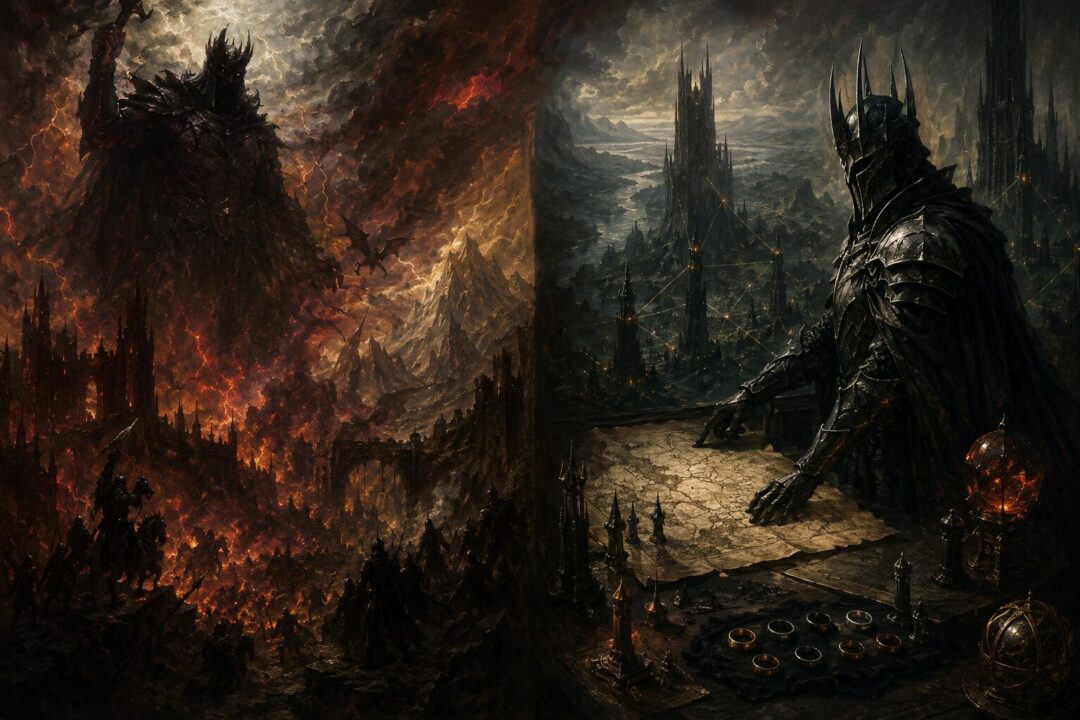
The Dark Lord is often imagined as a lesser version of an older evil.
Morgoth shattered mountains, corrupted the very substance of Arda, and waged wars that reshaped the world. Sauron, by comparison, never possessed the same raw power. He did not extinguish the Two Trees. He did not battle the Valar. He did not seek to destroy creation itself.
Yet by the end of the Third Age, many of the Free Peoples feared Sauron in a way that was different—and in some ways more immediate—than the terror Morgoth inspired.
The reason lies in a subtle change. Sauron became more frightening when he stopped trying to be another Morgoth.
Rather than pursuing his master's vast and chaotic ambitions, Sauron embraced something narrower, colder, and more practical. He ceased being the lieutenant of cosmic rebellion and became the architect of total domination. In doing so, he transformed evil from a force of destruction into a system of control.
That shift may be one of the most disturbing developments in the history of Middle-earth.
Morgoth Wanted Ruin. Sauron Wanted Order.
Understanding the difference begins with the goals of the two Dark Lords.
Morgoth's ultimate desire was not merely to rule Arda. Throughout the legends of the First Age, his rebellion becomes increasingly destructive. Having poured much of his native power into the physical world, he sought to corrupt, dominate, and ultimately mar what he could not truly possess.
The result was a vast campaign against creation itself. Lands were ruined. Creatures were twisted. Entire peoples suffered under wars that often seemed motivated as much by hatred as by strategy.
Sauron inherited much from Morgoth, but not everything.
Even before Morgoth's final defeat, Sauron displayed traits that set him apart. In various texts, he is associated with order, planning, efficiency, and organization. His evil was not initially rooted in pure nihilism. Instead, he desired control.
One of the most important insights preserved in Tolkien's writings is that Sauron loved order beyond measure. The problem was that he increasingly wanted all minds, wills, and societies arranged according to his own design.
This distinction matters.
Morgoth's evil often resembled destruction for its own sake. Sauron's evil increasingly resembled tyranny.
And tyranny can be more difficult to resist than chaos.
The Failure of the Morgoth Model
After the War of Wrath, Morgoth was expelled from the world. Sauron stood alone.
At first, he appears to have wavered. The texts suggest that he experienced fear and perhaps even a form of repentance after his master's fall. Yet he ultimately refused to submit himself for judgment.
Instead, he resumed his pursuit of power.
But he did not immediately become the Sauron known from The Lord of the Rings.
During the early Second Age, he operated through deception rather than open conquest. This alone reveals an important lesson he had learned. Morgoth's strategy had relied heavily on overwhelming force. Although terrifying, it united enemies against him and eventually provoked the intervention of the Valar.
Sauron adopted a different approach.
He discovered that corruption could achieve what armies could not.
Rather than attacking every enemy directly, he sought entry into their societies, institutions, and ambitions. The Dark Lord who emerged in the Second Age was not primarily a destroyer. He was a manipulator.
In many ways, this made him more dangerous.
A fortress can prepare for a siege. A kingdom can rally against invasion.
It is far harder to defend against a trusted adviser.
Annatar and the Weaponization of Trust
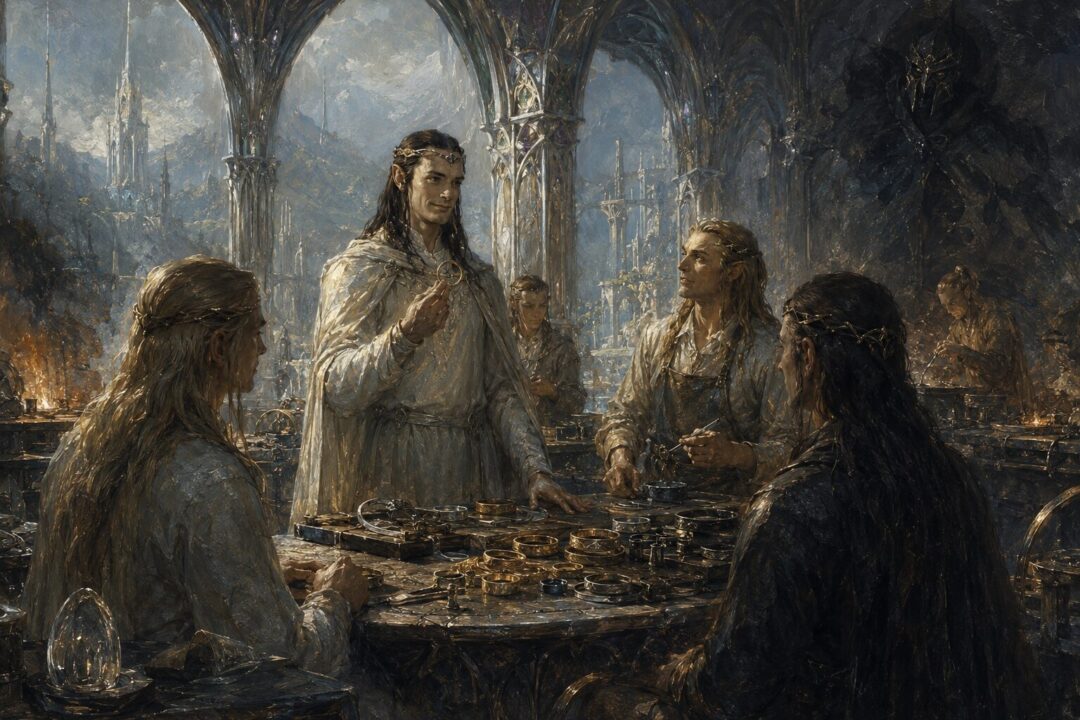
Nothing illustrates this transformation more clearly than Sauron's appearance as Annatar, the Lord of Gifts.
Disguised in fair form, he approached the Elves of Eregion and offered knowledge. He presented himself not as a conqueror but as a teacher.
The tragedy of Eregion was not that it fell to military power. The tragedy was that its downfall began with cooperation.
Sauron understood something Morgoth rarely exploited with equal sophistication: people can become agents of their own ruin when their desires are carefully guided.
The Elven-smiths wished to preserve beauty and resist decline. These goals were not evil. Yet Sauron learned how to connect legitimate hopes to hidden domination.
The Rings of Power emerged from that manipulation.
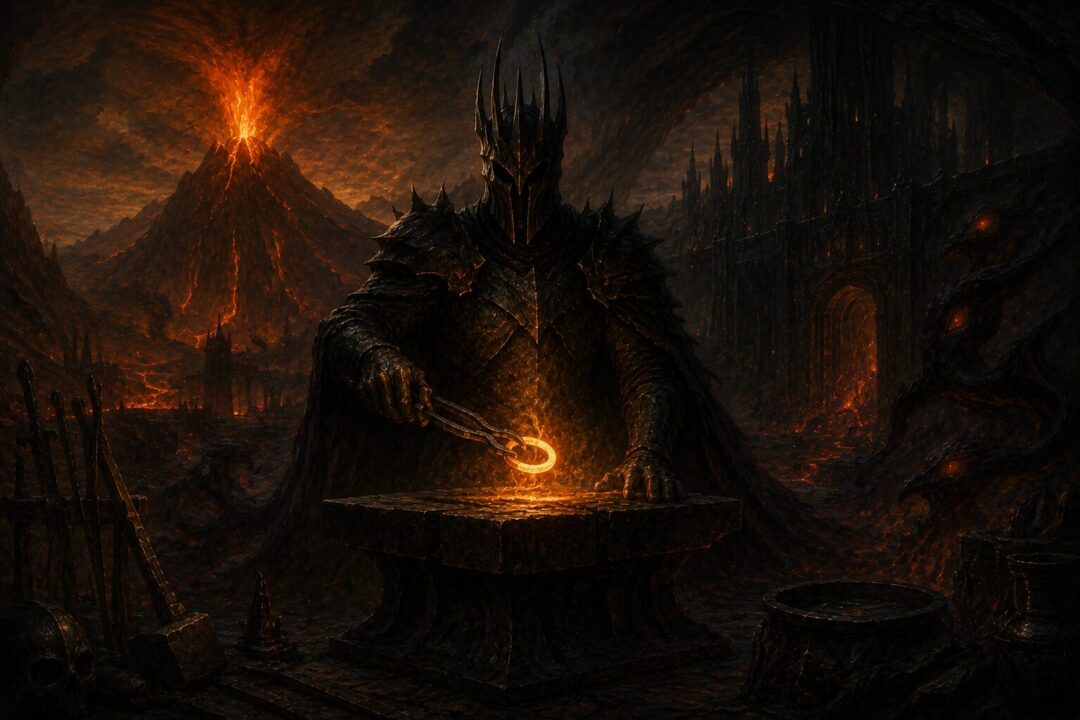
Importantly, Sauron did not simply forge weapons. He built a system. The One Ring was designed to govern the bearers of the others. Behind apparent gifts stood an invisible architecture of control.
This was no longer Morgoth's model of brute corruption.
It was something more precise.
A ruler who destroys a city creates enemies. A ruler who quietly gains influence over every important decision may never need to destroy it at all.
The One Ring Reveals Sauron's True Nature
The One Ring is often discussed as a source of power.
It is also a window into Sauron's mind.
The Ring embodies his belief that domination is the solution to every problem. Rather than convincing others, he would master them. Rather than cooperating, he would absorb their freedom into his own will.
This is why the Ring's corruption operates in such a distinctive way.
It does not usually tempt people with random evil. Instead, it exploits their existing virtues, ambitions, fears, and responsibilities.
Boromir wants to save Gondor.
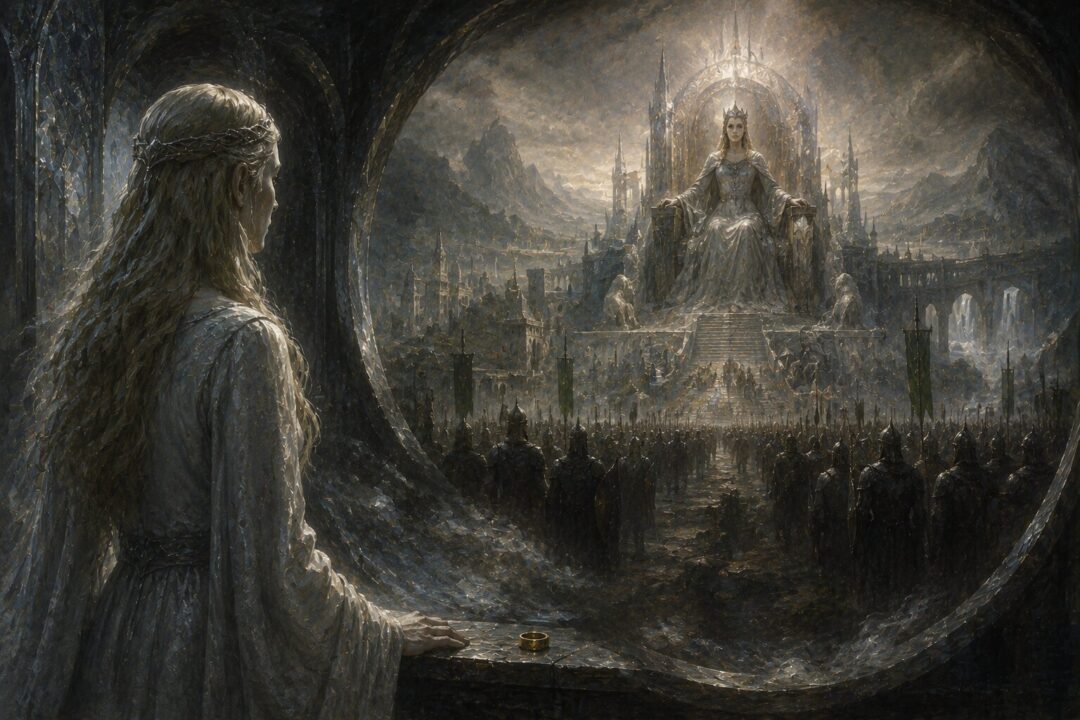
Galadriel desires the strength to preserve what she loves.
Even Gandalf refuses the Ring because he recognizes that the wish to do good through absolute power can become a pathway to tyranny.
The Ring reflects its maker.
Sauron's greatest danger is not that he loves destruction. It is that he believes domination can produce a better world.
That conviction makes him profoundly frightening.
A destroyer may be satisfied with ruin. A tyrant seeks endless expansion.
The Shadow Becomes Impersonal
Another reason Sauron became more frightening is that he gradually ceased to function as a conventional individual villain.
By the late Third Age, he is rarely encountered directly.
Readers never receive a dramatic conversation between Frodo and Sauron. No final duel settles the conflict. His presence is largely indirect.
Yet his influence seems to extend everywhere.
Armies move at his command. Spies serve him across vast distances. Fear spreads before him. Entire political systems react to his growing strength.
The effect is striking.
Morgoth often stood visibly at the center of events. Sauron increasingly became a shadow over institutions, kingdoms, and peoples.
This made him feel less like a person and more like a pervasive force.
Importantly, Tolkien never suggests that Sauron became omnipotent. He remained vulnerable, especially because so much of his power was invested in the Ring.
But from the perspective of ordinary inhabitants of Middle-earth, he appeared nearly inescapable.
The enemy was no longer only in Mordor.
The enemy was present wherever fear, coercion, and domination spread.
Even Victory Against Sauron Came at a Cost
One of the most revealing differences between Morgoth and Sauron is the nature of their defeats.
Morgoth was overthrown by overwhelming intervention from the West. His downfall came through catastrophic war.
Sauron's defeat required something stranger.
The Fellowship could not match him militarily. Gondor could not simply storm Mordor and destroy him. The West lacked the strength for direct victory.
Instead, resistance depended on rejecting Sauron's logic.
Again and again, the heroes succeed by refusing domination.
Frodo accepts burden rather than power.
Sam chooses loyalty rather than ambition.
Aragorn claims kingship, yet does not seek mastery over other peoples.
Faramir rejects the temptation that ensnared Boromir.
Even the quest itself revolves around destruction of the Ring rather than possession of it.
The conflict becomes moral before it becomes military.
This reveals the true threat Sauron represented. His greatest weapon was not his armies. It was the idea that power could solve every problem if only the right person held enough of it.
Why Sauron Became the More Relevant Evil
Morgoth remains the greater power in the mythology.
Nothing in the legendarium suggests that Sauron surpassed his master in sheer might.
Yet raw power is not the only measure of fear.
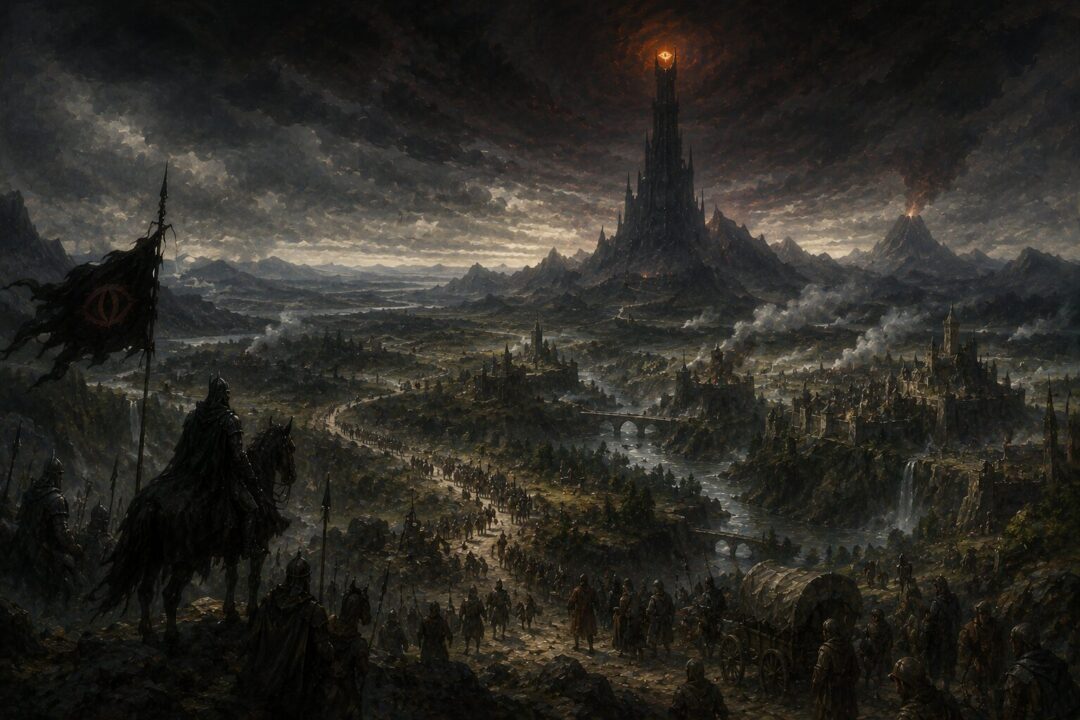
Morgoth threatened the world through overwhelming destruction. Sauron threatened it through systems of domination that could infiltrate ordinary life.
He learned that corruption often works better than conquest.
He learned that gifts can bind more effectively than chains.
He learned that people can be controlled through their hopes as easily as through their fears.
Most importantly, he abandoned the dream of becoming another Morgoth.
Instead of trying to tear the world apart, he sought to organize it under a single will—his own.
That ambition is what made him so frightening.
A world ruined by Morgoth would be a wasteland.
A world perfected by Sauron would still contain cities, laws, roads, and kingdoms. People might even convince themselves that order had been achieved.
But beneath that order, freedom would slowly disappear.
The tragedy at the heart of Sauron's story is that he never stopped believing control was the answer. Every age made him more committed to that belief. Every defeat pushed him deeper into it.
By the time of the War of the Ring, he no longer resembled the servant who once followed Morgoth.
He had become something uniquely dangerous: a ruler who saw every independent will as a problem to be solved.
And that is why the Shadow of Mordor could feel so close even when its master remained far away.
Sources & Notes
- J.R.R. Tolkien, The Silmarillion, “Valaquenta: Of the Enemies”: Sauron as Morgoth’s chief servant, “only less evil than his master” while long serving another rather than himself.
- J.R.R. Tolkien, The Silmarillion, “Of the Rings of Power and the Third Age”: Sauron’s post–War of Wrath fear/temporary repentance, his refusal to return for judgment, his Annatar disguise, and the making of the Rings and the One Ring to govern the rest.
- J.R.R. Tolkien, Morgoth’s Ring (History of Middle-earth X), “Myths Transformed”: Tolkien’s late reflections on Morgoth dispersing his power into Arda and Sauron’s different evil, rooted in order, coordination, and domination.
- J.R.R. Tolkien, The Lord of the Rings, Book I, ch. 2 “The Shadow of the Past”: Gandalf’s refusal of the Ring because power taken for good would become “too great and terrible,” supporting the article’s tyranny-through-good-intentions theme.
- J.R.R. Tolkien, The Lord of the Rings, Book II, ch. 7 “The Mirror of Galadriel”: Galadriel’s Ring temptation and rejection, illustrating how the Ring exploits preservationist desire rather than simple malice.
- J.R.R. Tolkien, The Lord of the Rings, Book V, ch. 9 “The Last Debate” and Book VI, ch. 3 “Mount Doom”: the West’s inability to defeat Sauron by force and the moral strategy of rejecting and destroying, not wielding, the Ring.