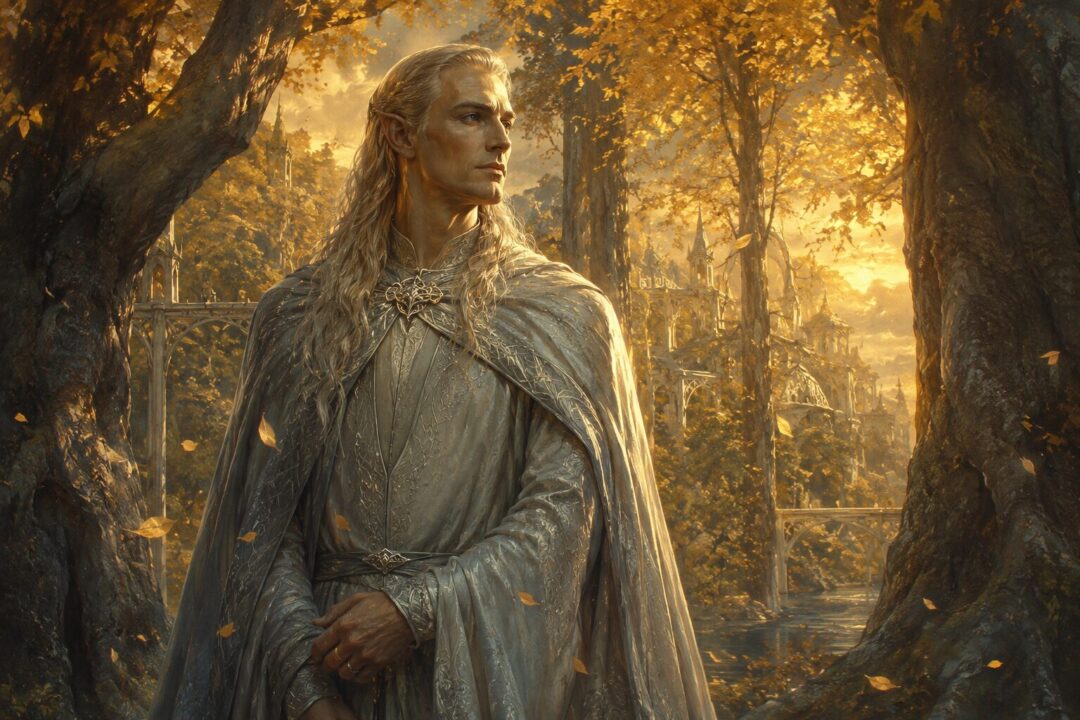
When readers think of the great leaders of Middle-earth, names like Gandalf, Aragorn, Galadriel, Elrond, or Théoden naturally come to mind. Yet one of the oldest and most accomplished Elves in the Third Age often stands almost unnoticed beside them. Celeborn rarely delivers long speeches, performs dazzling displays of power, or dominates the story. Instead, he embodies something Tolkien consistently treats as one of the highest forms of strength: quiet authority exercised without the need for recognition.
His role in The Lord of the Rings can seem surprisingly modest at first glance. He rules beside Galadriel in Lórien, welcomes the Fellowship after Gandalf's fall, later leads forces during the War of the Ring, and eventually remains among the last great Elves in Middle-earth. Yet beneath this restrained presence lies a remarkable history stretching back into the First Age.
Rather than asking why Celeborn seems overshadowed, a better question is why the narrative chooses to present such an ancient and capable lord with so little outward display. The answer reveals something important about how power works throughout Tolkien's world.
One of the Oldest Elves Still Remaining
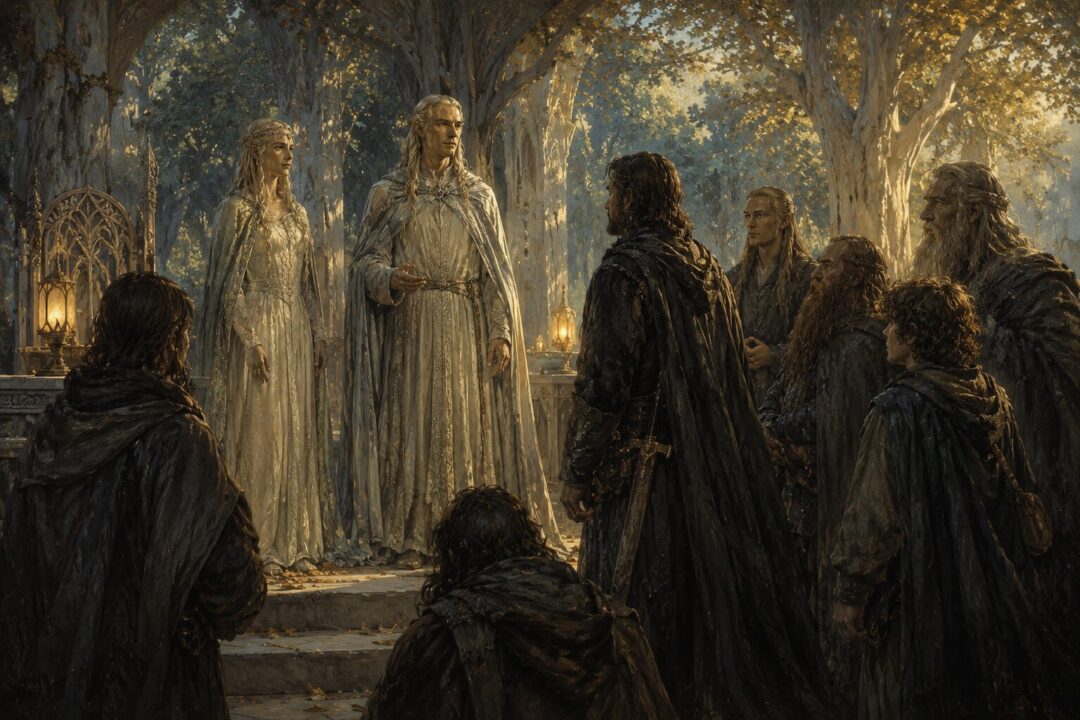
Celeborn's exact early history is one of the more complex areas of Tolkien's legendarium because different late writings offer different accounts of his ancestry. The published Silmarillion presents him as a kinsman of Thingol, making him a Sindarin Elf of Doriath. Some later texts explore alternative genealogies and origins, but Tolkien never produced a single final version that superseded all others.
What remains consistent is that Celeborn belongs among the ancient nobility of the Eldar. He lived through enormous changes in Middle-earth, witnessed the rise and fall of kingdoms, survived wars that destroyed entire civilizations, and remained active into the end of the Third Age.
This immense age matters because Tolkien repeatedly portrays true wisdom as something earned through long endurance rather than dramatic achievement. Celeborn has already experienced catastrophes that would define entire histories before most of Middle-earth's peoples even existed.
His calm is therefore not naivety. It is the composure of someone who has seen countless victories and losses pass into memory.
A Ruler Who Does Not Need the Spotlight
One reason readers may overlook Celeborn is that he shares the rule of Lórien with Galadriel, whose spiritual authority and extraordinary history naturally draw attention.
Galadriel possesses one of the Three Rings, openly resists the temptation of the One Ring, and serves as one of the central figures opposing Sauron's return. Her role carries enormous symbolic weight.
Celeborn, by contrast, exercises leadership in quieter ways.
When the Fellowship enters Lórien after Gandalf's apparent death, it is Celeborn who first questions Aragorn about the Company's journey. His concern reflects responsibility rather than suspicion for its own sake. The borders of Lórien have become increasingly dangerous, and every stranger might unknowingly carry news—or danger—from the growing war.
Once trust is established, he proves generous, courteous, and attentive. The Fellowship receives protection, rest, counsel, and gifts from the rulers of Lórien together, not from Galadriel alone.
The narrative subtly presents them as partners exercising different strengths rather than competitors for authority.
The Strength of Restraint
One of Tolkien's recurring themes is that genuine power often appears least impressive from the outside.
The greatest rulers rarely boast.
The wisest seldom seek dominance.
The noblest victories frequently involve refusing power rather than seizing it.
Celeborn reflects this pattern almost perfectly.
Unlike many legendary kings, he is never described seeking conquest, glory, or expansion. His purpose is preservation. Lórien exists as one of the last sanctuaries where the beauty of the Elder Days still survives.
Protecting such a realm requires constant vigilance rather than spectacular heroics.
Readers never witness every patrol guarding its borders or every decision required to preserve its hidden safety. Instead, Tolkien lets the existence of Lórien itself testify to generations of careful leadership.
Its continued peace during much of the Third Age is not accidental.
A Lord Capable of War
Quiet authority should not be mistaken for passivity.
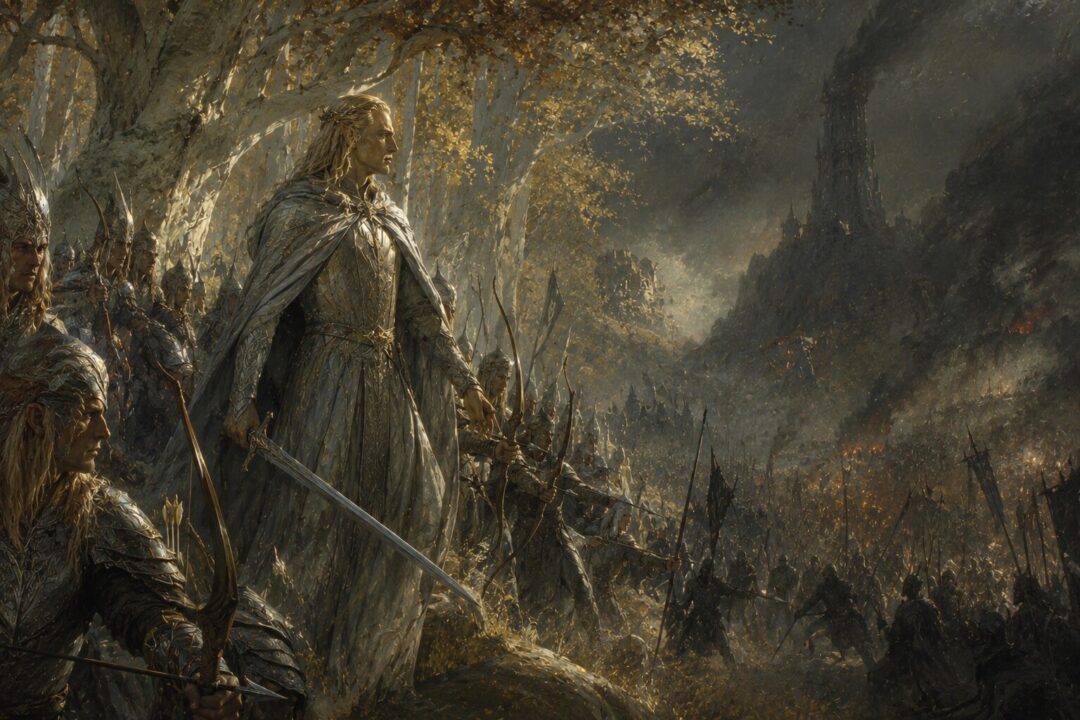
When open war finally comes, Celeborn demonstrates that preserving peace never meant lacking the ability to fight.
During the War of the Ring, Lórien suffers repeated assaults from Dol Guldur. These attacks occur while the Fellowship pursues its own quest, reminding readers that the struggle against Sauron extends far beyond the story's main characters.
Lórien withstands every assault.
After the destruction of the One Ring, Celeborn leads the forces of Lórien across the River Anduin. Together with Galadriel, they overthrow Dol Guldur, and Galadriel casts down its walls after Sauron's power has failed.
The texts distinguish these actions carefully.
The military leadership belongs to Celeborn, while Galadriel's extraordinary power contributes to the cleansing of the fortress once the One Ring has been destroyed. Neither achievement diminishes the other.
Instead, they reveal complementary forms of leadership working together.
His Patience Reflects Elvish Time
Mortals often measure greatness by decisive moments.
Elves frequently measure it by centuries.
Celeborn exemplifies this difference.
He does not rush into needless conflicts. He preserves alliances. He governs without constant upheaval. His perspective stretches across ages rather than years.
This patient outlook helps explain why he rarely appears emotionally reactive.
Even devastating news, including Gandalf's apparent death, is met first with thoughtful inquiry rather than impulsive action.
Such restraint reflects experience rather than emotional distance.
Throughout Tolkien's legendarium, many of the oldest Elves possess this same measured character. They understand that haste often serves evil more readily than wisdom.

His Marriage to Galadriel Is a Partnership
Modern discussions sometimes reduce Celeborn to "Galadriel's husband," but the texts present something richer.
Each possesses distinct strengths.
Galadriel's spiritual insight, exceptional lineage, and possession of Nenya make her one of the most remarkable individuals in Middle-earth.
Celeborn contributes political stability, military leadership, deep knowledge of the Sindar, and centuries of experience ruling alongside her.
Their marriage consistently appears cooperative.
Neither rules independently of the other in Lórien.
When the Fellowship departs, both participate in receiving the Company.
When major decisions are made, both are involved.
When war comes, both contribute according to their gifts.
Rather than diminishing either figure, Tolkien presents one of the healthiest enduring partnerships among the rulers of Middle-earth.
A Survivor of the Passing Ages
Perhaps the deepest tragedy surrounding Celeborn is that he survives almost everything he once knew.
The kingdoms of Beleriand disappear beneath the sea.
The great forests shrink.
Ancient allies depart.
Entire civilizations fade into history.
Even victory over Sauron cannot reverse this long decline.
After the One Ring is destroyed, the Three Rings lose their preserving power. The time of the Elves in Middle-earth draws toward its close.
Galadriel eventually sails into the West.
Celeborn does not immediately accompany her.
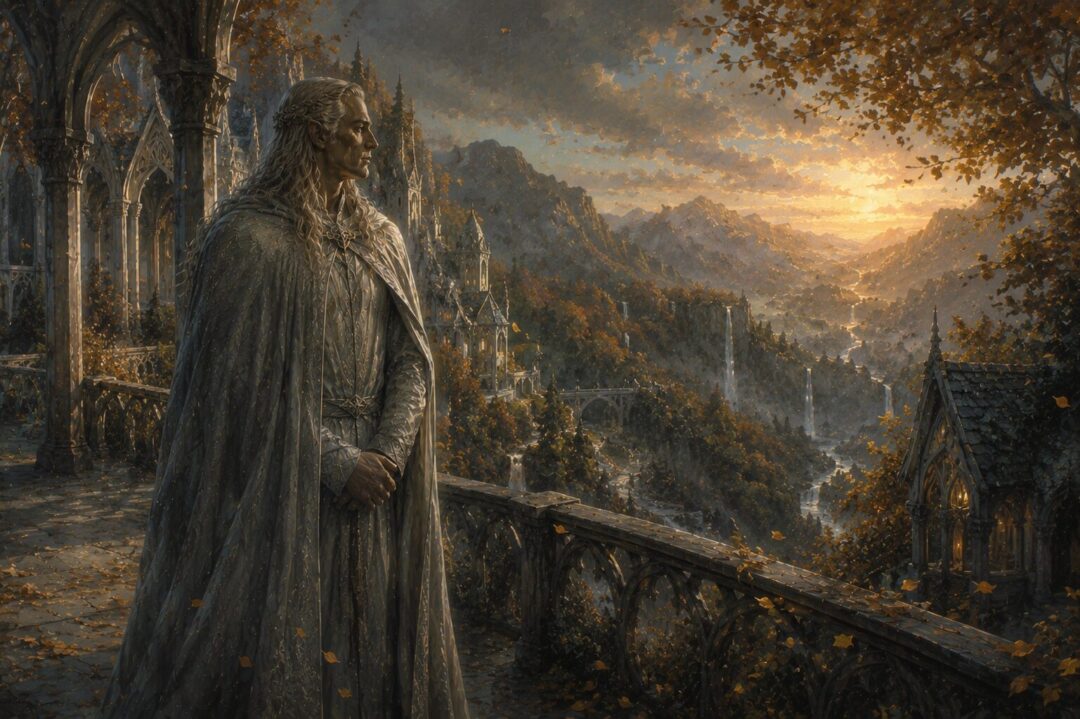
Instead, the appendices record that he remains for a time in Middle-earth, dwelling first in East Lórien and later in Rivendell. Eventually, he too is said to have passed over the Sea, though the exact timing is left unspecified.
There is quiet melancholy in this ending.
One of the oldest living witnesses of the Elder Days gradually becomes one of the last.
Why Tolkien Keeps Him Quiet
Some readers wish Celeborn had received more dramatic scenes.
Yet reducing his importance to page count misses Tolkien's larger pattern.
Many of Middle-earth's greatest figures influence events through stability rather than spectacle.
Elrond preserves Rivendell.
Círdan guards the Havens.
Treebeard protects Fangorn.
Celeborn preserves Lórien.
Each represents stewardship rather than domination.
These characters remind readers that civilizations endure because some people quietly maintain them year after year, even when no songs celebrate their daily work.
That idea reflects one of Tolkien's deepest moral themes.
The preservation of goodness often depends less upon extraordinary moments than upon ordinary faithfulness continued across generations.
The Hidden Lesson of Celeborn
Celeborn never becomes the central hero.
He never carries the Ring.
He never rides to the Black Gate.
He never defeats Sauron in single combat.
Yet Middle-earth would look profoundly different without him.
Lórien remains one of the last havens of beauty because he helps sustain it.
The Fellowship finds healing because he welcomes them.
The northern struggle against Sauron succeeds in part because he leads Lórien's defenses.
His story quietly argues that history is not shaped only by those who stand at its center. It is also shaped by those who preserve wisdom, maintain peace, and exercise authority without demanding admiration.
That kind of greatness is easy to overlook precisely because it rarely announces itself.
Perhaps that is why Celeborn continues to reward careful readers. Every return to the text reveals another example of leadership expressed through patience, dignity, restraint, and steadfastness rather than spectacle.
In a world filled with mighty warriors, magical artifacts, and world-changing battles, Tolkien quietly places beside them an ancient lord whose greatest strength may simply be that he never needed to prove it.
Sources & Notes
- Tolkien Gateway, "Celeborn" — https://tolkiengateway.net/wiki/Celeborn
- Tolkien Gateway, "Galadriel" — https://tolkiengateway.net/wiki/Galadriel
- Tolkien Gateway, "Lothlórien" — https://tolkiengateway.net/wiki/Lothl%C3%B3rien
Sources added for article-specific Tolkien reference context.