The Witch-king of Angmar is remembered for terror, conquest, and ruin. His name is bound to the fall of kingdoms, the corruption of Men, and the long shadow that crept across the North during the Third Age. Yet one of the most remarkable aspects of his story is not what he destroyed—but what survived him.
Angmar itself vanished. Its armies were broken. Its capital was abandoned. The realm he ruled for centuries ceased to exist. Yet long after Angmar fell, travelers still feared certain hills, ruins, and haunted lands. Rangers avoided them. Hobbits whispered about them. Even the Wise treated them with caution.
The Witch-king's greatest lasting creation was not a city, fortress, or dynasty. It was a landscape of evil centered upon the Barrow-downs, where the dead themselves became trapped within a lingering shadow. The kingdom disappeared, but some of the spiritual damage he inflicted endured for more than a thousand years.
Understanding how that happened reveals something important about power in Middle-earth. Buildings can be destroyed. Armies can be defeated. But corruption, once rooted deeply enough, can outlive the realm that created it.
The Rise of Angmar and the Northern War
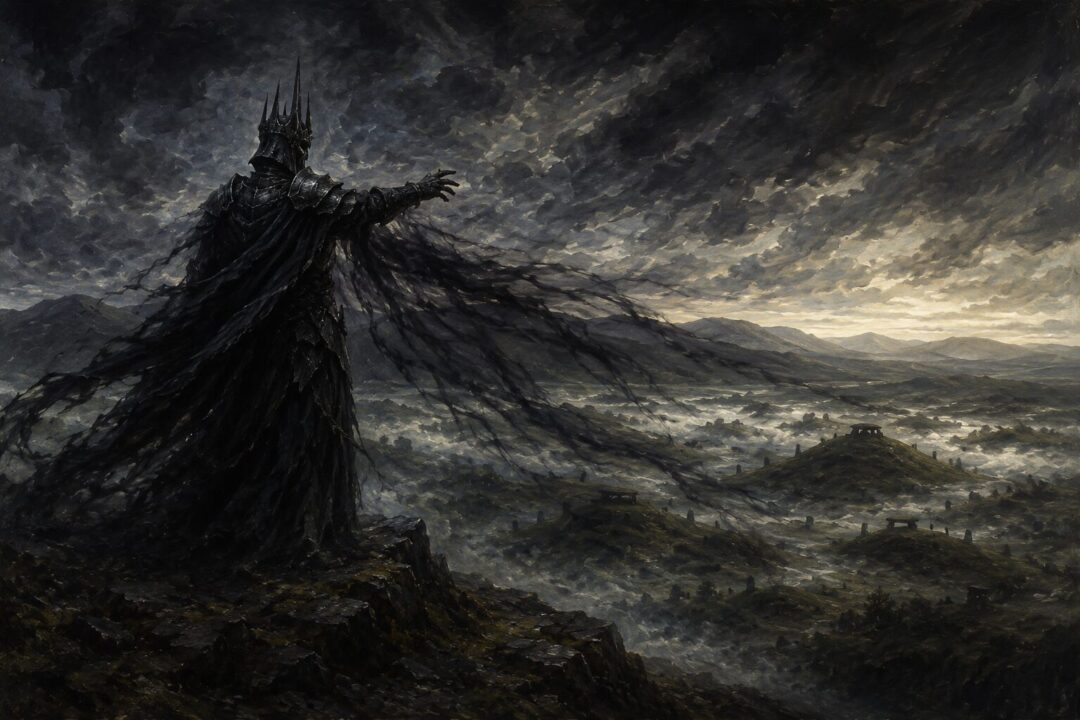
Angmar emerged around the year 1300 of the Third Age in the far north of Eriador. Its ruler was the Witch-king, chief of the Nazgûl, though his true identity remained concealed from most of his enemies.
At the time, the descendants of Númenor still maintained several northern realms. The greatest of these was Arnor, which had already fractured into the kingdoms of Arthedain, Cardolan, and Rhudaur. Division weakened the Dúnedain, and Angmar exploited those divisions relentlessly.
Over centuries, the Witch-king pursued a campaign of attrition and manipulation. Rhudaur fell under hostile influence. Wars erupted repeatedly. One by one, the northern successor states of Arnor weakened.
The Witch-king's goal was not simply territorial expansion. The texts make clear that Angmar existed as an instrument against the Dúnedain. It was a strategic extension of the Shadow, directed toward the destruction of Númenórean power in the North.
Eventually, this long campaign achieved much of its purpose. Cardolan was devastated. Rhudaur collapsed. Arthedain endured longest but ultimately fell in 1974. The northern kingdom of Arnor ceased to exist.
Yet even before these victories, the Witch-king had begun creating something far more enduring than military conquest.
The Ancient Barrows Before the Shadow
To understand what happened, it is necessary to look at the Barrow-downs themselves.
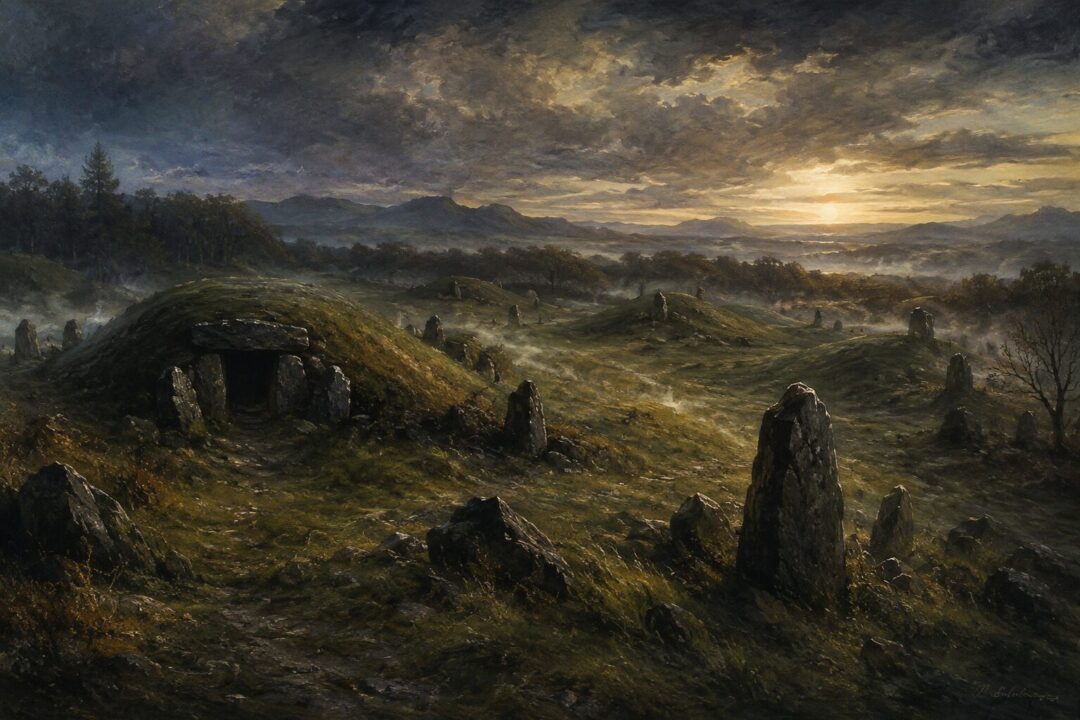
The Barrow-downs were ancient burial hills west of the Old Forest. Long before the arrival of Hobbits, these green downs served as burial places for the Dúnedain and their ancestors.
Many nobles and rulers of Cardolan were laid to rest there. The site possessed deep historical significance. These were places of memory, ancestry, and reverence.
In their original state, the barrows represented continuity between generations. They connected the living descendants of Númenor to those who had come before.
This makes what followed especially tragic.
The Witch-king did not merely conquer territory. He corrupted a place designed to honor the dead.
The Great Plague and the Opportunity for Darkness
A turning point came during the Great Plague of 1636.
The plague devastated much of Middle-earth. Gondor suffered catastrophic losses. Eriador was also heavily affected. Cardolan, already weakened by wars with Angmar, was hit particularly hard.
According to the accounts in Appendix A and related lore, many people died, and the surviving population struggled to maintain control of important regions.
The Barrow-downs became vulnerable.
The texts indicate that after the plague, evil spirits came to inhabit the barrows. These spirits were associated with the Witch-king's influence. The exact nature of these beings is not fully explained, and Tolkien never provides a complete taxonomy of what they were. However, the sources are clear that malignant spirits entered the tombs and transformed them into places of dread.
This was not merely a military occupation.
Something supernatural had occurred.
The burial grounds became haunted.
The Barrow-wights: A Lasting Weapon
The most enduring creation associated with the Witch-king was the establishment of the Barrow-wights.
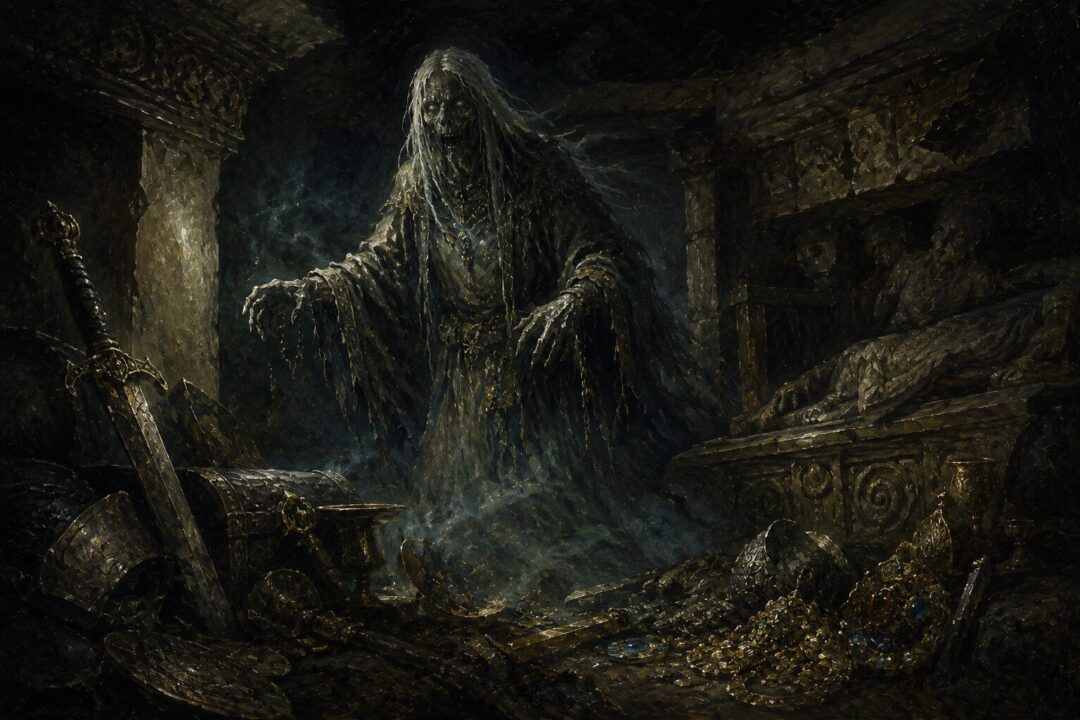
The account given by Gandalf states that evil spirits were sent from Angmar to dwell in the abandoned barrows. These beings became known as Barrow-wights.
Their presence transformed the entire region.
Travelers vanished.
Fear spread through Eriador.
The tombs became active centers of supernatural danger.
Unlike soldiers or fortresses, the Barrow-wights required no kingdom to sustain them. They were embedded within the landscape itself.
This distinction matters.
When Angmar was eventually destroyed, its armies disappeared. Its political structures vanished. Yet the wights remained.
Generation after generation passed while these spirits continued their silent watch over the ancient graves.
The Witch-king had effectively converted a sacred burial ground into a long-term source of terror.
The Fall of Angmar Did Not End the Threat
In 1975, Angmar finally met its defeat.
A combined force led by Gondor and the Elves shattered the kingdom. The Witch-king fled south rather than face destruction.
His famous encounter with the prince who would later become king of Gondor ended with a prophecy regarding his fate.
Politically and militarily, Angmar ceased to exist.
This should have ended its influence.
Yet the Barrow-downs tell a different story.
Centuries later, the region remained dangerous. The evil spirits did not vanish when their master lost his kingdom. Whatever connection existed between Angmar and the wights, it did not depend upon the continued existence of the realm itself.
This reveals a recurring principle in Middle-earth.
The consequences of evil often survive the downfall of evil rulers.
Morgoth's corruption endured long after his defeat. Sauron's influence lingered in many places after his setbacks. In a smaller but still significant way, the Witch-king's work in the Barrow-downs followed the same pattern.
The wound remained after the weapon that created it was gone.
Why the Barrow-downs Matter So Much
It is easy to overlook the Barrow-downs because they appear relatively early in The Lord of the Rings.
Yet they represent one of the clearest examples of spiritual corruption in the North.
The danger there is not primarily physical.
The landscape itself feels wrong.
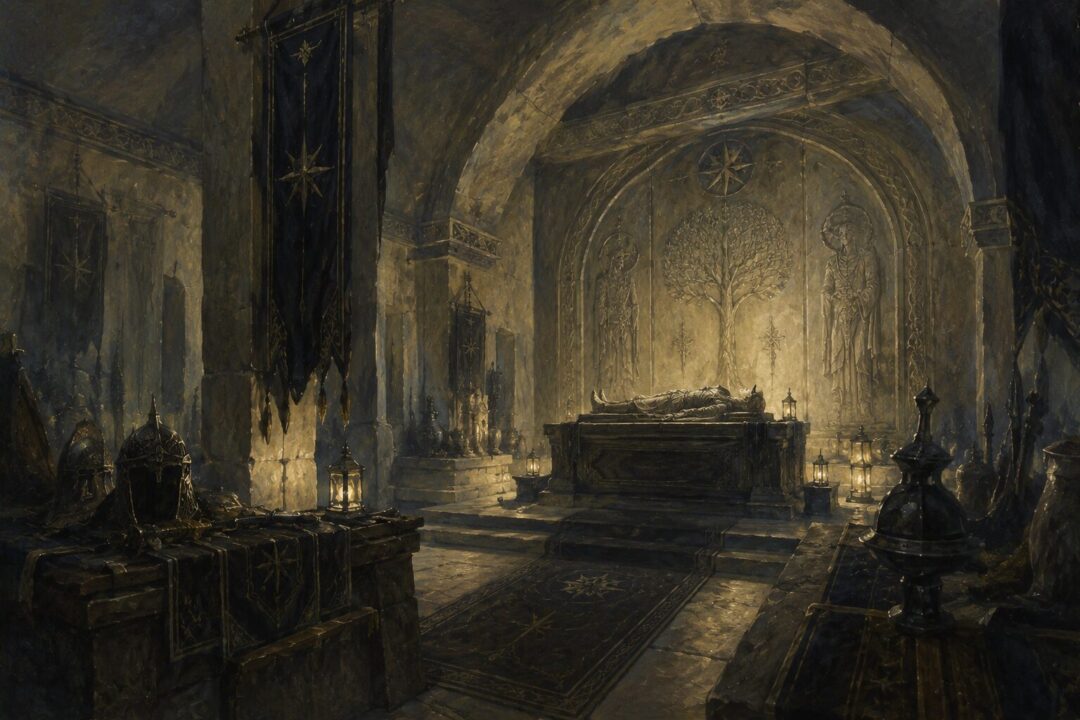
The barrow encountered by Frodo and his companions contains treasures from ancient kingdoms, funeral objects, and the lingering presence of death. The wight attempts to draw the Hobbits into a ritual that echoes burial and entombment.
The horror is rooted in distortion.
Everything that should have honored memory has been twisted into a trap.
The dead are not being respected.
The past is being weaponized.
That transformation reflects the broader methods of the Witch-king throughout his career. Rather than creating something entirely new, he frequently corrupted what already existed.
The Barrow-downs are perhaps the purest expression of that pattern.
Tom Bombadil and the Breaking of the Spell
The survival of the Barrow-wights makes their eventual defeat all the more significant.
When Frodo and his companions are captured in a barrow, they are rescued by Tom Bombadil.
Bombadil drives out the wight and frees the Hobbits.
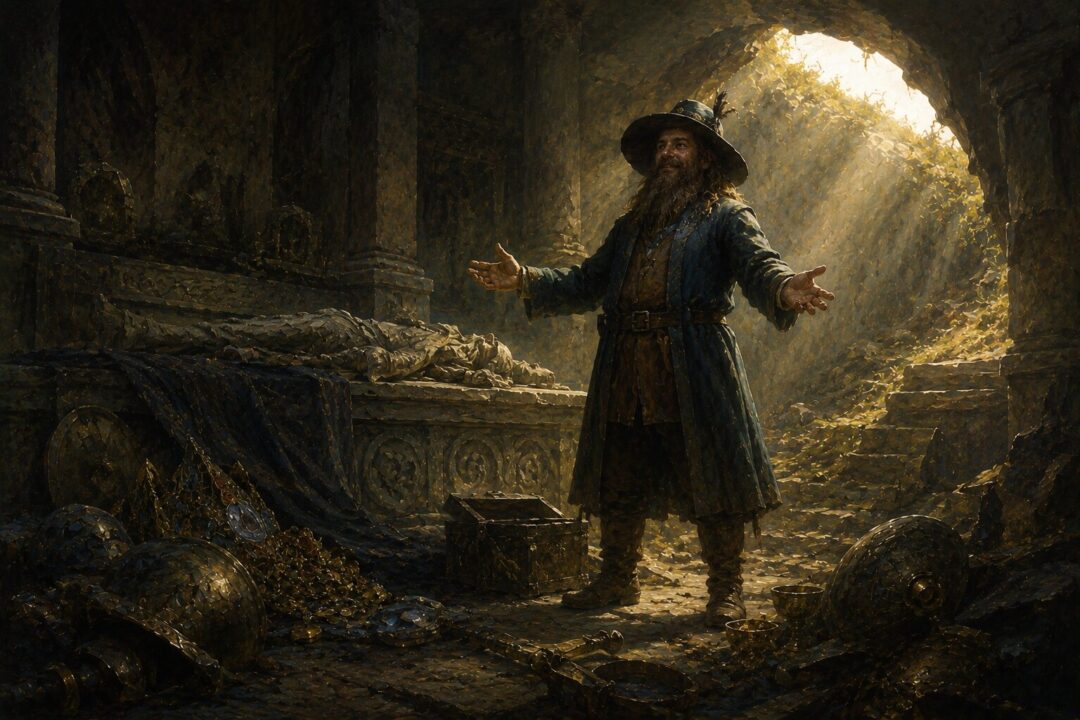
The specific wight encountered there is defeated, and the treasures of the tomb are brought into the sunlight.
However, Tolkien does not explicitly state that every evil spirit throughout the Barrow-downs was permanently eliminated at that moment. The episode concerns a particular barrow and a particular rescue.
What is clear is that Bombadil breaks the immediate power threatening the Hobbits and restores a measure of dignity to what had been corrupted.
The scene serves as a symbolic reversal of the Witch-king's work.
A place of burial is no longer hidden in darkness.
Ancient treasures are no longer imprisoned underground.
The dead are no longer entirely under the shadow that Angmar sent there centuries before.
A Kingdom Lost, a Curse Enduring
Most kingdoms are remembered through monuments, laws, descendants, or great achievements.
Angmar left almost none of these behind.
Its cities disappeared.
Its armies vanished.
Its political power collapsed.
What endured was fear.
The most lasting legacy of the Witch-king's northern realm was a corruption embedded in memory, landscape, and death itself.
The irony is striking.
The Witch-king spent centuries conquering kingdoms, yet the thing that survived longest was not one of his victories. It was a curse placed upon an ancient burial ground.
Long after Angmar's banners had fallen and its fortresses had become ruins, the Barrow-downs remained haunted by the consequences of its rule.
That lingering shadow captures something essential about evil in Middle-earth. Destruction is often swift. Healing is slow. A kingdom may fall in a single campaign, but the damage it leaves behind can persist for ages.
In the end, the Witch-king's most enduring construction was not built of stone at all.
It was built from fear, corruption, and the desecration of memory—and it outlasted the kingdom that created it.
Sources & Notes
- Tolkien Gateway, "Angmar" — https://tolkiengateway.net/wiki/Angmar
- Tolkien Gateway, "Witch-king of Angmar" — https://tolkiengateway.net/wiki/Witch-king_of_Angmar
- Tolkien Gateway, "Carn Dûm" — https://tolkiengateway.net/wiki/Carn_D%C3%BBm
Sources added for article-specific Tolkien reference context.