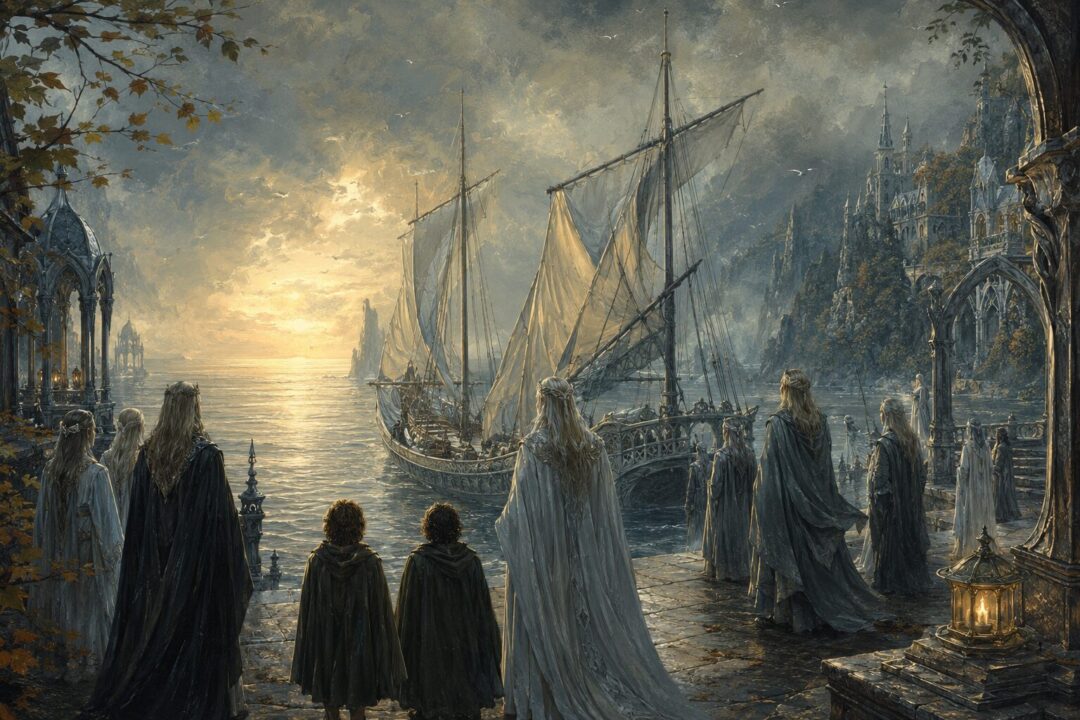
At the Grey Havens, the end of The Lord of the Rings looks almost peaceful: a white ship, a westward road, the Ring-bearers released from their wounds, and the great figures of the Third Age passing beyond the circles of the world. Sauron has fallen. Aragorn is crowned. The Shadow is broken. On the surface, the departure of the Elves can feel like the final sign that victory has been won.
But Middle-earth’s victory is stranger than that.
The Elves do not leave because everything has been restored. They leave because the kind of restoration they longed for is no longer possible. The War of the Ring saves the world from domination, but it also ends the hidden power that preserved much of the Elvish beauty still remaining in the Third Age. The destruction of the One Ring is necessary, merciful, and triumphant — yet it also means Rivendell and Lothlórien cannot remain what they were.
That is why the Elves’ leaving is not a simple victory. It is the cost of refusing Sauron’s world.
The Victory That Ended Preservation
The most important overlooked detail is that the Three Rings were not weapons of conquest. Elrond says at the Council that the Three were not made for war, domination, or hoarded wealth, but for “understanding, making, and healing,” and for preserving things unstained. The Three — Vilya, Nenya, and Narya — were made by Celebrimbor and not touched by Sauron, though they were still bound to the fate of the One Ring because the whole Ring-system depended on Sauron’s master design. Reputable Tolkien references summarize their chief power as preservation: resisting decay, weariness, and the griefs of time. Elrond Fansite
This matters because the Elvish victory over Sauron is not the recovery of an ancient golden age. It is the end of a compromise.
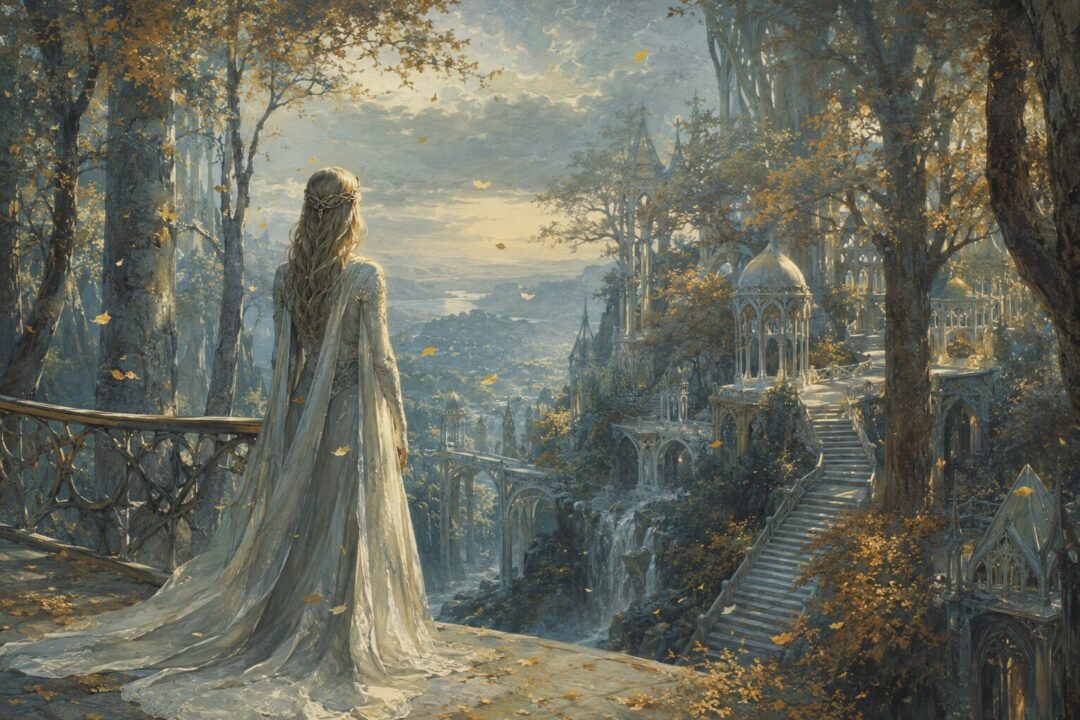
For much of the Third Age, the bearers of the Three could maintain places that felt almost outside ordinary decline. Rivendell became a house of memory, healing, and counsel. Lothlórien seemed to Frodo like a land where time flowed differently, a living echo of an older beauty. These places were not illusions, and the texts do not present them as evil. Yet they were sustained by power that could not survive the destruction of the One.
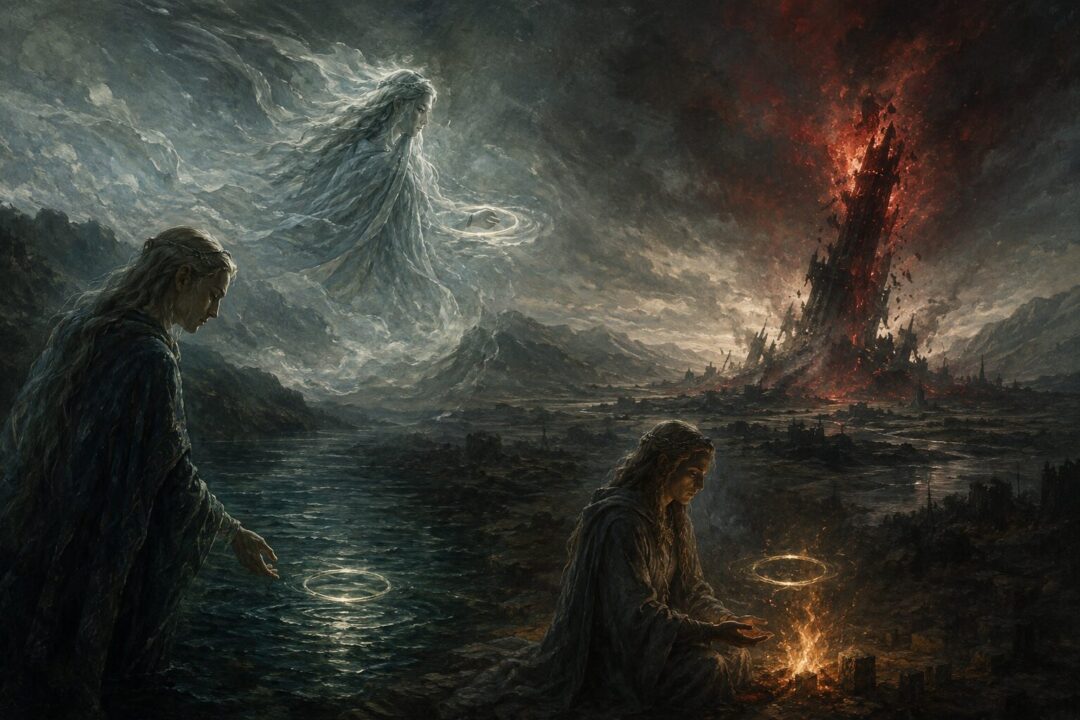
So the victory has a double edge. If Sauron regains the One, the bearers of the Three are exposed and all they have made is turned toward ruin. If the One is destroyed, the Three lose their power. Either way, the Elvish attempt to preserve Middle-earth unchanged cannot continue.
That is the tragedy: the only morally acceptable victory is the one that lets the old beauty pass away.
Galadriel’s Choice Was the Shape of the Whole Age
Galadriel gives the clearest personal form to this dilemma. When Frodo offers her the One Ring, she sees what she might become if she tried to preserve and rule by force. She refuses. Her words after that refusal — that she will diminish, go into the West, and remain Galadriel — are not just a private emotional moment. They are the moral logic of the ending.
To take the Ring would be to choose preservation through domination. To reject it is to accept loss without becoming monstrous.
That is why Galadriel’s “diminishing” is not humiliation in the ordinary sense. It is a renunciation. She chooses to remain herself rather than become a ruler who saves beauty by violating freedom. The texts imply that the Elves’ deepest temptation is not crude greed but the desire to keep what they love from changing. That desire can be noble. It can also become possessive.
Sauron’s evil is domination, but the Rings reveal how close preservation can come to domination when it refuses the limits of time. The Elves do not fall as Sauron falls. Yet their greatest remaining works are tied to a power that cannot be separated forever from the Ring’s fate.
Galadriel’s victory is therefore painful: she passes the test by accepting that Lothlórien must fade from the world of Men.
The End of Sauron Is Also the End of the Third Age
Sauron’s defeat does not return Middle-earth to the First Age. It ushers in the Fourth.
This is essential. The story is not only about removing an enemy; it is about handing the world onward. The Dominion of Men begins after the War of the Ring, and Tolkien’s own summary of the larger legend describes the unmaking of the Ring, the final departure of the Elves, and the return of the King as part of the same movement into the Dominion of Men.
The Tolkien Estate
That means the Elves’ departure is not an accident after the victory. It is woven into what the victory means.
Aragorn’s reign is hopeful, but it is not Elvish. The restored kingdoms of Gondor and Arnor belong to Men. Even Aragorn, though he carries Elvish and Númenórean inheritance, cannot stop the world from becoming more mortal, more historical, more ordinary. His marriage to Arwen joins the Elvish past to the future of Men, but it also sharpens the cost: Arwen chooses mortality, while Elrond must leave his daughter behind.
The triumph of Men is therefore not a clean replacement of darkness with light. It is a burden. Men inherit a world saved by Elves, Dwarves, Hobbits, and the Wise — but they inherit it after much of its ancient wonder has withdrawn.
The Shadow is defeated, but enchantment also recedes.
Rivendell and Lothlórien Were Saved Only to Be Lost
This is why the ending feels so bittersweet. Rivendell and Lothlórien are not destroyed by armies in the main story. Their loss is quieter. They become unsustainable.
Lothlórien is especially important. Frodo experiences it as a place of preserved beauty, but Galadriel knows its fate is bound to the Ring. If the Quest succeeds, her realm will no longer remain what it was. That does not make the Quest wrong. It makes the Quest morally expensive.
In this way, Lothlórien becomes one of the clearest examples of Tolkien’s refusal to make victory cheap. The Fellowship enters a realm that feels like healing, rest, and memory. Yet the very mission that must save Middle-earth will also end the power that keeps that realm untouched by time.
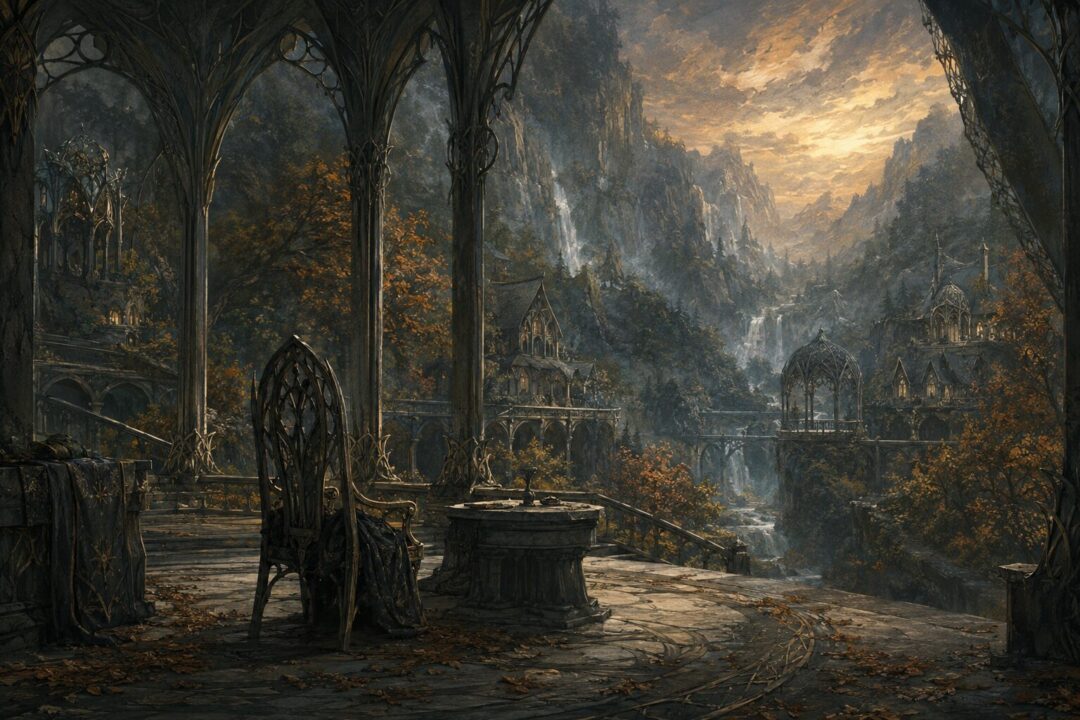
Rivendell too belongs to this passing world. It remains a place of lore and refuge, but Elrond’s road leads west. His house has fulfilled its purpose: it sheltered the heirs of Isildur, preserved memory, helped send the Ring toward its destruction, and became the place where the free peoples chose the only path left. Once that task is done, Rivendell’s deepest role in the story is complete.
These places are victorious because they helped defeat Sauron. They are tragic because the victory makes their continuing impossible.
Not All Elves Simply Vanish at Once
It is also important to be precise: the texts do not mean every Elf instantly leaves Middle-earth when Sauron falls. The great departure at the Grey Havens includes Elrond, Galadriel, Gandalf, Bilbo, Frodo, and other High Elves, and Appendix B places the Last Riding of the Keepers in September of Third Age 3021. Later traditions in the appendices tell of Legolas building a grey ship after Aragorn’s death and sailing over Sea, with Gimli said to go with him. آردا، دنیای تالکین
So the departure is both a single unforgettable scene and a longer historical fading.
Some Elves remain for a time. Some Silvan Elves are not described as immediately departing. Celeborn himself is associated with remaining in Middle-earth for a while after Galadriel’s departure, though the final details of his last journey are not fully dramatized in the narrative. The Fourth Age is not empty of Elves on its first morning.
But the “Eldar of story and song” are ending their central role. The great Elvish powers that shaped the history of the earlier ages are withdrawing. What remains is memory, remnant, and fading presence.
That distinction matters because it prevents the ending from becoming too simple. The Elves do not all disappear like a curtain falling. Rather, their age has ended, and those who remain do so in a world no longer ordered around them.
The Moral Cost of Letting the World Change
The Elves leaving Middle-earth is not a defeat in the same way Sauron’s fall is a defeat. They are not conquered. They are not morally exposed as villains. Their departure is closer to a sacrifice: the surrender of beauty that cannot rightly be preserved by force.
This is one of the deepest tensions in the legendarium. The Elves love the world intensely because they are bound to it. They remember what has been lost. They carry grief longer than Men can imagine. Their longing is not foolish. Who would not want Lothlórien to remain golden? Who would not want Rivendell’s songs, books, and healing halls to endure?
But the story repeatedly warns that refusing change can become a spiritual danger. Sauron offers order without freedom. The Ring offers power without humility. Even the gentler Elvish desire to preserve can become perilous if it tries to make Middle-earth into a museum of its own memory.
The victory over Sauron requires a harder wisdom: some things must be saved, and some things must be allowed to pass.
That is why the Grey Havens scene is not merely sad. It is morally charged. Frodo leaves because he cannot be fully healed in the world he saved. Elrond leaves after surrendering both his age and, through Arwen’s choice, part of his heart. Galadriel leaves because she has rejected the power to remain as a queen over a preserved world. Gandalf leaves because his mission is fulfilled. The ship carries victory, but it also carries wounds.
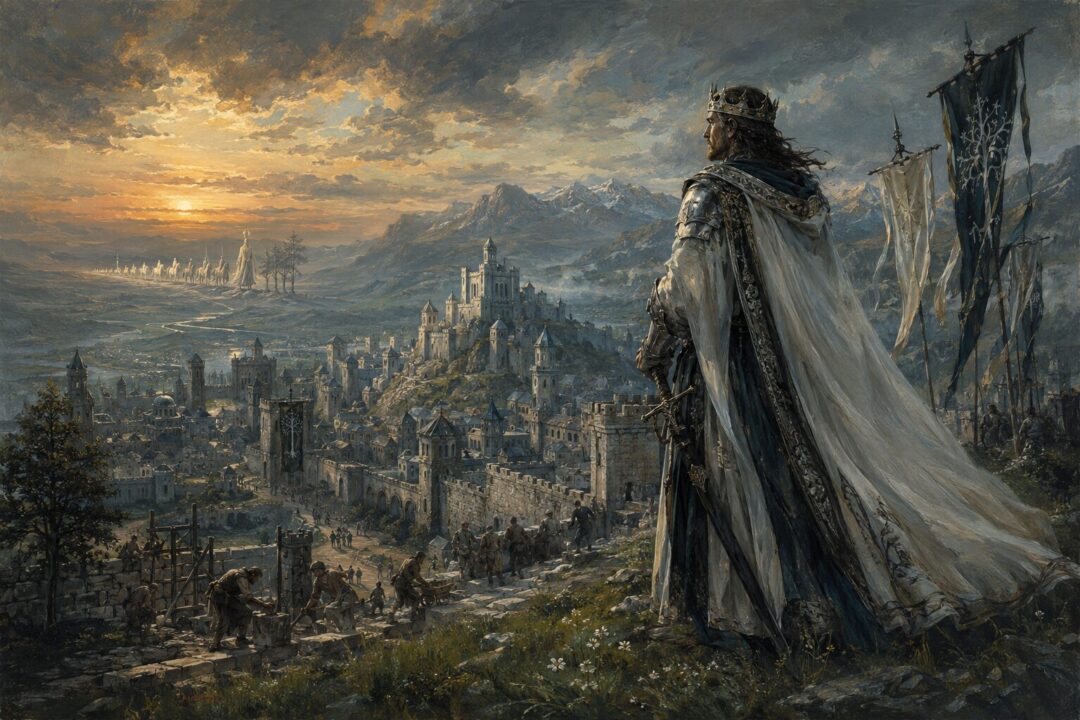
The Bittersweet Truth of the Westward Road
The Elves’ departure is often described as beautiful, and it is. But it is not simple. It is the sound of Middle-earth becoming less enchanted so that it can become free.
Sauron wanted a world ordered by one will. The destruction of the Ring prevents that. But it does not restore everything the Shadow damaged, nor does it freeze the world at its most beautiful moment. Instead, it opens the way for a mortal age — an age of rebuilding, memory, and responsibility.
That is why the ending lingers. The reader is not asked to cheer only because evil has fallen. We are asked to feel the cost of a victory that cannot keep everything it saves.
The Elves leave because the old powers are passing. Their departure marks the end of a world where ancient beauty could still stand visibly against time. What remains is not nothing. The Shire is restored. Gondor is renewed. Aragorn reigns. Sam returns home. Children are born. Gardens grow.
But the Sea has taken the last great light of the Elder Days westward.
Middle-earth is saved — and diminished. That is why the Elves leaving was not a simple victory. It was the price of a free world moving on.
Sources & Notes
- J.R.R. Tolkien, The Lord of the Rings, Book VI, Chapter 9, “The Grey Havens” — the departure scene shows victory joined to loss, healing, and the ending of the Elvish age in Middle-earth. https://tolkiengateway.net/wiki/The_Grey_Havens
- Tolkien Gateway, “Elves” — summarizes Elvish immortality, weariness/fading themes, and the Eldar’s relation to Aman and Middle-earth. https://tolkiengateway.net/wiki/Elves
- Tolkien Gateway, “Three Rings” — summarizes how the Elven Rings preserved realms and why the One Ring’s destruction also ended their power. https://tolkiengateway.net/wiki/Three_Rings
- The Encyclopedia of Arda, “Grey Havens” — independent reference for the Havens as the place of Elvish westward departure and the close of the Third Age. https://www.glyphweb.com/arda/g/greyhavens.html
Sources cover the Grey Havens, Elvish fading, and the ending of the Three Rings’ preserving power.