The Strange Insult Hidden Inside Treebeard’s Warning
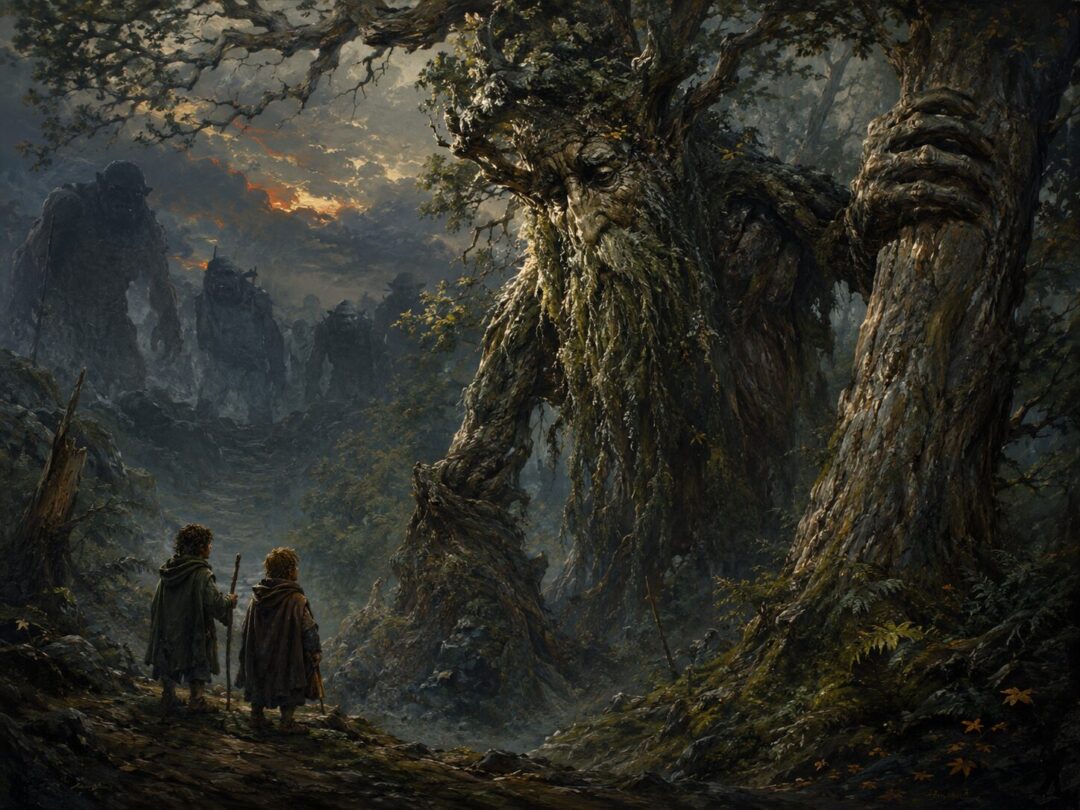
When Merry asks whether the Ents can really break the doors of Isengard, Treebeard answers with one of the most revealing comparisons in Middle-earth. He tells the hobbits that Trolls are strong, but that they are only “counterfeits,” made by the Enemy “in mockery of Ents,” just as Orcs were made in mockery of Elves.
It sounds, at first, like a simple origin note. Ents are good tree-shepherds; Trolls are their evil imitation. But the line carries far more weight than that. Treebeard is not merely saying that Trolls resemble Ents in size or strength. He is naming a deeper law of evil in Middle-earth: the Shadow does not honor what it imitates. It copies the outward power of living things while stripping away their purpose, memory, pity, and harmony with the world.
That is why the comparison matters. Trolls are not just big monsters. They are what strength looks like when it is severed from wisdom.
“Mockery” Does Not Mean Trolls Were Made From Ents
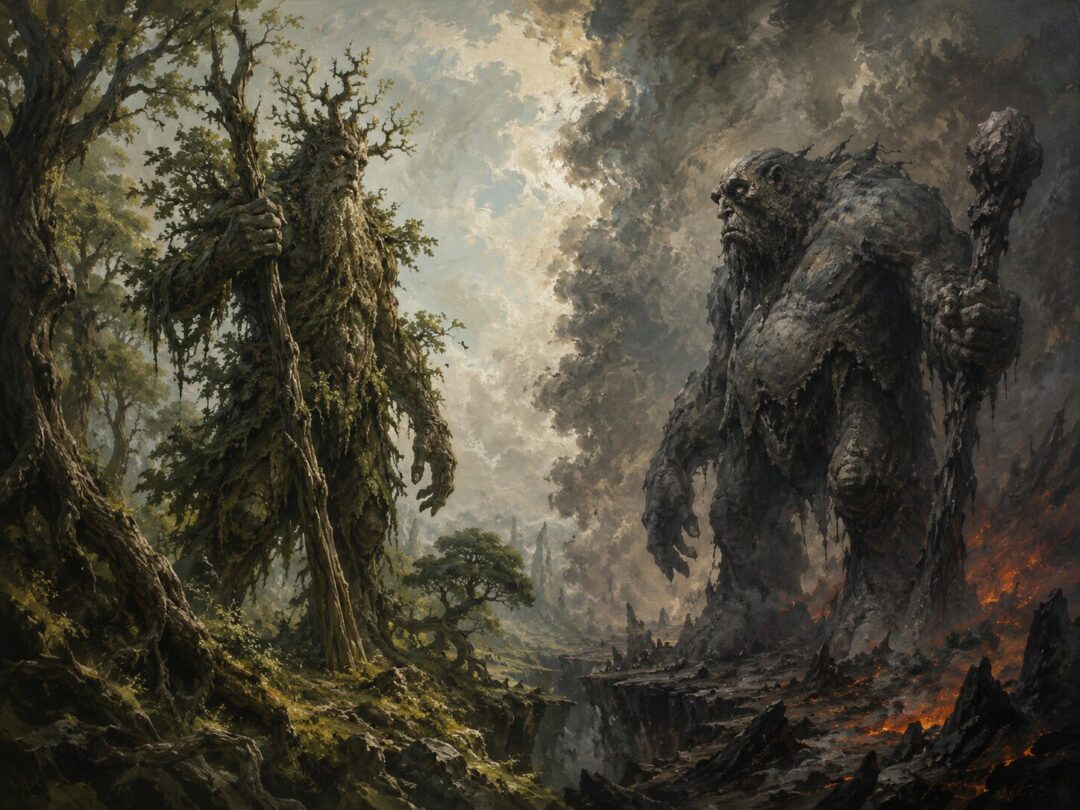
The most important point is also the easiest to miss: Treebeard does not say Trolls were corrupted Ents. He says they were made in mockery of Ents.
That distinction matters. In Tolkien’s texts, “mockery” often means a dark parody: a hostile imitation of something good, not necessarily the physical transformation of that thing. Treebeard himself compares Trolls and Ents to Orcs and Elves, but even there the origins of Orcs are famously difficult and not fully settled within the published legendarium. The comparison tells us how Treebeard understands the moral pattern, not every biological detail of the process.
So the safest reading is conservative: Trolls were fashioned, bred, altered, or devised by the Enemy as a crude imitation of Entish power. The texts do not clearly say that Ents were captured and turned into Trolls. They also do not give a complete technical account of how Trolls first came into being.
Treebeard is giving the hobbits a truth in the language of an Ent: old, moral, and rooted in likeness. Trolls are to Ents what a weaponized caricature is to a living guardian.
What Ents Actually Are
To understand the insult, we have to remember what Ents are.
Ents are not simply walking trees. They are ancient shepherds of trees, deeply tied to the forests of Middle-earth. Their origin is connected with Yavanna’s concern that the trees and growing things would be vulnerable once other living peoples awoke and began to use the world. The Ents are therefore bound to protection, patience, memory, and care.
That makes them unusual among the powers of Middle-earth. Ents are immensely strong, but their strength is not naturally aggressive. They are slow to anger, slow to decide, and deeply reluctant to act hastily. Treebeard’s long speech, his love of names, his grief for lost Entwives, and his sorrow over ruined forests all show that Entish power is inseparable from memory and responsibility.
An Ent can break stone, tear down walls, and march like a living forest when roused. But that violence is not his purpose. It is the last movement of a being whose true calling is preservation.
That is why Isengard matters so much. Saruman has not merely become politically dangerous. He has wounded the living world that Treebeard exists to guard. He has cut, burned, and consumed the trees. By the time the Ents march, their patience has become judgment.
What Trolls Are Missing
Trolls share some outward features with Ents: size, strength, endurance, and the ability to terrify smaller beings. But they lack the inward qualities that make Ents noble.
In The Hobbit, the three Trolls are dangerous but also crude and comically stupid. They quarrel, grumble, speak roughly, and are finally caught by dawn and turned to stone. In The Lord of the Rings, Trolls become darker and more militarized: the cave-troll in Moria is a brutal force in the deep places, while the Trolls used by Sauron in war are part of the machinery of the Shadow.
The contrast with Ents is sharp. Ents remember ancient forests; Trolls are associated with caves, darkness, stone, and violence. Ents speak slowly because words matter; Trolls are often dull, coarse, or driven by appetite and command. Ents guard growing things; Trolls are used to break, crush, and kill.
The mockery lies there. The Enemy sees the strength of Ents and reproduces only the part useful for domination. He does not create another shepherd. He creates a battering ram with limbs.
The Enemy’s Talent for Deformation
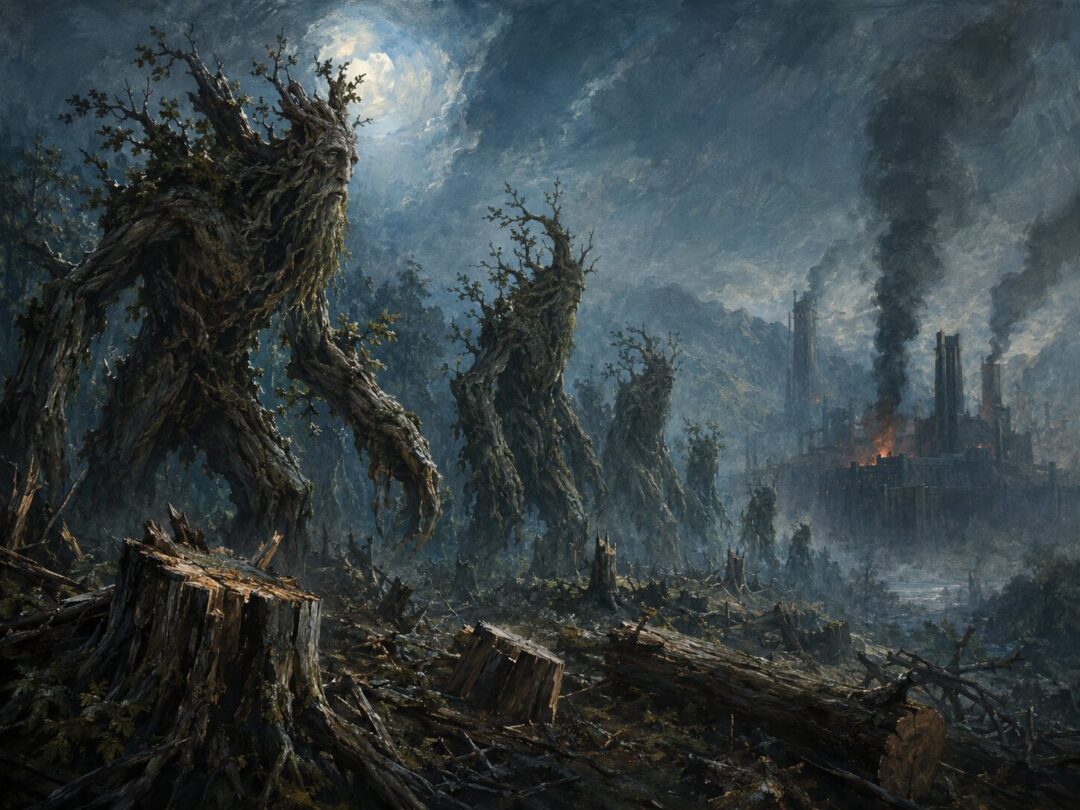
Treebeard’s line also points toward one of the central patterns of evil in Middle-earth. Morgoth and Sauron are not creative in the same life-giving sense as the powers aligned with the Music of creation. Their works repeatedly appear as distortions of what already exists: Orcs as a dark answer to Elves, Trolls as a dark answer to Ents, and many later weapons of the Shadow as corrupted reflections of craft, order, and rule.
This does not mean evil is powerless. Quite the opposite. In Middle-earth, evil is frightening because it can seize, bend, breed, train, and organize. It can increase fear. It can imitate majesty. It can make a fortress look like a kingdom and slavery look like order.
But it cannot make goodness. It cannot produce a true Entish equivalent because it cannot love the forest. It can make something strong enough to smash a gate, but not something wise enough to know why a gate should or should not be smashed.
That is why Trolls are “counterfeits.” A counterfeit may resemble the true thing from a distance. It may even be useful in crude ways. But it has no rightful inner value. It copies the surface and betrays the meaning.
Why Treebeard Says This Before Isengard Falls
Treebeard’s words come at a moment of awakening. The hobbits have stumbled into Fangorn, and the ancient shepherds of the trees are beginning to realize the scale of Saruman’s treachery. The Ents are not naturally soldiers, yet they are being forced into war because the war has entered the forest.
So when Treebeard compares Ents and Trolls, he is not offering a detached lecture. He is preparing Merry and Pippin to understand what an Ent can do when roused. Trolls are mighty, he says, but Ents are stronger.
That matters because the reader has already learned to fear Trolls. Trolls belong to old tales, dark caves, and armies of the Enemy. If Ents are stronger than Trolls, then the coming march on Isengard is not a quaint episode about talking trees. It is the release of a power older and more righteous than Saruman understands.
Saruman has machines, axes, furnaces, and disciplined servants. But he has forgotten that the world he exploits is not dead material. Fangorn can answer.
The Tragedy of Strength Without Wisdom
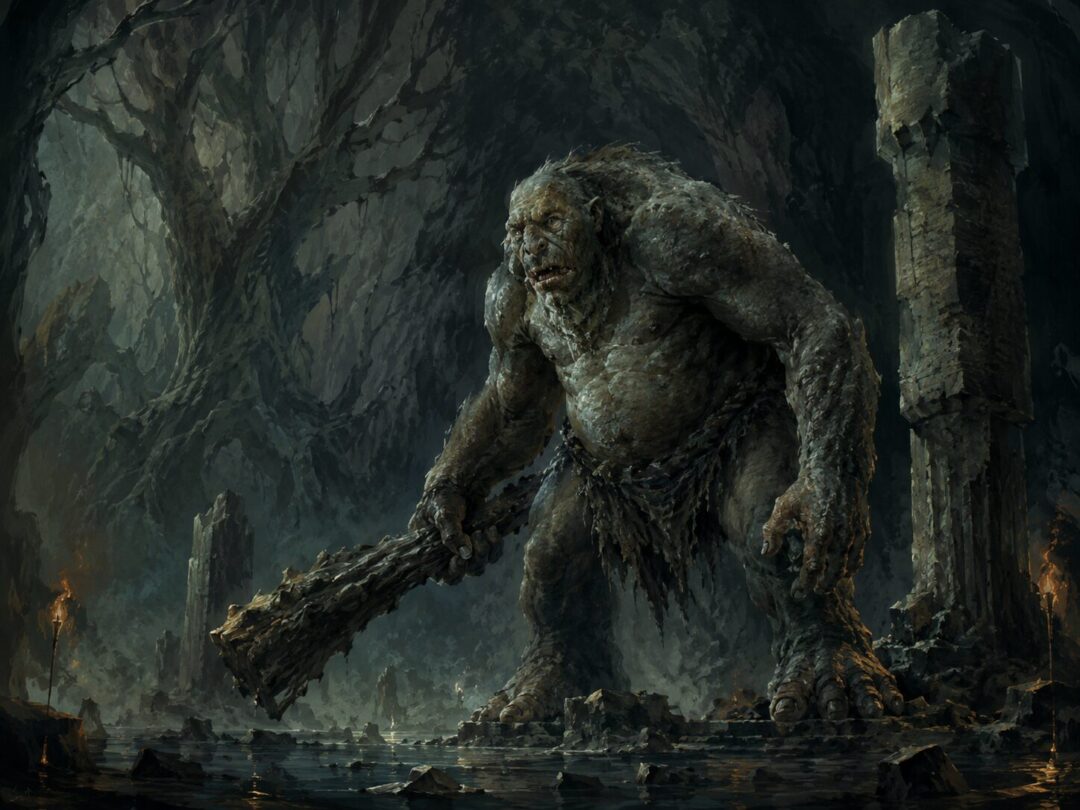
The Troll is one of Middle-earth’s clearest images of strength without moral imagination.
An Ent’s strength comes with slowness, grief, and care. Treebeard does not rush to war because he knows that action has consequences. The Ents deliberate because they are not merely deciding how to win; they are deciding whether their ancient people must spend themselves in a struggle that may hasten their own fading.
A Troll has no such burden in the stories. It is dangerous because it is strength simplified. Hunger, darkness, obedience, and violence are enough.
This is part of the moral horror behind the word “mockery.” Evil does not merely hate beauty by destroying it. It also hates beauty by making ugly copies of it. It turns guardianship into brute force, craft into industry, command into tyranny, and courage into domination.
Trolls are not frightening only because they are large. They are frightening because they show what the Enemy wants from living things: power without conscience.
The Olog-hai and Sauron’s Dark Improvement
The later history of Trolls makes the pattern even darker. In the War of the Ring, Sauron’s forces include the Olog-hai, a stronger and more terrible kind of Troll. The appendices describe them as appearing near the end of the Third Age, and they are able to endure the sun while Sauron’s will is upon them.
This is not a redemption of Troll-kind into intelligence or independence. It is a further militarization. Sauron takes the old brute image and sharpens it for war. Where older Trolls are dull and vulnerable to daylight, these newer servants are more dangerous, better fitted to the needs of Mordor.
That development fits Sauron’s character. He is less chaotic than Morgoth and more interested in order, control, and domination. If Morgoth’s mockery produces monstrous distortion, Sauron’s refinement turns distortion into a system.
The Olog-hai are therefore not a contradiction of Treebeard’s line. They are its continuation. The counterfeit has been improved as a weapon, not restored as a living good.
Why Ents and Trolls Are Opposites, Not Just Rivals
The deepest contrast is not forest versus cave, or tree versus stone, or good giant versus bad giant. It is purpose.
Ents exist in relation to something beyond themselves. They are shepherds. Their identity points outward, toward the trees, the forests, and the long memory of the living world. Even their sorrow over the Entwives is tied to loss, separation, and the fading of a whole way of life.
Trolls, as presented in the main stories, are not given that kind of vocation. They do not preserve. They consume. They do not remember the world lovingly. They are used against it. They do not stand as witnesses to ancient beauty. They stand as evidence that ancient beauty has enemies.
That is why Treebeard’s comparison feels so bitter. Trolls are not merely unlike Ents. They are an insult aimed at Ents: a version of their strength emptied of their soul.
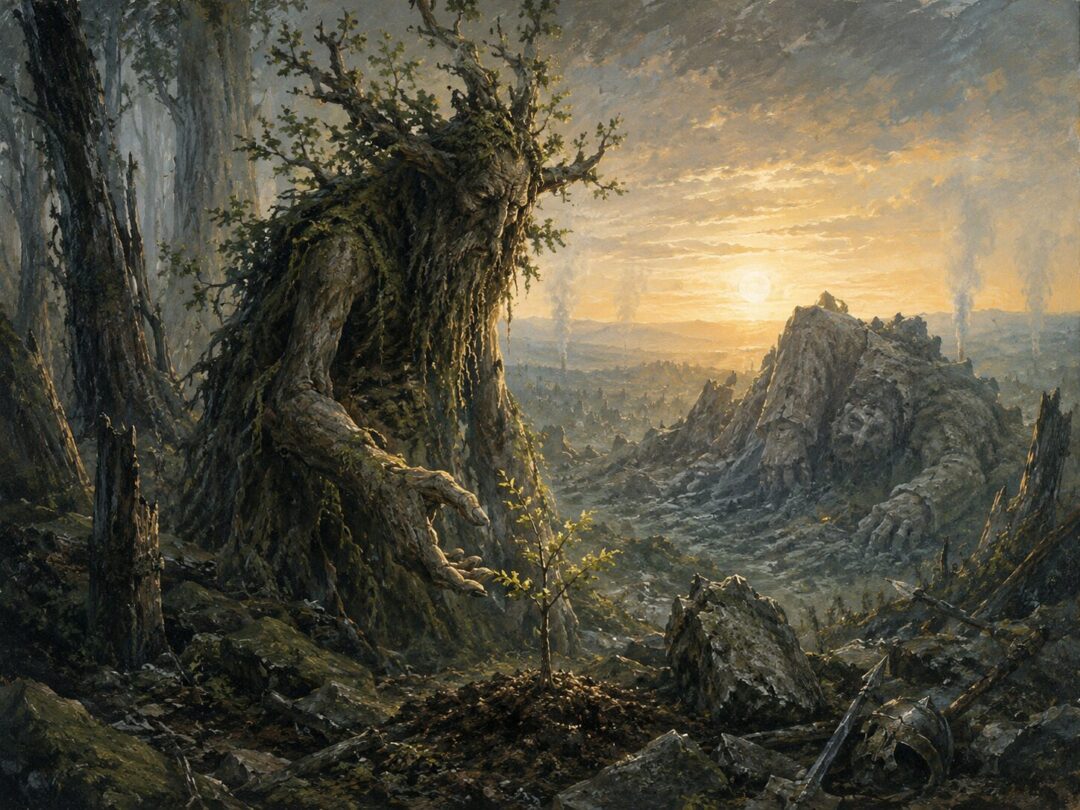
The Hidden Rule in Treebeard’s Sentence
Treebeard’s remark is easy to pass over because it comes in a conversation full of charm, humor, and old forest mystery. But it quietly explains a great deal about Middle-earth.
Evil can study the good. It can envy it. It can imitate its power. But when it imitates, it reveals what it cannot understand.
The Enemy looks at Elves and sees immortality, skill, and beauty worth twisting into Orcs. He looks at Ents and sees strength worth copying into Trolls. But he does not grasp the inner life that makes Elves and Ents more than useful forms. He cannot reproduce reverence, stewardship, song, pity, or patient love.
So when Treebeard calls Trolls counterfeits, he is not simply insulting them. He is exposing the poverty of the Shadow. Trolls are powerful, but their power is borrowed in shape and ruined in meaning.
That is the tragic irony: the Enemy can make something strong enough to frighten the world, but not something whole enough to belong to it.
Sources & Notes
- J.R.R. Tolkien, The Lord of the Rings, Book III, Chapter 4, “Treebeard” — Treebeard’s statement that Trolls were made in mockery of Ents is the article’s central textual anchor; Tolkien Gateway’s Treebeard summary identifies the character and chapter context. https://tolkiengateway.net/wiki/Treebeard
- Tolkien Gateway, “Ents” — summarizes the Ents as tree-shepherds tied to Yavanna’s concern for growing things, supporting the contrast between guardian-strength and brute parody. https://tolkiengateway.net/wiki/Ents
- Tolkien Gateway, “Trolls” — notes that Trolls were made by Melkor in mockery of Ents and describes their artificial, darkness-associated nature in the legendarium. https://tolkiengateway.net/wiki/Trolls
- The Encyclopedia of Arda, “Trolls” — provides an independent Tolkien-reference overview of Troll origins, varieties, and sunlight/stone associations, useful for the article’s distinction between Ents and Trolls. https://www.glyphweb.com/arda/t/trolls.html
Sources cover the Treebeard passage, Entish purpose/origin, and Trolls as a dark parody rather than corrupted Ents.