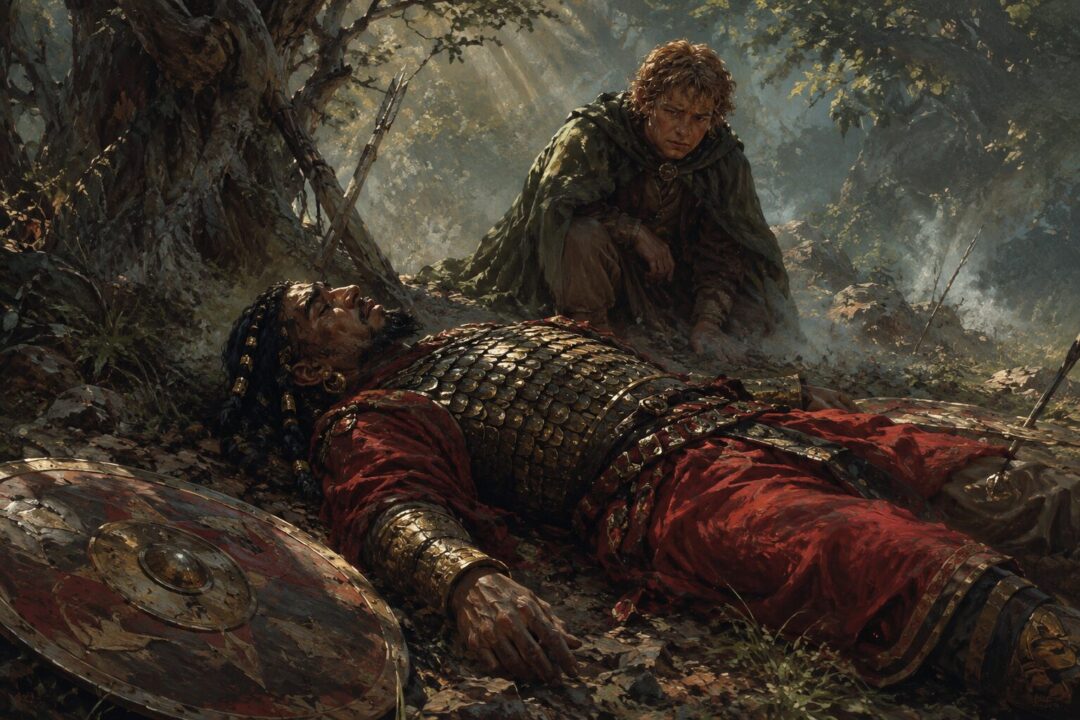
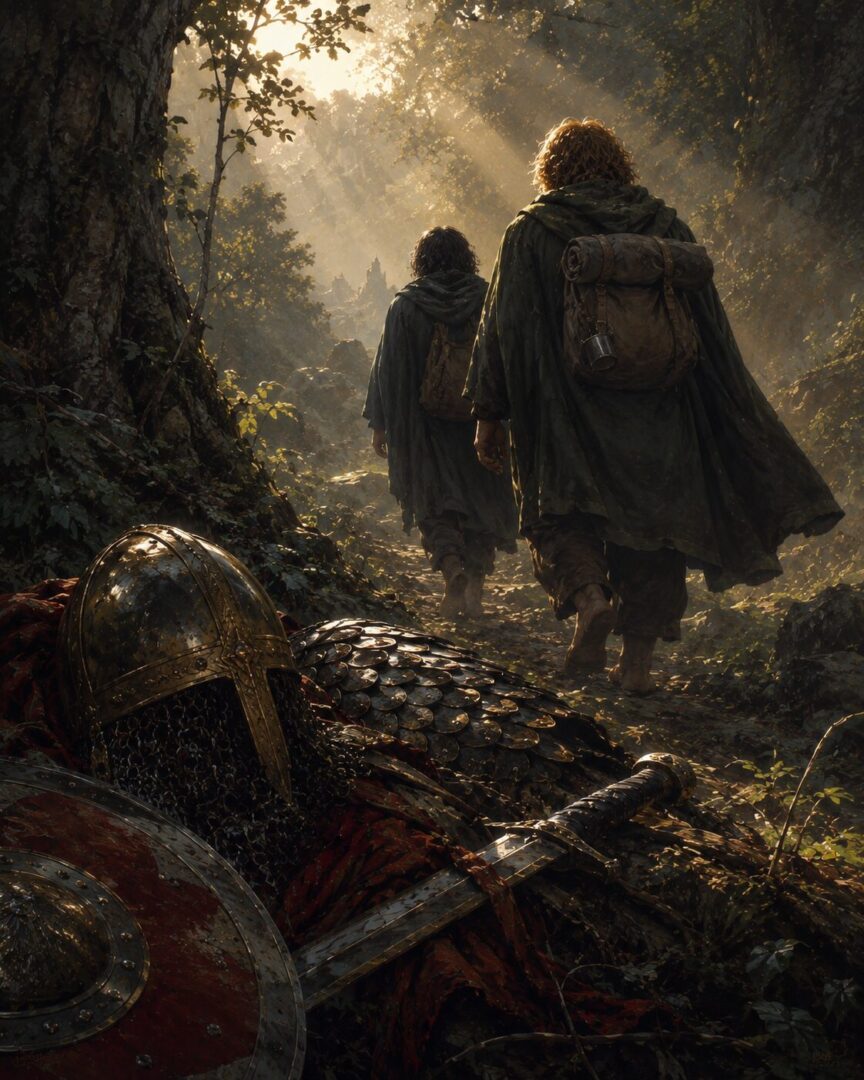
When readers think of the War of the Ring, they often picture the One Ring, the White City, or the Black Gate. Yet one of the story's most revealing moments happens far from any throne room or battlefield of legend. In the woods of Ithilien, a single dead Haradrim warrior falls at Sam Gamgee's feet.
The scene lasts only a few paragraphs, but it quietly changes how the entire conflict can be understood.
Until that moment, evil has largely worn monstrous faces. Orcs hunt, torture, and destroy. Nazgûl inspire supernatural terror. Sauron remains an unseen power whose will bends kingdoms. But the dead Southron is different. He is a man. He has a homeland, clothing of remarkable craftsmanship, and a life that ended far from home. Instead of asking whether the enemy deserved death, Sam wonders something far more unsettling: who he was, why he came, and whether he would rather have lived peacefully.
That brief act of compassion does not weaken the moral clarity of the War of the Ring. Instead, it deepens it. Evil remains real, but Tolkien's world reminds us that not every person serving the Shadow necessarily chose it with full freedom or understanding.
A Battle Seen Through Ordinary Eyes
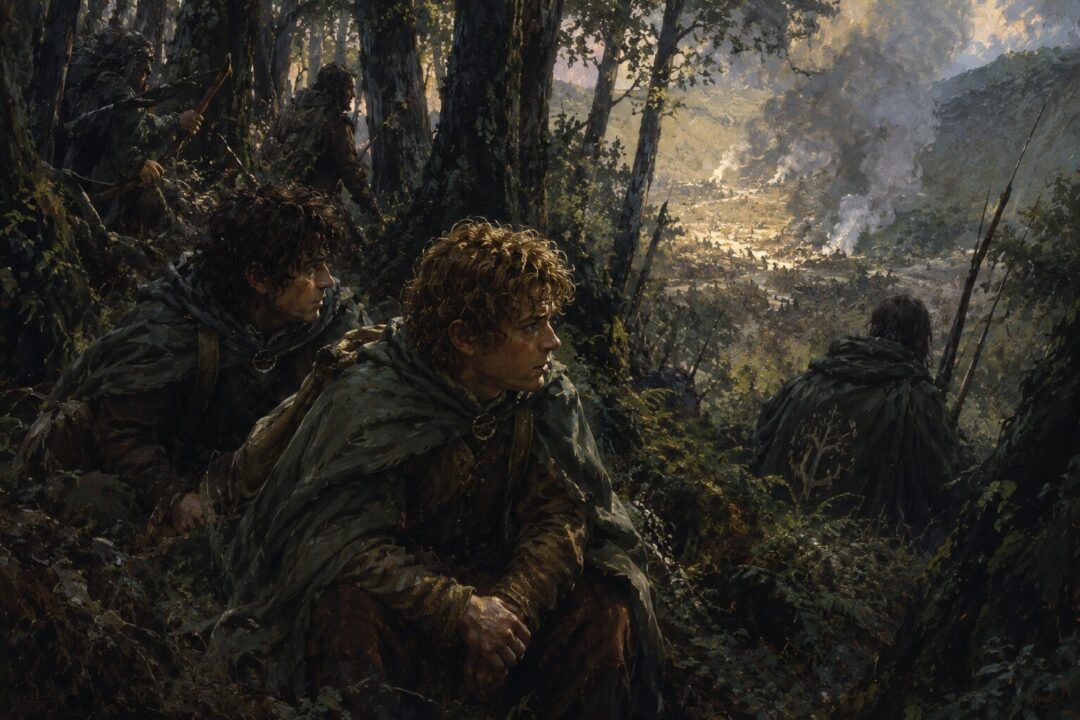
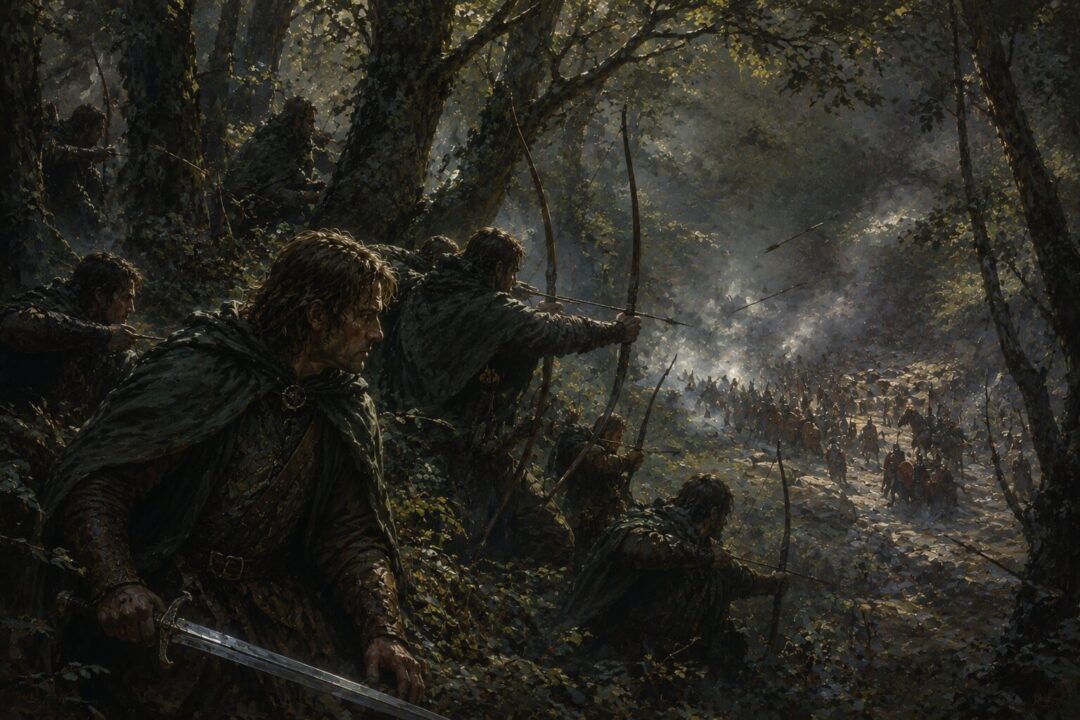
The encounter occurs during Faramir's ambush of a Haradrim force traveling through Ithilien toward Mordor. Frodo and Sam are hidden nearby with the Rangers and experience the battle largely through sounds rather than heroic spectacle.
This perspective matters.
Readers never receive a tactical overview or triumphant account of victory. Instead, steel clashes in the trees, arrows fly, and confusion reigns. Then one of the slain Haradrim falls close enough for Sam to examine.
The narration immediately tells us that this is Sam's first experience of "a battle of Men against Men," and that he does not like it. Rather than celebrating the defeat of an enemy column, the story pauses on a single casualty and on Sam's response to seeing him.
The emotional focus shifts away from military success toward the human cost of war.
The Haradrim Are Enemies, But They Are Still Men
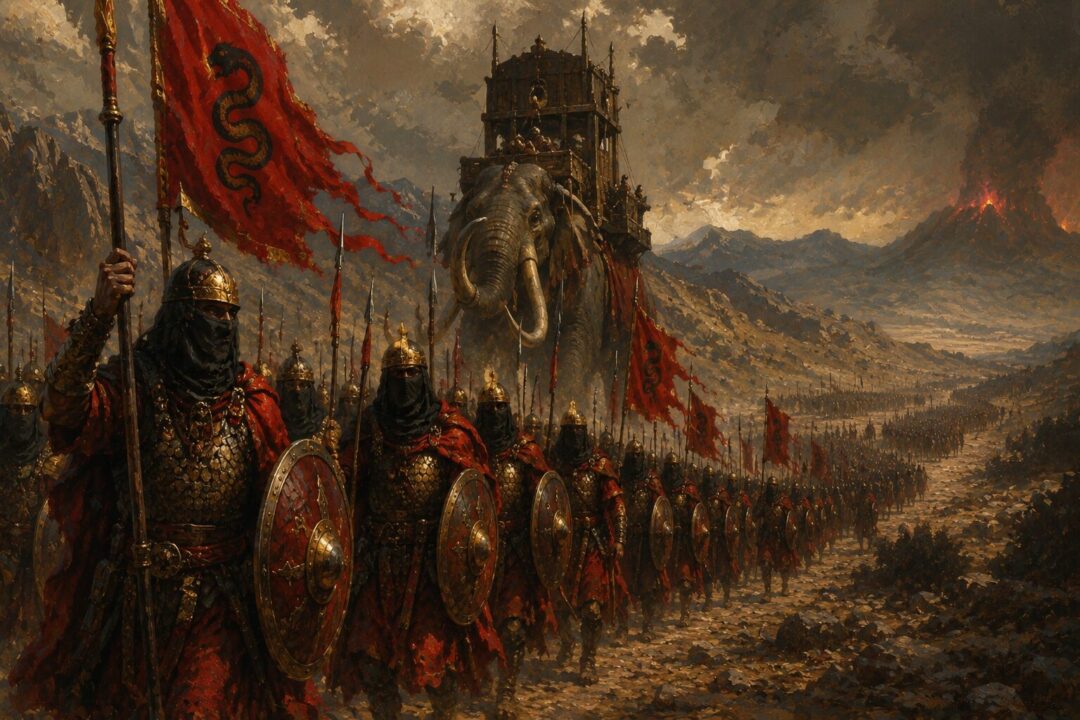
Throughout The Lord of the Rings, the Haradrim fight alongside Sauron's armies. They appear at Ithilien, at the Pelennor Fields, and elsewhere as dangerous opponents of Gondor and Rohan.
The texts never deny this.
Their weapons are real. Their warriors willingly march beneath Sauron's banners. Some ride mighty mûmakil into battle. Their arrival increases the danger facing the Free Peoples.
Yet Tolkien consistently distinguishes them from Orcs.
The Haradrim belong to the race of Men. Like other peoples of Middle-earth, they possess free will, cultures, histories, and families. Earlier traditions explain that Sauron's influence spread across many lands over long ages, and the peoples of Harad eventually came under his domination. The narrative never claims that every individual Haradrim was personally evil in heart.
That distinction allows Sam's question to exist.
If the dead warrior were simply another monster, there would be little reason to wonder about his name or his home.
Sam's Most Important Question
The passage contains one of the most remarkable questions in the entire legendarium.
Sam wonders:
what the man's name was,
where he came from,
whether he was really evil of heart,
what lies or threats had brought him so far,
and whether he would rather have remained peacefully at home.
Notice what Sam does not do.
He never excuses the war.
He never suggests Gondor should surrender.
He never denies that the Haradrim have become dangerous enemies.
Instead, he separates the individual from the machinery that brought him there.
That distinction becomes one of the moral foundations of the chapter.
The Shadow Uses More Than Fear
Sauron's greatest weapon is often imagined as armies or dark magic.
Yet throughout The Lord of the Rings, he more frequently rules through domination.
Kings fear him.
Servants obey him.
Nations become dependent upon him.
The Ring itself tempts rather than merely compels.
Sam's reflection fits naturally into this larger pattern.
The text does not answer whether the dead Haradrim marched willingly, under deception, from loyalty, or because of coercion. Sam himself can only speculate. His thoughts remain questions rather than conclusions.
That restraint is significant.
The story refuses to erase individual responsibility, but it also refuses to assume complete freedom under tyranny.
Faramir Provides an Important Contrast
The battle itself is commanded by Faramir, one of Gondor's greatest captains.
Faramir does not hesitate to fight.
His Rangers strike swiftly because allowing enemy forces to reach Mordor would strengthen Sauron's armies.
Nothing in the narrative criticizes this decision.
Later, Faramir explains that he loves not the sword for its sharpness, nor the warrior for his glory, but only that which they defend.
That philosophy helps frame Sam's reflections.
The Rangers wage war because they believe it necessary for the survival of their people, not because killing enemies is glorious.
Sam's compassion therefore complements, rather than contradicts, Faramir's understanding of just resistance.
The story presents both military necessity and personal pity at the same time.
The Enemy Is Not Always the Same as Evil
One of the subtler ideas running through the story is that "enemy" and "evil" are not always identical categories.
Sauron represents deliberate tyranny.
The One Ring represents corrupting power.
Orcs, though complex in Tolkien's wider writings, function within the narrative primarily as servants of destruction.
Human opponents occupy a different space.
Boromir falls into temptation.
Denethor succumbs to despair.
The Men of Dunland fight against Rohan.
The Haradrim march for Mordor.
Each case differs.
Some repent.
Some do not.
Some are victims of circumstances that readers can only partially see.
Sam's questions encourage readers to avoid reducing all human opponents into identical moral categories.
Mercy Appears Before Victory
It is striking that this moment occurs long before the Ring is destroyed.
If Sam had reflected only after Sauron's defeat, the passage might feel like retrospective generosity.
Instead, it happens while he himself is hunted, frightened, exhausted, and deep within enemy territory.
Compassion therefore appears before safety.
That timing matters because mercy throughout The Lord of the Rings is almost always shown before outcomes are known.
Bilbo spares Gollum.
Frodo spares Gollum repeatedly.
Aragorn repeatedly shows restraint where possible.
Even Gandalf warns against being eager to deal out death in judgment.
Sam's thoughts about the Haradrim belong to this same moral pattern.
Mercy begins as an attitude before it becomes an action.
The Limits of What the Text Actually Says
It is important not to overstate the passage.
The text never reveals the dead warrior's personal beliefs.
It never says he was secretly opposed to Sauron.
It never confirms that he had been forced into service.
Nor does it deny that some Haradrim may have willingly supported Sauron's cause.
Sam simply does not know.
His questions remain unanswered.
That uncertainty is precisely what gives the scene its power.
Rather than replacing one certainty with another, the narrative reminds readers that war often hides the full stories of those who die.
Why the Scene Still Feels Different
Many fantasy stories divide the world into heroes and faceless enemies.
This scene quietly refuses that simplicity.
The Haradrim warrior receives no name.
Yet paradoxically, his anonymity makes readers ask exactly the questions Sam asks.
He becomes representative of countless lives beyond the borders of Gondor—people with languages, customs, homes, and histories that the central characters scarcely know.
The world of Middle-earth suddenly feels larger than the map followed by the Fellowship.
The conflict becomes more tragic because it reaches peoples whose lives remain mostly unseen.
What Sam Changes About the Reader
By the end of the chapter, the military situation has hardly changed.
The Rangers have won their ambush.
The Ring-bearers continue toward Mordor.
Sauron's power still grows.
Yet readers see the war differently.
The greatest victory of this brief scene is not strategic.
It is moral.
Sam refuses to let a dead enemy become merely another number in a campaign. He instinctively imagines the life that existed before the armor, before the march, before the arrow.
That single act of imagination preserves something the Shadow constantly seeks to destroy: the ability to recognize another person's humanity.
The War of the Ring remains a struggle that must be fought. The armies of Gondor cannot simply lay down their weapons while Sauron's dominion spreads. The story never suggests otherwise.
But it also insists that even in a necessary war, victory should never require forgetting that many who stand on the opposite side are still human beings whose lives contain hopes, fears, homes, and names that history may never record.
That is why Sam's reflection echoes long after the battle itself has passed.
It transforms a moment of violence into one of the deepest expressions of pity in all of The Lord of the Rings, reminding readers that defeating evil is not the same thing as losing compassion. Indeed, the ability to keep compassion alive may be one of the clearest signs that the Free Peoples are still resisting the Shadow in spirit as well as in arms.
Sources & Notes
- https://tolkiengateway.net/wiki/Of_Herbs_and_Stewed_Rabbit — chapter summary covering Faramir’s Ithilien ambush and Sam’s reflection on the dead Southron warrior.
- https://tolkiengateway.net/wiki/Haradrim — background on the Men of Harad, their service in Sauron’s armies, and their distinction from Orcs or other monstrous servants.
- https://tolkiengateway.net/wiki/Ithilien — context for the setting of the ambush where Frodo and Sam encounter Faramir’s Rangers and the slain Haradrim.
- https://tolkiengateway.net/wiki/Faramir — supports the article’s contrast between Gondor’s military resistance and Faramir’s moral clarity about power, pity, and the Enemy.
Sources cover the Ithilien ambush, the Haradrim, Sam’s dead Southron reflection, and Faramir’s role.