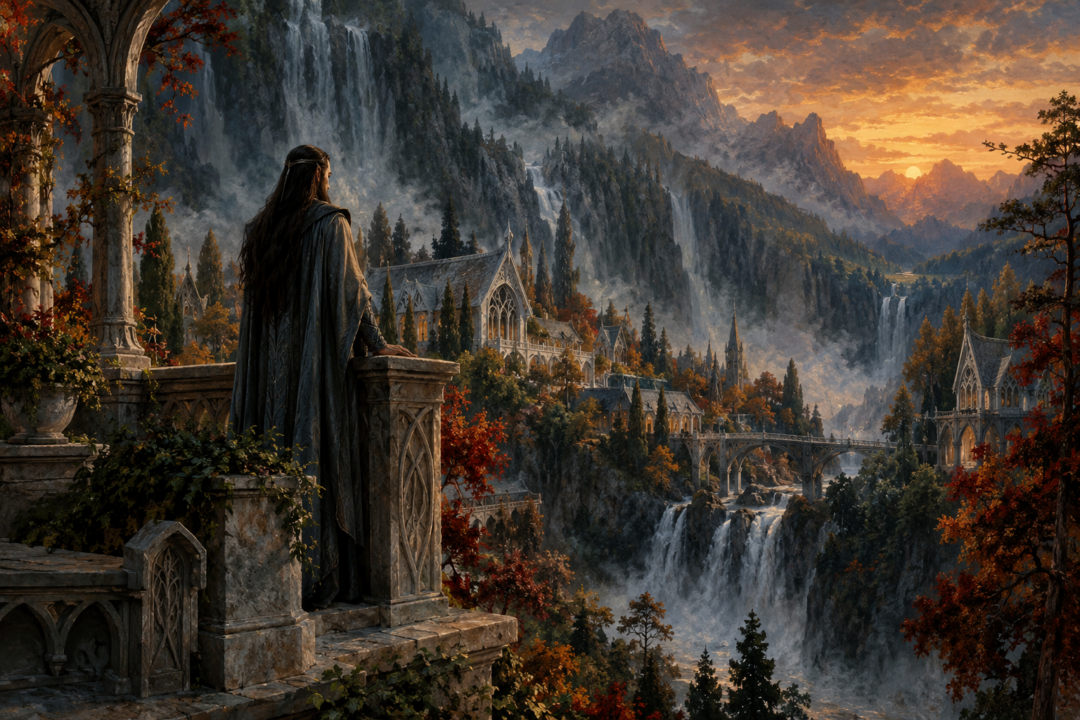
Rivendell feels like the kind of place that should survive forever.
When Bilbo first reaches the hidden valley in The Hobbit, it is already ancient. When Frodo arrives generations later, the Last Homely House still seems almost untouched by the decay consuming the wider world. Songs, stories, healing, memory, and counsel endure there while kingdoms outside its borders have risen and fallen.
Yet Rivendell is not timeless.
Its fate is tied to Elrond, to the power that helped preserve his refuge, and ultimately to the passing of the Elves from Middle-earth. What makes its ending unusual is that the texts give us a precise date for Elrond's departure—but no equally precise date for the end of Rivendell itself.
The valley does not simply vanish when its lord sails West.
It lingers.
And that distinction reveals something important about the ending of the Third Age: the old world does not disappear in a single moment. It fades unevenly, leaving inhabited remnants behind after the powers that sustained them have already passed away.
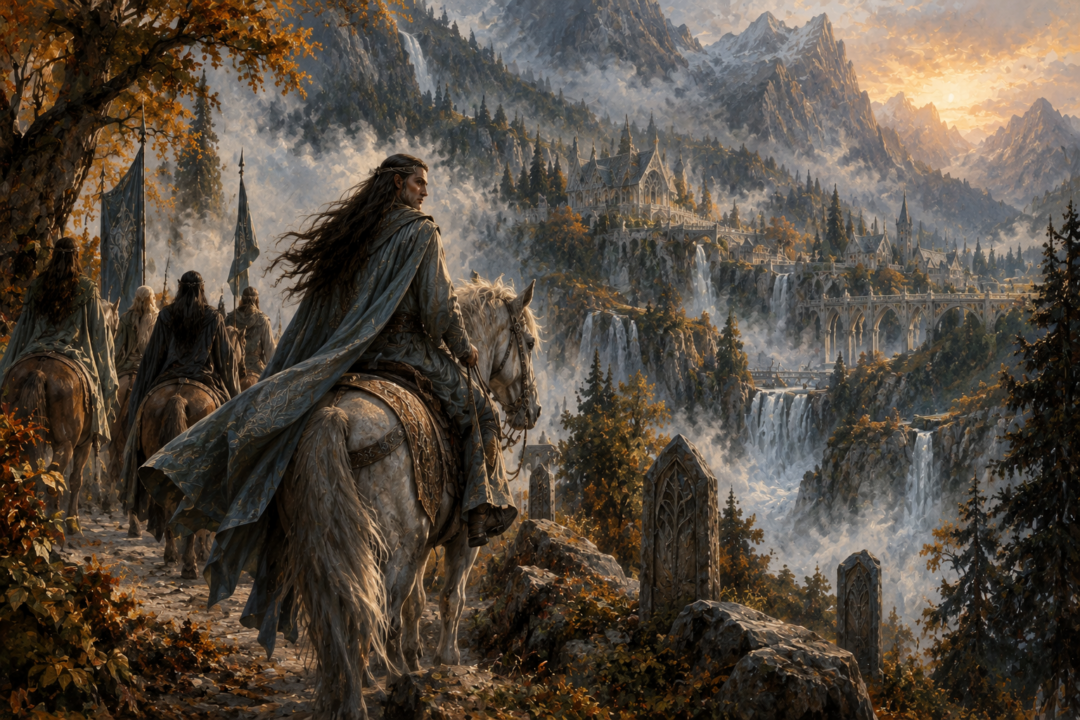
Rivendell Was More Than Elrond's Home
Imladris began as a refuge during the war between Sauron and the Elves of Eregion in the Second Age. Elrond established himself there during that conflict, and after Sauron was driven from Eriador the valley became a major Elven stronghold.
Its importance only grew.
During the Third Age, Rivendell preserved knowledge that had disappeared elsewhere. The heirs of Isildur were fostered there. The shards of Narsil were kept there. Aragorn was raised there under Elrond's protection. Bilbo eventually retired there, and the Council of Elrond gathered there before the Fellowship began its journey.
Rivendell therefore functioned as far more than a pleasant Elven settlement.
It was a sanctuary of memory.
That role matters because preservation is one of the central concerns surrounding the Three Rings of the Elves.
Elrond possessed Vilya, the Ring of Sapphire. The precise workings of the Three are deliberately mysterious, and the texts do not provide a mechanical explanation of exactly what Vilya did to Rivendell. What is clear is that the Three were associated with the preservation of things unstained by Sauron and with resistance to the weariness and decay of time.
Rivendell's extraordinary endurance belongs within that larger pattern.
But the preservation offered by the Three came with a terrible condition.
Their fate was bound to the One Ring.
Victory Over Sauron Also Doomed the Elven Rings
At the Council of Elrond, the central dilemma is larger than simply destroying Sauron.
If the One Ring is destroyed, Sauron will be overthrown—but the Three Rings may lose their power as well. The Elves understand that victory could therefore destroy the very means by which some of their remaining beauty and memory have been preserved.
That is exactly what happens.
The One Ring is destroyed on 25 March 3019 of the Third Age. Sauron falls, and the power of the Three ends with him.
This creates an important distinction in Rivendell's chronology.
The decisive change in the valley's supernatural condition occurs before Elrond actually leaves it.
Elrond does not sail West immediately after Sauron's defeat. He remains in Middle-earth for more than two additional years, participating in the aftermath of the war and eventually travelling back toward Rivendell.
Only in September 3021 does the final company of the Ring-bearers travel westward. Elrond, Galadriel, Gandalf, Frodo, and Bilbo reach the Grey Havens and depart over the Sea.
So there are really two endings involved.
First, Vilya loses its power.
Then Elrond leaves.
Neither event, however, is explicitly identified as the moment when Rivendell becomes empty.
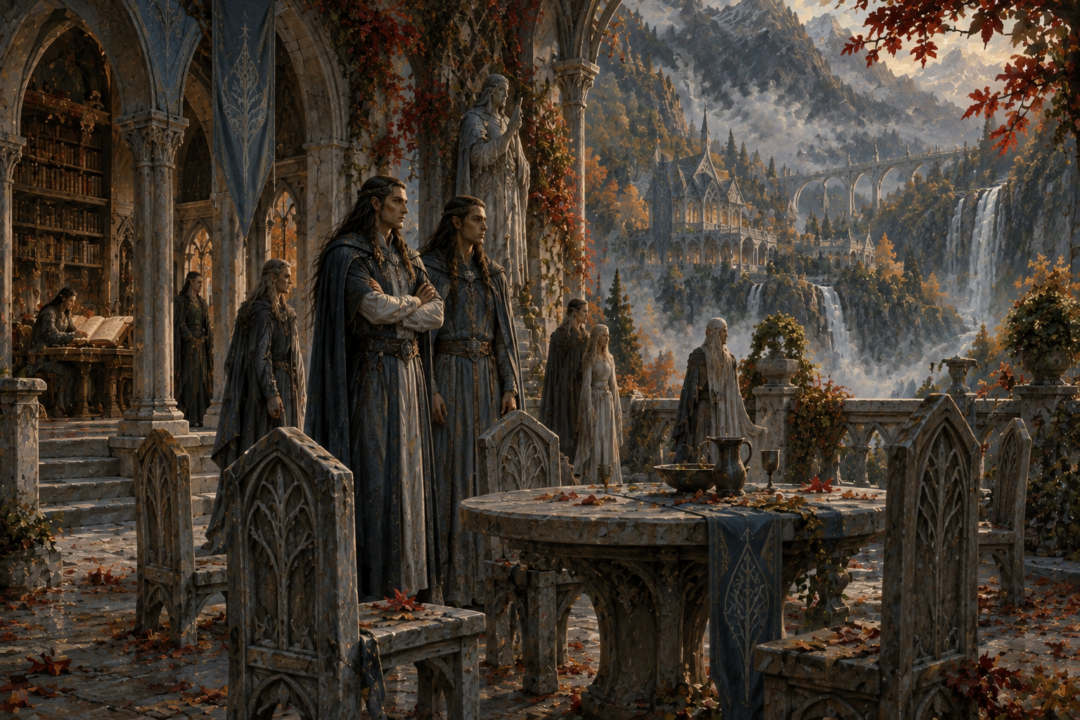
Elrond's Departure Is Precisely Dated
The departure of the Keepers of the Rings is one of the most carefully dated transitions at the end of the Third Age.
Appendix B places their sailing on 29 September 3021.
For Elrond personally, this is an enormous severance. He had established Imladris thousands of years earlier. Through wars, the destruction of kingdoms, the rise of Angmar, and the long decline of the Dúnedain, Rivendell remained his home and refuge.
His departure therefore ends Rivendell as the realm personally ruled by Elrond.
But it does not end habitation there.
This is where the often-overlooked evidence in the Prologue becomes crucial.
The section concerning Shire records says that Meriadoc Brandybuck probably obtained information from Rivendell and visited it more than once. It then states that after Elrond had departed, his sons remained there for a long time with some of the High-elven people.
That single detail prevents us from assigning Rivendell's end to 3021.
Elrond leaves.
Rivendell continues.
Elladan and Elrohir Keep the Valley Connected to Its Past
Elrond's sons, Elladan and Elrohir, do not sail with their father.
Their ultimate fate is deliberately left unresolved. Letter 153 likewise says that their end is not told and that they delayed their choice and remained for a while.
That uncertainty should not be filled with invented certainty. We cannot safely assign them a departure date, nor can we claim that the texts definitively record which final choice they made.
What we can say is that they remained at Rivendell after Elrond's departure.
And they were not alone.
Some High Elves remained with them.
This transforms the image of early Fourth Age Rivendell. It was no longer the great refuge of the Third Age under Elrond wielding Vilya, but neither was it immediately an abandoned ruin.
People still lived there.
Knowledge still survived there.
Indeed, Merry's later association with Rivendell suggests that the valley continued functioning as a repository of historical memory after the War of the Ring.
Its decline was therefore gradual rather than instantaneous.
Celeborn Makes Rivendell's Final Years Even Harder to Date
Another great figure of the Elder Days eventually comes to Imladris.
After Galadriel leaves Middle-earth, Appendix B says that Celeborn eventually grows weary of his realm and goes to Rivendell to dwell with Elrond's sons.
The Prologue adds an even more haunting detail.
It says there is no record of the day when Celeborn finally sought the Grey Havens.
That absence matters.
Celeborn's eventual departure is associated with the passing of the last living memory of the Elder Days in Middle-earth, but the chronology deliberately refuses to provide a neat date.
Rivendell therefore becomes something different in the Fourth Age.
It is no longer the preserved stronghold of Elrond and Vilya. Instead, it becomes one of the final gathering places of people whose memories reach back into the ancient history of the world.
Its last chapter is not a destruction story.
It is a story of departures.
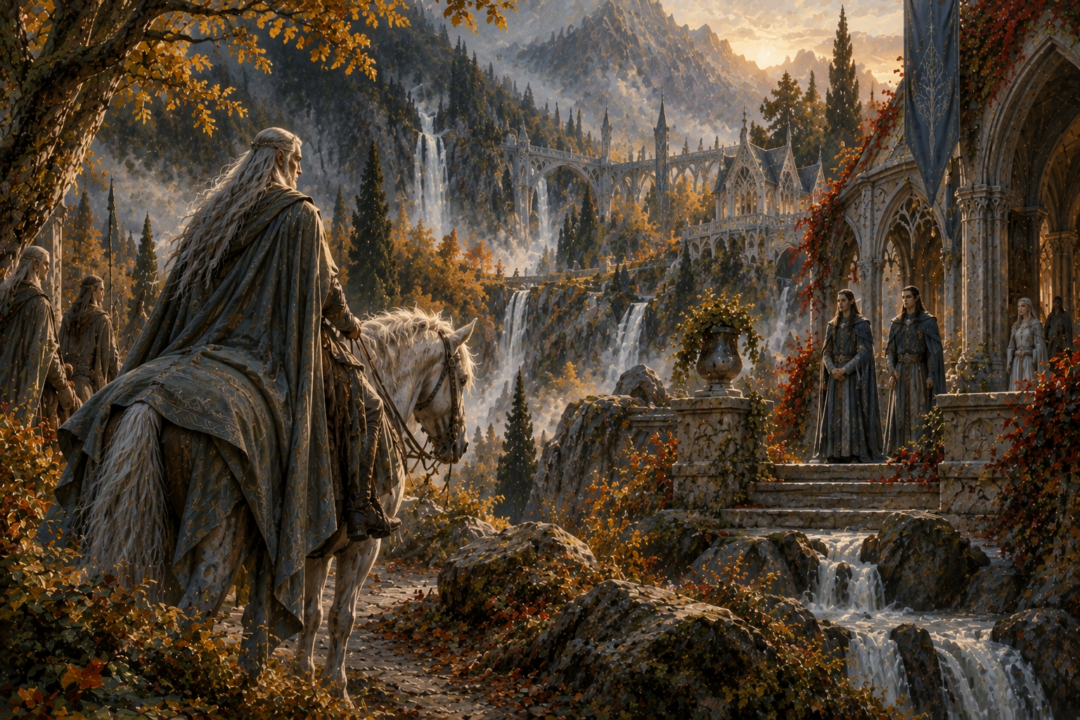
Arwen Gives Us a Later Boundary—but Not an Exact Date
There is one more clue.
Aragorn dies in Fourth Age 120. Before his death, he speaks with Arwen about the beginning of their love in the garden of Elrond.
His words indicate that by then nobody walks there anymore.
That gives us a powerful glimpse of Rivendell late in the Fourth Age.
The garden where Aragorn and Arwen once walked still exists in memory, but its people are gone.
Arwen herself later travels to Lórien, where she finds another once-great Elven land emptied and fading.
Yet even this does not give us the exact date Rivendell ceased to be inhabited.
It only provides a later boundary.
Elrond left in 3021 of the Third Age.
His sons and some High Elves remained afterward.
Celeborn later dwelt with them.
By the time of Aragorn's death in Fourth Age 120, the garden of Elrond is spoken of as a place where none now walk.
Somewhere between those points lies Rivendell's final abandonment.
The texts never tell us exactly where.
Rivendell Did Not Fall—It Faded
That uncertainty fits the larger transition from the Third Age into the Fourth.
Moria fell violently.
Númenor was drowned.
Arnor was destroyed through war and division.
But Rivendell receives no comparable catastrophe.
Its enemy is not an invading army.
It is the passing of its age.
The One Ring is destroyed, and the Three lose their power. Elrond sails West. The remaining High Elves gradually depart. Celeborn eventually seeks the Havens. The people who personally remember the Elder Days become fewer until that living continuity disappears from Middle-earth.
Rivendell's physical valley does not need to be destroyed for the Rivendell known to Bilbo and Frodo to end.
Its defining quality was never merely architecture.
It was Elrond's household, the gathered lore of ancient ages, the presence of the Eldar, and a strange preservation that allowed the past to remain unusually close to the present.
Once those things depart, the buildings could theoretically remain while the world they represented is already gone.
That is why there is no canonical "Fall of Rivendell."
There is only a sequence of farewells.
The Missing Date Is Part of the Meaning
It would be convenient to assign Rivendell a final year.
The texts do not permit it.
We know when the One Ring was destroyed. We know when Elrond sailed. We know that Elladan, Elrohir, and some High Elves remained afterward. We know that Celeborn later came to Imladris, and that the date of his eventual departure was not recorded. We also have Aragorn's much later reference to Elrond's empty garden.
Between those fixed points lies an intentionally misty stretch of history.
And perhaps that is the most fitting ending Rivendell could have received.
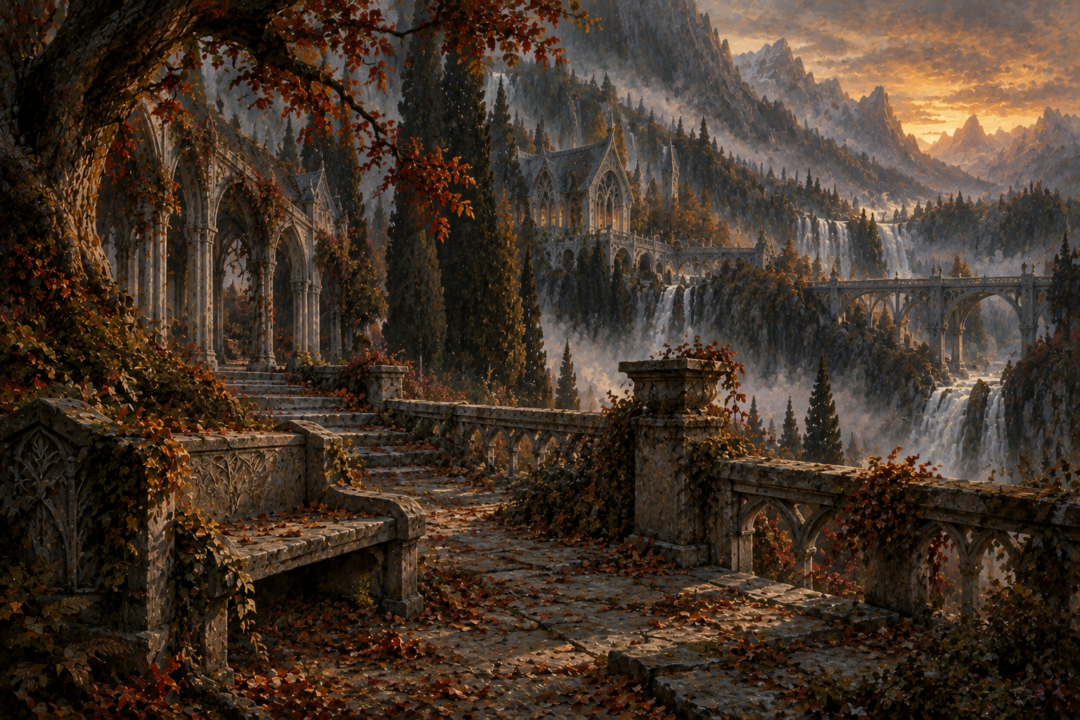
The Last Homely House does not end with burning towers or shattered gates. It recedes from the history of Men as the Elves themselves recede.
One ship sails.
Then another generation passes.
The songs become fewer. The people who remember the Elder Days depart one by one.
And eventually the hidden valley beneath the Misty Mountains becomes a place remembered for those who once walked there.
We know exactly when Elrond left Rivendell.
We do not know exactly when Rivendell finally became empty.
The difference between those two dates is the final chapter of the Last Homely House.
Sources & Notes
- Tolkien Gateway — Rivendell https://tolkiengateway.net/wiki/Rivendell
- Tolkien Gateway — Elrond https://tolkiengateway.net/wiki/Elrond
- Tolkien Gateway — Three Rings https://tolkiengateway.net/wiki/Three_Rings
These reference entries document Rivendell, Elrond's departure, and the loss of the Three Rings' preserving power. The article distinguishes those stated events from any unsupported exact date for Rivendell's final end.