How Sauron’s Simultaneous Northern Wars Divided His Enemies’ Aid
When the horns of Rohan sounded on the Pelennor Fields, the War of the Ring seemed to have reached its decisive battlefield. Minas Tirith stood beneath the Shadow, the Rohirrim charged into Sauron’s armies, and the fate of Gondor appeared to hang on a single day.
But far to the north, other kingdoms were fighting for survival at almost exactly the same time.
Dale was invaded. Erebor was besieged. Thranduil’s Woodland Realm fought beneath burning trees. Lothlórien endured repeated assaults from Dol Guldur.
This was one of the most important strategic realities of the War of the Ring: Sauron did not simply throw an enormous army against Gondor. His power allowed him to wage war across widely separated fronts, forcing potential allies of the West to defend their own homes instead of freely concentrating against Mordor.
The texts never give us a detailed document explaining Sauron’s northern strategy. Yet the chronology in The Lord of the Rings, especially Appendix B, makes the pattern unmistakable. While Gondor faced its greatest crisis, the northern peoples were being attacked as well.
And that helps explain something easily missed when the story follows Aragorn, Gandalf, and Frodo southward: victory at Minas Tirith did not mean that the rest of Middle-earth was safe.
The War Was Much Larger Than the Pelennor
The central narrative naturally makes Gondor feel like the heart of the military struggle. That was reasonable. Gondor bordered Sauron’s realm, had resisted him for centuries, and Minas Tirith guarded the approaches to the western lands.
Yet Sauron possessed forces beyond those sent directly against Gondor.
In the north, Dol Guldur remained a major stronghold of the Shadow. Farther east, hostile forces threatened the realm of King Brand of Dale. These threats became active fronts during the same crucial days in March 3019.
Appendix B records the northern chronology with striking compression.
Lothlórien was attacked on March 11.
The fighting around Dale began as Easterlings crossed the River Carnen and drove Brand back toward his kingdom.
On March 15—the day of the Battle of the Pelennor Fields—Lothlórien was assaulted again, while Thranduil’s realm fought what the chronology calls a battle beneath the trees.
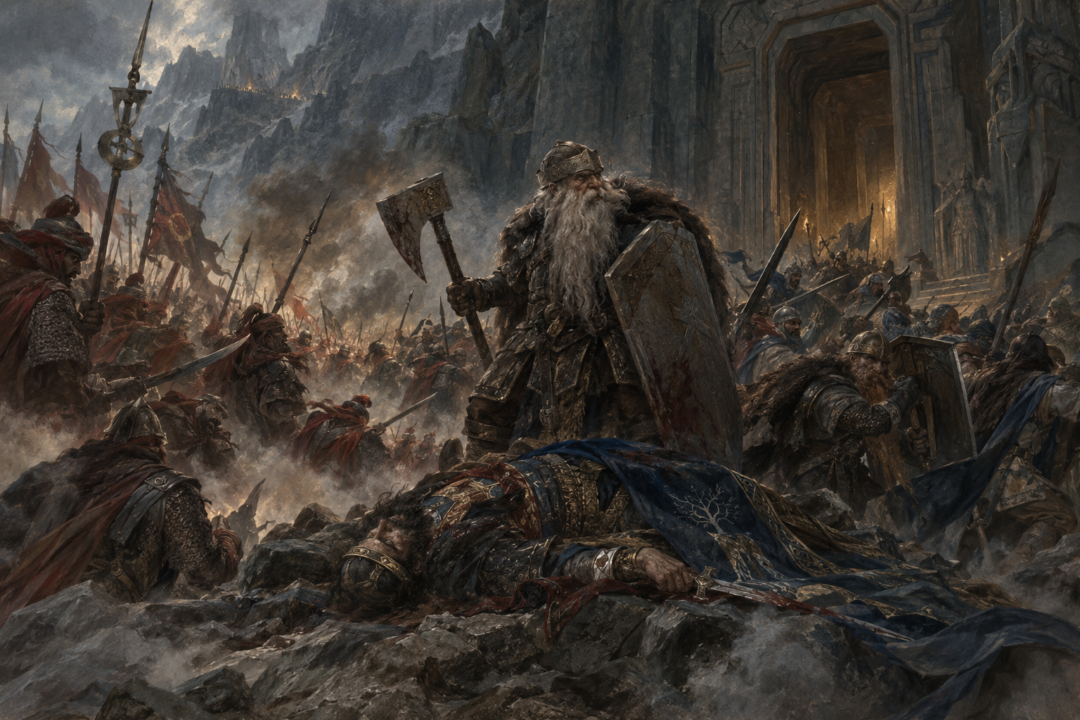
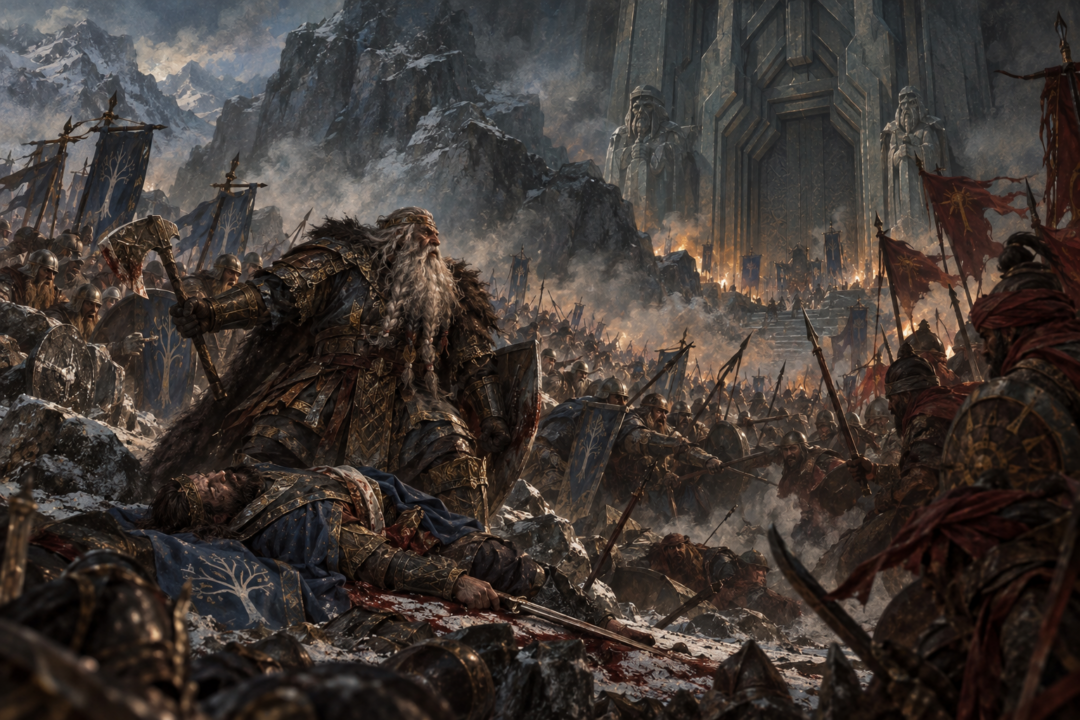
Two days later, King Brand and King Dáin Ironfoot fell before Erebor, and the surviving Men and Dwarves were forced inside the Lonely Mountain.
On March 22, Lothlórien endured a third assault.
These were not isolated disturbances on the edge of the real war. They were part of the War of the Ring itself.
Dale and Erebor Could Not Simply March South
The renewed kingdom of Dale and the restored Dwarf-kingdom under the Mountain represented a significant change in northern Middle-earth since the events of The Hobbit.
Smaug was dead. Dale had been rebuilt. Erebor was again inhabited by Durin’s Folk. Trade and friendship had developed between the peoples around the Mountain.
That recovery mattered strategically.
In The Return of the King, Gandalf later tells the hobbits to remember the battles in Dale and the valour of Durin’s Folk when thinking about the Pelennor. His warning is essentially a glimpse of the alternative history that never happened: if the northern defenders had failed, hostile forces could have spread much farther west.
Before the war, Sauron had already attempted another form of pressure. A messenger came to Dáin seeking information about Bilbo and the Ring, while offering rewards and the return of lost Dwarven Rings. Dáin refused to cooperate and eventually sent Glóin and Gimli to Rivendell seeking counsel.
By the final crisis, diplomacy and intimidation had given way to open war.
Easterlings crossed the Carnen and drove King Brand back toward Dale. Men and Dwarves fought together before Erebor. The struggle ended with both of their old kings dead: Brand fell, and Dáin was slain while standing over Brand’s body.
The survivors withdrew into Erebor.
At precisely the period when Gondor desperately needed every possible advantage, Dale and Erebor were therefore in no position to send substantial help south. They were fighting for their own existence.
That consequence does not require assuming a detailed strategic plan that the text never explicitly provides. The military effect is enough: Sauron’s northern war prevented those peoples from acting as an uncommitted reserve for the wider West.
Dol Guldur Made the Forests a Second Northern Front
The threat to Dale was only one part of the northern struggle.
Dol Guldur gave Sauron a powerful position west of the great eastern lands and close to both Lothlórien and the Woodland Realm. Though Sauron himself had left Dol Guldur decades earlier and openly returned to Mordor, the fortress was occupied again by his servants.
During the War of the Ring, forces from Dol Guldur struck repeatedly.
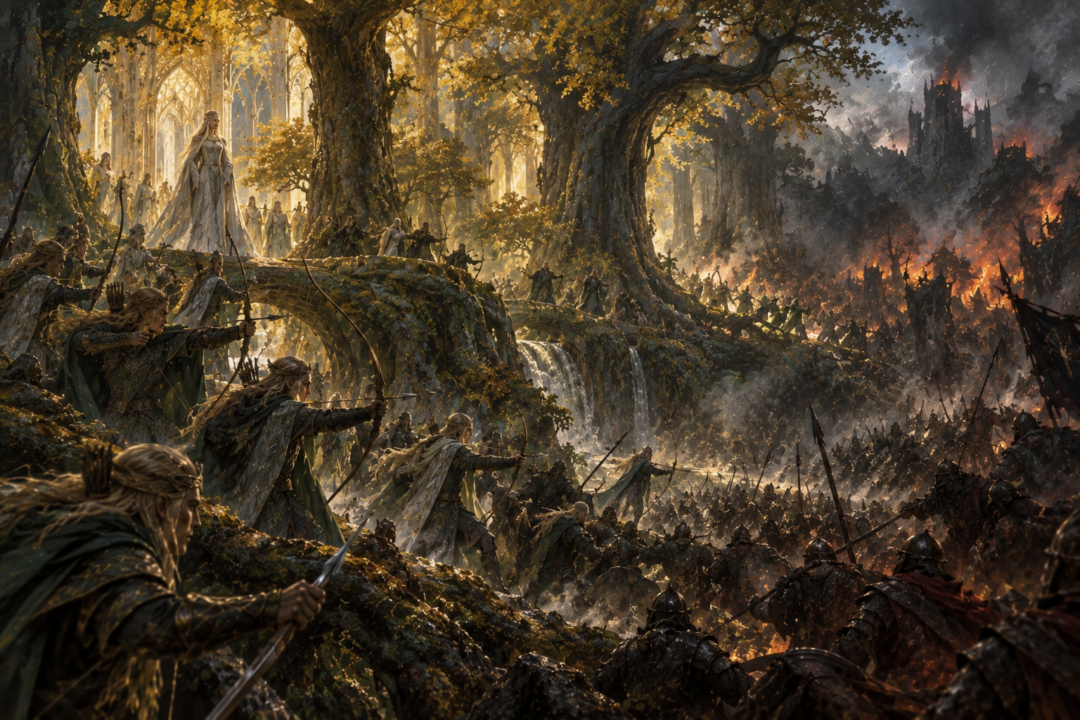
Lothlórien suffered three assaults: on March 11, March 15, and March 22.
The attacks were repelled, but Appendix B notes that grievous damage was done to the borders of the Golden Wood. The text also says that Lórien could not have been overcome unless Sauron himself had come there.
That qualification matters.
Lórien was extraordinarily difficult to conquer, protected not merely by warriors but by the power associated with Galadriel and her Ring. Yet even a realm that could successfully resist Sauron’s servants still had to fight them.
Defence consumes strength even when the defence succeeds.
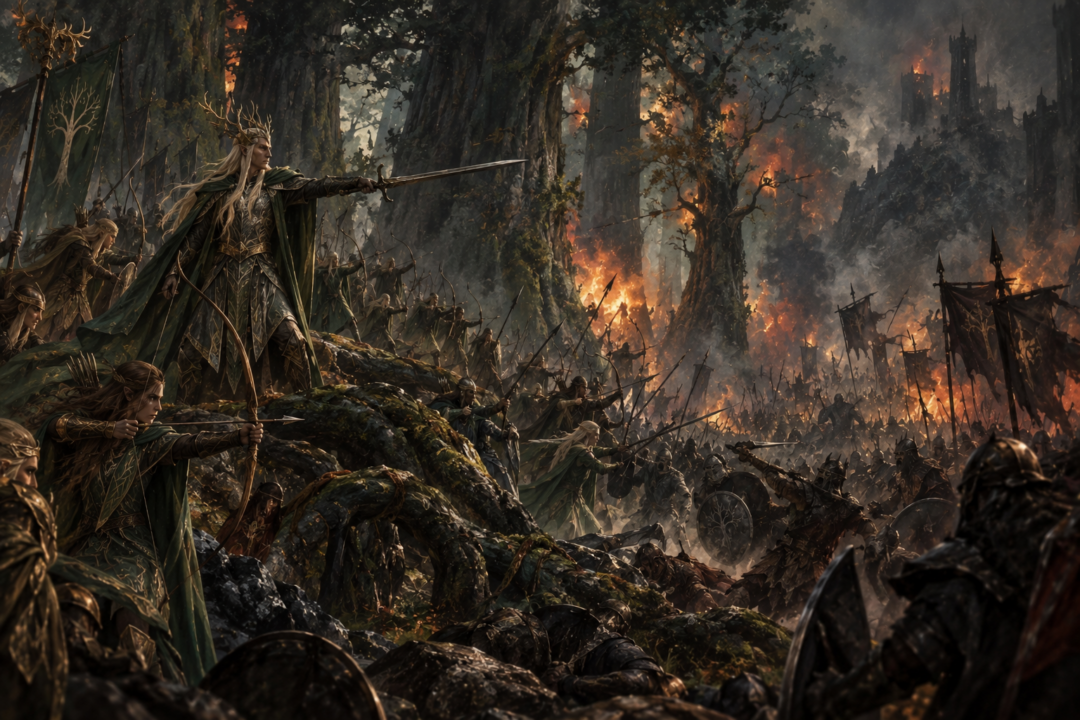
Meanwhile, on March 15, Thranduil’s people fought their own battle beneath the trees of Mirkwood. The fighting caused great destruction by fire before the Elves ultimately prevailed.
So while Théoden rode onto the Pelennor, two Elven realms in the north were themselves under attack.
March 15 Reveals the Scale of Sauron’s War
Few dates demonstrate Sauron’s reach more clearly than March 15, 3019.
Before Minas Tirith, his armies fought Gondor and Rohan in the Battle of the Pelennor Fields.
In Mirkwood, Thranduil’s people fought forces from Dol Guldur.
Lothlórien faced its second assault.
Around Dale and Erebor, the northern war against the Easterlings was already underway.
These battlefields were separated by enormous distances, yet they belonged to the same conflict.
It is tempting to imagine the Free Peoples as a single coalition capable of concentrating wherever Sauron was weakest. In practice, geography and immediate danger constrained them. Gondor, Rohan, Dale, Erebor, Lórien, and the Woodland Realm were distinct peoples scattered across a vast region.
Sauron did not need to conquer every one of them immediately to gain an advantage.
He merely needed to keep them occupied.
A warrior defending the borders of Lórien could not simultaneously stand on the Pelennor. A Dwarf guarding Erebor could not march to Minas Tirith. Thranduil could not safely empty his realm while Dol Guldur remained capable of invasion.
The simultaneous offensives therefore produced a strategic effect greater than any single northern battle.
They fragmented the defence of the West.
The Northern Battles Also Protected Rivendell and the West
The importance of Dale becomes even clearer in Gandalf’s later reflection.
After the war, he asks his companions to consider what might have happened if Dale and Erebor had fallen. His imagined danger reaches beyond the Lonely Mountain toward Eriador and even Rivendell.
This does not mean the text provides a precise invasion plan showing exactly where Sauron’s northern armies would have marched next. It does not.
But Gandalf’s point is clear enough: the resistance of Brand, Dáin, and their peoples prevented Sauron’s northern allies from becoming free to cause far greater destruction elsewhere.
The Battle of Dale therefore mattered even though no member of the Fellowship fought there.
Its defenders were protecting more than their own gates.
The same principle applies to the Elven realms. By holding Lórien and the Woodland Realm, the Elves denied Sauron secure domination of the great forest regions around the upper Anduin.
The northern fronts were defensive victories whose importance is easiest to understand by asking what enemy forces would have been free to do if those defences had collapsed.
Sauron Nearly Made Geography Work for Him
There is a grim logic to the pattern.
Sauron’s enemies were separated by mountains, rivers, forests, and hundreds of miles. Communication was difficult. Armies moved slowly. Every kingdom had lands and civilians it could not simply abandon.
Sauron, meanwhile, possessed multiple centres and sources of military power. Mordor was his principal stronghold, but Dol Guldur gave his servants another base in the north, while allies from the East could threaten Dale.
The result was not merely a series of battles.
It was pressure applied across the map.
Yet there was an irony in this strategy. Sauron’s strength allowed him to threaten many enemies simultaneously, but his entire war still depended ultimately upon himself and the One Ring.
The northern defenders did not need to destroy every enemy army permanently. They needed to endure.
And endure they did.
The Moment the Shadow Fell, the Northern War Changed
On March 25, the Ring was destroyed and Sauron fell.
The consequences reached battlefields whose warriors had never seen Mount Doom.
The forces besieging Erebor lost heart after Sauron’s downfall. On March 27, the defenders came out from the Mountain. Bard II, son of Brand, and Thorin III Stonehelm, son of Dáin, drove their enemies away.
The following day, Celeborn crossed the Anduin. The forces of Lórien moved against Dol Guldur, and Galadriel threw down its walls and laid bare its pits.
The strategic situation had reversed with extraordinary speed.
For weeks, Sauron’s northern enemies had been pinned to their own territories. Once he fell, those same surviving defenders could move outward against the remnants of his power.
The simultaneous wars had divided the Free Peoples—but they had not broken them.
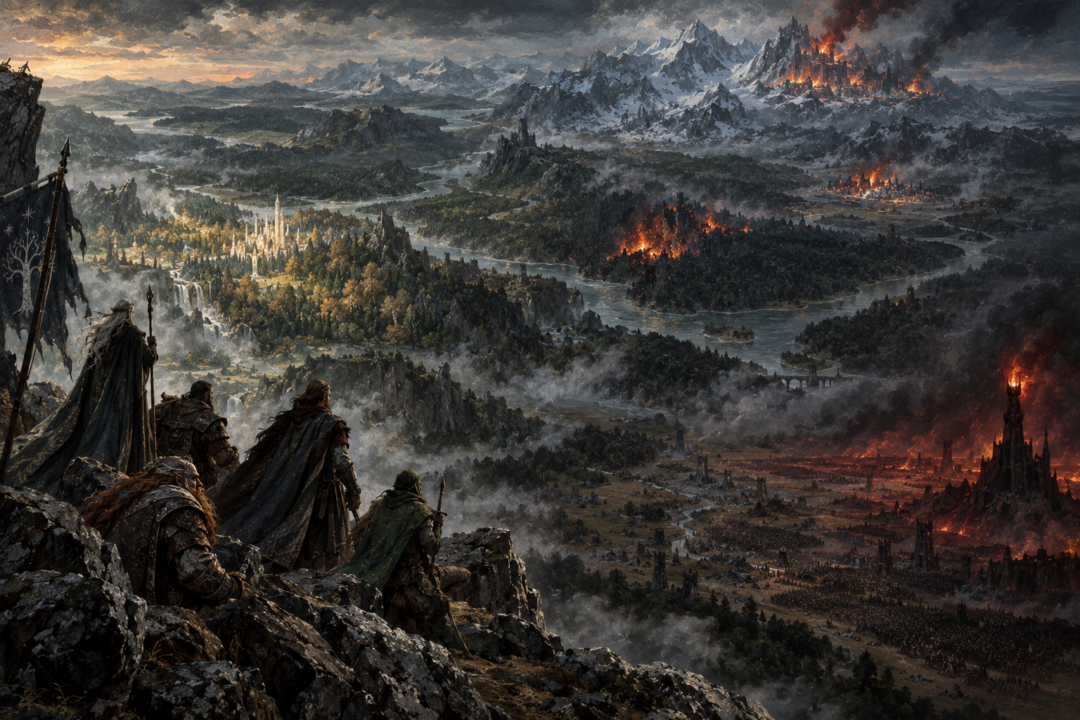
The Forgotten Scale of the War of the Ring
The War of the Ring is often remembered through its greatest visible moments: Helm’s Deep, the Pelennor Fields, the march to the Black Gate, and Frodo and Sam beneath Mount Doom.
But the chronology reveals a much larger conflict.
While Aragorn fought in the south, Brand and Dáin fought before Erebor.
While Rohan charged onto the Pelennor, Thranduil’s people fought beneath the trees.
While Minas Tirith endured the Shadow, Lothlórien was attacked again and again.
These northern wars explain why help could not simply flow toward Gondor from every surviving realm. Sauron had ensured that many of his enemies had immediate wars of their own.
That was the deeper danger of his military power: not merely that he possessed a great army, but that he possessed enough power and allies to make distant peoples face catastrophe at the same time.
His enemies survived because none of those northern defences collapsed quickly enough.
Dale endured behind the gates of Erebor. Thranduil held the Woodland Realm. Lórien resisted every assault. Gondor survived the Pelennor.
And while Sauron tried to make every realm look toward its own burning borders, two hobbits crossed Mordor toward the one place where all those wars could be ended at once.
Sources & Notes
- Tolkien Gateway — War in the North https://tolkiengateway.net/wiki/War_in_the_North
- Tolkien Gateway — Battle of Dale https://tolkiengateway.net/wiki/Battle_of_Dale
- Tolkien Gateway — Battle under the trees https://tolkiengateway.net/wiki/Battle_under_the_trees
These references document Sauron’s coordinated northern offensives, the Battle of Dale, and the simultaneous fighting in Mirkwood. The article’s argument that these fronts divided the Free Peoples’ capacity to reinforce one another is interpretive synthesis.