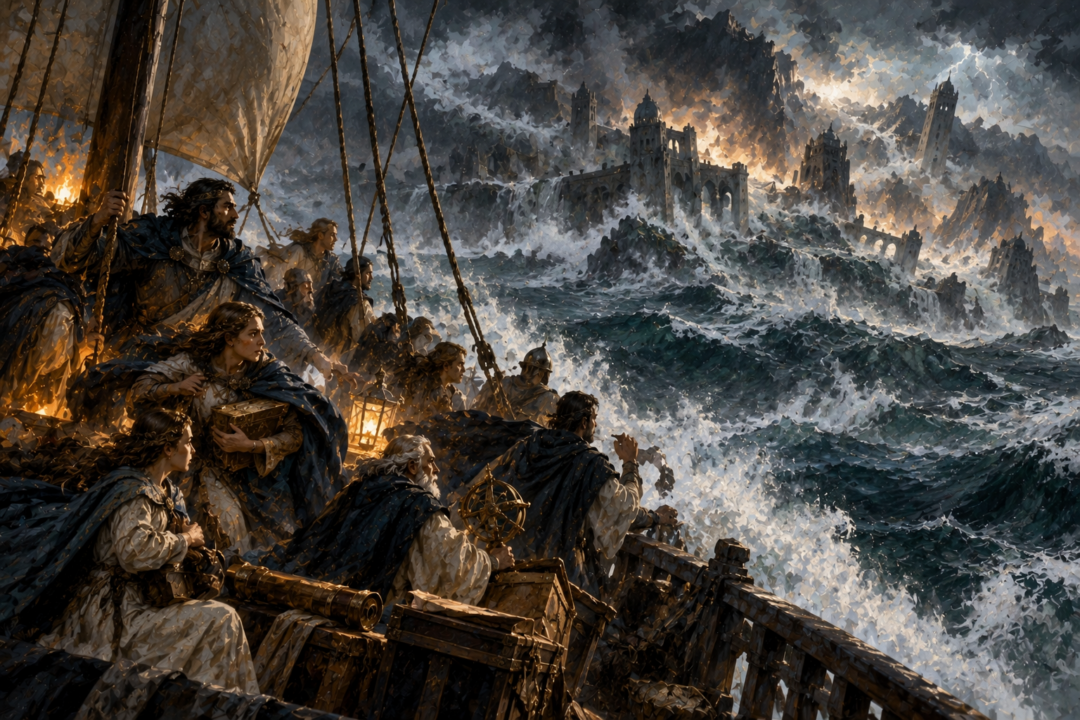
When Prince Imrahil rides into Minas Tirith during the War of the Ring, his name carries something far older than Gondor.
It reaches back beyond the founding of the Realms in Exile, beyond Elendil and the Downfall, to Númenor itself. More strikingly, it belongs to a linguistic tradition that once became entangled with Númenor’s rebellion against the Eldar and the Valar.
The island was destroyed. Its kings were gone. Yet Adûnaic, the native language of the Númenóreans, did not simply disappear beneath the sea.
Its descendants lived on in the Common Speech, while recognizable Adûnaic elements also survived in certain personal names. That makes names such as Imrahil, Adrahil, and Imrazôr more than curiosities. They are fragments of a cultural inheritance that endured even after the political world in which Adûnaic had flourished was annihilated.
And there is an important irony here: the language associated in late Númenor with the King’s Men was never inherently evil. After the Downfall, its linguistic legacy could belong just as naturally to people fighting against Sauron.
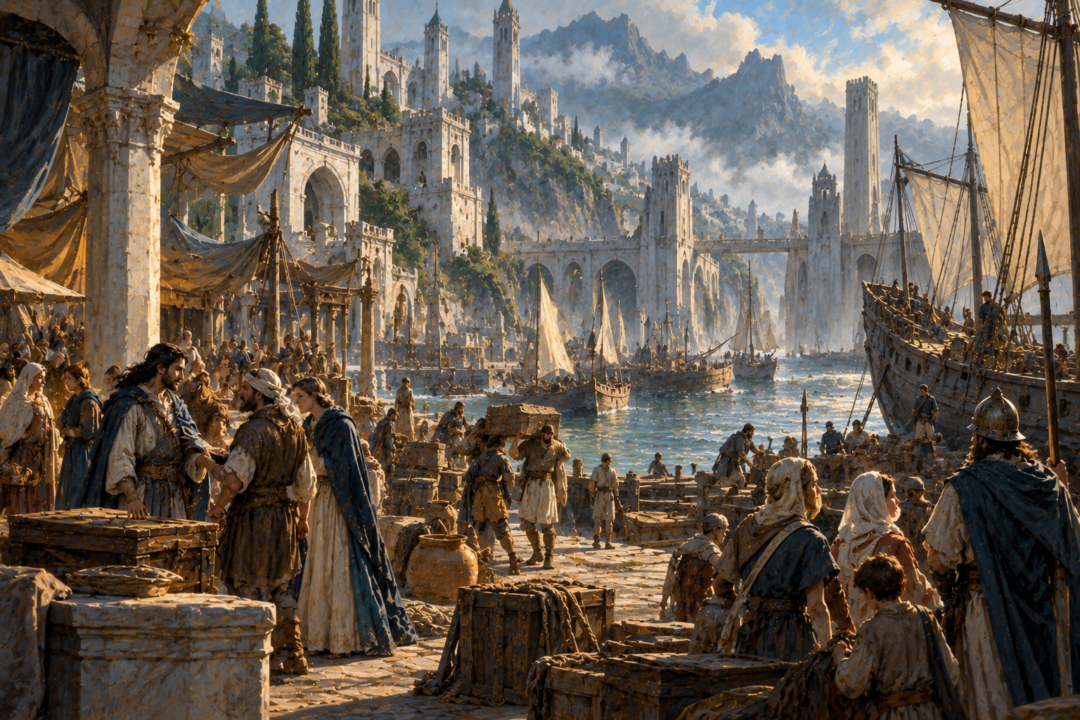
Adûnaic Existed Before Númenor’s Rebellion
The first distinction matters enormously: Adûnaic was not created by the King’s Men.
It was the native Mannish language of Númenor, ultimately derived from the speech of the Edain. Appendix F of The Lord of the Rings explains that the Númenóreans had their own ancestral tongue, although the learned among them also knew the Elven languages. Sindarin was widely used, particularly among those friendly with the Eldar, while Quenya possessed great prestige and was used for many formal names.
Early Númenórean royal names therefore appear in Quenya: Tar-Minyatur, Tar-Amandil, Tar-Elendil, Tar-Aldarion and others.
But beneath this elevated linguistic tradition remained the everyday Mannish language of the island.
Adûnaic belonged to Númenor before its great political division hardened into the King’s Men and the Faithful. Consequently, the later embrace of Adûnaic by anti-Elvish rulers should not be confused with the origin or fundamental character of the language itself.
That distinction explains much of what happened after Númenor fell.
When a Royal Name Became a Political Statement
The shift can be seen dramatically in the names of Númenor’s later kings.
Tar-Calmacil, the eighteenth ruler, still bore his official royal name in Quenya. Yet the King’s Men called him Ar-Belzagar in Adûnaic. The significance is difficult to miss: an Adûnaic form of the king’s name was entering political usage while the older royal convention remained intact.
The decisive break came with Ar-Adûnakhôr.
He was the first King of Númenor to take the Sceptre under an Adûnaic royal name rather than publicly maintaining the traditional Quenya form. His name meant “Lord of the West,” a title regarded by the Faithful as offensive because of its association with the Lords of the West, especially Manwë.
Yet the older custom was not abandoned without anxiety. A corresponding Quenya name, Tar-Herunúmen, was still entered in the Scroll of Kings. The surviving tradition says this was done because the kings feared completely breaking the ancient custom.
That detail reveals a fascinating contradiction. Númenor’s rulers were increasingly rejecting the friendship represented by the Elven tongues, but they were not entirely free from the authority of their own inherited traditions.
After Ar-Adûnakhôr came rulers whose familiar royal names are unmistakably Adûnaic: Ar-Zimrathôn, Ar-Sakalthôr and Ar-Gimilzôr.
Language had become part of Númenor’s cultural struggle.
But that still did not make Adûnaic itself a language of evil.
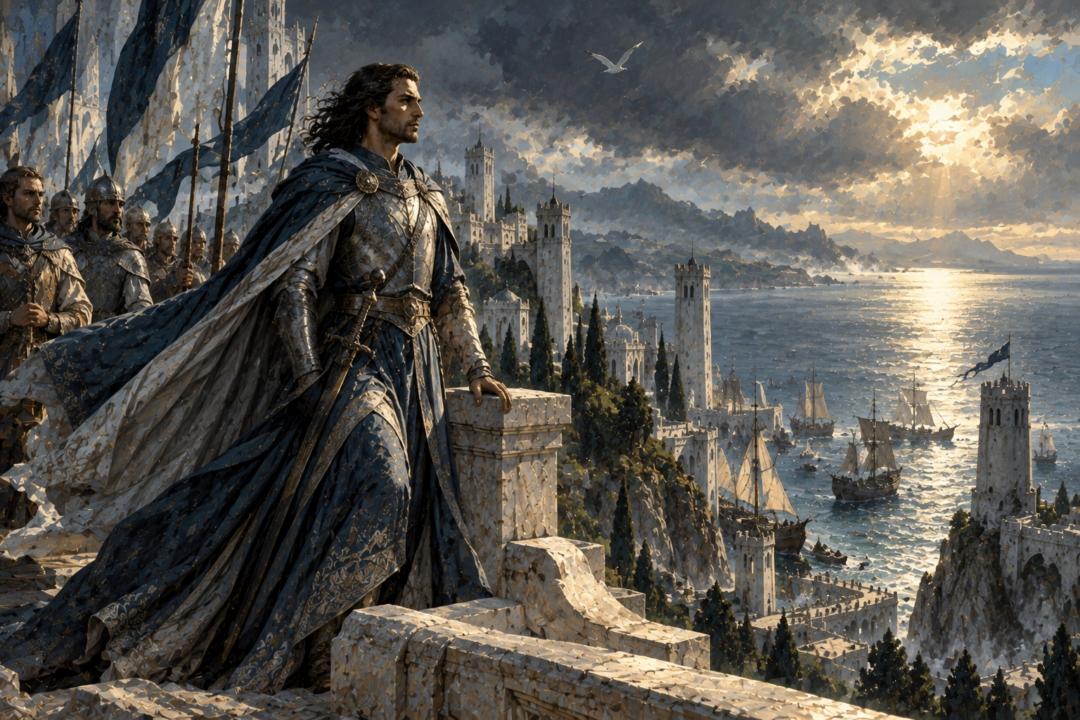
The Faithful Used Adûnaic Too
One of the clearest warnings against treating language as political destiny comes from the Faithful themselves.
Consider Tar-Palantir.
Before taking his royal name in Quenya, he was called Inziladûn.
That is an Adûnaic name.
Tar-Palantir attempted to reverse the policies of his predecessors and restore friendship with the Eldar and reverence toward the Valar. Yet he had grown up bearing an Adûnaic name. His daughter, Míriel, likewise possessed the Adûnaic name Zimraphel.
The point is important: Adûnaic crossed the political divide.
The King’s Men elevated it at the expense of the Elven languages, but Adûnaic remained the inherited language of Númenor rather than the exclusive property of one faction. A Faithful Númenórean could bear an Adûnaic name without sharing the ideology of Ar-Pharazôn.
That distinction becomes even more important after the Downfall.
Númenor Drowned, but Its Language Did Not
When Númenor was destroyed at the end of the Second Age, the physical center of Adûnaic civilization vanished.
Yet Númenórean speech had already crossed the sea.
For centuries Númenórean mariners, settlers, soldiers and rulers had established themselves along the western coasts of Middle-earth. The Faithful in particular had important settlements there, including Pelargir. When Elendil and his sons escaped the Downfall, they did not arrive in a land untouched by Númenórean culture.
Nor did the descendants of Númenor cease speaking forms of their ancestral Mannish language.
Appendix F explains that the Common Speech, or Westron, developed from the speech of the Númenóreans and spread widely through the lands influenced by them. It changed through contact with other peoples and languages, so Westron should not simply be treated as unchanged Second Age Adûnaic. But its ancestry provides the greatest evidence of Adûnaic’s survival.
By the end of the Third Age, a Hobbit in the Shire and a soldier in Gondor could communicate through a language whose remote history reached back to Númenórean speech.
Adûnaic had outlived the island on which it achieved its greatest prestige.
Gondor Preserved a Different Naming Tradition
There is nevertheless a puzzle.
If Adûnaic survived linguistically, why do the great rulers of Arnor and Gondor so often bear Elvish names?
Elendil, Isildur and Anárion all bear names formed from Elvish languages. The royal houses of the Realms in Exile continued this tradition extensively. Gondor gives us names such as Meneldil, Eärnil, Eärnur and Eldacar; its Stewards include names such as Mardil, Ecthelion, Denethor, Boromir and Faramir.
This reflects the cultural identity of the Faithful. They had preserved friendship with the Eldar when the King’s Men rejected it, and their elite naming traditions continued to display that inheritance.
So Adûnaic survived in a curious double form.
Its linguistic descendant became ordinary speech across a huge part of northwestern Middle-earth, while the high political culture of the Dúnedain often favored Elvish names.
Yet there were exceptions—and some of the most intriguing appear near the sea.
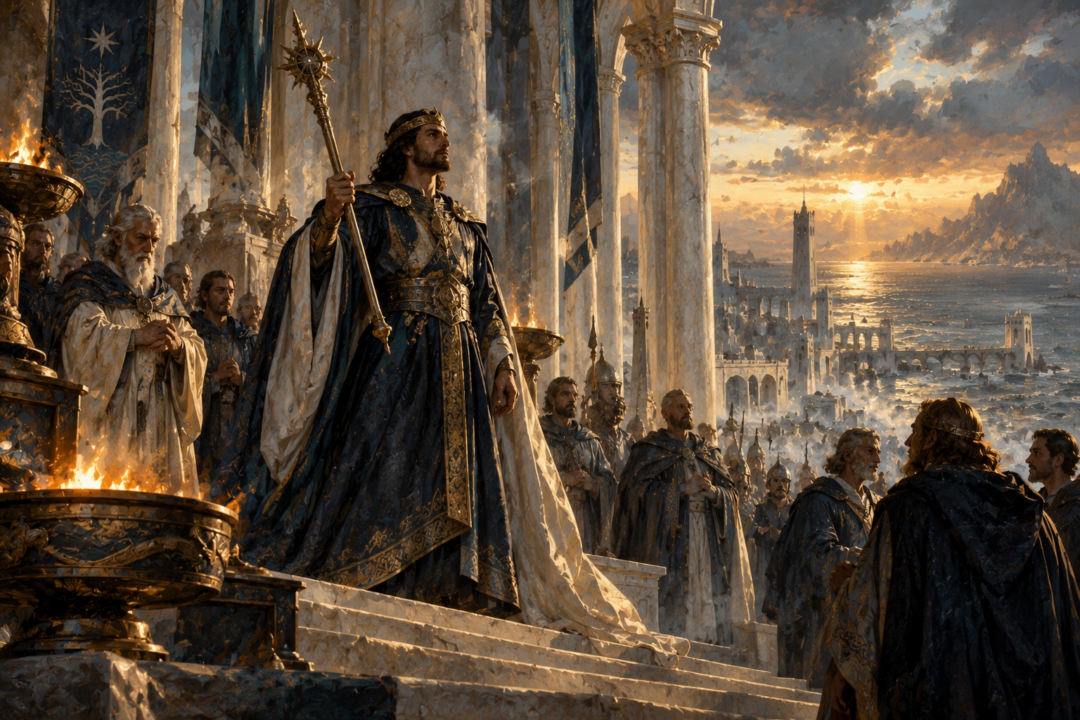
The Strange Names of Dol Amroth
The princely house of Dol Amroth preserves names that stand out immediately beside many other Gondorian aristocratic names.
Imrahil is explicitly identified as an Adûnaic name in later linguistic material, though its full meaning is not securely given. His father was Adrahil, another name generally identified as Adûnaic.
And the pattern goes further back.
In traditions concerning the ancestry of the Princes of Dol Amroth appears Imrazôr the Númenórean, a Gondorian noble associated with Belfalas. His name contains the Adûnaic element zôr, though the complete meaning of Imrazôr is uncertain.
The precise early genealogy of the house contains textual complications, so it is safer not to construct an uninterrupted naming system beyond what the sources actually provide. What can be said is that Adûnaic-looking or explicitly Adûnaic names occur repeatedly in the traditions of this Númenórean-descended family.
That is remarkable because Imrahil is no relic of the Second Age.
He lives at the very end of the Third.
Thousands of years after Númenor disappeared beneath the sea, a major Gondorian prince could still bear an Adûnaic name.
Imrahil Shows Why the Language Cannot Be Reduced to the King’s Men
The contrast with Ar-Pharazôn could hardly be stronger.
Ar-Pharazôn represents the catastrophic end of Númenórean pride. Under his rule Sauron corrupted Númenor, the Faithful were persecuted, and the King ultimately sailed against Aman.
Imrahil, bearing a name from the same broad linguistic inheritance, rides to defend Minas Tirith against Sauron.
During the War of the Ring he becomes one of Gondor’s principal commanders. He helps rescue Faramir, fights in the defense of the city, participates in the Captains’ counsels, and marches with the Host of the West toward the Black Gate.
The language has remained; the allegiance has not.
That is perhaps the most revealing aspect of Adûnaic’s survival. Words do not inherit the moral guilt of everyone who once spoke them.
The late Kings of Númenor made Adûnaic royal naming into a symbol of their rejection of Elvish influence. But they did not create the language, nor could they permanently determine what its descendants and surviving names would signify.
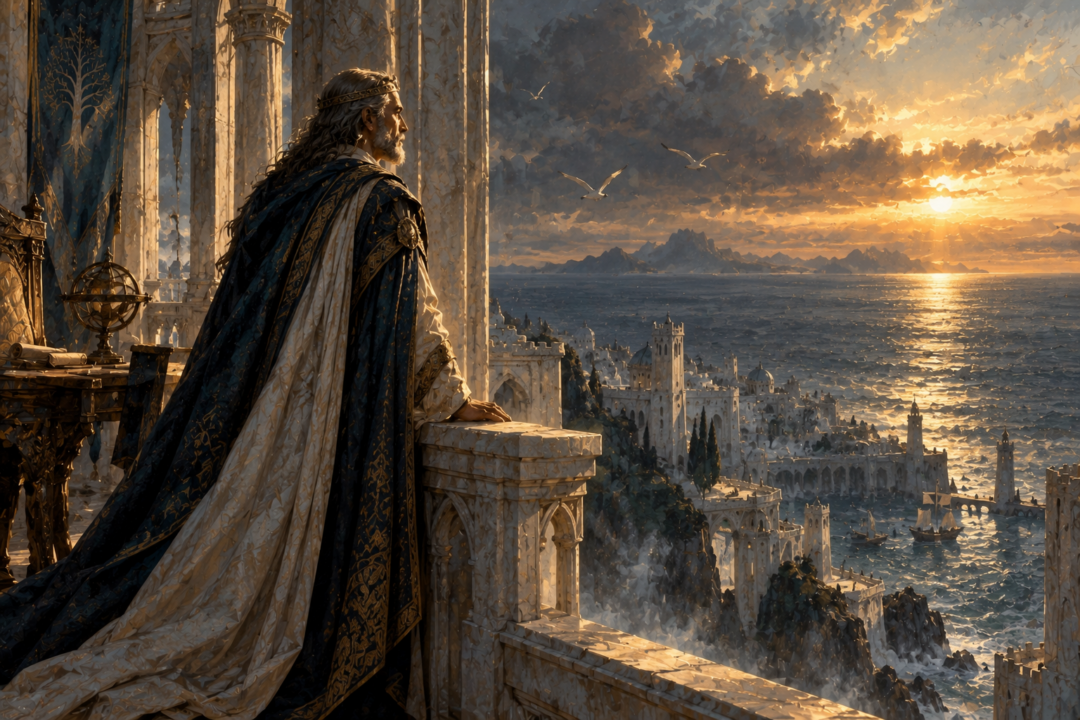
A Drowned Kingdom Hidden Inside Names
By the War of the Ring, Númenor survives everywhere in fragments.
It survives politically in Gondor and in Aragorn’s claim as Isildur’s heir. It survives physically in ancient works and ruins. It survives in memories of Westernesse, in inherited customs, and in the long identity of the Dúnedain.
But it also survives in speech.
Westron carries the distant linguistic inheritance of Númenórean Mannish speech into the everyday world of the Third Age. More visibly, names such as Imrahil, Adrahil and Imrazôr preserve traces of Adûnaic within Gondor’s aristocratic history.
Not every element of those names can be translated with certainty, and the surviving linguistic material is incomplete. That uncertainty is worth preserving rather than filling with attractive guesses.
What remains secure is more interesting anyway.
Númenor fell so completely that the shape of the world itself was changed. Its proudest king vanished with his fleet. Its cities, tombs and palaces were swallowed by the sea.
Yet its language escaped.
Part of it changed until it became woven into the Common Speech of Middle-earth. Part of it lingered more visibly in personal names. And at the end of the Third Age, when Prince Imrahil rode beneath the banners of Gondor against the same Dark Lord who had helped destroy Númenor, his very name carried an echo of the drowned island.
Adûnaic had survived its kings.
Sources & Notes
This article is based on close reading and interpretation of Tolkien's published works and related source material where relevant.