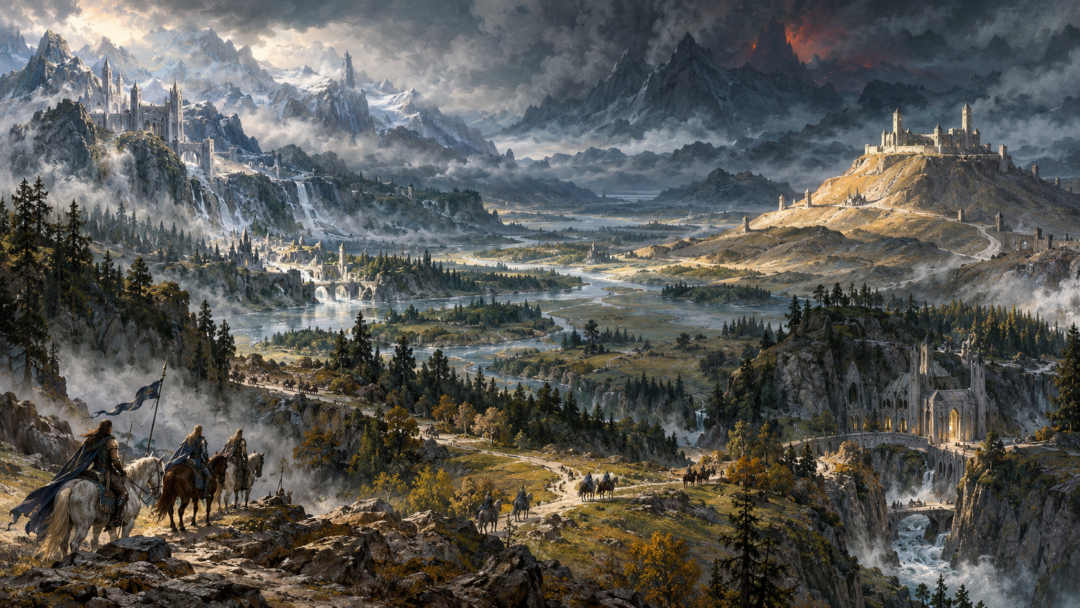
When the Noldor return to Middle-earth, they bring something more dangerous than swords, jewels, and grievances. They bring a royal family whose internal divisions can now be written onto an entire landscape.
Those divisions are not created by the Exile. Fëanor and Fingolfin had already become rivals in Aman, Finarfin had turned back after the Doom of Mandos, and the Kinslaying and abandonment at Losgar had deepened wounds that no arrival in Beleriand could erase. But Middle-earth changes the nature of the problem.
In Aman, these were disputes within one people. In Beleriand, descendants and followers of Finwë’s sons acquire fortresses, frontiers, armies, dependent peoples, and increasingly distinct political interests.
The result is not three perfectly sealed states. Loyalties overlap, friendships cross dynastic lines, and the Noldor repeatedly cooperate against Morgoth. Yet the map of Beleriand gradually turns family division into political structure.
Maedhros Gives Up a Crown, Not a Dynasty
The crucial settlement comes after Fingon rescues Maedhros from Thangorodrim.
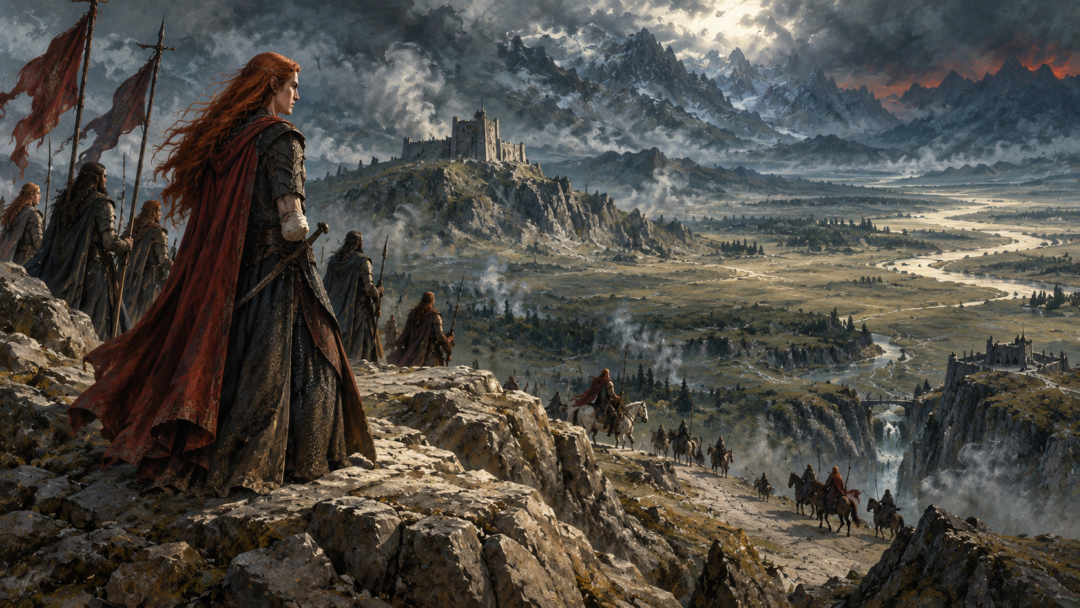
Maedhros, eldest son of Fëanor, relinquishes his claim to kingship in favor of Fingolfin. This is an extraordinary attempt at reconciliation. The deed helps heal the immediate feud between the houses, even though Maedhros’s brothers resent his decision.
But renouncing the kingship does not dissolve the House of Fëanor.
Instead, Maedhros does something politically shrewd. Recognizing the danger of renewed quarrels, he removes his brothers and their followers from the crowded lands around Mithrim. They establish themselves in East Beleriand.
That movement transforms a family faction into a territorial bloc.
Maedhros holds Himring and the northeastern marches. Maglor guards the vulnerable gap to the east of Himring. Celegorm and Curufin hold the Pass of Aglon. Caranthir establishes himself farther east around Lake Helevorn and Thargelion, while Amrod and Amras dwell farther south.
Their position is dangerous by design. The sons of Fëanor occupy much of the exposed eastern frontier facing the approaches from Morgoth’s northern lands.
The arrangement therefore accomplishes two things at once. It separates potentially hostile Noldorin factions, and it makes Fëanorian military power indispensable to the defense of Beleriand.
They are dispossessed of the supreme kingship, but hardly powerless.
Fingolfin’s House Builds the Political Center
The House of Fingolfin develops differently.
Fingolfin becomes High King of the Noldor and rules from Hithlum, with his people concentrated especially around Mithrim. His son Fingon receives Dor-lómin, while Turgon initially rules Nevrast from Vinyamar.
This is more than another collection of family estates. Fingolfin’s position carries an overarching claim to leadership among the Noldorin Exiles.
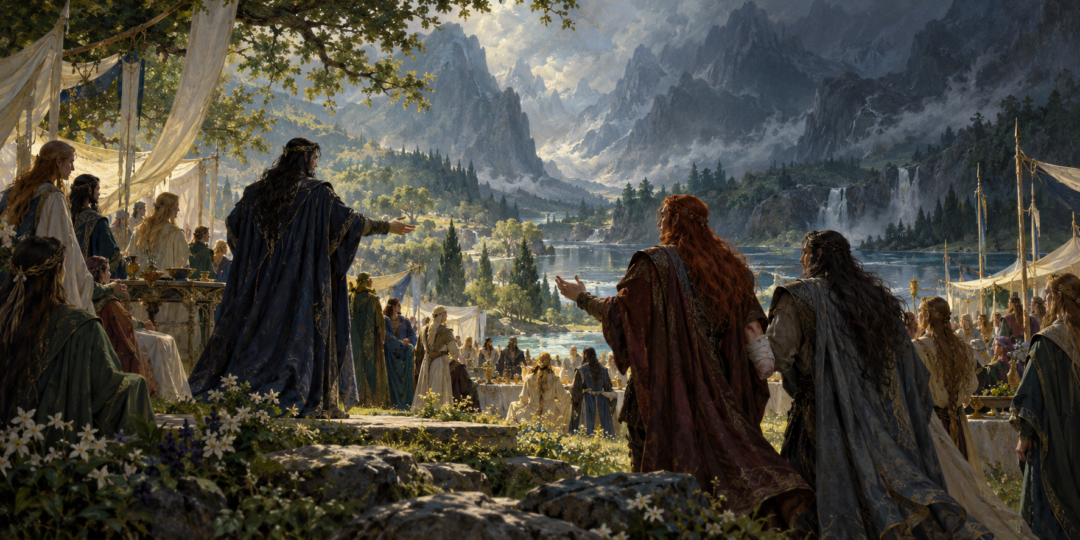
His Mereth Aderthad, the Feast of Reuniting, demonstrates what that leadership can mean. Elves from widely separated regions gather near the Pools of Ivrin, including Maedhros and Maglor from the eastern March. The event does not erase dynastic identity, but it shows that those identities can exist within a broader political and military community.
That distinction matters.
The Noldor are neither a centralized kingdom nor simply three hostile camps. Fingolfin possesses high kingship, while powerful princes retain their own lands, followers, and strategic freedom.
The limits of that high kingship become especially visible later. Before the Dagor Bragollach, Fingolfin considers taking the offensive against Angband, but many of the Noldor are reluctant. Their realms have prospered during the long Siege, and the danger and cost of attacking Morgoth directly are immense.
A High King can propose a common strategy. He cannot simply make every Noldorin lord pursue it.
Turgon Turns Separation into Secrecy
The House of Fingolfin itself does not remain territorially concentrated.
Turgon’s story shows how far political fragmentation can develop even within one dynastic house.
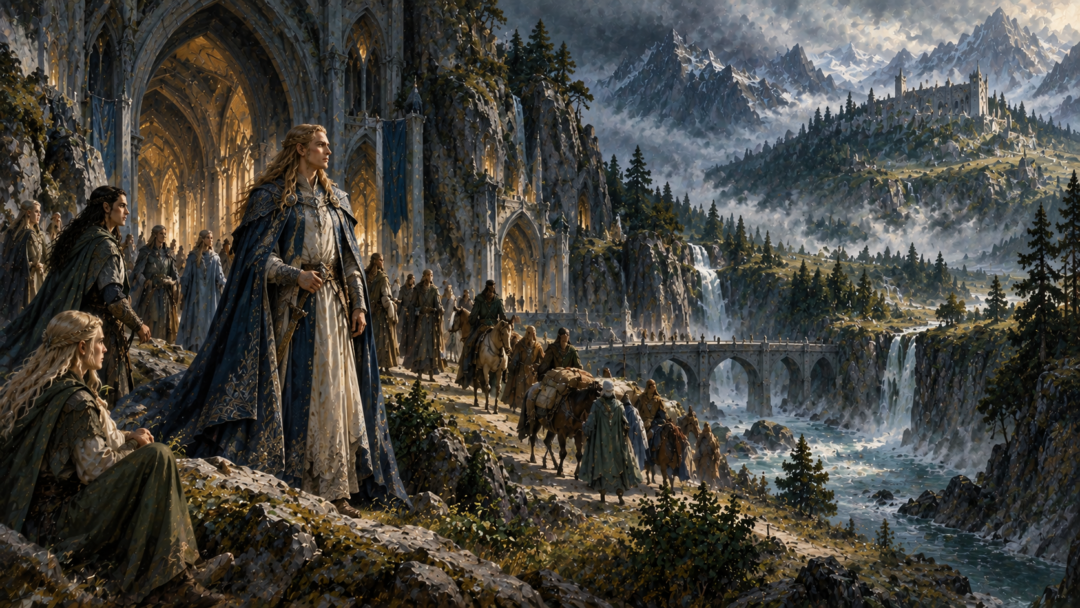
After receiving guidance from Ulmo, Turgon discovers the hidden valley of Tumladen. He eventually removes from Nevrast with many of his people and establishes Gondolin.
This is not a rebellion against Fingolfin. Turgon remains part of his father’s house and later succeeds to the High Kingship after Fingon’s death.
Yet Gondolin follows a radically different strategic logic from Hithlum.
Hithlum is a frontier realm. It watches the north, maintains armies, and stands openly within the defensive system against Angband. Gondolin survives by concealment. Its strength depends upon Morgoth not knowing where it is.
So even the Fingolfinian political world contains contrasting projects: exposed high kingship in Hithlum and hidden preservation in Gondolin.
Dynasty creates loyalty, but geography reshapes what that loyalty means.
Finarfin Stays Behind, but His Children Build Their Own Power
The third great bloc requires careful distinction.
Finarfin himself does not rule a realm in Beleriand. He turns back during the rebellion and remains in Aman. It is his children who carry that branch of Finwë’s family into the political geography of the First Age.
Among them, Finrod becomes the dominant territorial ruler.
He first holds power in West Beleriand and later establishes Nargothrond in the caves beside the Narog. His brothers Angrod and Aegnor hold Dorthonion, while Orodreth guards Minas Tirith on Tol Sirion in the published Silmarillion tradition.
These holdings form another recognizable network of power, but one that differs from both Hithlum and the Fëanorian March.
Finrod’s position also benefits from a relationship unavailable in the same way to the sons of Fëanor. Through their mother Eärwen, the children of Finarfin are close kin of Thingol of Doriath. They are therefore able to enter Doriath, and Finrod and Galadriel in particular develop important relationships within the Sindarin world.
Galadriel does not simply become the ruler of another Noldorin province. She remains for a long time in Doriath with Melian and Celeborn. Her path is a reminder that these “blocs” are analytical descriptions, not rigid constitutional parties.
Family allegiance could produce territorial networks without dictating every individual choice.
The Map Becomes a Military System
Once these settlements are established, the political map also becomes a strategic map.
The sons of Fëanor guard much of the east and northeast. Fingolfin’s people hold Hithlum in the northwest. Angrod and Aegnor stand in Dorthonion beneath the northern threat. Finrod’s wider power stretches through western Beleriand, while Nargothrond eventually becomes a great protected stronghold. Turgon disappears into Gondolin.
Together these realms help contain Morgoth during the long Siege of Angband.
But their very success creates a problem.
The Noldor have not constructed one unified military state. They have constructed multiple strongholds capable of cooperating.
That is not the same thing.
When pressure is manageable, the distinction can seem unimportant. When Morgoth breaks the Siege in the Dagor Bragollach, regional survival immediately becomes decisive.
Dorthonion is devastated and Angrod and Aegnor are slain. Maglor’s Gap is forced. Thargelion is ravaged. Celegorm and Curufin flee to Nargothrond. Hithlum survives but is isolated. Himring holds under Maedhros.
The catastrophe exposes the underlying structure: each dynastic territory experiences the war through its own geography.
Nargothrond Shows How Dynastic Rivalry Can Become Political Poison
The arrival of Celegorm and Curufin in Nargothrond after the Dagor Bragollach reveals another danger.
They arrive not as enemy conquerors but as displaced Noldorin princes. Yet during the story of Beren and Lúthien they gain considerable influence in Finrod’s realm and oppose Finrod’s decision to fulfill his oath to Barahir’s house by aiding Beren.
Finrod ultimately leaves Nargothrond with only a small company.
The episode should not be reduced to a simple war between the Houses of Fëanor and Finarfin. The politics are more complicated, and the Oath of Fëanor is central to Celegorm and Curufin’s actions concerning the Silmaril.
But the episode demonstrates the instability created by powerful dynasts operating inside another prince’s realm.
The Noldor share ancestry and a common enemy. That does not guarantee a common political interest.
Maedhros Tries to Rebuild Unity
The greatest irony comes near the end.
After Beren and Lúthien succeed in taking a Silmaril from Morgoth’s crown, Maedhros recognizes that the Enemy is not invincible. He attempts something larger than the old territorial system: a broad alliance later known as the Union of Maedhros.
It is perhaps the clearest attempt to turn the scattered strength of Beleriand back into coordinated offensive power.
But the past cannot simply be commanded away.
Doriath will not join the sons of Fëanor, and Nargothrond’s participation is limited, in large part because of the earlier deeds of Celegorm and Curufin. Fingon nevertheless joins the great effort, and the planned campaign operates through major eastern and western hosts associated respectively with Maedhros and Fingon.
Even at the moment of greatest attempted reunification, the old geography remains visible.
The alliance fails disastrously at the Nirnaeth Arnoediad. Its defeat has causes far beyond Noldorin dynastic rivalry, including Morgoth’s military strength, deception, and treachery. It would therefore be wrong to claim that family division alone destroys the Noldor.
But division limits what their unity can become.
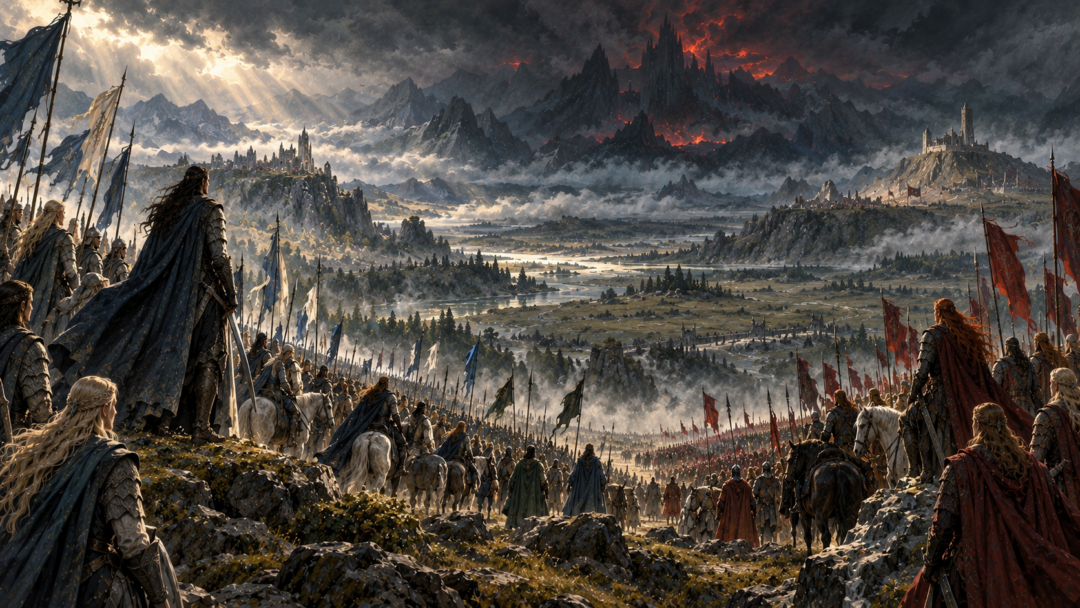
Exile Makes Family History into Political Geography
That is the deeper transformation.
Exile does not create the rivalry between Fëanor’s line and Fingolfin’s, nor does it turn every descendant of Finwë into an automatic partisan. What it does is give inherited divisions territory.
A quarrel can fade. A frontier cannot.
Once Maedhros sits at Himring, Fingolfin rules in Hithlum, Finrod builds Nargothrond, Angrod and Aegnor hold Dorthonion, and Turgon withdraws into Gondolin, the Noldor no longer merely remember their divisions. They inhabit them.
Their houses develop different neighbors, military problems, political relationships, and ideas of survival.
They can still reconcile. Fingon rescues Maedhros. Maedhros yields the kingship. Fingolfin gathers the Elves at the Feast of Reuniting. Fingon and Maedhros eventually fight within the same great alliance.
That is what makes the tragedy sharper.
The Noldor are never simply three peoples at war with one another. They remain capable of friendship, kinship, sacrifice, and common action.
But after the Return, unity has to be constructed across fortresses, kingdoms, memories, and oaths.
By then, one Noldorin people has become several centers of power—and every attempt to reunite them must contend with the history already built into the map.
Sources & Notes
- The Encyclopedia of Arda — Maedhros — The Fëanorian leader, his eastern stronghold and attempts to unite the Noldor. https://www.encyclopedia-of-arda.com/m/maedhros.html
- The Encyclopedia of Arda — March of Maedhros — The eastern borderlands held by the sons of Fëanor under Maedhros. https://www.encyclopedia-of-arda.com/m/marchofmaedhros.php
- The Encyclopedia of Arda — Nargothrond — Finrod’s realm and the later conflict involving Celegorm and Curufin. https://www.encyclopedia-of-arda.com/n/nargothrond.html
Primary passages: The Silmarillion, “Of the Return of the Noldor,” “Of Beleriand and Its Realms” and “Of Beren and Lúthien.” The dynastic-bloc reading is interpretation of the described realms and loyalties, not a claim that the Noldor formed three isolated modern states. Genealogical variants in later writings should not be silently combined with the published account.