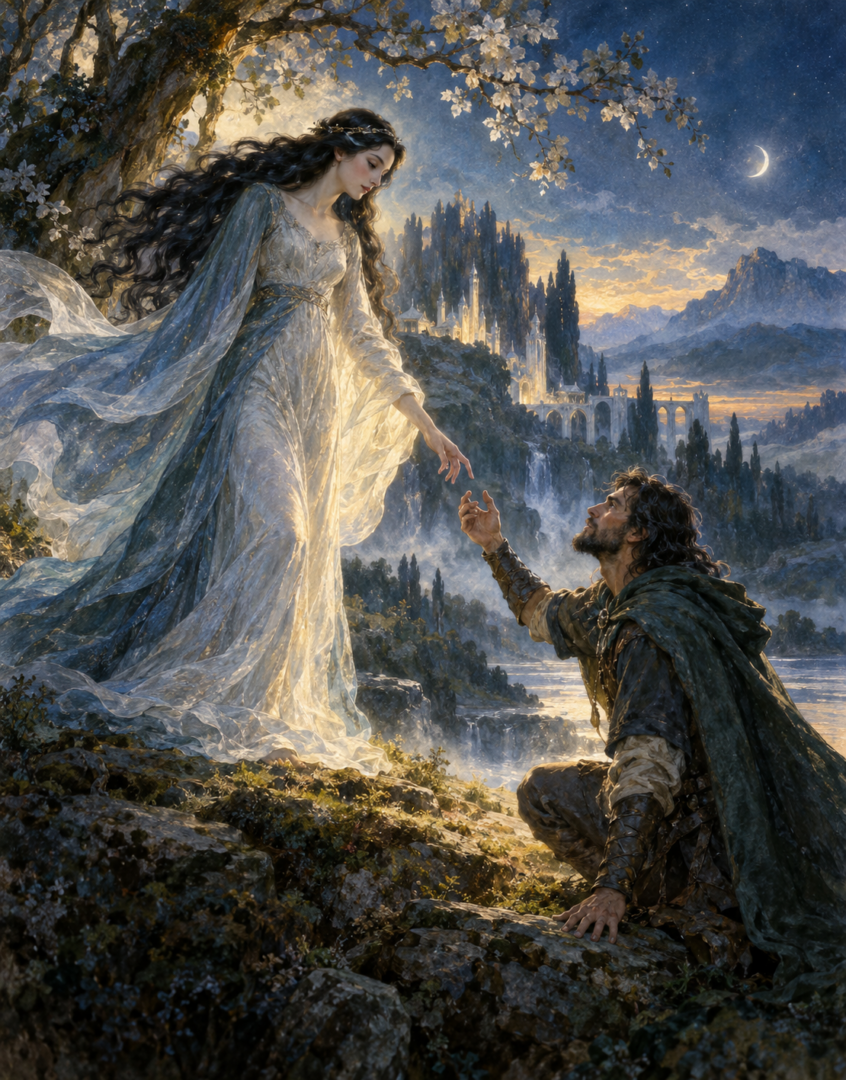
Lúthien does something almost no one in Middle-earth can do: she dies, enters the keeping of Mandos, and returns to embodied life.
At first glance, that seems to break one of the deepest boundaries in Tolkien’s world. Death is supposed to divide Elves and Men. The spirits of Elves remain bound to Arda, while Men ultimately leave the world by a road unknown even to the Valar. Yet Beren dies, Lúthien follows him, and somehow both return.
The crucial detail is what happens next.
Lúthien does not defeat mortality. She accepts it.
Her second life is therefore not a loophole through which death becomes reversible. It is a unique act of grace that actually preserves the distinction between the fates of Elves and Men. Beren is restored only for a time, while Lúthien receives something far more consequential than resurrection: she becomes mortal and shares his final destiny.
That is why their miracle remains an exception rather than a new rule.
The Problem Begins With Beren’s Death
The story reaches its apparent ending after the Hunting of the Wolf.
Carcharoth is slain and the Silmaril recovered, but Beren is mortally wounded. Before he dies, Lúthien asks him to wait for her beyond the Western Sea.
That request matters because Beren is a Man.
The fate of Men is fundamentally different from that of the Elves. Elves are naturally bound to the life of Arda. When an Elf dies, the spirit can be summoned to the Halls of Mandos, and under circumstances described elsewhere in the legendarium an Elf may eventually be rehoused.
Men do not share that destiny.
Their spirits leave the world, and their ultimate destination is not known to the Valar. Death is therefore not simply a biological difference between the two kindreds. It represents two different relationships to the created world.
Beren’s spirit nevertheless waits in the Halls of Mandos rather than immediately passing beyond the world. Lúthien soon dies of grief, and her spirit comes to Mandos.
There the famous turning point occurs.
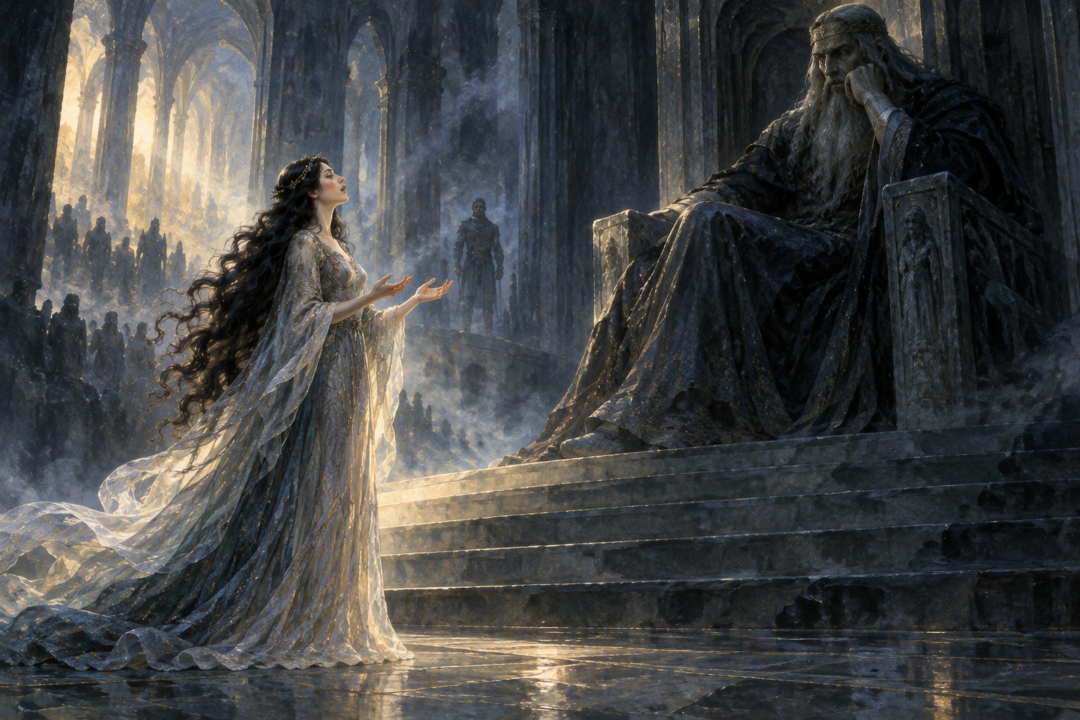
Lúthien sings before Mandos of the grief of Elves and Men. Mandos, who is rarely moved to pity, is moved by her song.
But pity alone cannot solve the problem.
Mandos Cannot Simply Rewrite the Fate of the Children
This is one of the most important limits in the episode.
Mandos does not possess unlimited authority over death. He cannot simply decide that Beren may remain indefinitely or that Lúthien may follow a mortal spirit beyond the world while retaining her ordinary Elvish fate.
The fundamental destinies of Elves and Men are not rules invented by Mandos.
The matter therefore passes beyond him.
In The Silmarillion, Mandos consults Manwë, and Manwë seeks the will of Ilúvatar. What follows is not presented as Mandos discovering a clever technicality in the laws of death. Something extraordinary is being permitted at the highest level of the world’s order.
Lúthien is given a choice.
She may go to Valinor and dwell there until the world’s end, separated from Beren.
Or she may return to Middle-earth with Beren.
But the second choice has a condition that changes everything.
If she returns with him, Lúthien herself will become mortal.
The Miracle Has a Price
This is what prevents Lúthien’s return from functioning as a general conquest of death.
Beren does receive another span of bodily life. In that limited sense, his return is extraordinary.
But he has not become immortal.
His mortal nature has not been replaced with an Elvish one. Nor has the Gift of Men been revoked. He will die again.
More astonishingly, Lúthien accepts the same fate.
She relinquishes the destiny normally belonging to the Elves and chooses a mortal life beside Beren, followed eventually by departure from the world.
The story therefore moves in the opposite direction from what a conventional resurrection tale might suggest.
The lovers do not escape mortality together.
Lúthien enters it.
Her choice resolves the otherwise impossible division between them not by keeping Beren permanently within the fate of the Elves, but by allowing Lúthien ultimately to share the fate of Men.
Their reunion is purchased through finitude.
A Second Life Is Not the Same as Immortality
The distinction between longevity, resurrection, and immortality matters throughout Middle-earth.
Living for an extraordinarily long time is not the same thing as escaping death. Returning once from death is not the same thing as acquiring endless bodily life.
Beren and Lúthien illustrate this with unusual clarity.
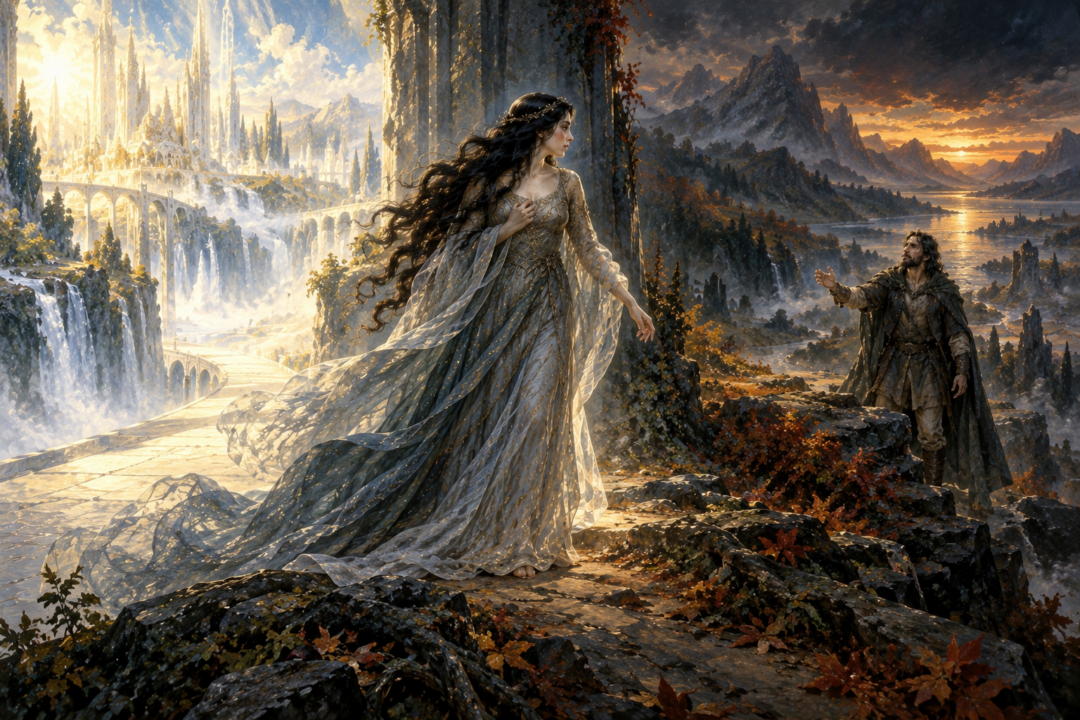
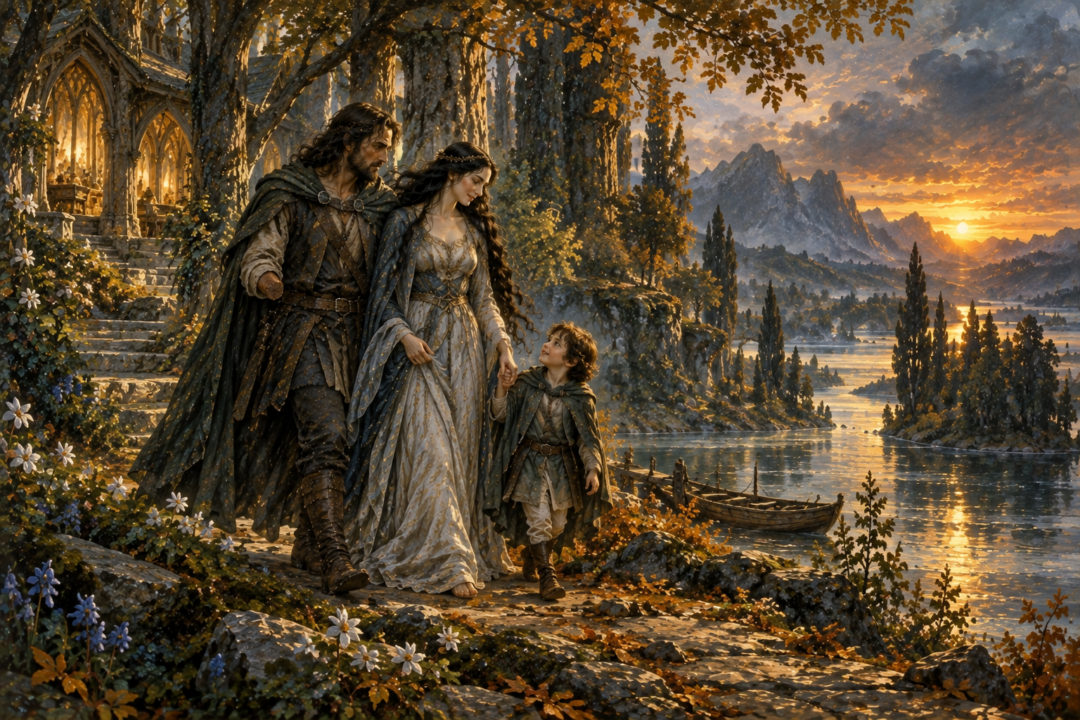
After their return, they eventually withdraw to Tol Galen, the Green Isle in the River Adurant in Ossiriand. The surrounding region becomes known as Dor Firn-i-Guinar, the Land of the Dead that Live.
The name captures their strange condition perfectly.
They are the dead who have returned, but they are not the deathless.
Their renewed life includes genuine earthly existence. Their son Dior is born, and their restored years become part of the continuing history of Beleriand. Beren later appears again in the events following the ruin of Doriath, when he and the Green-elves confront the Dwarves who have taken the Nauglamír and Silmaril.
Their second life is therefore not a ghostly interval.
It is real life.
But it remains temporary.
Eventually Beren and Lúthien disappear from the history of Middle-earth, and the Silmaril passes to Dior. The precise circumstances of their final deaths are not narrated in detail.
That silence is appropriate.
The important point is not how they died the second time.
It is that their second life still ended.
Why Lúthien Cannot Simply Remain an Immortal Elf
There is a deeper logic behind the choice.
If Lúthien had retained the ordinary fate of the Eldar while Beren retained the fate of Men, their reunion could only postpone the same separation.
Beren would eventually leave the world.
Lúthien would remain bound to it.
The fundamental tragedy of their relationship would return.
Instead, Lúthien accepts a permanent alteration of her own fate. The Silmarillion emphasizes the enormity of this by describing her as the only one of the Eldalië who truly died and left the world.
That is more significant than merely saying that she suffered bodily death.
Elves can suffer bodily death.
Lúthien’s uniqueness lies in what ultimately follows: she passes away from Arda according to the mortal destiny she has chosen.
Her first death brings her to Mandos.
Her final death takes her beyond the fate normally appointed to her people.
The second is the greater mystery.
Melian Immediately Understands the Cost
One of the most painful consequences appears when Lúthien returns to Doriath.
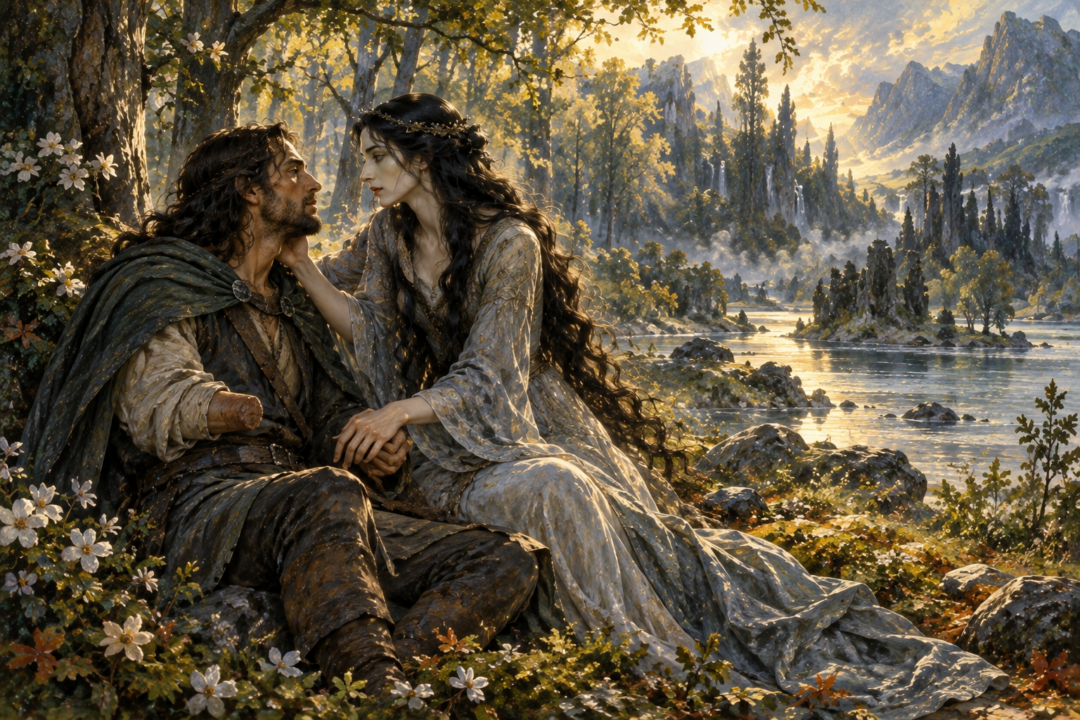
Her mother Melian is a Maia, an immortal spirit who has taken bodily form in Middle-earth. When Lúthien returns, Melian perceives what has happened.
Their reunion therefore contains the knowledge of a future separation.
Lúthien’s decision does not affect only herself and Beren. By choosing mortality, she accepts a destiny that will eventually carry her where her mother cannot follow by the same road.
This gives the episode a cost that is easy to overlook.
Lúthien chooses Beren completely, but the choice is not merely romantic reward after suffering. Something is surrendered.
She gives up the fate of her own people.
She gives up the possibility of remaining within Arda until its end.
And she accepts an ultimate destination that is hidden even from the great powers of the world.
Her victory over separation therefore creates another separation elsewhere.
That is part of what makes the choice tragic as well as beautiful.
Why This Does Not Make Death Reversible
If Beren can return, why cannot every mortal?
Because the narrative never presents his restoration as a technique, power, or precedent available to others.
Lúthien does not learn a spell for resurrection.
Mandos does not establish a new law.
The Valar do not acquire authority to retrieve Men after they have departed beyond the world.
Instead, the episode is repeatedly marked as exceptional. Mandos himself cannot resolve the problem within his own authority, and the solution depends upon a unique judgment concerning Beren and Lúthien.
Even then, mortality remains intact.
Beren eventually dies again.
Lúthien becomes mortal.
The boundary has been crossed in an extraordinary instance, but it has not been erased.
This is an important pattern in the metaphysics of Middle-earth: an exception need not invalidate the order in which it occurs. A unique grace can reveal the depth of a rule precisely because it cannot be mechanically repeated.
Beren’s restoration demonstrates that death is not beyond the authority of Ilúvatar.
It does not demonstrate that the inhabitants of Arda possess authority over it.
The Gift of Men Remains a Gift
From an Elvish perspective, mortality often appears terrifying.
Men age. Their lives are brief. Their spirits leave the world, while Elves remain tied to Arda and its history.
Yet within the larger theology of the legendarium, death is repeatedly described as the Gift of Ilúvatar to Men.
The word “gift” does not mean that every mortal experiences death without fear or grief. The stories plainly show otherwise.
Its deeper significance is that Men are not permanently confined within the life of the world.
Lúthien’s choice therefore becomes extraordinary because she willingly accepts the mystery given to Men.
She knows that choosing Beren means giving up the certainty of the Elvish relationship to Arda.
She does not receive knowledge of what lies beyond death as compensation.
She chooses without that knowledge.
Her second life is consequently not a retreat from death. It is a period of grace before she finally accepts death in its specifically mortal meaning.
The Exception Actually Protects the Rule
That is the paradox at the center of Lúthien’s fate.
She returns from death, yet death remains real.
Beren returns, yet Men remain mortal.
An Elf takes the mortal road, yet the ordinary distinction between Elves and Men remains.
Nothing about their experience turns resurrection into a repeatable mechanism.
Instead, their story demonstrates just how deep the boundary is.
To remain together permanently, it is not enough for Beren to be given additional years. The difference between their fundamental destinies must somehow be resolved.
And it is resolved through Lúthien’s sacrifice.
She does not pull Beren permanently back into the circles of the world.
She goes with him beyond them.
That makes their second life one of the strangest mercies in all the histories of Middle-earth. For a little while, the dead live again on a green island beside the waters of Ossiriand.
But the miracle does not cancel mortality.
It allows two people who were born under different dooms to meet death at last under the same one.
And that is why Lúthien’s exception never destroys the rule.
It reveals what the rule truly costs.
Sources & Notes
This article is based on close reading and interpretation of Tolkien's published works and related source material where relevant.