Saruman is often remembered for his armies, his treachery, and his alliance with dark powers. Yet one of the most striking details about his rise and fall is something far simpler: his hatred of trees.
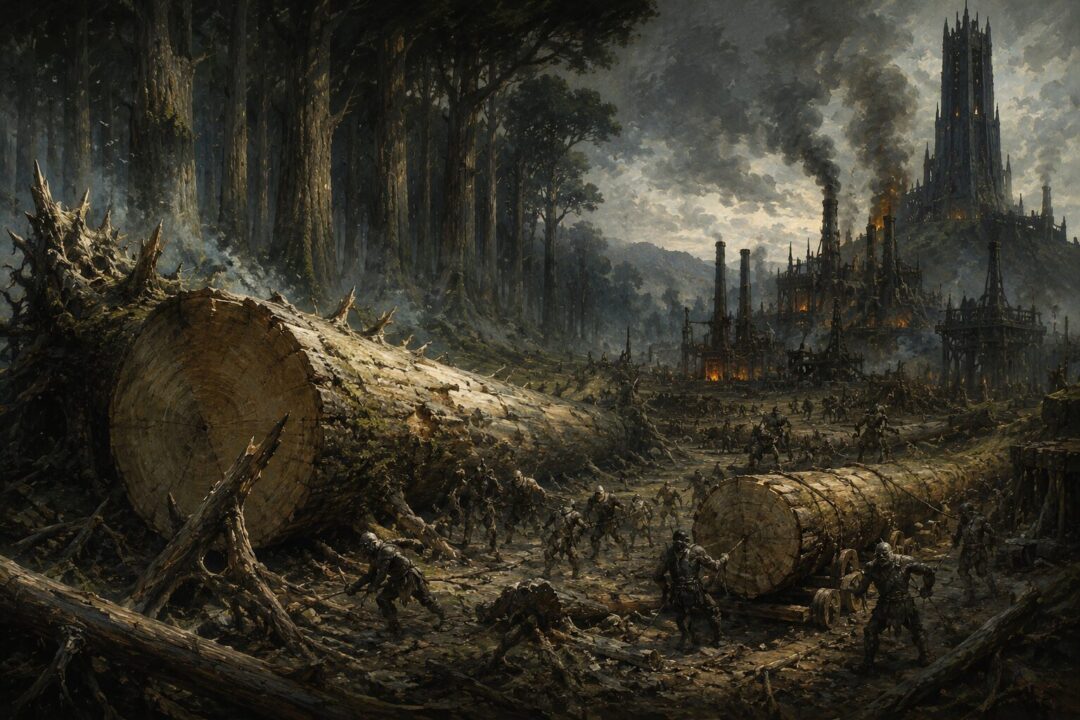
By the time of the War of the Ring, the lands around Isengard had been stripped for fuel. Ancient woods vanished into furnaces. The Ents spoke bitterly of Saruman’s servants cutting trees without care. Even Treebeard, who was slow to anger, described how Saruman had become an enemy of growing things.
At first glance, this can seem like a practical matter. Saruman needed timber for war. He needed fire for industry. He needed resources to build weapons and fortifications.
But the deeper one looks into the texts, the harder it becomes to see the destruction of forests as merely practical. Saruman’s war against trees appears to have reflected something much more personal: a rejection of limits, a hostility toward independent life, and a growing contempt for parts of the world that could not be controlled.
The axes around Isengard were cutting more than wood. They were revealing the final shape of Saruman’s character.
A Maia Sent to Help, Not Rule
To understand why Saruman’s conflict with forests became so intense, it helps to remember who he originally was.
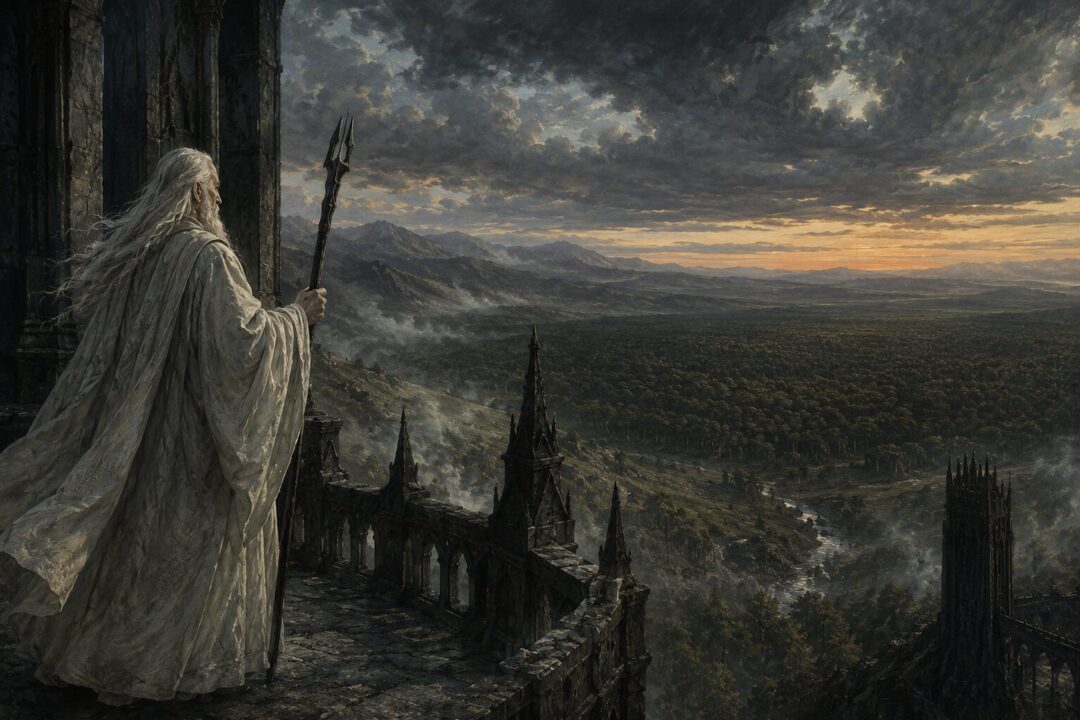
Saruman was not born as a tyrant. Before coming to Middle-earth, he was Curunír, one of the Maiar. In the accounts concerning the Istari, he is associated with Aulë, the Vala of craft, knowledge, and making.
That connection matters.
Aulë is a creator and builder. He delights in skill, order, and craftsmanship. Yet throughout the legendarium, true craftsmanship exists within the design of the world rather than against it. Aulë creates, but he also recognizes limits. He ultimately submits his works to a higher authority.
Saruman inherited the love of knowledge and craft, but over time something changed.
His wisdom gradually became linked to pride. His desire to understand became a desire to master. Instead of helping the peoples of Middle-earth resist evil, he increasingly sought power for himself.
The forests surrounding Isengard became one of the clearest physical expressions of that change.
Fangorn Was Not Just Another Forest
One reason Saruman’s actions carry such weight is that Fangorn Forest was no ordinary woodland.
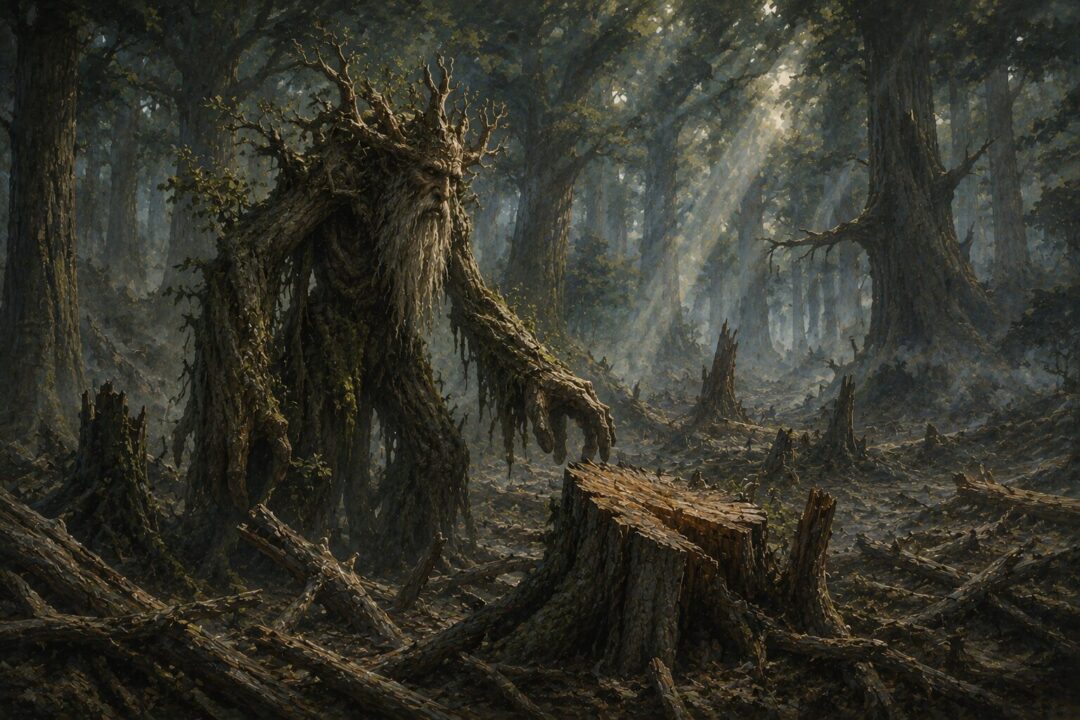
Fangorn was among the oldest surviving forests in Middle-earth. It preserved remnants of an ancient world that had existed long before the kingdoms of Men reached their height. Within it dwelt the Ents, shepherds of the trees whose memories stretched back through ages of history.
The text repeatedly emphasizes the unusual nature of Fangorn. Merry and Pippin discover that the forest feels alive in ways difficult to describe. The trees appear watchful. The woods possess a presence that exceeds ordinary vegetation.
Whether every tree in Fangorn was conscious is never fully explained. The texts distinguish between Ents, Huorns, and ordinary trees, but they also suggest that the boundaries between them are not always simple.
What matters is that Fangorn represented a living realm with its own identity and memory.
When Saruman cut into those forests, he was not simply harvesting a resource. He was attacking one of the oldest surviving expressions of Middle-earth’s natural order.
The Need to Dominate
Treebeard offers one of the most revealing judgments of Saruman.
He explains that Saruman once walked in the forest and seemed friendly. The Ents did not initially view him as an enemy. But over time they noticed a change.
Saruman became interested in things only as long as they could be used.
Treebeard describes how Saruman’s mind turned toward metal, wheels, engines, and devices. The issue is not technology itself. Tolkien’s texts contain many examples of skilled craftsmanship that are presented positively.
The problem is domination.
Saruman increasingly viewed the world as raw material.
Forests became timber.
Creatures became labor.
Knowledge became leverage.
Power became an end in itself.
This perspective stands in sharp contrast to the Ents. Treebeard and his people move slowly because they take time to understand things on their own terms. They do not rush to impose their will. They observe, remember, and preserve.
Saruman’s mentality moved in the opposite direction.
The older and more independent something was, the less patience he seemed to have for it.
Why Trees Were a Special Threat
There is an irony hidden within Saruman’s destruction of forests.
Trees are among the least aggressive things in Middle-earth. They do not seek kingdoms. They do not compete for thrones. They do not raise armies.
Yet they represent something Saruman increasingly disliked.
They endure.
A tree grows according to its own nature. It cannot be hurried beyond certain limits. It does not care about political schemes. It does not recognize claims of authority.
Ancient forests embody patience.
Saruman had become impatient.
His plans depended on rapid expansion, immediate production, and centralized control. Fangorn represented the opposite values: memory, continuity, and slow growth.
In that sense, the forest itself was a silent contradiction of everything Saruman was becoming.
The trees stood as a reminder that not all power comes from command.
Some power comes simply from enduring.
Isengard as a Symbol of Rebellion
The transformation of Isengard reflects this conflict perfectly.
Originally, Isengard was a fortress of Gondor. Under Saruman’s rule it became something very different.
Smoke rose from pits and furnaces. Trees were consumed for fuel. Workshops and industrial activity spread through the Ring of Isengard.
The imagery associated with Saruman increasingly centers on machinery, extraction, and production.
Again, the issue is not merely technological development. Middle-earth contains impressive works of engineering elsewhere.
The distinction lies in purpose.
Saruman’s industry exists to serve conquest.
Its growth requires constant consumption.
Its relationship with nature is fundamentally exploitative.
The more powerful Isengard becomes, the more lifeless it appears.
This creates one of the great visual contrasts in The Lord of the Rings: the green vitality of Fangorn versus the smoke and machinery surrounding Orthanc.
The contrast is moral as much as environmental.
One side nurtures life.
The other consumes it.
The Ents Were an Insult to Saruman’s Worldview
Saruman’s conflict with the Ents was probably about more than simple military concerns.
The Ents represented a kind of authority he could neither absorb nor command.
He could bargain with Men.
He could dominate Orcs.
He could deceive allies.
But the Ents remained stubbornly independent.
Treebeard listens carefully, thinks slowly, and reaches conclusions according to his own judgment. He cannot be rushed. He cannot be manipulated easily. He does not measure value according to power.
For someone increasingly obsessed with mastery, that independence may have been especially frustrating.
The Ents embodied a principle Saruman had abandoned: stewardship rather than ownership.
They cared for the forest because it possessed value in itself.
Saruman increasingly valued things only for what they could provide him.
That difference made conflict almost inevitable.
The Day the Forest Answered
One of the most satisfying moments in The Lord of the Rings occurs when the Ents finally march against Isengard.
The event feels larger than a military victory.
For much of the story, Saruman behaves as though the natural world is passive. Trees can be cut. Rivers can be redirected. Forests can be consumed.
Then the forest answers.
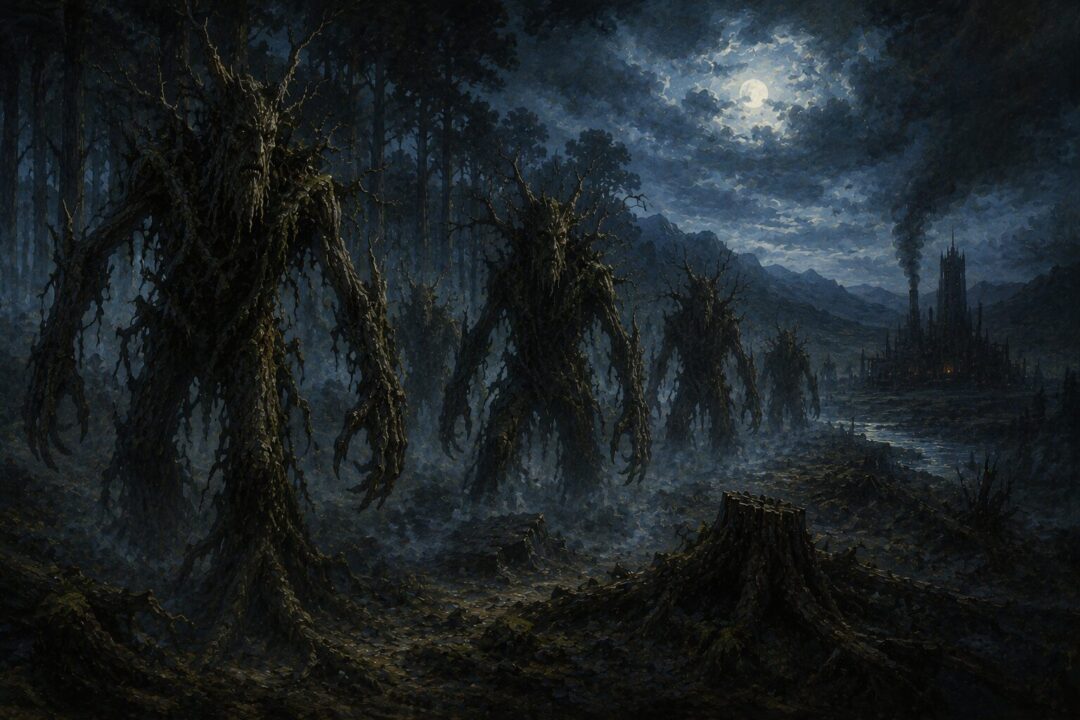
The Ents break Isengard’s defenses. Water floods the works of industry. The machinery that seemed so powerful proves fragile when confronted by forces older than Saruman’s plans.
Importantly, the Ents do not conquer Orthanc itself. The tower remains standing.
This detail reinforces a recurring theme.
Powerful structures can survive destruction.
Pride cannot.
Saruman’s defeat begins long before the Ents arrive. It begins when he decides that domination is superior to stewardship.
The ruin of Isengard simply reveals the consequences.
The Real Meaning of Saruman’s War Against Trees
Viewed from a distance, Saruman’s destruction of forests can look like a logistical necessity of war.
Viewed closely, it appears far more revealing.
His conflict with trees reflects his conflict with the world as it actually exists.
He wanted obedience from things that possessed their own nature.
He wanted speed where growth required patience.
He wanted control where life demanded respect.
The forests around Isengard became casualties of that mindset.
Fangorn endured because it represented something Saruman could never fully understand: strength that does not seek domination.
That is why the destruction of trees occupies such an important place in his story. The axes, furnaces, and smoke were not merely tools of war. They were symptoms of a deeper corruption.
In the end, Saruman’s war against trees was personal because the trees embodied everything he had rejected.
Memory instead of ambition.
Stewardship instead of mastery.
Patience instead of control.
And when the forest finally rose against him, it was not simply nature taking revenge. It was the world of Middle-earth answering a challenge that had been building for years—a reminder that some of the oldest powers are also the hardest to break.
Sources & Notes
- Tolkien Gateway, "Saruman" — https://tolkiengateway.net/wiki/Saruman
- Tolkien Gateway, "Ents" — https://tolkiengateway.net/wiki/Ents
- Tolkien Gateway, "Isengard" — https://tolkiengateway.net/wiki/Isengard
Sources added for article-specific Tolkien reference context.