Why did nobody simply ask the Eagles to carry the Ring to Mount Doom?
It is one of the most familiar questions in Middle-earth fandom, because at first glance the Eagles seem to break the story open. They rescue Thorin’s company from the burning trees. They appear at the Battle of Five Armies when ruin seems near. Gwaihir bears Gandalf from Orthanc. Later, the Eagles come to the Black Gate, and after the fall of Sauron they carry Frodo and Sam away from the ruin of Orodruin.
Seen only as transport, they look like an unused shortcut.
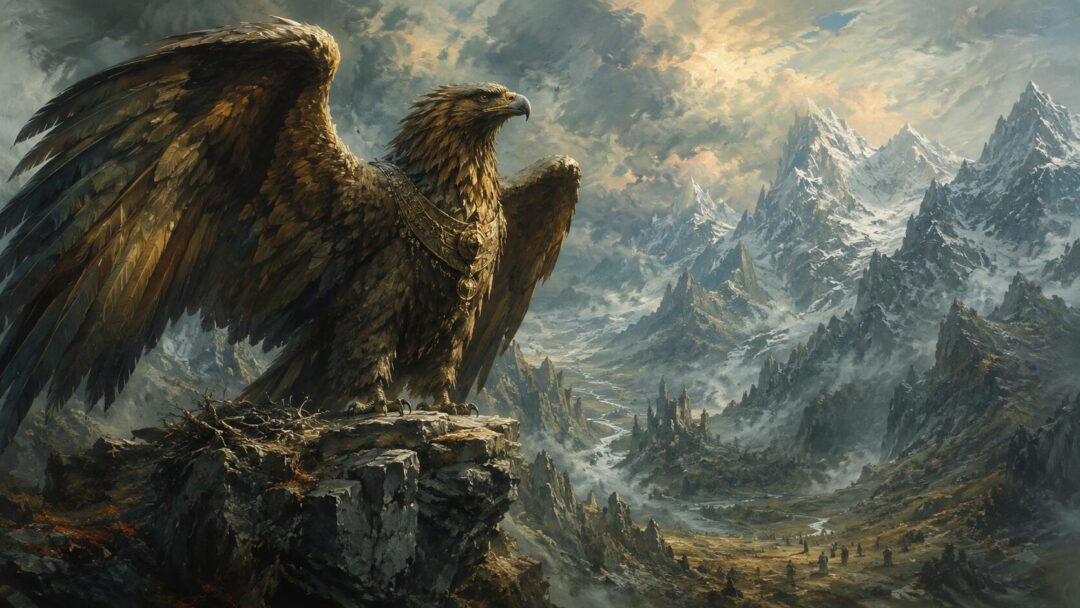
But that is the wrong category. The Great Eagles are not a service. They are not a neutral form of travel. They are proud, intelligent, morally independent beings with their own dignity, limits, loyalties, and place in the order of the world. In the deeper pattern of the legendarium, they are closer to kings, messengers, and sudden instruments of grace than to convenient taxis.
The question is not only “Could the Eagles fly there?” It is “What kind of beings are they, and what would it mean to treat them as tools?”
The Great Eagles Are Not Ordinary Animals
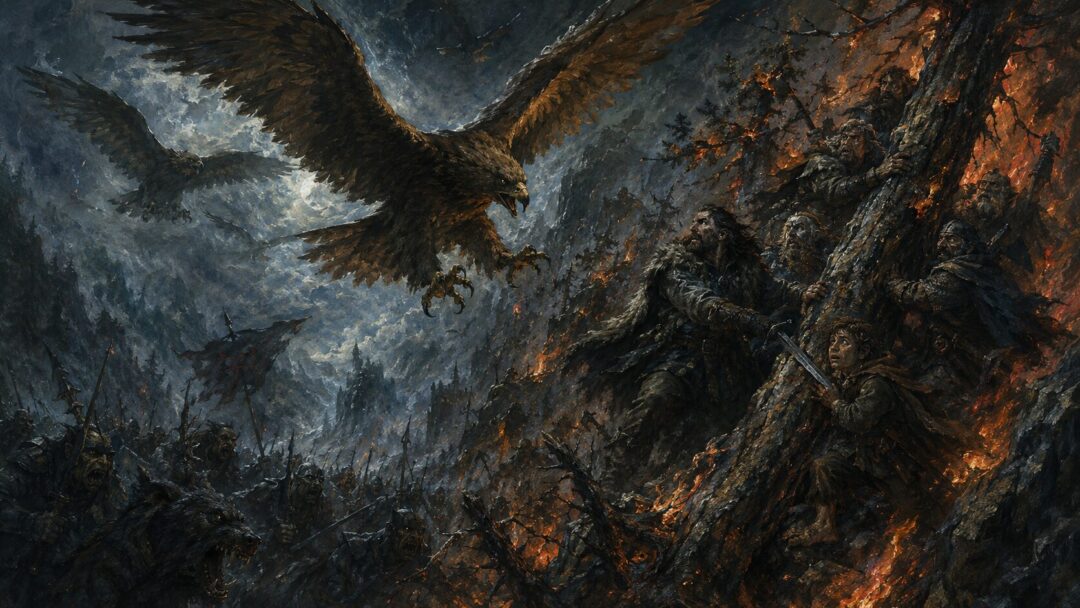
The Eagles of Middle-earth are not merely large birds. The texts present them as speaking, reasoning beings. In The Hobbit, the Lord of the Eagles speaks with Gandalf, gives orders, and leads his people. In The Lord of the Rings, Gwaihir the Windlord speaks with Gandalf and makes choices. These are not trained creatures responding to commands. They are persons in the narrative sense: beings with will, memory, pride, and judgment.
Their ancient association is even greater. The Silmarillion connects the Eagles with Manwë, lord of the Valar, and presents them as watchers and messengers in the long struggle against Morgoth. Thorondor, the greatest of the Eagles in the Elder Days, is called the King of Eagles. He is not described like a mount in a stable. He is a mighty power of the sky, involved at decisive moments in the wars and tragedies of the First Age.
That matters because the Eagles occupy a high symbolic place. They are linked with height, vision, sudden arrival, and help from beyond the calculations of the desperate. They can intervene, but they are not absorbed into the plans of Elves, Men, Dwarves, Hobbits, or even Wizards as ordinary servants.
A horse may be ridden because that is part of the relationship between rider and mount. An Eagle may bear someone, but only because the Eagle chooses to do so, or because the moment belongs to a larger providential pattern. The difference is crucial.
The Hobbit Already Warns Us Not to Treat Them as Friendly Transport
The Hobbit is often where the confusion begins, because the Eagles perform one of the most famous rescues in the story. Bilbo, Gandalf, Thorin, and the Dwarves are trapped in trees, surrounded by Wolves and Goblins, with fire climbing toward them. Then the Eagles come.
But even there, the episode does not present them as casual helpers.
The Eagles attack partly because they hate the Goblins. Their involvement has its own reason within the world. They are not simply waiting for Gandalf to wave them down. They notice trouble, recognize enemies, and act from their own hostility toward the servants of evil.
Nor do they carry the company all the way to the Lonely Mountain. They bring them to safety, feed them, and set them down near the Carrock. The journey must continue on foot, by river, through forest, and through danger. Their aid is real, but limited.
The Hobbit also describes the Eagles with a moral sharpness that is easy to overlook. They are not “kindly birds” in a simple, tame sense. Bilbo fears being eaten, and the story does not make them cozy woodland friends. They are noble, but they are also wild. They are capable of mercy, but not domestication.
Even in the lighter tone of The Hobbit, the rule is already visible: the Eagles may rescue, but they do not replace the quest.
Gwaihir Does Not Obey Gandalf Like a Servant
Gandalf’s rescues by Gwaihir are often used as proof that the Eagles could have been commanded more directly. But the text itself points the other way.
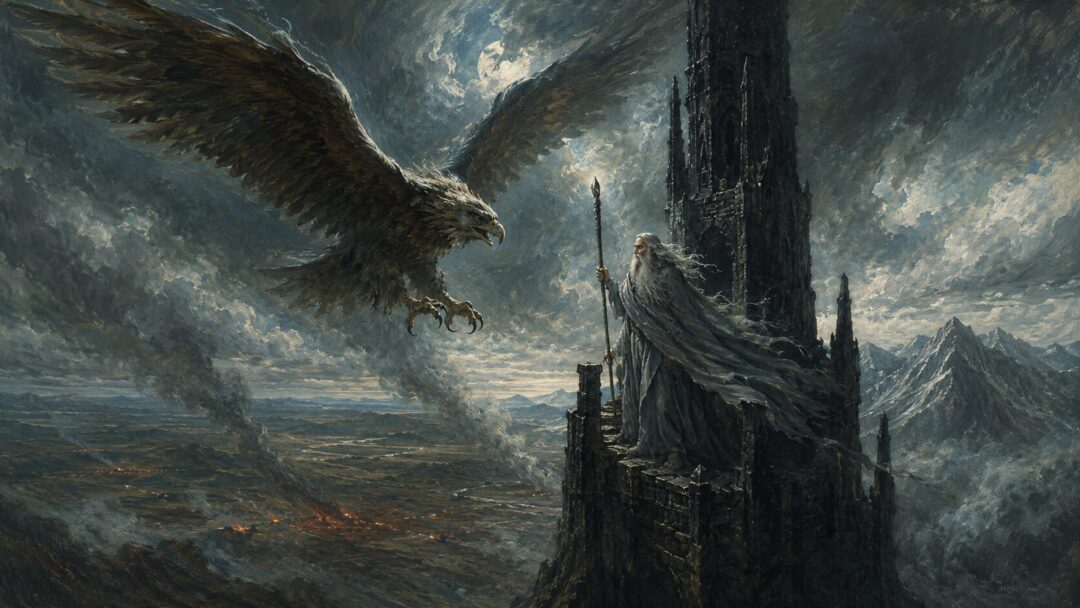
When Gwaihir comes to Orthanc, he is not functioning as Gandalf’s private vehicle. He has been sent to bring news, and he tells Gandalf that he was sent to bear tidings, not burdens. He does bear Gandalf away, but the exchange makes clear that this is not an ordinary arrangement. Gandalf asks. Gwaihir consents. The rescue is urgent and exceptional.
Even then, Gwaihir does not take Gandalf wherever he wishes without limit. He bears him away from Saruman’s tower and brings him to Rohan. The distance is significant, but it is not an unlimited flight across the world.
The same pattern appears after Gandalf’s battle with the Balrog. Gwaihir finds him on the mountain and carries him to Lórien. Again, the Eagle is not being used as a planned convenience. He arrives at a moment when Gandalf has passed through death and returned with a renewed task. The rescue feels less like logistics and more like intervention.
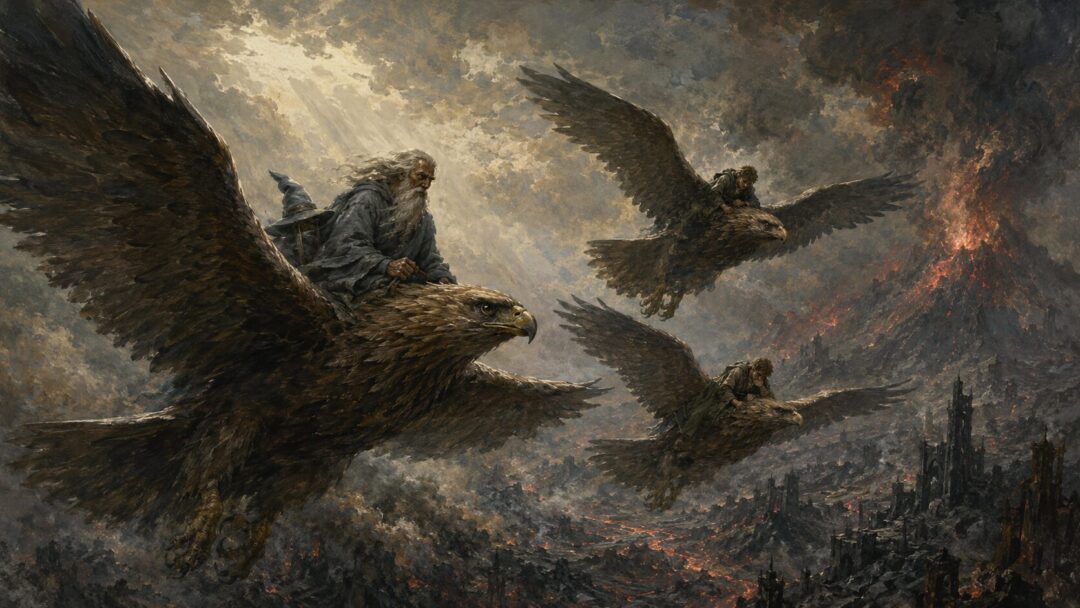
By the time Gwaihir carries Gandalf toward Mount Doom after the Ring is destroyed, the quest has already been fulfilled. The Eagles do not solve the moral test. They rescue the survivors after the impossible choice has reached its end.
The Eagles Arrive at Endings, Not as Replacements for Choices
A repeated pattern runs through the major Eagle scenes: they appear when ordinary hope has run out, but not before the central burden has been carried.
At the burning trees in The Hobbit, the company has already been driven to the edge of death. At the Battle of Five Armies, the Eagles arrive when the battle has turned desperate. At the Black Gate, they come when the Captains of the West are making their last stand as a diversion, not when victory is still a strategic calculation. At Mount Doom, they arrive only after Frodo and Sam have crossed Mordor, after Gollum has fallen, and after the Ring has been destroyed.
This is not a minor storytelling habit. It reveals how help works in Middle-earth. Aid may come from beyond expectation, but it does not cancel endurance, pity, courage, or sacrifice. The Eagles do not prevent the road. They appear after the road has demanded everything.
That is why treating them as taxis misunderstands not only their nature, but the moral structure of the story. A taxi exists to shorten a journey. The Eagles usually appear when the journey has done its work.
Why Not Fly the Ring to Mordor?
The most famous objection deserves a careful answer. The texts never give a single scene in which the Council of Elrond debates and rejects an Eagle plan in detail. So any answer must be framed conservatively. We should not pretend the books provide a neat technical memo.
Still, the story gives strong reasons why the idea does not fit.
First, the mission depends on secrecy. The Council chooses a small company and a hidden road, not open force. A flight of Great Eagles toward Mordor would be one of the least secret movements imaginable. The sky is not empty of enemies. Sauron has spies, servants, and eventually the Nazgûl mounted on winged creatures. The closer one came to Mordor, the more dangerous exposure would become.
Second, the Ring itself is not a package like any other. It works through desire, fear, and the will to possess. Powerful beings are especially dangerous around it because their strength gives the Ring greater possibilities. The texts do not explicitly say what would happen if a Great Eagle carried the Ring-bearer into Mordor, but they give us enough warning to be cautious. Gandalf refuses the Ring. Galadriel refuses it. Even Boromir falls under its temptation through the desire to save his people. The wiser and greater the being, the more catastrophic the corruption might become.
It would be too strong to say that an Eagle certainly would have claimed the Ring. Tolkien never stages that test. But it is fair to say the Ring makes any plan involving mighty, visible, proud beings morally dangerous.
Third, the Eagles are not under the command of the Council. Elrond, Gandalf, and the Free Peoples may receive help, but they cannot requisition the Eagles like military assets. The Eagles have their own lordship and their own relation to the powers of the world.
The Eagle plan fails not because the birds are weak, but because the quest is not merely a transportation problem.
“Dangerous Machine” Means Dangerous to the Story
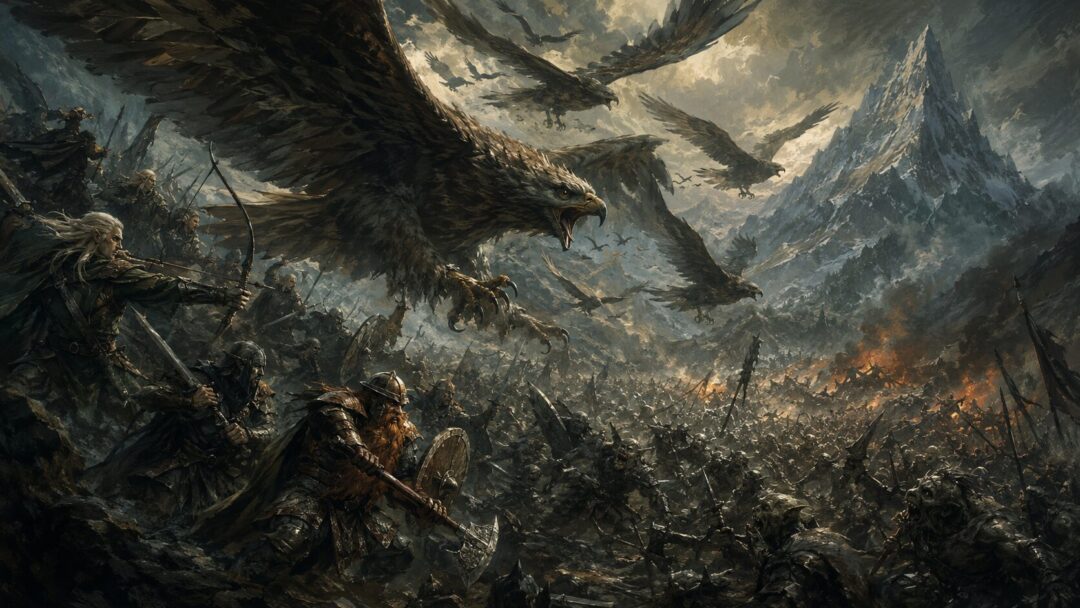
There is also an outside-the-story reason, and it is unusually direct. In a letter criticizing an early film treatment, Tolkien objected to the idea of using Eagles too freely and described them as a dangerous “machine.” He also criticized the notion of having them serve as taxis.
That remark is not just a joke about convenience. It shows the danger of overusing a power that can drop out of the sky and solve impossible situations. If Eagles can always appear whenever someone needs rescue or travel, then danger loses weight. Distance loses meaning. Imprisonment becomes temporary. The long road becomes optional.
Inside the world, that would make Middle-earth feel smaller. Outside the world, it would flatten the tale.
This is why the sparing use of the Eagles matters. They are most powerful when rare. Their arrival feels like wonder because it cannot be ordered on demand.
Kings of the Air, Not Furniture of the Plot
The Great Eagles often stand near the border between politics, myth, and providence. In The Hobbit, their leader negotiates and commands. In The Silmarillion, Thorondor belongs to the high, terrible scale of the Elder Days. In The Lord of the Rings, Gwaihir is named, remembered, and addressed as a friend, not handled as equipment.
Their kingship is not always political in the human sense. They do not rule cities, mint coins, or sit in halls of stone. But they have rank, lineage, territory, memory, and authority. They are not background creatures. They are a people of the heights.
This changes how their help should be read. When an Eagle bears Gandalf, the moment carries honor. When Eagles come to battle, it is an alliance or intervention. When they rescue Frodo and Sam, it is not the belated use of an obvious shortcut. It is the world answering after pity, weakness, and endurance have accomplished what force could not.
A taxi is summoned because someone has a destination.
An Eagle arrives when the story has reached a height where ordinary roads can no longer save anyone.
The Deeper Rule Behind the Wings
The Eagles remind us of one of Middle-earth’s hidden rules: power is not the same thing as rightful use.
A thing may be possible and still be unfitting. A road may be shorter and still be wrong for the task. A mighty ally may be real and still not be available as a tool. The Ring cannot be defeated by turning every noble being into equipment for a plan. That would already be thinking too much like the Enemy, who sees other wills as instruments.
The free peoples win because they do not merely assemble the strongest powers and point them at Mordor. They rely on secrecy, humility, friendship, mercy, and the strange strength of those who seem least likely to matter. The Eagles have their place in that victory, but it is not the place of hired wings.
They are not there to make the road unnecessary.
They are there to show that, after the road has been walked to its bitter end, help may still come from above.
Sources & Notes
- J.R.R. Tolkien, The Hobbit, Chapter 6, “Out of the Frying-Pan into the Fire” — the Lord of the Eagles rescues the company but refuses to carry them near the lands of Men, showing aid rather than hired transport.
- J.R.R. Tolkien, The Hobbit, Chapter 18, “The Return Journey” — the Eagles arrive at the Battle of Five Armies as a free power with their own lord and battle role, not as Bilbo’s or Gandalf’s vehicles.
- J.R.R. Tolkien, The Lord of the Rings, Book II, Chapter 2, “The Council of Elrond” — Gwaihir bears Gandalf from Orthanc after Radagast’s message, a providential rescue rather than an all-purpose travel solution.
- J.R.R. Tolkien, The Lord of the Rings, Book VI, Chapter 4, “The Field of Cormallen” — Gwaihir, Landroval, and Meneldor rescue Frodo and Sam from Orodruin after the Ring is destroyed, when secrecy is no longer the issue.
- J.R.R. Tolkien, The Silmarillion, “Of the Return of the Noldor” — Thorondor’s interventions around Maedhros and Fingolfin present the Great Eagles as majestic servants of Manwë, appearing at rare turning points.