At the Council of Elrond, the Ring lies in Rivendell as a thing of ancient terror: Isildur’s Bane, Sauron’s own weapon, the one object that cannot be safely used, hidden, or bargained with. Elrond understands its history. Gandalf understands its spiritual danger. Aragorn understands the long burden of the heirs of Elendil. Frodo, almost alone among them, begins to understand that the Ring must be carried into darkness rather than away from it.
But Boromir understands something else.
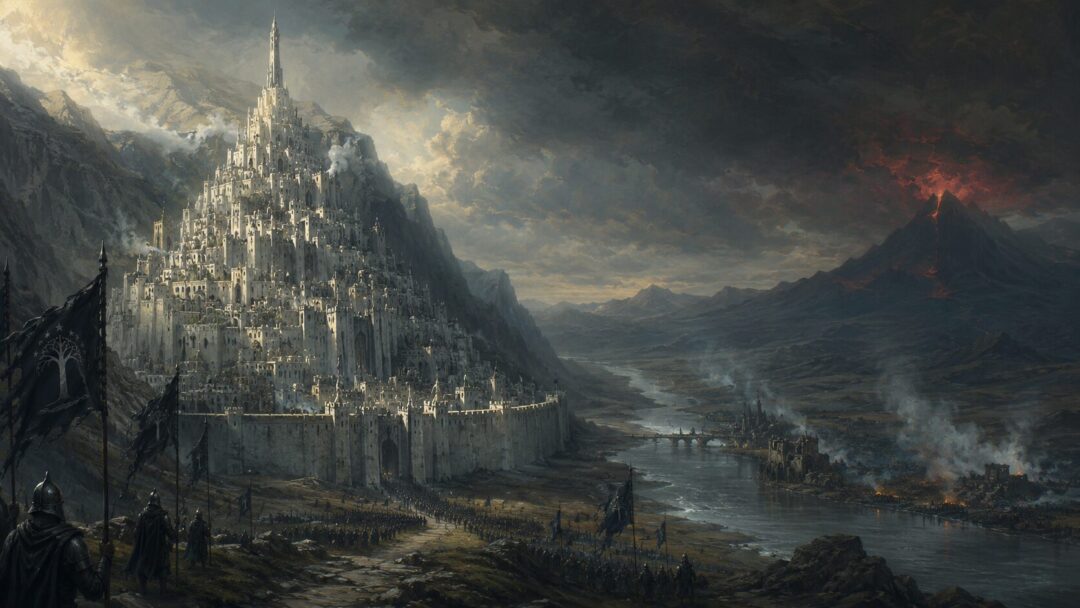
He understands Minas Tirith.
That does not make him right about the Ring. The Council is correct: the Ring cannot be wielded against Sauron without corruption. Yet Boromir’s error is not born from ignorance alone. It comes from a truth that the others can speak of, but not feel as he feels it: Gondor has been standing directly in front of Mordor for generations, and the price has been paid in men, walls, watchfulness, and hope.
Boromir’s tragedy is that he sees a real need and reaches for a forbidden answer.
A Man Who Came From the Front Line
Boromir does not arrive in Rivendell as a scholar, wanderer, or seeker of old songs. He comes as the son of Denethor, heir of the Steward of Gondor, from a city under pressure. His journey north is itself revealing. In “The Council of Elrond,” he explains that the dream came first to Faramir and then to him, and that he took the road to Imladris himself. The text does not present him as a coward fleeing danger. He is a warrior crossing a dangerous world because Gondor needs counsel.
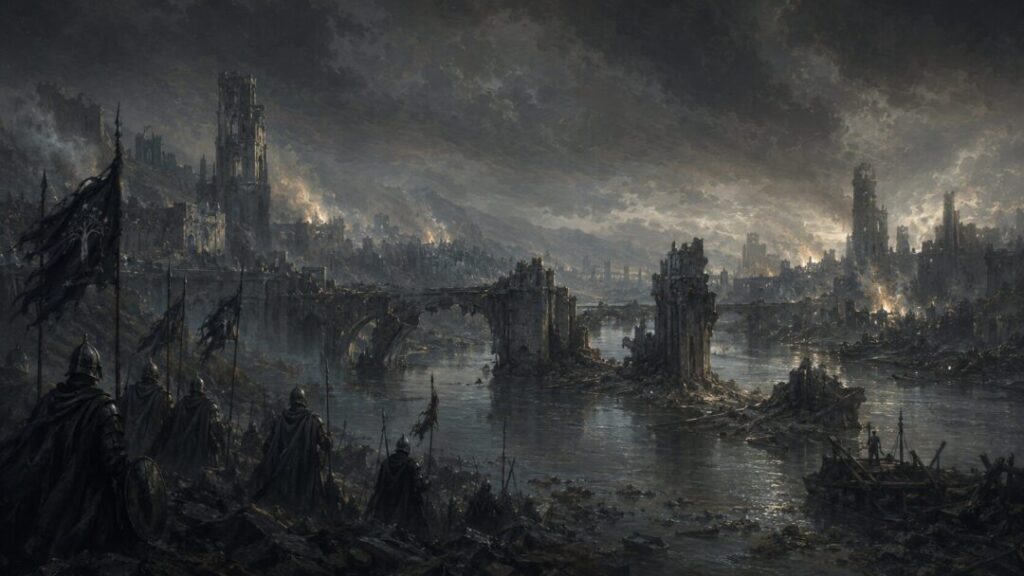
His first great speech is not really about glory. It is about exhaustion. He describes Gondor as a land that has held the Enemy back. He reminds the Council that the power of Mordor does not merely threaten distant maps; it presses upon his own people. Osgiliath has been fought over. The bridges have been cast down. The long defense of the Anduin is not theoretical.
This is the detail Boromir carries into the Council: evil is not approaching Gondor someday. It is already there.
The Elves can remember the Second Age. The Dwarves bring news from Erebor. Aragorn has fought in many lands under many names. Gandalf has labored for years against Sauron’s return. None of this is small. But Boromir’s imagination has been shaped by a different fact: if Gondor fails, the road westward opens.
The Council Thinks in Ages; Boromir Thinks in Days
One of the great tensions in the Council is the difference between long memory and immediate necessity. Elrond can trace the story of the Ring back to Sauron, Isildur, and the Last Alliance. He understands that the Ring has one true end: it must be unmade where it was made. Gandalf knows that to use it, even for good, would mean becoming something like the Enemy one seeks to defeat.
Boromir hears all this, but he also hears something unbearable: Gondor must continue to endure while others choose an almost impossible path.
From his perspective, the plan to send the Ring secretly into Mordor can look less like wisdom and more like refusal. Here is a weapon feared by Sauron. Here is Gondor, the chief military barrier before Mordor. Here are wise lords saying that the weapon must not be used. Boromir’s mind turns naturally toward the practical question: why should strength be thrown away when his people are being spent?
He does not understand the Ring’s nature deeply enough. That is his fatal weakness. But he understands war’s arithmetic better than many readers first notice. Walls can fall. Men can die. Reinforcements can be too late. A noble strategy that leaves soldiers unsupported may still feel, to the soldier, like abandonment.
The Council is right because it sees the spiritual law of the Ring. Boromir is dangerous because he sees the material crisis and refuses to let it remain abstract.
Gondor’s Pride Is Not Empty Boasting
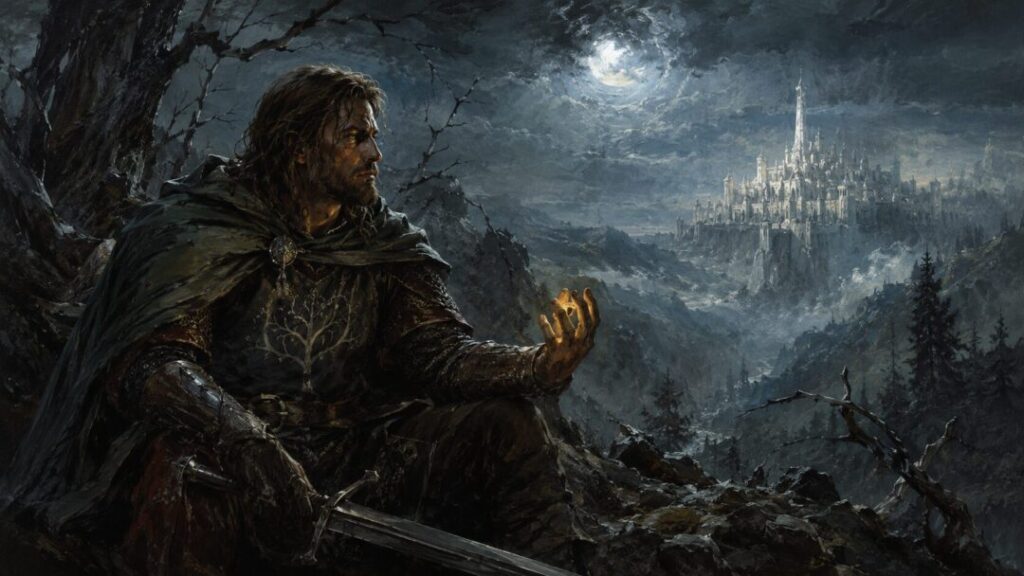
Boromir’s pride is easy to condemn because it leads him toward the Ring. Yet his pride has roots in real service. Gondor is not merely proud because it remembers Númenor and kings. It is proud because it has endured.
In the history of the Third Age, Gondor has declined from its former greatness. The king is gone. The Stewards rule in the king’s absence. The watch on Mordor has weakened over time, and Sauron has returned openly to the Black Land. Minas Tirith is still magnificent, but it is also a city facing east, a white stronghold under lengthening shadow.
Boromir speaks from that tradition. He is not inventing Gondor’s importance when he presents it as a shield of the West. Later, in “The Window on the West,” Faramir expresses a related idea when he speaks of Gondor’s long stewardship and its difference from lands of “less royalty.” The House of the Stewards is not a usurpation in its own eyes. It is a charge preserved through centuries.
This matters because Boromir’s resistance to Aragorn is not simply personal arrogance. Aragorn’s claim touches the deepest political wound in Gondor: the throne has been empty for a very long time, and the Stewards have borne the daily burden of rule. To Boromir, a northern Ranger with a broken sword may be a wonder, but he is also a question. Can a figure from legend truly return and understand the city that has stood without him?
The text does not ask us to approve Boromir’s doubt. It asks us to recognize why it exists.
The Ring Offers Exactly What Boromir Wants to Hear
The Ring’s temptation works through desire, but not always through petty desire. For Boromir, the temptation is not merely “I want power.” It is “my people are in peril, and power could save them.”
That is why his fall is so painful. The Ring does not need to persuade Boromir to love evil. It only needs to twist his love of Gondor. His desire to defend his city becomes a willingness to seize what cannot be safely possessed. His patriotism becomes impatience with mercy, secrecy, and trust.
This is one of the hidden rules of the Ring: it corrupts good intentions by making domination look like responsibility. Boromir imagines strength in the hands of the righteous. The Council knows that the Ring does not remain a neutral tool in anyone’s hand. A person who claims it to defeat Sauron would not merely defeat Sauron by ordinary force; he would enter the same logic of mastery.
Boromir does not fully accept this. He believes there must be a way for the strong-hearted to use strength rightly. In another story, that belief might make him heroic without tragedy. In this story, it makes him vulnerable.
What the Council Could Not Feel
The Council understands Gondor’s importance. Aragorn even answers Boromir by saying that other guardians have also labored, especially the Rangers of the North, though their work is less celebrated. This is true. The Shire and Bree have been protected without knowing it. The northern Dúnedain have fought a hidden war.
But Boromir’s grievance still has force. Gondor’s struggle is visible, costly, and public. Minas Tirith cannot defend itself invisibly. Its sons do not merely keep watch in the wild; they stand before the armies of Mordor.
This is the emotional truth Boromir brings into the story: sacrifice can become bitterness when those who benefit from it do not understand it. The Council is not ungrateful, but Boromir feels the loneliness of a people expected to hold the line. When he hears that the Ring must be destroyed rather than used, he hears yet another demand placed upon Gondor’s endurance.
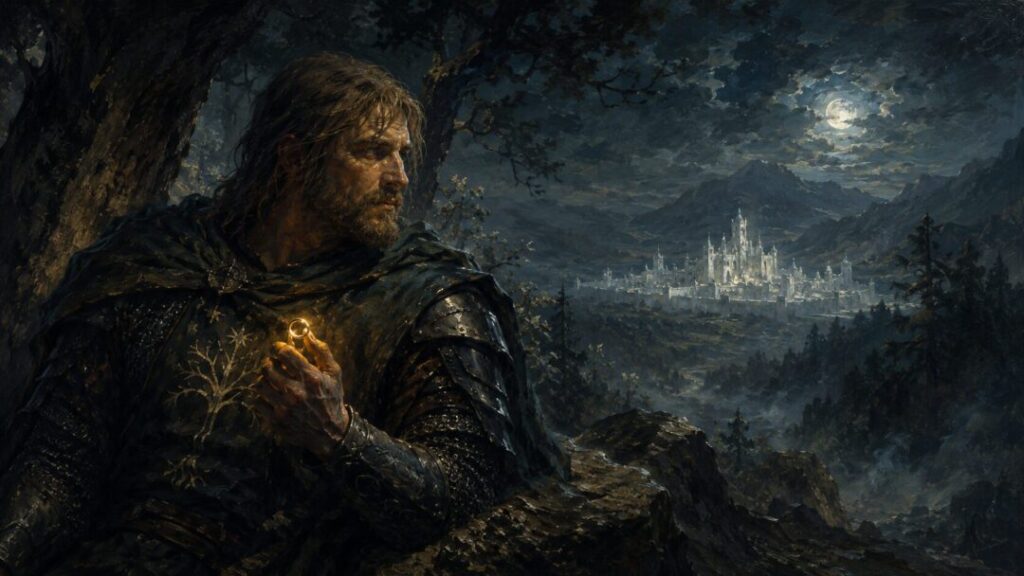
That does not justify his later attempt to take the Ring from Frodo. Nothing in the text softens that act into harmlessness. But it does explain why his temptation has such force. He is not dreaming of private luxury. He is imagining the White City saved.
Boromir and Faramir: Two Answers to the Same Burden
Boromir’s brother Faramir helps reveal Boromir more clearly. Faramir also loves Gondor. He also knows war, loss, and duty. He meets Frodo and Sam in Ithilien, much closer to Mordor than Rivendell ever was. Yet when he learns enough to understand the danger of the Ring, he refuses to take it.
The difference is not that Faramir loves Gondor and Boromir does not. The difference is how each man relates love to power. Faramir can imagine a loyalty that does not grasp. Boromir, under pressure and under the Ring’s influence, cannot hold that line.
Still, Faramir’s refusal should not make Boromir seem shallow. It makes him tragic. The brothers embody two possible responses to a besieged world. One says: because the need is desperate, we must seize any weapon that may save us. The other says: because the need is desperate, we must be even more careful not to become what we fight.
Both responses are human. Only one survives the Ring.
The Tragic Irony of Boromir’s Wisdom
Boromir understands Gondor’s military reality better than most of the Council because he has lived inside it. Yet that very understanding blinds him to the deeper peril. He is right that Gondor needs help. He is wrong that the Ring can be that help.
This is the tragic irony: Boromir sees the battlefield clearly but misreads the weapon. He knows what armies can do. He knows what courage can do. He knows what a desperate defense requires. But the Ring does not belong to the ordinary world of swords, walls, and captains. It belongs to the deeper war over wills.
When Boromir finally breaks at Amon Hen, the disaster has been prepared not by villainy but by pressure. The Ring has found the wound: fear for Gondor, resentment at delay, impatience with weakness, longing for a swift victory. His attempt to take the Ring is a moral collapse, but it is not the collapse of a man who never cared for good. It is the collapse of a man who cared so fiercely that he began to excuse the means.
And then, crucially, he repents.
His Last Act Restores the Truth Beneath the Error
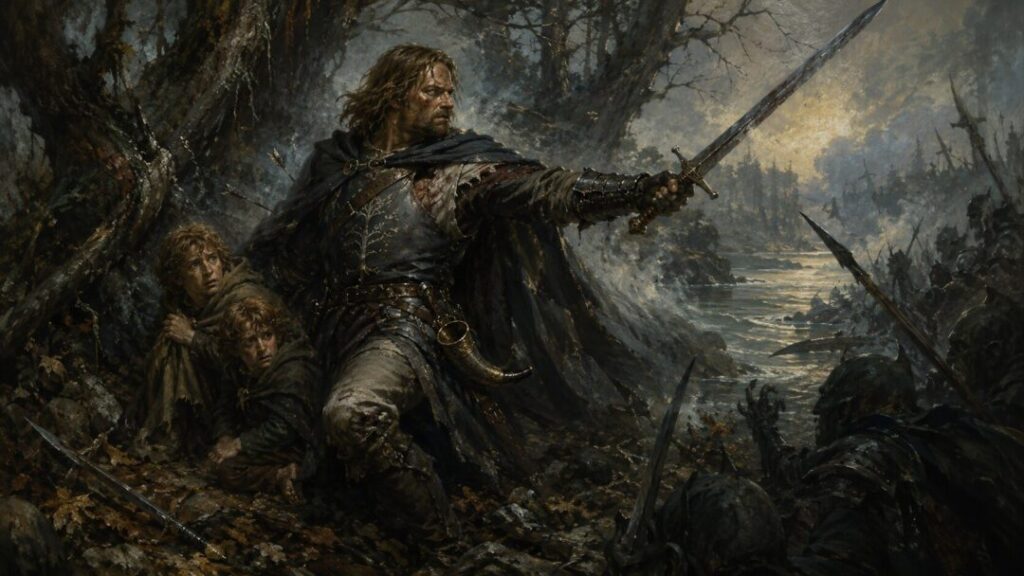
Boromir’s death matters because it reveals what was true in him before the Ring distorted it. He dies defending Merry and Pippin, not conquering, commanding, or claiming. He returns to service without possession. He cannot undo his attempt against Frodo, but he can still choose courage without domination.
In his final confession to Aragorn, Boromir acknowledges his failure. Aragorn does not answer him with contempt. He honors him. That mercy is important. The story does not pretend Boromir was right about the Ring, but neither does it reduce him to his worst moment.
Boromir understood that Gondor was bleeding. He understood that noble words do not hold bridges by themselves. He understood that the West had survived partly because men in the South kept dying for it. What he could not understand in time was that some powers cannot be used even for the defense of the beloved.
That is why Boromir remains one of the most human figures in the War of the Ring. He is not the man who saw nothing. He is the man who saw one terrible truth so clearly that it nearly made him blind to another.
Gondor needed saving. Boromir was right about that.
But it could not be saved by becoming another Mordor.
Sources & Notes
- J.R.R. Tolkien, The Lord of the Rings, Book II, Chapter 2, “The Council of Elrond” — Boromir speaks for Gondor as the long-standing shield against Mordor, recounting Osgiliath, the broken bridge, and the dream that sent him north.
- J.R.R. Tolkien, The Lord of the Rings, Book IV, Chapter 5, “The Window on the West” — Faramir’s words about Gondor, Númenórean memory, and refusing the Ring illuminate the same burden that Boromir answers differently.
- J.R.R. Tolkien, The Lord of the Rings, Book II, Chapter 10, “The Breaking of the Fellowship” — Boromir’s temptation turns his desire to defend Minas Tirith into an attempt to seize the Ring from Frodo.
- J.R.R. Tolkien, The Lord of the Rings, Book III, Chapter 1, “The Departure of Boromir” — Boromir’s confession, repentance, and death defending Merry and Pippin show the loyal courage beneath his failure.
- J.R.R. Tolkien, The Lord of the Rings, Appendix A, I, “The Númenórean Kings,” section “Gondor and the Heirs of Anárion” — gives the background of Gondor’s Stewardship, the empty throne, and the long pressure of Mordor on the South-kingdom.