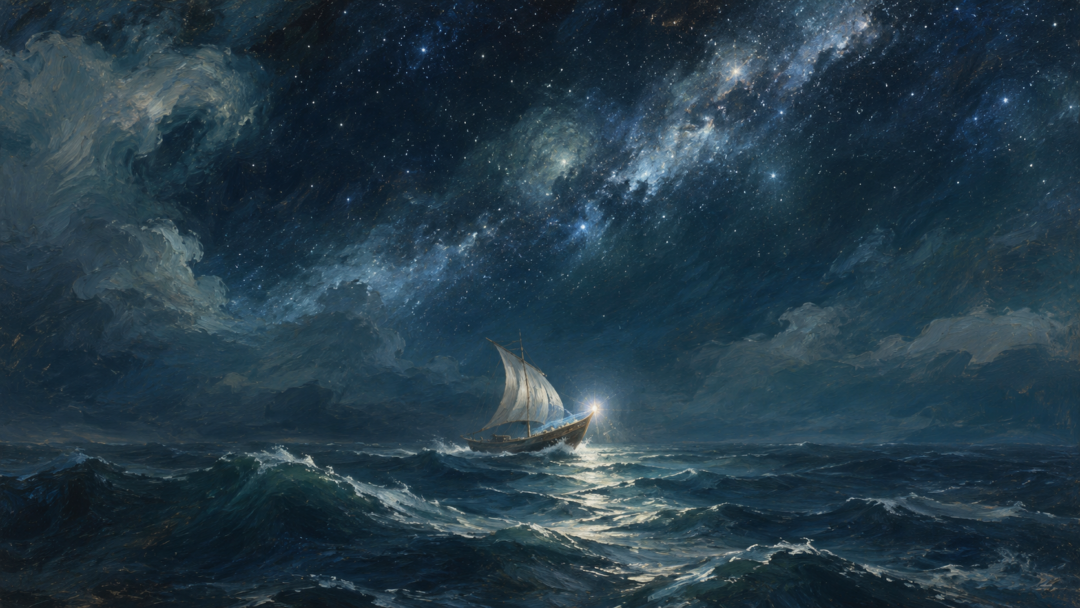
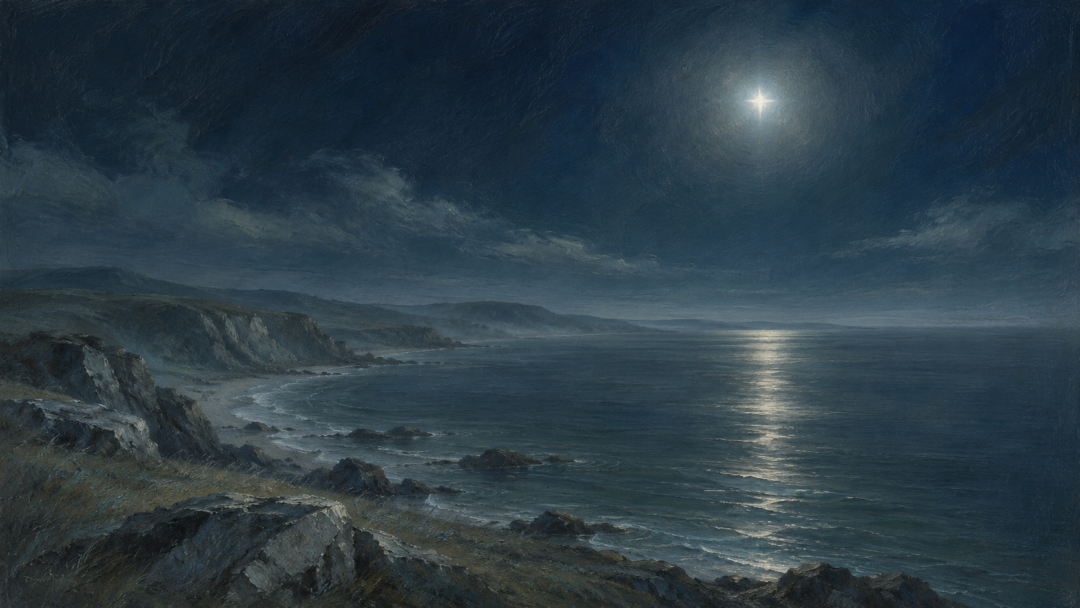
Above the ruined coasts of Beleriand, a mariner sails a shining ship through the heavens. The Silmaril bound upon Eärendil’s brow appears to Middle-earth as a star of hope. He has carried the suffering of Elves and Men before the Valar, and now his light shines where both peoples can see it. But what if the mariner had accepted mortality instead?
Morgoth would not suddenly have won. Eärendil’s plea was heard before his final fate was settled. The greater problem would be the star: someone destined to leave the world could not keep an everlasting watch in its skies. First, though, a correction. The published Silmarillion says Eärendil actually was offered a choice and chose the fate of the Elves. What it does not describe is what choosing Men would have meant.
What Eärendil was allowed to choose
The confusion is understandable because the Akallabêth, looking back from Númenor’s history, concentrates on his sons. It says that “in the matter of the Half-elven Ilúvatar gave to them the judgement; and they judged that to the sons of Eärendil should be given choice of their own destiny”. Elrond chose the Firstborn; Elros accepted the lot of Men. Read alone, that account makes the choice seem exclusively theirs.
But Of the Voyage of Eärendil and the War of Wrath describes Manwë’s decree more broadly. Eärendil, Elwing and their sons were each permitted to choose which kindred would determine their fate. Elwing chose the Elves because of Lúthien, and Eärendil chose likewise for her sake, although his heart lay more with his father’s mortal people. So this alternative was not forbidden to him. It was available, and he did not take it.
Two other passages help separate the family’s unusual histories. Of Men says that “in the glory and beauty of the Elves, and in their fate, full share had the offspring of elf and mortal, Eärendil, and Elwing, and Elrond their child”. That reflects the received outcome, not a description of a mortal Eärendil. And the words “his fate is sundered from the fate of Men” refer to Tuor, Eärendil’s father, who was said to have joined the Elves. They are not a ruling about Eärendil himself.
The power to make such decisions was limited. The Akallabêth says the Valar cannot withdraw Ilúvatar’s gift of death from Men; in the special case of the Half-elven, Ilúvatar entrusted them with judgement. Thus choosing Men would not mean acquiring ordinary mortality as a temporary condition to be cancelled later. It would mean accepting the destiny of the kindred, even for someone whose adventures had taken him beyond the reach of other mariners.
His mission would not have failed
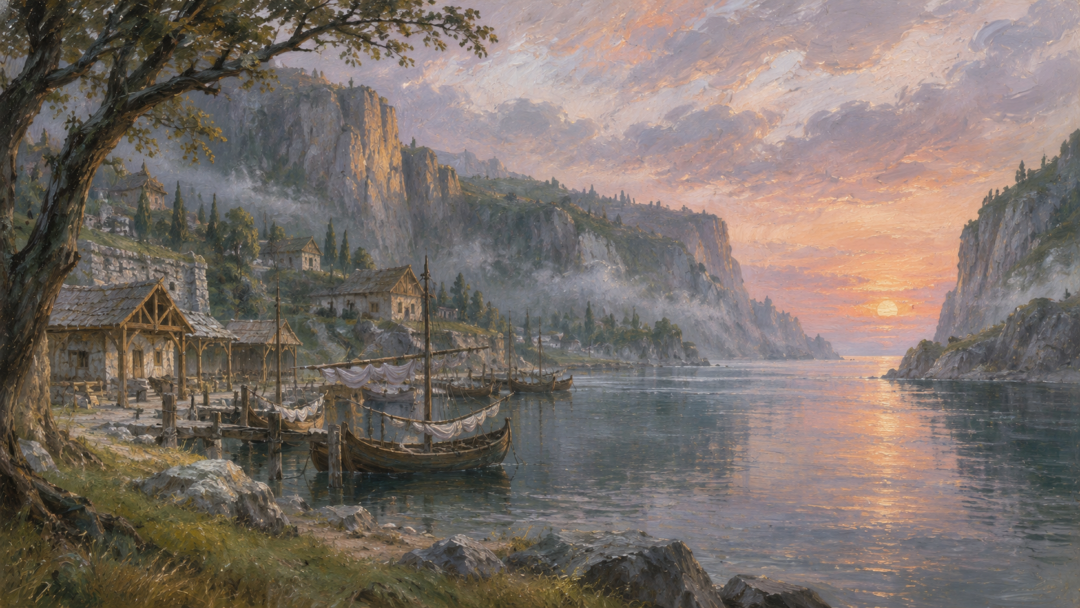
Long before the star appeared, Eärendil had survived the fall of Gondolin, where his parents, Tuor and Idril, had raised him. He became lord of the people settled near the mouths of Sirion, among refugees from ruined Elven realms. There he married Elwing, descendant of Beren and Lúthien, and they had two sons, Elrond and Elros. His family connected peoples whom Morgoth’s wars had driven toward destruction.
His voyages had several purposes. He sought Tuor and Idril, who had sailed into the West, and hoped to bring the plight of Elves and Men before the Valar before death overtook him. His mission was not a demand for a throne or a kingdom. It was an appeal from survivors who could no longer defeat Morgoth by their own strength. A mortal destiny would not diminish the need for that journey; it would put a final limit upon the time he had to make it.
Elwing carried the Silmaril away from the attacked Havens of Sirion and, through Ulmo’s intervention, reached Eärendil’s ship. With the jewel’s light upon him, Eärendil crossed to the West and pleaded for mercy and aid. The Valar answered, and the War of Wrath followed. Because his choice of kindred came after that appeal, changing it would not undo the crossing, the plea or the decision to oppose Morgoth.
Nor can we confidently say the Valar would have listened more readily to a man already committed to mortality. Eärendil came as one of the Half-elven, connected by descent and experience to both peoples. The text gives no second hearing in which his future lifespan changes his words. The achievement of his mission belongs to what he did, rather than to the destiny he subsequently accepted.
What mortality would mean in Aman
The fate of Men is not simply an abbreviated Elven life. Elves remain bound to the world while it lasts; Men ultimately depart beyond its circles. That departure is called a gift, though it can also be feared. Had Eärendil chosen Men, his life would have had an end and his spirit would have departed the world. No text assigns him an age at death in this unwritten history, and Elros’s exceptionally long life cannot safely be borrowed for his father.
Aman would not automatically cancel that ending. The Blessed Realm is inhabited by undying beings, but its shores do not make mortal visitors immortal. The judgement in the published story also forbids Eärendil and Elwing from returning to the outer lands where Elves and Men dwell. If he were mortal while that prohibition remained, he would face an extraordinary situation: alive in the West, yet unable simply to return to Sirion. The story offers no account of how such a life would unfold.
Elwing’s fate would complicate it further. She chose the Firstborn, and Eärendil followed her. In the recorded ending, she dwells beside the western seas while he voyages through the heavens, returning from time to time. Had he chosen Men, their endings would ultimately differ. This need not mean immediate separation, but his departure beyond the world could not be answered by an Elven voyage across the sea. Their shared past would not make their futures identical.
And there is Vingilot. The Valar hallow Eärendil’s ship, lift it into the heavens and set him at its helm with the Silmaril upon his brow. He journeys beyond familiar seas, appearing at morning or evening. This is a continuing office, not merely another voyage. A mortal Eärendil might conceivably perform it for a time, but not forever without overturning the fate he chose. No passage identifies a replacement mariner or explains how the Silmaril could remain a permanent sign without him.
The star, the war and the ages afterward
When the light first appears, people in Middle-earth name it Gil-Estel, the Star of High Hope. A Silmaril once guarded and fought over now shines beyond anyone’s possession. It gives hope to the survivors and troubles Morgoth, who had expected the estrangement of the Elves from the Valar to last. A mortal pilot could perhaps still bring that first appearance. The uncertainty begins with how long the sign would remain, and what would happen when his own journey ended.
The War of Wrath itself need not change. In the recorded battle, Eärendil flies in Vingilot among the great birds and slays Ancalagon the Black, whose fall breaks Thangorodrim. Choosing mortality would raise questions about how long he could serve in the sky, not give Morgoth an automatic victory. We can preserve the intervention of the Valar and Morgoth’s defeat without inventing a substitute dragon-slayer or an altered history of the battle.
Later, the Edain sail toward the island granted them in the West, guided by Eärendil’s star. Their new land is named Elenna, looking starward. If his light had disappeared by then, another guide would have been needed, but none is supplied by the story. That is not proof that Númenor could never have existed. The land was a gift of the Valar; the star gave its future inhabitants a visible guide across the water.
The light reaches even into The Lord of the Rings. Galadriel’s phial holds the light of Eärendil’s star, gathered in the waters of her mirror, and becomes a defence against the darkness of Shelob’s lair. Without a continuing star, that object would require a different origin. Yet this is not evidence that Frodo and Sam must fail. Altering the history of a light does not tell us what would replace it, or how every later choice would unfold.
His sons would still have their own choices. The Lord of the Rings remembers “Elrond Half-elven, who chose, as was granted to him, to be numbered among the Eldar; but Elros his brother chose to abide with Men”. Elros later became the first King of the Dúnedain, with a remarkable span of years; Elrond remained among the Eldar. Their father choosing mortality need not cancel a grant made to the sons independently. Nor did Elros’s future kingship already exist when the family’s fates were being decided.
Where the story leaves us
Perhaps Eärendil could have borne the Silmaril in the sky for a mortal span, with his light vanishing at death. Perhaps the Valar would have found another bearer, allowing the star to continue without him. Or perhaps his heavenly service would have taken some other form. These are possible ways to imagine the change, not outcomes the books establish. Tolkien tells us what Eärendil chose, but not how the world would have accommodated the alternative.
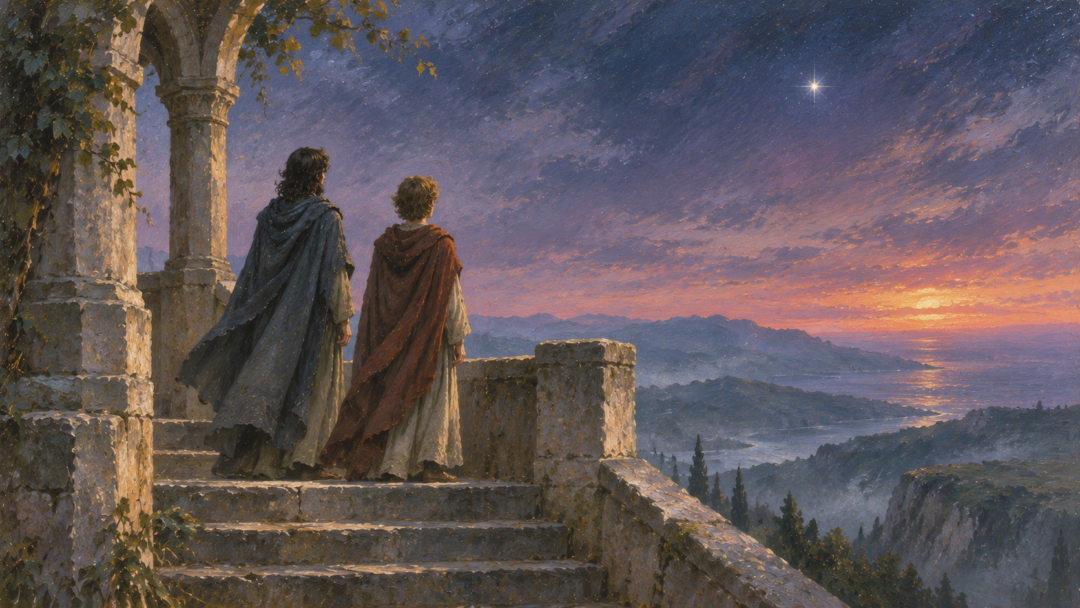
He stood at the meeting point of two destinies: born to a mortal father and an Elven mother, married to Elwing, father to sons who chose different paths. In the tale we have, his voyage becomes a lasting light above them all. Had he chosen Men, the mariner would eventually have passed beyond the world, leaving the Silmaril’s radiance to another keeper—or a dark place in the sky where hope once shone.
Sources & Notes
- The Encyclopedia of Arda, Eärendil — the mariner's embassy, choice, and voyage through the heavens — https://www.encyclopedia-of-arda.com/e/earendil.php
- The Encyclopedia of Arda, Elwing — Eärendil’s wife, the escape from Sirion, and the Silmaril — https://www.encyclopedia-of-arda.com/e/elwing.php
- Tolkien Gateway, Of the Voyage of Eärendil and the War of Wrath — the ordering of the plea, judgment, and war — https://tolkiengateway.net/wiki/Of_the_Voyage_of_E%C3%A4rendil_and_the_War_of_Wrath
Reading reference: The Silmarillion, Of the Voyage of Eärendil and the War of Wrath. Eärendil's embassy precedes the judgment allowing his choice. A mortal alternative and its consequences are not narrated; those portions are explicitly counterfactual.