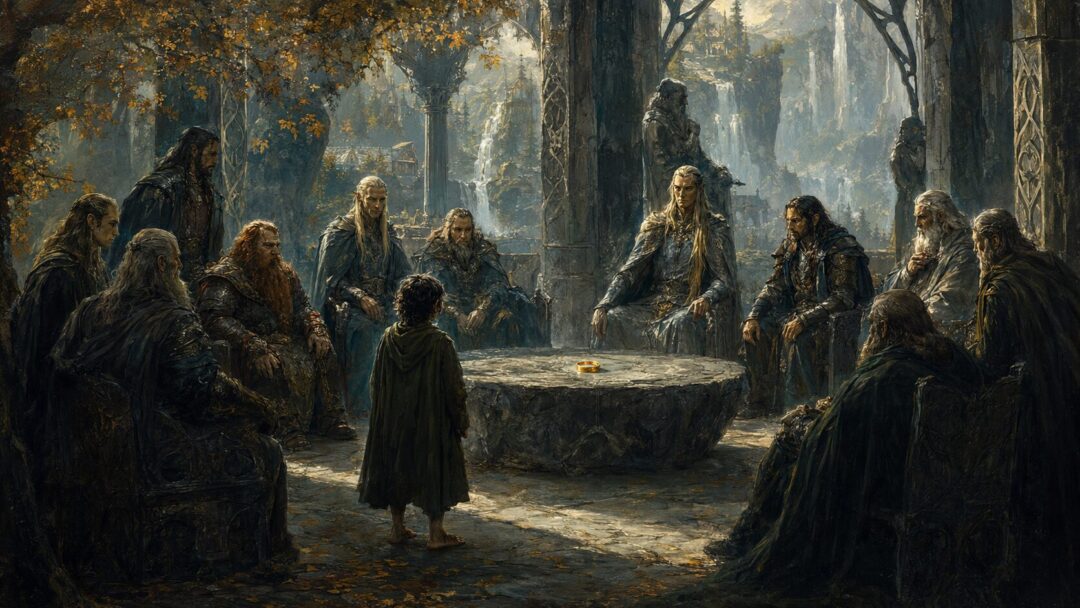
The Council of Elrond gathered in Rivendell around a small golden Ring, but the strangest thing about that meeting was not the Ring itself. By then, the Wise knew enough to fear it. Elrond remembered the Last Alliance. Gandalf had traced the Ring’s history through Gollum, Bilbo, and Frodo. Aragorn had hunted for Gollum. Boromir had come with a dream from Gondor. Glóin brought news from the Lonely Mountain, where Sauron’s messengers had asked after “a little ring” and the name of Baggins.
The great had gathered. Yet the answer did not come from the great.
It came from Frodo Baggins, a hobbit of the Shire, who stood among Elves, Dwarves, Men, and the Wise and offered to take the Ring into Mordor. That moment can seem almost absurd: why would the fate of Middle-earth rest on someone with no army, no ancient lineage of kingship, no craft of war, and no clear knowledge of the road? Why did Elrond’s Council need hobbits more than Elven lords?
The answer lies in one of the deepest rules of The Lord of the Rings: the Ring cannot be overcome by matching it with greater power. It can only be defeated by refusing the logic of domination altogether.
The Council Was Not Looking for the Strongest Bearer
The Council of Elrond is not a tournament of heroes. It is not a place where the mightiest person claims the hardest task. Its whole purpose is to discover what can be done with a thing that turns strength into danger.
Several options are considered or implied. The Ring cannot simply be kept in Rivendell. It cannot be safely hidden forever. It cannot be given to Tom Bombadil, because even if he himself might not be mastered by it, he would not treat it with the necessary gravity, and the world beyond his borders would still fall. It cannot be sent over the Sea, for the West will not receive it as an escape from Middle-earth’s responsibility. It cannot be used as a weapon, despite Boromir’s desire to turn the Enemy’s power against him.
That last temptation is crucial. Boromir’s argument is not foolish in a simple sense. Gondor is fighting for survival. Mordor’s pressure is real. To a captain of a besieged realm, wasting the Enemy’s greatest weapon may look like madness. But Elrond and Gandalf understand that the Ring is not a neutral tool. It belongs to Sauron’s mode of power. Whoever tries to wield it against him begins to enter his pattern: command, coercion, mastery, victory through domination.
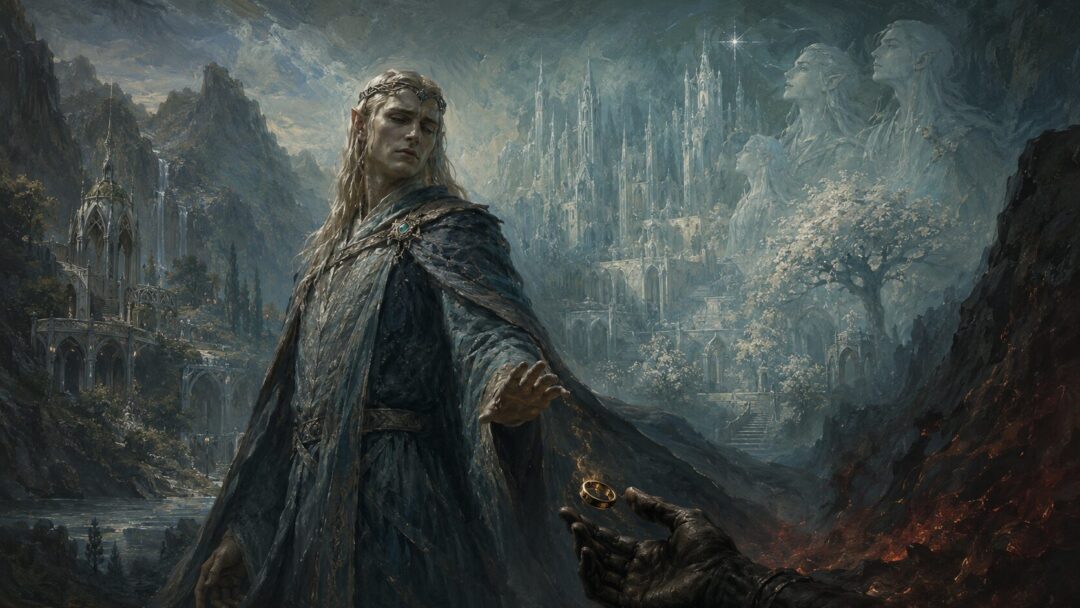
That is why an Elven lord would not automatically be the safest choice. Indeed, the greater the natural power, wisdom, ambition, or authority of the bearer, the more terrible the danger might become. The Ring offers power according to the measure of the one who claims it. A mighty bearer would not merely be corrupted into petty greed; such a bearer might become a rival Dark Lord.
The Council does not need the strongest hand. It needs the least possessive one.
Elven Wisdom Had Reached Its Limit
Elrond is not weak. He is among the greatest figures remaining in Middle-earth at the end of the Third Age: ancient, learned, a witness to the wars against Sauron, and lord of a hidden refuge preserved in part by Elven power. Galadriel, though not physically present at the Council, represents another form of Elven greatness: deep perception, authority, and terrible potential if she were to take the Ring. Círdan, too, belongs to the long memory of the Eldar, and other Elven lords have endured ages of sorrow and resistance.
Yet the very greatness of the Elves is tied to a particular wound: preservation. The Three Rings were not made by Sauron’s hand, but they are still part of the history of the Rings of Power, and their use is bound up with the desire to hold back decay and keep beautiful things unstained by time. Rivendell and Lórien are not evil places; they are among the fairest sanctuaries left in the world. But they are also places of delay, memory, and resistance against fading.
That makes the Ring uniquely dangerous to Elven desire. An Elven lord might not want crude conquest. He or she might want healing, restoration, protection, the preservation of beauty, the defeat of Sauron, and the ordering of the world for good. But the Ring corrupts through good intentions as readily as through selfish ones. It tempts the wise to imagine that their wisdom entitles them to rule.
This is why the Council’s need for hobbits is not an insult to Elven greatness. It is an acknowledgment of its peril. The Elves know too much, remember too much, and have too much power to lose. Their very nobility could become catastrophic if joined to the Ring.
Hobbits Were Small Enough to Carry What the Great Could Not
Hobbits are not immune to the Ring. That must be stated clearly. Bilbo is affected by it. Frodo is affected more deeply as the Quest goes on. Gollum is a terrible warning of what long possession can do to a hobbit-like creature. The texts never present hobbits as magically incorruptible.
But hobbits do have qualities that make Bilbo and Frodo unusually suited to the crisis. Their ordinary desires are small in the political sense. They do not dream naturally of kingdoms, armies, or dominion over other peoples. The Shire is provincial, comfortable, and limited; it has its own faults, but imperial ambition is not one of them. A hobbit’s imagination is more likely to turn toward food, home, gardens, walking roads, family inheritance, and local reputation than toward thrones.
That smallness matters.
The Ring works by magnifying desire. In a person whose imagination is already full of command and historical grievance, its temptation can become vast. In a hobbit, the same evil still works, but it has less grand material to seize at first. Bilbo uses the Ring for escape and secrecy, not conquest. Frodo bears it with increasing torment, but for a long time he resists claiming it as a weapon. Sam, when tempted in Mordor, briefly imagines himself as a heroic gardener transforming the wasteland, but his plain hobbit-sense quickly recognizes the absurdity and danger of that vision.
This does not make hobbits morally superior by species. Rather, the story shows that humility, limited appetite, pity, and love of simple goods can become forms of resistance against a power built for domination.
Bilbo’s Mercy Prepared the Road Before the Council Met
The Council needed hobbits before Frodo ever spoke. It needed Bilbo.
Bilbo’s finding of the Ring in The Hobbit looks at first like a strange accident in the dark. In The Lord of the Rings, that accident becomes one of the hidden hinges of history. Gandalf tells Frodo that Bilbo was “meant” to find the Ring, and not by its maker. That statement does not erase Bilbo’s choices; it gives them a deeper pattern.
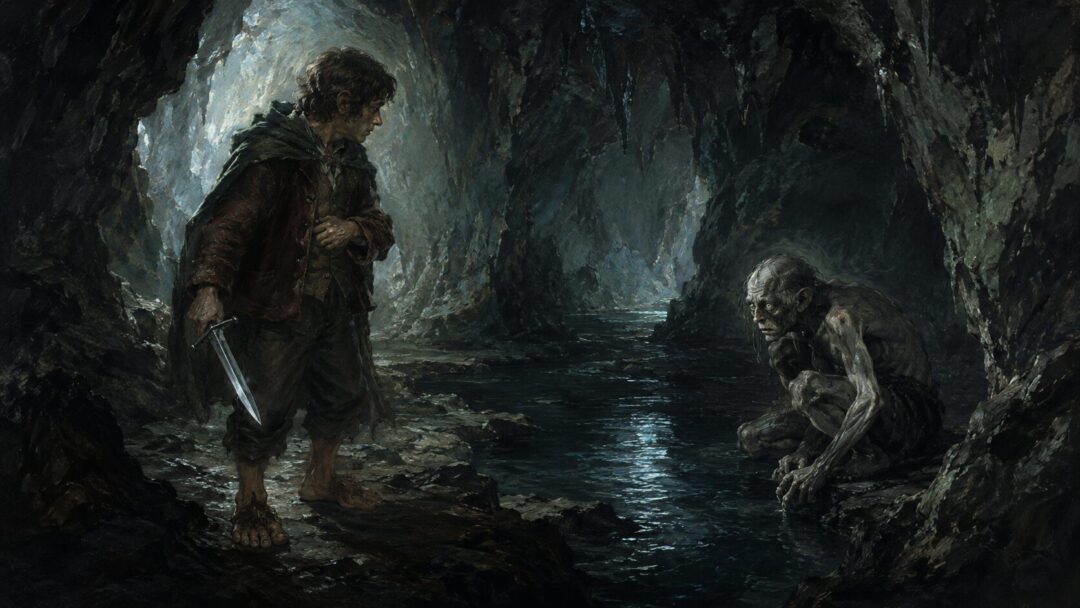
The most important of those choices is mercy. Bilbo has the chance to kill Gollum under the Misty Mountains. He does not. Frodo later struggles with that mercy, wishing that Bilbo had killed Gollum when he had the chance. Gandalf’s answer is one of the moral keys of the entire story: pity stayed Bilbo’s hand, and that pity may rule the fate of many.
At the Council, this matters because no strategy based only on force can foresee the final shape of the Quest. Gollum’s survival looks dangerous, and it is dangerous. He betrays, stalks, and torments Frodo and Sam. Yet without him, the Ring would not be destroyed in the way it finally is. Frodo’s mercy toward Gollum continues what Bilbo began.
An Elven lord might have wisdom enough to pity. Gandalf certainly does. But the hobbit story makes pity concrete, costly, and decisive. Bilbo’s refusal to kill in the dark becomes part of the road to Mount Doom. The Council needs that kind of history: not merely knowledge of the Ring, but a proven pattern of mercy around it.
Frodo’s Freedom Made the Quest Morally Possible
Elrond does not command Frodo to take the Ring. This is essential. He says the burden is too heavy for anyone to lay on another. If Frodo takes it freely, Elrond will say that his choice is right.
The distinction matters because the Quest cannot begin with coercion. To force someone to carry the Ring would already echo the Ring’s own principle: using another will as an instrument. The Council can judge, advise, and recognize the shape of necessity, but it cannot make Frodo into a sacrifice by decree.
Frodo’s offer is therefore not just practical. It is morally necessary. The Ring is the supreme object of domination, and its destruction must begin with a free act of self-giving. Frodo does not claim mastery. He does not promise success. He does not even know the way. His words are frightening precisely because they contain no heroic boast. They are an acceptance of burden without illusion.
That is why Elrond’s response places Frodo among the great figures of old if he freely chooses the task. The point is not that Frodo has suddenly become a warrior like the heroes of the First Age. It is that his act belongs in the same moral order: a small person accepting a doom beyond ordinary strength because it has come to him.
Sam Shows What the Council Could Not Supply
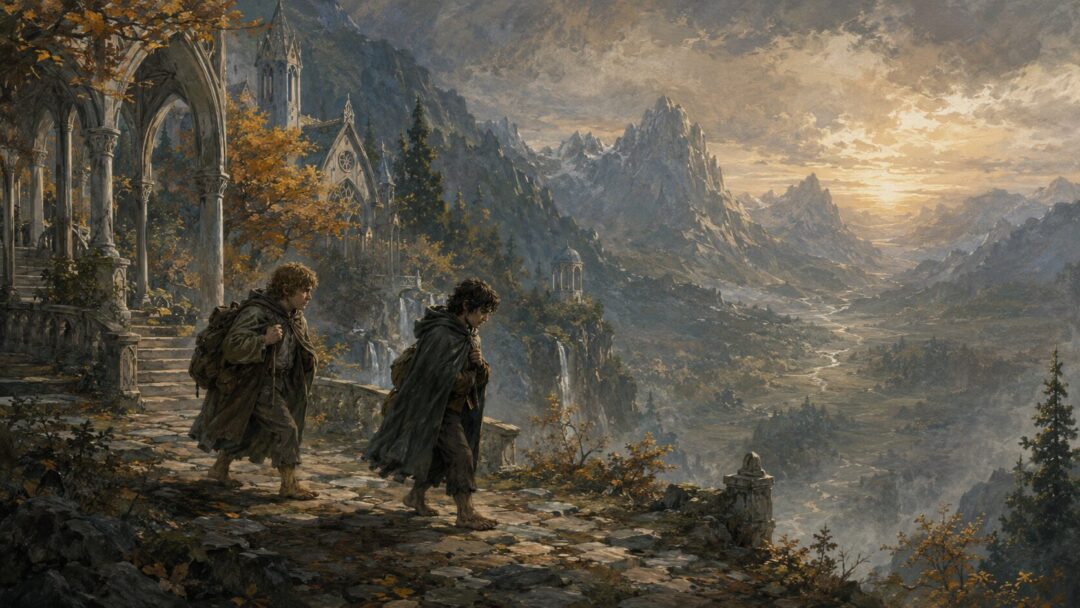
Frodo is not the only hobbit the Council needs. Samwise Gamgee, though not invited as a formal councillor, is discovered listening and is allowed to go with Frodo. This moment can be comic, but it is also profound. The Council has lore, memory, prophecy, political urgency, and strategic judgment. What it does not have, until Sam is added, is the kind of loyal love that can survive the long reduction of the Quest.
Sam is not chosen because he understands the Ring better than Elrond. He does not. He is chosen because he will not leave Frodo. As the Quest moves farther from Rivendell, that becomes more important than high counsel. In Mordor, titles and ancient wisdom fall away. What remains is endurance, service, food, water, shared suffering, and the refusal to abandon a friend.
The great powers of Middle-earth can bring the Ring-bearer only so far. Elrond can heal Frodo and host the Council. Gandalf can guide. Aragorn can protect. Galadriel can strengthen and test. Armies can draw Sauron’s eye away at the end. But no lord can carry Frodo’s inner burden for him. Sam cannot carry the Ring for Frodo in any permanent sense either, but he can carry Frodo himself when Frodo has nearly reached the end of his strength.
That is not a lesser form of heroism. It is the hidden form without which the greater designs fail.
The Hobbits Were Invisible to Sauron’s Imagination
The Council also needed hobbits because Sauron did not understand them. He understood power, fear, hierarchy, treachery, weapons, and the desire to rule. He could imagine someone using the Ring. He could imagine rivals. He could imagine the Ring being brought to a fortress, claimed by a lord, or used in war. But the plan to carry it into Mordor in order to destroy it was almost outside his moral imagination.
Hobbits made that impossible plan more plausible. Not easy, and not safe, but plausible. They were small, overlooked, and unmilitary. Their strength was not the kind that announces itself. In a world watched by the Eye, obscurity could become a shield.
This is not because Sauron had no information about hobbits. By the time of the Council, the Enemy has heard the name Baggins and has sought news of the Shire. The Nazgûl have entered that quiet land. The Shire is no longer untouched. But knowing that hobbits exist is not the same as understanding their moral importance. Sauron’s failure is deeper than intelligence. It is imaginative. He cannot truly conceive of renunciation.
The Council’s choice therefore turns the Enemy’s worldview against him. The Ring will not be borne by a conqueror. It will be borne by someone who does not want to become one.
The Great Still Had Their Part
To say the Council needed hobbits more than Elven lords does not mean the Elves were useless. The Quest is not anti-Elven, nor does it despise wisdom, beauty, or ancient power. Without Elrond, Frodo might have died from the wound of the Morgul-knife. Without Rivendell, the histories of the Ring would not have been gathered into one judgment. Without the wisdom of Elrond and Gandalf, the Council might have chosen concealment, weaponization, or despair.
The point is subtler: the great could identify the road, but they could not be the heart of the answer. Their task was to recognize the unlikely vessel when he appeared. Elrond’s greatness is shown not in claiming the Quest for himself, but in seeing that Frodo’s free acceptance is right.
That is one of the noblest acts of wisdom in the chapter. Elrond does not mistake power for fitness. He does not assume that the fate of the world must rest in hands like his own. He understands that the hour has come for the Shire-folk to shake the counsels of the Great.
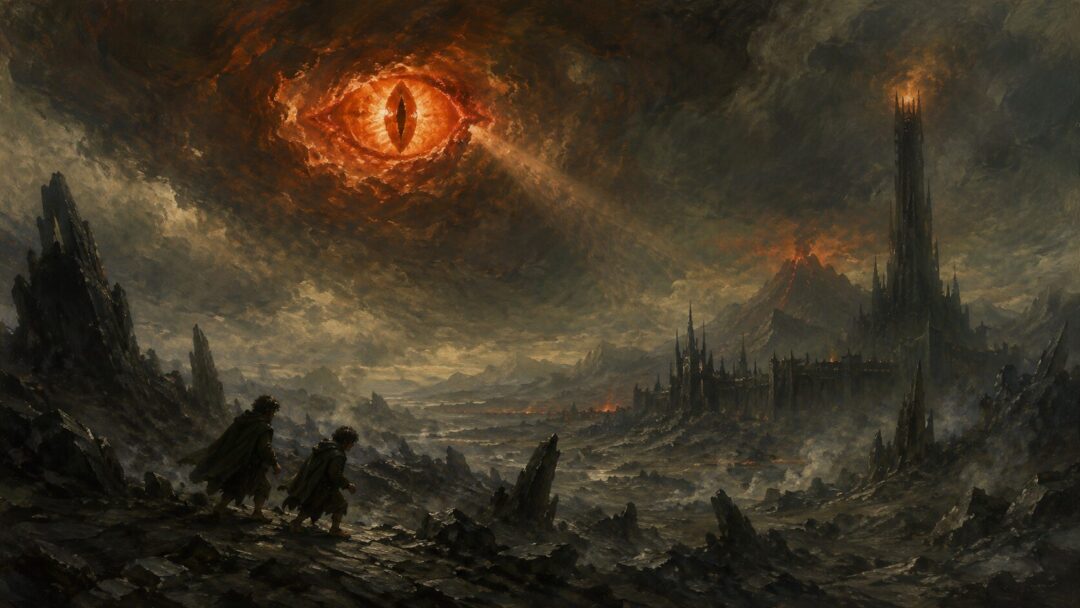
The Small Hand Against the Great Ring
The tragedy and beauty of the Council of Elrond is that everyone present knows the Quest is nearly hopeless. The road leads toward Mordor, into the land of the Enemy, to the very fire where the Ring was made. No army can simply escort the Ring there. No lord can wield it safely. No hiding place can be trusted forever. Every obvious solution has failed before the Quest begins.
Then a hobbit speaks.
Frodo’s offer does not solve the problem in a strategic sense. It does something more important: it reveals the only kind of bearer who can begin such a road. Not one who desires the Ring, but one who accepts the burden. Not one who imagines victory through mastery, but one who walks without knowing the way. Not one who is untouched by temptation, but one whose pity, humility, and endurance make resistance possible for longer than the Wise might have expected.
Elrond’s Council needed hobbits because the Ring was made for the great diseases of the great: domination, pride, fear of loss, and the will to order the world by force. Against that, Middle-earth did not finally send its most splendid lord. It sent a Baggins of the Shire, followed by a gardener.
And that was precisely why the Enemy did not understand the danger until it was too late.
Sources & Notes
- J.R.R. Tolkien, The Lord of the Rings, Book II, Chapter 2, “The Council of Elrond” — the Council weighs hiding, sending away, using, or destroying the Ring, and Frodo freely offers to bear it.
- J.R.R. Tolkien, The Lord of the Rings, Book I, Chapter 2, “The Shadow of the Past” — Gandalf explains Bilbo’s pity, Frodo’s burden, and the Ring’s danger as a power that cannot safely be used against Sauron.
- J.R.R. Tolkien, The Lord of the Rings, Book II, Chapter 7, “The Mirror of Galadriel” — Galadriel’s refusal of the Ring shows why great wisdom and power would make a bearer more perilous, not safer.
- J.R.R. Tolkien, The Lord of the Rings, Book VI, Chapter 1, “The Tower of Cirith Ungol” — Sam’s brief Ring-vision as “Samwise the Strong” turns back into plain hobbit-sense and loyalty to Frodo.
- J.R.R. Tolkien, The Lord of the Rings, Book VI, Chapter 3, “Mount Doom” — Frodo’s final failure, Sam’s support, and Gollum’s role complete the pattern begun by hobbit pity rather than heroic domination.
- J.R.R. Tolkien, The Letters of J.R.R. Tolkien, Letter 131 — Tolkien frames Sauron’s evil around domination and coercive power, supporting the article’s reading of why the Ring cannot be answered by greater mastery.