Why did Rohan seem to weaken long before the armies of Isengard crossed its borders? Why did a kingdom famous for proud riders, clear speech, and fierce loyalty drift into hesitation, suspicion, and paralysis at the very moment danger was rising all around it?
The answer is not found in a great battle or a single act of treason. It begins with something much smaller.
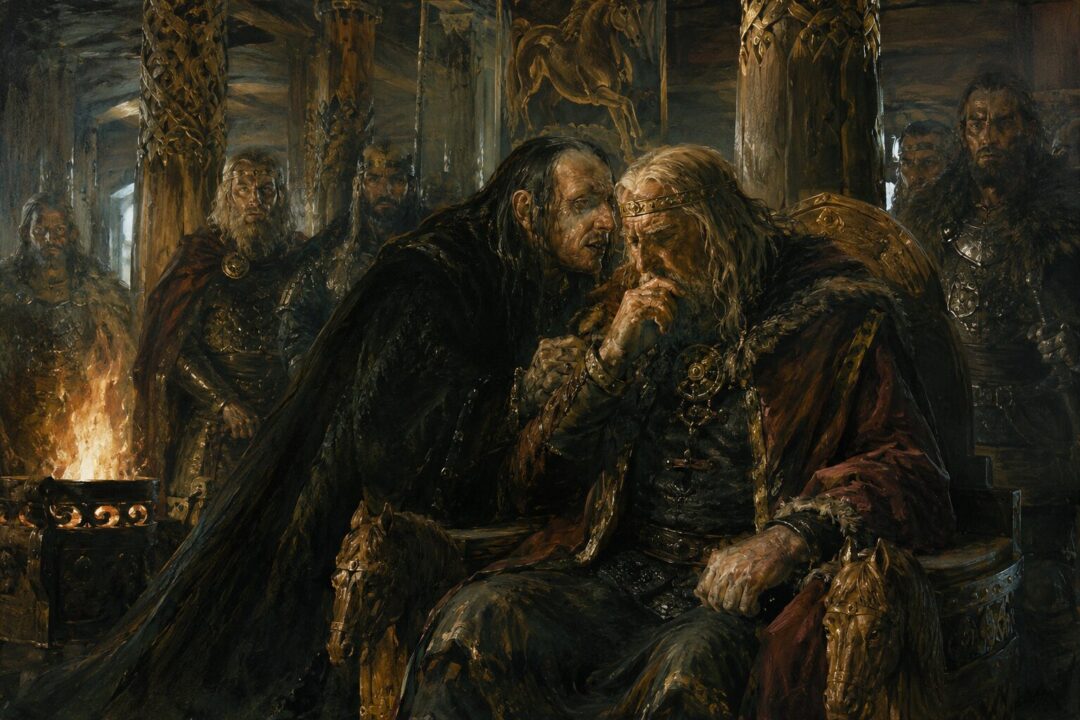
Before war erupted across the Riddermark, Gríma Wormtongue quietly reshaped the atmosphere around King Théoden. He did not command armies. He did not wield a Ring of Power. He did not openly seize authority. Instead, he relied on whispers, half-truths, selective advice, and carefully planted fears. The tragedy of Rohan is that its crisis began not with swords, but with words.
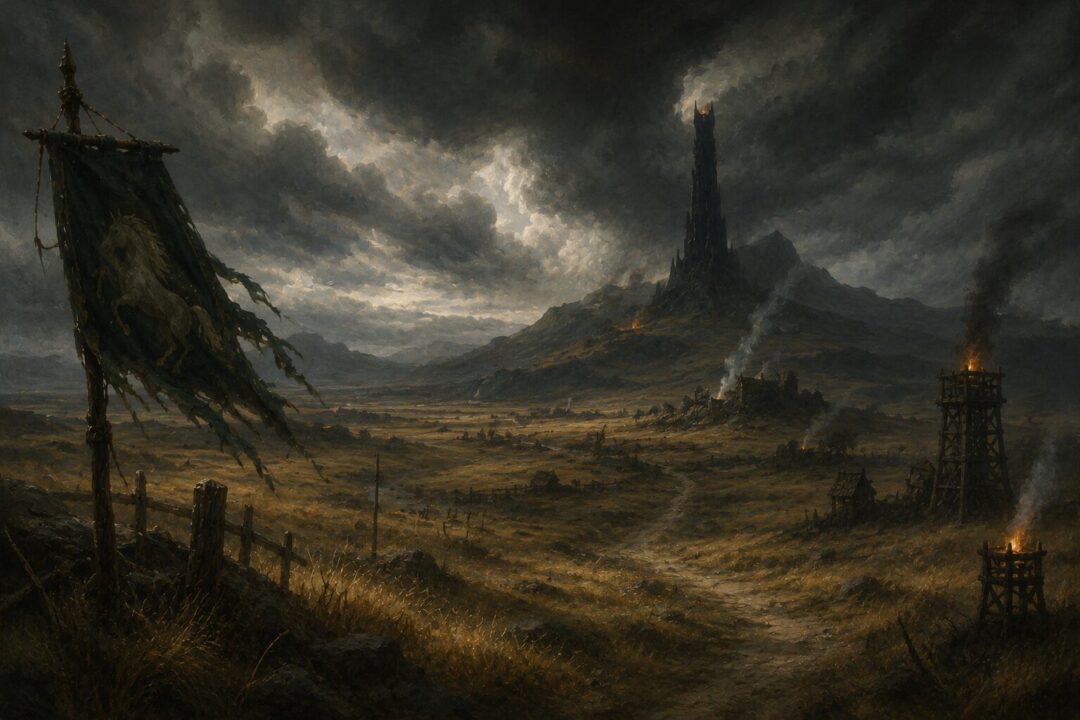
By the time Gandalf arrived in Edoras, years of subtle manipulation had left one of the strongest kingdoms of Men dangerously weakened. The military threat from Saruman was real, but Gríma’s influence helped create the conditions that made that threat so dangerous in the first place.
The Power Gríma Never Officially Held
One of the most striking details about Gríma is that he never appears to possess formal power equal to a ruler, marshal, or military commander.
When readers first encounter him in The Lord of the Rings, he is an adviser seated near Théoden's throne. Yet his influence extends far beyond what his official position should allow.
The texts suggest that Gríma became the king's chief counselor during a period when Théoden was aging and facing increasing pressures. Saruman's growing strength, raids along Rohan's borders, internal tensions among the Rohirrim, and the natural burdens of old age created opportunities for manipulation.
Gríma's effectiveness came from understanding a simple truth: if he could shape the king's perception of reality, he would not need direct authority.
A ruler who sees threats incorrectly can make damaging decisions without ever realizing he has been misled.
This is what makes Gríma so dangerous. He rarely appears to force Théoden into action. Instead, he influences how Théoden interprets events, people, and risks.
The Strategy of Isolation
One of Gríma's most damaging achievements was the gradual isolation of Théoden.
When Gandalf finally confronts the situation in Edoras, the king appears physically weakened, emotionally exhausted, and disconnected from many of his most loyal supporters. The atmosphere in Meduseld is heavy and distrustful.
The text strongly indicates that Gríma encouraged this condition.
Trusted figures increasingly found themselves viewed with suspicion. Messages from outside sources were filtered through Gríma. Information reaching the king became less reliable because Gríma positioned himself as the interpreter of events.
This pattern appears repeatedly.
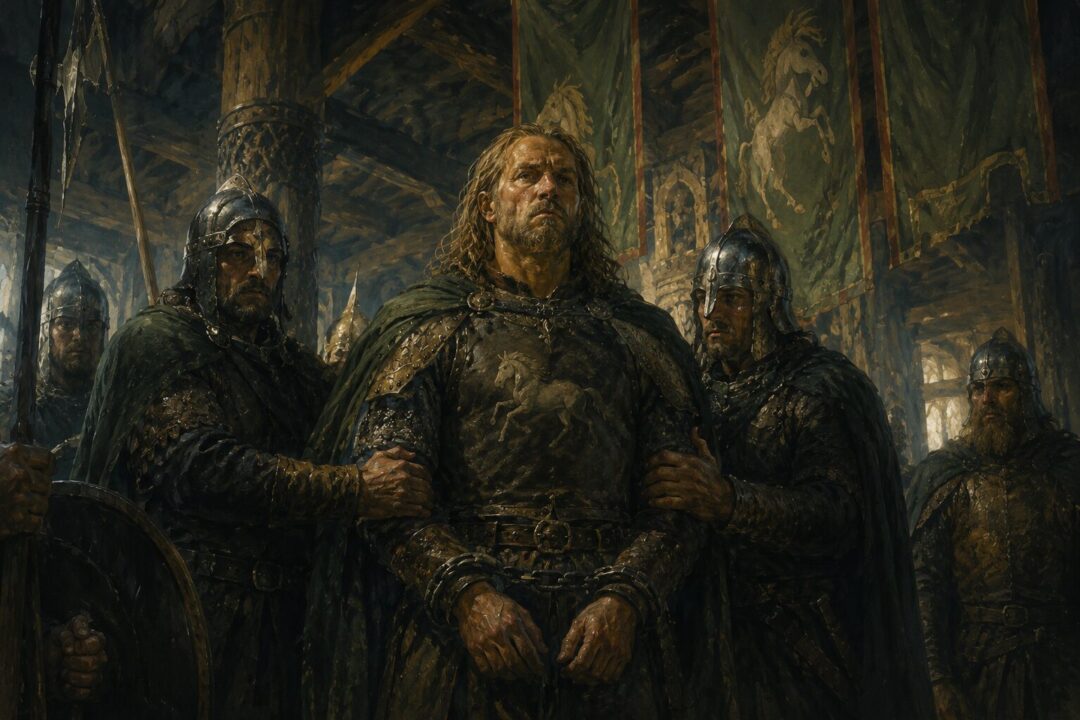
Éomer, one of Rohan's greatest captains and Théoden's own nephew, falls under suspicion. His independent actions against Orcs become grounds for criticism rather than praise. Eventually he is imprisoned.
Meanwhile, Gríma presents himself as the voice of caution and moderation.
The irony is devastating. The men most committed to protecting Rohan become marginalized, while the adviser secretly serving Rohan's enemy gains greater influence.
Military strength depends on trust between leaders. Gríma's success lay in weakening those bonds long before open war began.
Small Lies Work Better Than Great Ones
Nothing in the text suggests that Gríma constantly fed Théoden obvious falsehoods.
In fact, obvious lies would likely have failed.
The Rohirrim were not fools, and Théoden himself had ruled successfully for many years. A transparent deception would have been exposed.
Instead, Gríma appears to rely on distortions, omissions, and exaggerations.
A real danger becomes an overwhelming danger.
A reasonable concern becomes a justification for inaction.
A loyal captain becomes a potential threat.
A necessary risk becomes an unacceptable gamble.
This method mirrors what Gandalf later exposes in Meduseld. Gríma consistently encourages passivity. His advice tends toward delay, hesitation, and retreat from decisive action.
The result is that Théoden's judgment becomes clouded not because he believes impossible stories, but because he repeatedly receives interpretations designed to increase fear and uncertainty.
That makes Gríma's manipulation especially believable within the world of Middle-earth. The kingdom is not brought low by absurd propaganda. It is weakened by countless small alterations to how reality is perceived.
Why Saruman Needed Gríma
Saruman commanded armies, bred Orcs, and fortified Isengard. Yet he still invested heavily in Gríma's mission inside Rohan.
This alone reveals how valuable Gríma was.
Saruman understood that conquering a united Rohan would be difficult. The Rohirrim were renowned horsemen with a strong martial tradition and a network of experienced leaders.
A kingdom prepared for war presents a dangerous opponent.
A kingdom divided by distrust is far easier to defeat.
Gríma therefore functioned as a force multiplier for Saruman's larger strategy.
Every delay in mobilization helped Isengard.
Every conflict among Rohan's leaders benefited Isengard.
Every moment Théoden spent doubting his allies gave Saruman more time.
The remarkable aspect of this strategy is that Gríma's efforts likely cost Saruman relatively little. A single compromised adviser achieved effects that might otherwise have required major military victories.
The weakening of Rohan began from within.
The Attack on Hope
Another overlooked aspect of Gríma's influence is his persistent encouragement of despair.
The Lord of the Rings repeatedly contrasts hope with hopelessness. Characters often face situations that seem impossible, yet survival depends on refusing surrender before the final outcome is known.
Gríma consistently pushes in the opposite direction.
His counsel tends to frame resistance as futile and action as dangerous. Rather than inspiring confidence, he amplifies uncertainty.
This becomes particularly clear when Gandalf arrives.
The wizard does not merely provide new information. He challenges an entire mindset that has settled over the court. Suddenly possibilities reappear. Decisions become imaginable. Courage begins to return.
The transformation of Théoden is therefore not simply physical.
It is also psychological and moral.
The king emerges from a state in which fear had become the dominant lens through which every problem was viewed.
Gríma's success depended on maintaining that lens.
Éomer as the Obstacle
Among all the figures in Rohan, Éomer represented one of the greatest threats to Gríma's plans.
The reason is straightforward.
Éomer embodied nearly everything Gríma could not control.
He was respected by warriors, trusted by many Rohirrim, and willing to act independently when danger appeared. He also possessed personal courage and a strong sense of duty.
The conflict between Gríma and Éomer is therefore larger than a personal rivalry.
It reflects two competing visions for how Rohan should respond to crisis.
One vision emphasizes fear, caution, and delay.
The other emphasizes courage, responsibility, and action.
The imprisonment of Éomer demonstrates how far Gríma's influence had spread. A kingdom facing external threats ends up restraining one of its most capable defenders.
From a strategic perspective, this is exactly the sort of outcome Saruman would have wanted.
Rohan's resources are turned against themselves.
Théoden's Tragedy
It is important not to reduce Théoden's situation to simple weakness.
The text does not portray him as foolish.
Instead, his story illustrates how even a capable ruler can become vulnerable under prolonged pressure.
Age, grief, uncertainty, and isolation all contribute to his condition.
Gríma exploits existing weaknesses rather than creating them from nothing.
This distinction matters because it makes the tragedy more human.
Many of Middle-earth's greatest downfalls involve characters who possess genuine strengths but become trapped by fear, pride, or deception. Théoden's struggle belongs to this pattern.
His eventual recovery is meaningful precisely because he was not inherently corrupt. Once the web of manipulation is broken, his qualities quickly re-emerge.
The same king who seemed incapable of decisive action becomes the leader who rides to Helm's Deep and later answers Gondor's call.
The potential was always there.
Gríma's achievement had been concealing it.
The Moment the Spell Breaks
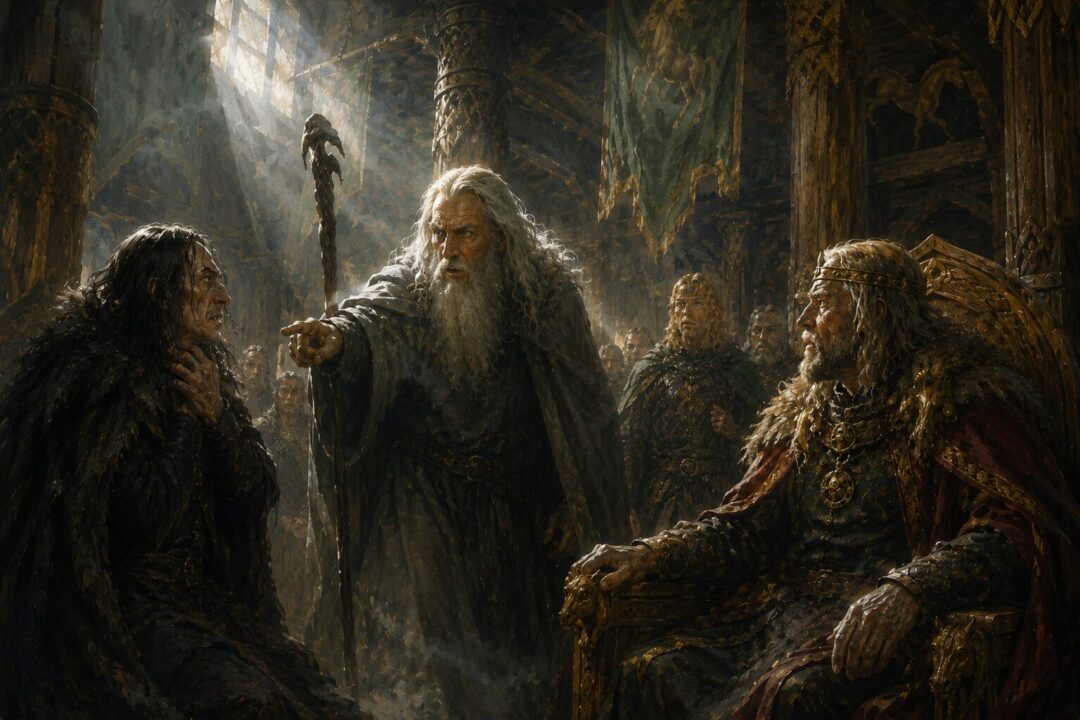
Readers sometimes focus on Gandalf's dramatic confrontation in Meduseld, but the scene carries a deeper significance.
The event does not create Théoden's strength.
It removes obstacles that have been suppressing it.
Once Gríma's influence is challenged, decisions begin happening rapidly.
Éomer is released.
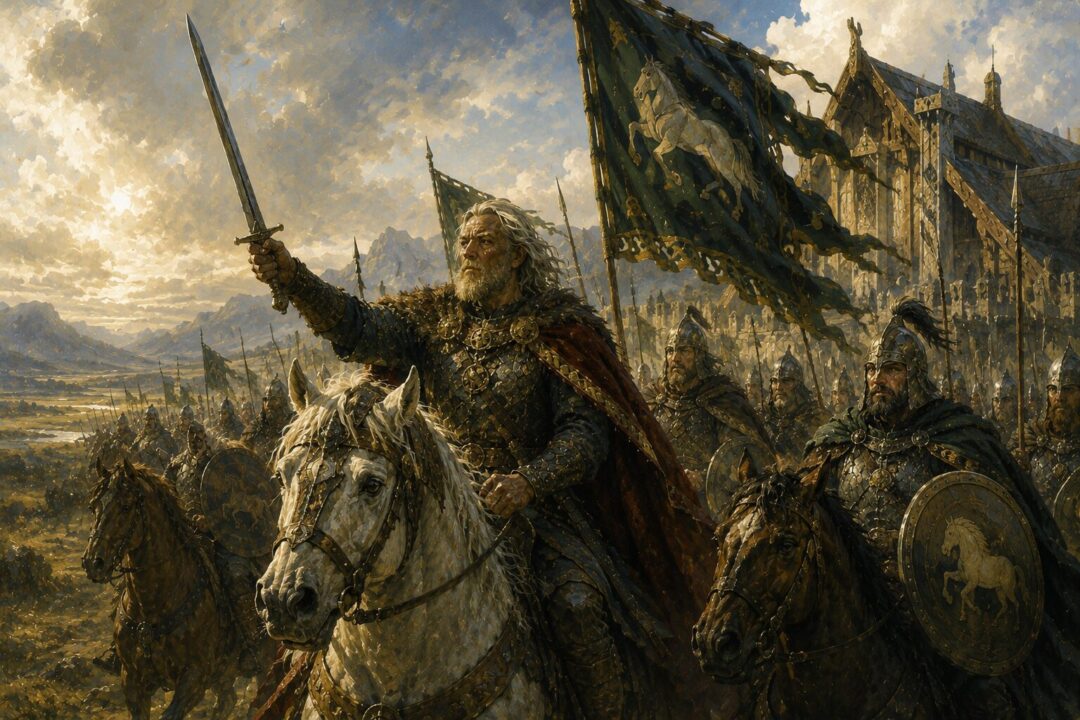
Rohan mobilizes.
The king rides among his people.
Military leadership becomes active again.
The contrast is striking because it reveals how much paralysis had accumulated beforehand.
The kingdom was not lacking warriors.
It was not lacking resources.
It was not even lacking leadership.
What it lacked was clarity.
Gríma's manipulation depended on confusion. The restoration of Rohan begins when confusion gives way to truth.
Why Gríma Almost Won
The most unsettling part of Gríma's story is how close he came to succeeding.
Had Gandalf arrived later, the situation might have become far worse. Saruman's military campaign was already underway. Rohan's political cohesion had already been damaged. Trust between leaders had already been strained.
Gríma did not need to destroy Rohan outright.
He only needed to keep it weakened long enough.
That is why his small lies mattered so much.
Each individual deception may have seemed insignificant. Each whispered doubt may have appeared harmless. Yet together they produced a kingdom less capable of recognizing danger, less willing to trust its defenders, and less prepared to act when action became necessary.
The story serves as one of Middle-earth's clearest demonstrations that power does not always arrive wearing armor or carrying weapons.
Sometimes it sits beside a king, speaking softly.
And sometimes the greatest victory against a kingdom is convincing it to doubt itself before the enemy ever attacks.
Sources & Notes
- J.R.R. Tolkien, The Lord of the Rings, Book III, Chapter 2, “The Riders of Rohan” — Éomer describes Théoden’s weakened rule, Wormtongue’s influence in the king’s counsels, and the mistrust already dividing Rohan.
- J.R.R. Tolkien, The Lord of the Rings, Book III, Chapter 6, “The King of the Golden Hall” — Gandalf exposes Gríma’s counsel in Meduseld as a force of fear, delay, and suspicion around Théoden.
- J.R.R. Tolkien, Unfinished Tales, “The Battles of the Fords of Isen” — gives the strategic background to Saruman’s attack on Rohan, including Théoden’s illness, Gríma’s influence, and Éomer’s imprisonment.
- J.R.R. Tolkien, The Lord of the Rings, Appendix A, “The House of Eorl” — summarizes Théoden’s decline under Saruman’s shadow, Gríma’s treachery, and the king’s later restoration.
- J.R.R. Tolkien, The Lord of the Rings, Book III, Chapter 7, “Helm’s Deep” — shows the immediate change after Théoden’s release, as restored leadership turns Rohan from paralysis toward active defense.