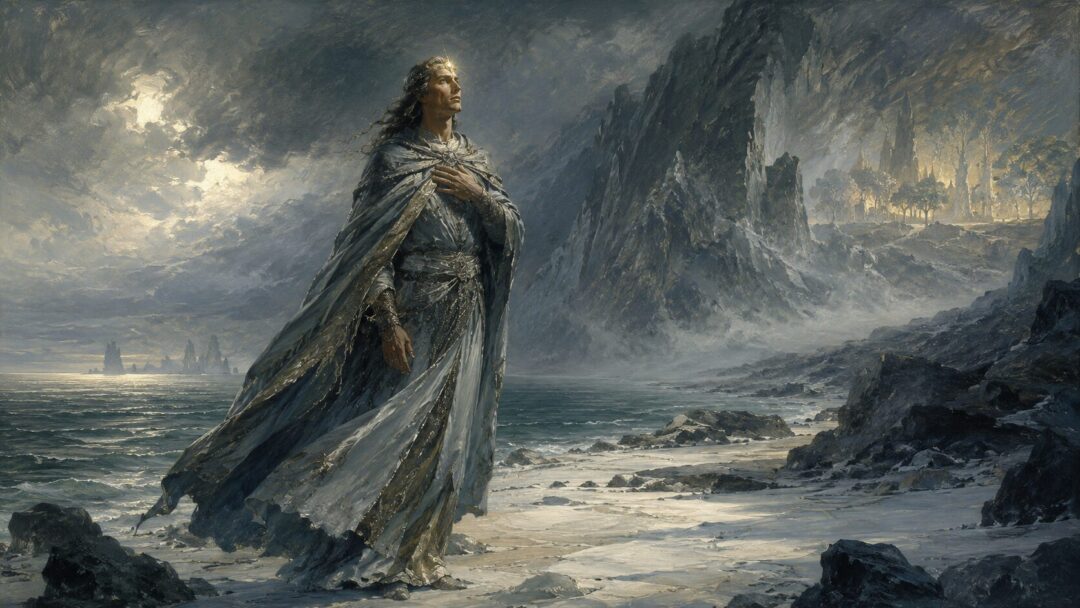
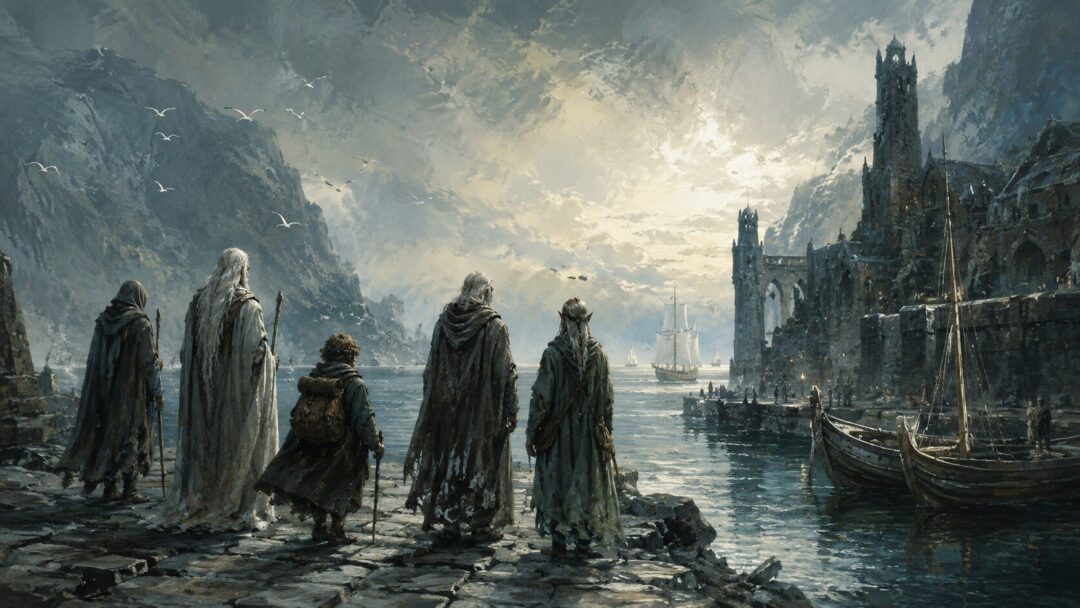
A ship reaches the forbidden West. A mariner steps onto a shore no mortal or exile was meant to find. Behind him lies a broken world: Gondolin fallen, Doriath ruined, the Havens of Sirion attacked, Morgoth still enthroned in the North. If the Valar were merciful, one hard question rises almost at once: why did they wait so long?
That question is one of the quiet wounds in the history of Middle-earth. Again and again, the Powers appear late. They warn before they strike. They forbid before they explain. They send dreams, messengers, eagles, wizards, and signs when readers might expect armies. Their mercy often does not look like rescue. It looks like distance.
But in Tolkien’s world, mercy is rarely the same as speed. The Valar are mighty, but they are not the authors of destiny, and they are not free to remake the lives of Elves and Men by force whenever tragedy begins. Their delays are sometimes judgments, sometimes restraints, sometimes failures of understanding, and sometimes the only kind of mercy that does not become domination.
The Problem of Power in a Wounded World
The Valar are not simply stronger kings living across the Sea. They are the Powers who entered the world before its full shaping, each bound to Arda and to the music from which it came. Their strength is immense, but it is not absolute. They can govern, heal, guard, and contend, yet they remain servants within a design greater than themselves.
That matters because the most obvious form of mercy — immediate overwhelming intervention — can also be the most dangerous. When the Valar fought Melkor in the earliest ages, the world itself suffered from the conflict. Later, when the Host of the West finally came against Morgoth in the War of Wrath, the victory ended the First Age, but much of Beleriand was broken and drowned. The text does not present divine war as a clean solution. It is deliverance, but deliverance by powers so great that the land itself cannot remain unchanged.
This is one reason the Valar’s restraint can feel painful. They know, better than most, that a war of Powers is not merely a battle with larger weapons. It is a convulsion of the world. To delay such force is not automatically indifference. In some cases, it may be an attempt to spare the world from the cure as long as possible.
Yet that does not remove the cost. While the Valar wait, Children of Ilúvatar suffer.
Mercy Is Not the Same as Permission
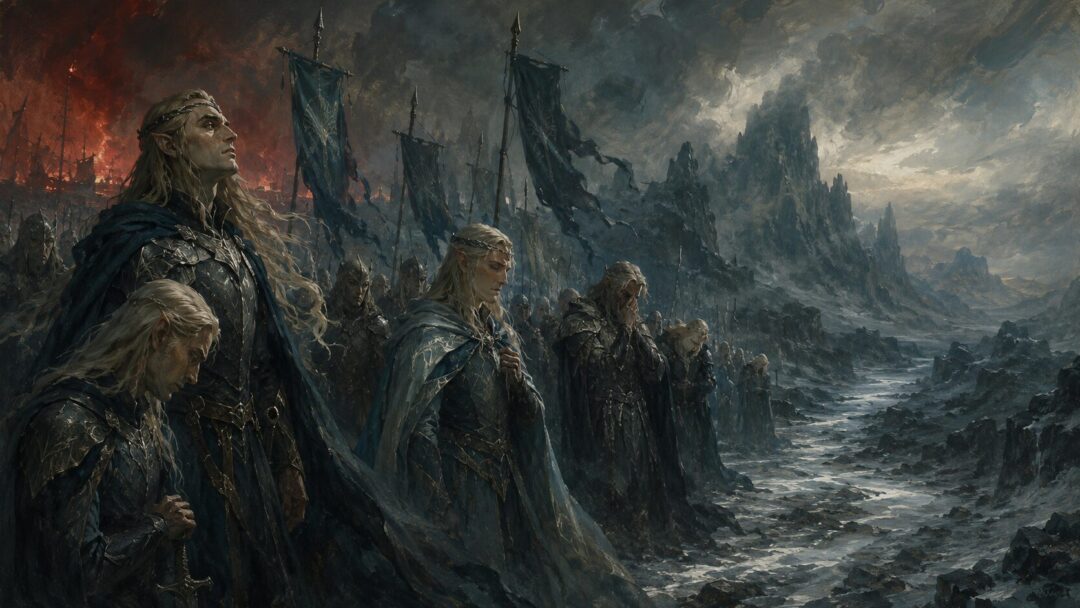
The Doom of Mandos is one of the clearest examples of mercy appearing in a severe form. After Fëanor’s rebellion and the Kinslaying at Alqualondë, the Noldor are warned of what will follow if they continue. The words are dreadful: exile, grief, betrayal, death by weapon and torment and sorrow. It is easy to read this as vengeance. But the Doom is also warning.
The Valar do not force the Noldor back. Some turn aside and return. Others go on. That distinction is crucial. The Valar’s judgment does not erase choice. It names consequences.
This is one of the hidden rules of mercy in Middle-earth: mercy may leave someone free enough to ruin themselves. The Valar could perhaps have tried to stop the Noldor more directly. Instead, they warn, judge, and withdraw the protection of Aman from rebellion. That delay is terrible, because it allows the long tragedy of the Silmarils to unfold. But it also preserves the moral seriousness of the Noldor’s own decisions.
The story does not ask us to pretend this is emotionally easy. Fingolfin’s people endure the Helcaraxë. Beleriand becomes a place of heroic resistance and catastrophic loss. But the Valar’s mercy is not sentimental rescue. It is bound to justice, memory, and freedom.
The Hidden Mercy of the Ban
The Ban of the Valar on Númenor is another case where protection looks like deprivation. The Númenóreans are given a rich island, long life, wisdom, and friendship with the Eldar. But they are forbidden to sail so far west that they lose sight of their own shores, and they may not set foot in the Undying Lands.
To the proud, the Ban begins to look like envy. Why should the Deathless keep immortality for themselves? Why should Men, even the greatest of Men, accept death?
But the deeper answer is that Aman does not make mortals immortal. The land is “Undying” because the Deathless dwell there, not because it can heal the mortal condition. The messengers of the Valar explain that Men are not appointed to dwell within the Circles of the World forever. Their destiny lies beyond the knowledge even of the Valar. In that light, the Ban is not a wall built to hoard bliss. It is a boundary meant to keep Men from mistaking proximity to deathlessness for salvation.
Here mercy looks like refusal. The Valar do not give the Númenóreans what they increasingly desire, because the desire itself has become corrupted by fear. To grant it would not cure them. It would deepen the wound.
This is why Sauron’s temptation of Númenor is so deadly. He does not merely lie about military power. He twists the meaning of the Ban. He turns a merciful limit into an insult. By the time Ar-Pharazôn sails against Aman, the delay of judgment has been mistaken for weakness. The Valar do not meet him with their own war. They lay down their guardianship and appeal beyond themselves. Númenor’s downfall is therefore not simply the Valar striking back. It is the catastrophic end of a long refusal to receive mercy as mercy.
Why the Valar Waited for Eärendil
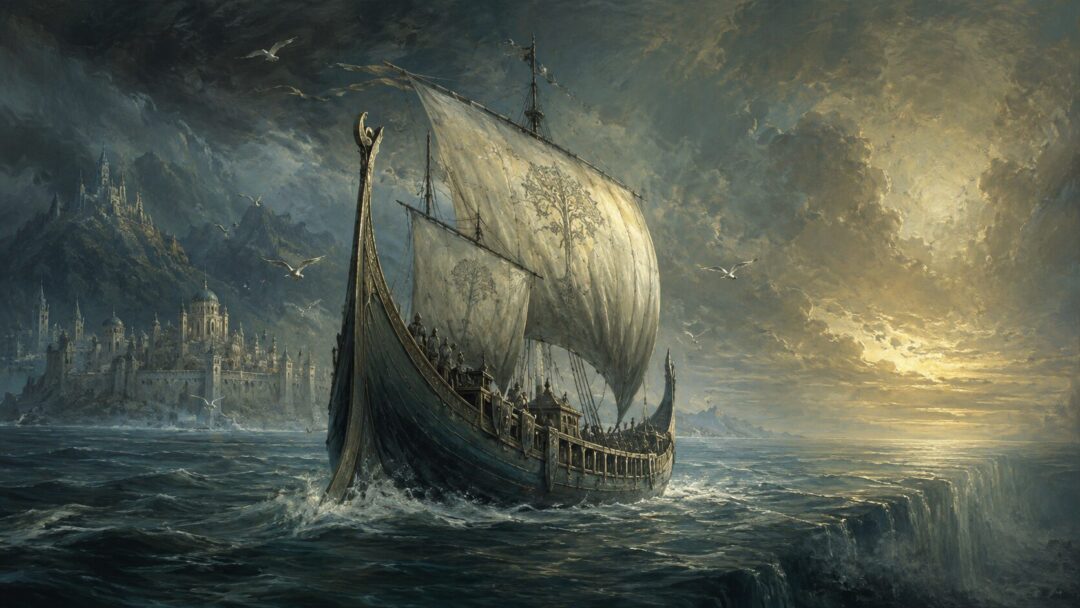
The most painful delay remains the First Age. Morgoth returns to Middle-earth with the Silmarils. The Noldor bleed themselves against Angband. Men awaken under shadow. Kingdoms rise and fall. By the time Eärendil reaches Aman, the free peoples of Beleriand are nearly spent.
Why did the Valar not come sooner?
The texts do not give a simple administrative answer, and any confident explanation goes beyond what is directly stated. But several things are clear. The rebellion of the Noldor matters. The Kinslaying matters. The Valar have fenced Aman against the exiles. The Oath of Fëanor continues to poison attempts at recovery. And when the final appeal does come, it comes not from a proud claimant demanding victory, but from Eärendil, who bears the Silmaril and pleads for both Elves and Men.
That representation matters. Eärendil is not merely asking for help for one faction. He stands at a crossing of kindreds: born of Tuor and Idril, joined to Elwing, connected to the houses of Elves and Men, carrying the jewel that has caused so much ruin yet still holds the light of the Trees. His plea is not conquest. It is intercession.
One careful reading is that the Valar wait until the appeal can be made without simply rewarding rebellion or seizing history from the Children. The mercy that comes through Eärendil does not erase responsibility, but it answers despair. It arrives when the peoples of Middle-earth can no longer save themselves, and when the request is made in humility rather than possessive pride.
Even then, the result is not painless. Morgoth is overthrown, but Beleriand is devastated. The delay did not prevent ruin. It did, perhaps, prevent a still earlier war of annihilating powers before all other roads had been spent.
Ulmo and the Mercy That Moves Quietly
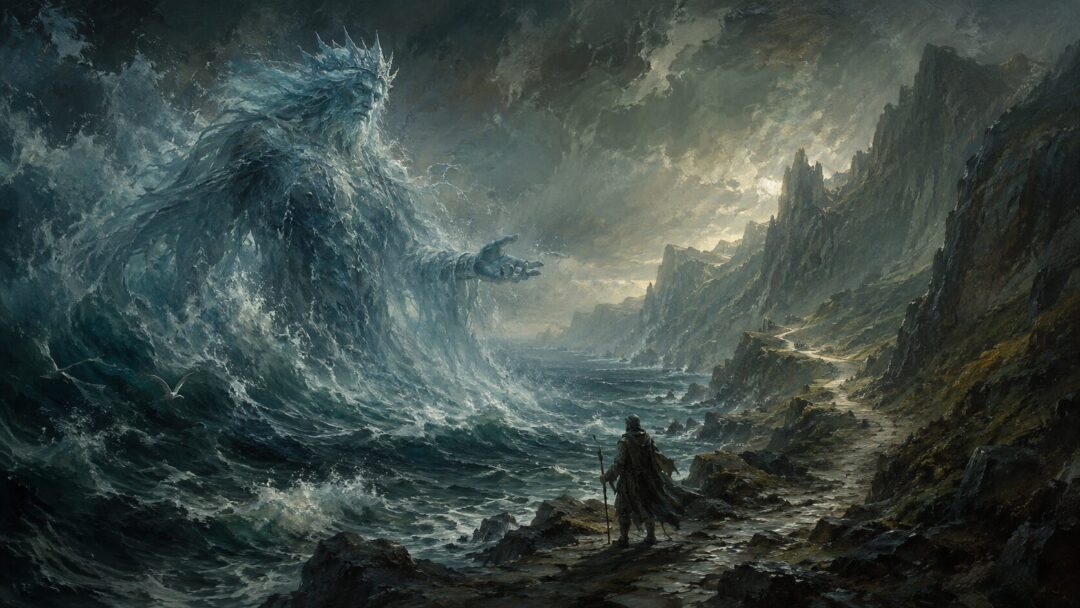
The Valar are not always equally distant. Ulmo, in particular, remains active in Middle-earth’s waters and counsels resistance to Morgoth. He sends dreams and warnings. He guides Tuor to Gondolin. He urges Turgon, through Tuor, to abandon the hidden city before its fall. Turgon does not obey.
This is a different kind of delay: mercy offered before disaster, but not accepted.
Ulmo’s pattern shows that the Valar’s restraint is not total absence. Middle-earth is full of indirect help: warnings, providential meetings, preserved lines of descent, hidden roads, dreams, and messengers. These forms of aid are easy to overlook because they do not look like thunder from Taniquetil. But they matter.
They also preserve the dignity and danger of choice. Tuor must walk. Turgon must decide. Eärendil must sail. The Valar’s mercy often opens a door rather than carrying everyone through it.
The Third Age: Help Without Domination
By the Third Age, the same pattern appears in a smaller, more familiar form. Sauron rises again, but the West does not send an army of the Valar. Instead, the Istari come: emissaries in the bodies of old men, sent to advise, encourage, and unite resistance rather than rule it.
That choice is easy to underestimate. Gandalf is powerful, but his mission is deliberately restrained. He does not conquer Mordor by revealed angelic force. He kindles courage, exposes lies, guides the humble, and trusts small hands with the fate of the Ring.
This is mercy shaped as patience. The free peoples of Middle-earth must not be replaced by the Powers. If Sauron’s evil is domination, then the answer cannot be a holy domination that leaves no room for courage, pity, or faithfulness. The Ring is destroyed not because the West overwhelms every will, but because mercy, endurance, and pity survive long enough to reach the fire.
When Delay Is Also Judgment
It would be too simple to say every delay by the Valar is obviously right. The stories invite unease. Their withdrawal to Aman, their summoning of the Elves, their handling of Melkor after his captivity, and their long restraint all raise difficult questions inside the legendarium. The texts do not always pause to defend them in modern terms.
But the pattern is consistent: the Valar’s mercy is bound by limits. They are not Eru. They do not fully know the destiny of Men. They cannot make deathlessness a gift to mortals. They cannot undo evil without consequences. They cannot save free peoples by making their freedom meaningless.
So their mercy often appears as delay because it waits for repentance, appeal, humility, or the last possible moment when intervention will heal more than it destroys. Sometimes it warns. Sometimes it forbids. Sometimes it sends one person instead of an army. Sometimes it allows grief to reveal what pride concealed.
That is why the Valar can feel distant and still not be indifferent. Their mercy is not the mercy of haste. It is the mercy of guardians who know that power, even benevolent power, can become a disaster if used too soon, too completely, or in the wrong way.
The Long Patience of the West
In Middle-earth, delay is one of the hardest forms mercy can take. It asks the suffering to endure. It leaves room for terrible choices. It permits stories to unfold that might have been spared by force. But it also leaves room for repentance, courage, intercession, and unexpected grace.
Eärendil must reach the shore. The Númenóreans must choose whether to trust the Ban. Turgon must decide whether to heed Ulmo. Frodo must carry the Ring as far as he can, and Gollum must be spared long enough for pity to become providence.
The Valar’s mercy sometimes looks like delay because Middle-earth is not a world where goodness simply cancels history. Mercy enters history without always overruling it. It waits, warns, restrains, and finally acts — not always when the wounded heart wants it, but often at the point where rescue can come without becoming another form of possession.
That may be the most unsettling truth behind the West: the Valar are powerful enough to save, but wise enough, and sometimes constrained enough, not to save too quickly.
Sources & Notes
- J.R.R. Tolkien, The Silmarillion, “Of the Flight of the Noldor” — the Doom of Mandos frames the Valar’s severity as warning and judgment after rebellion, while still leaving the Noldor free to turn back or continue.
- J.R.R. Tolkien, The Silmarillion, “Akallabêth” — the Ban of the Valar and their messengers’ explanation to Númenor support the article’s point that Aman cannot make mortal Men deathless.
- J.R.R. Tolkien, The Silmarillion, “Of the Voyage of Eärendil and the War of Wrath” — Eärendil’s intercession for Elves and Men brings the Host of the West, but the deliverance also breaks and drowns much of Beleriand.
- J.R.R. Tolkien, Unfinished Tales, “Of Tuor and His Coming to Gondolin” — Ulmo’s guidance of Tuor and warning to Turgon show mercy working through counsel and choice rather than irresistible rescue.
- J.R.R. Tolkien, Unfinished Tales, “The Istari” — the Wizards are sent to resist Sauron by counsel and encouragement, not by open domination or direct rule over the peoples of Middle-earth.
- J.R.R. Tolkien, The Letters of J.R.R. Tolkien, Letter 131 — Tolkien’s overview of the legendarium distinguishes the Valar’s limited governance under Eru and helps frame their restraint as storycraft, not simple indifference.