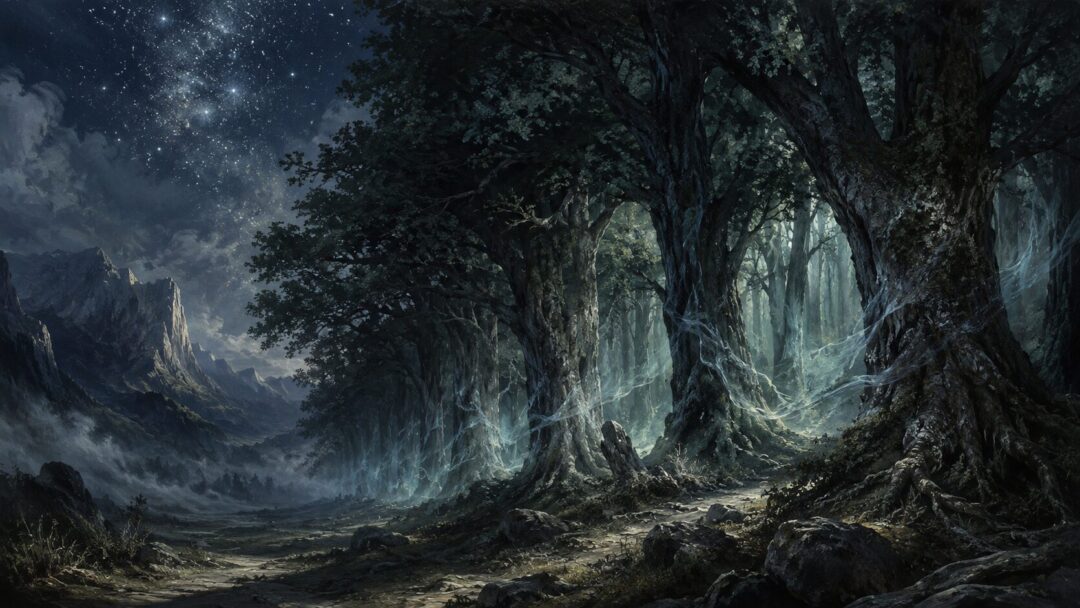
Doriath seems, at first, like the answer to the terror of the First Age. While Morgoth’s power spreads from the North, while Elves and Men are broken in war, one realm remains hidden in the forests of Beleriand: the guarded kingdom of Thingol and Melian. Around it lies the Girdle of Melian, not a wall of stone, but a fence of enchantment so potent that outsiders cannot enter without the will of the king and queen. Doriath is the Hidden Kingdom, the Land of the Fence, the place where beauty and memory endure while the world outside darkens.
And yet Doriath falls.
That is the contradiction at the heart of Melian’s protection. The Girdle is real. It is powerful. It saves Doriath for long years. But it is not an answer to every kind of danger. It can turn aside armies, confuse intruders, and preserve a realm from the open violence of Morgoth’s wars. What it cannot do is save Doriath from choices made inside the fence.
The tragedy of Doriath is not that Melian’s power was weak. It is that her power was defensive, conditional, and bound to a kingdom whose doom entered not as an invading army, but as desire, pride, grief, and possession.

The Girdle Was a Shelter, Not a Final Victory
Melian was not merely an Elven queen. She was one of the Maiar, a being of the same order as the great spirits who served the Valar. In Middle-earth she became the wife of Elu Thingol and queen of Doriath, and through her power the kingdom became unlike any other Elven realm in Beleriand. Tolkien Gateway
The Girdle appears after the first great shocks of war in Beleriand. Melian perceives that the long peace of the starlit ages is ending, and she sets her enchantment about the forests of Neldoreth, Region, and the guarded lands of Thingol. From that time the realm is called Doriath, the fenced land.
This matters because the Girdle was not created to conquer Morgoth. It was not a weapon meant to drive back Angband. It was a shelter. It made Doriath hidden, difficult, and forbidden to those without leave. In a world where many realms trusted in swords, alliances, towers, or open battle, Doriath trusted in secrecy, enchantment, and the foresight of its queen.
For a long time, that works. Doriath remains apart while other powers are drawn into the wars of the Noldor. But separation is not the same thing as innocence, and preservation is not the same thing as safety forever.
The Girdle Had Limits Written Into It
The most important thing to understand about the Girdle is that it was never described as absolute in the sense of being unbreakable by any power under heaven. The lore repeatedly frames it as a barrier that could not be passed without the permission of Thingol or Melian, unless some greater power or doom was involved.
That distinction is crucial. Doriath is not sealed outside history. Fate can still find it.
Beren is the first great sign of this. Melian foresees that one of Men will come to Doriath whom her enchantment will not restrain. When Beren at last enters the guarded realm, it is not because he is stronger than Melian in any ordinary sense. The texts present his coming as bound up with a doom beyond her power.
That should already trouble the idea that Doriath is perfectly safe. The Girdle can keep out enemies, wanderers, and armies. It cannot keep out a destiny that belongs to the larger design of the world.
And Beren’s coming brings love, yes, but also the Silmaril into the story of Doriath.

Melian Saw the Danger Before Thingol Did
One of the most tragic patterns in Doriath is that Melian often understands the spiritual danger before others do. She is not simply a maker of enchantments; she is a figure of counsel and foresight. When Thingol sets Beren the task of bringing him a Silmaril from Morgoth’s crown, Melian warns against it. The lore tradition is clear that she sees this demand as a path toward Doriath’s ruin.
This is not because the Silmaril is evil. The Silmarils contain the light of the Two Trees, and their beauty is bound to holy memory. But in the First Age they are also bound to oath, violence, possessiveness, and doom. The jewels draw out what is already unstable in those who claim them.
Thingol’s demand begins as an impossible bride-price. He does not intend to open the gates of Doriath to ruin; he is trying to control the fate of his daughter and dismiss a mortal suitor. But in doing so, he reaches beyond the safe boundaries of his own realm. He pulls the central conflict of the Age into Doriath’s heart.
The Girdle can guard borders. It cannot make a proud king listen.
Carcharoth Proved That Horror Could Still Enter
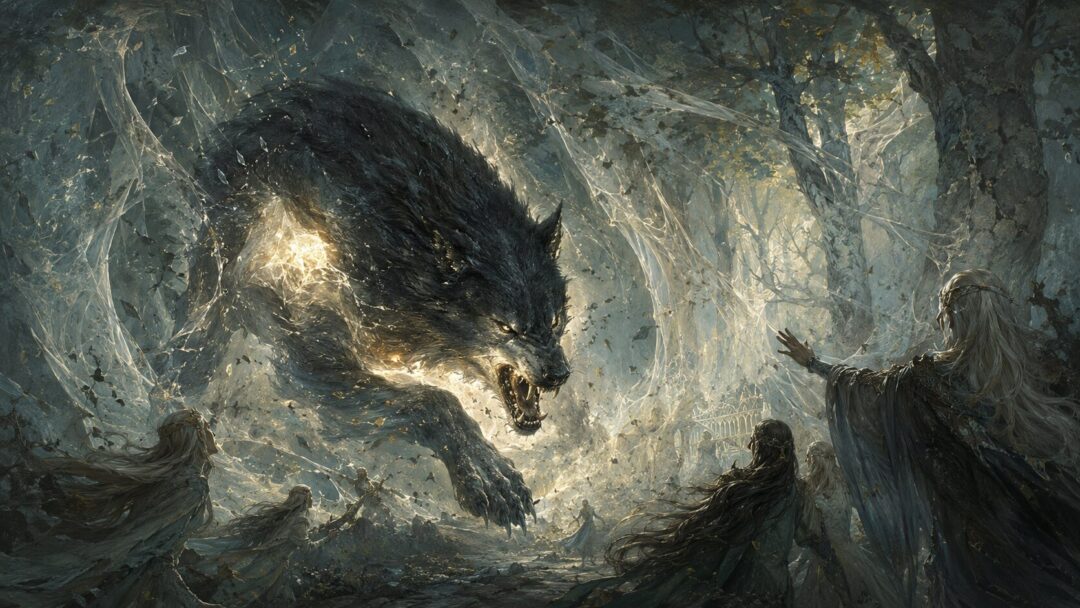
After Beren and Lúthien achieve the impossible and take a Silmaril from Angband, the wolf Carcharoth bites off Beren’s hand and swallows the jewel. Maddened by the burning power within him, Carcharoth later breaks into Doriath. The Girdle, for all its strength, does not stop him.
This moment is easy to overlook because Carcharoth is eventually hunted and slain. But symbolically, it is devastating. Doriath’s protection has failed once the Silmaril has become entangled with the realm’s fate. The danger is no longer outside, neatly contained in Angband. It has crossed the guarded boundary.
Carcharoth is not merely a monster wandering into the woods. He is the consequence of Thingol’s demand returning in a form no one can ignore. The quest that was meant to remove Beren has brought the terror of Morgoth’s own breeding into the guarded kingdom.
The Girdle remains, but its moral invulnerability has been exposed as an illusion. Doriath can still be wounded.
The Real Breach Came From Within
The final ruin of Doriath does not begin with Orcs at the border. It begins with treasure in the king’s halls.
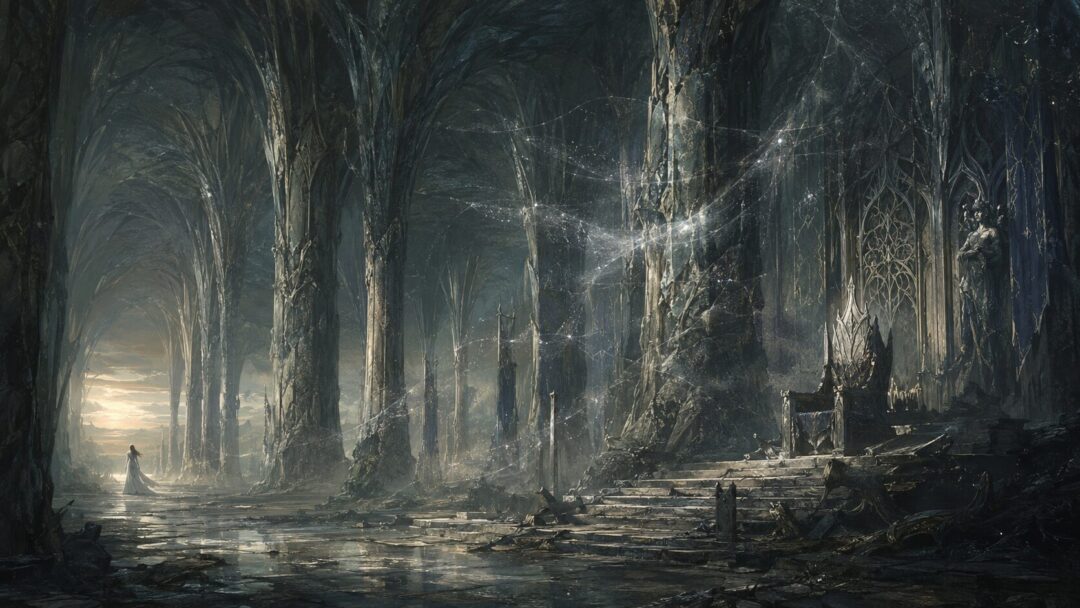
After the disasters surrounding Túrin and Húrin, the Nauglamír, the necklace of the Dwarves made long before for Finrod Felagund, comes to Thingol. Thingol then desires to have the Silmaril set within it. He summons Dwarven craftsmen from Nogrod for the work. The result unites two works of immense beauty: the necklace and the jewel. But beauty does not heal the possessiveness surrounding them. It intensifies it.
The Dwarves who work on the necklace come to desire it and claim it. Thingol refuses them. In the quarrel that follows, they murder him in Menegroth.
This is the fatal limitation of the Girdle. It does not matter how strong the border is if the danger is invited inside. The craftsmen are not an invading host battering against Melian’s enchantment. They are brought into the king’s own domain by Thingol’s command. The catastrophe happens not because the fence fails in a military sense, but because Doriath’s ruler brings the cursed pattern of the Silmaril into the deepest place of safety.
In that sense, Menegroth falls before Doriath is sacked. The heart of the realm is broken when Thingol dies.
Melian’s Power Was Bound to Her Presence
After Thingol’s death, Melian’s grief changes everything. She had come into Middle-earth, taken bodily form, loved Thingol, borne Lúthien, and poured her power into the guarded realm. But when Thingol is slain, she withdraws from Doriath and eventually departs Middle-earth. With her departure, the Girdle is gone.
This is another overlooked rule of the story: the Girdle is not an independent machine. It is not a spell that continues forever after its maker has left. It is the expression of Melian’s active power and presence. When she is no longer there to maintain it, Doriath is exposed.
This makes the fall of the kingdom painfully personal. The realm’s defense rested not only on enchantment, but on relationship: Melian with Thingol, Melian with the land, Melian with the people she had guarded. When that relationship is shattered by Thingol’s murder, the protection cannot simply continue as if nothing has happened.
Doriath was guarded by love and wisdom as much as by power. Once grief removes the guardian, the fence vanishes.
Why Doriath Could Not Remain Untouched
The deeper reason Melian’s Girdle could not save Doriath forever is that Doriath was part of the world’s sorrow, not exempt from it. Thingol tried to remain apart from the wars of the Noldor, and in many ways his caution preserved his people. But the First Age is not a story in which any realm can achieve permanent safety by hiding.
The Silmaril binds Doriath to the larger doom of Beleriand. Beren enters by destiny. Carcharoth enters through the terror unleashed by the quest. Húrin’s grief and Morgoth’s malice help bring the treasure of Nargothrond to Thingol’s halls. The Dwarves are invited to work upon the jewel and necklace. Thingol is slain. Melian departs. Then Doriath, stripped of its hidden defense, becomes vulnerable to the violence that had long raged beyond its borders.
None of this means the Girdle was useless. It saved lives for centuries of the Sun and preserved one of the greatest realms of the Sindar. It gave space for Lúthien to be born and for songs of beauty, wisdom, and resistance to arise. But its success was temporary because all defensive power in Middle-earth has limits when confronted by pride, possessiveness, oath, and doom.
The Girdle could keep enemies out. It could not purify desire. It could not undo the Oath of Fëanor. It could not make the Silmaril harmless in the hands of those who claimed it. It could not prevent Thingol from mistaking possession for mastery.
The Tragedy of a Perfect Defense Against the Wrong Enemy
Melian’s Girdle is one of the most haunting protections in the legendarium because it almost works. Against invasion, it is magnificent. Against secrecy, wandering evil, and the ordinary violence of war, it is formidable. Against Morgoth’s shadow pressing from the North, it allows Doriath to remain a hidden island of beauty.
But Doriath does not fall first to an army. It falls to a chain of choices.
That is why the story still feels sharp. Many kingdoms imagine that the greatest danger is outside the wall: the enemy at the gate, the wolf in the wild, the dark lord far away. Doriath teaches a colder lesson. Sometimes the fatal danger arrives as a treasure desired, a warning ignored, a guest mistrusted, a bargain poisoned by pride.
Melian could veil a forest. She could not force wisdom upon those she loved.
And so the Hidden Kingdom was hidden only for a time. Its fence was mighty, but not eternal. Its queen was wise, but not obeyed. Its beauty was real, but not immune to corruption. Doriath fell because no enchantment, however holy or ancient, can save a realm forever when the doom it fears has already entered the heart.
Sources & Notes
- J.R.R. Tolkien, The Silmarillion, “Of the Sindar”: Melian is named among the Maiar, and her power establishes the hidden fence of Doriath around Thingol’s guarded realm.
- J.R.R. Tolkien, The Silmarillion, “Of the Sindar”: the Girdle is strong but conditional—none may pass without Thingol and Melian’s will, unless a greater power or doom is involved.
- J.R.R. Tolkien, The Silmarillion, “Of Beren and Lúthien”: Beren’s destined entry, Melian’s warning to Thingol, and the Silmaril quest show danger entering Doriath through fate and desire rather than siege.
- J.R.R. Tolkien, The Silmarillion, “Of Beren and Lúthien”: Carcharoth’s Silmaril-driven passage into Doriath demonstrates that the realm’s enchantment cannot make it immune to the consequences of Thingol’s demand.
- J.R.R. Tolkien, The Silmarillion, “Of the Ruin of Doriath”: Thingol’s death over the Nauglamír and Silmaril, Melian’s departure, and the vanishing of the Girdle directly explain why Doriath’s protection could not last.