The Dead Men of Dunharrow are easy to misunderstand because their story ends with release.
Aragorn calls them. They follow him. They terrify the enemies of Gondor. Then he lets them go.
At a glance, that can feel almost too merciful. These were not brave allies who merely arrived late. They were men whose king swore allegiance to Isildur and then failed when the oath became costly. They hid while Sauron made war. They became a terror in the mountains, remembered not as a kingdom, but as a curse.
So why are they released?
The answer is not that Middle-earth rewards cowardice. It is that oaths in Tolkien’s world are not decoration. They are binding moral realities. The Dead Men are not saved because their failure was small. They are released because, after long punishment, they finally do the one thing they had refused to do: they answer the heir of Isildur and act against Sauron.
Their mercy is not cheap. It comes after centuries of unrest.
The Oath Was Not a Minor Promise
The story begins long before Aragorn enters the Paths of the Dead.
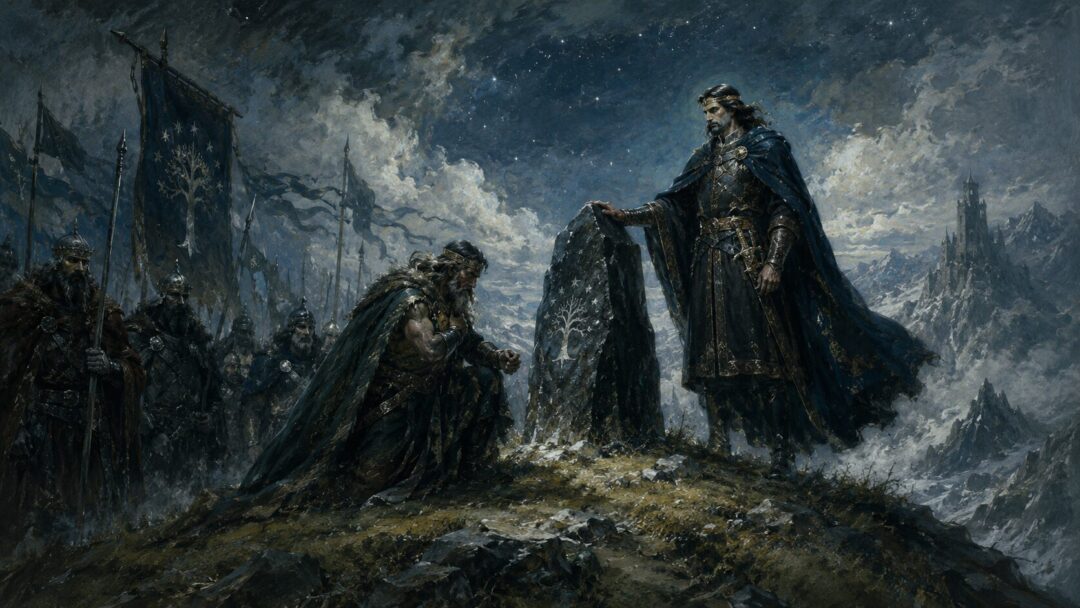
In the early days of Gondor, Isildur set the Stone of Erech upon the hill of Erech. There, the King of the Mountains swore allegiance to him. This was not a casual political agreement. It was a solemn oath made to the founder of a realm and, by extension, to the order Gondor represented against Sauron.
The later account makes the nature of their guilt clear. When Sauron returned and Isildur summoned them to fulfill their word, they did not come. The texts say that they had worshipped Sauron in the Dark Years. That detail matters.
Their failure was not simply that they were nervous soldiers who lost heart on the day of battle. Tolkien’s text frames them as men caught between a sworn allegiance to Isildur and a darker older attachment to Sauron. When the choice came, they refused to fight against the Shadow.
That is why “cowardice” is too small a word. Fear may have been involved, but the story is about oathbreaking, divided loyalty, and moral refusal. They had pledged themselves to one side and, when action was required, would not stand by the pledge.
In Middle-earth, that is catastrophic.
Isildur’s Curse Was Judgment, Not Revenge
After their refusal, Isildur cursed them. They would have no rest until their oath was fulfilled.
The text does not give a detailed metaphysical explanation of how the curse works. It does not pause to explain the mechanics of death, spirits, judgment, or why Isildur’s words bind them so terribly. Any claim beyond the text has to be handled carefully.
What the story does make clear is that the curse is real. The Men of the Mountains do not simply die and pass beyond the world in the ordinary way. They remain as the Sleepless Dead, haunting the Paths of the Dead and the regions around the White Mountains. Their broken oath becomes the shape of their afterlife in Middle-earth.
This is not presented as a normal punishment for military failure. It is exceptional, dreadful, and ancient. Isildur’s curse does not merely say, “You were afraid.” It says, in effect, “You are bound to the very duty you abandoned.”
They refused to fight when called. Therefore they would not rest until they answered that call.
The punishment fits the wound. Their history froze at the point of betrayal.
The Paths of the Dead Are a Memory of Unfinished Duty
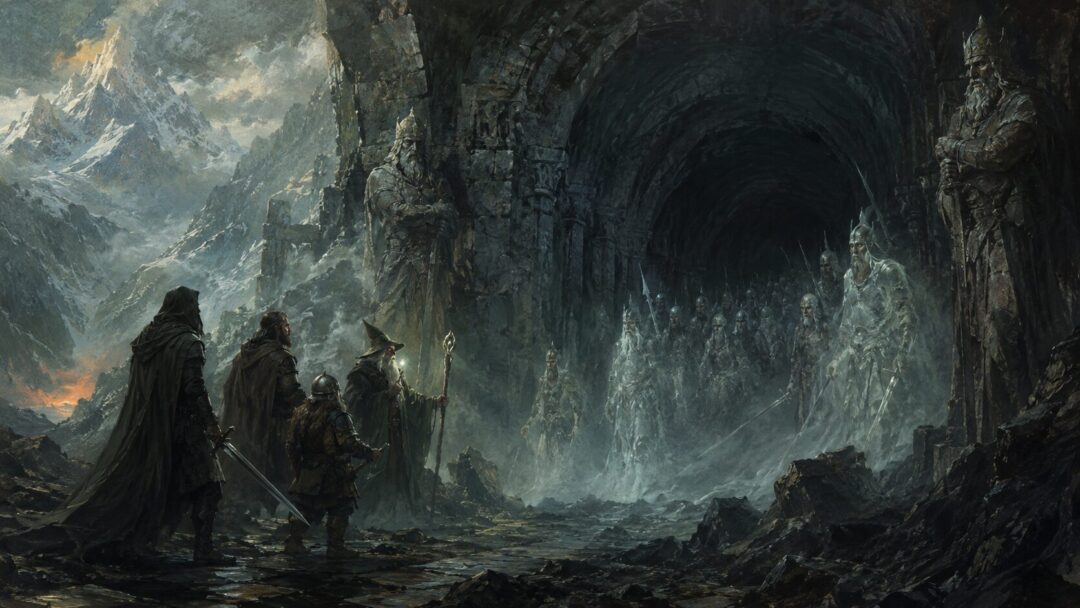
By the time of the War of the Ring, the Dead have become a living fear among the people near the White Mountains. The Paths of the Dead are avoided. Their presence is associated with dread, silence, and old prophecy.
This is important because it shows that the Oathbreakers were not living comfortably under a delayed sentence. They were not spared consequence. They were consequence.
They had no kingdom restored to them. No honor among Men. No ordinary death. No peace.
Their punishment is not described in sentimental detail, but its meaning is stark. They remain in Middle-earth as something unfinished. They are not allowed to vanish into legend as merely “those who once failed.” Their failure remains active, haunting the land until the heir of Isildur comes.
That is why Malbeth the Seer’s prophecy matters so much. The prophecy foretells that the Dead will be summoned when need and haste drive Isildur’s heir to the Paths of the Dead. The old betrayal is not forgotten by history. It waits for the moment when it can be answered.
The Dead are not an army Aragorn happens to find. They are an unresolved oath.
Aragorn Does Not Bargain Like a Warlord
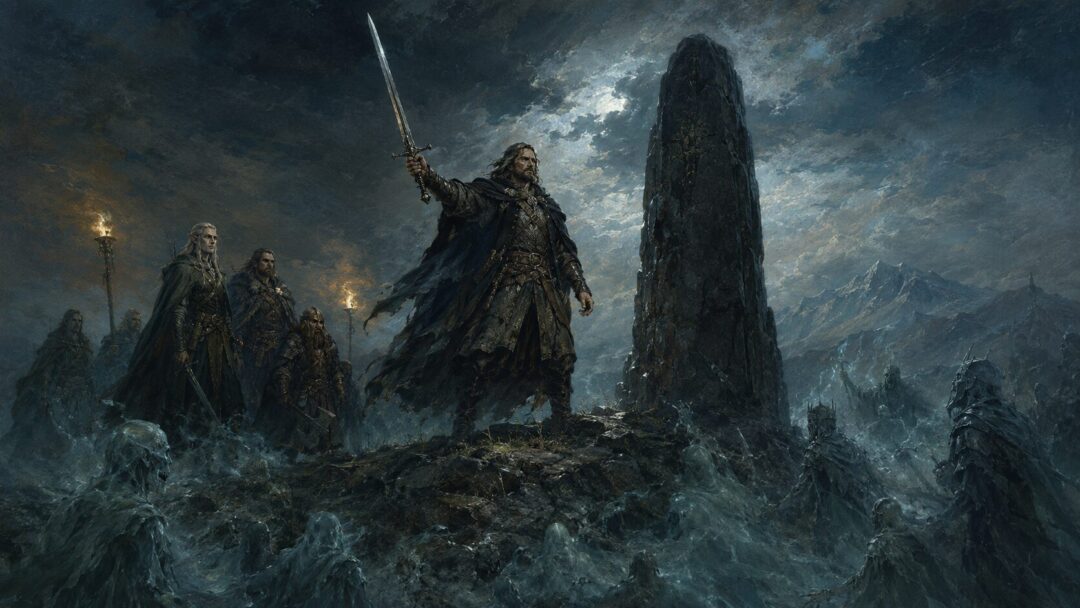
When Aragorn takes the Paths of the Dead, he is not merely making a desperate military move. He is stepping into an ancient legal and moral claim.
He is Isildur’s heir. That is why he can summon them. The story is not about any strong man commanding ghosts. It is about rightful authority calling an oath back into force.
This is one of the most overlooked details in the episode. Aragorn does not bribe the Dead. He does not flatter them. He does not promise them glory, treasure, revenge, or renewed power. He commands them to fulfill what they already owe.
That distinction changes the whole moral shape of the scene.
If Aragorn were simply hiring supernatural mercenaries, their release might look like payment. But he is not paying them for useful service. He is declaring that the old debt can finally be discharged.
The Dead are not rewarded for cowardice. They are held accountable to the very promise their cowardice, fear, or divided allegiance once violated.
Their Weapon Is Fear, Not Noble Battle
Another reason the Oathbreakers can be misread is that adaptations often turn them into a conventional ghost army. In the book, their role is stranger and more restrained.
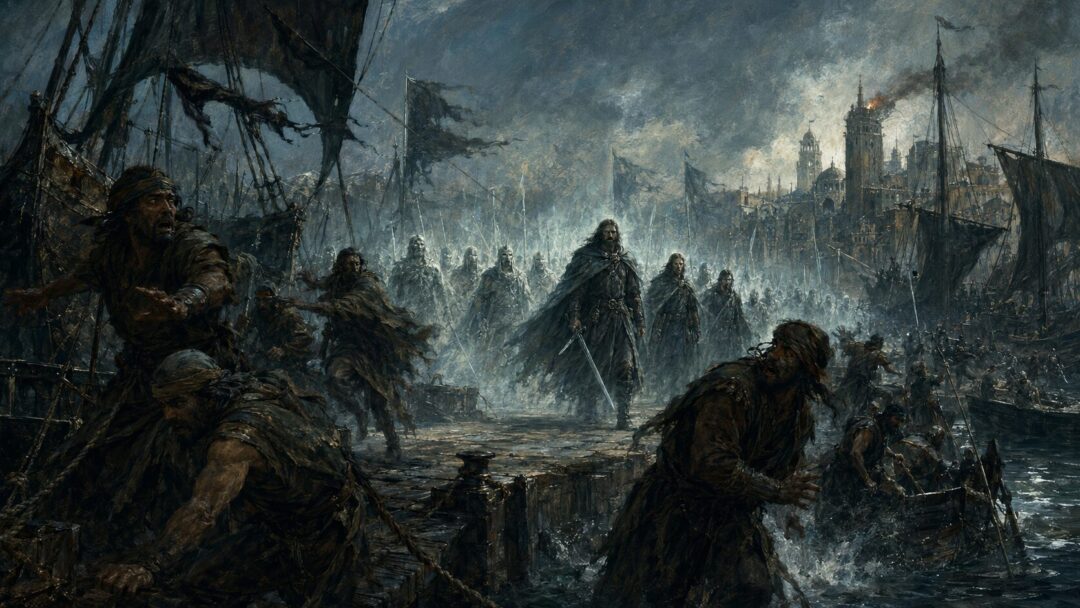
They do not sweep across the Pelennor Fields and win the central battle for Gondor. Their decisive action is in the south, especially in the events leading to the capture of the Corsair ships at Pelargir. This matters because it preserves the balance of the War of the Ring. The Dead are not a simple magical solution to Sauron’s armies.
Their power is terror.
Legolas later describes pale swords being drawn, but he does not know whether their blades could still bite. He says the Dead needed no weapon but fear. That is a careful and important point. The text does not ask us to imagine the Oathbreakers as heroic warriors restored to clean honor in the ordinary sense. Their presence breaks the courage of Sauron’s allies.
They become, for a final moment, the dread that serves the right side.
There is a grim justice in that. For centuries, they had been a terror haunting the mountains because of their refusal. At Pelargir, that terror is turned against the servants and allies of Sauron. Their curse is not beautified; it is redirected toward the oath they once betrayed.
They do not receive a glorious battlefield redemption. They perform a necessary act under the shadow of their old failure.
Aragorn Releases Them Only After the Oath Is Fulfilled
The key moment comes after the enemy is driven away and the ships are taken. Aragorn declares the oath fulfilled.
This is the heart of the matter.
The release does not come before obedience. It does not come after a vague apology. It does not come because Aragorn feels pity while Gondor still needs them. It comes when the practical and moral demand has been met: they have served against Sauron under the heir of Isildur.
Only then are they allowed to depart.
That order is crucial. Mercy follows fulfillment. It does not erase fulfillment.
Aragorn’s act is kingly because it is both stern and merciful. He does not minimize their ancient treachery, but neither does he extend punishment beyond its purpose. Once the oath is fulfilled, he does not keep them enslaved as a permanent weapon. He does not exploit the curse.
A lesser ruler might have tried to retain them. A desperate ruler might have reasoned that Minas Tirith still needed every advantage. But Aragorn releases them.
That tells us something about legitimate kingship in Middle-earth. True authority does not merely command. It knows when a debt has been paid.
Mercy Is Not the Same as Approval
The release of the Oathbreakers can feel troubling only if mercy is mistaken for approval.
The story never says their original refusal was understandable enough to excuse. It never says their long punishment was undeserved. It never rebrands them as secretly noble all along. Even at the end, their identity is defined by the oath they broke.
But mercy in Tolkien’s moral world often arrives without pretending evil was not evil or failure was not failure. Mercy does not require false innocence. It can come after guilt has been named and judgment has done its work.
That is what happens here.
The Oathbreakers are not praised for hiding in the mountains. They are not rewarded for abandoning Isildur. They are not given lands, titles, songs, or restored life. They are released from a curse that had held them because the condition of that curse has finally been satisfied.
Their ending is not triumph. It is rest.
And rest, after such a doom, is not a prize for cowardice. It is the closing of a wound that had remained open since the Second Age.
The Deeper Warning: Words Bind the Speaker
The Oathbreakers belong to a much larger pattern in Middle-earth: sworn words matter.
An oath can ennoble when it is faithful. It can destroy when it is corrupted, rash, or broken. The power of an oath is not treated as mere social pressure. It has spiritual weight. It binds identity, memory, and fate.
That is why the Dead Men of Dunharrow are so haunting. They are not monsters from outside the moral order. They are men trapped by their own words.
Their story asks a hard question: what happens when someone invokes loyalty, honor, and allegiance, but refuses the cost when the hour comes?
In their case, the answer is terrible. They become less than a people. Their name is replaced by their failure. They are remembered as Oathbreakers.
Yet the story also refuses despair. A broken oath can still be fulfilled if the rightful call comes and the guilty finally answer. The past cannot be undone, but the debt can be faced.
That is why their release is so powerful. It does not say betrayal is harmless. It says betrayal is not allowed to have the final word if the oath is at last fulfilled.
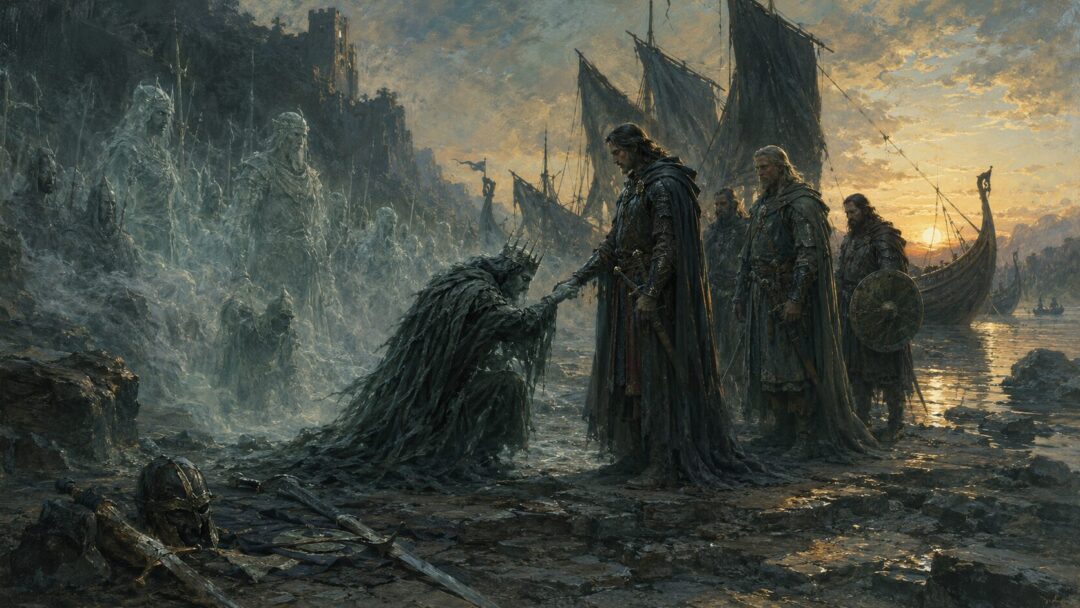
The Oathbreakers Were Freed Because Justice Was Complete
The Dead Men of Dunharrow were not rewarded for cowardice. They were judged for oathbreaking, held to their abandoned duty, summoned by the heir who had the right to call them, and released only when they had fulfilled what they once refused.
Their story is one of the darkest examples of moral consequence in The Lord of the Rings. But it is also one of the clearest examples of measured mercy.
Aragorn does not excuse them. He does not use them forever. He does not pretend their ancient betrayal was small. He brings them to the point where their old oath and their present action finally meet.
Then he lets them go.
That is not a reward for fear. It is the end of a sentence.
And in Middle-earth, where words can echo across ages, the end of an oath may be as solemn as its beginning.
Sources & Notes
- J.R.R. Tolkien, The Lord of the Rings, Book V, Chapter 2, “The Passing of the Grey Company” — Aragorn names the Dead as oathbreakers of Isildur and calls them to fulfill the old command they refused.
- J.R.R. Tolkien, The Lord of the Rings, Appendix A, “Gondor and the Heirs of Anárion” — gives the background of the Stone of Erech, the oath to Isildur, and the Men of the Mountains’ refusal after worshipping Sauron in the Dark Years.
- J.R.R. Tolkien, The Lord of the Rings, Book V, Chapter 9, “The Last Debate” — Legolas and Gimli describe how the Dead’s terror breaks the Corsairs at Pelargir before Aragorn releases them because their oath is fulfilled.
- J.R.R. Tolkien, The Silmarillion, “Of the Flight of the Noldor” — the Oath of Fëanor provides wider Tolkien context for oaths as spiritually dangerous, binding acts rather than decorative promises.