A black sword, a cursed house, and a name that means “Master of Doom” should sound like the beginning of victory. In Middle-earth, names often reveal hidden truth. Aragorn’s many names mark inheritance and healing. Gandalf’s names show how many peoples have known him. But Túrin’s chosen name, Turambar, is different. It is not a revelation. It is a defiance.
Túrin son of Húrin does not merely suffer misfortune. His life becomes one of the darkest stories of the First Age: a man of immense courage, beauty, pride, and grief who tries again and again to outrun the shadow placed upon his family. The tragedy is that he does not run from doom by naming himself its master. He carries it with him.
The texts present Túrin’s story in several related forms, especially in The Silmarillion, Unfinished Tales, and The Children of Húrin. Across those versions, the same terrible pattern remains: Morgoth lays a curse on Húrin’s kin, yet Túrin is not portrayed as a puppet. He makes choices. He resists evil. He also misjudges, refuses counsel, and lets pain harden into rashness. That is what makes his doom so devastating. It is not simple fate, and it is not simple guilt. It is both curse and character tightening around the same life.
The Curse Begins Before Túrin Can Understand It
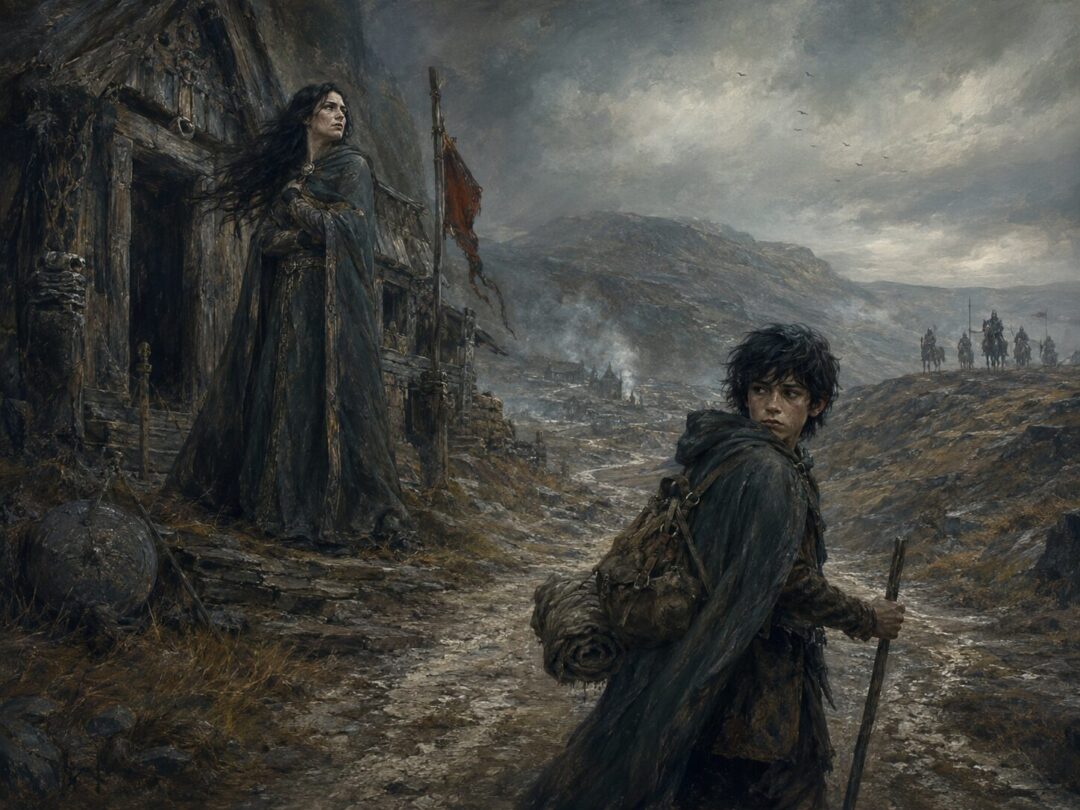
Túrin’s doom begins with his father, Húrin, after the disaster of the Nirnaeth Arnoediad, the Battle of Unnumbered Tears. Húrin is captured by Morgoth, who seeks knowledge of Gondolin and fails to break him. In anger, Morgoth curses Húrin, Morwen, and their children, and Húrin is set where he must watch the unfolding ruin of his house through Morgoth’s malice.
This matters because Túrin is born into a war already lost in his homeland. Dor-lómin falls under Easterling occupation. His father is gone. His mother Morwen is proud, bereaved, and increasingly trapped. His little sister Lalaith has already died young, a grief that marks the household before Túrin’s greater sorrows even begin.
But Tolkien’s tragedy does not work by making Morgoth omnipotent. Morgoth can curse, corrupt, deceive, and bend circumstances. He can send enemies, spread fear, and use Glaurung as an instrument of psychological destruction. Yet the curse is most terrible because it meets living people with wills of their own. Túrin’s courage is real. His love for his family is real. His desire to protect others is real. The curse does not need to erase those virtues. It twists the world around them until they become perilous.
Doriath Offers Shelter, But Not Peace
Túrin is sent away from Morwen to Doriath, where Thingol receives him with honor. This is one of the first cruel contradictions in his life: the safest place available to him is also a wound. Doriath preserves him, but it cannot restore what he has lost. He grows up fostered among Elves, yet remains a child of ruined Dor-lómin, separated from his mother and homeland.
In Doriath, Túrin becomes strong, skilled, and respected. Yet the seeds of tragedy remain. His pride is not mere vanity; it is tied to humiliation, exile, and the memory of his father’s greatness. He cannot easily bear insult. When Saeros mocks him, the conflict ends in Saeros’s death, though the details make clear that Túrin does not simply murder him in cold blood. Still, Túrin flees before judgment can fully reach him.
That flight is one of the first great patterns of his life. Instead of waiting, trusting, or receiving correction, Túrin runs. Later, he will learn that Thingol would have pardoned him. But by then the road has already changed him. Doom works through distance. The more Túrin tries to escape shame, the farther he moves from those who might have healed it.
Outlaw, Captain, and the False Freedom of Reinvention
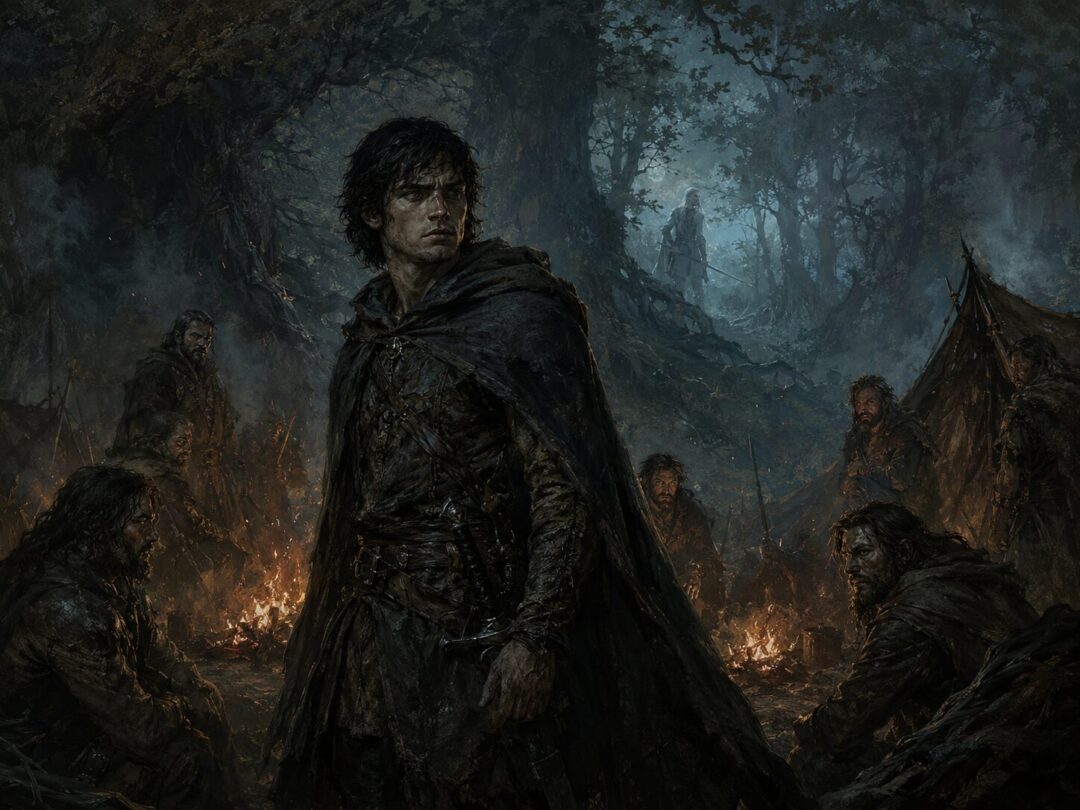
After Doriath, Túrin joins outlaws and eventually becomes their leader. He takes new names. He hides his identity. He tries to become something other than the son of Húrin under Morgoth’s curse. But the story repeatedly shows that changing names does not cleanse the past.
This is not because names have no power in Middle-earth. They do. The problem is that Túrin uses names as armor. Neithan, Gorthol, Agarwaen son of Úmarth, Mormegil, Turambar — each identity marks a stage in his attempt to control how the world sees him. Yet each name also reveals the truth he is trying to bury: the wronged one, the dread helm, the bloodstained, the black sword, the master of doom.
His time with Beleg is especially painful because Beleg represents faithful friendship that Túrin does not deserve less for being broken. Beleg searches for him, helps him, and remains loyal. Then, in one of the great accidental horrors of the tale, Túrin wakes in darkness during his rescue, mistakes Beleg for an enemy, and kills him with the sword Anglachel.
This is not a moral failure in the same way as later choices. It is tragic error under terror. But its effect on Túrin is immense. The man who wants to master doom has slain the friend who most tried to save him from it.
Nargothrond and the Pride of Open War
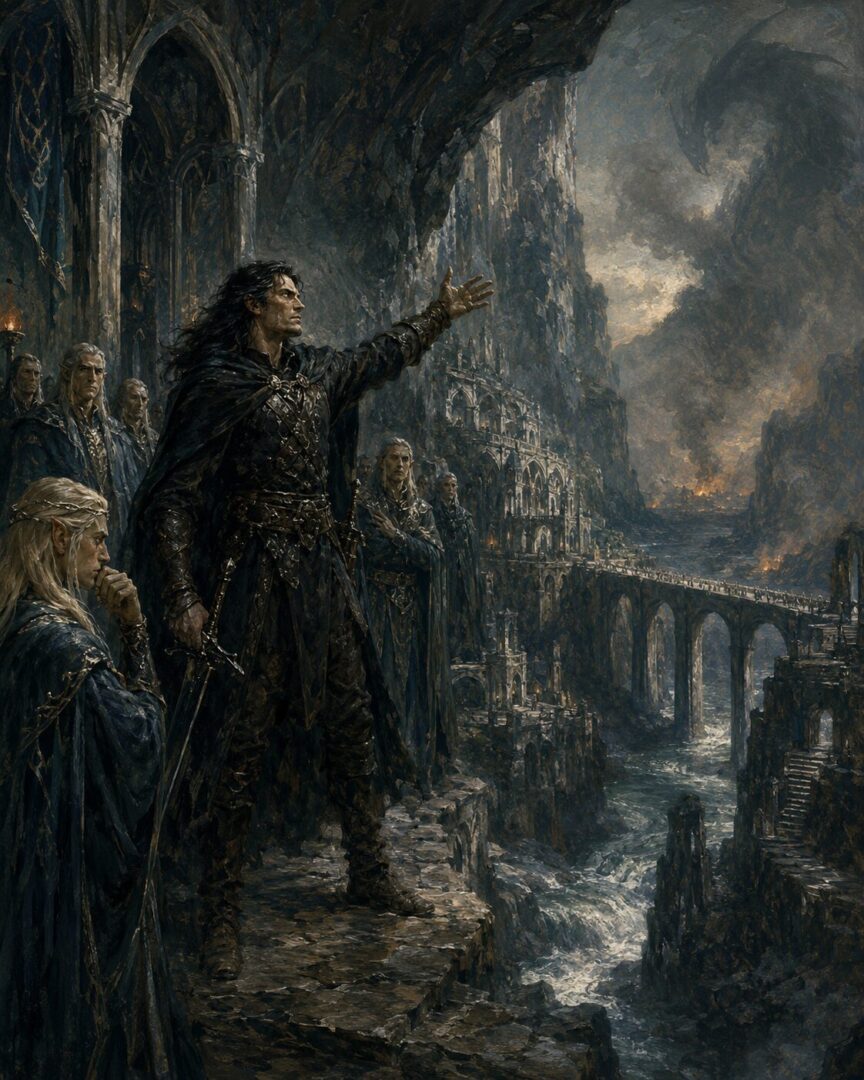
In Nargothrond, Túrin rises again. Under the name Mormegil, the Black Sword, he becomes a figure of power and fear to Morgoth’s servants. The tragedy is that his strength makes others listen to him.
Nargothrond had survived by secrecy and caution. Túrin urges a bolder policy of open warfare and bridge-building, making the hidden realm more exposed. The texts associate this shift with the later disaster that comes when Glaurung and the forces of Angband attack. It would be too simple to say Túrin alone destroys Nargothrond. Morgoth is the aggressor; Glaurung is the deceiver; many choices and failures converge. But Túrin’s counsel helps move Nargothrond toward a kind of heroic visibility it cannot survive.
Here the doom becomes larger than personal suffering. Túrin’s virtues — courage, hatred of Morgoth, refusal to hide — become dangerous when severed from wisdom. He wants to strike the Enemy openly. In another tale, that might be glorious. In Beleriand under Morgoth, it can be fatal.
Even when Glaurung confronts him, Túrin’s deepest wound is used against him. The dragon manipulates his guilt for Morwen and Niënor, turning him away from Finduilas. Finduilas, who loves him, is carried away and killed. Túrin later finds that he has chosen wrongly, not because he did not care, but because the Enemy knew exactly where care would hurt him most.
Encyclopedia of Arda
“Master of Doom” Is the Most Tragic Name
After Nargothrond’s fall and Finduilas’s death, Túrin comes to Brethil and takes the name Turambar, commonly understood as “Master of Doom.”
Encyclopedia of Arda
This is the heart of the tragedy. Túrin is not boasting after victory. He is trying to renounce the past. He lays aside the Black Sword identity and attempts to live quietly among the people of Brethil. On one level, this is a sincere turn. He is exhausted by ruin. He does not want every road to end in death.
But the name Turambar is also a challenge to the pattern of his life. It says: no longer will doom master me. I will master it.
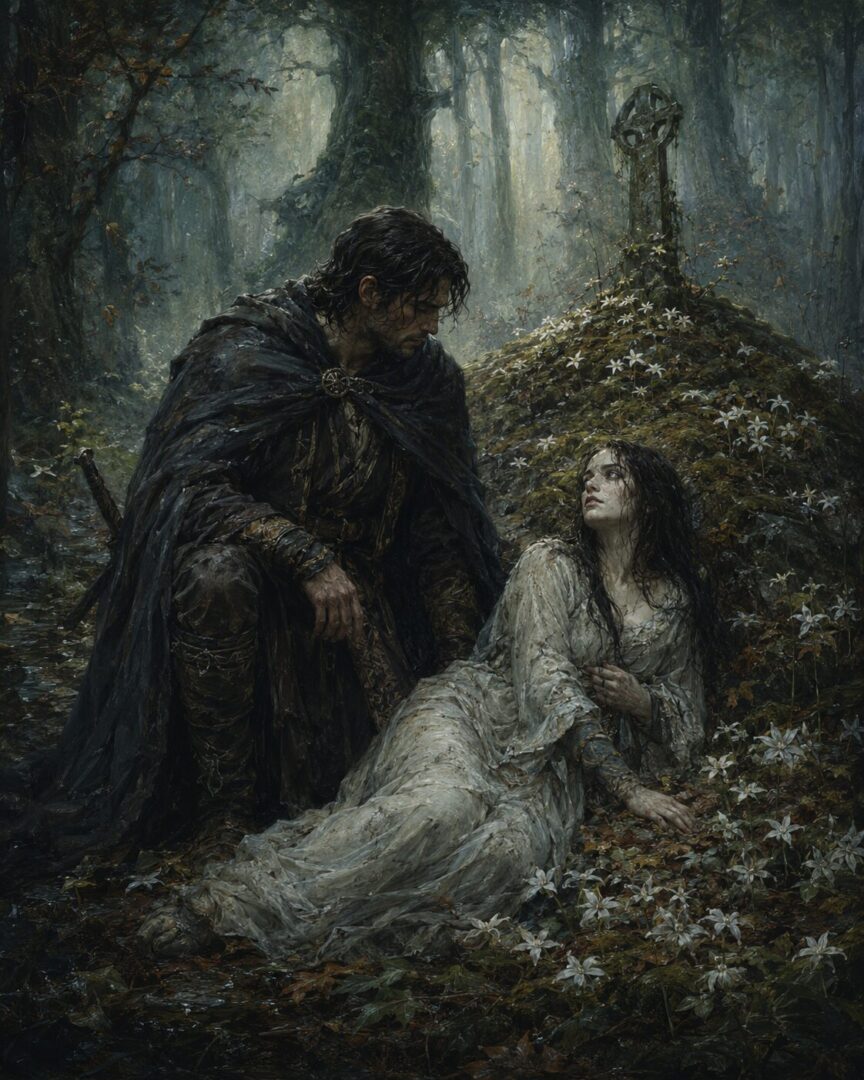
The story answers with terrible irony. Túrin can change his dwelling, his name, and his outward role. He cannot know what Morgoth and Glaurung have hidden from him. Niënor, his sister, has been enchanted by Glaurung so that she loses memory of herself. Túrin finds her under the name Níniel, “Maid of Tears,” and neither knows the other. They marry in ignorance.
This is the darkest point of the curse because Túrin’s longing for peace becomes the path to the deepest horror. His desire to begin again is not evil. Niënor’s dependence and love are not evil. The evil lies in the malice that has stripped knowledge away and arranged innocence into catastrophe.
Glaurung Wins By Revealing the Truth Too Late
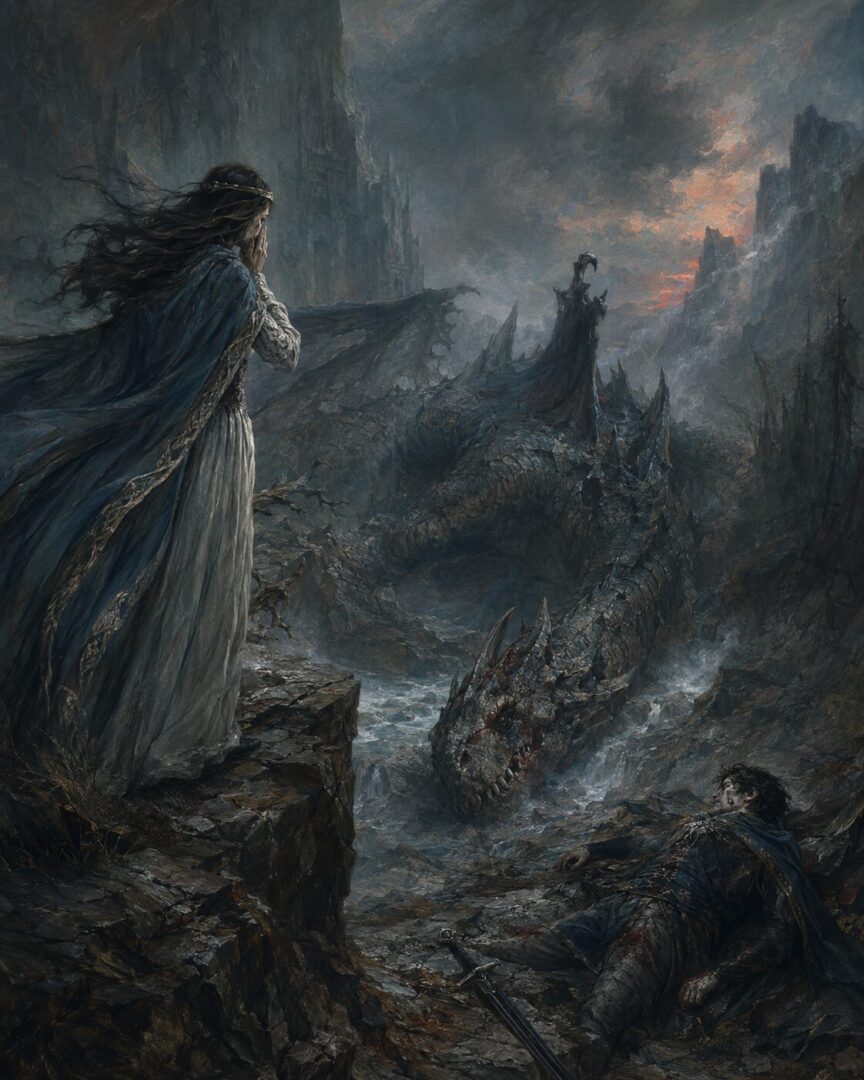
Túrin does achieve one of the great heroic deeds of the First Age: he slays Glaurung, the Father of Dragons. Yet even this victory cannot free him. Glaurung’s final weapon is not fire, but truth released at the worst possible moment.
As he dies, the dragon’s spell over Niënor breaks, and she remembers who she is. She learns that Turambar is Túrin her brother. In despair, she casts herself into the ravine of Cabed-en-Aras. When Túrin wakes and hears the truth from Brandir, he refuses it at first and kills Brandir in rage. Only afterward, confronted by confirmation, he turns to his sword Gurthang and dies by it.
This ending is often remembered as pure fatalism, but it is more morally complex. Túrin’s final collapse is caused by truths he did not know and deceptions he did not create. Yet his killing of Brandir is his own act, born from the same old inability to endure painful counsel. Even at the end, the curse and Túrin’s character are intertwined.
He could not control Glaurung’s malice. He could not undo Morgoth’s curse. But again and again, when the world presses on his wound, he answers with flight, anger, secrecy, or force. Doom finds those openings.
Could Túrin Ever Have Escaped?
The texts do not give a clean answer. Morgoth’s curse is real, and the tale repeatedly presents Túrin as pursued by a shadow greater than ordinary misfortune. At the same time, Túrin is not absolved of all responsibility. The tragedy depends on both truths being held together.
One reading is that Túrin could not escape the doom because he misunderstood mastery. He thought mastery meant refusing defeat, rejecting shame, conquering enemies, and renaming himself. But in Tolkien’s moral world, true mastery often looks more like humility, patience, mercy, and the willingness to receive counsel. Túrin has these qualities only in flashes. His grief is too raw, his pride too easily wounded, his courage too eager to become command.
That is why Túrin’s story stands apart from more consoling arcs in Middle-earth. Frodo is wounded beyond full healing, but his mercy helps save the world. Aragorn accepts a burden and becomes a healer-king. Túrin accepts burdens too, but he repeatedly tries to bear them alone, as if isolation can become freedom.
It cannot.
The Doom He Tried to Master Was Also Inside Him
Túrin Turambar remains unforgettable because he is not a villain and not merely a victim. He is one of the great Men of the Elder Days, brave enough to terrify Morgoth’s servants and strong enough to kill a dragon. He loves fiercely. He suffers deeply. He wants justice in a world where justice has been delayed by the power of the Enemy.
But his chosen name reveals the wound at the center of him. “Master of Doom” is not only a title. It is a prayer, a rebellion, and a misunderstanding.
Túrin could not escape doom because he treated it as something to overpower. The curse was not a single chain he could break with strength. It was a shadow moving through pride, grief, secrecy, and misdirected love. Every time he tried to begin again without truly being healed, the old darkness found him under a new name.
That is why his story hurts so much. Túrin’s greatness is never denied. His doom is not that he was weak. His doom is that his strength kept carrying him into places where wisdom, trust, and patience were needed more.
In the end, he masters only the dragon, and even that victory comes too late to save what the dragon has destroyed. The name Turambar becomes the bitterest irony in the tale: the man who called himself master of doom was never free from it, because he never learned that doom cannot be mastered by pride.
Sources & Notes
- The Silmarillion, “Of Túrin Turambar” — primary account of Túrin’s names, choices, Glaurung’s deception, Niënor/Níniel, and the final tragedy.
- The Silmarillion, “Of the Fifth Battle: Nirnaeth Arnoediad” — context for Húrin’s capture and the ruin that precedes Morgoth’s curse on his house.
- Unfinished Tales, “Narn i Hîn Húrin” — fuller prose tradition behind Túrin’s exile, Beleg, Nargothrond, Brethil, and the working of doom through counsel refused or misunderstood.
- The Children of Húrin, especially “Túrin in Doriath,” “The Fall of Nargothrond,” and “The Death of Glaurung” — expanded narrative basis for the article’s reading of curse, pride, and tragic ignorance.
- The History of Middle-earth, Vol. III, The Lays of Beleriand, “The Lay of the Children of Húrin” — earlier poetic form of Túrin’s doom and the fatal weight of the names Mormegil and Turambar.