The greatest deception in Middle-earth was not forged in fire. It began with a smile.
Most people remember Sauron as the Dark Lord of Mordor: a tyrant surrounded by Orcs, black towers, and war. Yet when he came closest to ruling all of Middle-earth, he did not appear terrifying at all. He appeared fair.
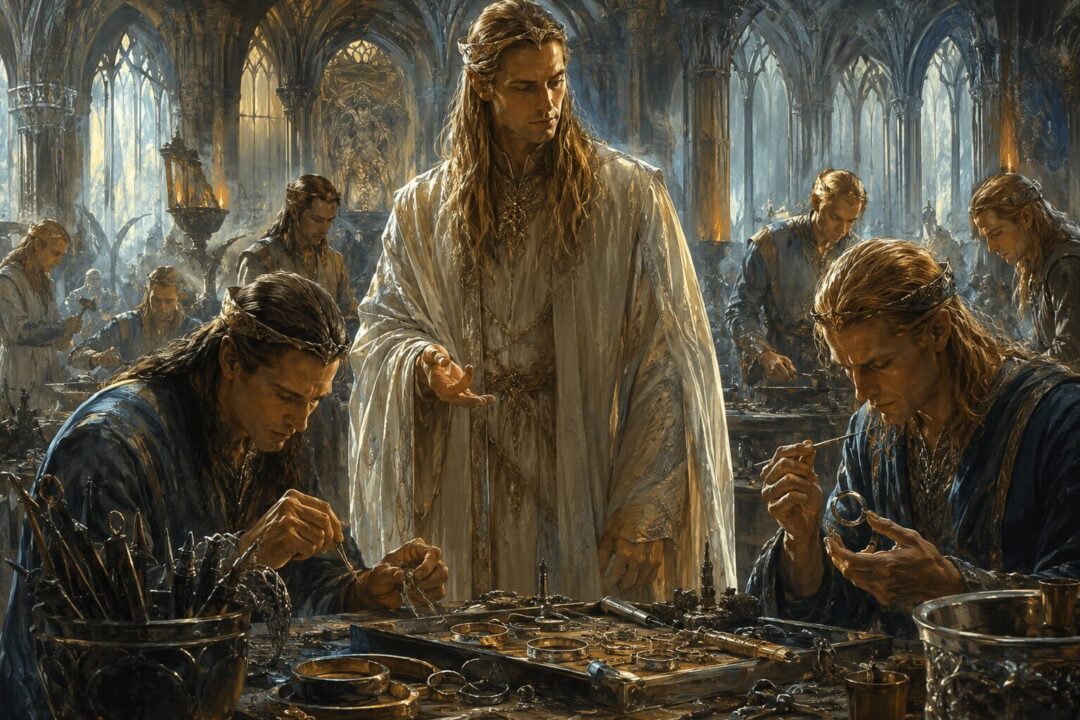
That contrast is one of the deepest ironies in Tolkien's legendarium. Sauron's most dangerous weapon was never brute force. It was trust. His beautiful appearance as Annatar, the Lord of Gifts, allowed him to accomplish what armies alone never could: persuading the greatest craftsmen among the Elves to help create the Rings of Power.
The texts present a striking pattern. As Sauron's outward appearance became more appealing, his inner corruption had become more deliberate. By the time he lost the ability to assume a fair form after the Downfall of Númenor, he had already revealed the true direction of his will. His greatest victories had come through persuasion rather than conquest.
The Meaning of a "Fair Form"
Sauron was one of the Maiar, spiritual beings capable of taking physical forms. During the First Age he demonstrated remarkable mastery over changing his appearance, assuming forms including a great wolf, a vampire, and a serpent during the tale of Beren and Lúthien.
This ability was not unique to him among the Ainur, but Sauron displayed exceptional command over it. A physical body was, in a sense, something these spirits could clothe themselves with, though repeated evil deeds gradually affected what forms they could successfully maintain.
Following Morgoth's defeat at the end of the First Age, Sauron briefly approached repentance out of fear before refusing judgment and fleeing into hiding. Later, when he emerged again during the Second Age, he did so not as an obvious tyrant but in a form specifically suited to persuasion.
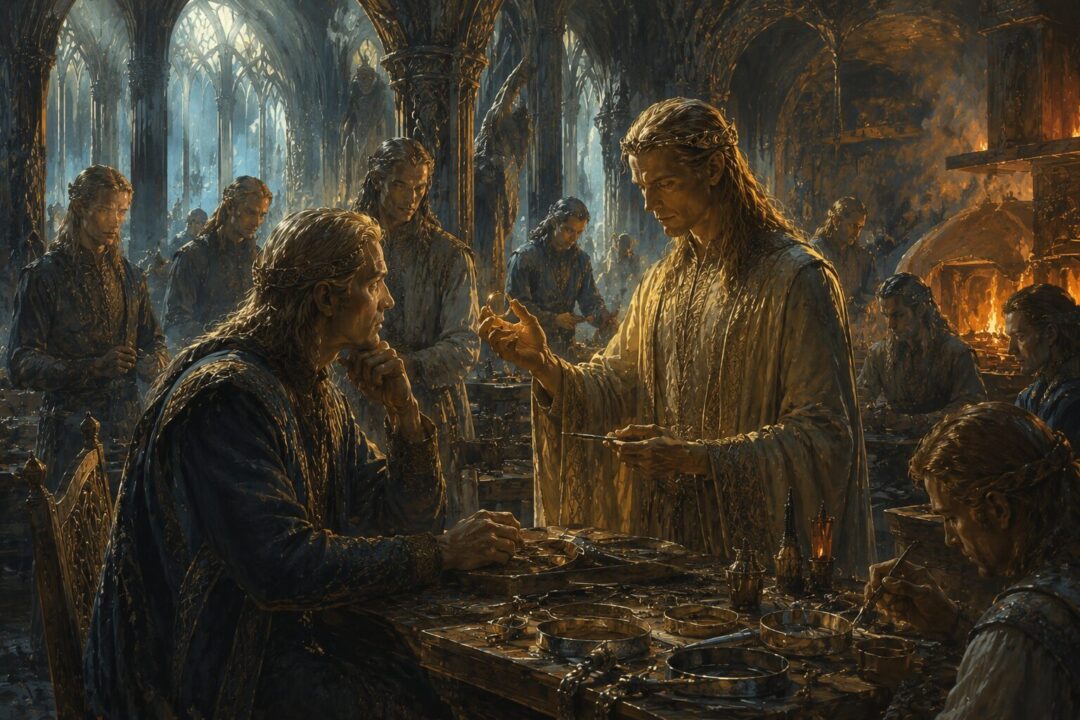
He called himself Annatar, the Lord of Gifts.
The surviving texts never provide a detailed physical description of Annatar. They simply emphasize that he appeared "fair." That word carries more than physical attractiveness. It suggests nobility, trustworthiness, dignity, and an appearance worthy of respect. Tolkien never explicitly describes his facial features, clothing, or precise appearance, leaving readers to understand that his beauty lay as much in the impression he created as in any particular physical detail.
Why Beauty Was the Perfect Weapon
It is tempting to think Sauron disguised himself simply to hide his identity. The texts suggest something more sophisticated.
He wanted the Elves to believe that he was a source of wisdom.
The smiths of Eregion were not fools. They were among the greatest craftsmen remaining in Middle-earth, led by Celebrimbor, himself descended from Fëanor. They desired knowledge, preservation, and the healing of loss rather than domination.
Sauron understood this perfectly.
Instead of demanding obedience, he offered instruction.
Instead of threatening destruction, he promised improvement.
Instead of declaring himself ruler, he presented himself as a generous teacher.
This is why the name "Lord of Gifts" mattered so much. Gifts create obligation. A freely accepted gift is often more powerful than a command. By appearing generous, Sauron encouraged others to lower their guard voluntarily.
The deception succeeded because it aligned with desires the Elves already possessed. They longed to preserve beauty against time and change, and Sauron presented himself as someone who could help them achieve that goal.
The Rings of Power Could Not Have Been Forged by Force
The creation of the Rings of Power illustrates why Sauron's fair appearance was strategically indispensable.
According to the published texts, many of the Elves distrusted him from the beginning. Gil-galad and Elrond did not accept him, even though they could not fully explain their suspicion.
Eregion proved different.
There Sauron found willing listeners, especially among the Gwaith-i-Mírdain, the brotherhood of jewel-smiths. Under his guidance they learned techniques that greatly increased their skill.
The Three Elven Rings were ultimately forged by Celebrimbor without Sauron's direct involvement, yet they were made using knowledge that had developed through his instruction. The Seven and the Nine were much more directly tied to his influence.
Only after this long process did Sauron secretly forge the One Ring in Orodruin, intending to dominate the bearers of all the others.
His greatest military victories came later.
His greatest strategic victory came first.
Without Annatar, there may never have been a system of Rings for the One Ring to dominate.
Why Even Wise People Could Be Deceived
One of Tolkien's recurring themes is that evil often works by twisting genuine virtues.
The Elves' love of craftsmanship was not sinful.
Their desire to preserve beauty was understandable.
Their wish to resist fading reflected the sorrow of a world slowly diminishing.
Sauron exploited these good desires rather than replacing them with openly wicked ones.
This helps explain why deception proved more effective than violence. An enemy at the gate can be resisted. A trusted adviser is far harder to detect.
The texts never suggest that every Elf believed Annatar unquestioningly. Suspicion existed from the beginning in some quarters. Yet enough influential figures accepted him that his larger design became possible.
That distinction matters.
The tragedy was not universal blindness.
It was that enough trust existed for catastrophe to unfold.
The Downfall of Númenor Changed Everything
Centuries later, Sauron employed a remarkably similar strategy in Númenor.
Captured by Ar-Pharazôn and taken to the island kingdom, Sauron initially arrived as a prisoner. Within a surprisingly short time he became the king's chief adviser.
Again, his principal weapon was persuasion.
He encouraged fear of death.
He fostered envy toward the Undying Lands.
He promoted the worship of Morgoth.
He transformed Númenórean society largely through influence rather than force.
The result was one of the greatest disasters in the history of Arda.
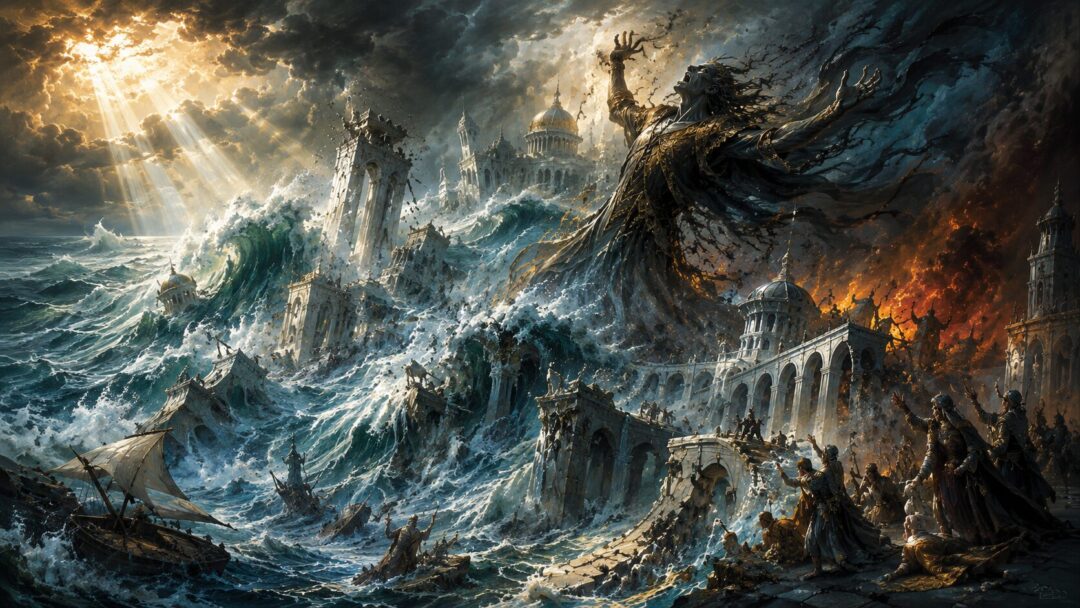
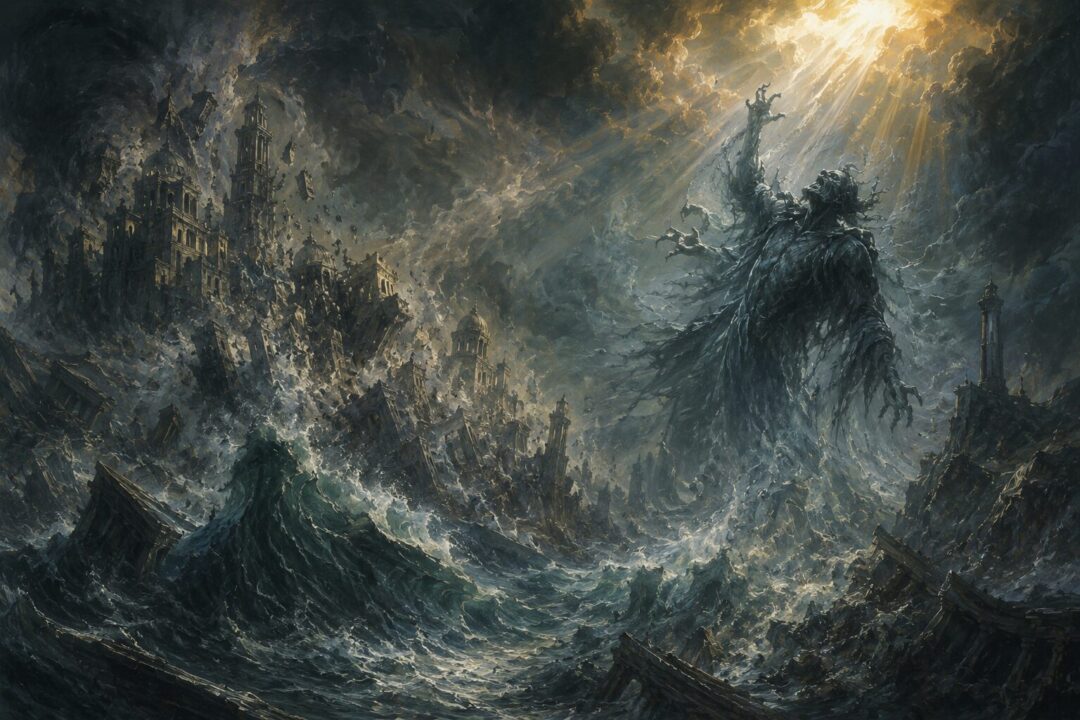
When Númenor was destroyed, Sauron's physical body perished in the catastrophe. His spirit returned to Middle-earth, but the texts state that he could never again appear fair to Men. From that point onward, his visible form reflected his corruption rather than concealing it.
Why Could He Never Be Fair Again?
The published works clearly state the result: Sauron permanently lost the ability to take a fair form after the Downfall of Númenor.
The reason is less explicitly explained.
One reading, supported by later writings and consistent with the broader mythology, is that repeated acts of evil increasingly bound powerful spirits to the forms they created. Great expenditure of native power and repeated self-corruption reduced their flexibility. Sauron's destruction in Númenor marked a decisive point from which his inner corruption could no longer be hidden behind an attractive exterior.
It is important to distinguish between what the texts state and what readers infer.
The canon firmly says he never again appeared fair.
The precise metaphysical mechanism is not fully explained in the primary narratives, so any explanation beyond that should be treated as interpretation rather than explicit doctrine.
A Dark Lord Who Could No Longer Pretend
The Sauron of the Third Age inspires fear in entirely different ways.
He still manipulates.
He still lies.
He still corrupts.
But his methods increasingly rely upon terror, military domination, and overwhelming displays of power.
His ambassadors issue threats.
His armies devastate kingdoms.
His servants inspire dread.
The beautiful teacher has become an unmistakable tyrant.
That transformation is not merely physical.
It mirrors the narrowing of Sauron's own imagination. Earlier, he could patiently study the hopes of others and exploit them through subtlety. Later, although still capable of strategy, his rule depended much more openly upon coercion.
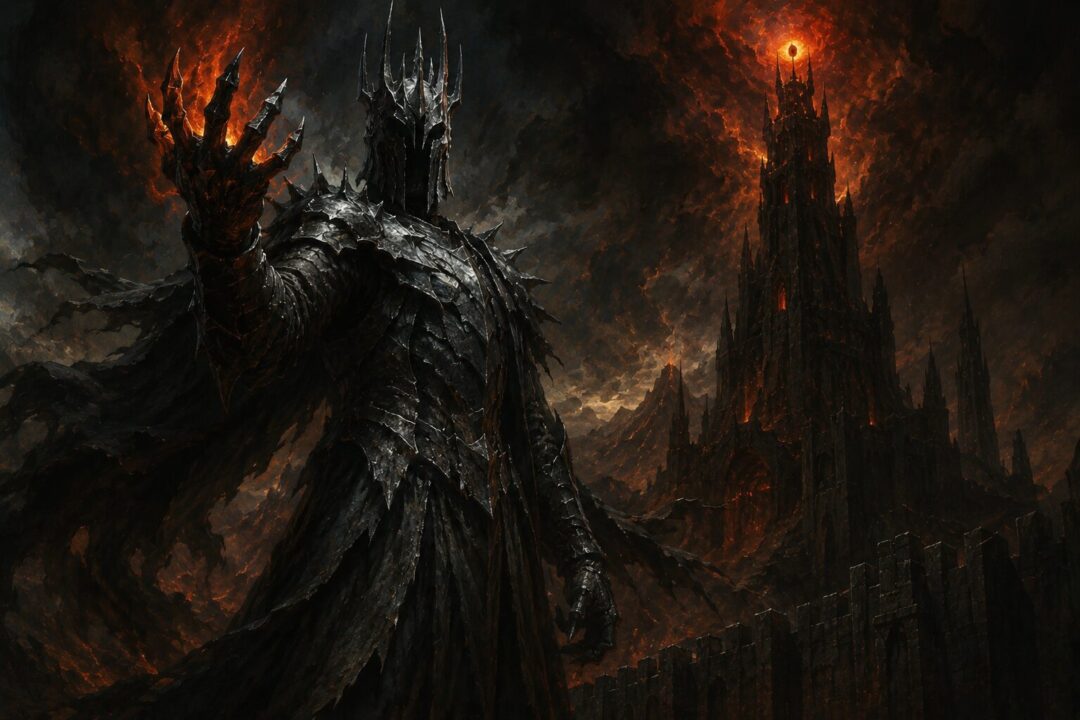
Even his symbols changed. Rather than appearing personally among Elves as a wise instructor, he became known primarily through the Lidless Eye, an image of relentless surveillance and domination.
The Tragic Irony of Fairness
Perhaps the most unsettling lesson is that Sauron's fair appearance was never evidence of goodness.
Beauty and moral goodness are not identical in Tolkien's world.
Physical splendor can reflect inner nobility, but it can also be imitated for deceptive purposes.
Annatar demonstrates that evil sometimes succeeds precisely because it resembles virtue closely enough to gain confidence before revealing its true purpose.
The opposite lesson appears elsewhere in the legendarium. Characters who seem humble, weathered, or physically unimpressive—such as Gandalf in his grey robes, Aragorn as the Ranger Strider, or Frodo carrying the Ring—often possess extraordinary moral strength hidden beneath ordinary appearances.
Sauron reverses that pattern.
He looks most trustworthy at the very moment he is preparing one of the greatest betrayals in the history of Middle-earth.
That is why his fair form remains so significant. It was not simply another disguise available to a shapeshifter. It embodied the central method by which he sought dominion: persuading others to surrender their judgment willingly.
Once that mask was lost forever in the Downfall of Númenor, Middle-earth faced a different kind of Dark Lord—one still immensely dangerous, but no longer capable of hiding what he had become.
Sources & Notes
- Tolkien Gateway, "Annatar" — https://tolkiengateway.net/wiki/Annatar
- Tolkien Gateway, "Sauron" — https://tolkiengateway.net/wiki/Sauron
- Tolkien Gateway, "Rings of Power" — https://tolkiengateway.net/wiki/Rings_of_Power
Sources added for article-specific Tolkien reference context.