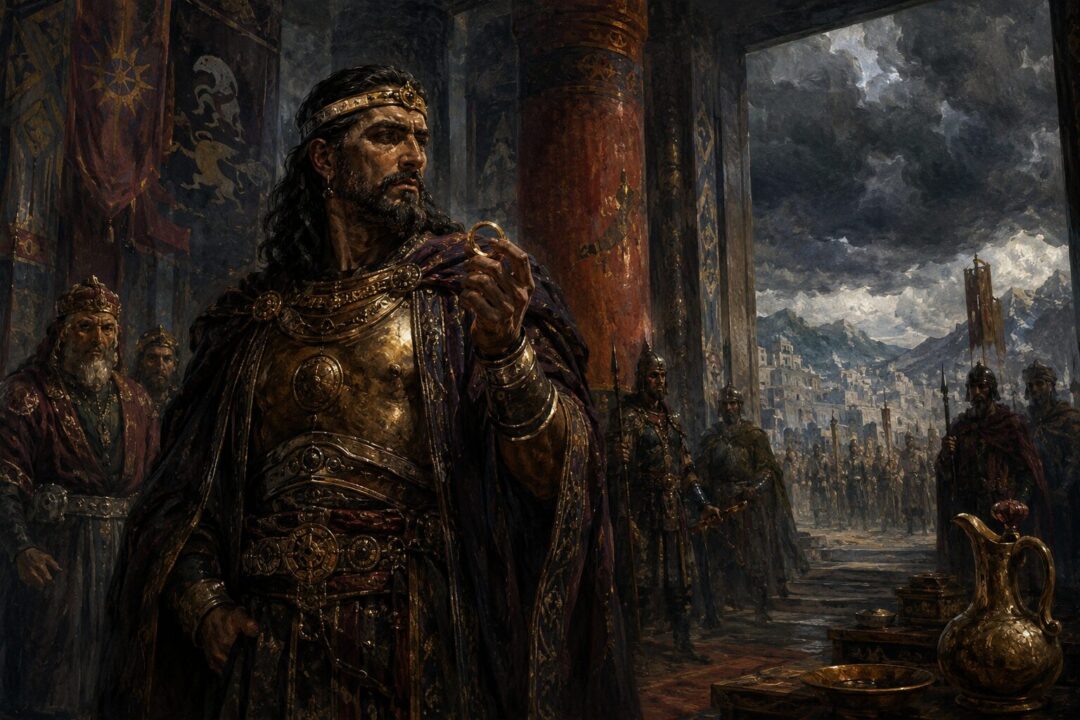
Khamûl is easy to overlook.
When readers think of the Nazgûl, they usually picture the Witch-king of Angmar: the Lord of the Nazgûl, destroyer of kingdoms, and the dark captain who rode against Minas Tirith. Yet among the Nine Ringwraiths, there is another figure who emerges from the shadows often enough that we can begin to understand him as an individual. His name is Khamûl, and remarkably, he is the Nazgûl Tolkien allows us to see more clearly than any of the others besides their chief.
That alone makes him fascinating. The Nazgûl are creatures of mystery. Their former names are almost entirely forgotten. Their mortal lives have vanished behind centuries of servitude. They exist more as manifestations of fear than as recognizable people. Khamûl is different. We know his name. We know his origins. We know some of his duties. We even glimpse something of his limitations.
The result is a portrait of corruption that feels unusually personal.
The Shadow from the East
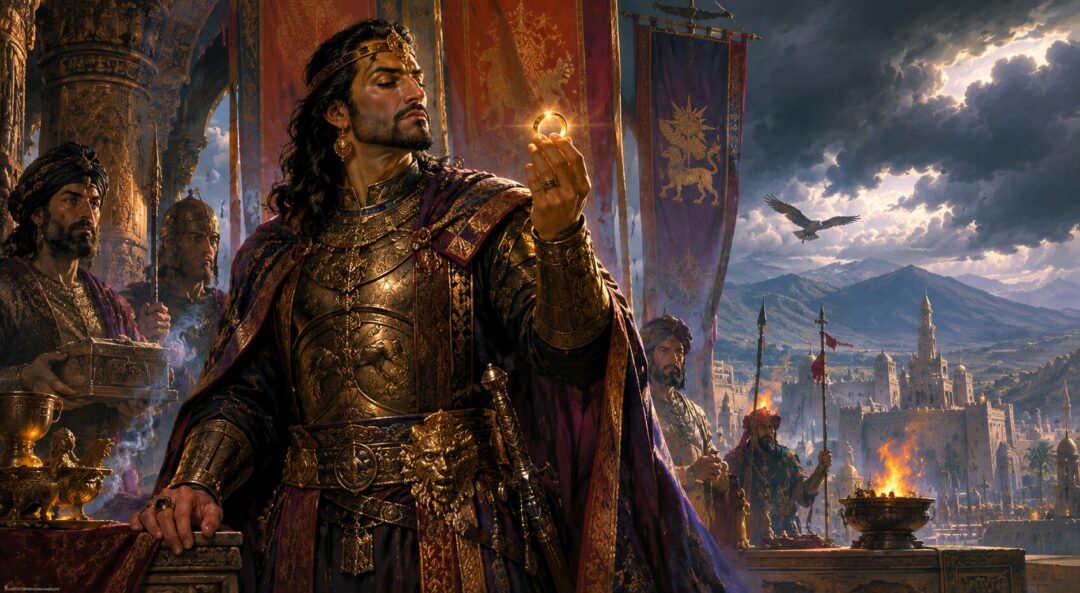
Khamûl was one of the Nine Men who received Rings of Power from Sauron.
Unlike the Witch-king, whose mortal identity remains uncertain, Khamûl is explicitly associated with the East. Tolkien's notes identify him as an Easterling who became one of the Ringwraiths. This seemingly small detail carries enormous significance.
Most of the major narratives of The Lord of the Rings are told from a western perspective. Gondor, Arnor, Rohan, the Shire, Rivendell, and the Grey Havens all belong to the western lands of Middle-earth. The peoples of the East are more distant, often appearing only briefly in the story.
Yet Khamûl stands as evidence that Sauron's reach extended far beyond the lands readers know best.
Before becoming a Ringwraith, he was presumably a powerful mortal ruler or lord among eastern peoples. The Nine Rings were not distributed randomly. They were given to men of influence, ambition, and status. Like the other future Nazgûl, Khamûl would have accepted power that seemed beneficial before it became a prison.
His story follows the central pattern behind all the Ringwraiths. Mortal success became dependence. Dependence became domination. Eventually the man disappeared entirely.
What remained was a servant.
The Only Named Nazgûl Besides the Witch-king
One reason Khamûl stands out is simply because Tolkien names him.
This may sound insignificant, but among the Nine it is extraordinary.
The Witch-king possesses a title rather than a personal name, yet he dominates much of the recorded history of the Third Age. The other Ringwraiths remain almost completely anonymous. Their identities are buried beneath centuries of shadow.
Khamûl breaks that pattern.
The existence of a name encourages readers to think about him differently. He ceases to be merely one of a faceless group. He becomes an individual who once had a homeland, loyalties, ambitions, and perhaps even dreams before Sauron's gift destroyed them.
Tolkien never tells us those details directly. We do not know Khamûl's mortal biography. But the fact that his name survives at all creates a rare connection between the Ringwraith and the man he once was.
That connection makes his tragedy easier to imagine.
Sauron's Most Important Lieutenant After the Witch-king
Khamûl was not merely one Nazgûl among many.
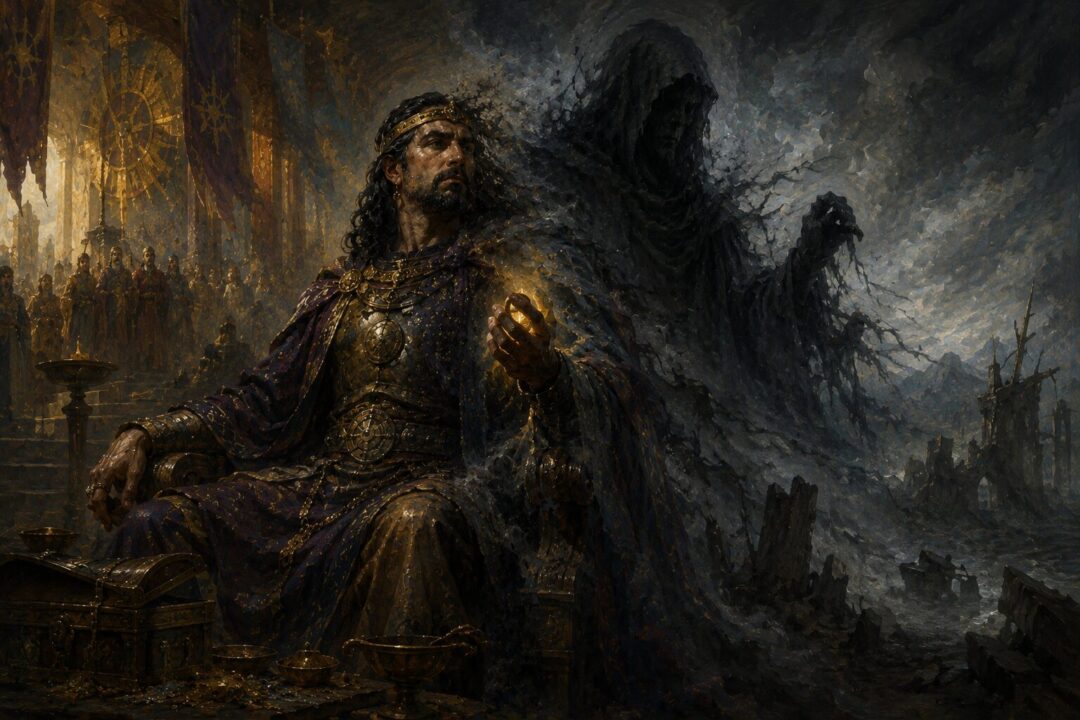
Late writings indicate that after the Witch-king, Khamûl was the greatest of the Ringwraiths. This elevated position helps explain why he appears repeatedly in important moments.
By the end of the Third Age, he had become one of Sauron's most trusted servants. If the Witch-king represented supreme military and political authority among the Nine, Khamûl appears to have functioned as the second-ranking Ringwraith.
This role becomes especially important after the Witch-king's destruction during the Battle of the Pelennor Fields.
The Nazgûl did not collapse into confusion after their lord's death. Someone had to lead the remaining eight. Tolkien's notes indicate that Khamûl assumed that position.
The promotion is revealing.
Sauron entrusted him with authority during the most critical stage of the War of the Ring. Such responsibility suggests centuries of proven loyalty and effectiveness.
Ironically, loyalty is perhaps the wrong word. The Nazgûl are not loyal in the ordinary sense. Their wills have been consumed. Khamûl serves because he can do nothing else.
That may be the darkest aspect of his rise.
The Nazgûl at Dol Guldur
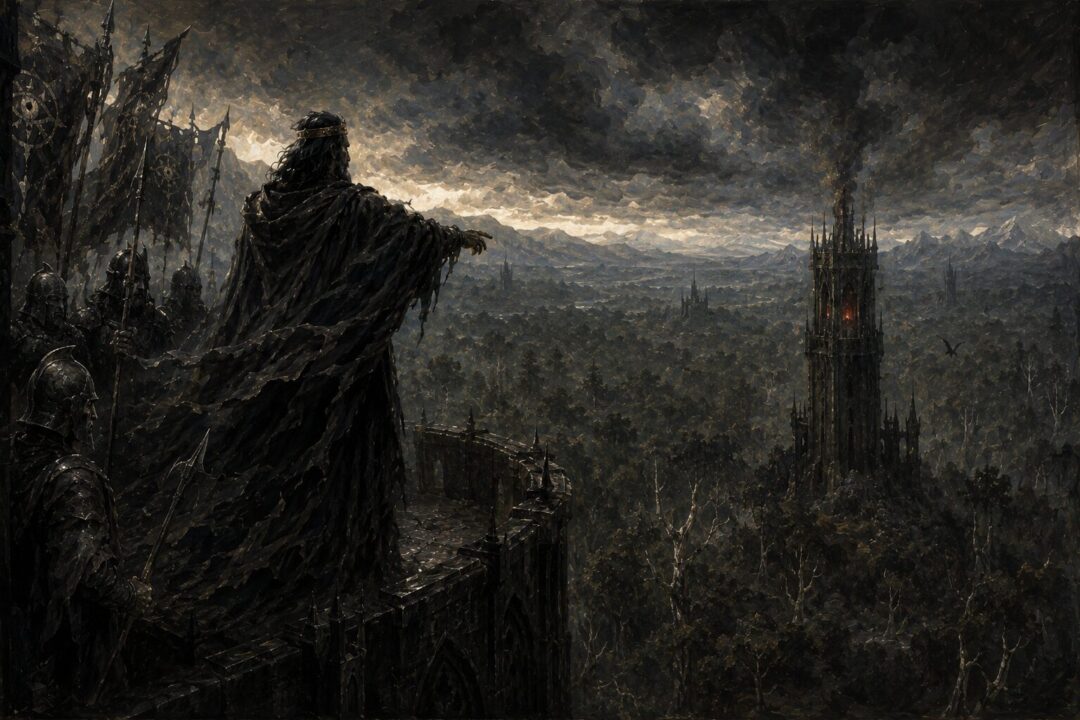
Perhaps Khamûl's most important role was his connection to Dol Guldur.
For centuries, the fortress in southern Mirkwood served as one of Sauron's key strongholds. Before Sauron openly declared himself in Mordor, his power was associated with the mysterious figure known as the Necromancer.
Later, when Sauron returned openly to Mordor, Dol Guldur remained strategically vital.
Khamûl became its commander.
This assignment tells us much about his status. Dol Guldur was not an isolated outpost. It threatened the Woodland Realm, endangered nearby lands, and projected Sauron's influence across a huge region.
A lesser servant would not have been entrusted with such a position.
From Dol Guldur, Khamûl stood at the center of conflicts involving Mirkwood, Lórien, and the northern reaches of Middle-earth. During the War of the Ring, forces from Dol Guldur launched attacks against both Lórien and the Woodland Realm.
While Sauron directed the broader strategy, Khamûl's presence reveals how deeply involved he was in maintaining the Dark Lord's northern front.
The Curious Weakness Tolkien Reveals
The most fascinating thing Tolkien tells us about Khamûl is not his rank.
It is his weakness.
A note concerning the Nazgûl explains that Khamûl possessed a heightened sensitivity to the presence of the One Ring. In a sense, he could detect it more effectively than many others.
At first glance, this sounds like a terrifying advantage.
Yet Tolkien immediately qualifies it.
Khamûl's ability weakened dramatically in daylight. He was especially vulnerable to confusion regarding the Ring's exact location when the sun was shining.
This is an astonishing detail because it gives a specific limitation to a Ringwraith.
The Nazgûl often feel unstoppable. They ride through darkness as supernatural hunters. They inspire terror wherever they appear. Yet here Tolkien allows readers to glimpse an actual flaw.
Khamûl's greatest strength is linked to a corresponding weakness.
The detail also helps illuminate scenes from the hunt for the Ring. The Ringwraiths are dangerous, but they are not omniscient. Their pursuit succeeds through persistence, fear, information, and overwhelming pressure—not because they possess perfect supernatural awareness.
Khamûl's limitation reminds us that evil in Middle-earth is powerful but rarely all-powerful.
The Ringwraith Closest to Frodo
Readers may unknowingly encounter Khamûl during one of the most famous episodes in The Fellowship of the Ring.
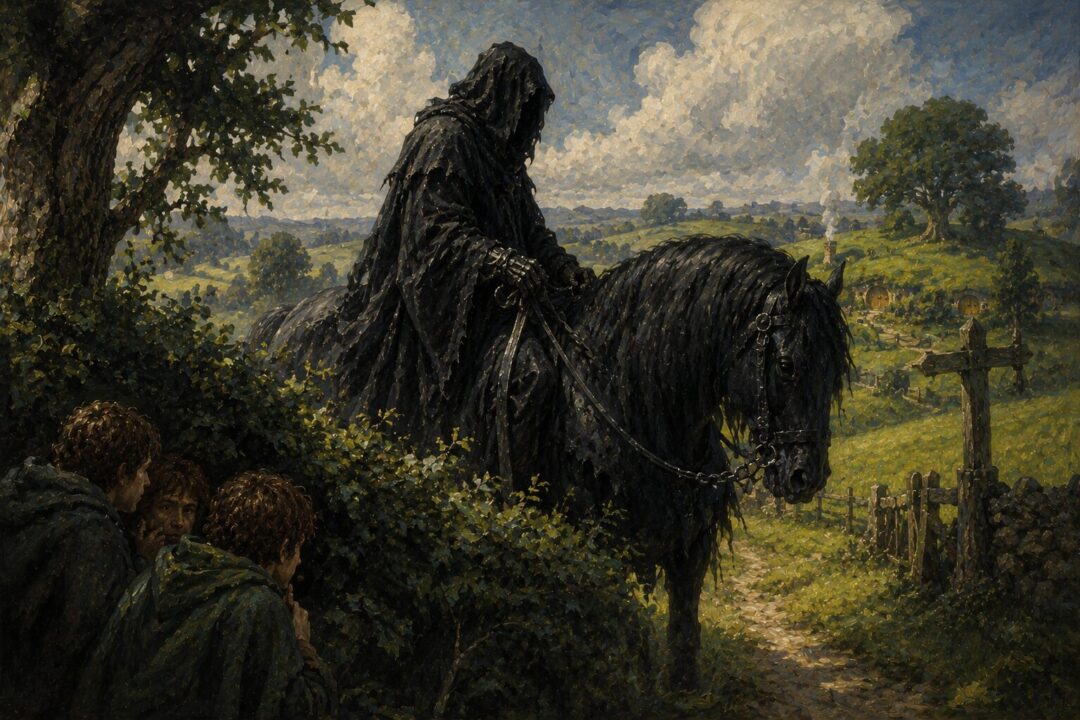
Tolkien's later notes identify Khamûl as the Nazgûl who came closest to capturing Frodo in the Shire.
The encounter is deeply ironic.
At several points the Ringwraiths seem terrifyingly close to success. One Black Rider pauses near the hiding hobbits. Another searches in ways that suggest the hunters are closing in.
Yet again and again something escapes them.
Chance, courage, resistance, and providence all play roles.
Khamûl's involvement makes these moments more meaningful because he is not merely a generic pursuer. He is arguably the most capable Ring-hunter among the Nine after their chief.
The hunter is skilled.
The prey is vulnerable.
And still the Ring slips away.
The tension highlights a recurring theme throughout The Lord of the Rings: power alone cannot guarantee victory.
What Khamûl Reveals About the Nature of the Nazgûl
The greatest value of Khamûl as a character may be what he teaches us about the Ringwraiths themselves.
The Nazgûl are often imagined as monsters. That description is understandable, but it is incomplete.
They were once human beings.
Khamûl's surviving name serves as a reminder of that forgotten reality. Somewhere behind the black robes and spectral terror stood a man who accepted power and lost everything else.
The process happened gradually.
The Nine Rings extended life, increased influence, and brought wealth and authority. None of those promises necessarily appeared evil at first. The corruption worked precisely because it offered desirable things.
Khamûl demonstrates the final outcome.
The man is gone.
The ambition remains.
The hunger remains.
The servitude remains.
But individuality survives only in fragments.
His name feels almost like an archaeological artifact from a vanished life.
The Most Human Ringwraith
The Witch-king overshadows every other Nazgûl in fame and accomplishment. He destroys kingdoms, commands armies, and fulfills ancient prophecies.
Yet Khamûl occupies a unique place in Tolkien's legendarium.
He is the Ringwraith who remains just visible enough to study.
We know where he came from. We know his name. We know his rank. We know where he served. We know something about his strengths and weaknesses. We even know that he stood among the closest pursuers of the Ring itself.
That collection of details is remarkably rich by Nazgûl standards.
The result is that Khamûl becomes more than a shadow. Not entirely a character in the way Aragorn, Gandalf, or Boromir are characters, but more than an anonymous servant of darkness.
He becomes a warning.
The Ringwraiths represent the ultimate consequence of surrendering one's freedom for power. Khamûl allows readers to see that transformation with unusual clarity. His surviving name reminds us that every Nazgûl was once a living person.
And that may be the most unsettling thing about him.
The darkness did not create Khamûl.
It consumed him.
Sources & Notes
- Tolkien Gateway, "Khamûl" — https://tolkiengateway.net/wiki/Kham%C3%BBl
- Tolkien Gateway, "Nazgûl" — https://tolkiengateway.net/wiki/Nazg%C3%BBl
- Tolkien Gateway, "Dol Guldur" — https://tolkiengateway.net/wiki/Dol_Guldur
Sources added for article-specific Tolkien reference context.