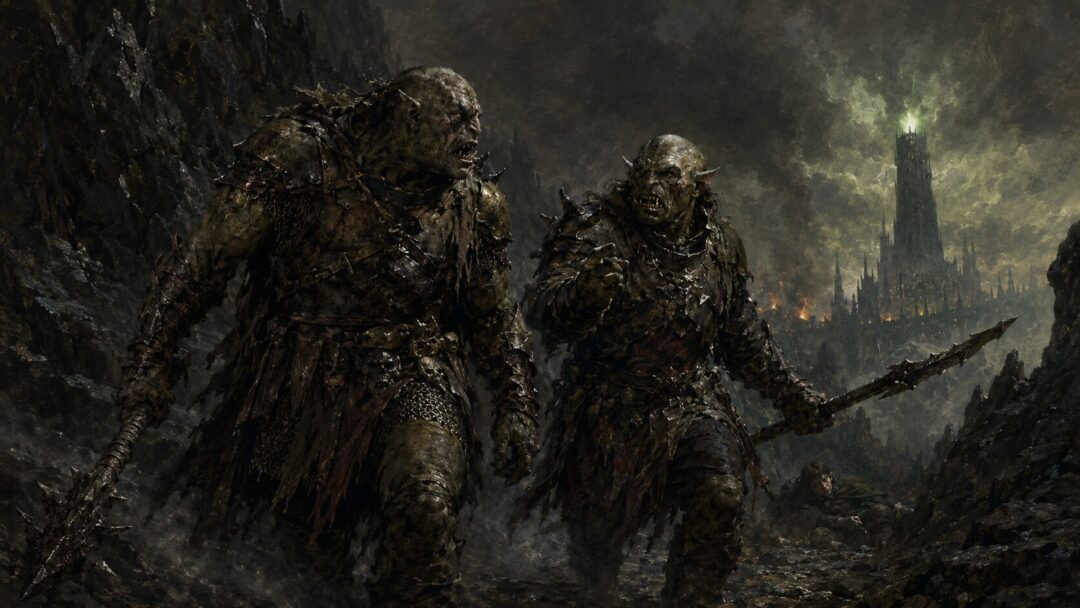
The most revealing conversation in Mordor does not come from Sauron, a Nazgûl, or the Mouth at the Black Gate. It comes from two Orc-captains trudging through the dark after Shelob has struck Frodo down.
Shagrat, captain of the Tower of Cirith Ungol, and Gorbag, an Orc-leader from Minas Morgul, are not grand villains. They are not strategists in the councils of Barad-dûr. They are servants of the Shadow doing grim work at the edge of Mordor. Yet that is exactly why they matter.
For a few pages, Sam hears Mordor speaking when it thinks no enemy can understand. What emerges is not just cruelty, but fear, resentment, bureaucracy, suspicion, greed, and the faintest dream of escape. Shagrat and Gorbag show us Mordor from the inside: not as a single perfect machine, but as a tyranny held together by terror and constantly weakened by the nature of evil itself.
Mordor’s Border Is Watched by Fear, Not Loyalty
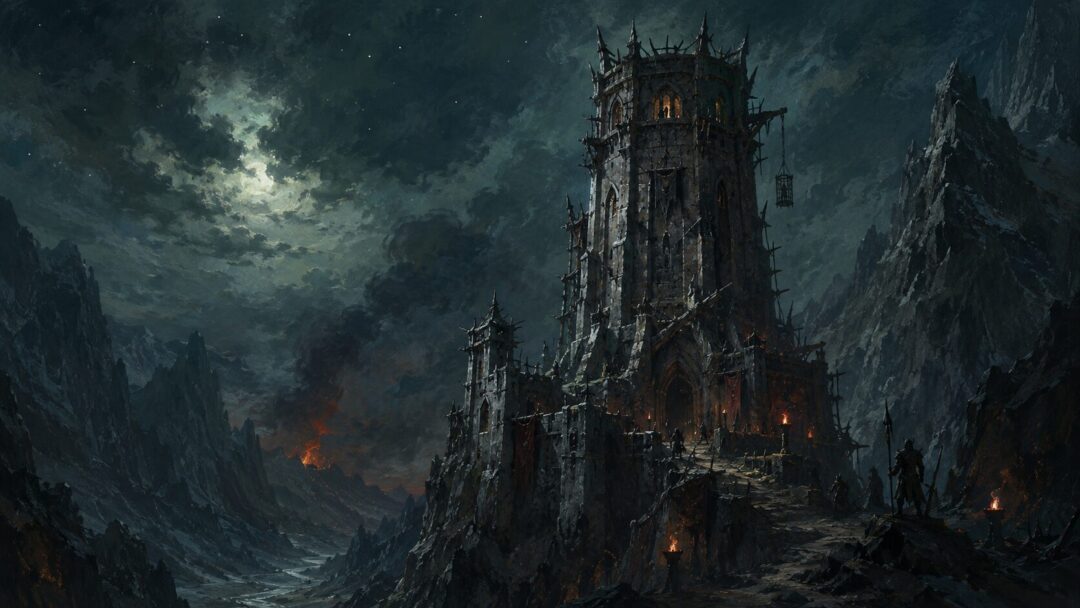
When Frodo is captured after Shelob’s attack, the Orcs who find him do not behave like careless raiders stumbling upon a prize. Shagrat has orders. He knows that any prisoner found in that region must be kept alive, stripped, searched, and reported upward. His instructions are specific enough to show how tightly Mordor’s outer defenses are being watched.
This matters because Frodo and Sam are not simply passing through wilderness. Cirith Ungol is a border zone filled with layered danger: Shelob’s lair, the pass, the tower, Minas Morgul below, and the greater command of Barad-dûr behind them all. Mordor’s frontier is not empty. It is a system.
But it is not a system of devotion.
Shagrat does not obey because he loves Sauron. He obeys because the consequences of failure are terrifying. The Nazgûl are near enough to be part of the pressure. Orders come from “higher up,” and everyone knows that mistakes do not disappear in Mordor. Information travels upward. Punishment travels downward.
That is the first thing Shagrat and Gorbag reveal: Mordor can be frighteningly alert without being unified. Its servants are watched as much as they are watching.
Shagrat Is the Face of Mordor’s Military Discipline
Shagrat is often remembered because he survives the fight in the Tower long enough to carry Frodo’s mithril-shirt and other tokens to Barad-dûr. But before that, he is important for another reason: he understands procedure.
He is not merely a brute. He knows the orders concerning prisoners. He knows the risk of mishandling Frodo’s possessions. He understands that the matter must be reported to the top. He is suspicious of Gorbag, suspicious of his own Orcs, and careful enough to lock Frodo in the upper chamber because he does not trust those around him.
That suspicion is not personal paranoia alone. It is Mordor’s culture.
Sauron’s realm runs on command, surveillance, and fear. In such a realm, every subordinate learns that survival depends on knowing who can betray you, who can report you, and what object might suddenly become important to someone more powerful. Shagrat’s behavior shows the system working: he recognizes that Frodo’s gear is not ordinary loot, and he tries to preserve it for the Dark Tower.
Yet the same behavior also shows the system’s weakness. Shagrat cannot trust his allies enough to work efficiently. His obedience to Sauron makes him dangerous, but his fear of other Orcs makes the tower unstable.
Gorbag Shows the Resentment Beneath the War
Gorbag’s value as a character lies in how ordinary his complaints sound. He is cruel, violent, and fully part of Mordor’s evil order, but his conversation with Shagrat reveals a mind full of grievance.
He dislikes the great bosses. He knows the risks of serving under powers that care nothing for the soldiers beneath them. He can imagine a life away from command, raiding or operating on his own terms. The texts do not make this dream noble. Gorbag is not longing for peace in any moral sense. His imagined freedom is still predatory. But the fact that he dreams of getting away at all is revealing.
Mordor’s servants are not bound together by shared love of Sauron’s cause. Many of them appear to be bound by coercion, fear, appetite, and habit. Gorbag’s private talk suggests that even within Mordor there is resentment toward the hierarchy of the Shadow.
This does not make him sympathetic in a simple way. It makes him useful to the story. Through him, we glimpse the inner contradiction of evil power: it gathers servants who imitate domination, but those servants hate being dominated themselves.
Mordor Is Organized, But Its Servants Are Divided
One of the most important things about Shagrat and Gorbag is that they belong to overlapping but rival commands. Shagrat is associated with the Tower of Cirith Ungol. Gorbag comes from Minas Morgul. Both serve the same larger power, but their groups do not behave like comrades.
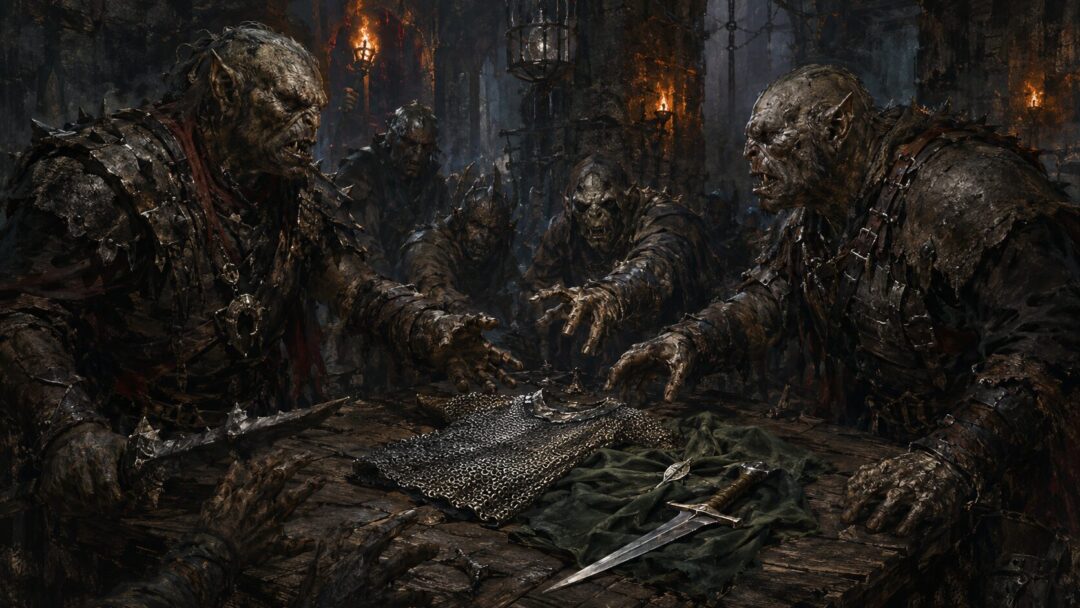
They distrust each other almost immediately. They argue about the prisoner. They argue about loot. Their troops become hostile. When the mithril-shirt appears, greed and rivalry ignite what fear and discipline had temporarily restrained.
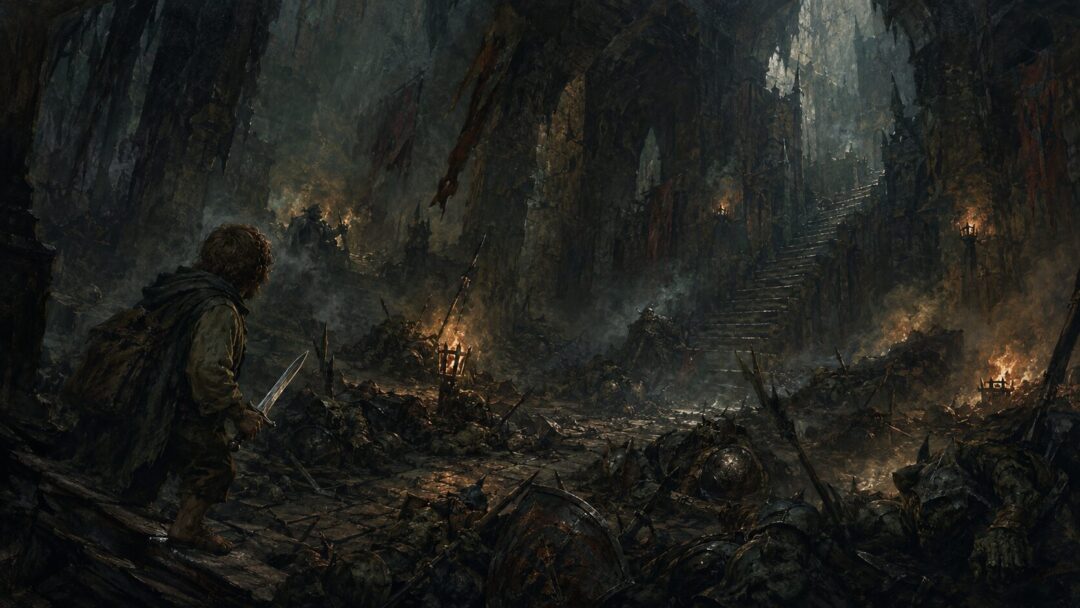
This is not a minor brawl. By the time Sam reaches the Tower in The Return of the King, the Orcs have largely destroyed one another. Frodo’s rescue becomes possible not because Sam defeats a fully functioning garrison, but because Mordor’s servants have already turned on each other.
That is the hidden mercy inside the horror. The Shadow nearly succeeds by capturing Frodo, but its own nature undermines the victory. Mordor can build towers, issue orders, and move armies, but it cannot create trust.
The Mithril-Shirt Exposes the Real Religion of Mordor: Possession
Frodo’s mithril-shirt is one of the most revealing objects in this part of the story. To readers, it carries a long memory: Bilbo’s adventure, Thorin’s gift, Frodo’s survival in Moria, and the strange providence by which small things become great. To the Orcs, it is treasure, status, and danger.
Shagrat understands that the shirt and other tokens must go to Barad-dûr. Gorbag sees the value of the prize. The object becomes too powerful for their fragile discipline to contain. The moment treasure appears, the hierarchy of Mordor begins to crack.
This is deeply consistent with the moral pattern of the wider story. Evil in Middle-earth often desires to possess, dominate, and hoard. The Orcs do not need to understand the Ring to be ruled by the same spiritual disease on a smaller scale. They see something precious and immediately begin fighting over who will control it.
The irony is sharp: the mithril-shirt helps save Frodo earlier in the story, then helps expose the rot inside the enemy’s own house. A gift of friendship becomes, in Mordor, a trigger for treachery.
The Tower Itself Is a Symbol of Reversed Purpose
Cirith Ungol is not just a dark Orc-tower. In the history behind the story, it was originally built by Gondor after the War of the Last Alliance to keep watch on Mordor. By the end of the Third Age, that purpose has been reversed. A tower raised to guard against evil has become part of evil’s border system.
That reversal deepens the meaning of Shagrat’s command. He is not merely occupying a fortress. He is living inside a captured intention. The stones around him belong to a world that once tried to contain Mordor, and now Mordor uses them to imprison Frodo.
This is one of the quieter tragedies of the setting: evil does not always create from nothing. Often it corrupts, occupies, twists, and repurposes what others made. Minas Ithil becomes Minas Morgul. Watchfulness becomes oppression. A guard-tower becomes a prison.
Shagrat and Gorbag’s conversation happens inside that larger pattern of decline. They are small figures, but the architecture around them tells the story of ages.
Orcs Are Not Mindless, and That Makes Mordor More Disturbing
Shagrat and Gorbag also complicate a shallow view of Orcs as merely faceless monsters. They think, complain, calculate, remember dangers, interpret orders, and imagine alternatives. Their speech is coarse and brutal, but it is recognizably social.
This does not soften Mordor. It makes it more disturbing.
If the Orcs were mindless, Mordor would be a machine of puppets. Instead, the story shows beings with enough personality to resent authority, enough cunning to scheme, and enough desire to dream of a different arrangement for themselves. Yet those capacities are bent toward cruelty. Their imagined freedom is not healing or repentance; it is a smaller version of the same predatory world.
That is why their scene is so effective. It gives the Enemy’s servants interiority without giving them false innocence. They are not noble victims hidden inside armor. They are morally damaged beings who both suffer under domination and reproduce domination wherever they can.
The Great Eye Cannot Make Its Servants Good
Sauron’s power is immense, but Shagrat and Gorbag reveal a limit. He can command, threaten, organize, and terrify. He can force obedience far enough to move armies and guard borders. But he cannot make his servants loyal in the way free peoples can be loyal.
The Fellowship is fragile too, but its bonds are real: friendship, pity, oaths, love of home, reverence for what is good. Mordor has substitutes for these things: fear of punishment, hunger for reward, hatred of enemies, and fear of superiors. Those substitutes can produce strength for a time, but they cannot produce trust.
So when pressure rises inside the Tower, Mordor’s substitute virtues fail. Discipline becomes suspicion. Rank becomes rivalry. Treasure becomes murder. The whole fortress turns inward.
This is not accidental. It is one of the story’s deepest moral rules. Evil can coordinate, but it struggles to commune. It can gather many wills under one terror, but it cannot heal the war between those wills.
Sam’s Eavesdropping Reveals the Crack in the Shadow
Sam’s role in this revelation is easy to overlook. He is not studying Mordor like a scholar. He is a terrified servant and friend, following the Orcs because Frodo has been taken. Yet because he listens, the reader hears what no council of the Wise could easily hear: the ordinary speech of Mordor’s working evil.
The scene gives Sam knowledge, but it gives the reader something larger. It shows that the Shadow is not smooth on the inside. It is full of cracks. Mordor remains terrifying, but it is not whole.
That matters for the emotional movement of the story. At this point, Frodo seems lost, Sam is alone, and the quest appears almost impossible. Then the enemy begins to reveal its own fracture. Hope does not arrive as a shining army. It arrives as overheard resentment, mistrust, and the fact that evil cannot stop devouring itself.
The Inside of Mordor Is Smaller Than It Looks
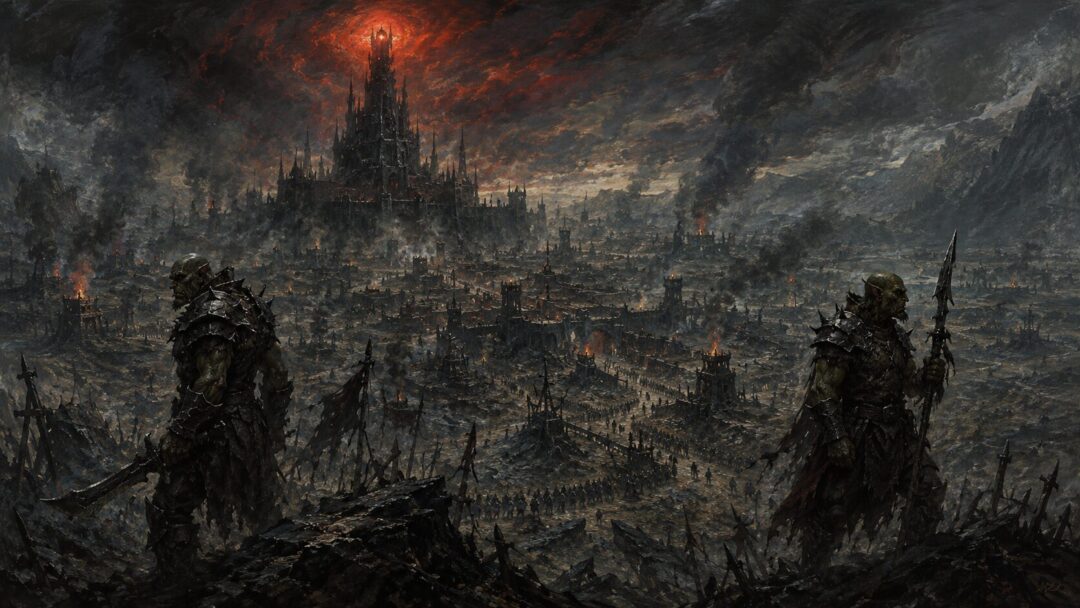
From far away, Mordor looks like overwhelming unity: the Eye, the Dark Tower, the armies, the ash, the iron will pressing outward. From inside, through Shagrat and Gorbag, it looks different. It is still deadly, but it is also petty. Its captains complain. Its soldiers quarrel. Its servants dream of escape. Its garrisons collapse over loot. Its discipline depends on terror because it has nothing better.
That contrast is the point.
Shagrat and Gorbag do not make Mordor less dangerous. They make it more believable. They show how a vast evil empire can function day by day: through fear, orders, watchfulness, and opportunism. But they also show why such an empire is spiritually unstable. It can terrify the world, but it cannot build fellowship. It can occupy towers, but it cannot restore their purpose. It can seize Frodo’s body, but it cannot understand the loyalty that will bring Sam into the Tower after him.
In the end, Shagrat and Gorbag reveal that Mordor’s greatest weakness is not poor strategy or weak soldiers. It is the nature of the Shadow itself. Everyone inside it wants power, but no one can truly trust anyone else with it.
Sources & Notes
- Tolkien Gateway, "Shagrat" — https://tolkiengateway.net/wiki/Shagrat
- Tolkien Gateway, "Gorbag" — https://tolkiengateway.net/wiki/Gorbag
- Tolkien Gateway, "Cirith Ungol" — https://tolkiengateway.net/wiki/Cirith_Ungol
Sources added for article-specific Tolkien reference context.