In the deep histories of Middle-earth, long before the first halls of Khazad-dûm rang with hammer-song, there is a quieter question that lingers beneath stone and saga alike: why do Dwarves endure when others fade, and why does their will seem so unyielding even in the face of ruin?
The answer, as preserved in the oldest traditions of the Dwarves and the writings that touch upon their origin, is not simply cultural. It is rooted in something older than kingdoms and wars—something shaped at their very awakening. The Seven Fathers of the Dwarves, and the mystery of their making, sit at the center of that stubbornness. Not as a myth of pride alone, but as a reflection of design, fate, and resistance against change itself.
The Making of the Dwarves and the First Act of Resistance
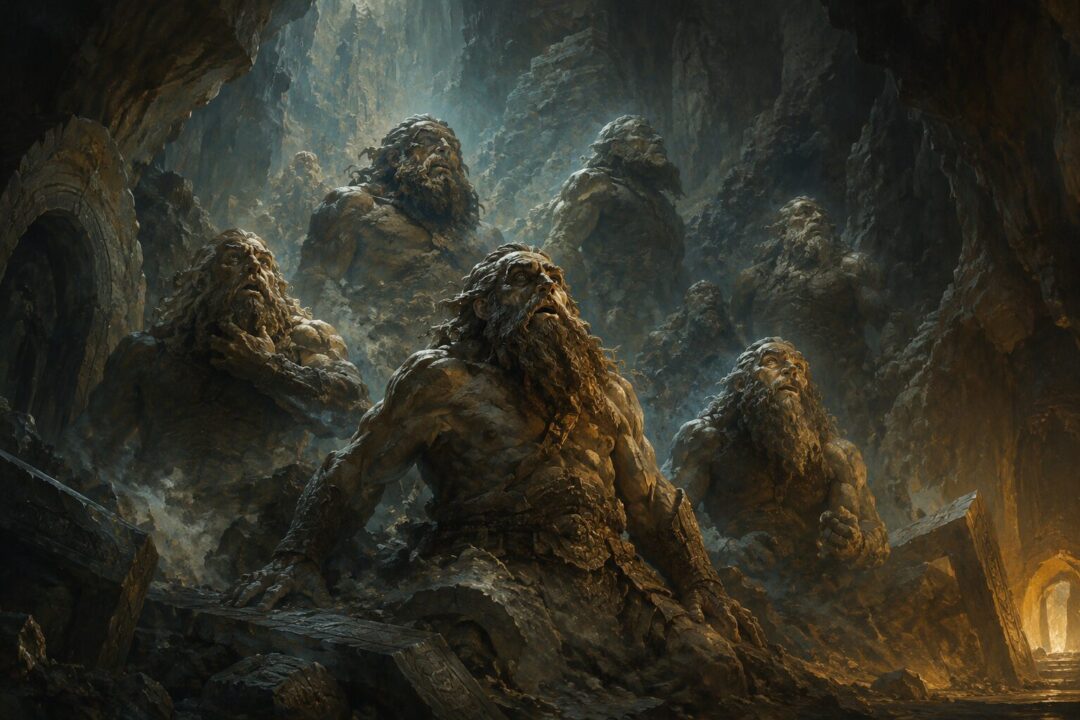
The origin of the Dwarves is unlike that of Elves or Men. According to The Silmarillion, they were first shaped by Aulë, the Vala of craft and earth, who desired companions to teach his lore and smith-craft. In his impatience, he created the Seven Fathers of the Dwarves in secret, fashioning them from stone.
Yet Aulë’s act was not permitted to stand unchallenged. Ilúvatar, the One, confronted him—not in anger alone, but in authority over creation itself. Aulë offered to destroy his work, but Ilúvatar revealed that the Dwarves had already been granted independent life. They were not mere puppets of stone; they possessed wills of their own, separate from Aulë’s intent.
This moment is often overlooked in discussions of Dwarven character, but it is foundational. The Dwarves were born twice: once in craft, and once in divine acceptance. Their stubbornness begins here—not as rebellion, but as the first assertion that they would not be unmade even by their own maker.
The Seven Fathers: Fragmented Memory and Singular Weight
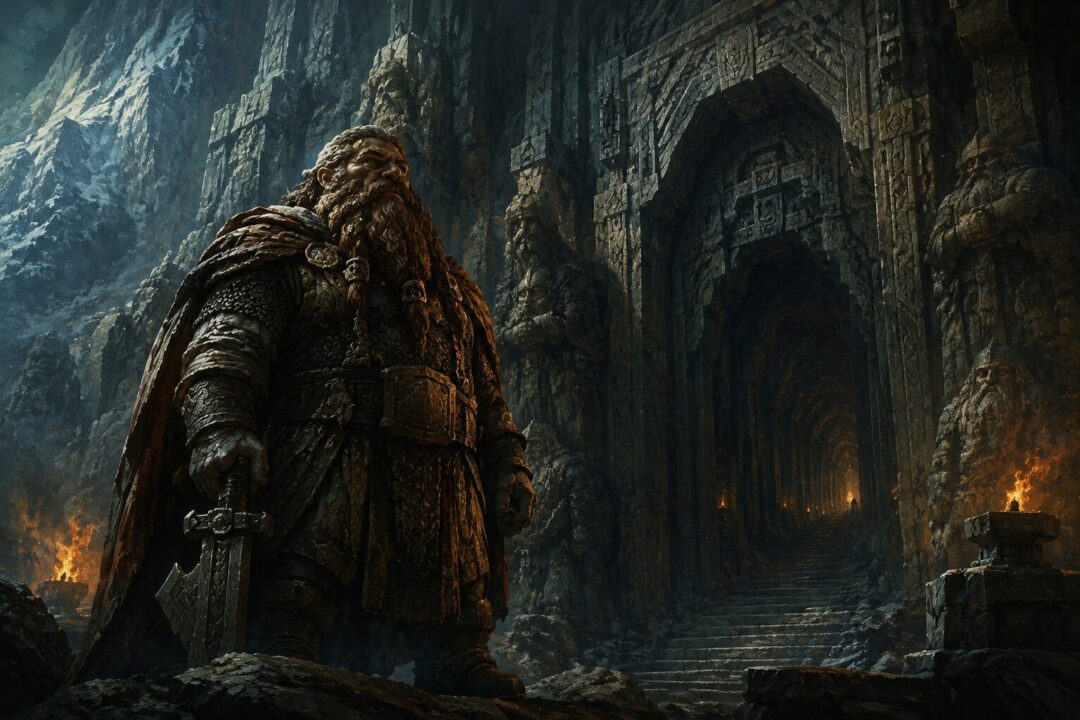
The Seven Fathers of the Dwarves are remembered as the ancestral heads of the seven houses of the Dwarves. Of these, only Durin is clearly named and given sustained narrative presence in Tolkien’s legendarium. The others are preserved more faintly in tradition, their identities overshadowed by the lineages and houses that followed.
Durin stands apart as the eldest and most enduring of the Fathers. From him descends the Longbeards, the most storied of the Dwarven kindreds, whose history is tied to Khazad-dûm, the deepest and most renowned of their mansions.
The remaining Fathers are spoken of collectively in the traditions of the Dwarves, associated with the other great houses. Yet Tolkien’s texts do not preserve their names with the same clarity. This absence is itself meaningful within the mythic structure: what matters is not individual fame, but the enduring division of Dwarven identity into seven rooted lines, each bound to stone, craft, and memory.
The Seven Fathers, therefore, function less as biographical figures and more as archetypal origins—each representing a strain of Dwarven endurance distributed across Middle-earth’s deep places.
Stubbornness as a Condition of Origin
To understand Dwarven stubbornness, one must begin not with behavior, but with metaphysics. The Dwarves were not born from the Music of the Ainur in the same way Elves and Men were. Their origin is indirect, mediated through Aulë’s craft and Ilúvatar’s correction.
This dual authorship creates a profound tension within their nature. From Aulë they inherit love of material form: stone, metal, and the shaping of tangible reality. From Ilúvatar they inherit autonomy: a will that cannot be overridden, not even by their creator.
Stubbornness, then, is not merely temperament. It is structural independence hardened into identity.
Where Elves may diminish with the world’s change and Men may bend toward hope or despair, Dwarves resist alteration. They endure pressure rather than yield to it. In this sense, stubbornness is not a flaw in their design, but the consequence of a will that was explicitly protected from external control.
Durin and the Memory That Does Not Fade
Among the Seven Fathers, Durin occupies a unique position. His line does not merely continue; it returns. The Dwarves of Durin’s Folk believe that Durin is reborn across ages, awakening anew in distant times to lead his people again.
Whether this is literal reincarnation or a mythic way of expressing dynastic continuity is not explicitly clarified in Tolkien’s texts. What is clear, however, is that the Longbeards treat Durin’s legacy as an unbroken presence in their identity.
This belief reinforces a key aspect of Dwarven stubbornness: continuity of memory. For the Dwarves, the past is not gone. It is layered beneath the present like strata in stone. To abandon an old promise, a lost hall, or a forgotten grievance is not simply forgetting—it is an act of self-fracture.
Durin’s enduring presence, whether spiritual or symbolic, becomes a focal point for this refusal to release the past.
Stone, Craft, and the Ethics of Persistence
The Dwarves’ association with stone is often described in poetic terms, but it also shapes their psychology. Stone does not change quickly. It records pressure over time. It yields only after prolonged force, and even then, it does not forget the shape of what pressed against it.
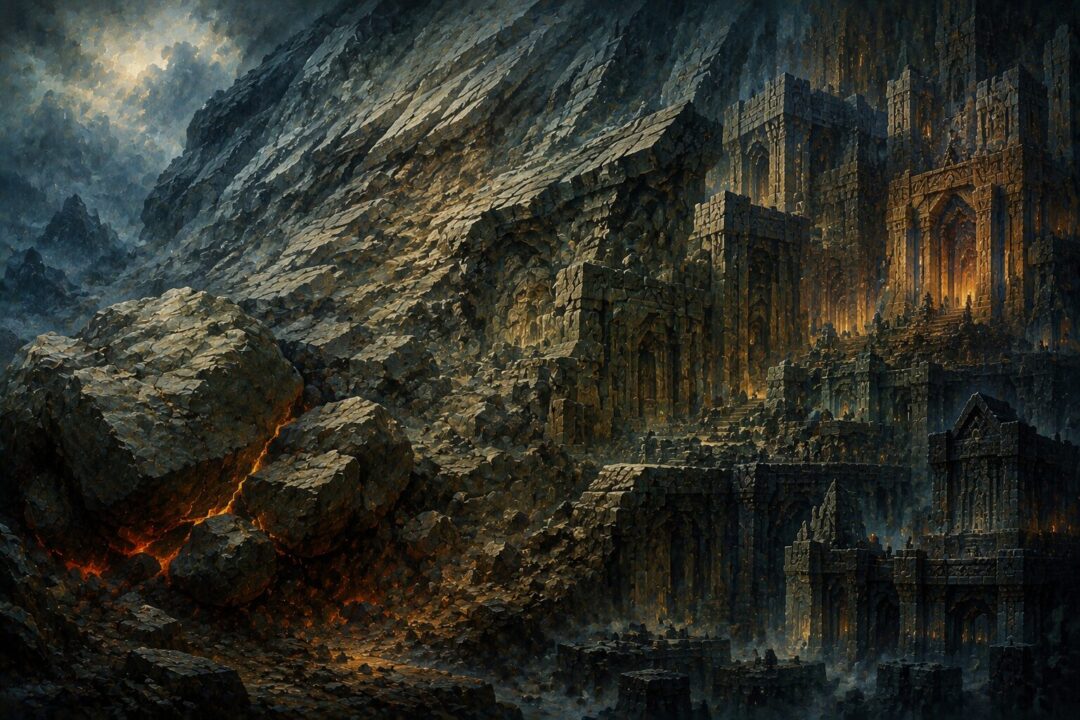
Dwarven craft reflects this logic. Their works are not designed for ephemerality but for permanence: halls carved deep into mountains, axes that endure generations, cities that become indistinguishable from the rock itself.
This devotion to permanence contributes directly to their stubbornness. To a Dwarf, change is not inherently good or bad, but it must justify itself against the weight of what already exists. New paths are measured against old foundations. Abandonment is rarely chosen lightly, because it is understood as the collapse of accumulated effort.
In Khazad-dûm, this principle reached its greatest expression—and its most tragic consequence. The deeper they delved, the more they committed themselves to a singular vision of greatness, until even warning signs were treated as obstacles rather than corrections.
The Shadow of the Deep Places
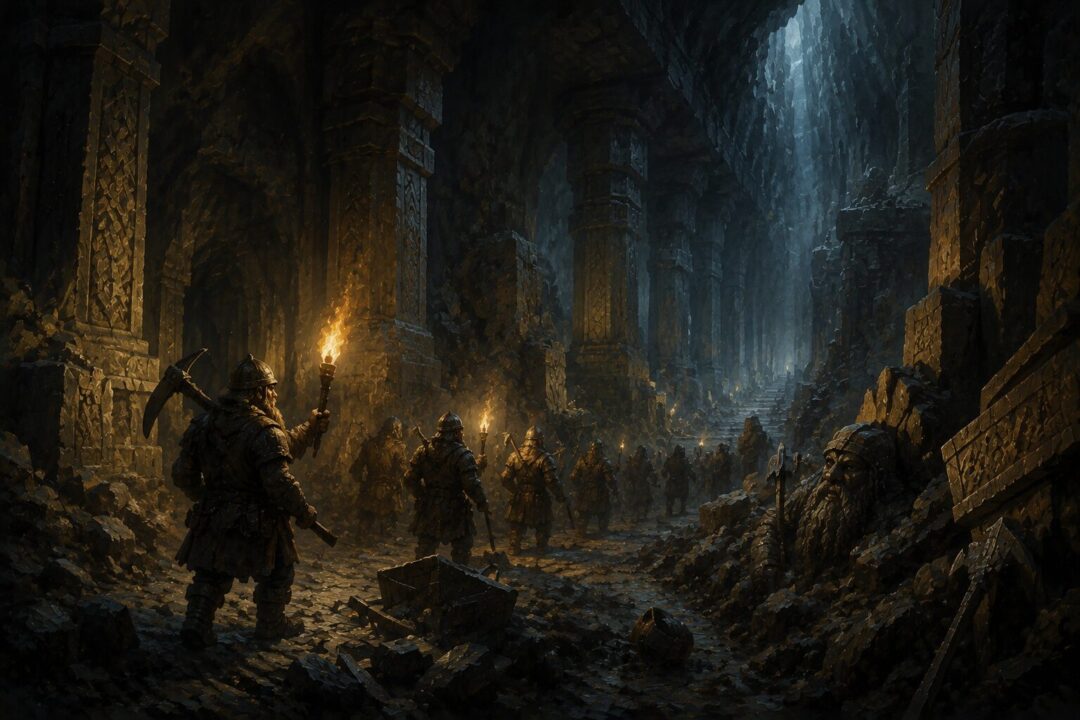
Dwarven stubbornness is most visible in moments of decline. The fall of great Dwarven realms, such as the ruin of Khazad-dûm, reveals a recurring pattern: persistence beyond prudence.
The texts imply that Dwarves are not easily swayed by fear or rumor once their course is set. This resilience is admirable in craft and war, but dangerous when the world itself shifts in unseen ways. In the case of Moria, the awakening of the Balrog is a catastrophic intersection of ancient delving and deeper ancient evil. Yet even here, the Dwarves’ refusal to abandon their works too quickly becomes part of their tragedy.
This is not presented as moral failure alone. Rather, it reflects the cost of a people whose identity is bound to endurance. To leave is to concede defeat not just externally, but internally.
The Sevenfold Pattern of Will
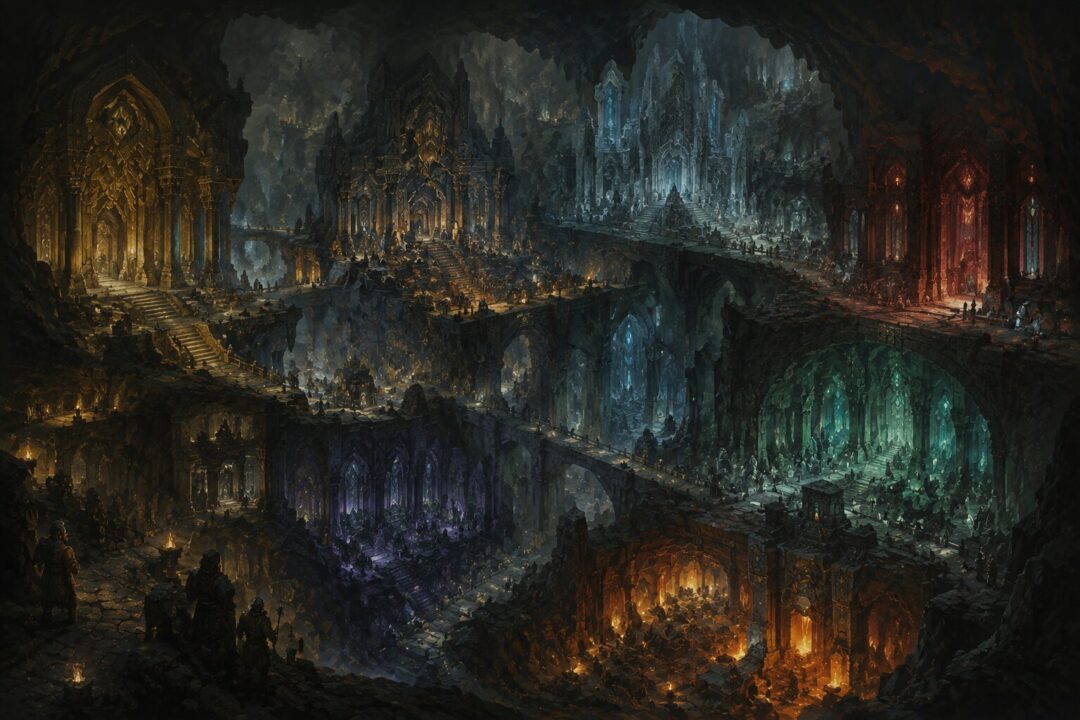
The Seven Fathers, as a collective origin, mirror a structural principle in Dwarven society: division without fragmentation. Seven houses emerge, each distinct in temperament and tradition, yet all sharing the same underlying resistance to dissolution.
This sevenfold structure suggests that stubbornness is not uniform, but varied across lines of descent. Some houses are known for fiercer pride, others for greater secrecy or trade, but all exhibit the same core trait: an unwillingness to yield identity to external forces.
The Fathers, therefore, can be understood as the first expressions of differentiated endurance. Each line of Dwarves carries forward a different way of resisting change, but none abandon resistance itself.
Conclusion: Stubbornness as Survival, and the Cost of Endurance
To call the Dwarves “stubborn” is to name a surface trait. Beneath it lies something far more complex: a people created through an act of independent will, preserved through divine acceptance, and shaped by a world that repeatedly tests the limits of their persistence.
The Seven Fathers of the Dwarves stand at the origin of this condition not as personalities fully known, but as archetypal anchors. From Durin’s enduring legacy to the unnamed forebears of the other houses, they represent the first articulation of a truth that defines their kind: that to be a Dwarf is to endure what others abandon, to remember what others forget, and to build as though time itself were only another material to be worked.
But endurance is not without cost. In Middle-earth, nothing that resists change entirely escapes its consequences. The same stubbornness that preserves the Dwarves also binds them to their deepest losses, ensuring that even their greatest strength remains inseparable from their greatest sorrow.
Sources & Notes
- Tolkien Gateway, “Seven Fathers of the Dwarves” — explains that the Seven Fathers were the first Dwarves, made by Aulë, granted life by Ilúvatar, and ancestral to the Dwarf houses. https://tolkiengateway.net/wiki/Seven_Fathers_of_the_Dwarves
- Tolkien Gateway, “Dwarves” — summarizes Aulë making Dwarves strong to endure Melkor, describing their stone-hard stubbornness, hardiness, long lives, and seven kindreds. https://tolkiengateway.net/wiki/Dwarves
- Tolkien Gateway, “Durin” — covers Durin as eldest of the Fathers and founder of the Longbeards, anchoring the article’s discussion of Durin’s special place among Dwarven traditions. https://tolkiengateway.net/wiki/Durin
- Tolkien Gateway, “Durin’s Folk” — gives the history of the Longbeards and their descent from Durin, including Khazad-dûm and the continuing weight of Durin’s name. https://tolkiengateway.net/wiki/Durin%27s_Folk
Sources cover the Seven Fathers, Aulë and Ilúvatar, Dwarven hardiness, Durin, and the Longbeards.