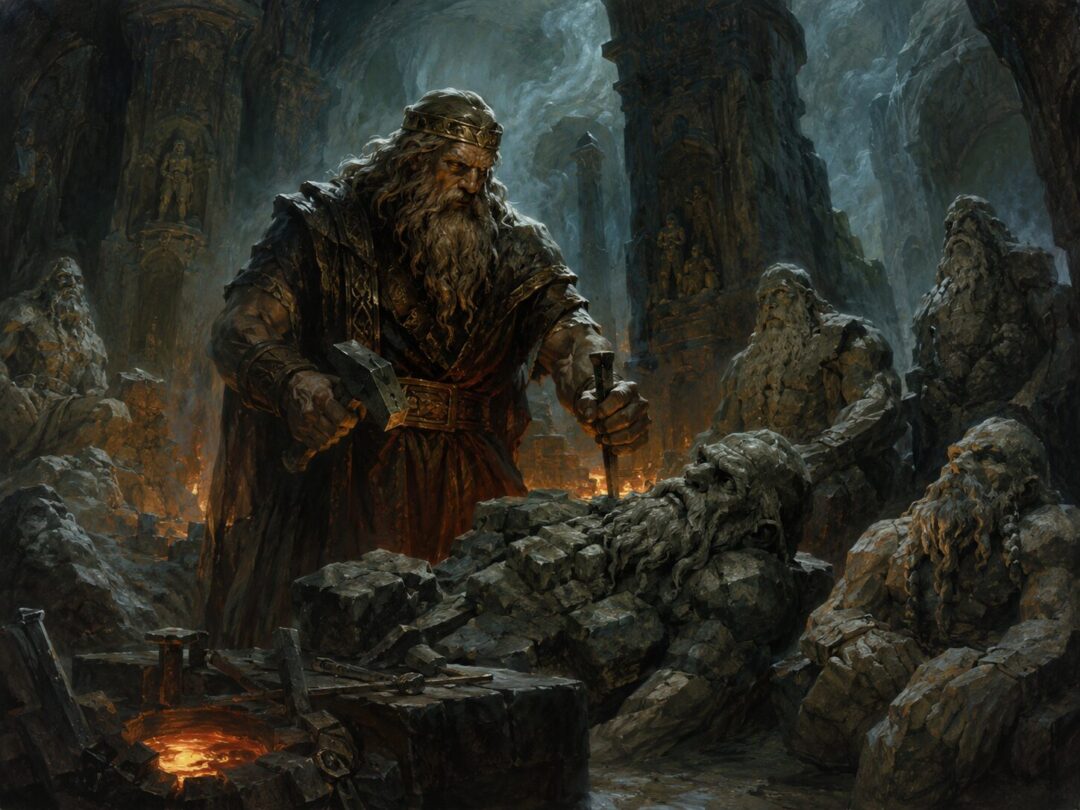
“Seven for the Dwarf-lords in their halls of stone” sounds, at first, like a sentence of doom. In the great Ring-lore of Middle-earth, Rings given by Sauron usually mean loss of freedom, the slow bending of the will, and at last a shadow where a person once stood. Men who received the Nine became Ringwraiths. The Elves perceived Sauron’s design and resisted him by taking off their Rings. But the Dwarves did something stranger: they used the Seven, suffered from them, and yet did not become Sauron’s servants.
That is the overlooked contradiction. Sauron’s craft was not harmless among them. The Seven Rings inflamed greed, wrath, and the hunger for gold. They helped build hoards that later brought ruin, dragons, exile, and sorrow. But they did not produce seven Dwarf-wraiths. They did not give Sauron a hidden army of Dwarf-kings obedient to his thought. The texts say the Dwarves were hard to tame, that they ill endured domination, that their hearts were difficult to fathom, and that they could not be turned into shadows.
The reason goes deeper than ordinary stubbornness. It reaches back before Khazad-dûm, before Erebor, before even the awakening of the Elves beside Cuiviénen. It begins with Aulë the Smith, and with the kind of strength he made because he knew his children would wake in a world already wounded by Melkor.
The Maker Who Did Not Want Slaves
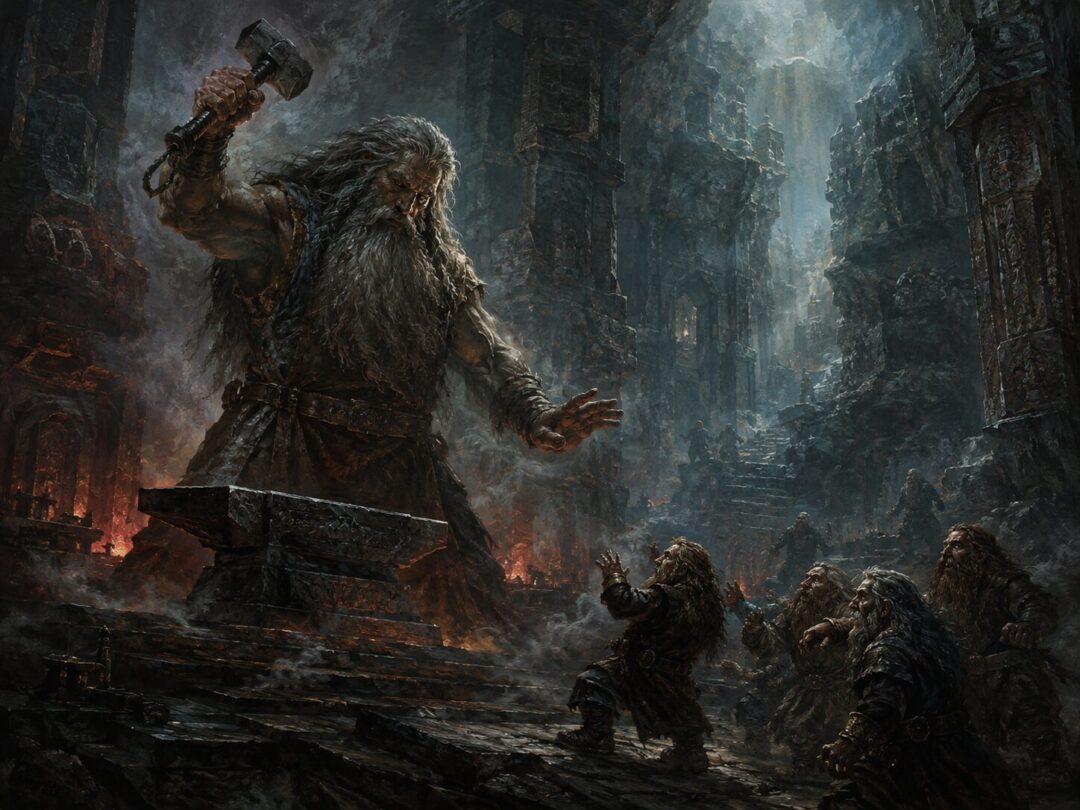
Aulë’s creation of the Dwarves is one of the strangest acts in the older histories of Arda. He did not create them because he wanted dominion over a race. He was impatient for learners, for beings who could understand craft, speech, making, and the beauty of shaped things. But he acted before the Children of Ilúvatar had awakened, and therefore before the appointed order of the world.
The important distinction is this: Aulë could shape bodies and temperaments, but he could not grant true independent life by his own power. When Ilúvatar confronted him, Aulë repented and offered to destroy the Dwarves rather than keep what he had made in disobedience. The moment the Dwarves shrank from the hammer showed that they were no longer mere puppets of Aulë’s will. Ilúvatar had accepted them and given them life beyond their maker’s control.
That matters for the later story of Sauron. The Dwarves were not simply “programmed” by Aulë to resist evil, as if they were enchanted machines. Tolkien’s texts are more subtle. Aulë shaped them for endurance, but their independent life came from Ilúvatar. Their resistance to domination is therefore both crafted and hallowed: it belongs to what Aulë intended for them, but it is not reducible to Aulë’s will.
This is why the contrast with Sauron is so sharp. Aulë made and then surrendered. Sauron made and sought to possess. Aulë’s delight was in the work itself, not in ownership or mastery; reputable lore summaries preserve this distinction from the “Ainulindalë.” Sauron’s Ring-craft was the opposite impulse: craft turned into a net.
Strong to Endure the Days of Melkor
The most direct answer to the topic is that Aulë made the Dwarves strong to endure. They were not designed for an untouched paradise. They were made with the expectation that they would come into a world where Melkor’s power was already at work. That is why their hardiness is not merely physical.
The Dwarves are repeatedly associated with stone, secrecy, tenacity, and endurance. They bear toil, hunger, hurt, long labor, and ancient grievance more stubbornly than other speaking peoples. Their strengths can become virtues: loyalty, craft, courage, patience, refusal to be broken. They can also become dangers: possessiveness, brooding memory, wrath, and fierce enmity.
This duality is essential. Aulë did not build moral perfection into the Dwarves. He built survival. They were made to last under pressure. They were made not to dissolve easily under pain, fear, hunger, or command. And that is exactly the kind of people Sauron found difficult to master.
Sauron’s deepest victories usually came by entering through desire: fear of death, lust for power, pride in wisdom, hunger for order, or the wish to preserve what time would take away. The Dwarves were not immune to desire. Far from it. But their inner life was not easily opened, read, or redirected by another will. The Seven Rings could heat the furnace of their greed, but they could not turn the whole people into tools.
Why the Seven Rings Failed Differently
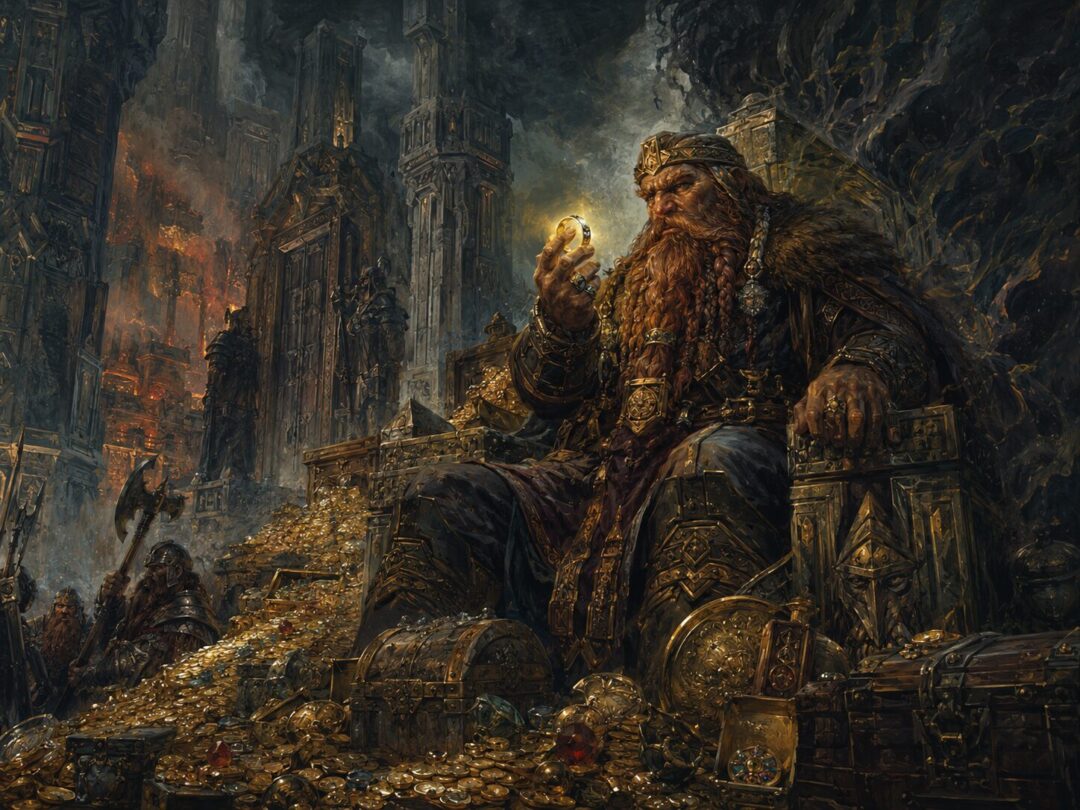
The Seven Rings did not “fail” in the sense of doing nothing. That would be too simple. The texts say they were used for gaining wealth, and that wrath and an overmastering greed for gold were kindled in Dwarven hearts. Evil came of this, and Sauron profited from it.
But Sauron wanted more than indirect damage. The pattern of the Nine shows what total success looked like: Men drawn into the Unseen, fading into wraiths, and becoming servants under his domination. With the Dwarves, the Rings intensified what was already dangerous in them, but they did not dissolve their personhood into Sauron’s command.
This makes the Seven one of the great examples of partial corruption in Middle-earth. The Dwarves were not conquered from within, but they were harmed from within. Their resistance blocked enslavement, not temptation. They could not easily be mastered, but they could still be wounded through gold, inheritance, vengeance, and longing for lost halls.
That distinction saves the lore from turning Dwarves into a simple fantasy race of “incorruptible” beings. They are not incorruptible. They are hard to dominate. They can be greedy, secretive, proud, and disastrous in anger. Yet they do not readily surrender their wills to another. What Sauron could inflame, he could not easily command.
The Hidden Heart Sauron Could Not Read
The phrase about the thoughts of Dwarven hearts being hard to fathom is one of the most revealing details in the Ring-lore. Sauron’s power is often linked not merely to brute force but to perception, pressure, and domination of will. The One Ring was made to control the other Rings and their bearers, and Sauron’s designs depended on reaching inward.
The Dwarves were bad material for that kind of conquest. Their hearts were closed like stone chambers. Their languages, names, and inner customs were famously guarded. Even their true names were not lightly revealed to outsiders. This secrecy is not identical with virtue, but in a world of spiritual surveillance it becomes a defense.
A Dwarf could be tempted by treasure. A Dwarf-king could be consumed by the desire to recover what was lost. A Dwarf-house could fall into ruin through pride or grievance. But the door into the will was not easily opened from outside. Sauron could stir the fire; he could not always hold the tongs.
There is a tragic irony here. The same quality that protected the Dwarves from enslavement could isolate them from counsel. Stubbornness can preserve freedom, but it can also preserve folly. The Dwarves’ resistance to domination did not guarantee wisdom. It meant that when they fell, they often fell in their own shape, not Sauron’s.
Aulë, Sauron, and the Perverted Craft
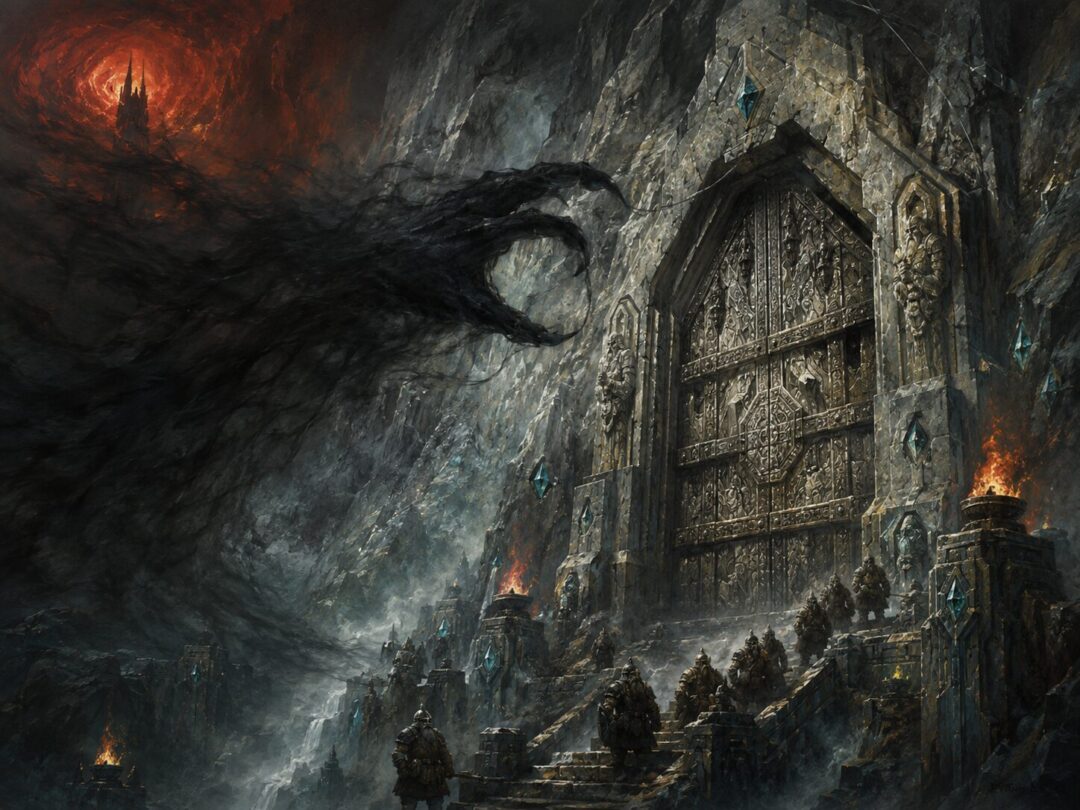
The relationship between Aulë and Sauron adds another layer. Before becoming Sauron, Mairon was associated with Aulë. Both are linked with making, order, skill, and the shaping of matter. But their moral directions diverge completely. Aulë submits his work; Sauron seeks to bind others through his work. Aulë repairs what Melkor mars; Sauron inherits the impulse to dominate and systematize evil.
That makes the Dwarves a kind of rebuke to Sauron’s philosophy of craft. They are made beings who cannot be reduced to possessions. Their maker himself learned that lesson when Ilúvatar accepted them. Sauron, by contrast, never learns it. To him, a crafted thing is valuable because it can become an instrument of control.
The Seven Rings were therefore not merely magical jewelry placed on an unfortunate people. They were a test of two visions of making. Aulë’s making produced a people who were hard, enduring, and inwardly guarded. Sauron’s making tried to turn desire into chains. The result was catastrophe, but not the catastrophe Sauron intended.
The Last Ring and the Limits of Resistance
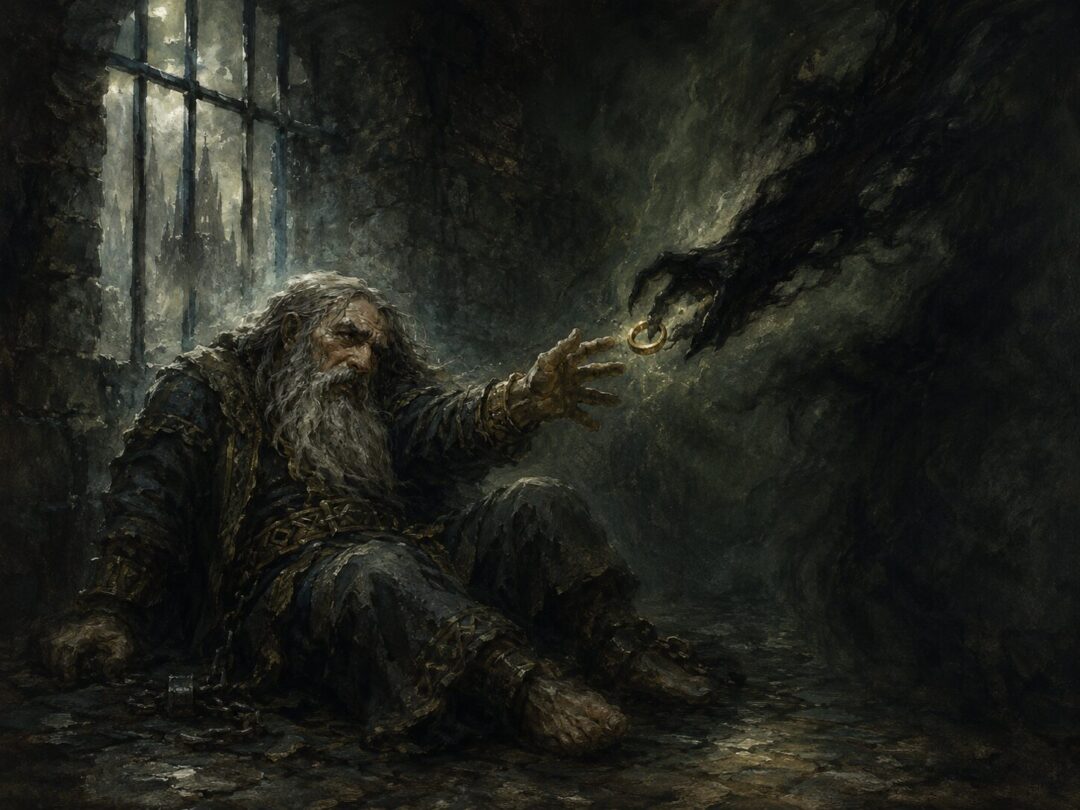
The fate of Thráin II shows the limit of Dwarven resistance. The last of the Seven held by Durin’s line was eventually taken from him in Dol Guldur. The sources connect Thráin’s capture with Sauron’s recovery of the Ring, and the wider history places that loss among the long tragedies that preceded the Quest of Erebor.
This is important because it prevents a false reading. Dwarves were not magically safe from Sauron. They could be hunted, imprisoned, tortured, deceived, impoverished, and bereaved. Their kingdoms could fall. Their treasures could draw dragons. Their Rings could be taken.
What Sauron could not easily do was turn them into obedient shadows. He could break bodies and steal Rings. He could profit from greed. He could use dragons, war, fear, and exile. But the deep domination achieved over the Nazgûl did not repeat itself in the Dwarf-lords.
That makes Dwarven endurance both heroic and sorrowful. It saves their wills, but not their homes. It guards their hearts, but not always their halls. It resists the Shadow, but it does not erase the cost of living in a world where the Shadow has many ways to wound.
The Strength That Was Also a Burden
Aulë built into the Dwarves a resistance that Sauron could not easily master: endurance, hardness of will, secrecy of heart, and a deep refusal to be ruled by another. But the story is not simply “Aulë made them strong, so Sauron failed.”
The stronger reading is more tragic. Aulë made them for a damaged world. Ilúvatar gave them independent life. Their nature helped them withstand domination, yet that same nature could bend toward possessiveness and wrath. The Seven Rings did not enslave them, but they magnified their hungers. Sauron failed to make Dwarf-wraiths, but he still gained evil from Dwarven suffering.
In Middle-earth, resistance is rarely clean. Frodo resists and is wounded. Boromir falls and is redeemed. Galadriel refuses the Ring and diminishes. The Dwarves resist domination, yet their treasure becomes a battlefield. Their strength is real, but it is not painless.
That is what Aulë built: not immunity, not innocence, not easy holiness, but a people whose wills were stone-deep. Sauron could heat that stone. He could crack kingdoms built from it. He could bury it under greed, dragon-fire, and exile. But he could not easily make it kneel.
Sources & Notes
- Tolkien Gateway, “Dwarves” — summarizes Aulë making the Dwarves strong to endure Melkor, their stone-hard stubbornness, and their resistance to domination by the Seven Rings. https://tolkiengateway.net/wiki/Dwarves
- Tolkien Gateway, “Rings of Power” — contrasts the Nine with the Seven and notes that Dwarves could hardly be dominated, were hard to read, and could not be turned into wraiths. https://tolkiengateway.net/wiki/Rings_of_Power
- Tolkien Gateway, “Seven Rings” — covers Sauron’s distribution/recovery of the Seven and the Dwarven tradition that Durin III received his Ring from the Elves, useful context for why the Seven harmed Dwarves differently. https://tolkiengateway.net/wiki/Seven_Rings
- Tolkien Gateway, “Of Aulë and Yavanna” — outlines the Silmarillion chapter in which Aulë creates the Dwarves, repents, and Ilúvatar grants them independent life. https://tolkiengateway.net/wiki/Of_Aul%C3%AB_and_Yavanna
Sources focus on Aulë’s making of the Dwarves, their deliberately hardened endurance, and the Seven Rings’ limited dominion over Dwarven bearers.