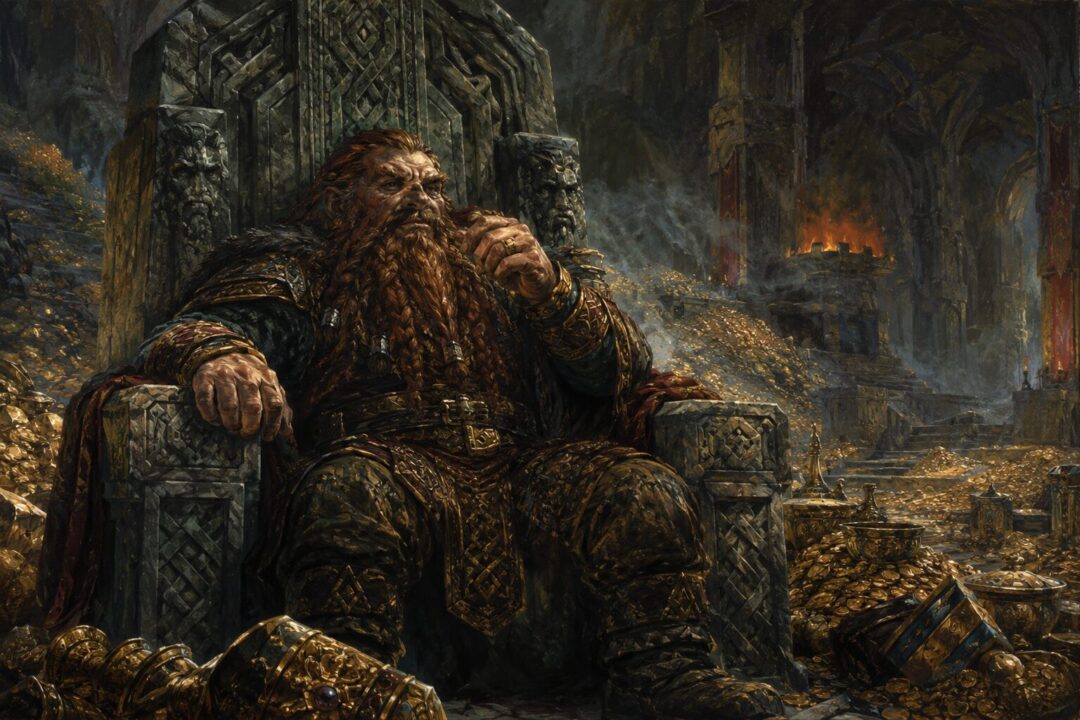
When readers think about Sauron’s greatest victories, they often think of Men. The Nine Kings who became Ringwraiths. The mighty Númenóreans who eventually fell into pride and darkness. Entire kingdoms that served the Shadow out of fear, ambition, or despair.
Yet one of the most revealing facts about Middle-earth is that the Dark Lord never achieved the same level of domination over the Dwarves.
He tried.
He distributed Rings of Power to Dwarf-lords. He coveted their wealth. He attacked their kingdoms. He manipulated dragons and wars that devastated their realms. Yet despite centuries of effort, no Dwarf ever became the equivalent of a Nazgûl. No Dwarf king faded into a wraith enslaved to the One Ring. No Dwarven realm became permanently absorbed into Sauron’s will through corruption of its rulers.
The reason reveals something fundamental about both Dwarves and Men. Sauron understood how to exploit greed, fear, and ambition, but the Dwarves possessed a stubborn resistance unlike any other race in Middle-earth. That resistance came at a cost, yet it prevented a catastrophe that might have reshaped the history of the world.
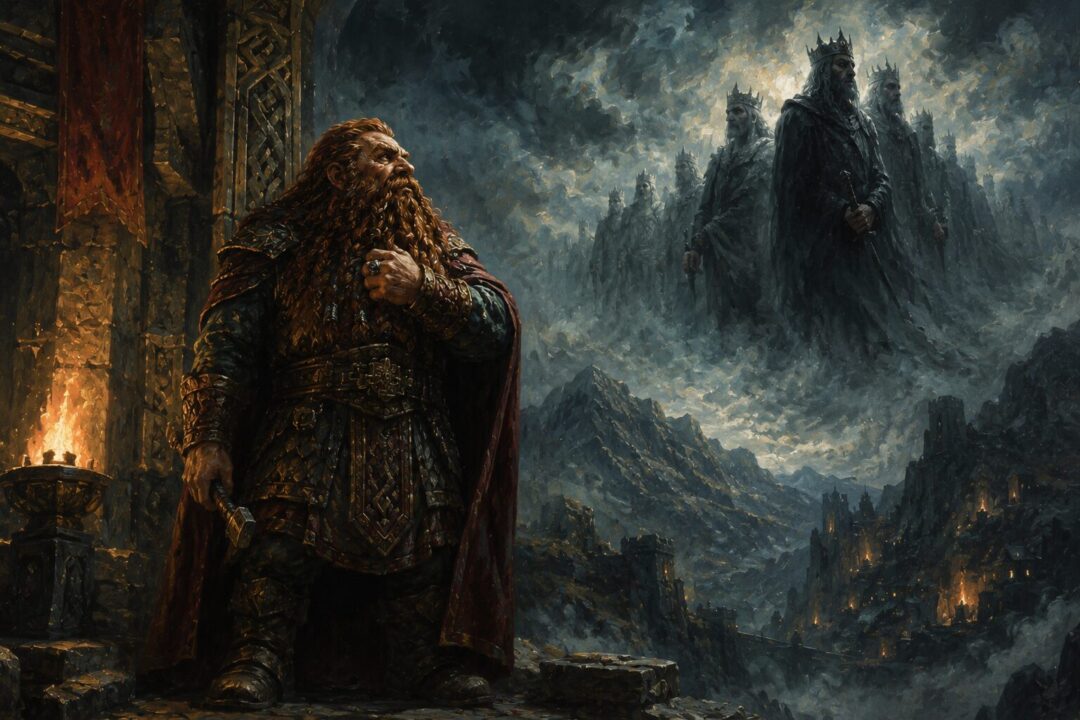
The Rings of Power Worked Differently on Dwarves
The clearest evidence comes from the Seven Rings given to the Dwarf-lords.
According to the lore, Sauron helped create the Rings of Power through the deception of the Elven-smiths of Eregion. His ultimate goal was domination. The One Ring was forged to govern the others and bring their bearers under his control.
This strategy worked disastrously well on Men.
The Nine Rings granted power and longevity, but their bearers eventually fell completely under Sauron’s authority. They became the Nazgûl, immortal servants whose wills were consumed by the Dark Lord.
The Seven Rings produced a different result among the Dwarves.
The texts explicitly state that Dwarves proved difficult to dominate. Their nature resisted complete subjugation. The Rings increased certain tendencies, especially the desire for wealth and the accumulation of treasure, but they did not transform Dwarf-lords into wraiths. Nor did they reduce them to obedient servants of the One Ring.
This was not because the Rings were harmless. They still brought suffering. Great hoards attracted enemies. Greed sometimes intensified. Rivalries emerged. Yet the central purpose of Sauron’s plan failed. The Dwarves could be influenced, but they could not be possessed.
In a sense, the Seven Rings amplified weaknesses without destroying identity. The Dwarves remained themselves even while experiencing the consequences of heightened desire for treasure.
For Sauron, this was a major strategic disappointment.
A Resistance Rooted in Their Creation
Why were the Dwarves different?
The answer begins before the First Age, with their creation by Aulë.
Unlike Elves and Men, the Dwarves were originally fashioned by the Vala Aulë before the awakening of the Children of Ilúvatar. Although Ilúvatar accepted them and granted them true life, their origins left a lasting mark upon their nature.
Throughout Tolkien’s writings, Dwarves are repeatedly described as extraordinarily hardy, enduring, and stubborn. Once they committed themselves to a purpose, changing their minds became extremely difficult.
This stubbornness created problems. It could lead to feuds, grudges, and inflexibility. Yet it also provided a powerful defense against domination.
Sauron excelled at exploiting weakness through manipulation. He offered power to the ambitious. He offered safety to the fearful. He offered immortality to those who dreaded death.
These temptations found fertile ground among Men because human desires were often easier to redirect. Men could be persuaded that surrendering freedom served a greater goal.
Dwarves were different.
A Dwarf might desire treasure. A Dwarf might refuse forgiveness for generations. A Dwarf might become obsessed with recovering a lost kingdom. But convincing a Dwarf to abandon his own will and embrace another’s was vastly more difficult.
The very trait that made them difficult allies also made them difficult slaves.
Greed Was a Weakness—but Not a Path to Complete Control
Some readers mistakenly assume that Dwarven greed should have made them easy targets for corruption.
The history of Erebor appears to support that idea at first glance.
After the death of the dragon Smaug, Thorin Oakenshield became increasingly possessive regarding the treasure beneath the Lonely Mountain. The Arkenstone dispute nearly triggered a disastrous war among former allies. Elsewhere in Dwarven history, immense treasure hoards repeatedly attracted conflict and destruction.
Yet Tolkien presents an important distinction.
Greed can corrupt judgment without eliminating free will.
The Dwarves certainly suffered from the destructive consequences of excessive attachment to wealth. However, this attachment rarely translated into loyalty toward Sauron. Their treasure mattered to them because it was theirs: earned through labor, craftsmanship, inheritance, and memory.
The problem for Sauron was that Dwarven greed remained fundamentally independent.
A Dwarf obsessed with gold still wanted his own gold.
A Dwarf consumed by recovering ancestral wealth still pursued ancestral wealth.
The obsession did not naturally redirect toward service of the Dark Lord.
Instead of creating obedient followers, the Rings often generated conditions that indirectly benefited Sauron. Vast treasures attracted dragons. Wealth inspired invasions. Internal tensions weakened kingdoms.
These outcomes harmed the Dwarves, but they were side effects rather than successful domination.
Dragons Became More Effective Than Rings
One of the great ironies of Middle-earth is that dragons often accomplished what the Rings could not.
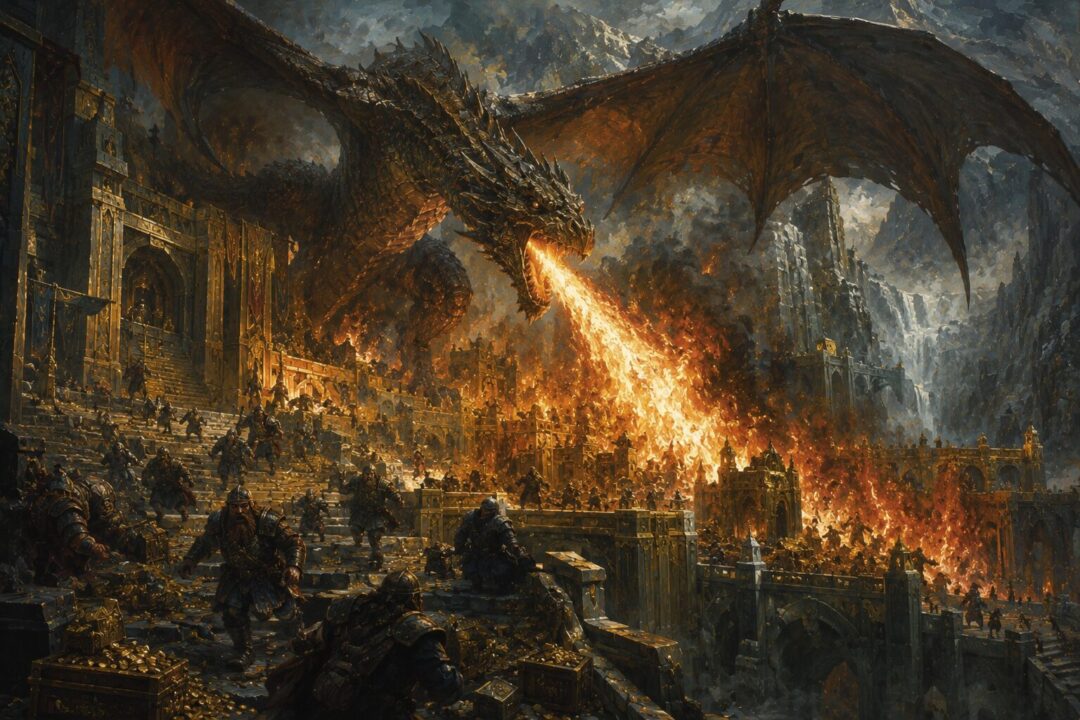
The Seven Rings encouraged the accumulation of treasure. Over time, some Dwarven realms amassed enormous hoards. Such wealth became irresistible to dragons.
The most famous example is Smaug’s conquest of Erebor. The dragon destroyed Dale, seized the treasure of the Lonely Mountain, and scattered the Dwarves.
This devastation was not direct mind control. Yet it achieved results useful to the Shadow.
Powerful Dwarven kingdoms were weakened. Economic centers vanished. Strategic regions became unstable. Refugees dispersed across the north.
The same pattern appears elsewhere in Dwarven history. Wealth attracted danger, and danger frequently destroyed what generations had built.
From Sauron’s perspective, destruction could be almost as useful as domination.
If he could not enslave the Dwarves, he could still benefit from the collapse of their strength.
Dwarven Independence Survived Repeated Catastrophes
What makes Dwarven resistance remarkable is not that they avoided tragedy.
They did not.
Their history is filled with loss.
Khazad-dûm was abandoned after the awakening of Durin’s Bane. Erebor fell to Smaug. Countless Dwarves died in wars against Orcs. Ancient mansions and kingdoms disappeared beneath mountains and ruins.
Yet even after catastrophic defeats, the Dwarves repeatedly re-emerged as independent peoples.
This pattern contrasts sharply with the fate of the Nazgûl. Once Men fell completely under Sauron’s domination, recovery became impossible. Their identities effectively vanished into servitude.
Dwarven kingdoms might be conquered, but Dwarven identity endured.
Exiles rebuilt elsewhere.
Clans preserved memory.
Craft traditions survived.
The determination to reclaim lost homes persisted across generations.
Sauron could break cities, seize treasure, and kill kings. Breaking the spirit of an entire people proved far more difficult.
The Test of the War of the Ring
The ultimate proof of Dwarven resistance came during the War of the Ring itself.
Many readers focus on events in Gondor, Rohan, and Mordor, but important struggles occurred elsewhere. Sauron sought allies and servants throughout Middle-earth. He understood that neutralizing potential enemies was nearly as valuable as defeating them directly.
The Dwarves faced tremendous pressure.
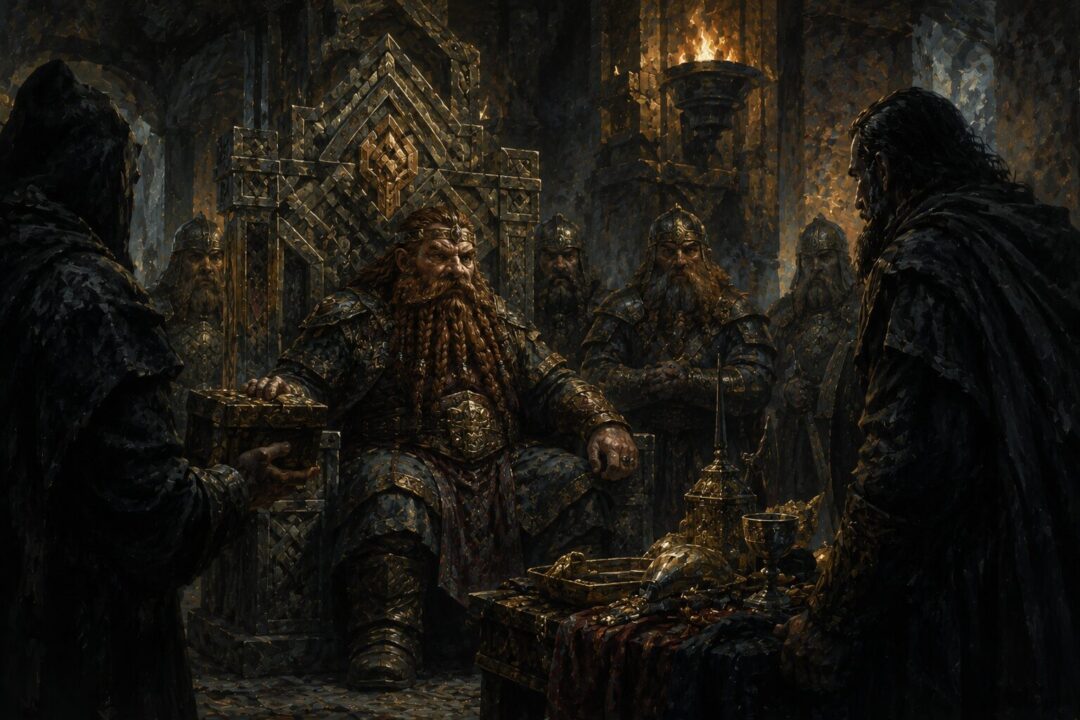
Representatives connected to Mordor attempted to gather information about Bilbo and the Ring by approaching King Dáin Ironfoot in Erebor. Rich rewards were offered. The return of lost Dwarven Rings was hinted at. Valuable information was requested.
For many rulers, such offers might have been irresistible.
Yet Dáin did not surrender.
Instead, Erebor remained opposed to the Shadow. During the War of the Ring, Dwarves fought alongside Men against Sauron’s forces in the north. The Kingdom under the Mountain endured siege and battle rather than submit.
This decision reflects a recurring theme throughout Dwarven history.
They could be tempted.
They could be harmed.
They could be divided.
But they were extraordinarily difficult to bend.
Why Men Fell More Easily
The comparison with Men highlights the tragedy of the human condition in Tolkien’s world.
Men possessed extraordinary gifts, including adaptability and the freedom to shape history rapidly. Great kingdoms rose among them. Great heroes emerged from their ranks.
Yet those same qualities created vulnerabilities.
Fear of death played a particularly important role. The desire to escape mortality made many of Sauron’s promises attractive. Power, longevity, prestige, and security all became tools of manipulation.
The Dwarves certainly feared loss and cherished wealth, but they lacked the same susceptibility to domination through promises of power over death. Their flaws pointed in different directions.
As a result, Men often stood closer to greatness and catastrophe alike.
The Dwarves rarely reached the towering heights of Númenor, but neither did they suffer an equivalent fall into total spiritual enslavement.
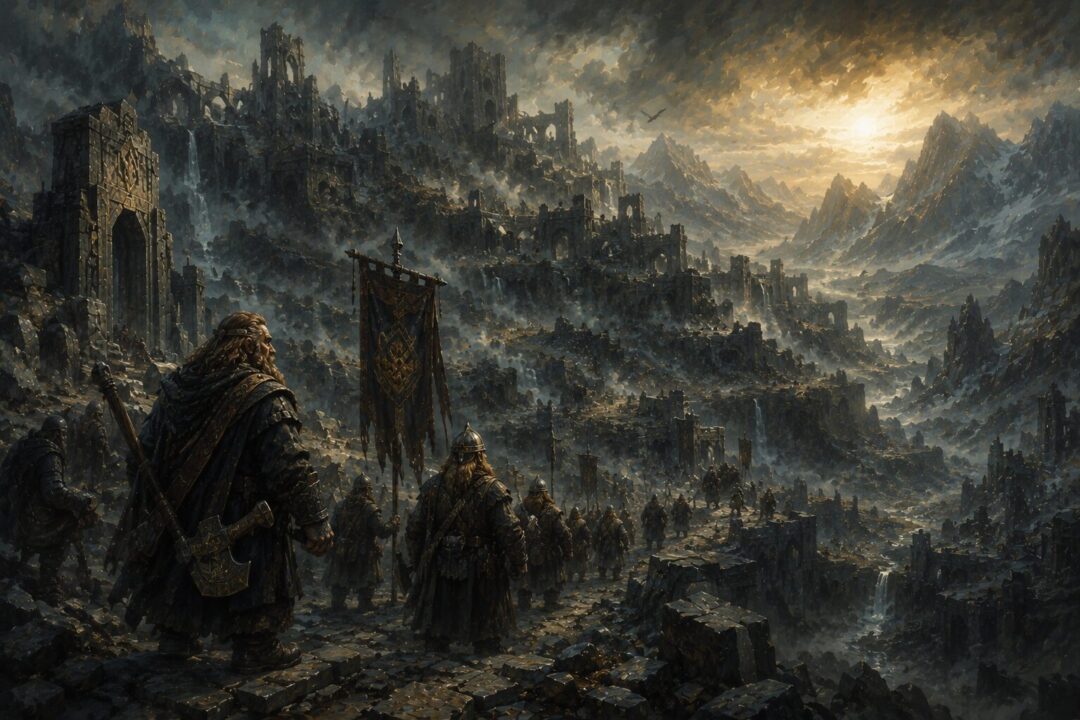
The Strength Hidden Within Stubbornness
The story of the Dwarves reveals one of Middle-earth’s most surprising truths: a flaw can also be a shield.
Their stubbornness caused feuds, pride, and conflict. It sometimes blinded them to compromise or mercy. Yet the same unyielding character protected them from one of Sauron’s most dangerous weapons.
The Dark Lord could exploit desire, but he struggled to erase Dwarven independence.
The Seven Rings increased greed but failed to create Nazgûl.
Offers of wealth failed to buy loyalty.
Military defeat failed to destroy identity.
Again and again, Dwarven kingdoms fell, yet the Dwarves themselves remained stubbornly their own people.
In the end, Sauron learned a lesson reflected throughout the history of Middle-earth: strength is not always found in purity or perfection. Sometimes it is found in a people so determined, so enduring, and so difficult to bend that even the greatest tyrant in the world cannot truly make them his.
Sources & Notes
- J.R.R. Tolkien, The Silmarillion, “Of the Rings of Power and the Third Age” — direct source for Sauron’s plan to rule through the Rings, the Nine becoming Ringwraiths, and the Dwarves proving hard to tame.
- J.R.R. Tolkien, The Lord of the Rings, Appendix A, “Durin’s Folk” — recounts the Seven Rings among the Dwarf-lords, their power to found hoards, and the way dragons and war consumed much of that wealth.
- J.R.R. Tolkien, The Silmarillion, “Of Aulë and Yavanna” — explains the Dwarves’ making by Aulë and their specially hardy, enduring nature before their awakening.
- J.R.R. Tolkien, The Lord of the Rings, Book II, Chapter 1, “Many Meetings” — Glóin reports Mordor’s messenger offering Dáin rewards and lost Rings in exchange for news of Bilbo and the Ring.
- J.R.R. Tolkien, The Lord of the Rings, Appendix B, “The Tale of Years” — records the northern war in which Dáin and Brand fell before Erebor while their peoples resisted Sauron’s forces.
- J.R.R. Tolkien, The Letters of J.R.R. Tolkien, Letter 131 — Tolkien’s own overview of Sauron’s will to domination and the Rings’ differing effects on Elves, Men, and Dwarves.