Why Sauron Always Returned to Mordor
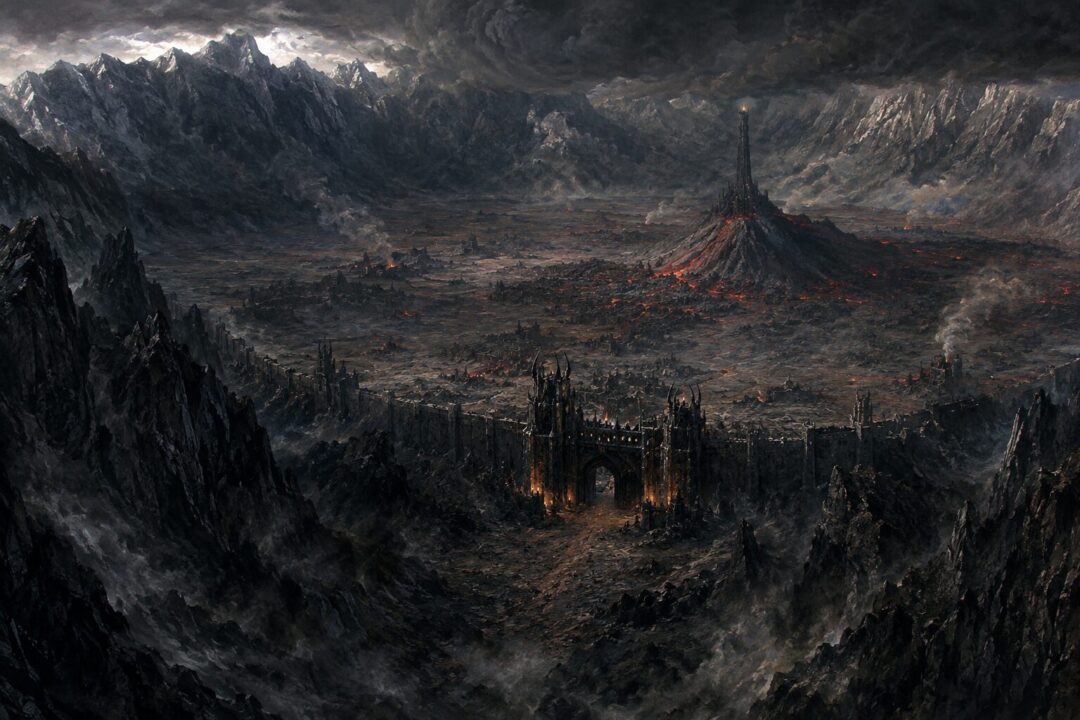
When readers think of Sauron, they usually picture a Dark Tower, a burning Eye, and the barren land of Mordor. It seems obvious that Mordor was his home. Yet one of the more interesting questions in Middle-earth is why he kept returning there at all.
Sauron was not born in Mordor. He existed long before its towers were built. During the Elder Days, he served Morgoth in the far north of Middle-earth. He ruled from Angband’s shadow and later established strongholds elsewhere, including Tol-in-Gaurhoth, the Isle of Werewolves. Even after Morgoth's defeat, Sauron could have attempted to build a new center of power in many different regions.
Instead, after every major setback, defeat, or apparent destruction, he came back to Mordor.
This was not merely habit. It was not because the land was pleasant, fertile, or culturally important. Mordor represented something much deeper: security, control, memory, strategy, and ultimately the physical expression of Sauron's entire vision for Middle-earth.
Understanding why he repeatedly returned there reveals how he thought, what he feared, and why the destruction of the One Ring ended far more than a military empire.
Mordor Was Built for Defense
One reason stands out immediately in the texts: Mordor was extraordinarily difficult to invade.
The land was enclosed by massive mountain ranges. To the west stood the Ephel Dúath, the Mountains of Shadow. To the north rose the Ash Mountains, known as Ered Lithui. Together they created a natural fortress surrounding much of the region.
Only a few practical entrances existed. The Black Gate controlled the northern approach. Other routes were narrow, dangerous, and easily defended.
For a ruler obsessed with security, Mordor was nearly ideal.
Sauron had learned difficult lessons over thousands of years. Morgoth's great northern fortress, Angband, had eventually been breached after centuries of war. Sauron himself had lost strongholds before. Tol-in-Gaurhoth fell to Lúthien and Huan. Númenor later shattered his ambitions. Even after surviving that catastrophe, he witnessed the Last Alliance march directly against him.
A ruler who feared defeat would naturally value terrain that multiplied his strength and reduced vulnerability.
Mordor gave him exactly that.
Its geography meant enemies had to funnel themselves into predictable routes. Armies approaching Mordor could rarely achieve surprise. Long before they reached Barad-dûr, Sauron's servants would know they were coming.
The Land Contained the Mountain He Needed Most
Geography alone does not explain Sauron's attachment to Mordor.
The most important feature of the region was not Barad-dûr or the Black Gate. It was Orodruin, the Mountain of Fire.
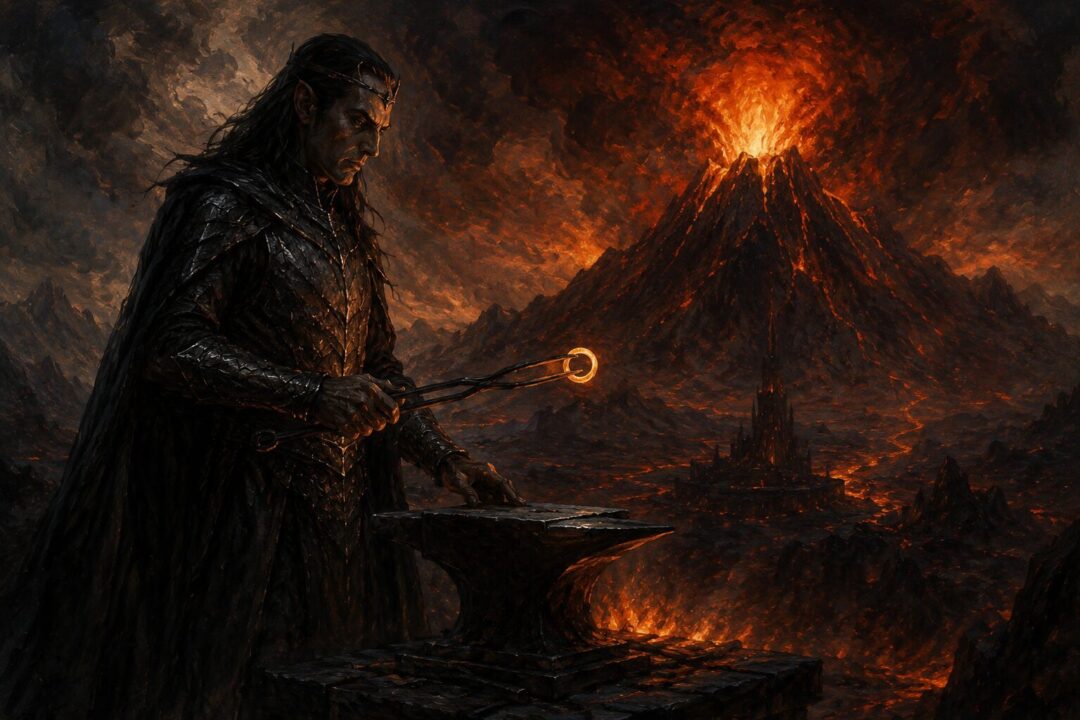
The One Ring was forged there.
The texts make clear that Sauron created the Ring in the fires of Orodruin. More importantly, the Ring could only be unmade in the same volcanic fire where it had originally been forged.
This connection was unique.
The Ring contained much of Sauron's native power. By investing his strength into it, he bound his fate to a physical object. That object, in turn, was linked to a specific place.
Whether every aspect of Ring-making required Orodruin is not fully explained, but the mountain clearly possessed significance beyond ordinary volcanic activity. Sauron deliberately chose it as the site of his greatest work.
As a result, Mordor became more than a kingdom.
It became the location of the central artifact upon which his long-term power depended.
Leaving Mordor permanently would mean abandoning the place most closely tied to the foundation of his dominion.
Barad-dûr Was More Than a Fortress
The Dark Tower is often viewed simply as Sauron's castle, but it represented something much larger.
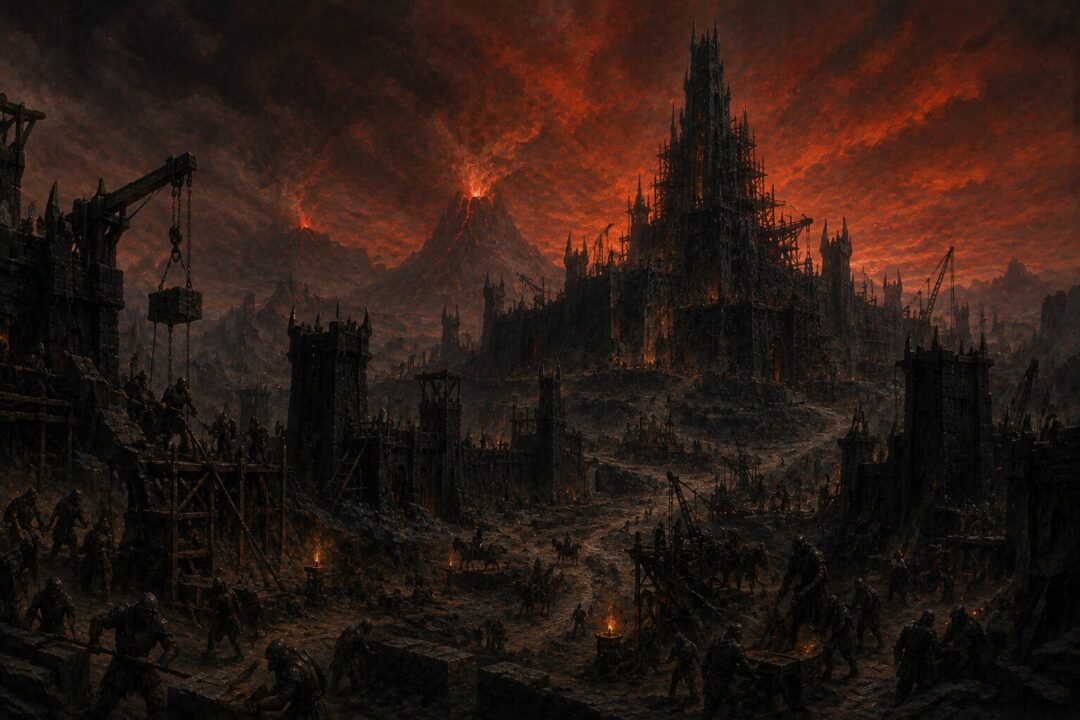
Barad-dûr was the administrative and symbolic center of his power. From there he coordinated armies, controlled servants, directed spies, and projected authority across enormous distances.
After the defeat of the Last Alliance, the tower was thrown down because its foundations were bound to the power of the One Ring. Yet when Sauron gradually regained strength during the Third Age, he rebuilt it.
That decision reveals an important aspect of his character.
Sauron consistently sought order, structure, and control. Unlike Morgoth, who often descended into destructive chaos, Sauron preferred systems, organization, hierarchy, and administration. His evil expressed itself through domination and control rather than pure ruin.
Barad-dûr was the perfect symbol of that mentality.
It stood as a monument to centralized authority. Every road, army, fortress, and servant ultimately connected back to the Dark Tower.
Returning to Mordor meant returning to the place where that system functioned best.
Mordor Was the Center of a Growing Empire
By the late Third Age, Mordor occupied a strategic position within a broader network of allies and subject peoples.
To the east and south lived numerous groups who either served Sauron, feared him, or fell under his influence. The Haradrim, Easterlings, and other peoples supplied warriors, resources, and military support.
Mordor sat near the heart of these connections.
From there, Sauron could coordinate campaigns against Gondor while maintaining contact with territories farther east. His logistical position was stronger than it would have been in many western regions of Middle-earth.
This matters because Sauron's ambitions extended far beyond local conquest.
He sought dominion over the entire continent.
A central command center capable of supporting enormous military operations was essential to that goal. Mordor fulfilled that role better than almost any alternative location available to him.
The land's harshness, often viewed as a disadvantage, mattered little. Sauron was not trying to create a thriving civilization. He was creating a war machine.
The Shadow of the Past Drew Him Back
There is also a psychological dimension that should not be overlooked.
Mordor was the place where Sauron achieved his greatest success.
It was there that he forged the One Ring. There he built Barad-dûr. There he established himself as the dominant power in Middle-earth after Morgoth's fall.
For centuries, Mordor embodied victory.
Even after catastrophic defeats, it remained associated with the height of his strength.
The texts do not explicitly state that nostalgia or sentiment motivated Sauron. Such emotions are difficult to attribute to him with certainty. Yet it is reasonable to observe that powerful rulers often return to places connected with former triumphs.
Mordor was not merely useful.
It was the landscape where Sauron's grand design had once seemed closest to fulfillment.
Why He Returned After Númenor's Fall
One of the strongest examples of this pattern occurred after the Downfall of Númenor.
Sauron achieved extraordinary influence within Númenor, corrupting its rulers and encouraging rebellion against the Valar. Yet the kingdom was destroyed, and Sauron's physical form perished in the catastrophe.
Although his spirit survived, he suffered a devastating setback.
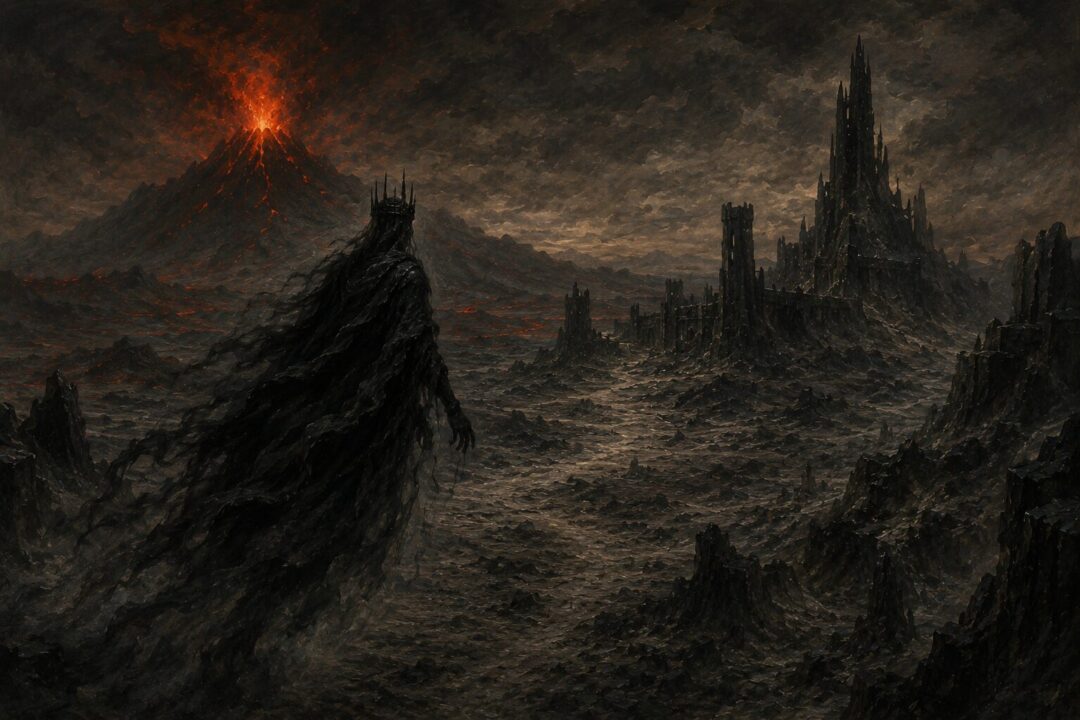
Afterward, he returned to Middle-earth and established himself once again in Mordor.
This is significant because he had experienced the greatest political success of his existence outside Mordor. If another location were preferable, this would have been the moment to abandon the old stronghold.
Instead, he went back.
The choice suggests that Mordor remained the most secure foundation for rebuilding power after disaster. No matter how ambitious his plans became elsewhere, the land beneath Orodruin remained his ultimate base of operations.
Why He Returned After the Last Alliance
The defeat at the end of the Second Age was even more severe.
Gil-galad and Elendil overthrew Sauron after a long war. The Dark Lord's physical form was destroyed, and the One Ring was cut from his hand.
For centuries afterward, he existed only as a diminished spirit.
Yet when he gradually recovered enough strength to emerge again, his path ultimately led back toward Mordor.
At first he concealed himself in southern Mirkwood as the Necromancer of Dol Guldur. This temporary refuge allowed him to rebuild without exposing himself too early.
But he did not remain there.
Once strong enough, he openly reoccupied Mordor and resumed construction and military preparations.
This pattern reveals something important. Dol Guldur was useful. Mordor was essential.
One was a hiding place.
The other was the center of his identity as ruler and conqueror.
The Great Irony of Mordor
The very reason Sauron kept returning to Mordor also contributed to his downfall.
He became so dependent on the region that he could scarcely imagine anyone willingly entering it for any purpose except war, conquest, or power.
His confidence rested on assumptions shaped by his own mindset.
The Ring was forged in Mordor. His armies gathered in Mordor. His tower rose in Mordor. His greatest strength lay in Mordor.
To him, no enemy would voluntarily carry the Ring into the heart of his realm simply to destroy it.
This failure of imagination proved fatal.
The Quest of Mount Doom succeeded partly because Sauron interpreted events through the lens of domination. He expected rivals to seize power, not reject it.
As Gandalf and others recognized, the willingness to renounce power created possibilities Sauron could barely comprehend.
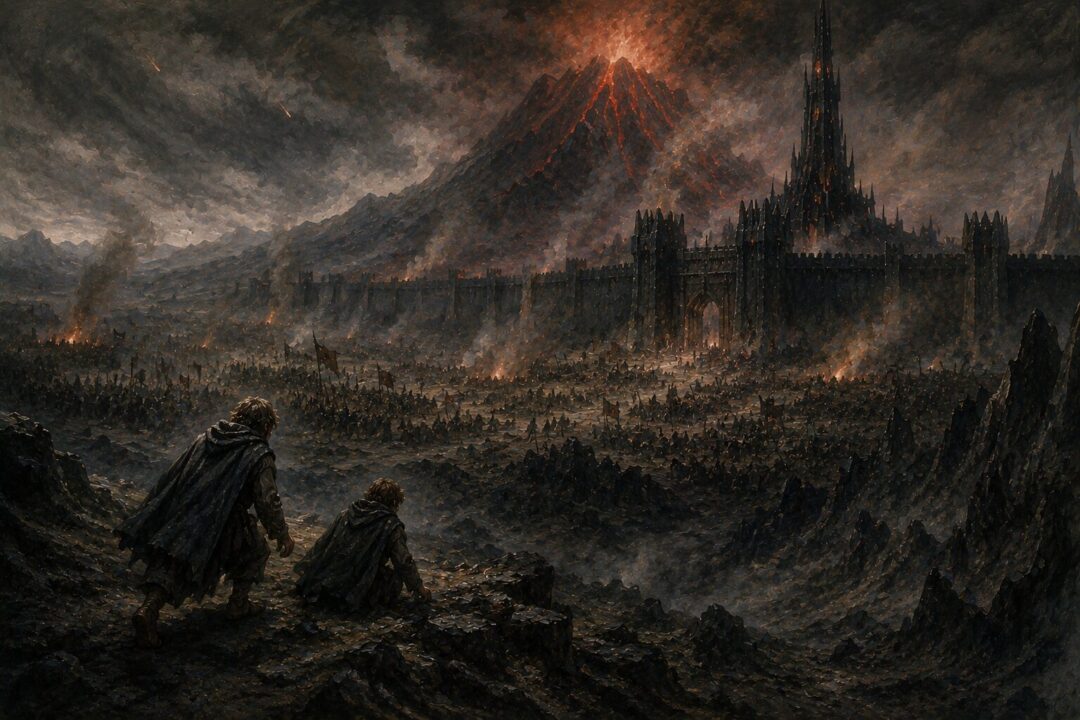
Mordor Was the Physical Shape of Sauron's Will
In the end, the answer is larger than geography, military strategy, or even Orodruin.
Mordor represented the world Sauron wanted to create.
It was ordered according to his will. Its roads, fortresses, armies, and industries existed to serve a single authority. The land functioned as the clearest expression of his desire to dominate and organize all things beneath himself.
Every major defeat stripped away some part of his power, but Mordor remained the place where he believed that power could be restored.
That is why he returned after Númenor.
That is why he returned after the Last Alliance.
That is why he rebuilt Barad-dûr.
And that is why the destruction of the One Ring did more than defeat an enemy. It shattered the foundation of the realm to which he had always returned.
Mordor was not simply Sauron's home.
It was the material embodiment of his ambition, his strength, and ultimately his greatest weakness.
Sources & Notes
- Tolkien Gateway, "Sauron" — https://tolkiengateway.net/wiki/Sauron
- Tolkien Gateway, "Mordor" — https://tolkiengateway.net/wiki/Mordor
- Tolkien Gateway, "Barad-dûr" — https://tolkiengateway.net/wiki/Barad-d%C3%BBr
Sources added for article-specific Tolkien reference context.