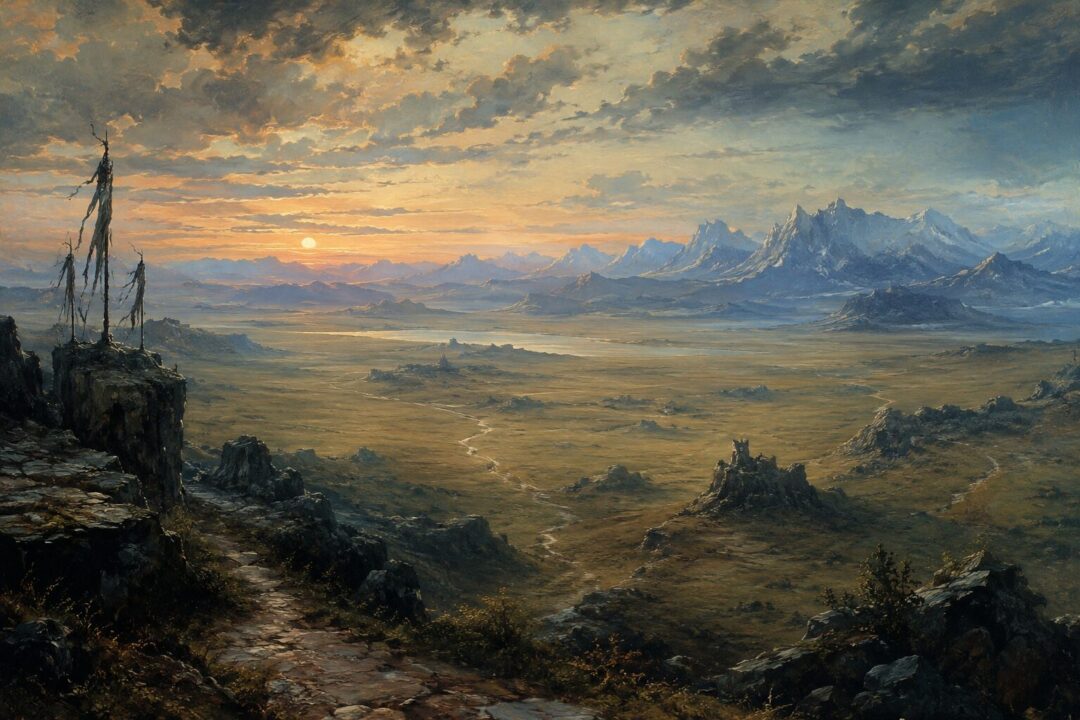
The Fellowship never journeys beyond the Sea of Rhûn. Aragorn's kingship does not begin with an expedition into its distant plains. Even Gandalf, who wandered farther than almost anyone else in Middle-earth, leaves the East largely undescribed. That silence has encouraged generations of readers to imagine Rhûn as a land filled with hidden monsters or forgotten kingdoms.
Yet the greatest danger of the East is not that Tolkien filled it with terrifying secrets. It is that he deliberately left much of it unknown while revealing just enough to show that the fate of Middle-earth had always depended upon it.
Rhûn is where many enemies of Gondor came from. It is also where the first Elves awoke, where the first Men began their history, where several Dwarf houses first lived, and where the Blue Wizards were eventually sent. The same direction that later became associated with armies marching under the Shadow was also the birthplace of nearly every free people of Middle-earth.
That contradiction is what makes Tolkien's East so fascinating—and so dangerous.
The East Was Never Simply the Land of Evil
Readers often associate "the East" with Sauron's allies because most encounters in The Lord of the Rings involve Easterling armies fighting beside Mordor. But the texts never state that all peoples of Rhûn were evil.
Instead, they distinguish between geography and allegiance.
Many peoples of the East served Morgoth in the First Age and later Sauron during the Second and Third Ages. Others migrated west long before those conflicts and became the ancestors of the Edain, whose descendants included the Númenóreans. The Silmarillion also records that not every group of Men remained under the Shadow.
This distinction matters.
The moral divisions in Tolkien's world are rarely based on birthplace alone. Individuals and nations make choices, though those choices are shaped by history, fear, conquest, and long exposure to tyranny.
Sam Gamgee's reflection after seeing a fallen Southron soldier captures this idea. He wonders what lies or fears brought that man to war and whether he truly wished to fight. Although Sam is thinking about Harad rather than Rhûn, the passage establishes an important principle: enemies are still people.
Rhûn should therefore be understood as a vast collection of lands and cultures, not as a single kingdom of darkness.
The Forgotten Birthplace of the Children of Ilúvatar
One of the greatest ironies surrounding Rhûn is that its deepest importance comes long before Sauron's rise.
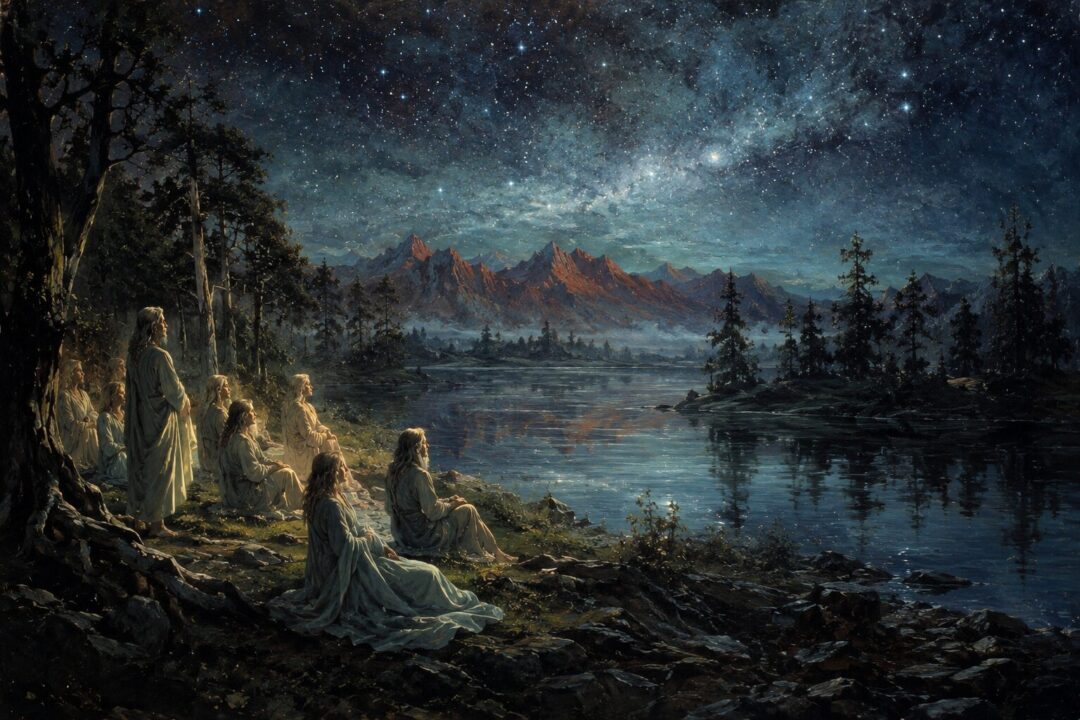
According to The Silmarillion, the Elves first awoke at Cuiviénen, a place situated far to the east near the ancient Sea of Helcar. Likewise, Men first awoke in Hildórien, also in the far eastern regions of Middle-earth. Later traditions place these locations beyond the familiar western maps, in lands associated with Rhûn and the distant East.
This transforms how the East should be viewed.
The western kingdoms often think of themselves as the center of civilization, yet nearly every important people traces its earliest origins eastward.
The Eldar began there before the Great Journey.
The Edain began there before migrating west.
Even four of the seven houses of the Dwarves awoke beneath eastern mountains traditionally associated with the Orocarni.
The East is therefore not civilization's opposite.
It is civilization's forgotten beginning.
Why So Little Is Described
The lack of detail about Rhûn sometimes frustrates readers, but it serves an important narrative purpose.
Most of Tolkien's stories are written from western perspectives. The chroniclers are Hobbits, Gondorians, or Elves whose knowledge naturally becomes uncertain the farther east one travels.
This limited perspective mirrors real historical records.
Ancient kingdoms often knew neighboring lands well while possessing only fragmentary knowledge of distant regions. Rumors replaced geography. Travelers became rare. Maps grew uncertain.
Middle-earth reflects that same phenomenon.
Rather than pretending complete knowledge of the world, the legendarium openly admits where knowledge ends.
The result is unusual.
Rhûn feels genuinely unexplored because the surviving records are genuinely incomplete.
The mystery belongs to the narrators as much as it does to the landscape.
The Shadow Worked Long Before the War of the Ring
Rhûn's danger did not suddenly appear with the War of the Ring.
The corruption of the East stretches back across thousands of years.
After Morgoth's influence spread among early Men, many eastern peoples remained outside the westward migrations that eventually produced the Edain. Later, Sauron inherited much of Morgoth's influence and repeatedly rebuilt his strength among eastern kingdoms.
During the Third Age, when Sauron abandoned Dol Guldur for a time, he spent centuries hidden in the East rebuilding his power before openly returning to Mordor. The peoples of Rhûn repeatedly supplied soldiers, allies, and military strength to his wars.
This history explains why Gondor continually faced invasions from the east.
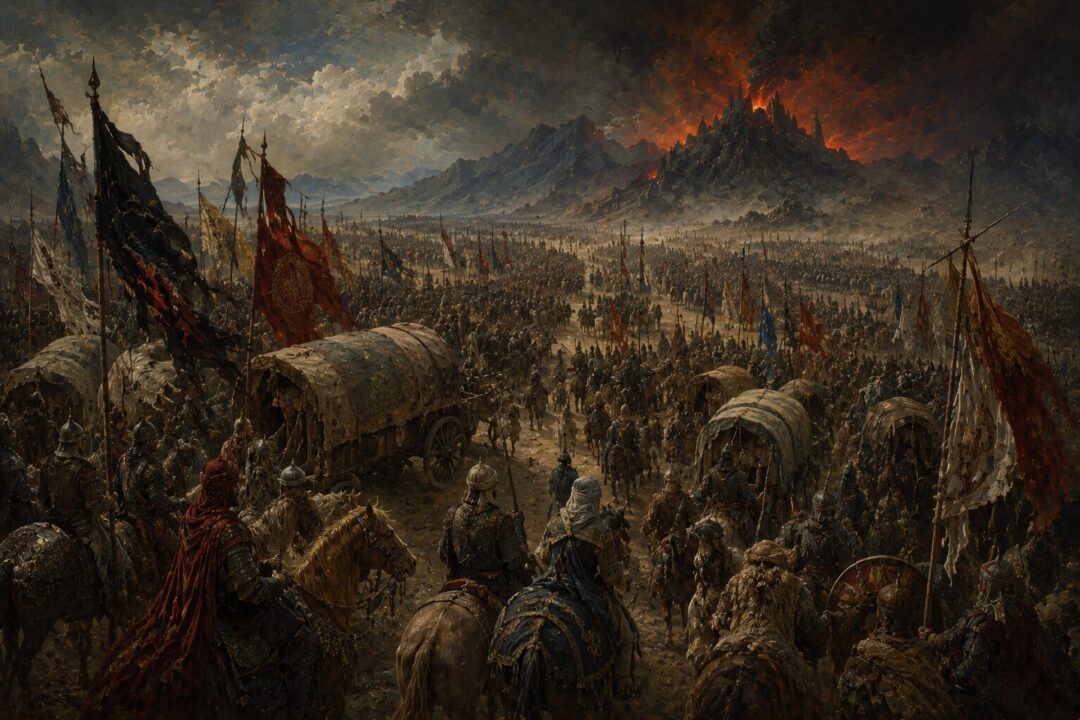
Groups such as the Wainriders and later the Balchoth emerged from eastern peoples allied with the Shadow, inflicting devastating defeats upon Gondor before eventually being driven back. Their campaigns reshaped the political history of the Third Age and nearly destroyed Gondor on several occasions.
The danger of Rhûn therefore came less from mysterious magic than from its strategic importance as the largest reservoir of peoples beyond Gondor's influence.
The Blue Wizards Enter the Silence
Perhaps no mystery illustrates Rhûn better than the Blue Wizards.
Unlike Gandalf, Saruman, and Radagast, they disappeared almost entirely from the narrative after traveling east.
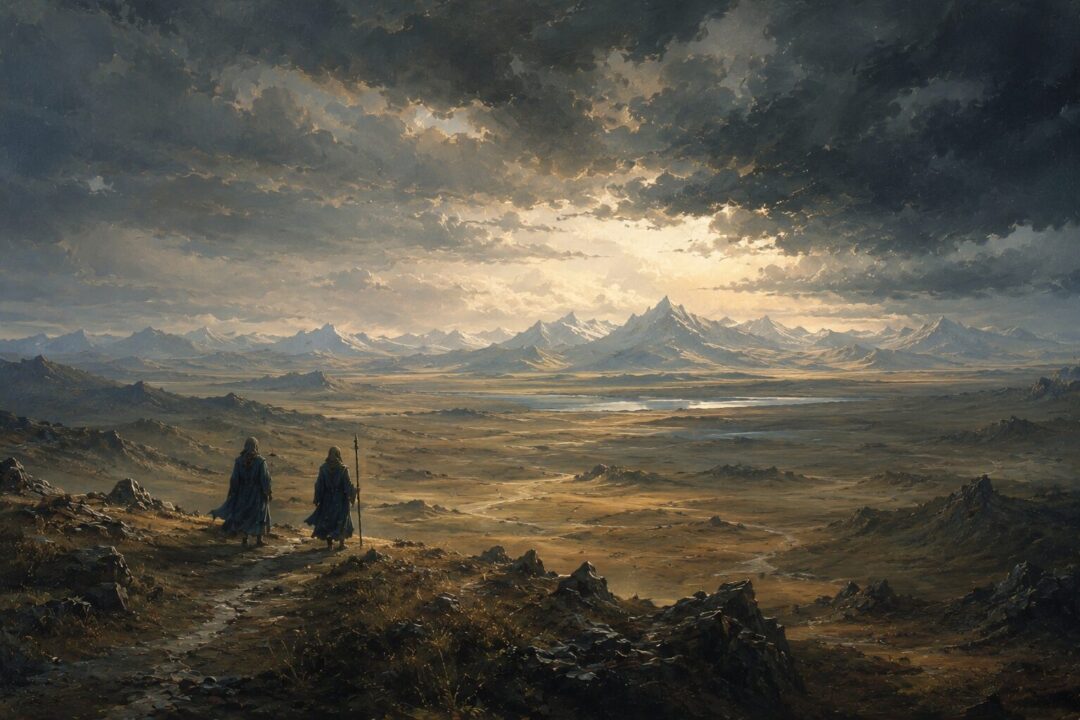
The published Unfinished Tales presents one tradition in which they journeyed into the East and were never heard from again. Later writings suggest another possibility: that they successfully weakened Sauron's influence by disrupting his eastern followers, preventing far greater armies from overwhelming the West.
Neither tradition provides a detailed account.
What matters is that both agree on one point.
The East was so important that two members of the Istari were sent there instead of remaining among the peoples most readers know.
Whether they failed completely or achieved quiet success remains one of the great unresolved questions of Tolkien's legendarium.
The texts never explicitly resolve the issue, and any stronger conclusion would go beyond the available evidence.
Not Every Easterling Was the Same
One of the easiest mistakes is to speak of "the Easterlings" as though they formed a single nation.
The texts instead describe many different peoples appearing across different ages.
Some fought beside Morgoth.
Others invaded Gondor centuries apart under different leaders.
The Wainriders, named for their wagon warfare, were distinct from the Balchoth, who emerged later. The Variags of Khand, while eastern allies of Sauron, were a separate people again.
These groups shared alliances more often than shared identity.
That distinction is important because Tolkien consistently portrays history as shaped by many cultures rather than a single monolithic civilization.
Rhûn itself almost certainly contained peoples who never appear in western histories at all.
The silence surrounding them should not be mistaken for proof that they did not exist.
Fear Travels Faster Than Knowledge
Another reason Rhûn appears threatening is psychological rather than geographical.
For Gondor, danger almost always arrived from the east.
The winds from Mordor carried smoke.
Invading armies crossed eastern frontiers.
Ancient memories connected the sunrise direction with the lands where both Morgoth's servants and Sauron's allies gathered.
Over centuries, practical military experience merged with cultural memory.
Eventually, "the East" became not merely a direction but a symbol of approaching danger.
Yet symbols simplify reality.
Readers are invited to recognize that the people living beyond Gondor's borders possessed histories far older and richer than Gondor itself understood.
The western kingdoms feared what they could not fully know.
Why the Mystery Still Matters
Many fantasy worlds eventually explain every blank space on their maps.
Rhûn remains different.
The absence of detail invites careful imagination while preserving the feeling that Middle-earth extends beyond every story we are told.
Importantly, the silence is not empty.
Scattered references reveal ancient awakenings, forgotten Dwarf realms, wandering Avari, migrations of Men, eastern kingdoms, repeated wars, and the uncertain missions of the Blue Wizards.
These fragments create the impression of an enormous historical landscape without pretending to document every part of it.
That restraint makes the world feel older and larger.
Instead of reducing mystery, the legendarium preserves it.
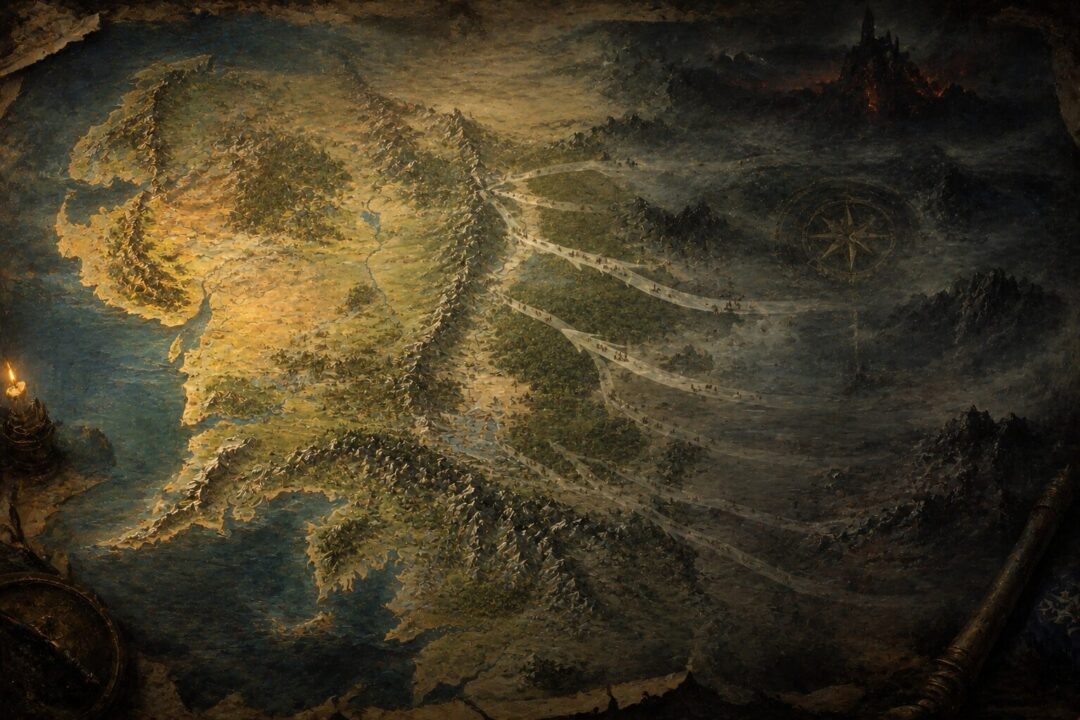
The Real Danger Hidden by the Silence
Rhûn's greatest danger is not that it contains monsters never named or magical civilizations never described.
Its true danger lies in scale.
Most of the peoples living beyond Gondor never enter the narrative directly. If Sauron had united them completely and permanently, the military balance of Middle-earth might have become impossible for the West to resist. Some later writings even suggest that the Blue Wizards may have prevented precisely such an outcome by hindering Sauron's influence in the East, though the surviving texts stop short of describing exactly how.
The silence therefore carries its own warning.
Readers only witness the western edge of conflicts whose roots stretch across an entire continent.
Rhûn reminds us that the stories of The Hobbit and The Lord of the Rings are not the whole history of Middle-earth. They are the surviving western account of a much larger world—one whose oldest beginnings, greatest migrations, and perhaps even decisive unseen struggles all originated beyond the horizon in the quiet lands of the East.
Sources & Notes
- https://tolkiengateway.net/wiki/Rh%C3%BBn — overview of the eastern lands of Middle-earth, their sparse description, and their association with peoples under Sauron’s influence.
- https://tolkiengateway.net/wiki/Easterlings — background on the Men of the East, their repeated wars with Gondor, and their service in Sauron’s armies.
- https://tolkiengateway.net/wiki/Blue_Wizards — supports the article’s discussion of how little is known about the East and the uncertain mission of the two Wizards sent there.
- https://tolkiengateway.net/wiki/Wainriders — documents one of the major eastern threats to Gondor, showing how Rhûn’s peoples affected western history despite limited narrative detail.
Sources cover Rhûn, Easterlings, the Blue Wizards, and Wainrider history as support for Tolkien’s dangerous but under-described East.