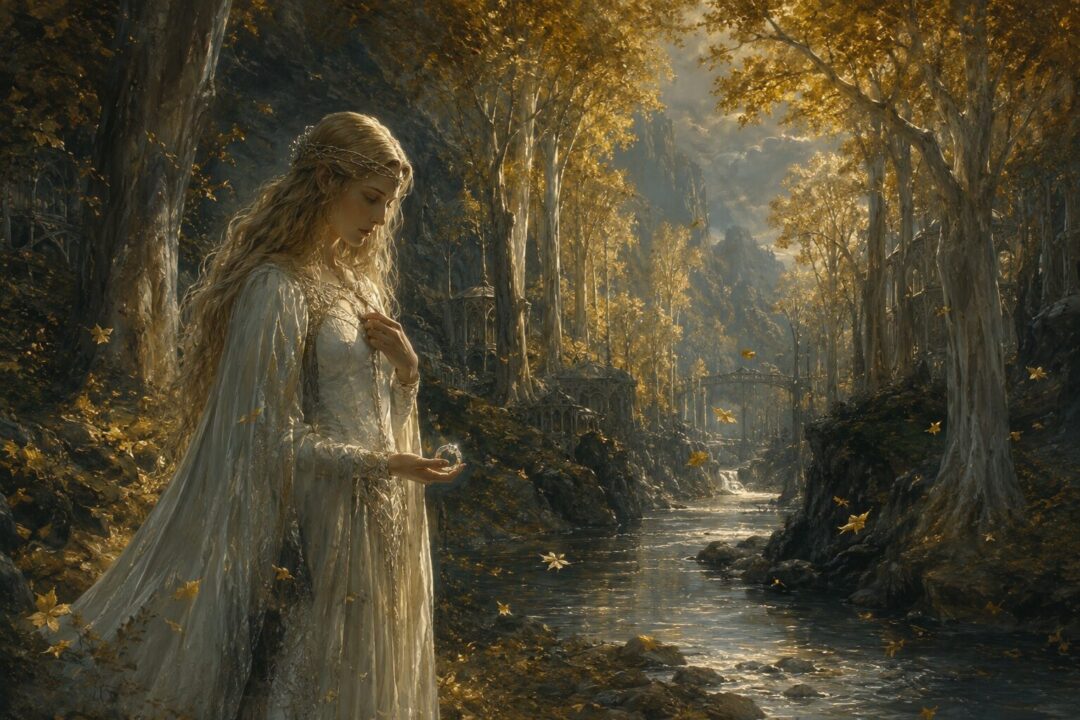
The Three Rings are among the most beautiful mysteries in Middle-earth: Narya, Nenya, and Vilya, hidden from Sauron, untouched by his hand, carried by the wisest powers still resisting the Shadow. They do not feel like weapons. They do not burn armies or shatter gates. Their power is quieter, older, and more sorrowful.
They preserve.
That word sounds gentle until we see what it means. Rivendell remains a house of memory while kingdoms fall. Lothlórien seems almost outside time, golden and unmarred by the weariness spreading through the world. Gandalf bears a Ring associated not with domination, but with kindling courage in hearts grown cold.
Yet the tragedy of the Three is that preservation is not salvation. They can delay fading. They can protect beauty. They can hold back decay for a season. But they cannot heal the wound at the root of Middle-earth. They cannot undo the long defeat. And when the One Ring is destroyed, the very success of the Quest means the passing of the world they helped preserve.
The Elven Answer to Time
The Rings of Power were born from a desire that was not evil in itself. The Elves of Middle-earth loved what was beautiful, and they suffered under the knowledge that beauty in the mortal lands changed, diminished, and passed away. For immortal beings bound to the world, time was not simply a road forward. It was also erosion.
The Three Rings were the purest expression of that desire. They were not made by Sauron’s hand, and they were not designed for conquest in the way the One was. Their deepest purpose was preservation: the slowing of decay, the warding off of weariness, the maintenance of beauty against time.
This matters because Tolkien’s Ring-lore is not merely about “magic items.” It is about the moral danger of trying to arrest the world. Even when the motive is love, the temptation remains: to keep things as they were, to preserve a golden moment, to resist the painful movement of history.
The Three are therefore both noble and perilous. They are not evil in the way the Nine become evil. But they belong to the same larger problem: power used to impose a will upon the natural course of the world.
Nenya and the Golden Stillness of Lothlórien
Galadriel’s Ring, Nenya, is the clearest image of preservation. Lothlórien feels unlike the rest of Middle-earth. When the Fellowship enters it, they do not merely find a safe woodland. They enter a realm where memory has become atmosphere.
The trees are golden. The light is strange. The grief of ages seems present, but held in a kind of beauty. Lórien is not untouched because evil never threatened it. It is protected because great power, wisdom, vigilance, and sacrifice have held decay at bay.
But that stillness has a cost. Lothlórien is beautiful partly because it cannot last. Its enchantment depends on a hidden Ring whose fate is bound to the One. If Sauron recovers the One, the Three will be laid bare to him. If the One is destroyed, their power will fail.
This is the terrible contradiction at the heart of Galadriel’s realm. The same victory that saves Middle-earth from Sauron also ends the power that keeps Lórien as it is.
Galadriel understands this. Her refusal of the One Ring is not just a rejection of tyranny. It is a surrender of her dream of preserving her realm forever. She chooses diminishment over domination. She accepts that even the fairest things in Middle-earth must pass.
Vilya and the House of Memory
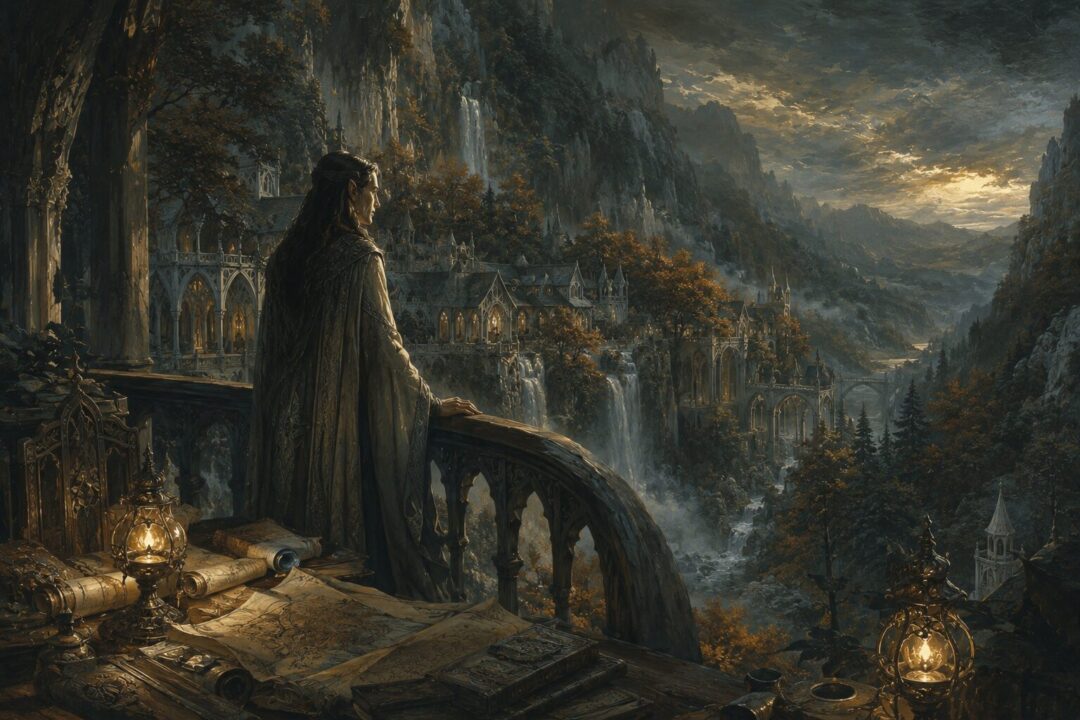
Elrond’s Ring, Vilya, is less openly described in action, but Rivendell itself shows what such preservation can mean. Imladris is a refuge, a place where lore is gathered, wounds are tended, and the long memory of the Elder Days has not vanished from the world.
It is not a kingdom of conquest. It is a house against forgetting.
That may be Vilya’s most important symbolic function. Rivendell preserves wisdom. It gathers fragments: heirs of lost realms, broken swords, ancient songs, old counsels, and histories nearly swallowed by war. Without such places, the Free Peoples would not merely lose battles. They would lose memory, and with memory, the ability to understand what they are fighting for.
Yet Rivendell too cannot save Middle-earth by remaining Rivendell. Counsel can guide the Quest, but it cannot replace it. Healing can restore the wounded, but it cannot destroy the Ring. Memory can preserve truth, but it cannot force the future to remain obedient to the past.
Elrond’s wisdom lies partly in knowing this. The Council does not decide to hide the Ring forever in Rivendell. It sends it away. The preserved house must risk itself for a world beyond its borders.
Narya and the Fire That Does Not Dominate
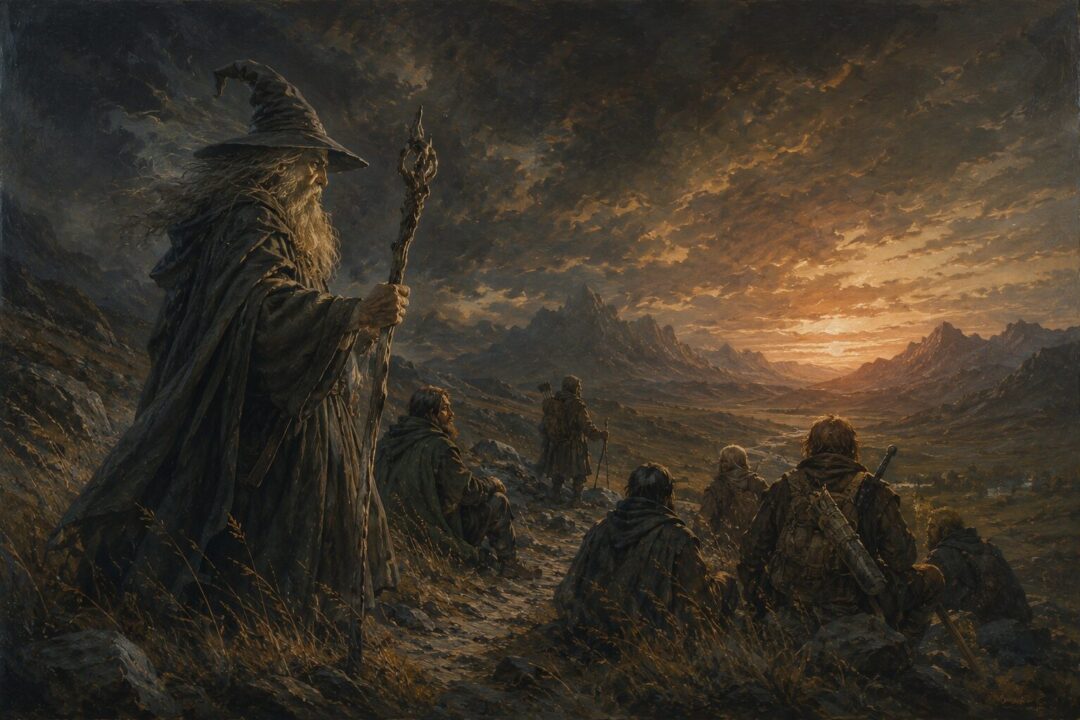
Narya, the Ring of Fire, is different. It is given to Gandalf, and its associated power is not the freezing of beauty into timelessness, but the kindling of courage. Círdan’s gift recognizes something essential about Gandalf’s mission: he is not sent to rule, but to strengthen others against despair.
That makes Narya the least possessive of the Three in spirit. Its fire does not appear as conquest. It works through encouragement, endurance, and hope. Gandalf does not use power to make the Free Peoples obey him. He awakens them to act.
Still, even Narya cannot save Middle-earth by itself. Courage is necessary, but courage alone cannot abolish evil. Hope can carry Frodo to Mordor, but it cannot make the burden painless. Gandalf can resist Sauron’s servants, guide kings, and rouse hearts, but he cannot simply overpower the Dark Lord by force.
This is why Narya’s fire is so moving. It does not remove the need for suffering. It helps people endure it.
Why the Three Were Still Bound to the One
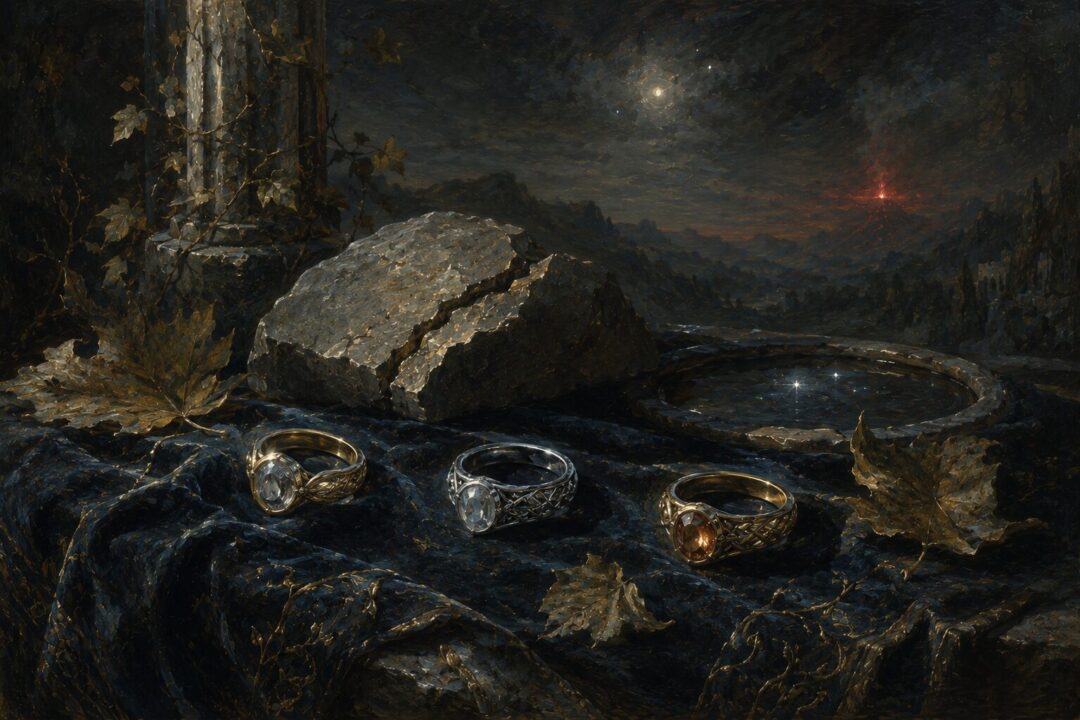
The Three were hidden from Sauron, and he never touched them. That distinction is crucial. They are not corrupted in the same direct way as the Nine, which enslave mortal kings into wraiths.
But they are still Rings of Power. Their power remains bound up with the fate of the One. When Sauron makes the Ruling Ring, he creates a master-key to the whole system of ringcraft. The Elves perceive his treachery and remove their Rings, preventing him from using the One to dominate them while he possesses it.
That fact reveals the danger. The Three may be beautiful, but they are not independent of the larger design. They are vulnerable to the One because they belong to the same art of preservation and control. The difference is moral direction, not total separation.
This is why the destruction of the One is both deliverance and loss. It frees the world from Sauron’s ruling power, but it also ends the age of the Three. Their works fade. Their bearers depart. Middle-earth is saved from domination, but not preserved unchanged.
Preservation Is Not Healing
The deepest lesson of the Three is the difference between preserving and healing.
Preservation holds a wound closed. Healing makes the body whole. Preservation keeps beauty from fading. Healing would remove the corruption that makes fading tragic. Preservation can maintain Lórien, shelter Rivendell, and strengthen courage through Narya. But it cannot remake Arda Unmarred. It cannot remove the ancient marring of the world. It cannot prevent loss forever.
This is why the Three feel so bittersweet. They are among the least evil uses of power in the legendarium, yet they still cannot accomplish the final good their bearers desire. They can make sanctuaries, not paradise. They can guard memory, not reverse history. They can delay grief, not abolish it.
That limitation is not failure in a simple sense. The Three do real good. Without the hidden refuges and the courage they help sustain, the resistance to Sauron may have failed long before Frodo reached Mordor. But their goodness is temporary by nature. They are lamps in a darkening world, not a new sun.
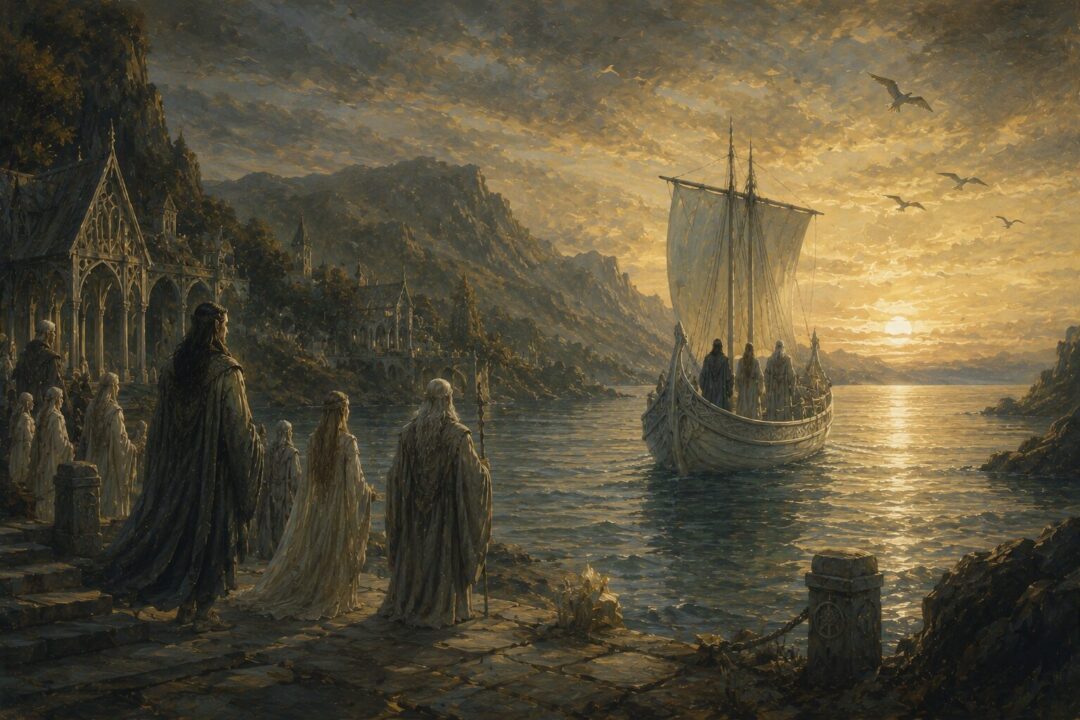
The Victory That Ends the Dream
At the end of the Third Age, the destruction of the One Ring saves Middle-earth from Sauron. But for the Elves, it also confirms the passing of their dominion. The Keepers of the Three leave over Sea. The preserved places lose the power that made them seem almost beyond time.
This is not presented as meaningless loss. It is the price of refusing domination. Galadriel cannot keep Lórien forever without accepting the logic of the Ring. Elrond cannot preserve the Elder Days in Middle-earth indefinitely. Gandalf’s work is completed not when he rules, but when others can stand after him.
The Three could preserve what was beloved. They could never truly save it from change.
And that is why they are so powerful as a symbol. They show the noblest form of a temptation we all recognize: the desire to keep what is beautiful from passing away. Middle-earth is saved because its wisest guardians finally accept that some beloved things must fade, rather than be possessed forever.
The Three Rings preserve beauty, memory, and courage. But salvation comes only when preservation yields to sacrifice.
Sources & Notes
- Tolkien Gateway, “Three Rings” — describes the Elven Rings, their preservative power, and their dependence on the fate of the One Ring. https://tolkiengateway.net/wiki/Three_Rings
- Tolkien Gateway, “Rings of Power” — gives wider context for the making and purpose of the Rings and Sauron’s attempt to dominate them. https://tolkiengateway.net/wiki/Rings_of_Power
- Tolkien Gateway, “Elrond” — summarizes Elrond’s bearing of Vilya and the preservation of Rivendell during the Third Age. https://tolkiengateway.net/wiki/Elrond
Sources added for the Three Rings’ preservative role and limits.