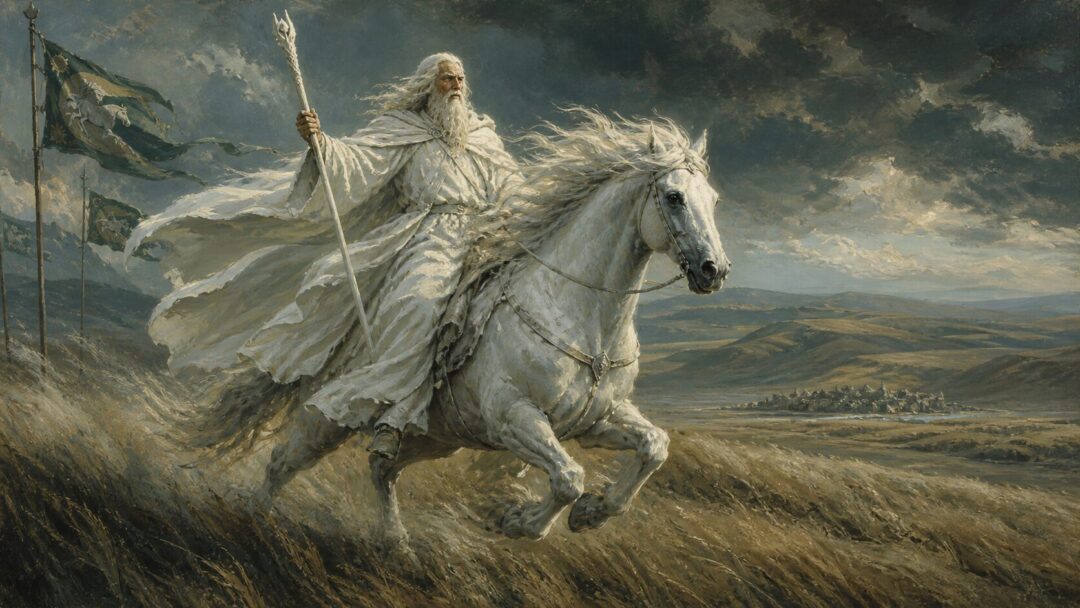
When Gandalf returns in Fangorn Forest, the moment should feel impossible.
Aragorn, Legolas, and Gimli have watched him fall into the abyss of Moria. They have mourned him. They have continued the road without him, believing that the guide of the Fellowship was gone forever.
Then, in the deep shadow of Fangorn, they meet an old man in white.
At first, they fear Saruman.
That fear is not foolish. Saruman is the White Wizard. He is dangerous, persuasive, and known to work through voice and deception. Aragorn warns the others not to let the stranger speak too freely. Gimli is ready to strike. Legolas is wary.
Then the truth breaks through.
It is Gandalf.
But Gandalf’s response is not simple recognition. In the book, when his old name is spoken, he repeats it as though reaching back toward something distant. He says, in effect, that this was his name. He was Gandalf.
That small hesitation has puzzled readers for years.
Why would Gandalf seem uncertain about being called Gandalf the Grey?
The answer is not that he had literally become a different person. It is not that he was suffering ordinary memory loss. And it is not simply that he was being dramatic.
The answer is stranger and more meaningful.
“Gandalf the Grey” was not merely a name.
It was a completed life.
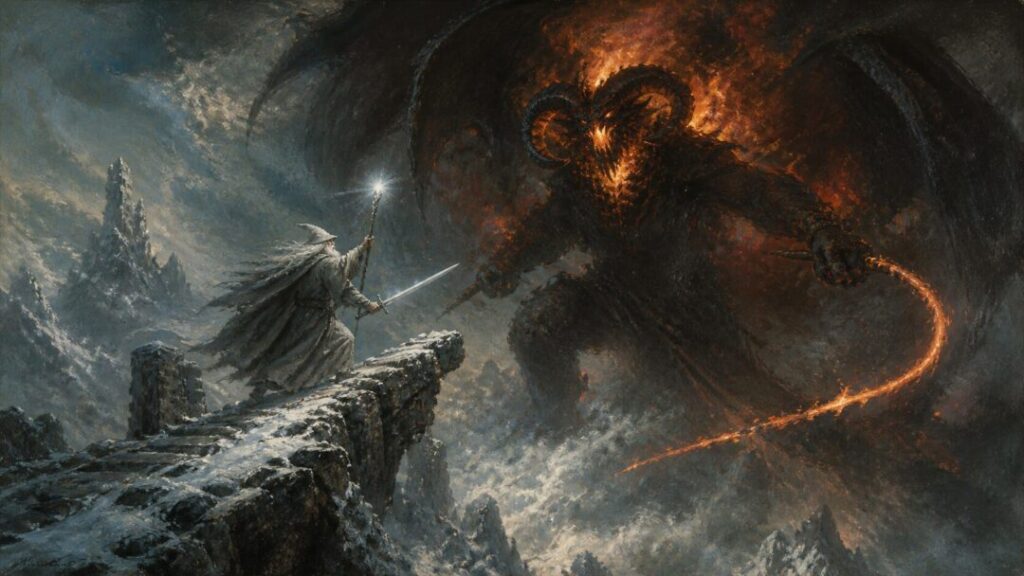
Gandalf Was Never His Only Name
To understand the scene, we have to begin with something the story tells us plainly:
Gandalf had many names.
In Gondor, Faramir remembers him as one who said that he was called Mithrandir among the Elves, Tharkûn by the Dwarves, Gandalf in the North, and Olórin in the West that was forgotten. He also says he did not go to the East.
This is important because “Gandalf” is not presented as his first or deepest name.
It is the name by which he is known in the northern lands of Middle-earth. To Hobbits, Men of the North, and many others, he is Gandalf. To the Elves, he is Mithrandir, the Grey Pilgrim. To the Dwarves, he is Tharkûn. Long before any of these names were used in Middle-earth, he was Olórin.
So when Aragorn calls him Gandalf in Fangorn, the name is real—but it belongs to one part of his long existence.
It is not false.
But it is not the whole truth.
This already makes the moment more layered. Gandalf is not like Aragorn, whose name belongs to a mortal life moving forward in one continuous line. Gandalf’s identity stretches beyond the ordinary experience of Men, Elves, Dwarves, and Hobbits.
He has worn names as he has worn cloaks.
And one of those cloaks was grey.
“The Grey” Was a Role
Gandalf the Grey was not simply Gandalf with a color attached.
The color mattered.
The Wizards, or Istari, came to Middle-earth in forms that looked like old Men. They were not meant to rule openly, seize power, or match Sauron by force. Their task was to guide, counsel, encourage, and help the free peoples resist the Shadow.
Within that order, Saruman was the White. Gandalf was the Grey. Radagast was the Brown. The two Blue Wizards went into the East, though their later story is not fully told in The Lord of the Rings itself.
Gandalf’s greyness fits his work.
He wanders. He advises. He appears at doors, councils, roads, inns, and battlefields. He does not hold a kingdom. He does not command an empire. He is often dismissed as a meddler, a bringer of bad news, or a wandering conjurer.
That humility is part of his strength.
As the Grey Pilgrim, Gandalf works through trust, friendship, memory, and courage. He helps Thorin’s Company begin the Quest of Erebor. He suspects the Ring long before most of the Wise understand the danger clearly. He guides the Fellowship until the Bridge of Khazad-dûm.
And there, the Grey Pilgrim reaches the end of his road.
Moria Was Not Just a Defeat
The fall in Moria is often remembered as a sacrifice.
It is that, but it is more than that.
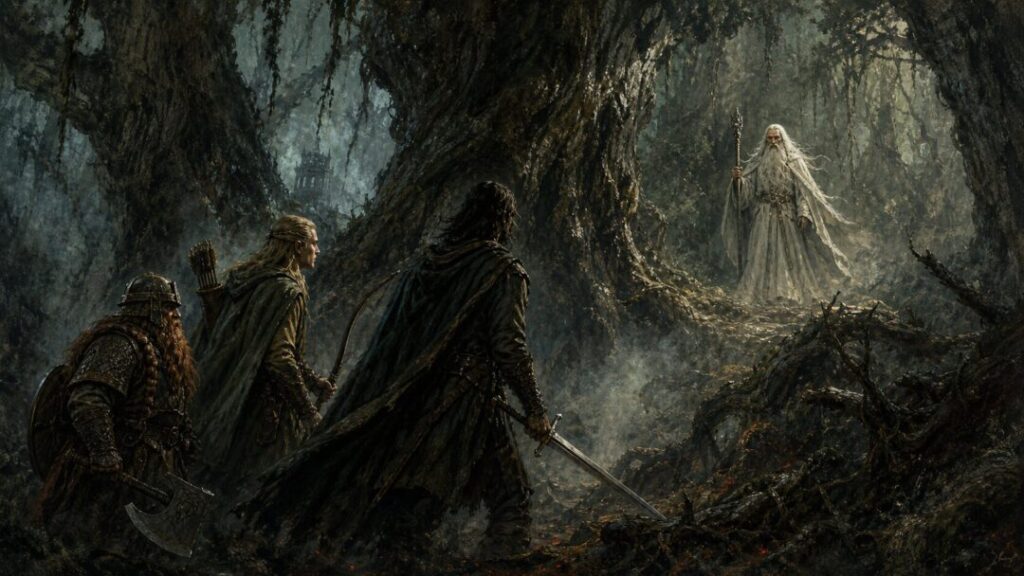
When Gandalf faces the Balrog, he is not merely fighting a monster. He is confronting a being of the same ancient order as himself, a terrible spirit from the Elder Days. The battle does not end when both fall from the bridge.
Gandalf later tells the Three Hunters that he and the Balrog fought far below the earth, climbed the Endless Stair, and came at last to the peak of Zirakzigil. There, above the clouds, the battle ended.
The Balrog was thrown down.
Gandalf also died.
The text is careful and solemn here. Gandalf does not describe a narrow escape. He does not say that he hid, healed, and returned by his own strength. He says he passed out of thought and time. Then he was sent back.
That phrase matters.
Gandalf did not simply survive Moria.
He completed the life and task of Gandalf the Grey, died, and returned because his work in Middle-earth was not yet finished.
Why the Old Name Felt Distant
This is why his reaction in Fangorn feels so strange.
When Aragorn calls him Gandalf, the name reaches someone who has passed through death and returned changed.
The book says he recalls the name like something long unused. That does not mean he has forgotten everything. He knows his companions. He knows their need. He knows the war is still unfolding. But the name “Gandalf” belongs to the life that ended on the mountain.
For Aragorn, Legolas, and Gimli, only days have passed since Moria.
For Gandalf, something far more mysterious has happened.
He has fallen through fire and darkness. He has fought to the death. He has passed beyond ordinary time. He has been returned naked to the mountain until Gwaihir bore him away.
The texts do not explain the experience in full, and they are wise not to. But they show enough to make one thing clear:
Gandalf’s hesitation is not confusion in the ordinary sense.
It is distance.
The name belongs to him, but it belongs to the version of him who died.
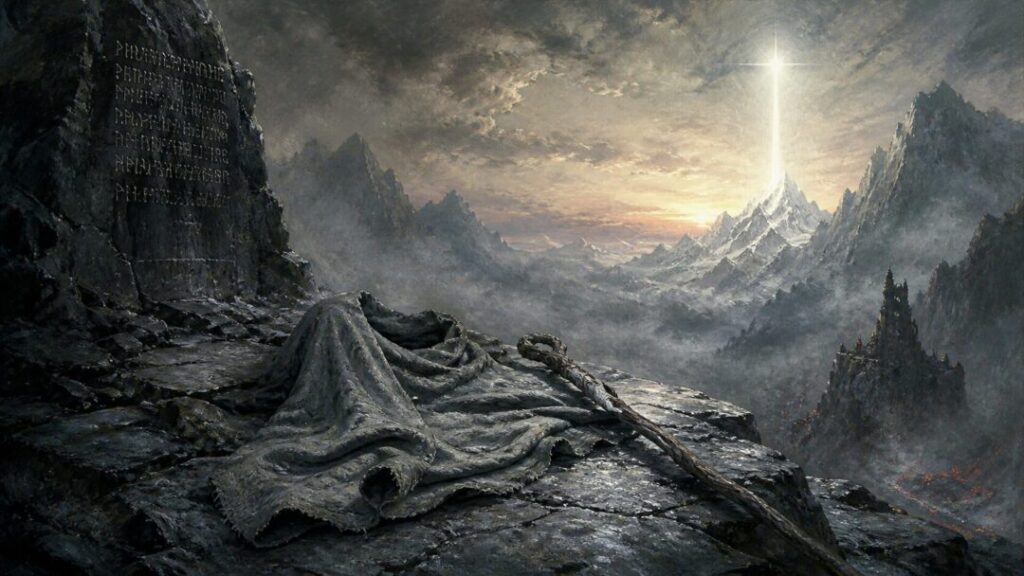
Gandalf the White Is Not Merely Gandalf in New Clothes
After his return, Gandalf declares himself Gandalf the White.
This is not cosmetic.
Saruman had been the White Wizard, the head of the order. But Saruman betrayed his purpose. He sought power, made himself a rival to Sauron, and used his wisdom for domination rather than guidance.
Gandalf’s return in white signals a reversal.
He has not become Saruman in personality or ambition. In fact, he later says he is Saruman as Saruman should have been. That line is crucial. Gandalf the White represents the office and authority Saruman failed to bear rightly.
But he remains Gandalf.
He still laughs. He still cares for Hobbits. He still guides rather than rules. He still rejects the desire to possess the Ring. The continuity is real.
Yet the change is also real.
The Grey Pilgrim was a wandering counselor whose power was veiled. Gandalf the White comes with greater authority and urgency. He confronts Saruman. He breaks Saruman’s staff. He becomes the chief guide of the resistance against Sauron in the final phase of the War of the Ring.
The old name still fits.
But it no longer contains everything.
Why “Grey” No Longer Fits
If the question is specifically why Gandalf seemed confused when called “Grey,” the answer is even sharper.
Because he is no longer Grey.
The title “Grey” belongs to the earlier stage of his mission. It belongs to the wandering figure who came to the Shire with fireworks, moved quietly among the Wise, and led the Fellowship until he fell in Moria.
That Gandalf was not false.
But that Gandalf has died.
So if someone calls him “Gandalf the Grey” after Fangorn, they are naming a past identity. A true identity, but no longer the present one.
This is why the moment is not about vanity. Gandalf is not correcting his branding. He is not demanding a promotion.
He is recognizing that a boundary has been crossed.
Before Moria, he was the Grey Pilgrim moving toward sacrifice.
After Moria, he is the White Rider returned for the final labor.
The difference is spiritual, not merely visual.
Did Gandalf Forget Himself?
The safest answer is this:
The text does not say that Gandalf completely forgot who he was.
It says the name seemed distant.
That distinction matters.
Readers sometimes turn the scene into a simple memory problem, as if Gandalf woke up with missing information. But the book presents something subtler. He remembers, but from far away. He has returned from an experience beyond normal mortal categories, and his old identity comes back into focus only when his friends call it forth.
This also fits the way Gandalf speaks after his return.
He is familiar and unfamiliar at once. He is the same friend, but more commanding. The same guide, but less hidden. The same Gandalf, but no longer only the Grey wanderer they knew.
That is why the scene feels uncanny.
Aragorn, Legolas, and Gimli are not simply meeting a resurrected companion.
They are meeting someone whose old life ended, and whose new task has begun.
The Name Was an Echo From a Finished Road
The beauty of the Fangorn scene is that it lets both truths stand.
Gandalf is still Gandalf.
And Gandalf the Grey is gone.
That is why his response carries such weight. He is not denying the name. He accepts it. He even says they may still call him Gandalf. But he also makes clear that something has changed beyond ordinary explanation.
The Grey Pilgrim died on Zirakzigil.
The White Rider returned.
And for a moment, when his old name is spoken beneath the trees of Fangorn, Middle-earth hears the echo of both.
The friend who was lost.
And the messenger who was sent back.
That is why Gandalf seems confused.
Not because he does not know who he is.
But because the name “Gandalf the Grey” belongs to a life that had already ended—one that he could remember, but no longer fully inhabit.
Sources & Notes
- J.R.R. Tolkien, The Lord of the Rings, Book III, Chapter 5, “The White Rider” — Gandalf’s return in Fangorn, his distant response to the name “Gandalf,” and his declaration that he is now Gandalf the White.
- J.R.R. Tolkien, The Lord of the Rings, Book II, Chapter 5, “The Bridge of Khazad-dûm” — the fall with the Balrog that ends Gandalf the Grey’s road with the Fellowship.
- J.R.R. Tolkien, The Lord of the Rings, Book IV, Chapter 5, “The Window on the West” — Faramir’s recollection of Gandalf’s many names, including Mithrandir, Tharkûn, Gandalf, and Olórin.
- J.R.R. Tolkien, Unfinished Tales, “The Istari” — background on the Wizards’ embodied mission to counsel and encourage resistance to Sauron rather than rule by force.
- J.R.R. Tolkien, The Silmarillion, “Valaquenta: Of the Maiar” — identifies Olórin among the Maiar, giving context for Gandalf’s deeper identity beyond his names in Middle-earth.