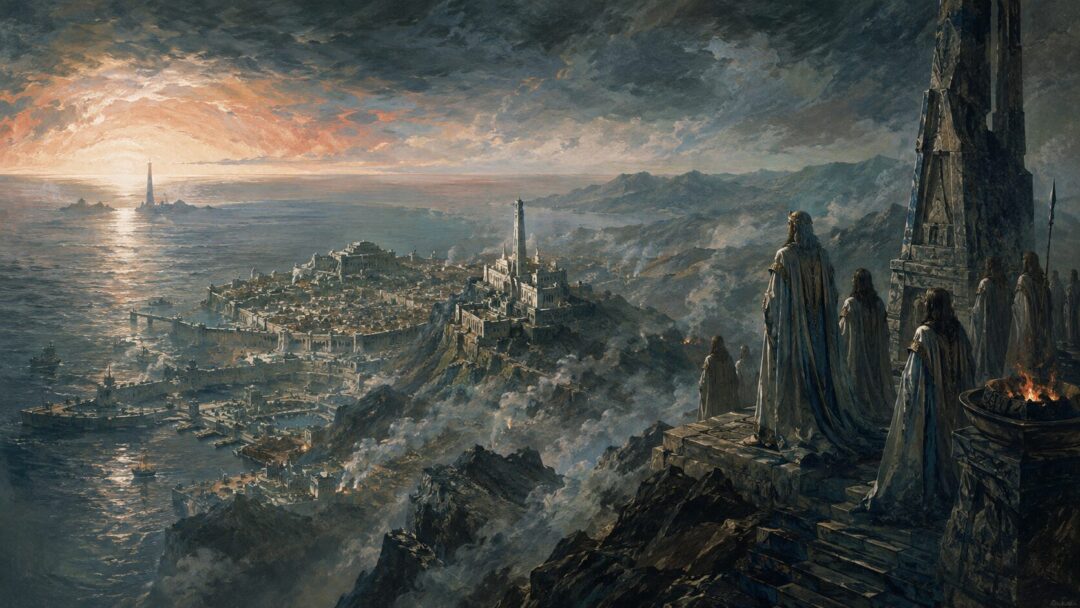
The strangest thing about Númenor is that it was destroyed not because its people were weak, but because they had been given almost everything.
They had an island raised for them out of the sea. They had long life, wisdom, strength, ships, wealth, friendship with the Eldar, and a line of kings descended from Elros, brother of Elrond. From the height of Meneltarma, they could worship the One without temple or image. From their western shores, in clear weather, they could look toward the Undying Lands, though they were forbidden to sail there.
And that was the wound.
For the Númenóreans, the great question was not simply why they must die. It was why they must die while the Elves did not. Their downfall began when they stopped seeing mortality as the Gift of Men and began seeing it as an insult.
The Gift That Looked Like a Curse
In the deeper mythology of Middle-earth, Men are not merely shorter-lived versions of Elves. Their mortality is not an accident. The texts describe death as the Gift of Ilúvatar to Men: a release from the circles of the world, a fate different from that of the Elves, who remain bound to Arda as long as Arda lasts.
That does not make death simple, painless, or easy to understand. Even the wisest characters rarely speak of it as something fully explained. The Gift is mysterious because no one within the world fully knows what lies beyond it. The Elves can name it, but they do not possess it. The Valar can teach that it is not evil, but even they do not govern what comes after.
This is one reason Númenor’s tragedy feels so human. The Númenóreans were not wrong to grieve death. They were wrong when grief became accusation, and accusation became rebellion against the nature of the world.
A gift that cannot be controlled can feel like a threat. A freedom that begins with surrender can feel like defeat.
Númenor Was Built on Both Reward and Test
Númenor, also called Andor, the Land of Gift, was granted to the Edain after the War of Wrath because they had aided the Elves against Morgoth. It was not Aman. It was not Middle-earth. It stood between them: blessed, beautiful, and deliberately limited.
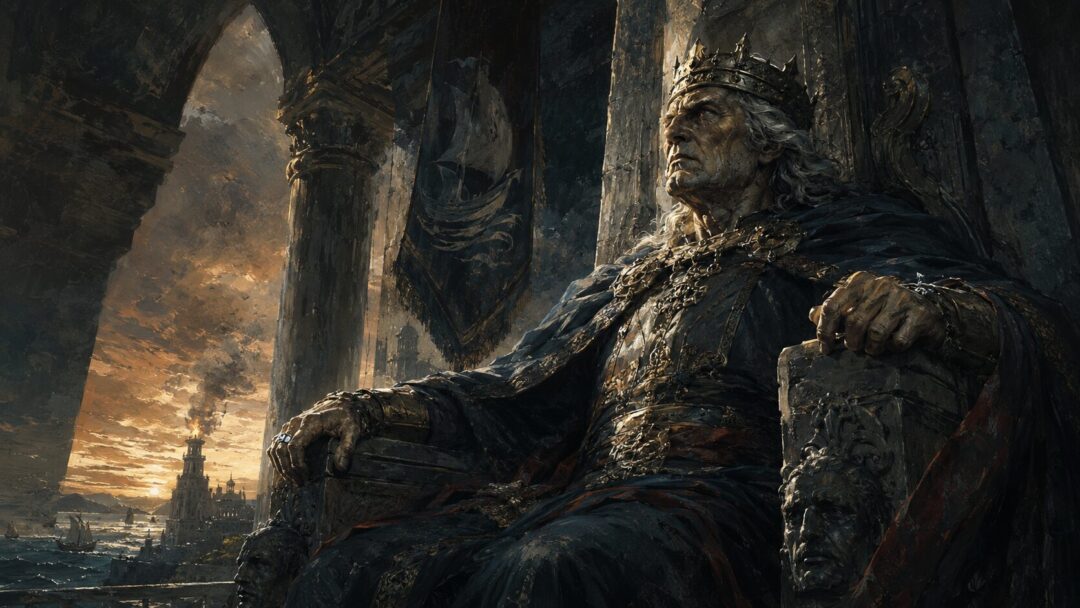
The Númenóreans were given longer life than other Men, but not immortality. Their kings especially lived for centuries. Elros himself ruled for a vast span before relinquishing his life. The early Númenórean ideal was not endless survival, but willing acceptance. A king could lay down his life before decay mastered him, passing authority in dignity rather than clinging to the throne until the body failed.
That early pattern matters. Númenor did not fall because Men were mortal. It fell because mortality became unbearable to them after greatness had taught them to expect mastery over almost everything else.
Their long lives were a blessing, but they also made the border sharper. Ordinary Men died quickly and had little time to imagine themselves as rivals of the deathless. Númenóreans lived long enough to build marvels, accumulate memory, command seas, and look upon Elves as near equals in beauty and knowledge. Then death still came.
The longer the road, the more bitter the wall at the end appeared.
The Ban of the Valar Was Not the Cause, but the Mirror
The Ban of the Valar forbade the Númenóreans from sailing west so far that they could no longer see their own land. The reason was not that the Valar wished to hoard bliss like jealous kings. The Undying Lands did not make mortals deathless. Aman was undying because the deathless dwelt there; it was not a cure for the nature of Men.
But to a fearful heart, a boundary can look like theft.
The Númenóreans saw the Eldar come from the West. They heard of Valinor. They knew the Elves did not die as Men died. Over time, the Ban became a symbol of everything they resented. It stood before them like a locked gate, and beyond it, they imagined the thing they most desired.
The tragedy is that the Ban was meant partly to protect them from exactly this confusion. If Men came to believe that reaching Aman would give them immortality, they would chase a false hope into spiritual disaster. That is precisely what happened.
The Ban did not create Númenor’s fear. It revealed it.
The First Decline Was Inward
The decline of Númenor did not begin with Sauron. That is important. Sauron exploited the sickness, but he did not invent it.
The Akallabêth describes a growing restlessness among the Númenóreans. They became proud of their power, eager for wealth, and increasingly uneasy with death. Their ships went east to Middle-earth, first bringing aid and knowledge, later returning with tribute and dominion. Their relationship to lesser Men darkened as their fear deepened.
This is one of the sharpest moral patterns in the story: fear of death does not make Númenor gentle. It makes Númenor possessive.
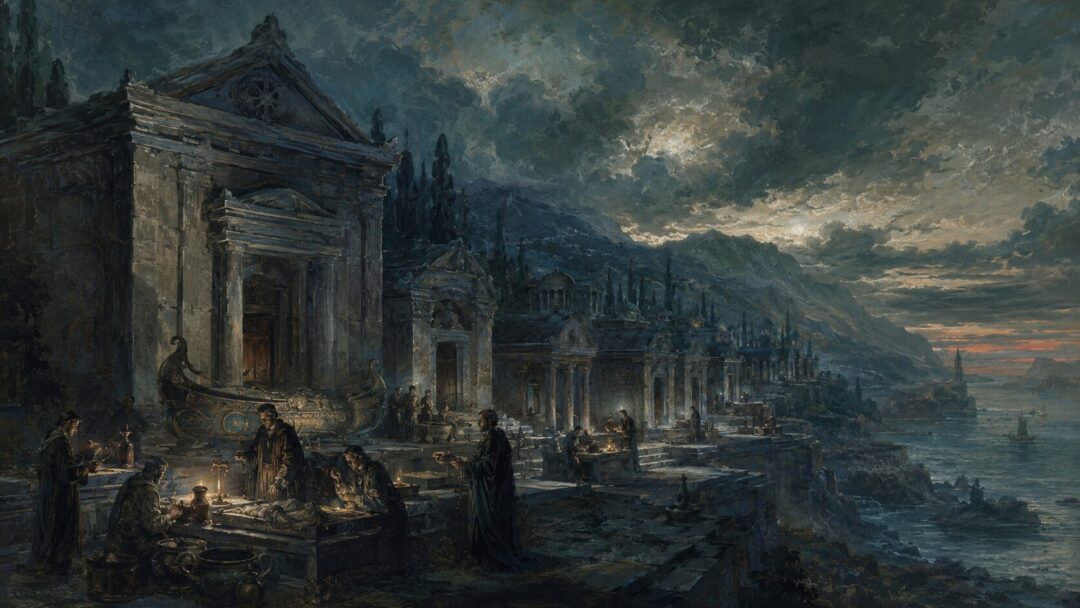
Instead of receiving life as a stewardship, they try to turn it into ownership. Instead of accepting time, they try to store themselves against loss. The texts describe them building great tombs and devoting thought to preserving the dead or extending life. That detail is more than cultural atmosphere. It shows a civilization reorganizing itself around refusal.
A people who once looked west in reverence begin to look west in envy. A people who once ruled long enough to serve begin to rule long enough to dominate.
Tar-Atanamir and the Refusal to Let Go
The reign of Tar-Atanamir marks a crucial stage in the spiritual decline. He is remembered as one of the first kings to speak openly against the Ban and to cling to life until death took him unwillingly. This was a break from the older royal wisdom, where the king surrendered life before age reduced him.
His refusal was not merely personal weakness. In a monarchy descended from Elros, the king’s relationship to death had symbolic force. If the king could no longer accept the Gift, then the realm itself had lost part of its memory.
The messengers of the Valar came to answer the unrest of Númenor, explaining that the fate of Men was not a punishment and that the Undying Lands would not heal mortality. Yet instruction could not remove the central trial. The Númenóreans still had to trust that what they could not see was not evil.
Many did not.
The split between the King’s Men and the Faithful grew from this wound. The Faithful did not necessarily understand death without sorrow; the texts imply they too were troubled by the shadow that had fallen on their people. But they chose trust over rebellion. The King’s Men chose resentment and eventually hostility toward the Eldar and the Valar.
Sauron Did Not Offer Power First — He Offered an Answer to Fear
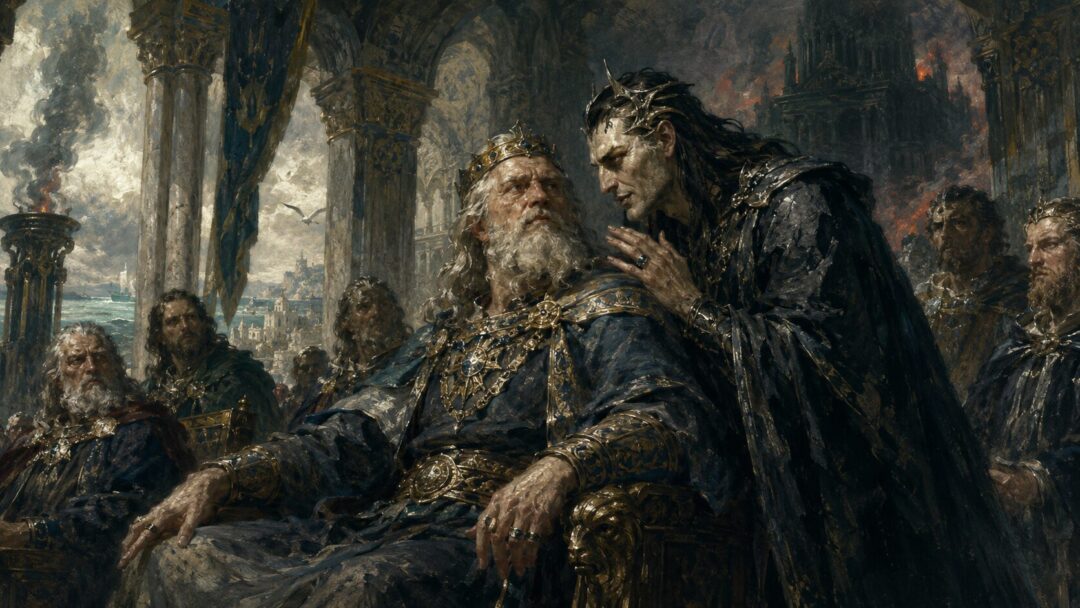
When Ar-Pharazôn brought Sauron captive to Númenor, the king seemed triumphant. In reality, Númenor had invited into its heart the one voice best suited to weaponize its terror.
Sauron’s genius in Númenor was not simply military or political. He gave theological shape to the nation’s fear. He persuaded the king and many of the people that the Valar had deceived them, that death was not a gift, and that immortality could be seized. He redirected their resentment into worship of Melkor, presenting rebellion as enlightenment and sacrilege as courage.
This is why Númenor’s fall is not just a punishment story. It is a corruption story. Sauron tells the lie the proud already want to believe: that limits are insults, that obedience is slavery, that the world’s deepest law is merely someone else’s power play.
Under his influence, Númenor becomes a grotesque inversion of itself. The mountain once associated with open worship of Ilúvatar is overshadowed by a temple to Melkor. The White Tree, Nimloth, descendant of holy trees and a sign of friendship with the Eldar, is destroyed, though Isildur rescues a fruit before its end. The Faithful are persecuted. Human sacrifice enters the worship of darkness.
Fear of death has become service to death.
Ar-Pharazôn’s Armada Was the Final Misreading
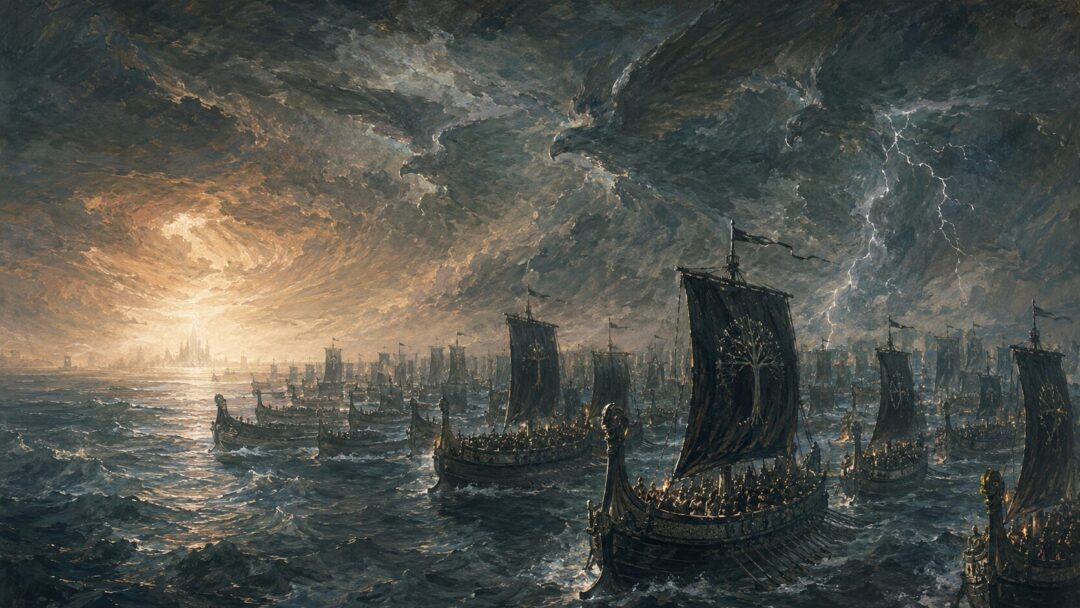
Ar-Pharazôn’s final assault on Aman was the last and greatest expression of Númenor’s error. He sailed west not because he had discovered the truth, but because he had believed the oldest lie of tyrants: that what cannot be received may be taken.
The fleet that approached the Undying Lands was not merely a military force. It was a civilization’s refusal made visible. Every mast and sail declared that Númenor would rather break the world than accept the Gift appointed to Men.
Yet Aman could not give them what they sought. Even had they reached its shores in triumph, they would still have been mortal. The quest was doomed before judgment fell because it was founded on a false idea of immortality.
When the Valar laid down their guardianship and appealed to Ilúvatar, the world itself was changed. Númenor was drowned. Aman was removed from the circles of the world. Only the Faithful led by Elendil and his sons escaped, borne eastward through the ruin to found realms in exile.
The island that had been a gift vanished beneath the sea because its people could no longer bear gift as gift.
The Faithful Were Not Saved Because They Were Fearless
It is tempting to reduce the story into two simple groups: the wicked who feared death and the righteous who did not. The texts are more subtle than that.
The Faithful were not necessarily free from grief, uncertainty, or longing. Their difference was fidelity. They refused to make fear their master. They preserved friendship with the Eldar, reverence for the Valar, and memory of Ilúvatar. They did not solve death. They trusted beyond it.
That distinction is vital. Númenor’s fall does not teach that good people feel no fear. It teaches that fear becomes ruin when it demands false worship.
The Faithful survive not by conquering death, but by carrying memory through catastrophe. Elendil does not save Númenor. He saves what can still be saved from Númenor: language, lineage, the seed of the White Tree, and a humbled kingship that will be tested again in Middle-earth.
Númenor’s Real Enemy Was Not Mortality
Númenor fell because it mistook mortality for the enemy. But the story suggests that the deeper enemy was possessiveness: the desire to make life permanent on one’s own terms.
The Gift of Men is frightening because it cannot be proven from within the world. It asks Men to move beyond what even the Elves can fully understand. For Númenor, that mystery became intolerable. Their greatness made them less willing to receive, less willing to trust, less willing to depart.
So they built tombs. Then they built empires. Then they built a temple. Then they built an armada.
Each stage was another way of saying no.
That is why the Downfall remains one of the most powerful tragedies in Middle-earth. Númenor was not destroyed by ignorance alone. It had wisdom. It had warnings. It had examples of noble death. It had the friendship of the West. But it allowed the fear of an unseen gift to turn blessing into grievance.
In the end, the sea closed over the Land of Gift. Not because Men were meant to despise life, but because they tried to steal a kind of life that was never theirs. Númenor’s doom is the story of a people who had been given time, beauty, and glory — and lost them because they could not accept that even the greatest life must be released.
Sources & Notes
- J.R.R. Tolkien, The Silmarillion, "Akallabêth" — the core account of Númenor as the Land of Gift, the Ban of the Valar, Sauron's corruption, Ar-Pharazôn's armada, and the Downfall.
- J.R.R. Tolkien, The Silmarillion, "Of the Beginning of Days" — frames mortality as the Gift of Ilúvatar to Men, distinct from the fate of the Elves within Arda.
- J.R.R. Tolkien, Unfinished Tales, "A Description of the Island of Númenor" — background on Númenor's geography, Meneltarma, western outlook, and the blessed but bounded nature of the island.
- J.R.R. Tolkien, Unfinished Tales, "The Line of Elros: Kings of Númenor" — supports the royal chronology, Elros's long rule, and Tar-Atanamir's refusal to surrender life willingly.
- J.R.R. Tolkien, The Letters of J.R.R. Tolkien, Letter 131 — Tolkien's own summary of the Númenóreans' fear of death, resentment of the Ban, and Sauron's exploitation of that desire.