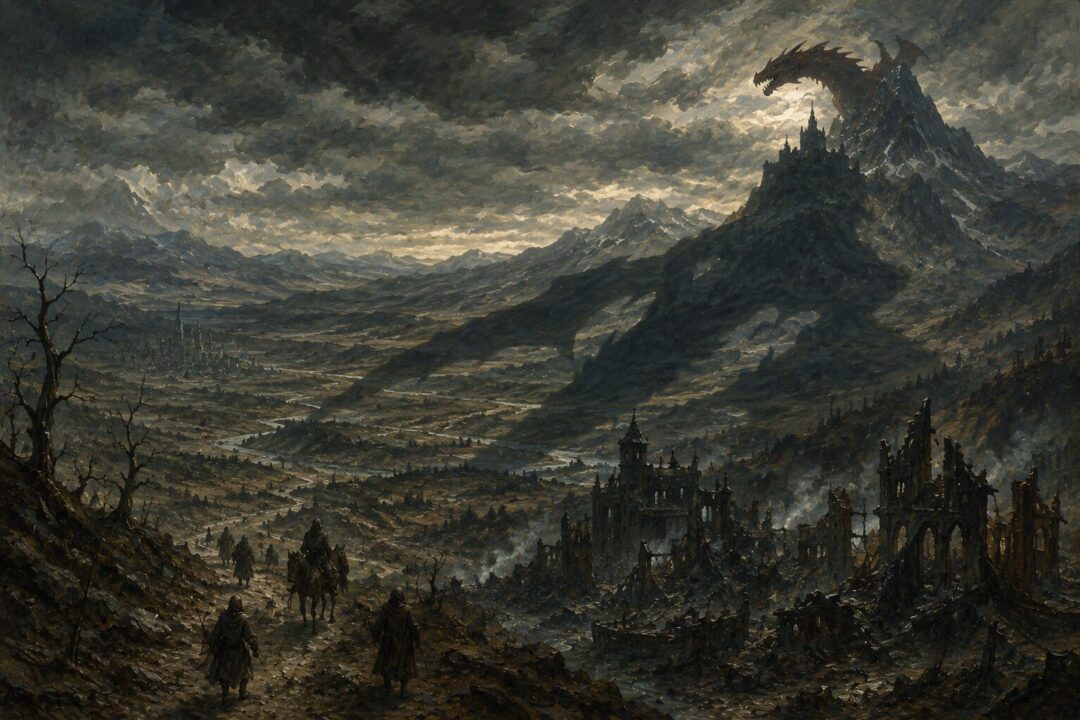
A dragon sleeping on a mountain of gold is one of the most recognizable images in Middle-earth. Smaug, the last great dragon of the Third Age, is often remembered for his enormous body, his fiery breath, and the destruction he brought to the Lonely Mountain. Yet focusing only on his physical size misses what made him truly terrifying.
Many creatures in Tolkien’s world possessed immense strength. Balrogs could shatter armies. Trolls towered over Men. Even giant Eagles could rival dragons in scale. Smaug’s danger came from something more complex. He combined overwhelming physical power with intelligence, patience, greed, psychological manipulation, and an almost supernatural confidence in his own invulnerability.
His greatest weapon was not necessarily fire.
It was his mind.
The Dragon Who Ended a Kingdom in a Single Day
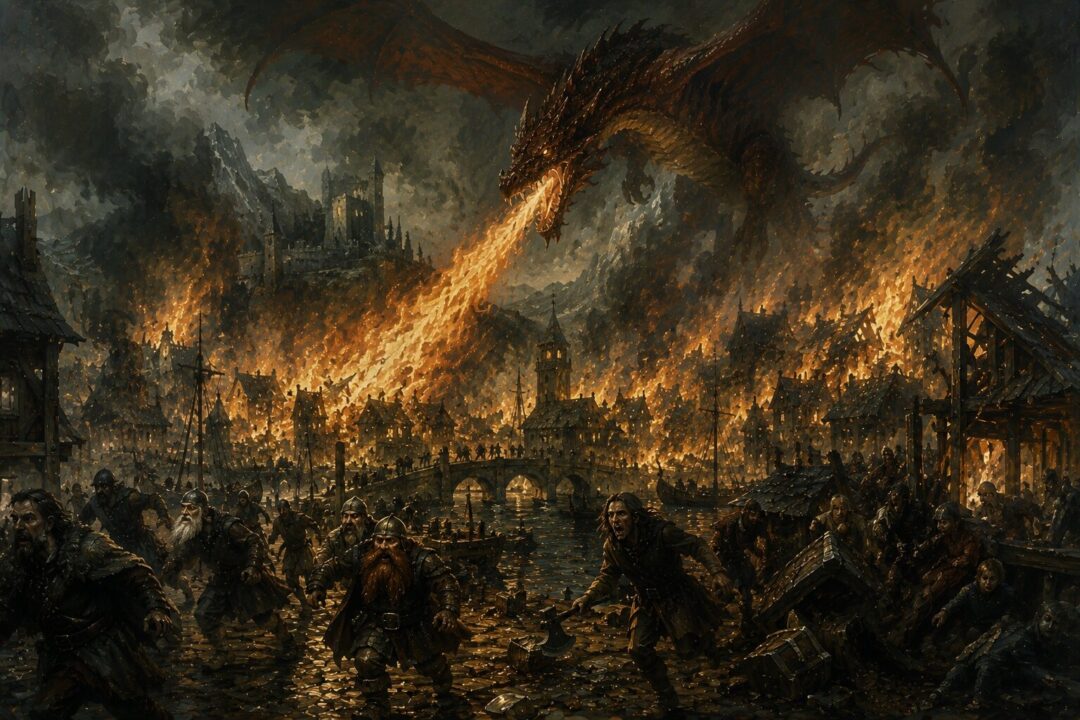
When Smaug descended upon Erebor and Dale, he did not merely attack a city. He destroyed an entire regional power.
The Kingdom under the Mountain was one of the wealthiest realms in northwestern Middle-earth. Nearby Dale flourished through trade with the Dwarves. Together they formed an economic center whose influence reached far beyond their immediate borders.
According to The Hobbit, Smaug’s assault devastated both kingdoms. The Dwarves were driven into exile, Dale was ruined, and countless inhabitants were killed or scattered. The dragon then claimed the mountain and its treasure for himself.
The remarkable detail is not simply that he conquered these realms. It is how completely the victory lasted.
For nearly two centuries after the attack, Erebor remained in Smaug’s possession.
Most conquerors require armies, fortifications, supply lines, and constant vigilance. Smaug required only himself.
His physical strength enabled the conquest, but his reputation preserved it. Fear alone discouraged attempts to reclaim the mountain. The destruction he had inflicted became a warning visible across generations.
The Lonely Mountain became not merely occupied territory but forbidden territory.
Smaug Understood Fear Better Than Most Men
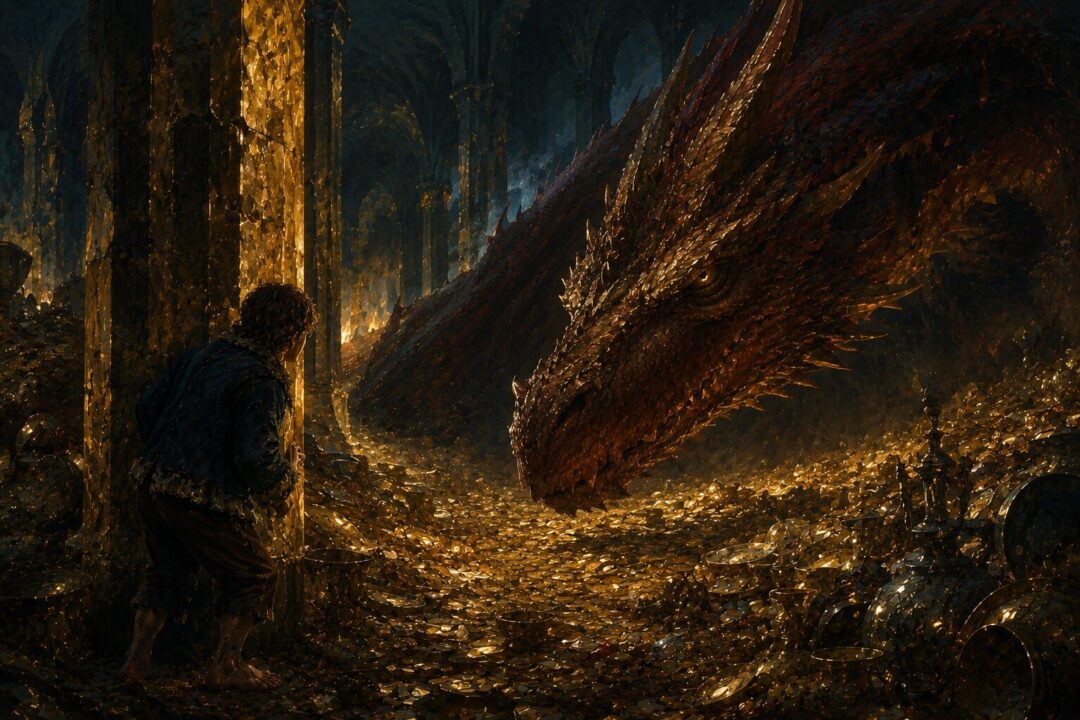
One of the most revealing chapters in The Hobbit is Bilbo’s conversation with Smaug.
The encounter demonstrates that Smaug was not a mindless beast guarding treasure. He was extraordinarily perceptive and psychologically dangerous.
Throughout the conversation, Smaug constantly probes for information. He attempts to identify Bilbo’s origins, motives, companions, and weaknesses. He listens carefully to every answer while simultaneously boasting and threatening.
More importantly, he recognizes emotional vulnerabilities.
Smaug quickly senses tensions between Dwarves, Men, and others. He understands that suspicion can be as destructive as fire. He hints that Bilbo may be receiving less than he deserves from Thorin’s expedition. He plants doubts and encourages mistrust.
The dragon is effectively conducting psychological warfare from within his own treasure hall.
Bilbo manages to resist these manipulations, but only barely. The narrative repeatedly emphasizes how dangerous Smaug’s speech can be. His words are designed to weaken enemies before any physical confrontation begins.
A creature capable of destroying armies is frightening.
A creature capable of understanding exactly how people think is far worse.
Intelligence Made His Physical Power More Effective
Many monsters possess strength. Few know how to use it strategically.
Smaug demonstrates tactical awareness throughout The Hobbit. After Bilbo discovers the hidden weakness in the dragon’s armor-like scales, Smaug immediately becomes suspicious that information about his vulnerable spot may have escaped.
He begins examining possibilities and trying to determine what Bilbo has learned.
Later, when he realizes that someone may have revealed secrets to the people of Lake-town, he does not blindly rage in every direction. Instead, he identifies what he believes is the source of assistance and launches a direct retaliatory attack.
His reasoning is flawed because he lacks complete information, but the process itself reveals an analytical mind. Smaug investigates causes, forms conclusions, and acts upon them.
He is dangerous because strength and intelligence reinforce one another.
A giant beast can destroy buildings.
A giant beast that can think, plan, evaluate threats, and adapt becomes exponentially harder to defeat.
His Armor Created a Dangerous Illusion
One of Smaug’s most overlooked advantages was psychological rather than physical.
He believed himself nearly invulnerable—and for good reason.
Bilbo observes that the dragon’s underside is encrusted with gems and precious metals. Combined with his scales, these protections create an armor that appears almost impenetrable. Only a tiny bare patch remains exposed.
This extraordinary defense changed how Smaug viewed risk.
Creatures that know they can be wounded often behave cautiously. Smaug displays the opposite tendency. His confidence borders on arrogance because centuries of experience have largely confirmed his beliefs about his own superiority.
That confidence allows him to dominate others through sheer presence.
Most opponents cannot realistically imagine defeating him. The challenge appears hopeless before it begins. Fear magnifies every advantage he possesses.
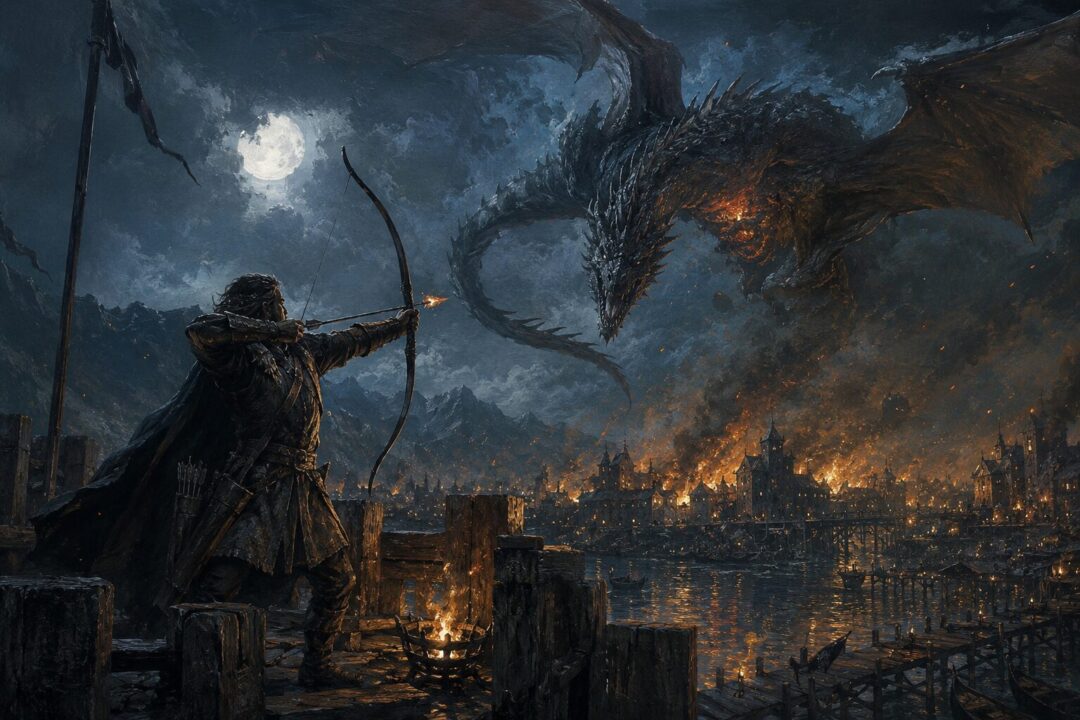
Ironically, this same confidence contributes to his downfall. The exposed patch remains vulnerable, and information about it eventually reaches Bard of Lake-town.
Yet until that moment, Smaug’s near-invulnerability functioned as a weapon in itself.
He projected inevitability.
The Treasure Was Part of the Threat
Smaug’s greed is often treated as a dragon stereotype, but in The Hobbit it serves a deeper narrative purpose.
The treasure beneath Erebor becomes a source of conflict long before any battle begins.
The dragon hoards enormous wealth and removes it from circulation for generations. At the same time, possession of that wealth influences the ambitions and decisions of others. Dwarves seek its recovery. Men hope for restoration and compensation. Rival claims emerge after Smaug’s death.
The dragon’s presence therefore creates consequences that extend beyond direct violence.
Even absent from the story’s central action, Smaug shapes events through the treasure he controls.
The texts never suggest that every aspect of dragon greed functions through magical compulsion. However, they repeatedly show how immense wealth can distort judgment among many peoples of Middle-earth. Smaug becomes both guardian and symbol of concentrated greed.
His hoard is not merely property.
It is a source of instability affecting entire societies.
Smaug Controlled More Than Territory
When discussing power, it is easy to focus exclusively on land.
Smaug exercised influence over something equally important: movement.
The regions surrounding the Lonely Mountain became constrained by his existence. Trade routes suffered. Settlements lived under threat. Political and economic recovery became difficult while the dragon remained alive.
The destruction of Dale removed a major center of commerce. The exile of Erebor’s Dwarves disrupted networks that had connected distant peoples. Fear of the dragon altered decisions far beyond the mountain itself.
A ruler’s authority normally depends upon subjects obeying commands.
Smaug required no bureaucracy.
His influence emerged from the simple fact that everyone knew what could happen if they provoked him.
This is one reason his death transforms the political landscape so dramatically. The moment the dragon falls, opportunities long suppressed suddenly reappear. People immediately begin considering alliances, claims, rebuilding efforts, and future prosperity.
His presence had been shaping the region even when he appeared inactive.
Unlike Earlier Dragons, He Faced Few Serious Rivals
Smaug was not necessarily the largest dragon ever to exist.
The First Age witnessed far greater terrors, including dragons bred by Morgoth during the ancient wars of Beleriand. Creatures such as Ancalagon the Black occupied a legendary place in Middle-earth’s history.
Yet Smaug possessed an advantage many earlier dragons lacked.
By the Third Age, the world had changed.
The great Elven kingdoms had diminished. Ancient heroes no longer strode across the land in large numbers. Many of the powers that once confronted dragons directly had faded, departed, or declined.
This does not make Smaug stronger than every dragon who came before him. The texts do not support such a claim.
It does mean that fewer opponents existed who could realistically challenge him.
In a diminished age, his power carried proportionally greater weight.
A dangerous predator becomes even more dangerous when potential rivals disappear.
His Greatest Weakness Was Certainty
Every major strength Smaug possessed contained the seed of a corresponding weakness.
His intelligence encouraged overconfidence in his ability to read others.
His power encouraged contempt for opponents.
His armor encouraged belief in his own invulnerability.
His long success encouraged certainty that past victories guaranteed future security.
Throughout The Hobbit, Smaug rarely behaves as though genuine defeat is possible. He recognizes threats, but he does not fully appreciate how unlikely events can combine against him.
A hidden weakness is discovered.
A thrush carries information.
An expert archer receives knowledge at the crucial moment.
The chain of events is extraordinary, but Middle-earth repeatedly demonstrates that overwhelming power can be undone by overlooked details.
Smaug understands kingdoms, treasure, fear, and force.
He fails to account for chance, courage, and the persistence of smaller people.
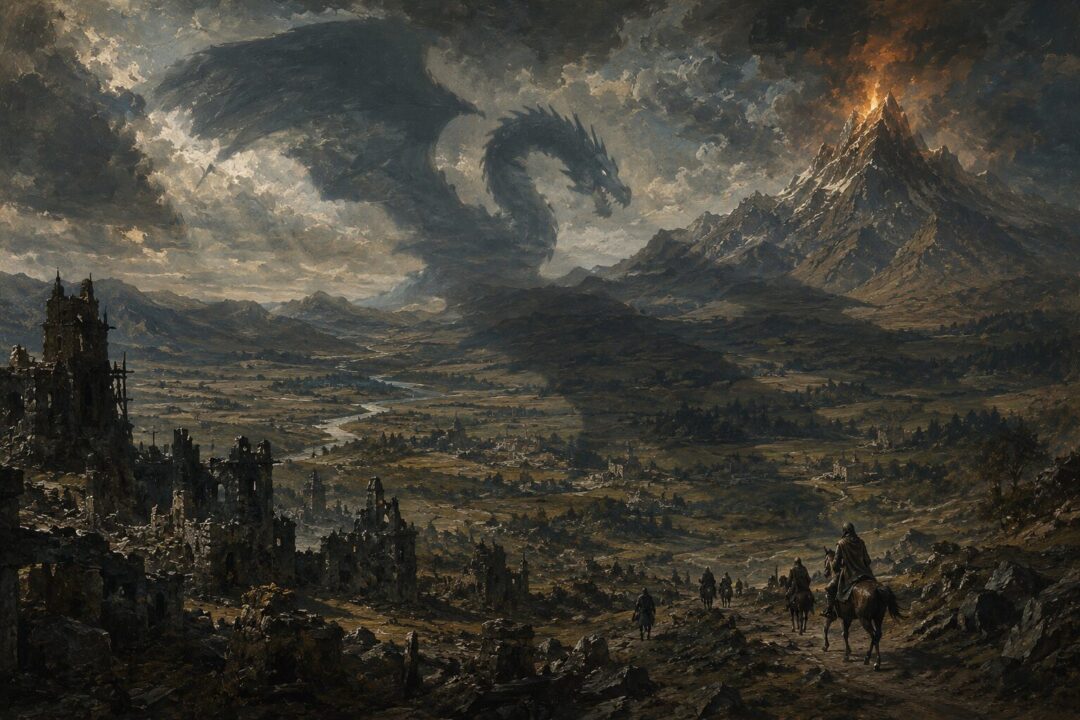
Why Smaug Was More Dangerous Than His Size Suggested
Smaug’s enormous body made him frightening.
His fire made him deadly.
His scales made him difficult to kill.
Yet none of these qualities alone explain why he dominated an entire region for generations.
His true danger came from the combination of traits rarely found together. He was physically overwhelming, intellectually formidable, psychologically manipulative, strategically aware, and protected by near-invulnerable defenses. He understood fear and knew how to exploit it. He recognized weakness and knew how to magnify it.
Most monsters threaten lives.
Smaug threatened kingdoms, economies, alliances, and hopes for the future.
That is why the people of the North feared him for nearly two hundred years. Not because he was merely a giant dragon, but because he possessed everything necessary to turn strength into lasting domination.
His size was impressive.
His mind was what made him truly dangerous.
Sources & Notes
- J.R.R. Tolkien, The Hobbit, Chapter 1, “An Unexpected Party” — recounts Smaug’s descent on Erebor and Dale, the Dwarves’ exile, and the dragon’s long possession of the Mountain.
- J.R.R. Tolkien, The Hobbit, Chapter 12, “Inside Information” — Bilbo’s conversation with Smaug shows the dragon probing for names, motives, allies, and weak points while sowing doubt about Thorin’s company.
- J.R.R. Tolkien, The Hobbit, Chapter 12, “Inside Information” — Bilbo sees Smaug’s jeweled underbelly and the small bare patch that makes his apparent invulnerability dangerously incomplete.
- J.R.R. Tolkien, The Hobbit, Chapter 14, “Fire and Water” — Smaug’s attack on Lake-town and Bard’s black arrow show both the dragon’s destructive reach and the narrow chance by which he is defeated.
- J.R.R. Tolkien, The Hobbit, Chapters 15–17, “The Gathering of the Clouds” through “The Clouds Burst” — the struggle over the treasure after Smaug’s death supports the article’s point that his hoard destabilized Dwarves, Men, and Elves.
- J.R.R. Tolkien, The Lord of the Rings, Appendix A, “Durin’s Folk” — places Smaug’s seizure of the Lonely Mountain within the wider history of the Longbeards, Thrór’s line, and the North before the Quest of Erebor.