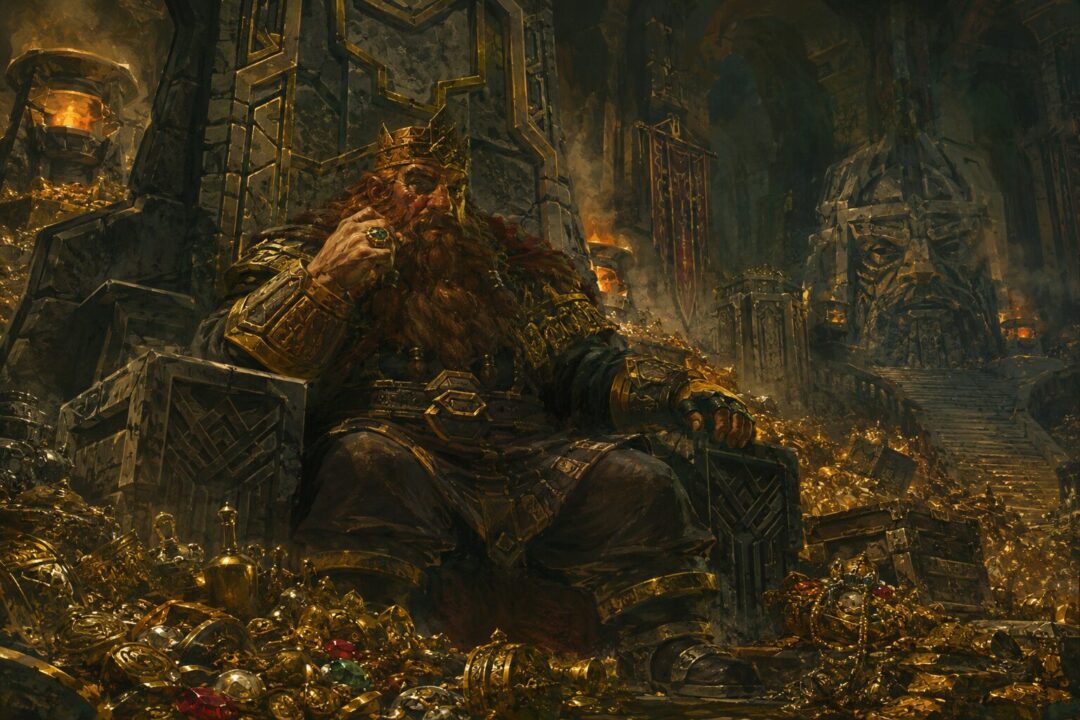
The One Ring enslaved. The Nine Rings corrupted kings into wraiths. But the Seven Rings given to the Dwarves produced something stranger—and in some ways more dangerous.
The Dwarves never became Ringwraiths. They did not fall under direct domination. Sauron could not bend them to his will in the same way he dominated Men. Yet the Seven still achieved a terrible result. Instead of creating slaves, they amplified desire itself.
The tragedy of the Dwarven Rings is that they turned one of the Dwarves’ greatest strengths—their love of craft, wealth, and creation—into a force that consumed kingdoms, poisoned relationships, and attracted destruction. The Rings did not steal freedom. They made treasure so important that entire realms became vulnerable because of it.
In Middle-earth, slavery of the mind is frightening. But obsession can be just as deadly.
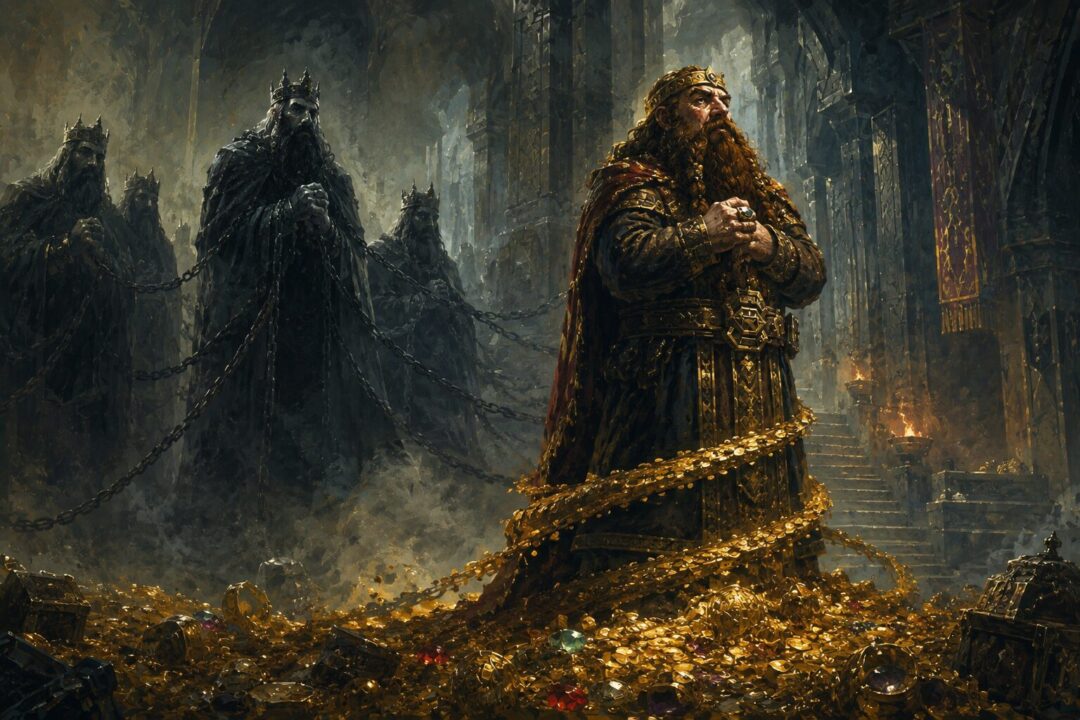
The Different Fate of the Seven Rings
The Seven Rings were originally among the Rings of Power made with the assistance of Sauron during the Second Age. After Sauron forged the One Ring, he intended to dominate all the bearers of the lesser Rings.
That plan worked differently depending on the race involved.
The Nine eventually reduced their bearers to Nazgûl. The Men who possessed them gained power and longevity, but lost themselves. Their wills were consumed by Sauron.
The Dwarves proved different.
The texts repeatedly emphasize that Dwarves were unusually resistant to domination. Their nature had been shaped by Aulë, and they possessed a stubborn endurance unlike that of Men. As a result, Sauron could not turn the Dwarven Ring-bearers into wraiths or fully enslave their minds.
This might sound like a victory.
In reality, it created a different catastrophe.
Instead of mastering the Dwarves directly, the Rings inflamed traits already present within them. They intensified the desire for wealth and possession. The bearers became consumed by accumulating treasure, building hoards, and increasing their riches.
Sauron could not own their wills.
But he could make their desires work against them.
What the Rings Actually Did to the Dwarves
One of the most important details about the Seven Rings is that they did not simply create gold from nothing.
Rather, they seem to have increased the ability of their bearers to gather wealth and enlarge their treasures. The Rings helped create great hoards and immense prosperity.
The problem was the psychological effect that accompanied this prosperity.
According to the lore, the Rings kindled an overwhelming lust for gold and precious things. Wealth became not merely useful or desirable but central to life itself.
The distinction matters.
A slave is controlled from outside.
The Dwarven Ring-bearers increasingly became controlled from within.
Their decisions, priorities, and ambitions revolved around treasure. Wealth ceased to be a tool and became an obsession.
This obsession spread beyond individual rulers. Entire kingdoms could become focused on the accumulation and protection of enormous hoards.
The Rings did not command the Dwarves to serve Sauron.
Instead, they encouraged behavior that weakened them in other ways.
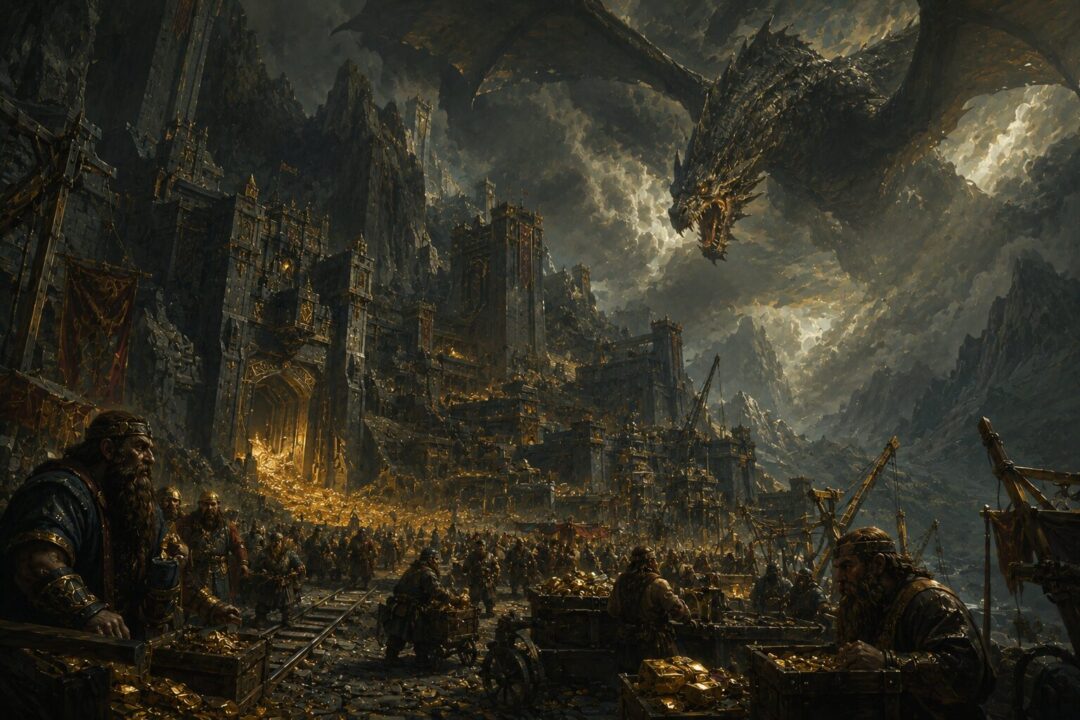
Why Dragons Became the Real Beneficiaries
One of the most fascinating ironies in the history of the Seven Rings is that dragons often benefited more from them than Sauron did.
The Rings helped create legendary concentrations of wealth.
But vast treasure hoards are not hidden.
They attract attention.
In Middle-earth, few creatures were more drawn to accumulated wealth than dragons.
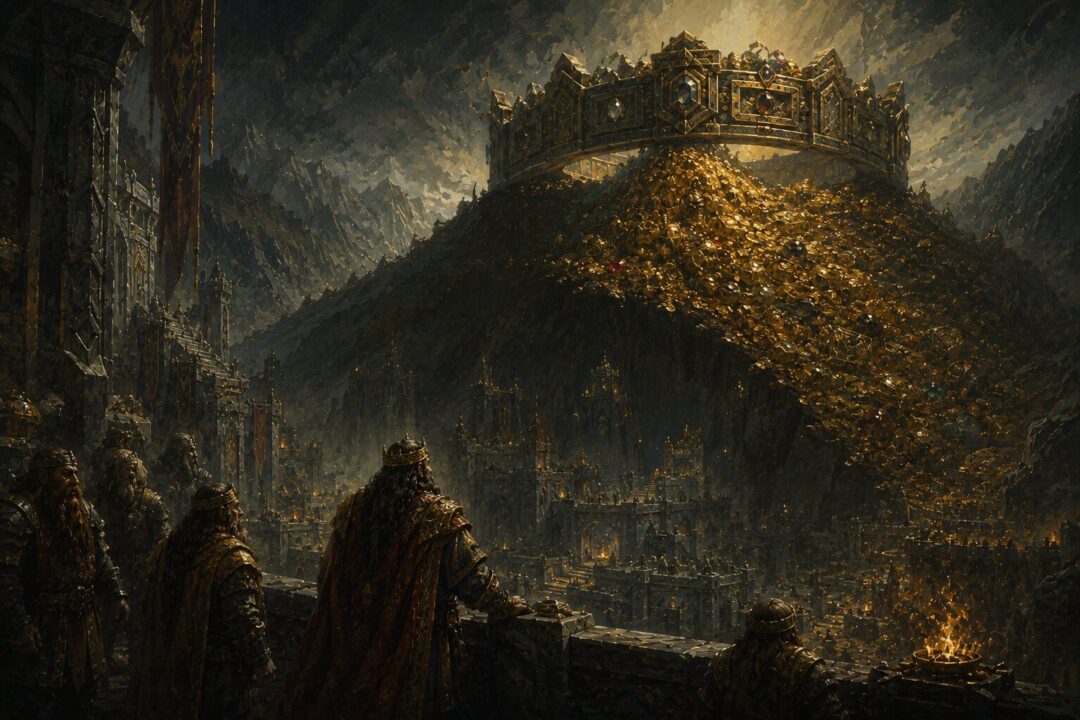
The connection between immense treasure and dragon attacks appears repeatedly throughout Dwarven history. The lore specifically notes that several Rings were consumed by dragon-fire after dragons attacked Dwarven realms and seized their riches.
This outcome reveals a cruel chain of consequences.
The Rings encouraged the creation of vast stores of wealth.
Those stores of wealth attracted dragons.
The dragons destroyed kingdoms and devoured the treasures.
In some cases, the Rings themselves were lost.
Rather than creating secure prosperity, the Seven often helped create targets.
A ruler might believe he was strengthening his realm by increasing its riches. Yet every addition to the hoard potentially increased the danger surrounding it.
The wealth became both the kingdom's greatest asset and its greatest vulnerability.
The Shadow Behind Erebor
No discussion of Dwarven greed can avoid the example of Erebor.
It is important to note that Thrór's treasure in the Lonely Mountain was not necessarily created by one of the Seven Rings alone. The texts do not provide a complete accounting of every factor behind Erebor's wealth.
However, we know that Thrór possessed one of the Seven Rings before the coming of Smaug.
The kingdom became unimaginably rich.
Its halls overflowed with treasure gathered through generations of labor, trade, craftsmanship, and royal accumulation.
Then came the dragon.
Smaug did not attack Erebor because of military necessity. He attacked because of wealth.
The treasure itself became the invitation.
Everything the Dwarves had built—their prosperity, their achievements, their legacy—helped attract the catastrophe that destroyed them.
This is one of the recurring lessons of the Dwarven Rings. The danger is not that wealth is evil. Dwarven craftsmanship is repeatedly portrayed as admirable and beautiful.
The danger arises when wealth becomes so concentrated and so valued that it reshapes the priorities of an entire society.
The treasure draws enemies.
Then the treasure becomes the cause of suffering.
The Difference Between Greed and Craftsmanship
A common misunderstanding is that Tolkien's Dwarves are simply greedy.
The texts present a far more nuanced picture.
Dwarves are creators.
They are builders, miners, smiths, architects, and artisans. They value precious metals and gems partly because these materials become the raw ingredients of extraordinary craftsmanship.
Many of the greatest works in Middle-earth emerge from Dwarven skill.
The problem introduced by the Seven Rings was not craftsmanship itself.
It was imbalance.
The Rings magnified desire beyond healthy limits. They encouraged possessiveness and accumulation without necessarily increasing wisdom.
A king might gain greater wealth while becoming less capable of seeing when wealth had become dangerous.
This distinction helps explain why the Dwarven Rings are so tragic.
The Rings corrupted virtues rather than replacing them with entirely new vices.
Love of craft became possessiveness.
Pride in achievement became obsession.
Prosperity became vulnerability.
The corruption was subtle because it grew from qualities that were not inherently evil.
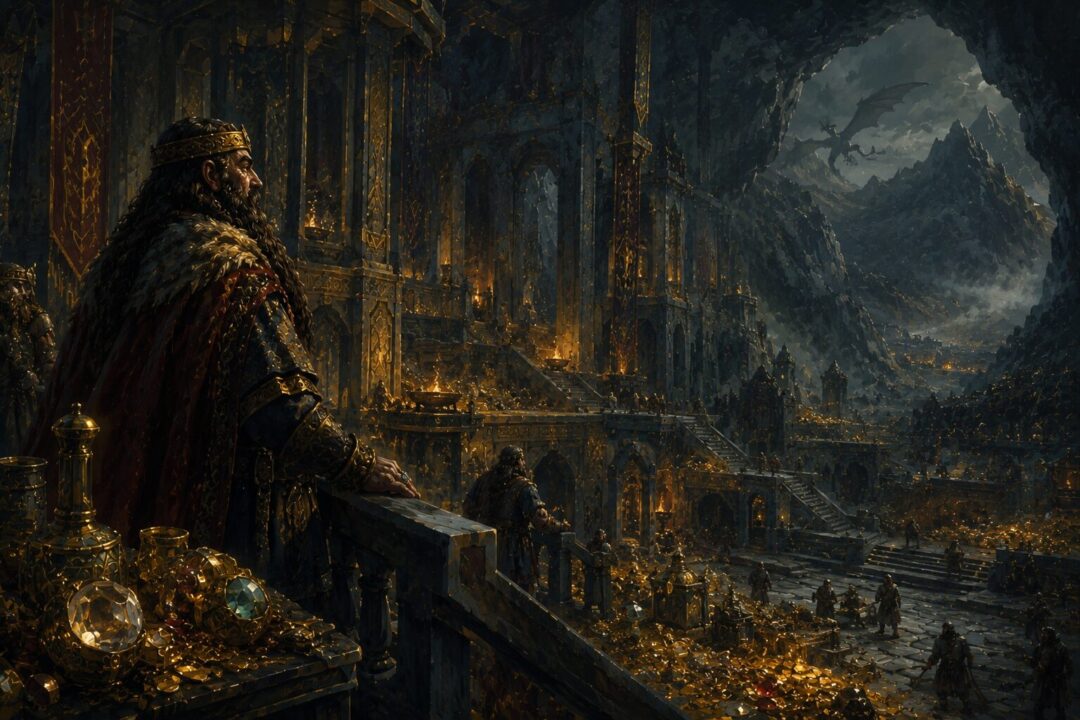
Why Sauron's Plan Partially Failed
From Sauron's perspective, the Seven Rings were only a partial success.
His ultimate goal was domination.
The Dwarves denied him that.
Even when they possessed Rings of Power, they remained difficult to control. They did not become obedient servants. They did not become Ringwraiths. They did not surrender their identities.
This resistance frustrated Sauron throughout the ages.
Yet failure was not complete.
The Seven still spread instability.
Obsession with treasure could create conflict between Dwarves and others. Great hoards attracted dragons. Wealth concentrated in a few places could lead to disaster when those places fell.
The Dwarves remained independent, but they were not untouched.
In that sense, the Seven reveal an important truth about evil in Middle-earth.
Direct control is not the only path to destruction.
Sometimes it is enough to magnify an existing weakness.
A person—or a kingdom—may ruin itself while believing it is pursuing success.
A Corruption More Difficult to Recognize
The Nine Rings produced visible monsters.
The Seven produced something harder to identify.
Nobody looked at a Dwarven king and saw a Nazgûl emerging.
The corruption often appeared as prosperity.
The treasury grew.
The halls expanded.
The wealth increased.
Outwardly, everything looked successful.
Yet beneath the surface, desire was becoming stronger than judgment.
This is what makes the Dwarven Rings uniquely unsettling.
The bearers could still believe they were acting freely.
They could still see themselves as successful rulers.
The corruption rarely announced itself openly.
Instead, it disguised itself as achievement.
The danger was hidden within the very thing that appeared beneficial.
Why Treasure Became More Dangerous Than Slavery
The great irony of the Seven Rings is that the Dwarves escaped the fate suffered by Men.
They were not enslaved.
But freedom alone was not enough to protect them.
The Rings transformed treasure into a source of escalating danger. Wealth invited dragons. Hoards inspired possessiveness. Prosperity increased vulnerability. Desire became harder to master.
The Nine destroyed freedom directly.
The Seven threatened freedom indirectly.
A slave knows he has chains.
Someone ruled by obsession may never notice them.
That is why the story of the Dwarven Rings remains one of the most subtle forms of corruption in Middle-earth. The Dwarves resisted domination better than almost anyone. Yet the Seven still found a way to wound them.
Not by taking away their will.
But by convincing them to center their lives around something that could never truly satisfy—and that ultimately attracted ruin to everything they loved.
Sources & Notes
- J.R.R. Tolkien, The Lord of the Rings, Appendix A, III, “Durin’s Folk” — explains that the Seven did not enslave the Dwarves, but inflamed wrath and greed for gold; four were consumed by dragons and three recovered by Sauron.
- J.R.R. Tolkien, The Silmarillion, “Of the Rings of Power and the Third Age” — describes Sauron’s distribution of the Seven and Nine, his failure to dominate the Dwarves, and the Rings’ role in kindling lust for treasure.
- J.R.R. Tolkien, The Silmarillion, “Of Aulë and Yavanna” — gives the background for Dwarven toughness, secrecy, and resistance, helping explain why domination worked differently on them than on Men.
- J.R.R. Tolkien, The Hobbit, Chapter 1, “An Unexpected Party” — recounts Smaug’s descent on Erebor after hearing of the Dwarves’ wealth, showing how treasure itself became a danger.
- J.R.R. Tolkien, Unfinished Tales, “The Quest of Erebor” — connects Thrór’s Ring, Smaug, Erebor, and Gandalf’s fear that the dragon could serve Sauron’s wider designs.
- J.R.R. Tolkien, Letter 131 — frames Sauron’s larger motive as domination and control, useful context for why the Dwarven Rings were a partial failure rather than a clean victory.