
Why would the One Ring abandon a harmless hobbit in a tunnel under the Misty Mountains — and yet still fail to save the Dark Lord who forged it?
At first glance, the Ring’s behavior around Bilbo Baggins looks contradictory. In The Hobbit, it slips from Gollum’s possession and falls into Bilbo’s path. Decades later, Gandalf suggests that the Ring “left” Gollum. Yet when Bilbo carries it away into the Shire, Sauron does not regain his greatest weapon. The Ring betrays one bearer without accomplishing the very purpose for which it exists.
That tension reveals something important about how the Ring actually works in Tolkien’s world. It is not a conscious servant with unlimited foresight. It has a will aligned with Sauron’s — but it operates through opportunity, corruption, and pressure rather than perfect strategy.
The Ring’s Loyalty Was to Sauron — But Not Through Direct Control
The One Ring is not merely enchanted jewelry. It contains a portion of Sauron’s own native power. In The Lord of the Rings, Gandalf explicitly says the Ring was “trying to get back to its master.”
That matters.
The Ring’s deepest tendency is toward reunion with Sauron. It influences minds, magnifies desires, and works against concealment and restraint. Yet Tolkien’s texts do not portray it as an omniscient intelligence capable of calculating centuries-long outcomes with precision.
Instead, the Ring behaves more like an extension of Sauron’s dominating nature.
It abandons Isildur at the Disaster of the Gladden Fields by slipping from his finger when invisibility no longer protects him. The betrayal exposes him to Orc arrows and leads to his death. The Ring does not preserve its bearer; it preserves its own long-term movement toward freedom.
The same principle appears with Gollum.
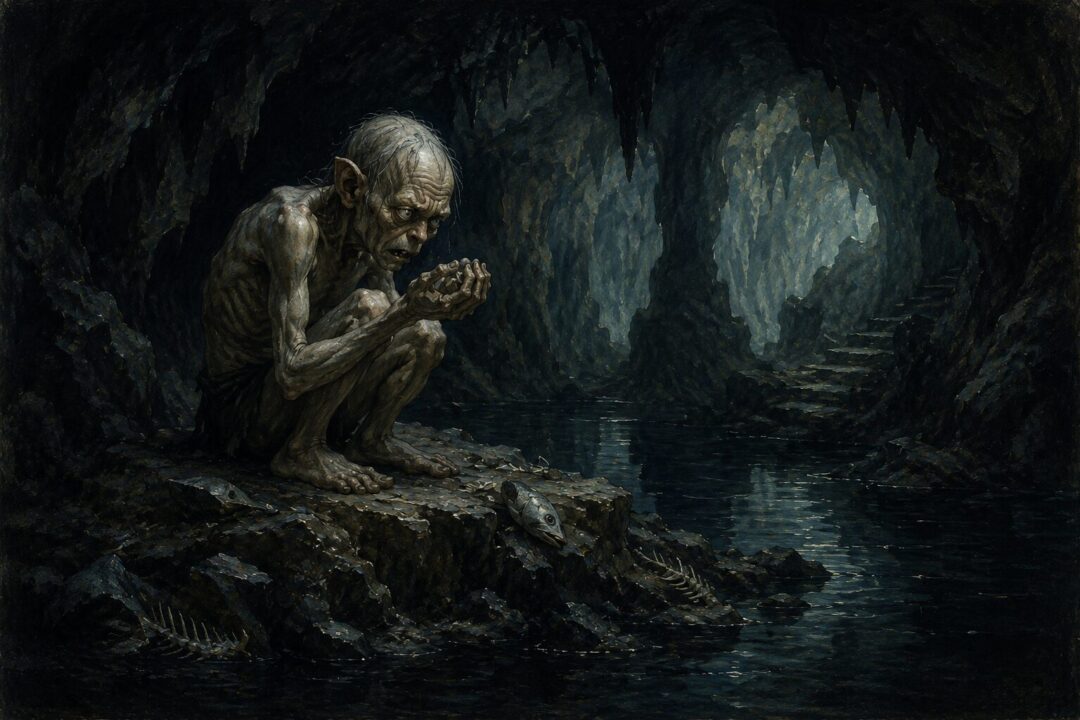
By the late Third Age, Gollum no longer lives in hidden wandering freedom. He clings obsessively to the Ring beneath the mountains. The Ring has consumed him spiritually, but it has also trapped him geographically and strategically. A bearer isolated in darkness cannot bring the Ring closer to Mordor.
From that perspective, the Ring’s abandonment of Gollum is not irrational betrayal. It is movement.
Gollum Had Become a Dead End
Readers sometimes assume the Ring remained with Gollum because it loved domination through misery alone. But the texts imply a more practical problem.
Gollum had possessed the Ring for centuries beneath the Misty Mountains. He used it for secrecy, spying, theft, and survival. Yet he did not march toward power. He did not seek kingdoms. He did not even meaningfully re-enter the wider world for long periods.
He had become, in effect, a stagnant hiding place.
Gandalf’s account in The Shadow of the Past strongly points toward this reading. He says the Ring abandoned Gollum because its “maker was awake once more and sending out his dark thought from Mirkwood.”
That timing is crucial.
Sauron’s strength is returning. The Shadow is growing. The Ring’s long dormancy under the mountains no longer suits the political reality of Middle-earth. Hidden possession by a corrupted cave-dweller does not serve reunion.
So the Ring slips away.
But here comes the overlooked irony: abandoning Gollum does not mean the Ring had a flawless plan.
Bilbo Was a Better Opportunity — But Not an Intended Destroyer
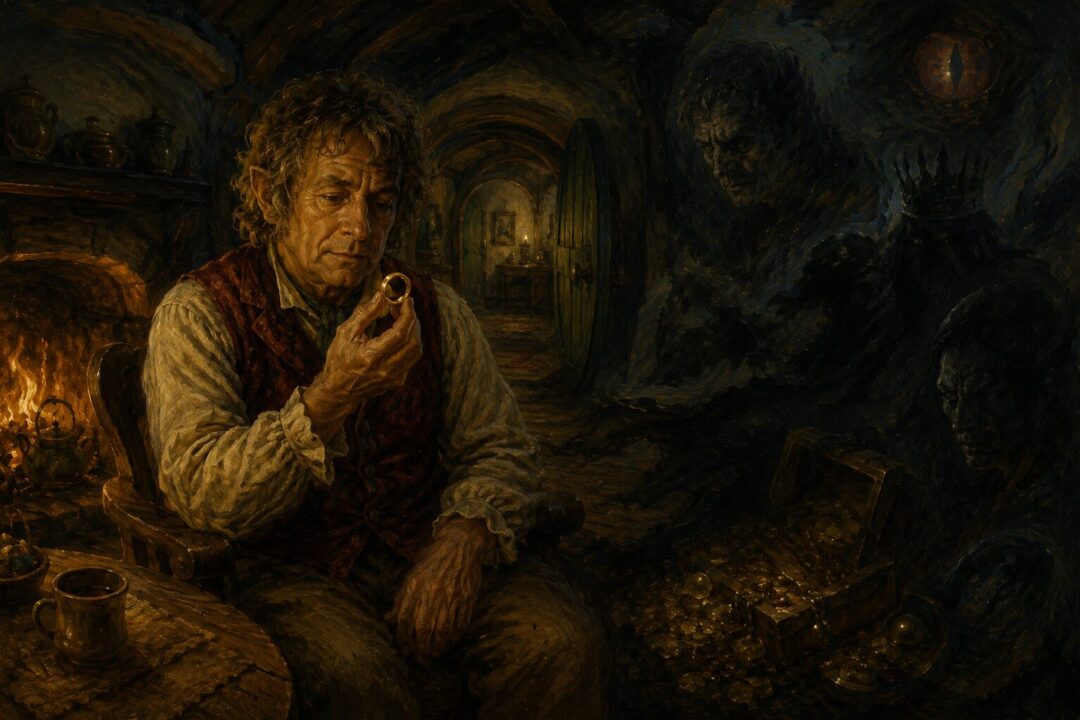
When Bilbo finds the Ring, he is a far more mobile bearer than Gollum.
He belongs to the outside world. He travels with a company moving across Wilderland. He has connections to settlements, roads, commerce, and eventually the Shire — a land entirely unknown to Sauron at that stage.
From the Ring’s perspective, Bilbo may have represented opportunity.
But that does not mean the Ring “wanted” Bilbo specifically, nor that it foresaw the destruction of Barad-dûr through a chain of unlikely mercy, pity, and hobbit resilience.
The texts support a narrower claim.
The Ring can exert influence. It can manipulate circumstances within limits. It can encourage concealment, possession, and temptation. But it repeatedly fails to anticipate fully what free peoples — especially hobbits — will do.
Bilbo’s possession illustrates this failure.
Instead of bringing the Ring toward Sauron, Bilbo removes it into one of the most politically irrelevant and hidden regions in Middle-earth.
The Shire becomes a kind of accidental strategic exile.
For decades.
Why Didn’t the Ring Simply Escape Bilbo?
This is one of the most revealing questions in the entire legendarium.
If the Ring could abandon Gollum, why not Bilbo?
The answer appears to involve circumstance rather than unlimited agency.
The Ring’s betrayals occur under particular conditions. It slips from Isildur amid chaos and mortal danger. It leaves Gollum in a tunnel where chance places Bilbo nearby.
The Ring is dangerous, but it is not shown changing hands at will whenever convenient.
Bilbo’s habits may actually have complicated escape.
He lives quietly. He guards the Ring closely. He does not constantly expose himself to warfare, pursuit, or deadly wilderness after returning home. The opportunities for sudden abandonment may simply be fewer.
More importantly, Bilbo proves unexpectedly resistant in certain ways.
Not immune — the Ring clearly affects him. His possessiveness grows. His aging slows unnaturally. His anger flashes dangerously when Gandalf pressures him to leave it behind.
But Bilbo also performs something extraordinarily rare.
He gives it up voluntarily.
That act matters because almost nobody in the texts manages comparable renunciation without overwhelming struggle or failure.
The Ring may corrupt, but corruption does not erase free will entirely.
Hobbits Were a Strategic Blind Spot
One reason the Ring’s movement through Bilbo fails to save Sauron lies in something larger than individual choice.
Sauron misunderstands hobbits.
Repeatedly.
This theme runs through The Lord of the Rings.
He cannot imagine willingly rejected domination. He assumes power must seek greater power. He interprets opponents through the logic of rulers, generals, and ambitious rivals.
That creates a catastrophic blind spot.
Bilbo uses the Ring largely for avoidance, stealth, and personal convenience. Frodo carries it out of burdened duty. Sam briefly imagines heroic transformation under its influence but rejects the fantasy almost immediately.
These are not the responses Sauron expects from bearers of supreme power.
The Ring shares in this limitation because its nature is bound to Sauron’s.
Its corruptive logic pushes toward possession, enhancement, and domination. Hobbits repeatedly redirect or delay those pressures through humility, ordinary affection, and small-scale desires.
Not perfectly. But enough.
The Ring’s Greatest Failure Was Underestimating Mercy
The deepest irony in the Bilbo story is not merely geographic miscalculation.
It is moral miscalculation.
Bilbo does something that the Ring’s logic cannot fully exploit: he shows pity.
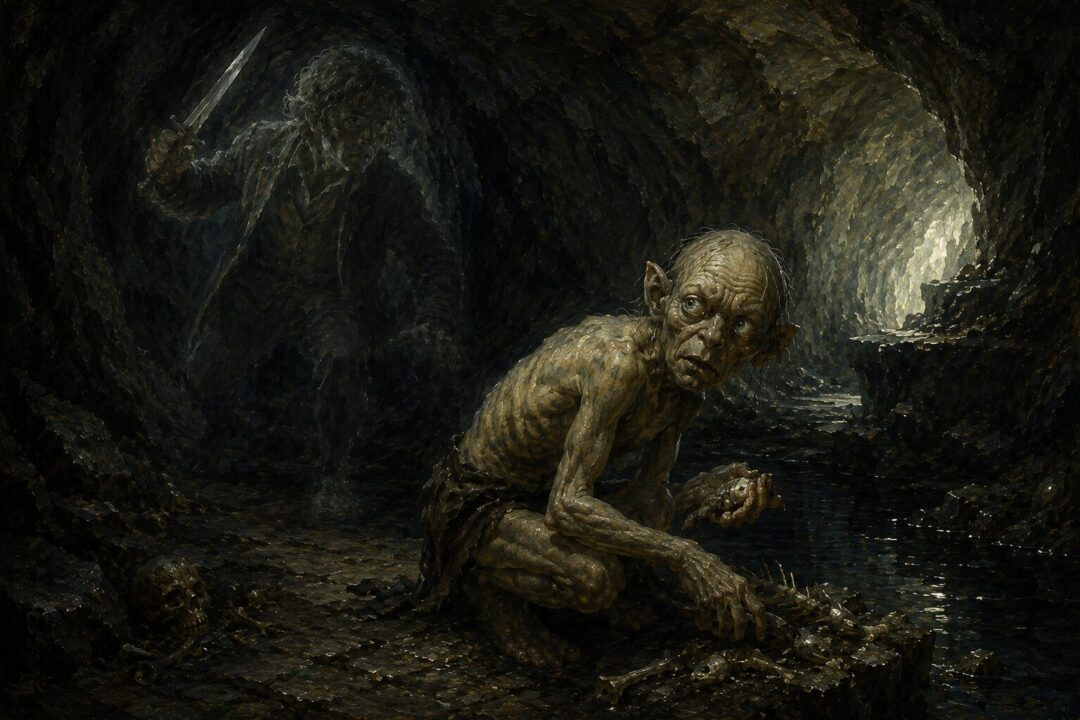
In the tunnels, he has the chance to kill Gollum. Invisible, armed, and desperate, he could strike.
He does not.
That decision shapes the entire fate of Middle-earth.
The choice preserves the one being ultimately responsible for the Ring’s destruction in Mount Doom. Yet neither Sauron nor the Ring appears capable of anticipating such an outcome.
The texts consistently frame pity and mercy as forces with consequences beyond ordinary strategic calculation.
Gandalf explicitly warns Frodo against judging Gollum too quickly because pity may “rule the fate of many.”
Bilbo’s refusal to kill Gollum is therefore not sentimental decoration in the narrative. It becomes one of the hidden laws governing the downfall of overwhelming power.
And it begins with the Ring’s apparent success.
The Ring Could Betray Bilbo — But Not Rewrite Reality
By the end of the story, a paradox remains.
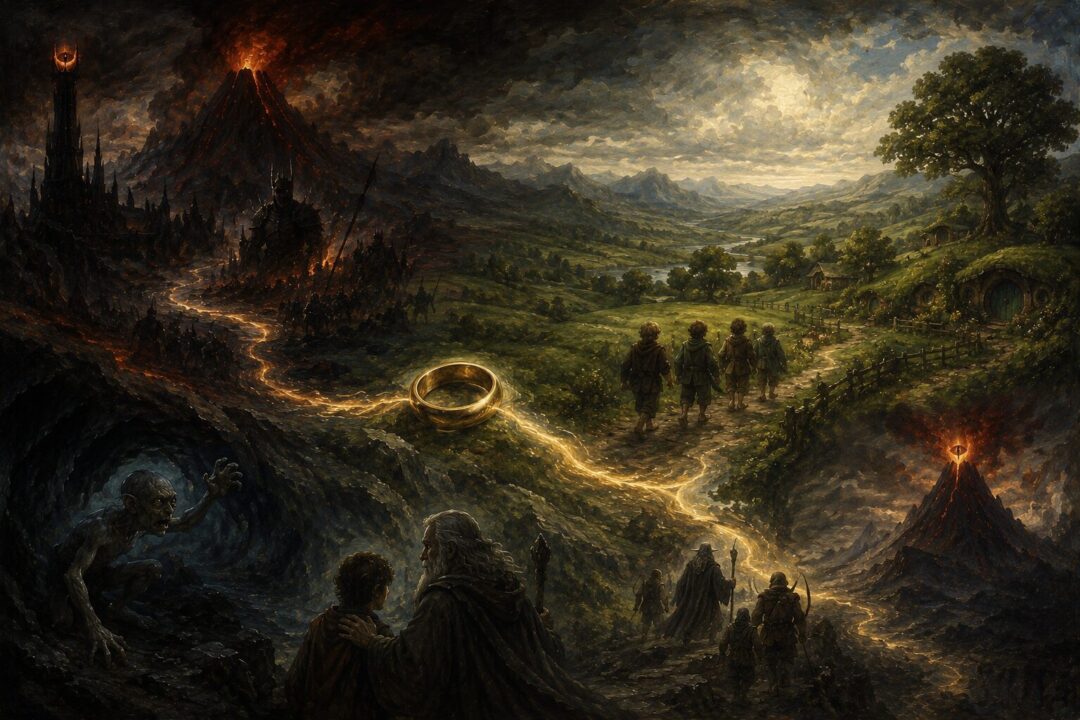
The Ring could abandon bearers. It could tempt, manipulate, corrupt, and pressure minds toward its master.
But it could not guarantee outcomes.
It leaves Gollum without saving Sauron.
It empowers Bilbo without reclaiming itself.
It corrupts Frodo profoundly, yet still reaches Mount Doom only because acts of mercy preserved Gollum’s role in the final catastrophe.
The Ring possesses will, but not sovereignty over history.
That distinction matters.
Middle-earth is not a world where evil wins through superior calculation alone. Again and again, domination fails because it misunderstands humility, restraint, compassion, and the unpredictable exercise of free will.
The Ring betrayed Bilbo in subtle ways across decades — deepening attachment, prolonging possessiveness, narrowing his inner freedom.
But the greater betrayal ran in the opposite direction.
The Ring abandoned Gollum hoping for movement toward Sauron.
Instead, through a chain of unlikely hobbit choices, it entered the one path that would eventually destroy both itself and its maker.
Sources & Notes
- J.R.R. Tolkien, The Lord of the Rings, Book I, Chapter 2 “The Shadow of the Past” — Gandalf on the Ring leaving Gollum, trying to return to its master, and Bilbo’s pity.
- J.R.R. Tolkien, The Hobbit, Chapter 5 “Riddles in the Dark” — Bilbo finds the Ring after it leaves Gollum and chooses not to kill him.
- J.R.R. Tolkien, The Lord of the Rings, Book I, Chapter 1 “A Long-expected Party” — Bilbo’s possessiveness and his rare voluntary surrender of the Ring.
- J.R.R. Tolkien, The Silmarillion, “Of the Rings of Power and the Third Age” — Sauron puts much of his power into the One Ring, and Isildur later loses it in the Anduin.
- J.R.R. Tolkien, The Lord of the Rings, Book VI, Chapter 3 “Mount Doom” — Frodo’s failure at the brink, Gollum’s return, and the Ring’s destruction.