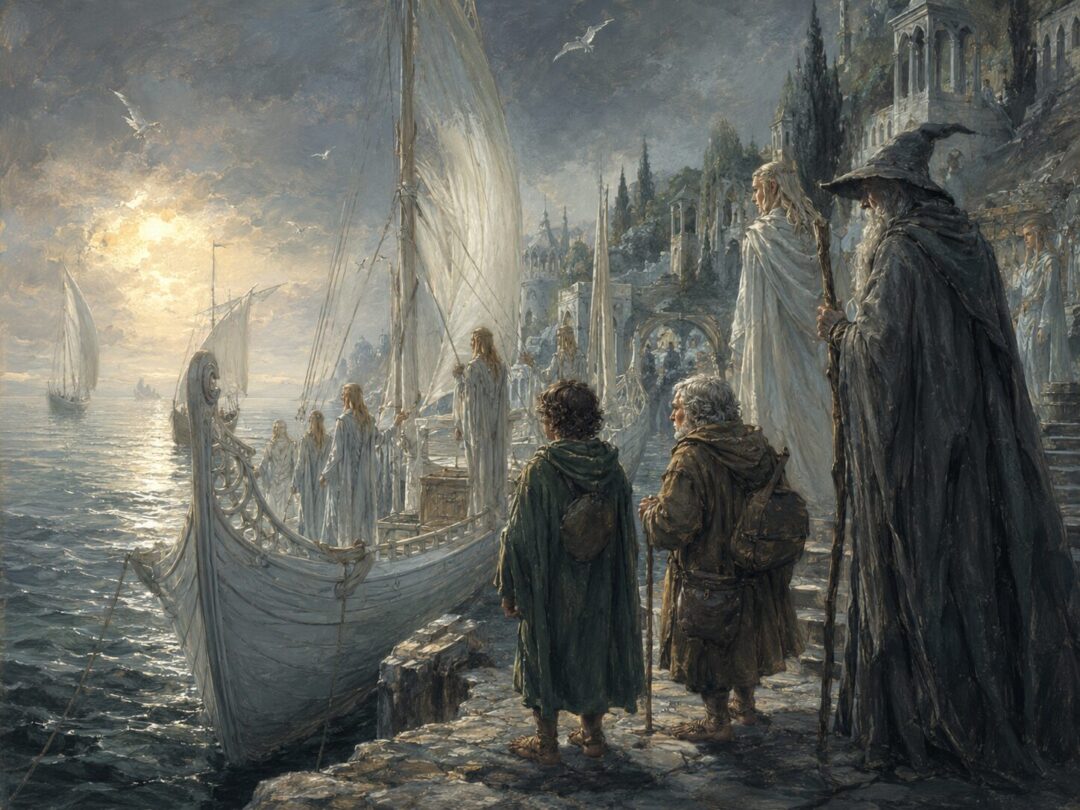
At the Grey Havens, everything feels like an ending beyond grief.
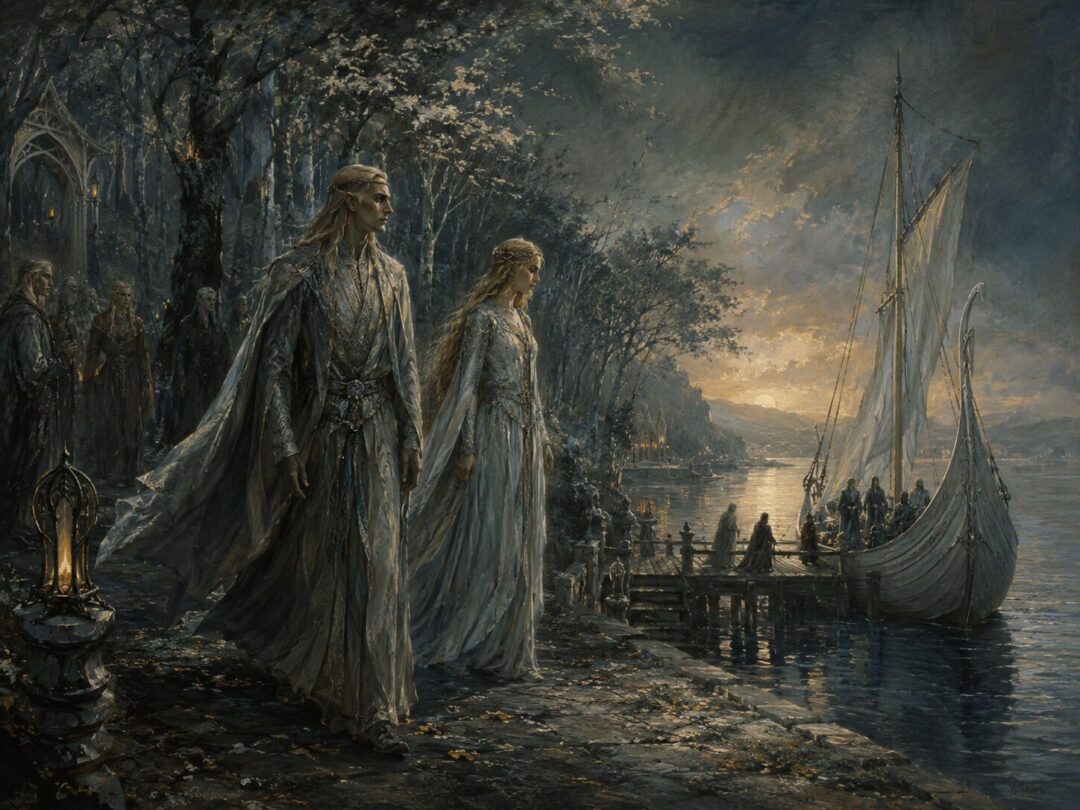
Frodo boards the white ship. Bilbo is already there, old and quiet. Gandalf goes with them. Elrond and Galadriel depart. The sea opens westward, and the world of ordinary sorrow seems to fall away behind them. It is easy to feel, especially through the emotional language of the films, that Frodo is sailing into heaven.
But in the lore of Middle-earth, Valinor is not heaven.
That distinction matters. It changes what Frodo’s departure means. It changes what the “Undying Lands” are. It changes the temptation of Númenor, the sorrow of the Elves, and the strange mercy granted to the Ring-bearers after the War of the Ring.
Valinor is blessed. It is holy in the older sense. It is removed from the ordinary hurts of Middle-earth. But it is not the place where souls go after death. It is not eternal reward. It is not the final home of Men, Hobbits, or Dwarves.
It is a real land within the world’s mythology — and that makes it more mysterious, not less.
Valinor Was a Place, Not an Afterlife
The first mistake is to treat sailing West as a poetic way of dying.
In The Lord of the Rings, Frodo does not die at the Grey Havens. He boards a ship. The scene is physical. There is a shore, a vessel, companions, farewell, and departure. The grief comes from separation, not from a funeral.
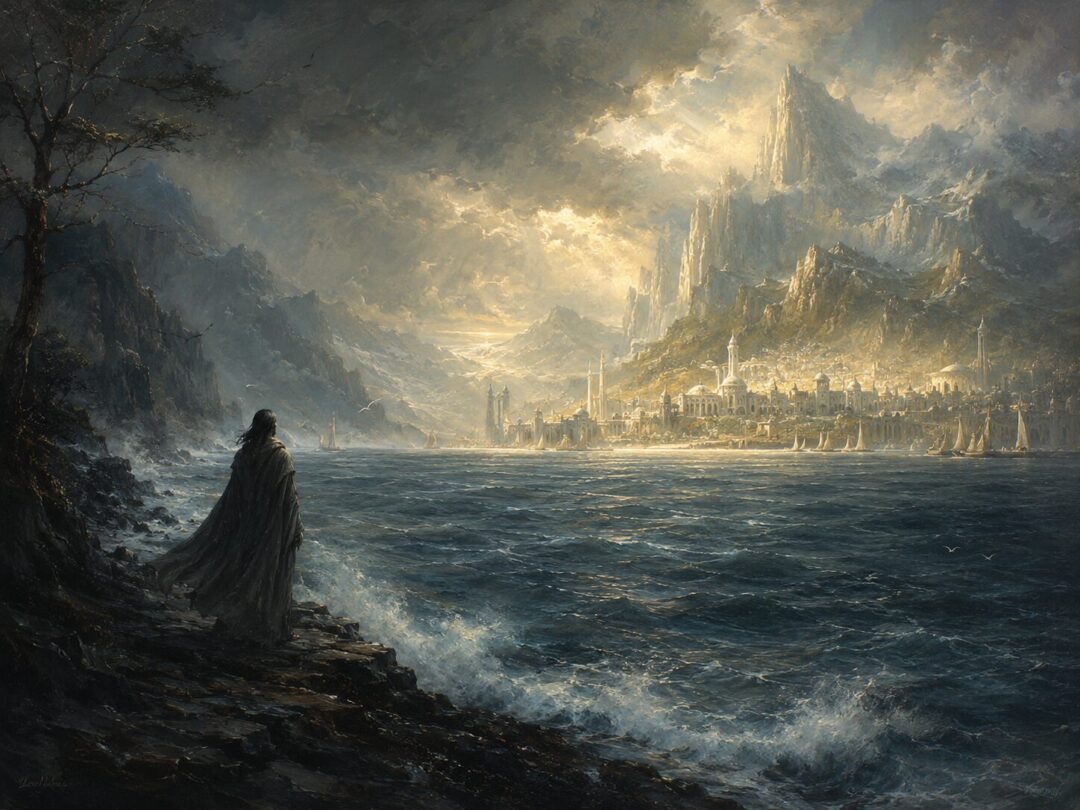
Valinor lies in Aman, the Blessed Realm across the Sea. It is associated with the Valar, the great Powers who entered the world before its shaping was complete. It is also bound up with the Elves, especially those who once saw the light of the Two Trees before the Sun and Moon were made.
That already makes Valinor different from heaven. Heaven, in the usual sense, is beyond the created world and beyond ordinary geography. Valinor is not presented that way in the older histories. It has mountains, shores, cities, trees, and inhabitants. It can be reached by ship under certain conditions. In earlier ages, it belonged to the geography of Arda.
The confusion comes because Valinor feels heavenly. It is westward. It is bright. It is associated with healing, rest, immortals, and a kind of beauty almost too intense for mortal life. But “heavenly” is not the same as heaven.
Valinor is not where all good people go. It is not the natural destination of the dead. It is not even the ordinary destination of Elves when they die, though their spirits are summoned to the Halls of Mandos in Aman before any later restoration that may be granted to them.
For mortals, the matter is even clearer: their fate lies beyond the circles of the world. The texts do not give Men a mapped afterlife inside Valinor. Their death is called the Gift of Men, however bitter and frightening that gift may appear.
That is the hidden rule beneath the beauty: Valinor is inside the world’s order. The final fate of mortals is beyond it.
Why It Is Called the Undying Lands
The name “Undying Lands” is easy to misunderstand.
It does not mean that the land makes people undying. It means that the Undying dwell there.
That difference is central to the whole tragedy of Númenor. The Númenóreans looked west and saw the deathless realm. They envied the Elves. They feared their own mortality. Over time, the sight of Aman became not a comfort but a wound. It reminded them that they would die while the Elves would not.
But the lore is careful: Aman is not a machine for granting immortality. The messengers sent to Númenor warn that even if a mortal could reach the Blessed Realm, the land itself would not change his nature. A mortal would remain mortal. Indeed, the warning suggests that the light and permanence of that realm would only make mortal frailty more painful, like a moth exposed to a light too strong and steady.
This is one of the most important corrections to the popular image of Valinor.
The Undying Lands are not undying because they cure death. They are undying because they are inhabited by beings whose nature is already bound differently to the world: Valar, Maiar, and Elves. Elves are immortal within Arda, though not invulnerable and not free from grief, weariness, or death by violence. Their spirits remain within the world. Their long life is tied to Arda itself.
Men are different. Hobbits, being a branch of Men in the broad design of the world, share mortality. Dwarves have their own mysterious fate, guarded in their traditions, but they are not made immortal by sailing West either.
So when Frodo goes to the Undying Lands, he is not becoming an Elf. He is not escaping the Doom of Men. He is entering a place of healing for a time.
That makes his ending quieter and more painful than a simple ascent into paradise.
Frodo Went West for Healing, Not Immortality
Frodo’s departure is not a reward in the simple sense.
It is a mercy.
By the end of The Lord of the Rings, Frodo has saved the Shire, but he cannot fully live in it. The wound from Weathertop still returns. The memory of Shelob, the burden of the Ring, and the spiritual damage of bearing it have not vanished with victory. The world has been saved, but Frodo has paid a price that ordinary peace cannot repair.
This is why the West matters. Frodo is not going because he has become too noble for Middle-earth. He is going because Middle-earth can no longer heal him.
The same applies, in a different way, to Bilbo. He too carried the Ring, though without understanding its full nature. He too is marked by it. Sam, according to the tradition preserved in the appendices, later sails West as the last of the Ring-bearers after Rosie’s death. That does not imply that Sam becomes immortal either. It implies that the same mercy was extended to him because of his share in the burden.
This also explains why the ending is not triumphal. Frodo does not return as a crowned hero. He cannot simply enjoy the restored Shire. His victory includes loss. The great wound of the story is that some acts of salvation do not leave the savior untouched.
Valinor, then, is not the prize at the end of a quest. It is more like a sanctuary beyond the reach of ordinary medicine. It may bring peace. It may bring healing. But for a mortal, it does not abolish death.
Frodo’s sailing is not “he lived happily forever.” It is closer to: he was granted rest before the end.
The Elves Were Not Going to Heaven Either
The Elves sailing West are also often misunderstood.
For them, Valinor is not heaven but home, or at least the nearest thing to home still available in a fading world. The Elves are bound to Arda. Their immortality is not endless bliss in the modern fantasy sense. It is a long endurance within the world, carrying memory upon memory as the ages change and decline.
That is why the departure of Elrond and Galadriel is so heavy. They are not simply retiring into paradise. They are leaving Middle-earth because their time there is over.
The Three Rings preserved beauty and slowed decay in places like Rivendell and Lothlórien. When the One Ring is destroyed, the power of the Three also fades. The Elven realms cannot remain what they were. The choice before the Elves is not between Middle-earth and heaven. It is between lingering in a world where their works will fade, or returning West across the Sea.
Even in Valinor, Elves remain Elves. They do not pass beyond the world in the way Men do. Their fate is still tied to Arda until its end. Their sorrow is not cancelled by sailing. Their memories do not disappear. The Blessed Realm may heal much, but it does not undo all history.
That gives the Grey Havens a sharper sadness. The Elves are not escaping story. They are withdrawing from one part of it.
Their departure marks the end of an age.
Númenor Proves Valinor Was Not Heaven
The strongest proof that Valinor is not heaven may be the downfall of Númenor.
If Valinor were simply heaven, the Númenórean desire to reach it would look like religious longing. But in the story, their desire becomes rebellion. They do not seek wisdom, holiness, or reconciliation. They seek to seize deathlessness by force.
That is why Sauron’s deception works so terribly well. He does not create their fear of death from nothing. He exploits a fear already growing in them. The Númenóreans see the Ban of the Valar not as protection but as deprivation. They come to believe that immortality is being withheld from them.
But the Ban is not based on petty jealousy. Mortals are forbidden to sail to Aman because Aman cannot give them what they want. Their nature cannot be changed by geography. To invade the Blessed Realm is to misunderstand both Valinor and themselves.
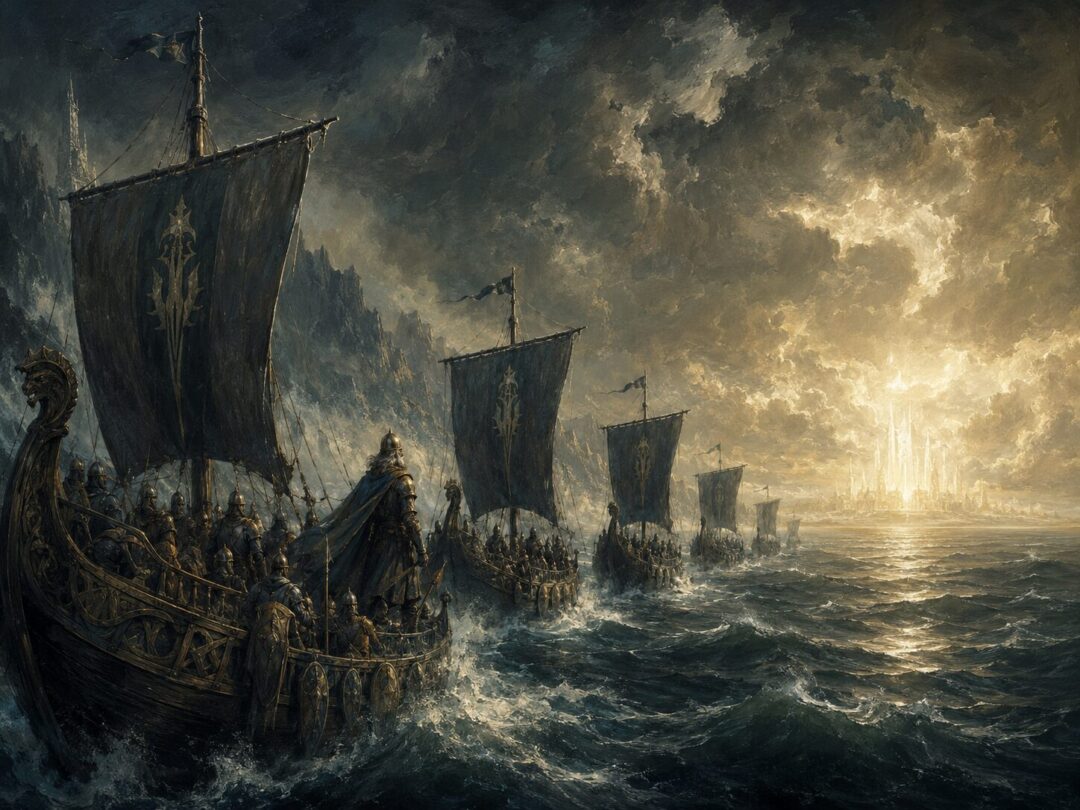
Ar-Pharazôn’s armada is therefore tragic before it is catastrophic. It is a fleet sailing toward the wrong answer. The king thinks he is attacking the gate of eternal life. In truth, he is rejecting the mortal gift and trying to break the structure of the world.
The result is not admission into paradise, but judgment. Númenor is drowned. Aman is removed from the ordinary circles of the world. The Straight Road remains only for those permitted to take it.
This is not the story of men failing to reach heaven. It is the story of men trying to steal immortality from a land that could never grant it.
The Deeper Difference Between Elves and Men
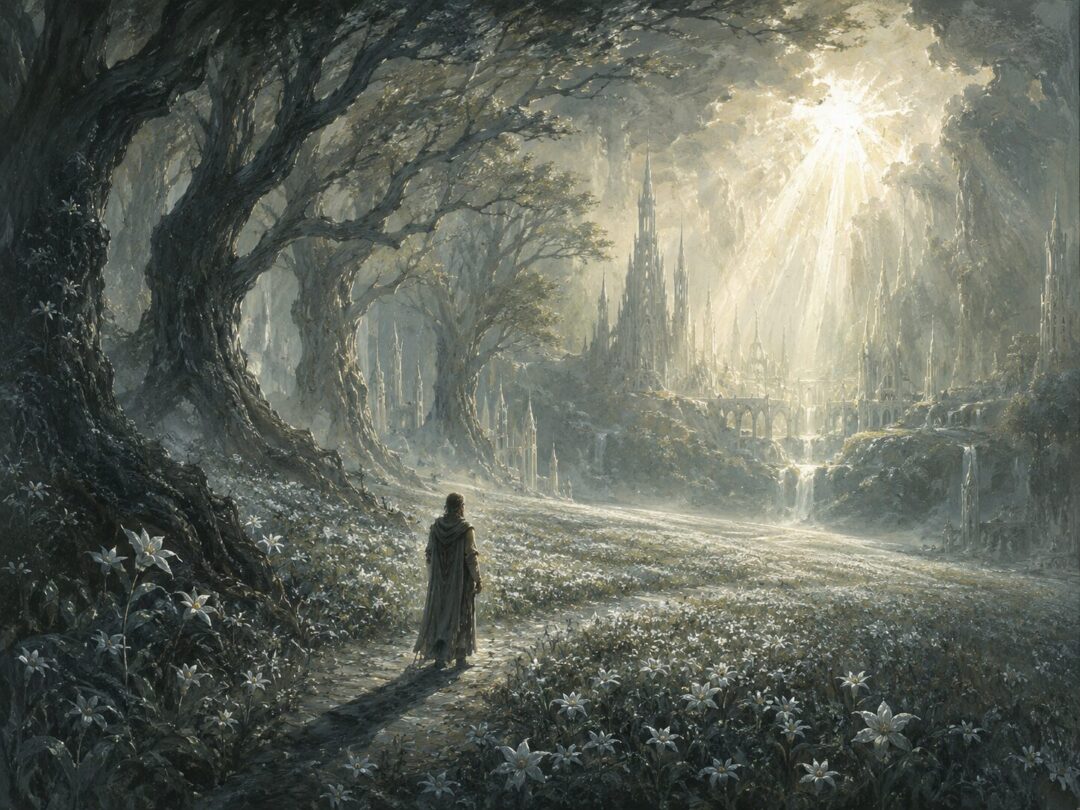
The question of Valinor leads into one of the deepest divisions in Middle-earth: Elves and Men do not merely live different lengths of time. They belong to the world differently.
Elves are bound to Arda. Their lives are long beyond mortal measure, and even when they die, their spirits remain within the world. This makes them seem blessed to Men, but the blessing has its own burden. They remember too much. They watch beauty fade. They can become weary of change because they have endured so much of it.
Men are mortal. Their lives are brief, uncertain, and shadowed by death. Yet the texts frame this mortality, at the deepest level, as a gift from the One. Men are not meant to remain forever inside the world. Their spirits pass beyond it to a destiny unknown to the Elves.
That unknown destiny is not described in detail. The silence is deliberate. Elves do not know it. The Valar do not control it. Even the wisest within the world cannot fully explain it.
This means Valinor cannot be the final answer for mortals, because mortals are not ultimately made for Valinor. They may receive healing there by special grace, as Frodo does. But their true end lies elsewhere, beyond the map.
The sorrow is that mortals often experience this gift as loss. Númenor feared it. Arwen, after choosing mortality, found it bitter when Aragorn’s death came. Even the wise can tremble before the unknown.
But the lore does not solve that fear by turning Valinor into heaven. It keeps the mystery intact.
Why the Movies Make It Feel Like Heaven
The films lean into the emotional truth of the Grey Havens: farewell, release, peace after unbearable suffering. Visually and musically, the scene feels transcendent. For many viewers, it naturally reads as a passage into the afterlife.
That feeling is understandable. The story wants us to feel that Frodo is being released from pain. It wants the West to feel sacred. It wants the ship to carry more than bodies across water; it carries the memory of an age ending.
But the lore underneath is more precise.
Frodo is not dead. Valinor is not heaven. The ship is not a funeral bier. The West is not a universal afterlife. It is a permitted passage to a hallowed land where certain wounds may be healed before the mortal end comes in its own time.
The filmic feeling is not completely wrong emotionally. It is wrong if taken literally.
That difference matters because the more lore-accurate version is, in some ways, more moving. Frodo is not rewarded with endless life. He is allowed a gentler ending. He is not lifted out of mortality. He is given peace within it.
Valinor Is Not Heaven — And That Makes It More Powerful
Valinor would be simpler if it were heaven.
Then Frodo’s departure would mean permanent reward. The Elves’ sailing would mean salvation. Númenor’s longing would be a misplaced but understandable reach for paradise. The Grey Havens would be sad only because the living are left behind.
But Middle-earth is stranger and more severe than that.
Valinor is holy, but not final. Beautiful, but not omnipotent. Deathless in its inhabitants, but not able to make mortals deathless. It can heal, but it cannot rewrite the fate of Men. It can receive Frodo, but it cannot make him something other than what he is.
That is why the West is so haunting. It is not heaven descending into the story. It is the last mercy still available inside the story.
Frodo does not escape the rules of the world. He is tenderly carried to the edge of them.
And perhaps that is why the ending hurts so much. The ship does not erase death, memory, or sacrifice. It simply gives the wounded Ring-bearer a place where the pain may finally loosen its grip.
Valinor is not heaven.
It is the place where Middle-earth admits that some wounds are too deep for home to heal.
Sources & Notes
- J.R.R. Tolkien, The Lord of the Rings, Book VI, Chapter 9, “The Grey Havens” — Frodo, Bilbo, Gandalf, Elrond, and Galadriel depart by ship into the West rather than through a death scene.
- J.R.R. Tolkien, The Silmarillion, “Akallabêth” — the Ban of the Valar and their messengers make clear that Aman does not make mortals deathless.
- J.R.R. Tolkien, The Silmarillion, “Of Eldamar and the Princes of the Eldalië” — establishes Aman, Valinor, Eldamar, and the Blessed Realm as places within the geography and history of Arda.
- J.R.R. Tolkien, The Lord of the Rings, Appendix B, “The Tale of Years” — records the later tradition that Samwise, as a Ring-bearer, also passed over Sea after Rosie’s death.
- J.R.R. Tolkien, Morgoth’s Ring, “Athrabeth Finrod ah Andreth” — explores the Gift of Men and the idea that mortal destiny lies beyond the circles of the world.