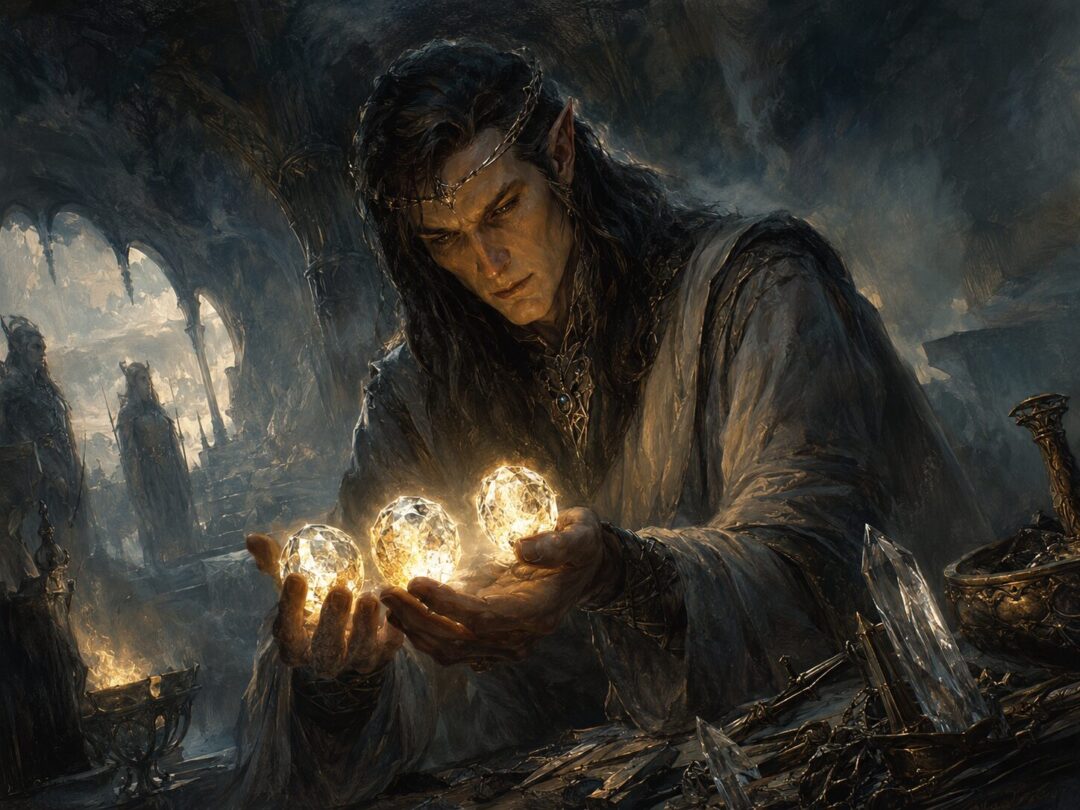
The Silmarils begin as jewels, but they do not remain merely jewels. That is the first mistake nearly every doomed hand in the story makes.
Fëanor makes them. Morgoth steals them. Beren takes one from the Iron Crown. Thingol desires one for his house. Dior inherits one. Elwing bears one into the sea. Eärendil carries one into the heavens. Maedhros and Maglor seize the last two at the end of the First Age, only to discover that the jewels they spent their lives claiming can no longer be endured.
On the surface, the Silmarils look like the greatest treasures ever made by Elven craft: three radiant gems containing the unmarred light of the Two Trees of Valinor. But the deeper tragedy of The Silmarillion is that they are too sacred to function as possessions. They can be made, guarded, stolen, worn, demanded, and recovered — but they cannot truly be owned in the ordinary sense.
Their holiness exposes the moral state of everyone who reaches for them. That is why the Silmarils are not simply beautiful objects at the center of a war. They are a test of whether any created being can hold light without turning it into private power.
The Light Before Ownership
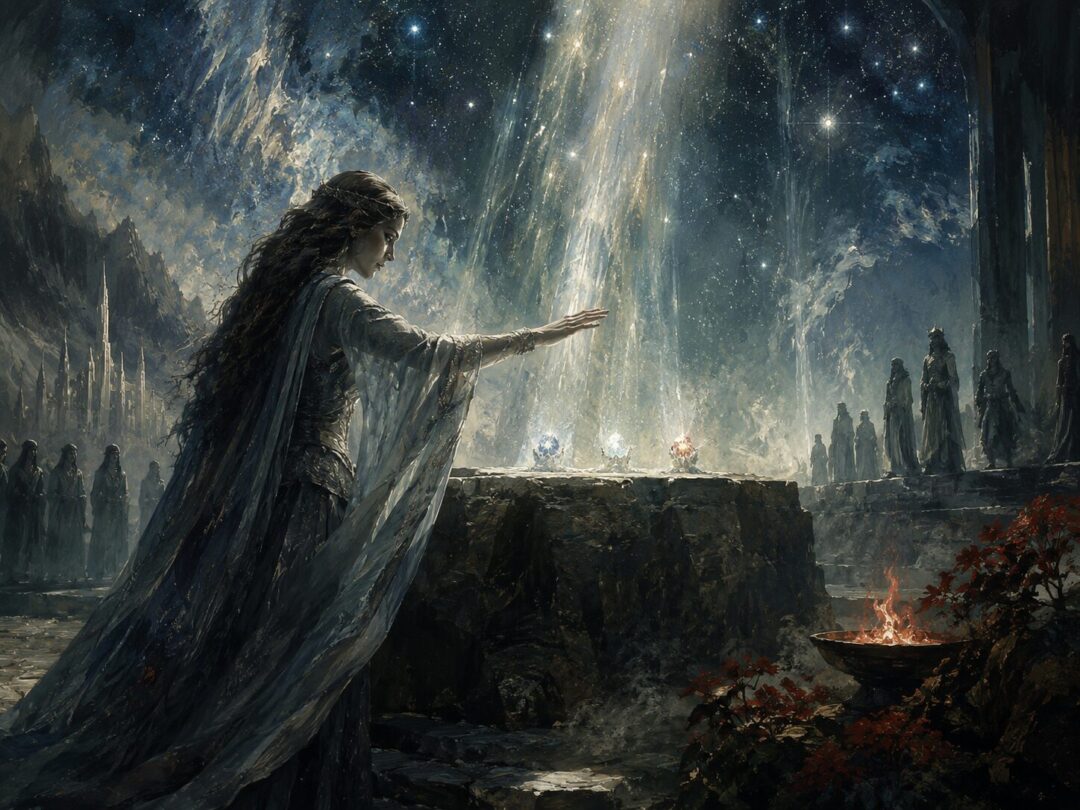
The Silmarils contain the light of the Two Trees, Telperion and Laurelin, before their destruction. This matters because that light is not Fëanor’s invention. He captures it within a form only he understands, using a substance called silima, but the light itself precedes him. It is part of the blessed life of Valinor, something received before it is ever shaped.
That tension sits at the heart of the Silmarils. Fëanor’s craftsmanship is real. No one else can make their like, and the texts treat his skill as extraordinary, perhaps unsurpassed among the Children of Ilúvatar. Yet the most precious thing inside the jewels is not something he created from nothing. He preserves and encloses a light already given to the world.
This does not make his achievement small. It makes it dangerous. The more sacred the thing preserved, the more disastrous it becomes when the maker begins to treat preservation as ownership.
The Silmarils are not ordinary gems improved by beauty. They are vessels of a light associated with the bliss of Aman before the poisoning of the Trees. Their beauty is therefore not neutral. It recalls a world before loss, envy, exile, and bloodshed. Anyone who looks at them is not merely admiring craft; they are seeing something like memory made visible — a memory of unfallen radiance.
That is why possession of them becomes so spiritually charged. To claim the Silmarils is, in a sense, to claim a fragment of the lost light of the world.
Varda’s Hallowing Changes Everything
The decisive sign that the Silmarils are not merely private property comes when Varda hallows them. After this hallowing, no mortal flesh, no unclean hands, and nothing of evil will can touch them without being scorched and withered.
That rule is easy to read too narrowly, as though the Silmarils are enchanted with a defensive spell. But the story treats the hallowing as something deeper than security. The jewels become morally dangerous. Their sanctity is not passive. They judge contact.
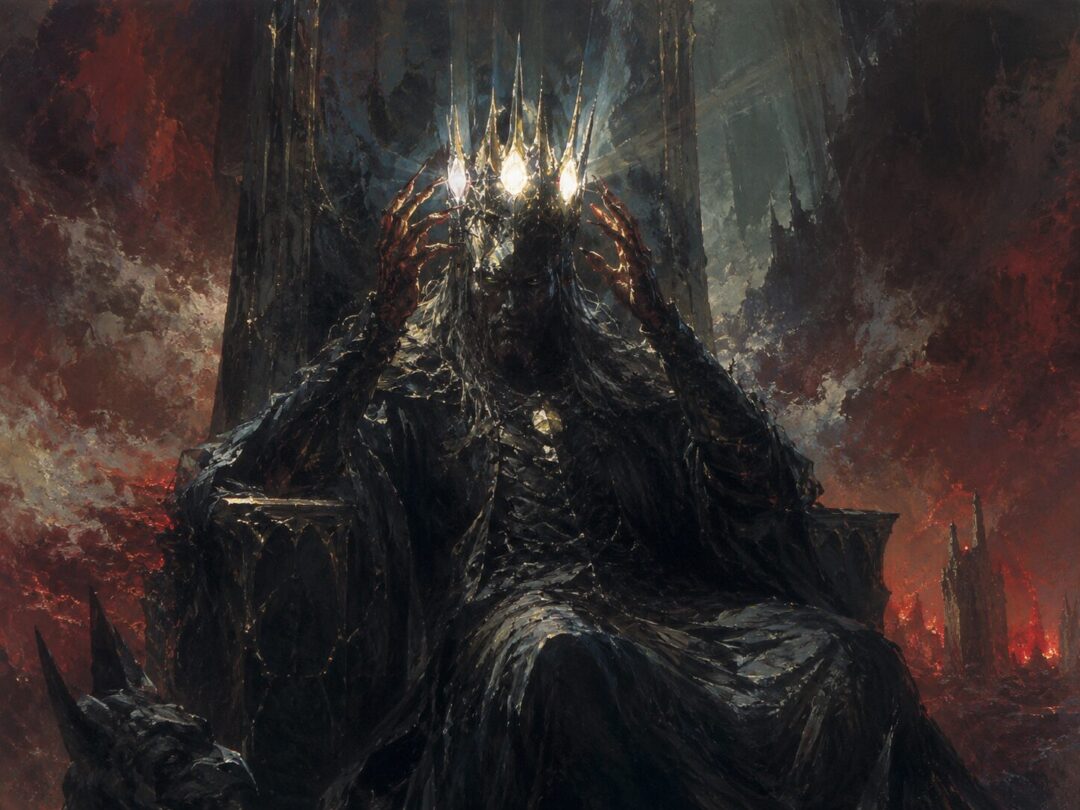
This is why Morgoth’s theft is so revealing. He can steal the Silmarils, set them in his Iron Crown, and display them as trophies of domination. Yet he is burned by them. His ownership is outward only. The Silmarils may be physically in his possession, but they do not belong to him in any meaningful moral sense. They sit above him like a contradiction: holy light enthroned on the head of the being most committed to corrupting and possessing the world.
The same principle later turns against Maedhros and Maglor. They are not Morgoth. They are sons of the maker. Their claim has a kind of legal and familial force, and their oath has driven them through centuries of ruin. Yet when they finally take the remaining Silmarils after the War of Wrath, the jewels burn them too.
That moment is one of the clearest answers to the question of ownership. The Silmarils do not ask, “Who made us?” or “Who inherited us?” or “Who swore most fiercely to recover us?” They reveal whether the hand that holds them is clean.
By the end, Maedhros and Maglor possess the jewels in the most literal sense — and are condemned by the very possession they sought.
Fëanor’s Claim Was Both True and Not Enough
It would be too simple to say Fëanor had no claim at all. He made the Silmarils. Their form came from his genius, and their creation was an act of immense craft and will. When Morgoth stole them, Fëanor was genuinely wronged. The murder of Finwë at Formenos and the theft of the jewels are real crimes, not illusions created by Fëanor’s pride.
The tragedy is that Fëanor turns a real wrong into an absolute claim.
After the Darkening of Valinor, the Valar ask whether he will surrender the Silmarils so that the Trees might perhaps be healed. Fëanor refuses. He says, in effect, that he cannot make their like again and that breaking them would be the death of him. The story does not ask us to pretend this costs him nothing. The Silmarils are bound up with his deepest creative self.
But this is also the moment when the jewels reveal the danger of confusing making with ultimate ownership. Fëanor’s grief is understandable; his possessiveness becomes catastrophic. Once he treats the Silmarils as a private absolute, nothing can stand above his claim — not the healing of Valinor, not the counsel of the Valar, not kinship, not mercy, not the lives of other Elves.
His oath makes that possessiveness permanent. He and his sons swear to pursue anyone, great or small, good or evil, who withholds a Silmaril from them. The wording matters because it does not distinguish between a thief like Morgoth and later holders whose relationship to the jewel is far more complex. The oath turns the Silmarils from sacred light into a legal obsession enforced by violence.
That is the irony: Fëanor’s love for the greatest holy objects of Elven craft becomes the engine of unholy deeds.
The Jewels Become a Test of Desire
The Silmarils do not corrupt in the same way the One Ring corrupts. The Ring is made by Sauron to dominate, and its evil is built into its purpose. The Silmarils are not evil. They are holy. Yet holiness can still become dangerous to the proud, because it exposes disordered desire.
Morgoth wants them as trophies. Fëanor wants them as the inviolable work of his hands. The sons of Fëanor want them because oath, inheritance, guilt, and identity have fused into one unbearable command. Thingol’s desire for the Silmaril brought from Angband is more complicated: he receives it through Beren and Lúthien’s impossible quest, yet his later attachment to it becomes entangled with pride and ruin in Doriath.
In each case, the jewel does not need to be evil in order to become disastrous. It is enough that people try to reduce it to possession.
The Silmarils intensify what is already in the heart. Courage, pride, love, greed, grief, defiance, and despair all become clearer in their light. Beren’s recovery of a Silmaril from Morgoth’s crown is bound to love and impossible courage. But the oath-driven attacks on Doriath and the Havens of Sirion show the opposite: the same jewel becomes an excuse for slaughter when claimed without mercy.
This is one of the most unsettling moral patterns in the First Age. The holiest created objects in the legendarium do not prevent evil actions around them. Instead, they make those actions more terrible, because the violence is committed in the name of light.
Why Beren, Lúthien, Elwing, and Eärendil Matter
The Silmaril recovered by Beren does not remain with the sons of Fëanor. It passes through a line marked by suffering, exile, and interwoven Elven and human destiny: Beren and Lúthien, Dior, Elwing, and Eärendil.
This history is important because it shows another kind of relationship to the jewel. Beren does not take the Silmaril because he believes all light belongs to him. He enters Angband because Thingol has set the Silmaril as the bride-price for Lúthien, and the quest becomes part of a larger story of love, doom, and resistance to Morgoth. Even here, the situation is not morally simple. Thingol’s demand is severe and arguably intended to be impossible. Yet Beren’s act is not the same as Morgoth’s theft or the later kinslayings.
Elwing’s keeping of the Silmaril is also bound to survival and inheritance, not simple greed. When the Havens of Sirion are attacked, she casts herself into the sea with the jewel rather than surrender it to the sons of Fëanor. Through divine mercy, she is transformed and brought to Eärendil. Eärendil then sails to Valinor, bearing the Silmaril, and his voyage leads to the plea that brings the Host of the West against Morgoth.
Here the Silmaril becomes not a private treasure but a sign carried beyond private claims. It becomes associated with intercession, hope, and the deliverance of Middle-earth from Morgoth’s domination. Eventually Eärendil bears it in the sky, where its light becomes a star.
That fate is crucial. The jewel that caused so many to say “mine” is finally placed beyond ordinary possession, visible to many and owned by none in the possessive sense.
Maedhros and Maglor Prove the Claim Has Failed
After the War of Wrath, the last two Silmarils are recovered from Morgoth’s Iron Crown. At this point, the great enemy who stole them has fallen. If the story were only about rightful recovery, this should be the moment of restoration. The surviving sons of Fëanor should receive what was theirs.
But they do not.
Eönwë, herald of Manwë, refuses their demand, because their right has been lost through their deeds. Maedhros and Maglor have not simply pursued justice. The oath has led the sons of Fëanor into kinslaying and ruin. Their claim remains loud, but it is no longer clean.
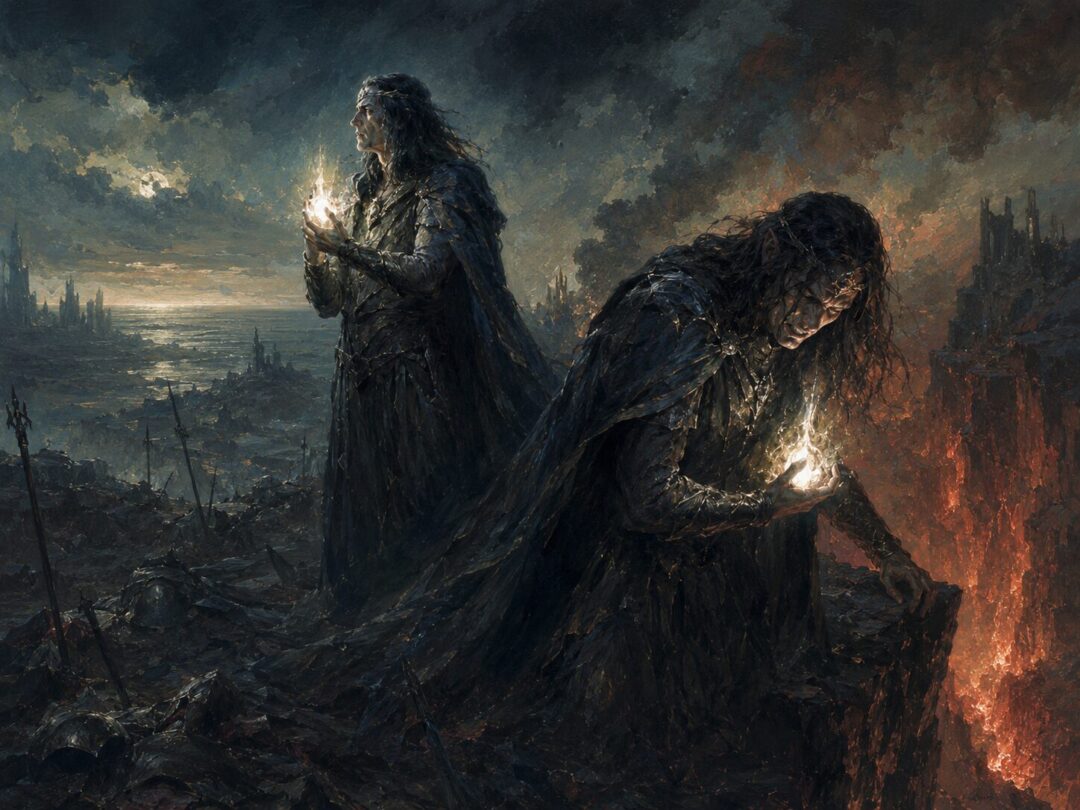
When they steal the Silmarils, the jewels burn them. This burning is the final collapse of their argument. They can still take. They can still flee. They can still hold. But they cannot possess in peace.
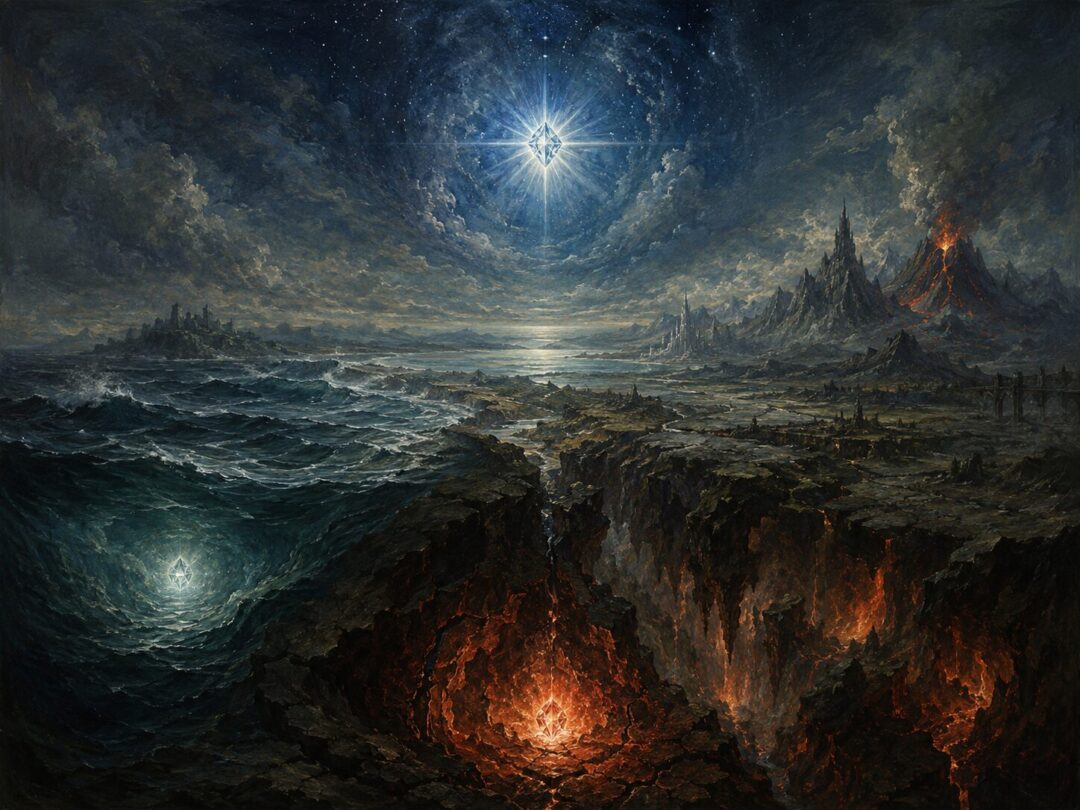
Maedhros, in torment, casts himself with his Silmaril into a fiery chasm. Maglor throws his into the sea and wanders in grief. The three Silmarils are then divided beyond the reach of ownership: one in the heavens with Eärendil, one in the earth, and one in the sea.
The pattern is almost liturgical in its finality. Air, earth, and water receive what no single hand could rightly keep.
Too Holy for the Logic of “Mine”
The Silmarils are too holy to belong to anyone because their deepest meaning is larger than craft, inheritance, conquest, or desire. They contain a light that was never private. They are hallowed so that possession without purity becomes torment. They are tied by prophecy to the fate of Arda itself, not merely to the grief of one house.
This does not erase Fëanor’s genius or Morgoth’s crime. It does not make the story simple. The Silmarils are tragic precisely because many claims around them contain fragments of truth. Fëanor really made them. Morgoth really stole them. The sons of Fëanor really inherited an oath they believed they could not break. Beren and Lúthien really won one through courage and love. Elwing really guarded a perilous inheritance. Eärendil really bore it into a hope beyond himself.
But the Silmarils will not be reduced to any of those claims.
Their holiness means they belong, finally, to the story of Arda’s wound and healing. They are made by a person, stolen by a tyrant, sought by the proud, carried by the faithful, and removed from possession altogether. The light inside them began as a gift to the world, and by the end it is returned to the world in forms no king, craftsman, warrior, or oath-maker can lock away.
That is the hidden judgment of the Silmarils. The most beautiful things in Middle-earth cannot safely be held by those who only know how to say “mine.”
They can be received. They can be guarded for a time. They can even be borne as part of a burden.
But the moment they become an absolute possession, their light turns unbearable.
Sources & Notes
- J.R.R. Tolkien, The Silmarillion, “Of the Silmarils and the Unrest of the Noldor” — the making of the Silmarils, their preservation of the Two Trees’ light, and Varda’s hallowing of them.
- J.R.R. Tolkien, The Silmarillion, “Of the Darkening of Valinor” — Morgoth and Ungoliant destroy the Trees, Morgoth steals the Silmarils, and Fëanor refuses to break them for the Trees’ healing.
- J.R.R. Tolkien, The Silmarillion, “Of the Flight of the Noldor” — Fëanor and his sons swear the Oath against anyone withholding a Silmaril, turning a real theft into a ruinous absolute claim.
- J.R.R. Tolkien, The Silmarillion, “Of Beren and Lúthien” and “Of the Ruin of Doriath” — Beren wins a Silmaril from Morgoth’s crown, and the jewel later becomes entangled with Thingol, Dior, and the fall of Doriath.
- J.R.R. Tolkien, The Silmarillion, “Of the Voyage of Eärendil and the War of Wrath” — Elwing and Eärendil bear the Silmaril toward hope, while Maedhros and Maglor are burned by the remaining jewels and lose them to earth and sea.