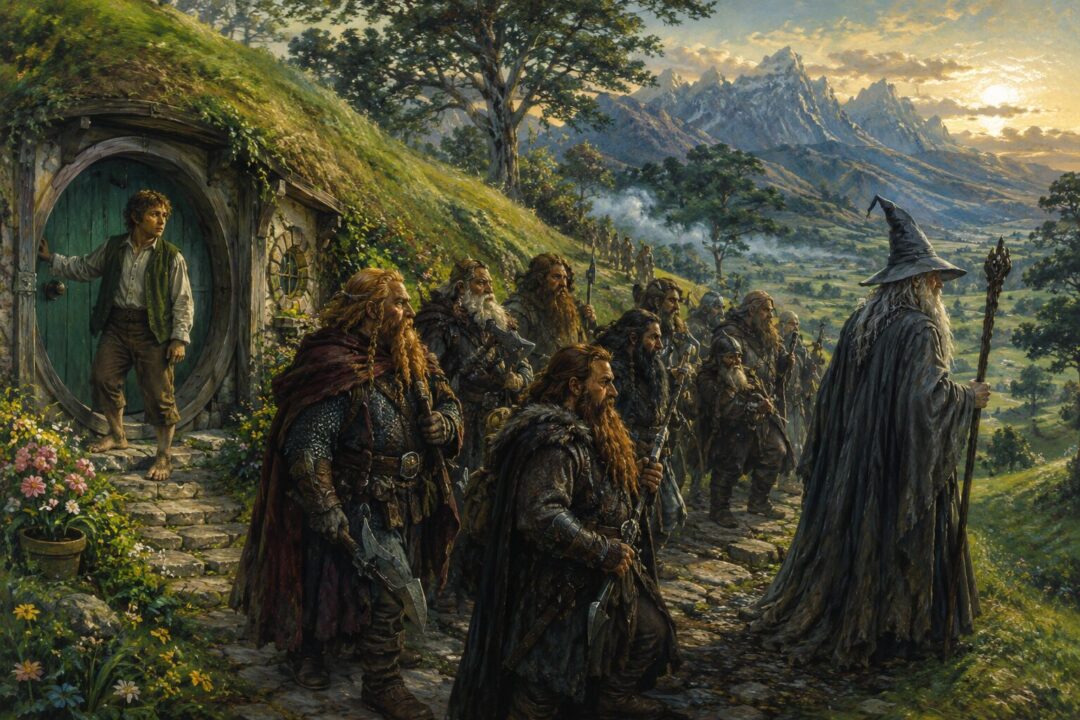
When thirteen Dwarves arrived at Bag End looking for a burglar, the choice seemed absurd. Bilbo Baggins was not a warrior, a treasure-hunter, or a master thief. He had never fought a dragon, crossed a wilderness, or crept through an enemy fortress. Even Gandalf’s recommendation baffled Thorin Oakenshield and the others.
Yet by the end of the journey, Bilbo had done something none of the Dwarves could have accomplished. He entered Smaug’s lair alone, escaped the Goblin tunnels, outwitted giant spiders, infiltrated the halls of the Elvenking, and played a decisive role in preventing disaster at the Lonely Mountain.
The deeper irony of The Hobbit is that Bilbo succeeded not despite his weaknesses, but because of them. The quest required qualities that traditional heroes often lack. Courage mattered, but so did humility. Intelligence mattered, but so did mercy. The ideal burglar was not the strongest member of the company. He was the one person least likely to be consumed by pride, greed, or the desire for glory.
Bilbo survived because he was uniquely suited to challenges that could not be solved with swords.
The Dwarves Wanted a Burglar—But They Imagined the Wrong Kind
At the beginning of the quest, Thorin and his companions seem to expect a professional adventurer. They speak of secret entries, treasure recovery, and dangerous infiltration. Bilbo appears utterly unsuitable.
Yet the quest’s greatest obstacles repeatedly prove resistant to brute force.
The Company cannot fight its way through every danger. Trolls nearly capture them despite the Dwarves’ weapons and experience. Goblins overwhelm them through sheer numbers. The spiders of Mirkwood trap them. Smaug himself is beyond the ability of any member of the Company to defeat directly.
Again and again, success depends on stealth, observation, timing, and psychological insight.
Bilbo gradually becomes exactly that kind of burglar.
Importantly, he is not a burglar in the criminal sense. He rarely steals for personal gain. Instead, he excels at entering dangerous places, gathering information, escaping impossible situations, and noticing details others overlook.
Those talents become more valuable than martial strength.
His Small Size Was an Advantage, Not a Weakness
Middle-earth often overturns expectations about power. Hobbits are physically unimpressive compared to Men, Elves, or Dwarves. Yet their size frequently becomes a strength.
Bilbo can move quietly where larger people would attract attention. He slips through narrow spaces. He is difficult to detect. Enemies often underestimate him completely.
This becomes especially important after he acquires the Ring in the Goblin tunnels beneath the Misty Mountains. The Ring grants invisibility, but invisibility alone is not enough. A noisy or reckless user could still reveal himself.
Bilbo combines invisibility with natural caution and stealth. He learns how to observe without being seen and how to gather information before acting.
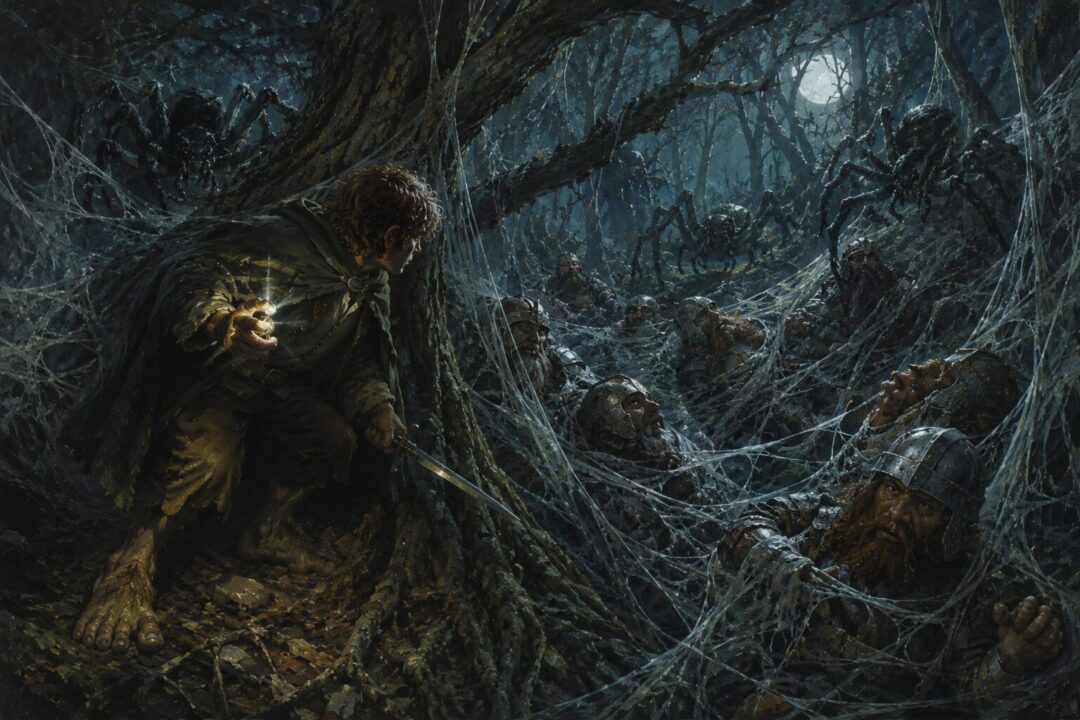
His rescue of the Dwarves from the spiders demonstrates this perfectly. Rather than charging into battle, he uses distraction, timing, and mobility. He moves between danger and safety, confusing the spiders while freeing his companions.
The same pattern appears throughout the story. Bilbo survives because he understands when not to fight.
Bilbo Could Adapt Faster Than Anyone Else
One of Bilbo’s most underrated qualities is flexibility.
The Dwarves possess many admirable traits, but they are often constrained by habit, pride, or established ways of thinking. Thorin in particular can become rigid once he has committed to a course of action.
Bilbo is different.
Because he begins the adventure as an outsider, he has fewer assumptions about how problems should be solved. He improvises constantly.
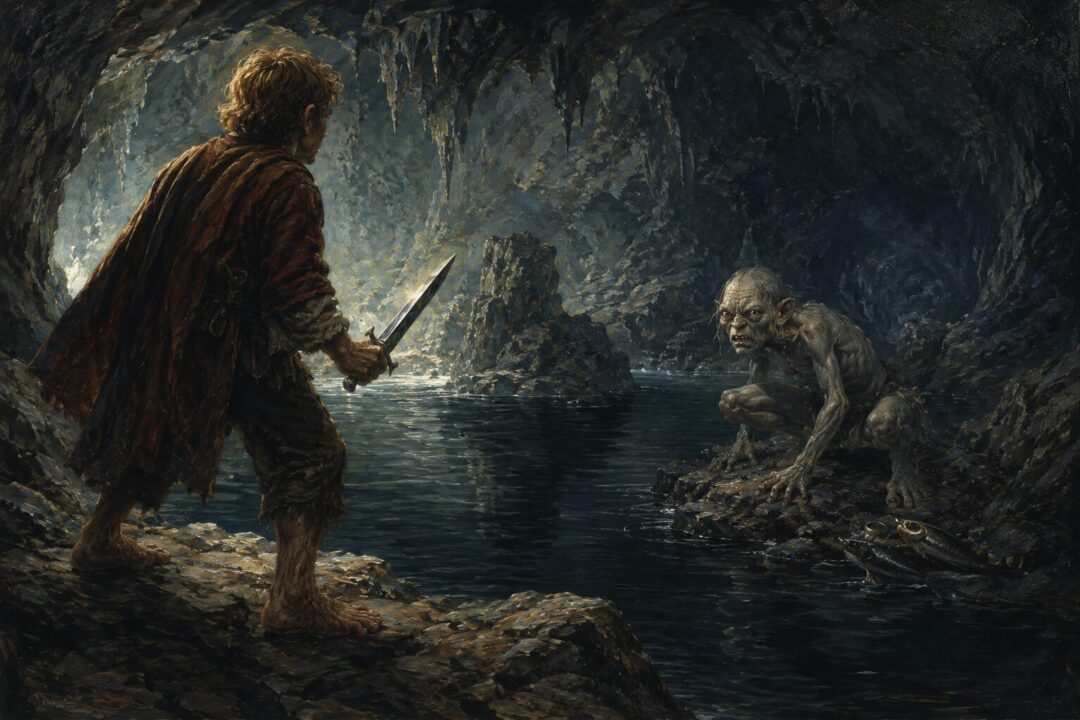
When separated from the Company in the Goblin tunnels, he survives alone. When confronted by Gollum, he does not rely on force. Instead, he engages in a battle of riddles. When trapped in Mirkwood, he develops creative solutions under pressure. During the escape from the Woodland Realm, he devises the barrel plan that saves the entire Company.
None of these victories were planned in advance.
Bilbo succeeds because he thinks quickly when circumstances change.
The journey repeatedly rewards adaptability over strength, and Bilbo possesses more adaptability than anyone else in the expedition.
Mercy Saved Him More Than Skill Did
Many readers remember Bilbo’s cleverness, but one of the most important reasons for his survival is mercy.
The defining moment occurs beneath the Misty Mountains.
After winning the riddle game, Bilbo encounters Gollum in a position of extreme vulnerability. Invisible and armed with a sword, he has an opportunity to kill him.
Instead, he chooses pity.
The text presents this as a moral decision rather than a strategic calculation. Bilbo recognizes Gollum’s misery and spares him.
At the time, the choice seems irrelevant to the quest. Yet within the larger history of Middle-earth, it becomes enormously significant. Gollum ultimately plays a crucial role in the fate of the One Ring generations later.
Even within The Hobbit, the moment reveals why Bilbo differs from many adventurers. He is capable of violence when necessary, but he does not seek it. Compassion remains intact despite hardship.
This quality repeatedly protects him from becoming reckless, cruel, or blinded by hatred.
His survival is not merely physical. He survives morally as well.
He Was Resistant to the Dragon-Sickness That Destroyed Others
The treasure of Erebor represents one of the story’s greatest dangers.
Smaug is terrifying, but the greed surrounding the treasure proves nearly as destructive.
Throughout Tolkien’s legendarium, treasure can become a source of obsession. In The Hobbit, Thorin gradually falls under the influence commonly called dragon-sickness—a consuming fixation on wealth and possession.
Bilbo experiences temptation too. He appreciates beautiful things and understands the value of treasure. Yet he never allows wealth to become his master.
This distinction becomes critical after Smaug’s death.
As tensions rise between Thorin, the Men of Lake-town, and the Elves, Bilbo recognizes the approaching catastrophe. He secretly delivers the Arkenstone to Bard and the Elvenking as a bargaining tool.
This decision risks Thorin’s anger and potentially his own safety.
Why does Bilbo take such a risk?
Because he values peace above treasure.
Most members of the expedition are emotionally invested in reclaiming wealth and kingdom. Bilbo alone remains detached enough to see the broader danger.
A burglar obsessed with gold would have failed at the crucial moment. Bilbo succeeds precisely because treasure never fully captures his heart.
Smaug Could Not Understand Him
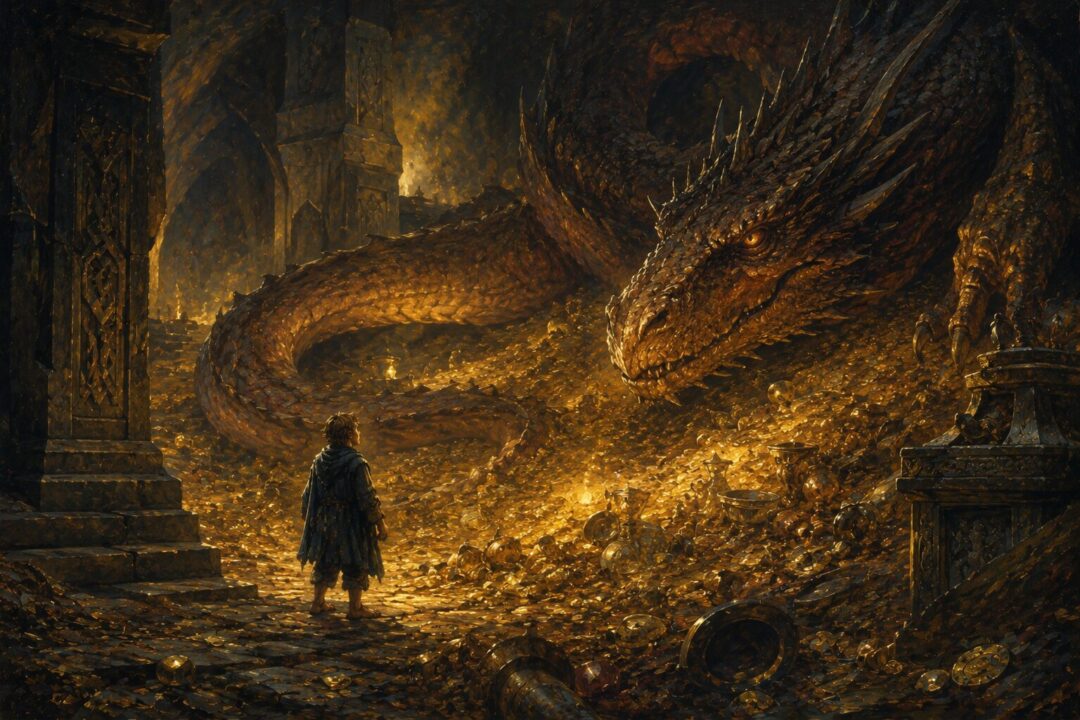
One of the most fascinating aspects of Bilbo’s encounter with Smaug is the dragon’s inability to categorize him.
Smaug understands greed. He understands ambition. He understands conquest and power.
Bilbo does not fit any of those patterns.
When Bilbo enters the treasure chamber, he engages the dragon in a verbal contest filled with riddling titles and indirect speech. Smaug attempts to analyze him, determine his motives, and identify his weaknesses.
Yet Bilbo’s motives remain unusually complex.
He seeks information rather than treasure. He serves friends rather than personal ambition. He values home more than wealth. He admires courage but distrusts domination.
As a result, Smaug never fully understands him.
This matters because dragons in Tolkien’s world are extraordinarily perceptive. Smaug manipulates others through psychological insight. He recognizes vulnerabilities and exploits them.
Bilbo presents fewer vulnerabilities than expected.
His humility makes him difficult to corrupt. His limited greed makes him difficult to tempt. His loyalty makes him difficult to intimidate.
In a strange way, Bilbo’s ordinary Hobbit values become a defense against one of Middle-earth’s most dangerous creatures.
Gandalf Saw Something Everyone Else Missed
The central mystery of the story is why Gandalf chose Bilbo in the first place.
The wizard never provides a simple explanation, but the text strongly suggests that he recognized qualities invisible to others.
The Dwarves saw comfort, caution, and inexperience.
Gandalf saw hidden resilience.
He understood that courage is not the absence of fear. Courage is the decision to act despite fear. Bilbo repeatedly demonstrates exactly that kind of bravery.
Unlike many heroes, Bilbo rarely appears fearless. He worries constantly. He misses home. He doubts himself.
Yet he keeps going.
That distinction matters.
Fearless individuals sometimes take unnecessary risks. Bilbo measures danger carefully and acts anyway when duty requires it.
Gandalf appears to recognize that this combination of caution and courage is extraordinarily rare.
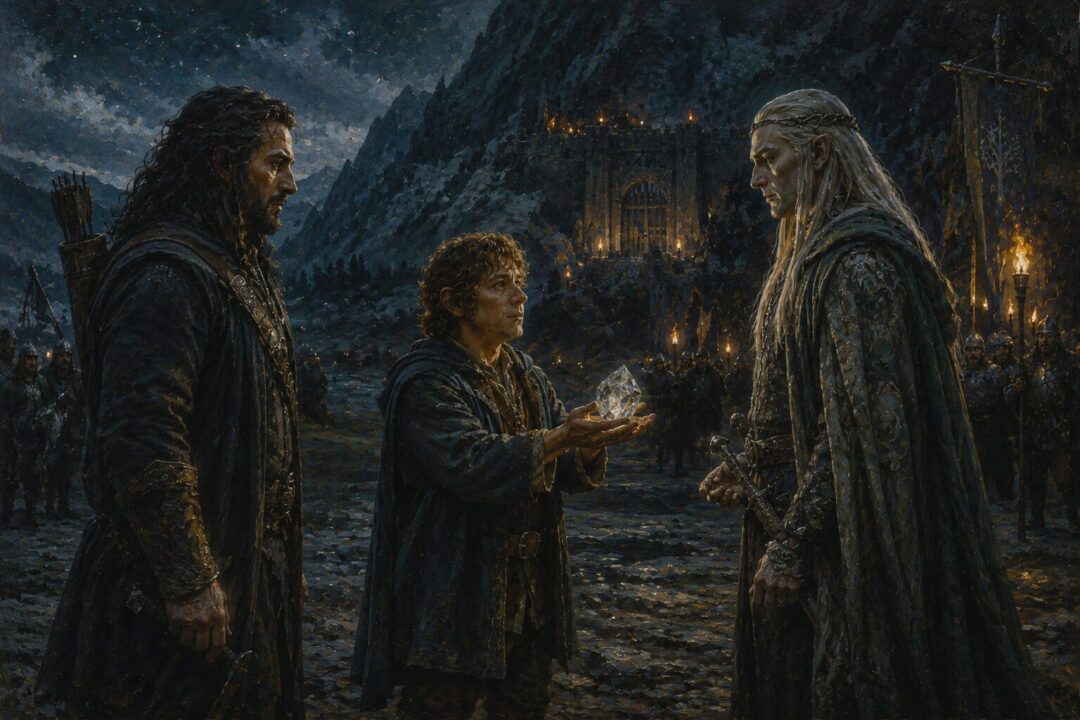
The Real Reason Bilbo Survived
By the end of The Hobbit, Bilbo has become one of the most successful adventurers in Middle-earth.
Yet he never transforms into a conventional hero.
He remains fond of meals, gardens, comfort, and home. He retains his humor. He preserves his compassion. He never becomes obsessed with wealth or glory.
That is precisely why he survives.
The quest demanded stealth rather than strength, mercy rather than cruelty, adaptability rather than rigidity, and wisdom rather than greed. Every major challenge rewarded the qualities most people initially dismissed as weaknesses.
The Dwarves thought they needed a legendary burglar capable of impossible feats.
What they actually needed was a Hobbit.
Bilbo Baggins could survive The Hobbit because he was never trying to become a conqueror, a king, or a dragon-slayer. He remained something far rarer in Middle-earth: a decent person who refused to lose himself, even while walking through darkness, treasure, and danger.
In the end, that proved more valuable than any skill a professional burglar could have possessed.
Sources & Notes
- J.R.R. Tolkien, The Hobbit, ch. 1, “An Unexpected Party” — Gandalf’s choice of Bilbo and the Dwarves’ early doubts set up why an unlikely burglar is needed.
- J.R.R. Tolkien, The Hobbit, ch. 5, “Riddles in the Dark” — Bilbo survives Gollum by wit rather than force, and his pity becomes one of his defining choices.
- J.R.R. Tolkien, The Hobbit, ch. 8, “Flies and Spiders” — Bilbo’s stealth, timing, and improvisation make him the only member of the Company able to rescue the others.
- J.R.R. Tolkien, The Hobbit, ch. 12, “Inside Information” — Bilbo’s riddling exchange with Smaug shows observation and nerve succeeding where direct strength could not.
- J.R.R. Tolkien, The Hobbit, chs. 15–16, “The Gathering of the Clouds” and “A Thief in the Night” — Bilbo’s handling of the Arkenstone shows his resistance to treasure-obsession and his preference for peace over possession.